Low Humidity on Ashwagandha: Indoor Winter Checks
Quick answer
Ashwagandha (Withania somnifera) is an arid-climate nightshade that prefers low to moderate humidity (30–50%) and rarely needs a humidifier on a sunny balcony. Crispy silvery leaf tips, winter indoor stress, or stalled growth more often trace to heating-vent drafts, underwatering in full sun, weak light after frost protection, or spider mites in hot dry corners—not tropical-style dry-air panic. First step: read a hygrometer at pot height for two days; if you are already near 30–50%, move the pot off the vent path and probe moisture at 3–4 cm before raising humidity.
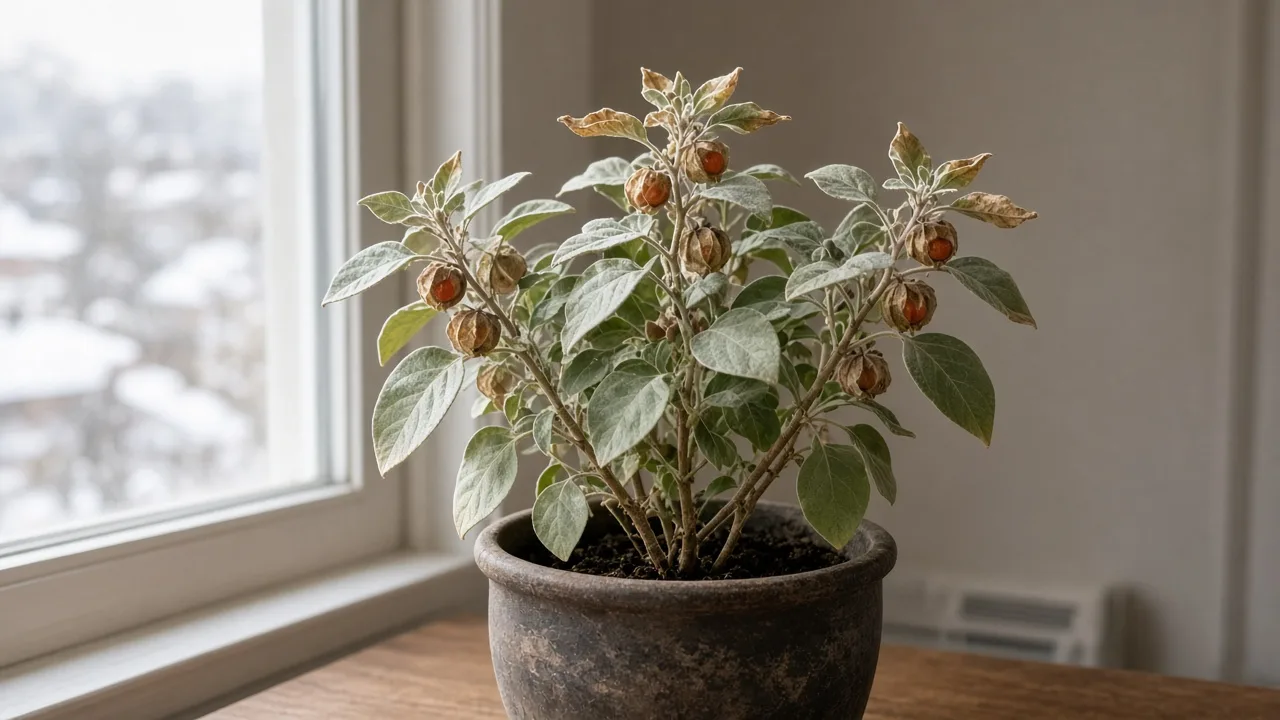
Low Humidity on Ashwagandha: Causes, Checks & Fixes
This guide covers low humidity on Ashwagandha. See also the general Low Humidity guide, watering, and light pages for this plant.
Low Humidity on Ashwagandha: Causes, Checks & Fixes
Quick answer
Ashwagandha (Withania somnifera, Indian Ginseng) is a small shrub from open, disturbed dry habitats that is extremely drought tolerant in warm sunny conditions. It is not a fern or calathea that needs steamy rooms. For how dry winter air crisp leaf edges on houseplants in general, see our low humidity hub. On Ashwagandha, low humidity is often a secondary stressor—silvery leaf tips crisp beside heating vents indoors, dry wind on a roof terrace, or spider mites in hot dry corners matter more than whole-room humidity on a sunny outdoor pot.
First step: place a hygrometer at pot height for two to three days. If readings sit in the 30–60% band most homes already provide, move the pot off the heating-vent path and probe whether the top 3–4 cm of mix is dry before buying a humidifier.
When to use this page vs other Ashwagandha guides
| Your question | Best page |
|---|---|
| Crispy tips beside a radiator during indoor overwintering | This page |
| Tan tips on a light pot in full summer sun | Underwatering |
| Dry tan tips after weeks without water on a balcony | Brown tips |
| Lower leaves drying as orange berries form | This page (harvest-stage senescence) |
| Fine stippling on hairy undersides in a hot window | Spider mites |
| Pale stretched stems in a dim room | Not enough light |
| Yellowing on wet soil after heavy watering | Overwatering |
What low humidity looks like on Ashwagandha
Healthy Ashwagandha carries short, fine silver-gray hairs on ovate alternate leaves along erect woody stems—not broad tropical foliage. Dry-air stress shows on those velvety leaf edges, not as the classic “crispy fern frond” pattern.
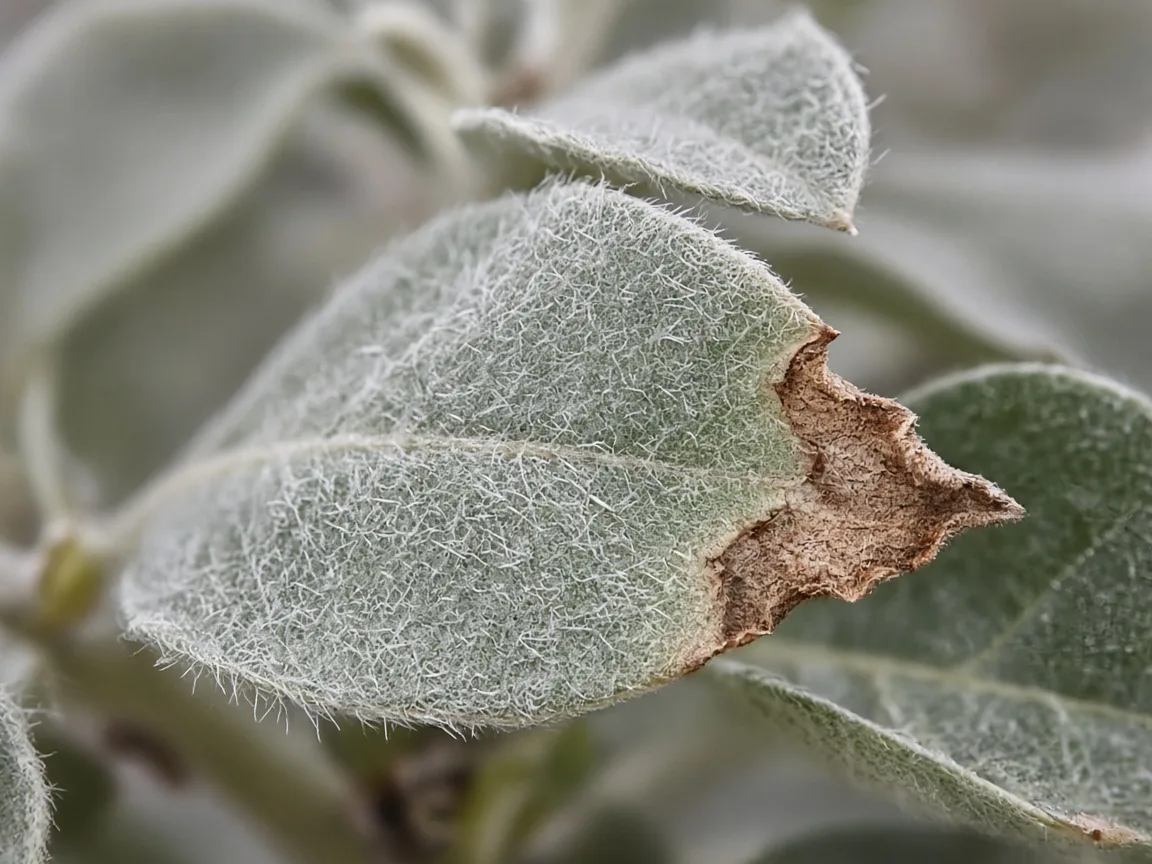
Papery brown tips on silvery ovate leaves beside a heating vent—the dead tip tissue will not re-green; watch for clean new leaves on firm stems.
Typical signs when dry air is actually involved:
- Papery brown tips on the uppermost silvery leaves facing a heating vent or AC return
- Crisp edges on one side of a container while the leeward face stays greener
- Slow tip burn over weeks after moving a frost-protection pot indoors without regaining sun hours
- Stalled new growth in a dry 20–25% winter room even when soil moisture at 3–4 cm looks correct
Usually not low humidity:
- Midday wilt on a light terracotta pot in July — underwatering on a full-sun balcony
- Lower leaf dry-down as flowers and orange winter-cherry fruit form — normal energy shift toward roots
- Whole-leaf browning on wet sour mix — overwatering or root rot, never humidify first
- Stippling and fine webbing on hairy undersides — spider mites in hot dry indoor corners
Winter-cherry harvest stage vs dry air: a pattern only Ashwagandha shows
This distinction is mandatory for Ashwagandha and wrong for generic houseplant humidity guides.
Growers harvest roots when flowers and fruits form and leaves start to dry out. Lower silvery leaves yellowing or crisping during orange berry development is often normal senescence, not a humidifier emergency—especially if upper stems stay firm and new branch tips still look healthy.
| What you see | More likely cause |
|---|---|
| Lower leaves drying as orange berries swell, firm woody stems | Harvest-stage senescence |
| Crisp tips on newest upper leaves only beside a vent | Localized dry air draft |
| Many leaves crisping on a very light pot in summer sun | Underwatering |
| Tips on moist soil in a dim room after frost move | Dry air plus not enough light |
| Stippling on tender winter shoots indoors | Spider mites in dry air |
Judge health by firm erect stems and clean new leaves at branch tips, not by every lower leaf staying attached through fruiting.
Velvety silver leaves and vent drafts: why tips crisp before the shrub wilts
This section is Ashwagandha-specific and does not apply to smooth-leaved tropicals.
- Leaves are densely covered in silver-gray hairs—the farthest leaf margin loses water first when a heating vent blows across the pot.
- The plant is grown for woody stems and thick roots, not soft lush foliage. Tip damage is often cosmetic if stems stay hard and the soil mix drains fast.
- Ashwagandha cannot grow in the shade. Indoor frost protection without six hours of direct sun produces weak leaves where tips brown from chronic stress even when a hygrometer reads acceptable room humidity.
- Leaves have a distinct odor sometimes compared to horse sweat—that is normal. A sour rotting smell at the crown means stem rot from wet mix, not dry air.
Why Ashwagandha gets low humidity stress
Indoor overwintering beside heating vents
Ashwagandha is frost tender and must be brought indoors in cooler climates. Radiators and forced-air vents create micro-climates below 25% relative humidity within a metre of the pot. Silvery tips on the vent-facing side while soil at 3–4 cm stays moist is classic localized dry air—not a whole-room crisis.
Full-sun outdoor pots misread as humidity problems
On a sunny terrace, Ashwagandha transpires heavily in full sun with six or more hours of direct light daily. A small pot can go from moist to dangerously dry in 48 hours while stems stay upright. Tan tips from drought look like “low humidity” on a forum post but need the watering guide fix, not a humidifier.
Weak light after the frost move compounds dry air
It cannot grow in the shade. Dim winter windows plus dry vent air produce pale stretched growth where tips brown easily. Fix light placement before you chase humidity numbers.
Spider mites in dry indoor air
Washington College notes spider mites could attack the plant. Dry weather favors mite outbreaks on houseplants. Fine stippling on hairy undersides plus occasional webbing can look like edge burn from dry air. Confirm with a lens before misting a plant that dislikes wet feet.
Dry roof wind on young containers
Ashwagandha prefers well-draining dry soil in warm environments between roughly 70°F and 95°F. Young nursery pots on exposed roofs can crisp on the windward side from desiccating breeze plus fast dry-down—not from ambient humidity alone.
How to confirm the cause
Run this checklist before you stack fixes:
- Read a hygrometer at pot height for 48–72 hours — Below 25% beside a vent supports dry-air stress; 30–50% points elsewhere.
- Probe moisture at 3–4 cm — Crumbly and light confirms underwatering; wet and heavy points to root stress, not humidity.
- Note vent and AC distance — Tips on the vent-facing leaf side only support localized dry air.
- Count direct sun hours — Fewer than six hours after an indoor move explains weak growth with tip burn.
- Check seasonal stage — Lower leaf dry-down during orange berry formation may be normal senescence.
- Inspect hairy undersides — Stippling or webbing suggests spider mites.
Confirmation decision table
| If you find… | Likely cause | First action |
|---|---|---|
| Hygrometer below 25% beside vent, moist 3–4 cm, vent-side tip crisping | Localized dry air | Move pot off vent path |
| Dry 3–4 cm, light pot, tan tips on many leaves | Underwatering / drought | Deep soak; see underwatering |
| 30–50% humidity, dim room, pale stretched stems | Weak light plus indoor stress | Brightest glass; light guide |
| Tips on lowest leaves during fruiting, firm stems | Harvest senescence | Maintain watering rhythm |
| Stippling + webbing on undersides | Spider mites | Rinse; isolate; mite guide |
The first fix to try
Move the pot at least one metre away from heating vents, radiators, and forced-air returns—then recheck a hygrometer at pot height for 48 hours.
That single step fixes the most common indoor failure—localized dry drafts on overwintering containers—without misting hairy foliage or soaking a plant that only needs better sun. If the hygrometer already reads 30–50% and tips crisp on a light pot in summer sun, probe the top 3–4 cm instead. Dry crumbly mix means one thorough soak per the watering guide, not a humidifier.
If spider mite stippling is present, isolate and rinse hairy undersides before any spray. Wet roots plus pesticide on the same day stresses this nightshade unnecessarily.
Step-by-step recovery by cause
Localized vent draft
Relocate the pot, optionally group it with other plants to raise the immediate micro-climate a few points, and avoid misting leaves directly—stagnant moisture on hairy foliage in a dim corner invites stem rot. A pebble tray beneath the pot adds humidity without wetting leaves.
Drought tip burn mistaken for humidity
Water when the top 3–4 cm dries. In peak summer heat, check every two days on small terracotta pots. After one thorough soak, wait for new leaves at stem tips to open without fresh crisping.
Light-stress tip burn indoors
Move to the sunniest spot available—six or more hours of direct sun daily outdoors, or the brightest south-facing glass indoors. Pair with the light guide for seasonal adjustments after frost protection.
Mite-related edge damage
Isolate, rinse hairy leaf undersides with plain water, and confirm active pests before any treatment. Dry indoor air increases mite risk—raising humidity slightly and improving airflow helps prevention, but mites need direct control.
Recovery timeline
Judge progress by firm erect stems and clean new leaves at branch tips, not by old tan tips re-greening. Mild vent-draft tip burn on an overwintering pot often stabilizes within two to four weeks after relocation. Drought cases on sunny balconies may improve within one to two watering cycles once dry-down timing is corrected.
Lower leaves that dried during fruiting may drop naturally; that is not failure if upper growth stays healthy and roots feel firm.
Mistakes to avoid
- Running a humidifier before checking sun hours after moving a frost-protection pot indoors—shade stress plus wet feet is worse than dry air.
- Misting hairy silvery leaves daily in a dim room—surface moisture without airflow invites leaf and stem rot.
- Soaking a plant already on wet mix because tips look dry—damaged roots cannot supply leaf edges.
- Blaming room humidity on a July terrace when the pot is light and soil is dry to depth.
- Expecting dead tips to recover—trim for appearance only after the cause is fixed.
How to prevent low-humidity stress next time
Align care with this shrub’s native rhythm: full sun, sandy well-draining soil, and water only when the mix dries. Outdoors, Ashwagandha rarely needs humidity intervention. If you overwinter containers, place them at bright glass, pull them off vent paths, and target roughly 40–50% near the pot only when readings stay chronically low. Inspect hairy undersides weekly in dry winter air. Resume normal watering checks at 3–4 cm depth before every major drink.
Related Ashwagandha guides
Conclusion
Low humidity on Ashwagandha is usually a winter indoor or vent-draft issue, not a year-round humidifier problem—this arid-climate shrub tolerates dry air better than tropical foliage plants. Match vent distance, sun hours, and watering to what the hygrometer, pot weight, and leaf position tell you. Dead tan tips will not recover; watch for clean new leaves on firm erect stems as your success marker.