Pale Leaves on Ashwagandha: Sun & Root Checks
Quick answer
Pale leaves on Ashwagandha look washed-out, lime-green, or thin instead of the firm silvery-green this sun shrub shows outdoors—not the same as its natural gray hairy cast. First step: compare newest stem tips to older leaves, then count direct sun hours and press the base stem for softness before fertilizing.
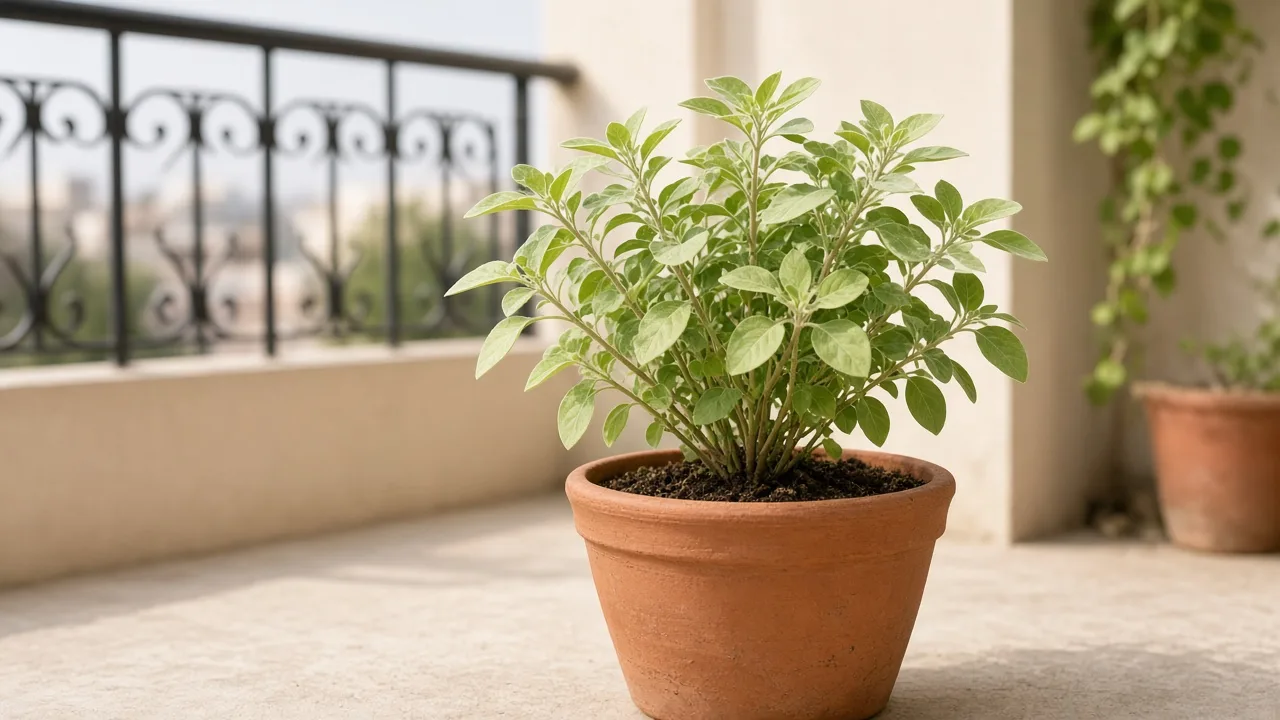
Pale Leaves on Ashwagandha: Causes, Checks & Fixes
This guide covers pale leaves on Ashwagandha. See also the general Pale Leaves guide, watering, and light pages for this plant.
Pale Leaves on Ashwagandha: Causes, Checks & Fixes
Quick answer
Pale leaves on Withania somnifera look washed-out, lime-green, or thin instead of the firm silvery-green Ashwagandha shows on a sunny terrace—not the same as its normal gray-hairy leaf cast. For general chlorosis patterns, see our pale leaves guide. On Ashwagandha, weak light and wet roots are more common than fertilizer deficiency—and pre-harvest leaf fade near flowering is normal when you grow for roots.
First step: compare newest leaves at stem tips to older lower blades, then count direct sun hours on the pot and press the base stem for softness before adding fertilizer.
When to use this page vs other Ashwagandha guides
| Pattern | Read next |
|---|---|
| Yellow lower leaves + wet mix | Overwatering |
| Whole plant pale in dim corner | Not enough light |
| Long soft shoots reaching for glass | Leggy growth |
| Yellow between veins on new leaves | Iron deficiency |
| Uniform pale lowers only, green tips | Nitrogen deficiency |
| Pale + soft base stem on wet soil | Root rot |
What pale leaves look like on Ashwagandha
Healthy Ashwagandha leaves are ovate, hairy, and silvery-gray-green with a distinct odor sometimes compared to horse sweat on the foliage. Paleness shows as:
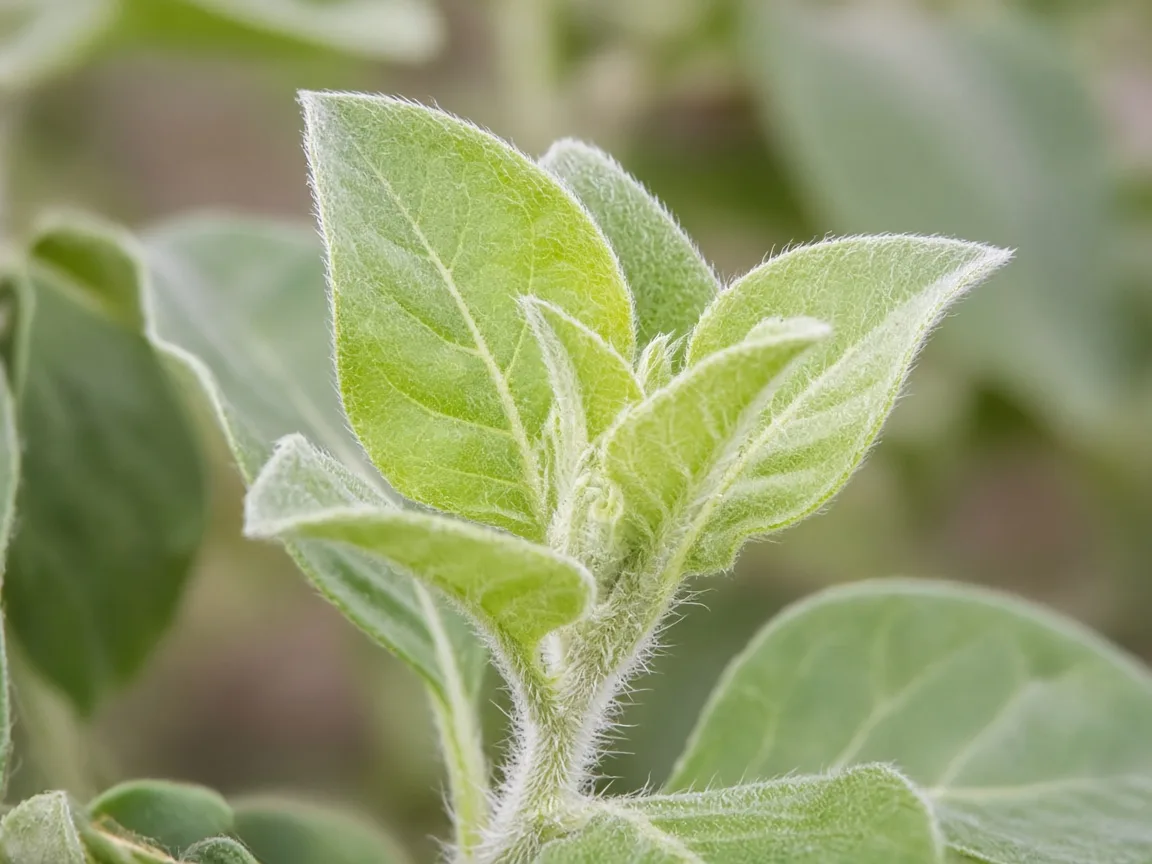
Pale lime-green Ashwagandha leaf—compare the gray hairy baseline on firm stems with true washed-out color on new tips.
- Uniform lime or yellow-green across the whole plant — Often on a north balcony, indoor shelf, or winter window with short days. NC State Extension rates Withania somnifera as full sun and states it cannot grow in the shade.
- Silvery-gray that looks dull but stems stay firm — May still be within normal hairy leaf color; compare newest stem tips for loss of vigor.
- Pale new shoots with wide gaps between leaves — Light starvation, not hunger. Soil often stays heavy for days after watering.
- Pale leaves + soft stem at soil line on wet mix — Root stress mimicking deficiency. Stem and root rot are listed problems on this species.
- Gradual fade as flowers and orange winter-cherry fruits form — Normal pre-harvest pattern when leaves start to dry for root digging, not a rescue emergency.
Check newest stem tips first. Pale new growth in warm weather with strong sun points to roots, nutrients, or pests. Pale only on old lowers with green tips is lower urgency.
Silvery baseline vs true paleness
Ashwagandha is not a deep emerald foliage plant like a Ficus. Short silver-gray branched hairs cover most of the plant—that is species-normal, not chlorosis. This plant-only distinction fails on smooth-leaved herbs or glossy tropicals.
Use a three-point check:
- Tip color vs lower color — Tips should match or slightly out-green lowers. Tips much lighter than mature leaves signal stress.
- Stem firmness — Erect woody stems should feel rigid. Soft, denting tissue at the crown overrides a “maybe it needs feed” guess.
- Pot dry-down speed — On a sunny terrace, the mix should lighten within a few days after a deep drink. A pale plant on soil that stays wet for a week usually needs watering and light fixes, not nitrogen first.
Terrace sun audit for a root crop
Ashwagandha is grown for deep, firm roots, not soft shade foliage. Plants For A Future places it in open places with a warm sheltered full-sun position and repeats that it cannot grow in the shade. Without six or more hours of direct sunlight daily, leaves lose depth and internodes stretch.
Quick light audit:
- Count direct sun hours on the pot, not “bright room” glare.
- If stems lean hard toward the open edge, rotate the container and increase exposure gradually per the light guide.
- After two weeks of stronger terrace sun, new leaves should open with normal silvery-green firmness. If they stay washed out on dry gritty mix with firm stems, look at nutrients or pests.
Indoor winter holding is temporary. When nights stay warm again, return the pot outdoors rather than accepting permanent pale survival mode.
Root-zone and stem-base cross-check
This nightshade dislikes wet feet and prefers watering only when soil dries out (NC State Extension Plant Toolbox). Pale leaves on a firm erect stem usually mean light or seasonal pattern—not automatic repotting. Pale leaves on a soft base stem with heavy wet soil mean root stress mimicking deficiency:
- Lift the pot when you know the mix is fully dry versus two days after watering.
- Press the stem base above the soil line—firm woody tissue vs spongy denting.
- Probe 3–4 cm deep with a finger or skewer. Surface dust-dry on peat-heavy mix can hide wet roots below.
- Sniff the mix — sour smell plus pale limp shoots points to overwatering before any feed.
This stem-base logic does not apply to succulents with caudex storage or to ferns without woody crowns.
Lookalike symptoms
| Pattern | Stem base | Soil | Likely cause |
|---|---|---|---|
| Whole plant lime-green | Firm | Dry sandy mix | Not enough light |
| Long pale shoots toward window | Firm | Dry | Leggy growth |
| Lower leaves pale, green tips | Firm | Dry | Nitrogen deficiency or normal aging |
| Uniform pale + limp stems | Soft | Wet heavy | Overwatering |
| Pale new leaves, green veins | Firm | Alkaline sand | Iron deficiency |
| Stippled pale patches | Firm | Any | Spider mites or aphids |
| Fade then dry-down with fruit | Firm | Dry | Pre-harvest leaf senescence per overview |
Why Ashwagandha gets pale leaves
Insufficient light. Most indoor and north-balcony pale Ashwagandha simply need more direct sun. NC State lists full sun and states the plant cannot grow in shade. Stalled flowering and washed-out foliage often arrive together.
Root stress from wet mix. Damaged roots cannot take up nutrients evenly. Pale-yellow leaves on heavy wet soil mimic deficiency—press the stem base before feeding. Stem and root rot are documented problems on this species.
Cool-season slowdown. Frost-tender pots brought indoors or kept on cool terraces grow slowly; remaining leaves can look dull until warmth returns. That is not fixed with heavy nitrogen in December.
True nutrient lack. Rare on lean sandy soil with modest warm-season fertilizer. Suspect only after light and roots check clean. Clemson Extension advises not fertilizing during drought or stress—the plant needs stable uptake before triggered growth (Clemson HGIC — Fertilizers and the Environment).
Pest feeding. Hairy leaves attract spider mites and aphids on soft new growth; stippling can read as paleness until you inspect undersides.
How to confirm the cause
- Light hours — Less than six hours direct sun in warm active growth = primary suspect.
- Stem base + soil — Soft crown on wet mix = root issue, not feed.
- Which leaves — Whole plant vs lower only vs new tips vs pre-harvest fade.
- Season — Cool short days or indoor winter = slower metabolism.
- Feed history — Recent heavy dose vs months without any feed during active growth.
First fix for Ashwagandha
Move the pot to the brightest available terrace, roof edge, or south-facing balcony with six or more hours of direct sun in warm active growth—acclimate over one to two weeks if it came from deep shade.
If the stem base is firm and mix dries appropriately on gritty soil:
- Increase sun gradually; watch for sudden bleaching after a jump from dim nursery shade.
- After two weeks of better light, if new leaves still open washed out, apply half-strength balanced liquid feed per label only during active warm-season growth.
If the stem base is soft or soil stays wet:
- Stop fertilizer. See overwatering and, if rot is advanced, root rot routes.
If you are approaching root harvest and leaves naturally dry as orange berries form:
- Accept senescence; do not force lush foliage with nitrogen when the crop is finishing.
Recovery timeline
Improved terrace light often shows firmer silvery-green new leaves within two to four weeks in warm conditions. Root-stressed plants recover slower—sometimes one full growth flush after dry-down stabilizes. Pre-harvest pale leaves dry naturally; spring outdoor growth should look vigorous again.
Improvement signs: Firm new stem tips, shorter internodes, lighter pot weight between scheduled drinks, simultaneous pale-green flower buds in summer sun.
Worsening signs: Pale spreading to every new leaf within days, stem base softening on wet mix, limp shoots despite moist soil, or stippling without pest confirmation—escalate to root rot or pest pages.
Mistakes to avoid
- High-dose fertilizer on wet mix
- Keeping Ashwagandha as a permanent indoor foliage plant
- Confusing normal gray hairy leaves with deficiency
- Repotting, pruning, and feeding the same week
- Harvest-stage leaf fade treated as an emergency
How to prevent pale leaves next time
Give open-sky terrace sun, sandy fast-draining mix, predictable watering when the top 3–4 cm dries, and light warm-season feeding only when actively growing. See Ashwagandha overview and the problems hub.
Related Ashwagandha guides
Conclusion
Pale Ashwagandha leaves usually ask for more terrace sun or drier roots—not more fertilizer. Read new stem tips and stem-base firmness, fix light or moisture, then feed lightly only in active warm growth. Firm silvery-green new shoots are the recovery signal—not perfect re-greening of every old blade.