Scale Insects on Ashwagandha: Node Checks & Fixes
Quick answer
Flat tan or brown bumps glued to Ashwagandha stem forks and opposite leaf nodes—often with sticky honeydew on silvery hairy leaves—usually mean scale insects, not drought stress. Isolate the plant and scrape every visible bump with a cotton swab dipped in 70% isopropyl alcohol before spraying the whole shrub.
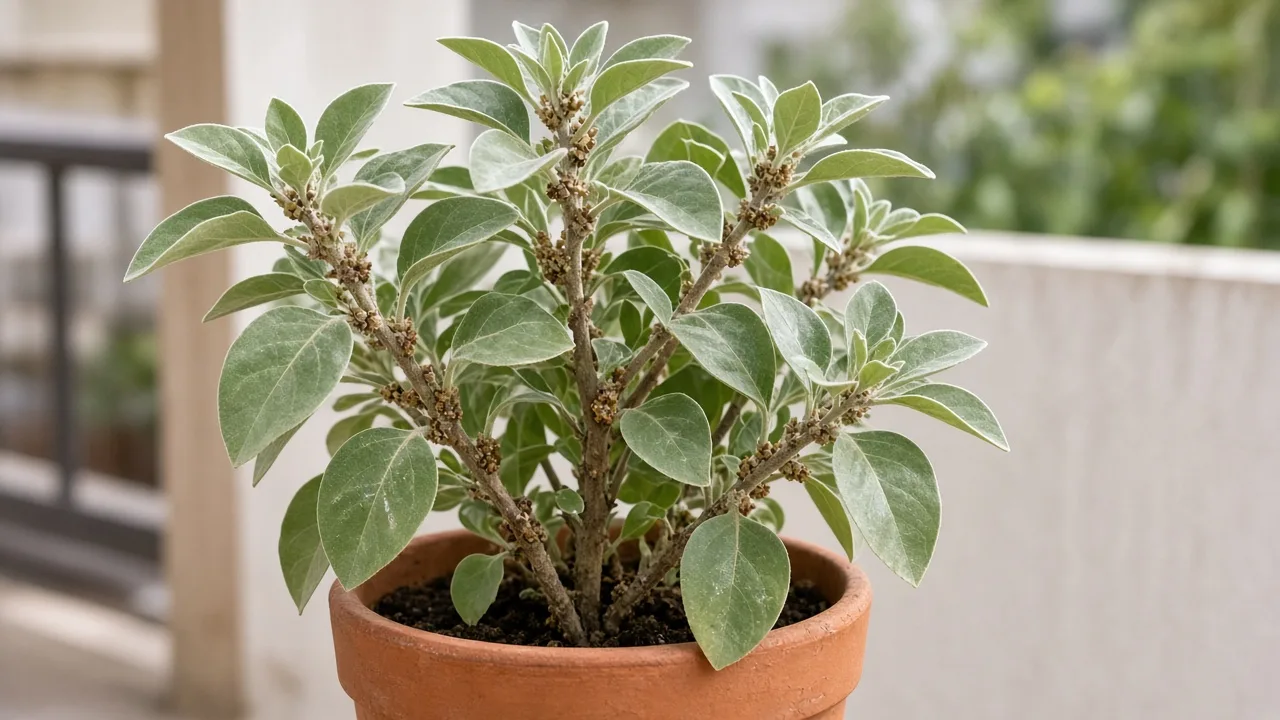
Scale Insects on Ashwagandha: Causes, Checks & Fixes
This guide covers scale insects on Ashwagandha. See also the general Scale Insects guide, watering, and light pages for this plant.
Scale Insects on Ashwagandha: Causes, Checks & Fixes
Quick answer
Scale insects on Withania somnifera are small, immobile sap feeders protected by a waxy or shell-like cover that look like flat tan or brown bumps glued to stem forks, opposite leaf nodes, and along hairy petiole bases. They pierce tissue, drain sap, and—on soft scale species—leave sticky honeydew that can feed sooty mold on silvery tomentose leaves.
For how armored versus soft scale life cycles work indoors in general, see our scale insects pest guide. On Ashwagandha, the practical pattern is firm disks at opposite nodes on erect woody stems, sticky shine on gray-hairy leaf surfaces, and extra caution because you may be growing this shrub for taproots—not just foliage.
First step: isolate the plant away from other sun-loving herbs and nightshades, then scrape every visible bump with a cotton swab dipped in 70% isopropyl alcohol—then re-inspect in three days before spraying anything.
A soft, mushy stem base on wet mix is a different emergency—see the Ashwagandha root rot guide before you treat pests.
When to use this page vs other Ashwagandha guides
This page is the pest-first entry for immobile tan or brown bumps on hairy nightshade stems.
| Pattern | Read next |
|---|---|
| White cottony clusters in stem crevices | Mealybugs |
| Soft pear-shaped insects on fresh shoots | Aphids |
| Fine webbing and stippling on older leaves | Spider mites |
| Tiny white insects that fly when disturbed | Whiteflies |
| Midday wilt on dry mix, no bumps | Underwatering |
| Soft crown, wet mix, no disks above | Overwatering or root rot |
What scale insects look like on Ashwagandha
Scale insects are protected by a waxy or shell-like cover that makes adults essentially immobile once they settle. On Ashwagandha they are easy to mistake for normal stem texture or dried sap until colonies build:
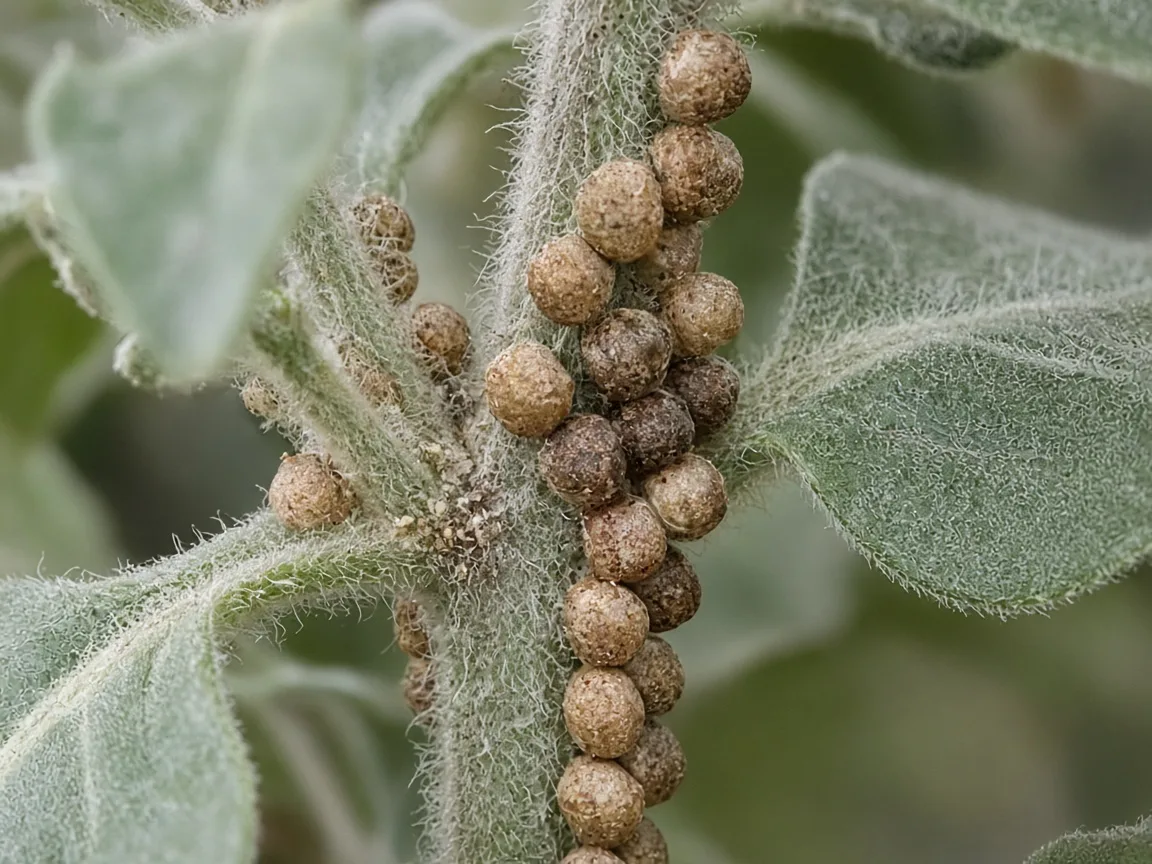
Flat tan scale shells at an opposite leaf node—compare with healthy silvery-green tissue on the same stem.
- Flat or dome-shaped tan, brown, or bark-colored bumps on firm erect stems, opposite leaf nodes, and branch forks
- Disks that do not wipe away with a dry cloth—unlike mineral dust on hairy leaves
- Sticky honeydew on silvery tomentose foliage — Sap feeders excrete honeydew that can feed sooty mold
- Black sooty coating on lower leaves or pot rims — Fungus growing on dried honeydew, not stem rot
- Ant trails on terrace pots — Ants harvest honeydew and protect scale colonies from lady beetles and lacewings
- Yellowing or dropped lower leaves — Heavy feeding while the stem base stays firm
- Pale orangish crawlers before shells harden — Mobile nymphs are tiny until they settle and grow armor
On Ashwagandha’s hairy leaves, honeydew can bead on gray tomentum and make nodes look wet even when the pot is dry—wipe a stem fork and check for tacky residue that returns within a day.
Where scale hides on hairy nightshade stems and nodes
Withania somnifera grows as a branching shrub with silvery-green hairy foliage and opposite leaves at the nodes. Scale follows those protected angles—not the open flat leaf faces you see from across the terrace.
Scale often concentrates in somewhat protected areas such as branch crotches, stem joints, and along leaf petioles. On Ashwagandha, the hot zones are:
- Opposite leaf nodes — Where pale green flower buds swell during warm growth
- Stem forks — Where a lateral branch splits from the main erect stem
- Hairy leaf axils — Disks pressed against tomentose undersides along the stem
- Lower woody stem near the soil line — Warm pockets when cachepots hold humidity
- Inside pot rim and drainage holes — Crawlers travel between terrace pots on shared benches
This node-and-fork inspection pattern is plant-specific. A philodendron guide tells you to search broad leaf undersides; on Ashwagandha you are tracing each opposite node and branch crotch on firm woody stems with a swab or lens.
Why Ashwagandha gets scale insects
Scale insects are common sap-sucking pests on houseplants and landscape shrubs that arrive on nursery stock, shared herb benches, or nearby infested specimens. What makes Ashwagandha vulnerable is its growth rhythm and stem geometry, not weak culture alone.
Opposite nodes create protected feeding sites. The same branching pattern that produces pale green flowers at leaf nodes gives scale flat surfaces a casual rinse misses. Adult scales are relatively protected from contact sprays by their waxy covering, so disks on woody stems survive one quick wipe.
Warm terrace summers and indoor winters favor year-round colonies. Scale crawlers are the mobile life stage that spreads between pots before settling. A sunny balcony Ashwagandha brought inside before frost can harbor bumps in stem forks that stayed invisible outdoors.
Full-sun placement does not prevent scale, but weak light changes the diagnosis. NC State Extension notes Ashwagandha cannot grow in shade and dislikes wet feet. A plant in a dim room may look pale or wilted without any insects—cross-check the Ashwagandha light guide before assuming every yellow leaf is pest damage.
Soft, over-fed shoots attract crawlers. Match feeding to the Ashwagandha fertilizer guide instead of pushing soft nodes while the shrub is already in rapid warm-season growth.
Shared nightshade benches spread crawlers slowly. Scale hitchhikes on new plants and moves between pots on the same terrace. One infested Ashwagandha beside peppers, tomatoes, or other Solanaceae is a common outdoor pattern.
Confirm scale vs. mealybugs, aphids, mites, and rot
Work through checks in order so you do not scrape alcohol on a rotting crown:
- Stem-base press — Firm erect stems with disks only at nodes point to insects. Soft or mushy tissue at the crown on damp mix means rot risk first.
- Fork-and-node scan — Start at branch crotches and opposite nodes with swelling buds.
- Shell lift test — Pry one bump gently: armored scale covers can be removed from the body and leave the insect beneath; mealybugs smear pink-orange under cotton wax.
- Honeydew test — Wipe a node; if stickiness returns within a day, sap feeders are still active.
- Dry-down cross-check — Finger-test the top 3–4 cm per the Ashwagandha watering guide; true drought wilt usually hits the whole plant evenly, not just sticky nodes.
Symptom lookalike comparison
| What you see | Likely cause | Key check |
|---|---|---|
| Flat tan or brown bumps at stem nodes | Scale insects | Stationary shell; does not smear like cotton |
| White cottony masses in stem crevices | Mealybugs | Wax smears pink-orange when crushed |
| Soft pear-shaped insects on fresh shoots | Aphids | Colonies move when disturbed |
| Fine webbing and stippling on older leaves | Spider mites | Dry air; no disks on woody stems |
| Tiny white insects that fly when disturbed | Whiteflies | Cloud rises from undersides |
| Midday wilt on dry mix, no bumps | Underwatering | Pot light; whole plant limp |
| Limp stems, soft crown, wet mix | Overwatering | No scale shells; sour soil odor possible |
Confirmed diagnosis — Immobile bumps plus honeydew or ants on stem forks with firm stems. Suspected — Sticky nodes without visible insects may need a magnifying glass on the youngest hairy leaf axils before treating.
First fix: isolate and scrape with alcohol
Isolate the plant away from other sun-loving herbs and nightshades until you see no new bumps for at least two weeks after treatment.
Scrape every visible bump with 70% isopropyl alcohol first. Manual removal with alcohol-soaked swabs is the lowest-risk first fix for Ashwagandha—targeted contact on shells without coating the whole shrub. Work node to node with a fresh swab for each major cluster. Re-inspect in three days—scale egg cycles hatch on a staggered schedule, so one pass rarely clears a mature colony.
Morning scrape timing for full-sun terrace plants
Schedule alcohol scrapes and any follow-up rinses in early morning so hairy leaves dry quickly in full sun. Wet foliage sitting through a hot afternoon on a terrace can stress the plant even when the mix is correctly dry. Outdoor plants in peak summer should be treated before direct midday heat, then allowed to dry in open air.
Root-harvest gaps for medicinal growers
If you grow Ashwagandha for roots, remember the crop is underground. Sukhi Farm notes that chemical treatments require observing harvest intervals so roots remain safe for medicinal use. Alcohol scrapes on visible bumps are usually the safest first response because they stay local. If you later use neem or soap sprays, stop all foliar treatments well before your planned dig date and follow label pre-harvest guidance.
Heavy sap loss from unchecked scale can slow the deep taproot development this plant is valued for. Clear visible feeding early so energy returns to stem and root growth rather than replacing honeydew-coated shoots every week.
When to add soap or oil after scraping
If bumps remain after two full weeks of alcohol scraping and re-inspection, apply horticultural oil or insecticidal soap labeled for ornamentals. UC IPM recommends well-timed oil sprays when scale crawlers are active because the mobile nymph stage is more vulnerable than armored adults.
Critical rules for Ashwagandha:
- Spray early morning or late evening—not in full midday sun on outdoor terrace plants; heat-stressed hairy leaves burn more easily.
- Coat stem forks, opposite nodes, and hairy leaf undersides; contact sprays only kill insects they touch.
- Patch-test one lower leaf cluster and wait 24 hours before treating the whole shrub.
- Avoid stacking repot, heavy prune, or fertilizer the same week you start spray—that masks whether pests or care stress caused the setback.
Wipe honeydew from leaves with a damp cloth. Wear gloves when handling stems and treated foliage—NC State Extension classifies all Ashwagandha parts as poisonous to humans if eaten, including leaves and orange winter-cherry berries.
What not to do the same day
Do not increase watering because leaves look stressed—check stem firmness and soil dry-down first. Do not soak the whole plant in oil at midday on a sun-exposed terrace. Do not ignore ants—they protect scale colonies from predators. Do not reach for systemic insecticides as a first fix when you plan to harvest roots.
Recovery timeline
Visible bumps should shrink within one to two weeks of consistent alcohol scraping. Expect clean new nodes within three to five weeks during active warm growth. Yellowed or dropped leaves will not fully regrow on the same node. Buds that aborted from heavy feeding are gone for that cycle—judge success by the next clean flush, not by reopening old buds.
Firm erect stems throughout treatment are a good sign. Softening at the crown means rot or overwatering—not scale—and needs a different response immediately.
How to prevent scale insects on Ashwagandha
Quarantine every new Ashwagandha for two weeks before placing it near other plants. Inspect stem forks and opposite nodes weekly during spring and summer active growth. Control ant trails on pot rims so natural predators can reach colonies.
Keep care aligned with the full Ashwagandha care hub—full direct sun, sandy fast-draining mix per the soil guide, and dry-down watering so growth stays firm rather than overly soft. Beneficial insects such as lady beetles can help on outdoor plants when ant trails are controlled.
When to escalate — chronic infestations and toxicity
Escalate if new nodes repeatedly emerge with fresh bumps after three full treatment cycles, if sooty mold covers most foliage, or if ants make colonies impossible to scrape away. Chronic feeding during flower and fruit formation can weaken the shrub over months even when rot has not started.
For heavy recurring outdoor infestations, a local extension office can confirm the pest species and discuss options. Systemic insecticides move through plant sap and may affect roots you plan to harvest—contact scrapes and soaps are usually safer first choices for medicinal herbs unless an expert recommends otherwise for your situation.
Pet and child safety: All parts of Ashwagandha are poisonous if eaten, with orange berries inside the papery calyx especially hazardous. Keep treated plants out of reach and contact your veterinarian or poison control if ingestion is suspected.
Scale alone rarely kills a mature Ashwagandha with firm stems, but it can ruin a flowering season and open the door to secondary stress if you respond with extra water or fertilizer.