Distorted Leaves on Ashwagandha: Causes, Checks & Fixes
Quick answer
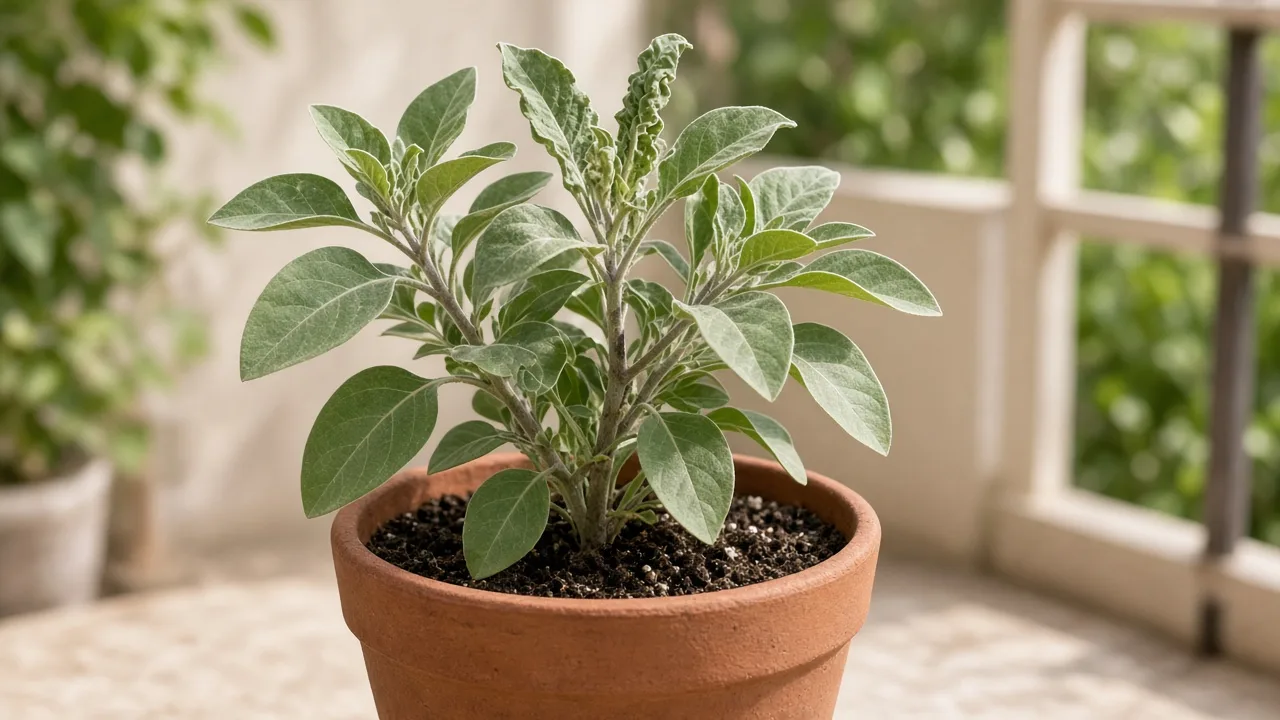
Distorted leaves on Ashwagandha almost always show on the newest silvery-hairy leaf still opening at a shoot tip—twisted, rippled, narrow, or scarred tissue while older opposite leaves on the same stem may look normal. First step: gently open the rolled shoot-tip leaf and magnify the inside for silver thrips streaks or aphids before you change watering, light, or fertilizer.
Distorted Leaves on Ashwagandha: Causes, Checks & Fixes
This guide covers distorted leaves on Ashwagandha. See also the general Distorted Leaves guide, watering, and light pages for this plant.
Distorted Leaves on Ashwagandha: Causes, Checks & Fixes
Quick answer
Distorted leaves on Ashwagandha (Withania somnifera, Indian Ginseng) almost always hit the newest silvery-hairy leaf still opening at a shoot tip—twisted, rippled, narrow, scarred, or uneven while older opposite leaves on the same erect woody stem may stay normal. That pattern matters because Ashwagandha hardens each leaf in place as it opens; warped tissue rarely straightens once mature.
For how expanding leaves warp on houseplants in general, see our distorted leaves guide. On Ashwagandha, the rolled shoot-tip leaf is the diagnostic stage—thrips scar the inside with silver streaks, aphids distort tender buds, calcium gaps cup the expanding margin, and wet soil makes new tissue soft and lopsided while the stem base stays firm or goes mushy.
First step: gently part the newest shoot-tip leaf and magnify the inside surface for thrips streaks, aphids, or mealybugs before you change watering, light, or fertilizer.
When to use this page vs other Ashwagandha guides
| Pattern | Read next |
|---|---|
| Twisted or scarred new shoot-tip leaf still unfurling | Distorted leaves (this page) |
| Silver streaks, black specks inside rolled new leaf | Thrips |
| Soft pear-shaped insects on tender tips with honeydew | Aphids |
| Cupped or margin-burned new leaf, firm base, no insects | Calcium deficiency |
| Leaves curling inward on firm blades, dry mix | Curling leaves or underwatering |
| Long bent stems reaching toward a dim window | Leggy growth or not enough light |
| Soft mushy base, wet soil, yellow lower leaves | Overwatering or root rot |
| One old opposite leaf kinked, firm stem, stable care | Mechanical bump—trim when dry; no treatment needed |
What distorted leaves look like on Ashwagandha
Healthy Ashwagandha pushes silvery-gray hairy leaves in opposite pairs along erect woody stems in full sun. Each new leaf emerges from a tight roll at a shoot tip or beside a swelling flower bud, unfurls over days, then hardens. Distortion shows while that shoot-tip leaf is still expanding—or as permanent scarring after it opens.
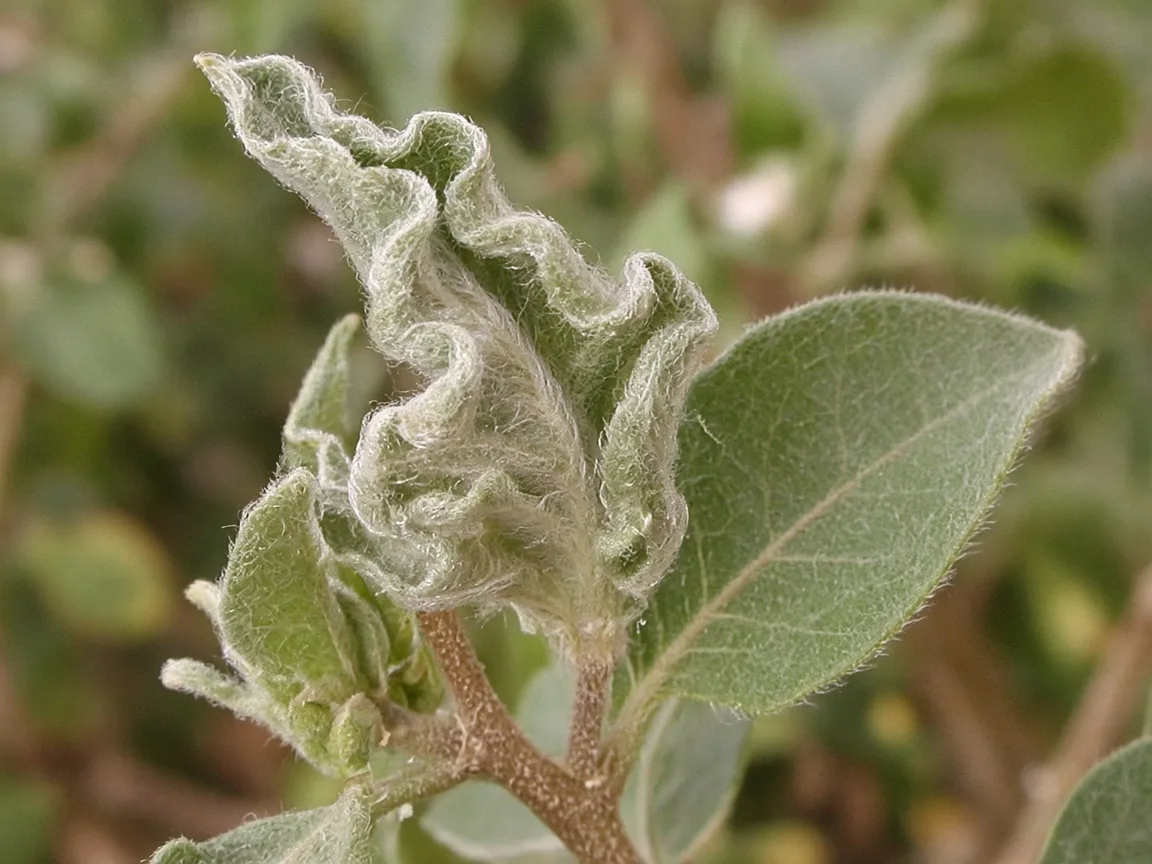
Twisted new Ashwagandha leaf at a shoot tip—compare width and symmetry with the previous fully opened opposite pair on the same stem.
Thrips and pest scarring pattern:
- Silver-gray streaks or speckling on the inside of the rolled shoot-tip leaf
- Tiny black fecal specks in the streaks when magnified
- Crinkled, narrow, or corkscrew new blade that opens with permanent ripples
- Older opposite leaves may look untouched while each new shoot-tip leaf gets worse
- Often follows open windows, new nursery stock, or terrace plants beside peppers and other nightshades
Aphid distortion pattern:
- Sticky honeydew on hairy leaf tips and pale green flower buds
- Curled or stunted newest leaves at branch tips with soft pear-shaped insects visible
- Ants traveling up stems toward feeding sites
- Aphids gather around tender shoots on Ashwagandha and can transmit viruses that add mosaic-like twisting—confirm insects before assuming a virus
Calcium or nutrient distortion pattern:
- Cupped, hood-like, or uneven margins on the newest shoot-tip leaf only
- New expanding tissue shows damage first while older opposite leaves stay normal
- Firm woody stem base if roots are healthy; no silver streaks inside the roll
- Common on plants fed rarely or watered with very soft water only during warm growth flushes
Wet-soil and root-stress pattern:
- New leaves look soft, swollen, or lopsided rather than crisply scarred
- Stem may feel less firm at the base; pot stays heavy for days
- Distortion may pair with yellow lower leaves on persistently wet mix
- Follows calendar watering in cool months or dense peat mix in a dim room
Low-light stretch pattern:
- Entire shoot bends toward the brightest side; internodes lengthen
- New blades grow long, thin, and bent rather than one rippled leaf on an otherwise erect stem
- Differs from a single twisted shoot-tip leaf on a compact sun-exposed plant
Mechanical damage pattern:
- One kinked opposite leaf after a bump, pet, or repotting squeeze
- Firm tissue with a sharp bend; shoot-tip growth continues clean
- No streaks inside newer leaves; soil and pests check normal
A single scarred old leaf on a firm erect stem with clean new shoot-tip growth is often past mechanical damage, not an active crisis. Worry when each successive shoot-tip leaf emerges more twisted, pests are confirmed, or the crown softens on wet soil.
Reading the shoot-tip roll—Ashwagandha’s unfurling-leaf inspection
Ashwagandha does not produce a tight succulent rosette like aloe—it grows opposite silvery-hairy leaves from woody branch tips where the next blade stays rolled until it opens. That roll is where thrips feed on expanding tissue unseen and where calcium stress shows first.
How to inspect without tearing tissue:
- Follow the newest growth to the end of an erect branch or beside a pale green flower bud.
- Gently spread the roll with your fingers—do not peel it backward forcefully.
- Hold a phone magnifier or 10× loupe to the inner surface of that leaf.
- Tap-test if you suspect mites: shake a blade over white paper; thrips look like tiny pale slivers that move.
Silver streaks with black specks inside the roll point to thrips before you assume nutrient trouble. Sticky tips with pear-shaped insects point to aphids. Clean inner tissue with an asymmetric cupped margin points to calcium deficiency. Soft, wet-feeling new tissue on damp soil points to overwatering—not a spray schedule.
Why Ashwagandha gets distorted leaves
Ashwagandha is a rapid-growing sun-loving shrub grown for firm medicinal roots, not soft foliage. It needs full sun, sandy slightly alkaline mix, and watering only when the top few centimeters dry out. Each unfurling silvery leaf at a shoot tip is vulnerable while still soft—pests, calcium gaps, wet roots, and dim light all show there first.
Ashwagandha-specific causes:
- Thrips on unfurling shoot tips — Thrips scar new tissue with silvery feeding marks and leave permanent ripples once the leaf hardens. Warm terrace seasons and open windows bring them from nearby solanaceous crops.
- Aphids on tender shoots and buds — Colonies on branch tips and flower buds curl and stunt new leaves while stems stay firm; heavy feeding can drop buds for the season.
- Calcium uptake gaps on expanding leaves — Calcium is plant-immobile, so cupping and marginal burn hit the newest shoot-tip leaf while older opposite foliage looks fine.
- Chronic wet soil limiting uptake — NC State notes Ashwagandha does not like wet feet; soggy mix makes new tissue soft and uneven even when fertilizer is present.
- Shade and stretch — Ashwagandha cannot grow in the shade; dim placement bends whole shoots toward light rather than scarring one leaf—see not enough light.
- Soft water without complete feed — Terrace growers using distilled or RO water without calcium in the fertilizer bottle often see rippled new tips only during summer growth flushes.
- Mechanical squeeze during repot or move — Hairy leaves crush easily when the pot tips; one bent old leaf does not need treatment if shoot tips stay clean.
Confirm the cause—distorted leaves vs lookalikes
Work through checks in order so you do not spray pests while the crown is rotting from wet soil:
- Stem-base press — Firm erect stems with damage only on shoot tips point to insects or nutrients. Soft or mushy tissue at the crown on damp mix means rot risk first.
- Shoot-tip roll inspection — Magnify the inside of the newest leaf before any treatment.
- Successive-leaf test — One slightly wrinkled unfurl after a dry spell differs from three consecutive twisted shoot-tip leaves on stable summer care.
- Honeydew and ant check — Sticky tips with ants point to sap feeders, not calcium alone.
- Dry-down cross-check — Finger-test the top 3–4 cm per the Ashwagandha watering guide; true drought wilt usually hits the whole plant evenly, not just rippled new tips.
Symptom lookalike comparison
| What you see | Likely cause | Key check |
|---|---|---|
| Silver streaks inside rolled new leaf | Thrips | Black specks at 10×; streaks on inner surface |
| Sticky tips, pear-shaped insects on buds | Aphids | Honeydew returns within a day after wiping |
| Cupped margin, no insects in roll | Calcium deficiency | Older opposite leaves normal; soft water history |
| Inward curl on firm blades, dry pot | Curling leaves | No silver streaks; whole leaf cups, not rippled unfurl |
| Long bent shoot toward window | Leggy growth | Spacing between nodes; not one scarred new blade |
| Fine webbing on older leaves | Spider mites | Dry air; stippling on mature foliage, not shoot-tip roll alone |
| Limp stems, soft crown, wet mix | Overwatering / rot | No insect clusters; sour soil odor possible |
Confirmed diagnosis — Silver streaks with black specks inside the shoot-tip roll, or visible aphids on tender tips with firm stems. Suspected — Rippled new leaves without visible insects need magnified roll inspection before feeding or spraying.
First fix: inspect the roll, then treat the confirmed cause
Do not repot, fertilize, and spray on the same day. Pick one first action based on what the roll inspection shows.
If thrips are confirmed
Isolate the plant away from peppers, tomatoes, and other nightshades on the terrace. Rinse shoot tips and hairy leaf undersides with a firm water stream in early morning so foliage dries before full midday sun hits the pot. Repeat every two to three days. If streaks persist after two rinse cycles, follow the full thrips on Ashwagandha protocol—do not jump to systemic products first on a plant you may harvest for roots.
If aphids are confirmed
Blast colonies off tender tips and flower buds with water first, then see the aphids on Ashwagandha guide for soap timing on hairy sun-exposed foliage. Distorted tips from heavy feeding will not reopen—watch the next flush.
If calcium deficiency is confirmed
Stabilize dry-between-drinks watering per the watering guide and apply one measured dose of complete fertilizer including calcium during active warm growth—see calcium deficiency for soft-water specifics. Do not stack heavy feed on a stressed crown.
If wet soil is the driver
Stop watering until the top 3–4 cm is dry and confirm drainage in the soil guide. Soft new tissue on a firm stem often improves once the mix breathes again—no pest spray needed.
If light stretch is the driver
Move gradually to the sunniest spot you have per the Ashwagandha light guide. New shoot-tip leaves should open wider within one or two flushes once light is adequate.
What not to do the same day
Do not increase watering because leaves look stressed—check stem firmness first. Do not apply oil sprays at midday on sun-exposed terrace plants. Do not use harsh indoor pesticides without ventilation. Do not ignore ants—they protect aphid colonies from predators.
Recovery timeline and root-harvest expectations
Visible thrips or aphids should clear within one to two weeks of consistent rinsing or targeted treatment. Expect cleaner shoot-tip leaves within three to six weeks during active warm growth. Distorted young leaves will not fully flatten once they harden. Flower buds that dropped from feeding are gone for that cycle—judge success by the next clean flush, not by reopening old buds.
Firm erect stems throughout treatment are a good sign. Softening at the crown means rot or overwatering—not pests—and needs a different response immediately.
If you grow Ashwagandha for roots, repeated distortion on shoot tips during peak summer can slow the deep taproot development this plant is valued for. Stop visible feeding early so energy returns to stem and root growth rather than replacing scarred shoots every week.
How to prevent distorted leaves on Ashwagandha
Quarantine every new Ashwagandha for two weeks before placing it near other plants. Inspect shoot tips weekly during spring and summer active growth. Yellow sticky traps near terrace pots help monitor winged thrips and whiteflies before colonies scar unfurling leaves.
Keep care aligned with the full Ashwagandha care hub—full direct sun, sandy fast-draining mix per the soil guide, and dry-down watering so growth stays firm rather than overly soft. If you rely on soft water, use complete fertilizer sparingly during warm flushes. Open-window seasons on balconies warrant extra roll inspections on the newest silvery leaves.
When to escalate — chronic distortion and toxicity
Escalate if two or more successive shoot-tip leaves emerge increasingly twisted after three treatment cycles, if mosaic-like mottling spreads on multiple stems with confirmed aphids, or if the crown softens despite dry soil corrections. Chronic pest feeding during flower and fruit formation can weaken the shrub over months even when rot has not started.
For heavy recurring outdoor infestations, a local extension office can confirm the pest and discuss options. Systemic insecticides move through plant sap and may affect roots you plan to harvest—contact rinses and soaps are usually safer first choices for medicinal herbs unless an expert recommends otherwise for your situation.
Pet and child safety: All parts of Ashwagandha are poisonous if eaten, with orange winter-cherry berries inside the papery calyx especially hazardous. Keep treated plants out of reach and contact your veterinarian or poison control if ingestion is suspected.
Thrips or aphids alone rarely kill a mature Ashwagandha with firm stems, but they can ruin a flowering season and scar every new shoot-tip leaf if you respond with extra water or fertilizer instead of the roll inspection.
Before you treat again
Rippled new tips on firm erect stems mean open the shoot-tip roll and magnify the inside first—not another drink or random feed. Soft crown on wet mix means rot protocol, not pest spray. That single check keeps most Ashwagandha growers from making distortion worse while they treat the wrong cause.
Related Ashwagandha guides
- Ashwagandha overview
- Ashwagandha watering
- Ashwagandha light
- Thrips on Ashwagandha
- Aphids on Ashwagandha
- Calcium deficiency on Ashwagandha
- Curling leaves on Ashwagandha
- Yellow leaves on Ashwagandha
- Ashwagandha problems hub
Related tool
Use the Plant Problem Diagnosis Tool to narrow causes for distorted leaves on this plant before changing multiple variables at once.