Thrips on Ashwagandha: Causes, Checks & Fixes
Quick answer
Thrips on Ashwagandha scar the inside of unfurling silvery-hairy shoot-tip leaves with silver streaks and black frass specks while older opposite leaves on the same stem may look normal. First step: gently part the newest rolled leaf at a branch tip and magnify the inner surface for thrips before you change watering, light, or fertilizer.
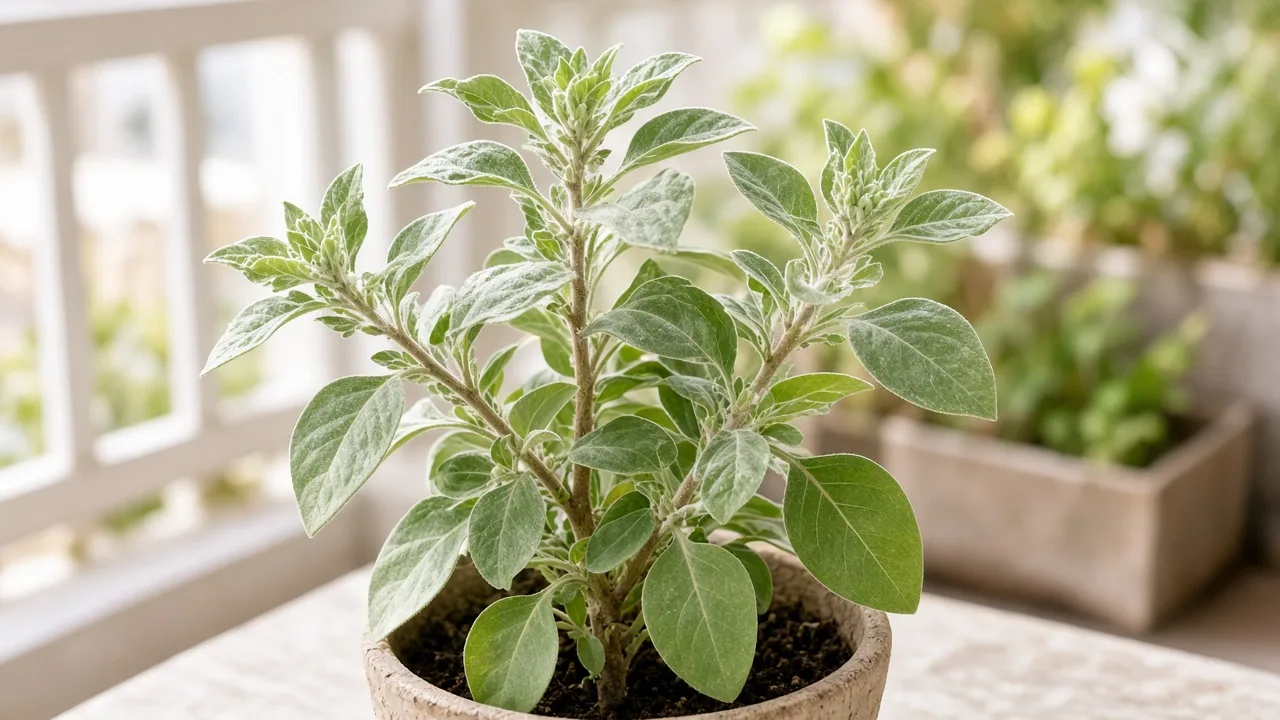
Thrips on Ashwagandha: Causes, Checks & Fixes
This guide covers thrips on Ashwagandha. See also the general Thrips guide, watering, and light pages for this plant.
Thrips on Ashwagandha: Causes, Checks & Fixes
Quick answer
If your Ashwagandha has silver streaks, black specks, or rippled tissue on the newest leaf still rolled at a shoot tip—while older opposite silvery-hairy leaves on the same stem look normal—thrips are a likely culprit, not underwatering alone. Withania somnifera pushes its softest tissue at woody branch tips and swelling flower buds during warm active growth, exactly where thrips feed on young leaves and buds with rasping-sucking mouthparts.
First step: gently part the newest rolled shoot-tip leaf and magnify the inside surface for silver streaks and black frass specks before you soak, feed, or repot.
For general thrips biology, spread, and control options, see our thrips pest guide. On Ashwagandha, damage concentrates inside the unfurling silvery blade at branch tips—places a quick glance from above never catches.
When to use this page vs other Ashwagandha guides
| Pattern | Read next |
|---|---|
| Silver streaks, black frass inside rolled new shoot-tip leaf | This page |
| Twisted or cupped new leaves without silver streaks | Distorted leaves |
| Sticky tips with pear-shaped insects | Aphids |
| Fine yellow stippling and webbing on older leaves | Spider mites |
| Pale tunnels with a dark frass line inside the leaf | Leaf miners |
| Whole plant limp on dry mix, no silver scarring | Underwatering |
What thrips look like on Ashwagandha
Thrips are small, slender insects—generally less than one-eighth inch long—with rasping mouthparts. UF/IFAS notes that thrips feeding causes leaves to dry out and develop a scarred or silver-flecked appearance, with small brownish specks of excrement on undersides.
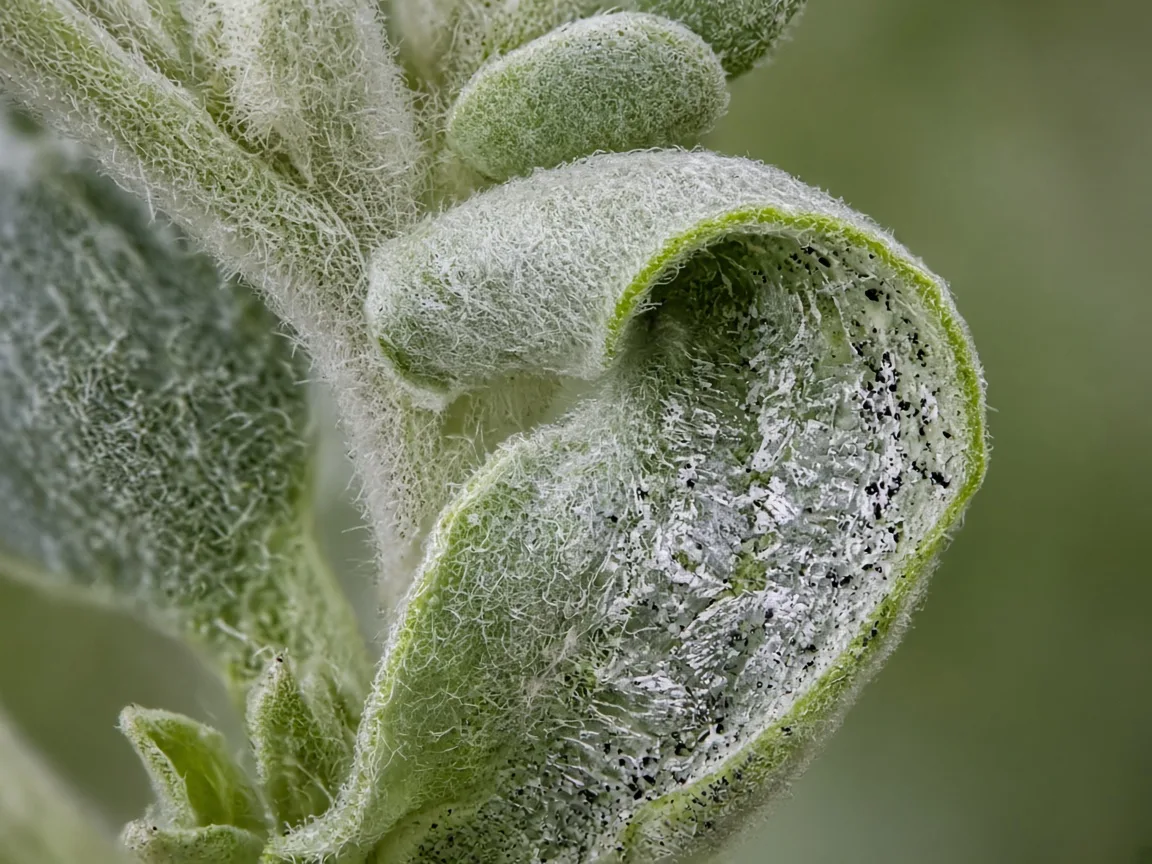
Silver rasp marks and tiny black frass specks on the inner surface of a rolled Ashwagandha shoot-tip leaf—compare with intact silvery tissue on the same stem.
Early feeding on shoot tips:
- Pale silver or bronze streaks across the inner surface of a leaf still rolled at a branch tip
- Tiny black varnish-like dots (frass) scattered near streaked zones
- Slight dulling of the silvery sheen on the youngest opposite leaf pair
- Damage often starts on one shoot tip before spreading to neighboring buds
Established infestation:
- Rippled, narrow, or permanently scarred leaves as they unfurl from woody branch tips
- Distorted or aborted pale-green flower buds at the nodes
- Slender yellow, brown, or black insects on a white-paper shake test
- Silver patches that look like dust until viewed in angled side light
What Ashwagandha thrips damage is not:
- Fine yellow stippling with silk webbing on older leaves—spider mites, not thrips
- Sticky honeydew and pear-shaped colonies on tips—aphids
- A dark line inside a pale tunnel through the leaf blade—leaf miners
- Asymmetric cupped margins on clean inner tissue without silver streaks—calcium deficiency
Scarred shoot-tip leaves stay rippled permanently. New clean silvery growth after treatment is your recovery signal.
Why Ashwagandha gets thrips
Ashwagandha is a Solanaceae nightshade with opposite silvery-gray hairy leaves on woody branch tips. That hairy tomentose surface does not repel thrips—it gives them shelter along tender margins where the next blade stays rolled until it opens.
Thrips prefer young leaves, buds, and tender growth—exactly where Ashwagandha pushes new shoots and pale flower buds during warm terrace seasons. Western flower thrips feed on peppers, tomatoes, and other solanaceous crops, so a sunny balcony Ashwagandha beside peppers or tomatoes can pick up pests without direct leaf contact.
The rolled shoot-tip leaf is the hiding place. Unlike broad flat leaves on pothos, Ashwagandha’s next blade stays curled at the tip until it opens. UC IPM notes that most pest thrips feed while hidden in buds and shoot tips—on this plant, that means inside the roll, not on the silvery upper surface you see from across the room.
Warm, dry terrace air favors thrips, especially when plants sit close together during peak summer. Thrips usually arrive on new purchases, open windows, cut flowers, or neighboring nightshades. Because Ashwagandha needs full sun and dry-down watering, stressed plants with weak new shoots show scarring more visibly—but thrips are not caused by underwatering alone.
Overwatering on Ashwagandha does not attract thrips, but responding to scarred tips with extra water can trigger crown rot while pests keep feeding on unfurling tissue.
How to confirm the cause
Use a white-paper shake test: hold a suspect shoot tip over white paper and tap the stem sharply. Thrips fall as tiny moving specks. UF/IFAS suggests this method alongside visual inspection of young leaves and buds.
Work in this order:
- Newest rolled shoot-tip leaf — gently part the roll and magnify the inner surface for silver streaks and black frass.
- Flower buds — check swelling pale-green buds at nodes for scarring or failure to open.
- Hairy leaf undersides — scan opposite silvery leaves along the same stem for frass specks near streaked zones.
- White-paper shake — confirm live thrips on damaged tips; wait ten seconds because dislodged specks may appear slowly.
- Stem-base press — firm erect stems support a pest diagnosis; soft mushy tissue at the crown on damp mix means rot.
- Neighboring nightshades — inspect peppers, tomatoes, and other terrace pots on the same shelf.
- Sticky traps — yellow traps near the pot catch adult thrips and monitor population trends.
Symptom lookalike comparison
| What you see | Likely cause | Key check |
|---|---|---|
| Silver streaks inside rolled new leaf, black frass specks | Thrips | Magnify inner roll surface at 10× |
| Sticky tips with soft pear-shaped insects | Aphids | Honeydew on hairy undersides |
| Fine yellow dots, webbing on older leaves | Spider mites | Dry terrace air; mites on undersides |
| Pale tunnel with dark line inside leaf | Leaf miners | Frass line inside bordered trail |
| Cupped new margin, clean inner tissue | Calcium deficiency | No silver streaks or insects |
| Midday wilt on dry mix, no scarring | Underwatering | Whole plant limp, not just new tips |
Confirmed diagnosis — Silver streaks plus black frass inside a rolled shoot-tip leaf with firm stems. Suspected — Rippled new tips without visible insects may need a magnifier on the youngest rolled leaf before treating.
First fix: isolate, rinse, and treat safely
Isolate the plant away from peppers, tomatoes, and other nightshades on the terrace until you see no fresh scarring for at least two weeks after treatment.
Blast shoot tips and hairy leaf undersides with a firm water stream in early morning so foliage dries before full midday sun hits the pot. Repeat every two to three days. This physically removes thrips and debris before any chemical treatment—the lowest-risk first fix for a plant you may harvest for roots.
Morning rinse timing for full-sun Ashwagandha
Schedule rinses in early morning so hairy leaves dry quickly in full sun. Wet foliage sitting through a hot afternoon on a terrace can stress the plant even when the mix is correctly dry. Outdoor plants in peak summer should be rinsed before direct midday heat, then allowed to dry in open air.
Do not soak the crown trying to wash thrips from soil. Thrips primarily inhabit foliage, especially tender unfurling shoot tips—not potting media.
Insecticidal soap and neem on hairy nightshade foliage
If streaks persist after two or three rinse cycles, apply insecticidal soap or neem oil labeled for ornamentals. Clemson Extension recommends a 1 to 2% soap solution (about 2½ to 5 tablespoons per gallon of water) and coverage until runoff, with repeat applications every four to seven days until pests are gone.
Critical rules for Ashwagandha:
- Spray early morning or late evening—do not apply above 90°F or in full midday sun on outdoor plants.
- Coat shoot tips, rolled leaves, and hairy undersides; contact sprays only kill insects they touch.
- Patch-test one lower leaf and wait 24 hours before treating the whole plant.
- Avoid stacking repot, heavy prune, or fertilizer the same week you start spray.
Wear gloves when handling stems and sprayed foliage—NC State Extension classifies all Ashwagandha parts as poisonous to humans if eaten, including leaves and orange winter-cherry berries.
What not to do the same day
Do not increase watering because new leaves look stressed—check stem firmness and soil dry-down per the Ashwagandha watering guide first. Do not apply oil sprays at midday on sun-exposed terrace plants. Do not use harsh indoor pesticides without ventilation. Do not ignore neighboring nightshades—they reinfest quickly from untreated peppers or tomatoes.
Recovery timeline and root-harvest expectations
Visible thrips should clear within one to two weeks of consistent rinsing or soap treatment. Expect cleaner shoot-tip leaves within three to six weeks during active warm growth. Distorted young leaves will not fully flatten once they harden. Flower buds that dropped from feeding are gone for that cycle—judge success by the next clean flush, not by reopening old buds.
Firm erect stems throughout treatment are a good sign. Softening at the crown means rot or overwatering—not thrips—and needs a different response immediately.
If you grow Ashwagandha for roots, stop foliar sprays well before digging and follow label harvest intervals. Systemic insecticides move through plant sap and may affect roots you plan to harvest—contact rinses and soaps are usually safer first choices for medicinal herbs.
How to prevent thrips on Ashwagandha
Quarantine every new Ashwagandha for two weeks before placing it near other plants. Inspect shoot tips weekly during spring and summer active growth. Yellow sticky traps near terrace pots help monitor winged thrips and whiteflies before colonies scar unfurling leaves.
Keep care aligned with the full Ashwagandha care hub—full direct sun per the light guide, sandy fast-draining mix per the soil guide, and dry-down watering so growth stays firm rather than overly soft. Beneficial insects such as minute pirate bugs can help on outdoor plants when broad-spectrum sprays are avoided—UF/IFAS notes these predators feed on western flower thrips.
When to escalate
Escalate if new shoots repeatedly emerge with fresh silver scarring after three full treatment cycles, if damage spreads to multiple terrace pots, or if distorted buds fail on every branch. Chronic feeding during flower formation can weaken the shrub over months even when rot has not started.
For heavy recurring outdoor infestations, a local extension office can confirm the pest species and discuss options. UC IPM notes that pesticides alone rarely provide good control on thrips; combine spraying with rinsing and cultural fixes.
Pet and child safety: All parts of Ashwagandha are poisonous if eaten, with orange berries inside the papery calyx especially hazardous. Keep treated plants out of reach and contact your veterinarian or poison control if ingestion is suspected.
Thrips alone rarely kill a mature Ashwagandha with firm stems, but they can ruin a flowering season and scar every new shoot-tip leaf if you respond with extra water or fertilizer instead of the roll inspection.
Before you rinse again
Silver streaks inside a rolled shoot-tip leaf on firm erect stems mean isolate and rinse tender tips first—not another drink. Soft crown on wet mix means rot protocol, not pest spray. That single check keeps most Ashwagandha growers from making the problem worse while they treat the right cause.