Caterpillars on Ashwagandha: Causes, Checks & Fixes
Quick answer
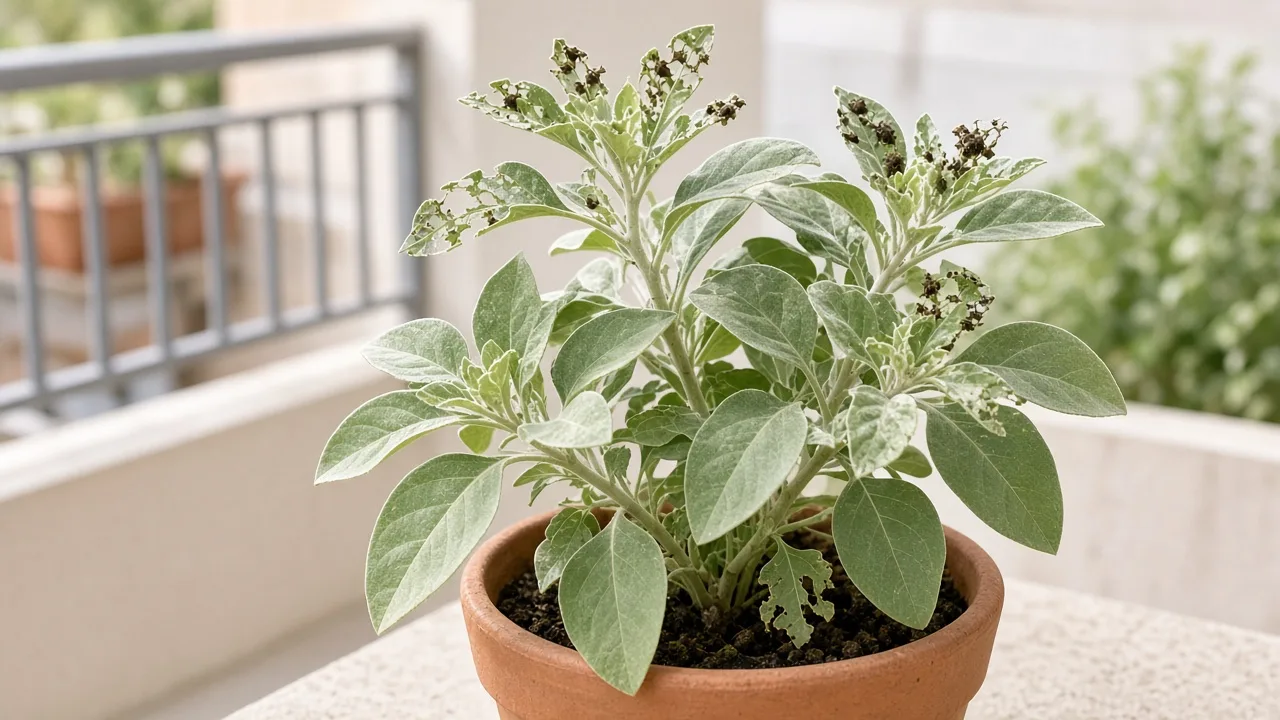
Ragged chew holes with pellet frass on silvery new shoots—but firm erect stems—usually mean caterpillars, not drought stress. First step at dawn, hand-pick every visible larva from hairy leaf undersides and branch tips into soapy water before reaching for spray.
Caterpillars on Ashwagandha: Causes, Checks & Fixes
This guide covers caterpillars on Ashwagandha. See also the general Caterpillars guide, watering, and light pages for this plant.
Caterpillars on Ashwagandha: Causes, Checks & Fixes
Quick answer
If your Ashwagandha (Withania somnifera) has ragged holes, missing leaf sections, or skeletonized tissue between veins on the newest silvery shoots—but the stems still feel firm and erect—caterpillars are a more likely culprit than underwatering. Leaf-eating caterpillars chew Ashwagandha foliage, reducing the photosynthetic area the shrub needs while it builds its valued root system.
First step: at dawn, hand-pick every visible larva from hairy leaf undersides and tender branch tips into a bucket of soapy water. Wear gloves—all Ashwagandha parts are poisonous if eaten, including leaves and orange winter-cherry berries.
For how caterpillars hatch, feed, and respond to hand-picking and Bt in general, see our caterpillars pest guide. On Ashwagandha, the pattern usually shows up as ragged full-thickness chew with pellet frass on tomentose silvery foliage in full sun—not as enclosed pale tunnels inside the blade.
When to use this page vs other Ashwagandha guides
| Pattern | Start here | Or route to… |
|---|---|---|
| Ragged holes, skeletonized tissue, pellet frass | This page | Holes in leaves for mixed causes |
| Serpentine tunnel inside the blade | Leaf miners | This page if tissue is chewed through |
| Sticky curled tips with pear-shaped insects | Aphids | — |
| Fine webbing, yellow stippling on older leaves | Spider mites | — |
| Soft stem base, wet soil, yellowing canopy | Overwatering | Firm stems with chew damage only |
| Circular tan-to-black lesions | Black spots | — |
What caterpillars look like on Ashwagandha
Ashwagandha carries alternate leaves opposite flowering shoots on short, fine silver-gray branches. Caterpillar damage concentrates on the softest new tissue at branch tips, swelling pale green flower buds, and the hairy undersides of young ovate leaves—exactly where you would also find aphids, but with a very different damage signature.
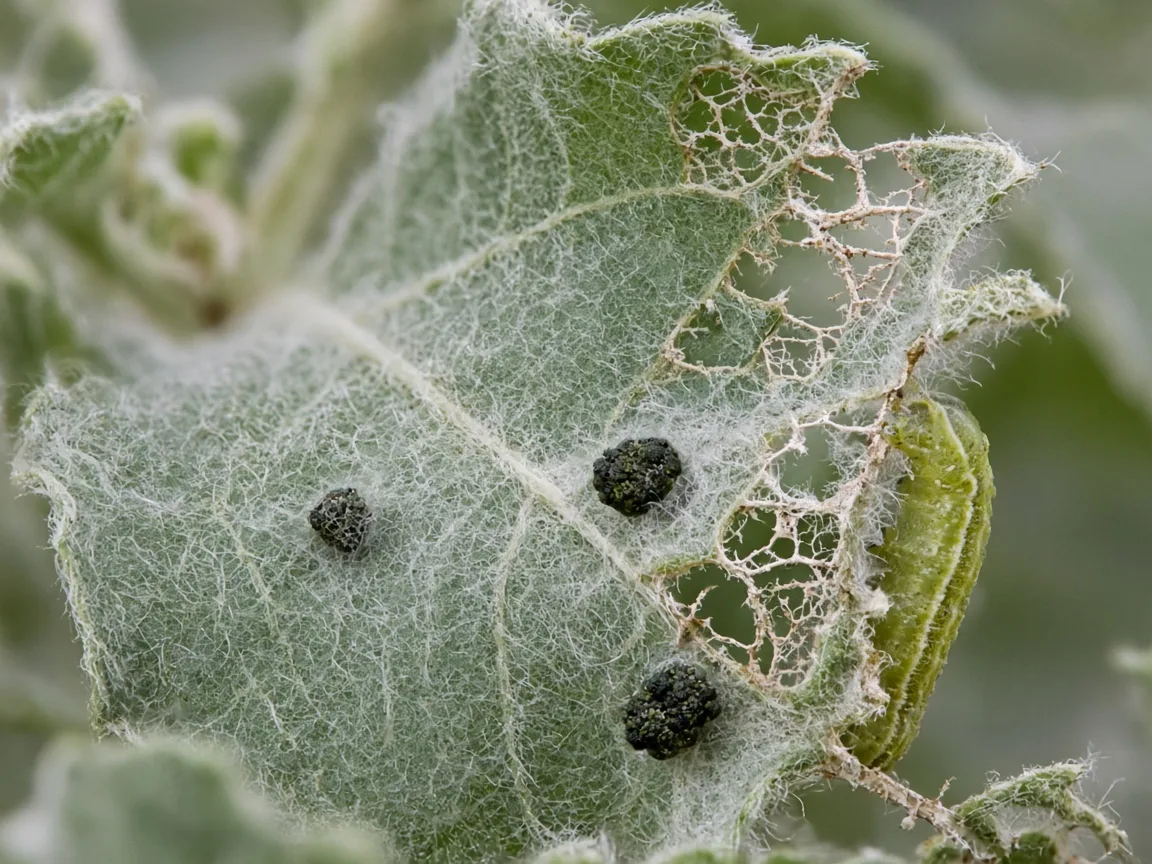
Ragged chew margin and dark pellet frass on a young Ashwagandha leaf—the hairy silvery surface makes larvae harder to spot until holes enlarge.
Ragged holes and skeletonized patches
Unlike leaf miners that tunnel inside the blade, caterpillars remove tissue outright. You see irregular holes, missing sections between veins, or skeletonized patches where only the vein network remains. Caterpillars tend to chew from leaf edges, though small larvae also punch holes through the center of tender Ashwagandha leaves.
Pellet frass on hairy foliage
Active feeding leaves dark green or black pellet-like droppings (frass) on leaf faces, at stem nodes, on the pot rim, or the terrace floor below. On Ashwagandha’s tomentose leaves, frass can lodge in the gray hairs and look like soil splash until you brush it and it stays put.
Camouflaged larvae on silvery undersides
Many garden caterpillars are green or brown and blend into silvery-haired foliage. Flip suspect leaves at dawn or dusk when larvae feed openly. A quick spray of water on the plant can make hidden caterpillars thrash and reveal themselves—useful on dense terrace shrubs where hand-searching is slow.
Rolled or webbed young leaves
Some species web or roll tender Ashwagandha leaves around themselves. Unroll suspicious tips carefully and check for a larva inside before you assume mechanical wind damage on an exposed balcony.
Why Ashwagandha gets caterpillars on sunny terraces
This is not random chewing on any houseplant. Ashwagandha’s biology and where you grow it determine risk.
Solanaceae nightshade exposure
Ashwagandha belongs to Solanaceae—the same plant family as tomatoes, peppers, eggplant, and tobacco. Hornworms and related caterpillars feed primarily on solanaceous plants. A sun-drenched terrace with nightshade neighbors, or a medicinal herb bed beside kitchen-garden tomatoes, puts Ashwagandha on the same moth flight path as those crops.
Warm-season outdoor placement
NC State Extension notes Ashwagandha needs full sun and cannot grow in shade. Owners move pots outdoors for summer growth—which is correct for the plant but opens the door to regional caterpillars that rarely appear on strictly indoor collections. Moths lay eggs on tender shoots; larvae hatch during warm active growth months when Ashwagandha pushes its fastest foliage flush.
Nursery hitchhikers and winter bring-in
A plant that looked clean at purchase may carry tiny larvae or egg clusters on hairy undersides. Bringing patio Ashwagandha indoors for frost without inspection is a common way chewing damage appears weeks later under grow lights, long after you changed watering.
Not a drought or rot pattern
Chew damage on firm erect stems with correctly dry mix is foliar pest pressure. Midday wilt on light dry pots without frass or larvae points to underwatering. Soft mushy tissue at the crown on damp mix is overwatering or rot—not caterpillars—and needs a different response immediately.
Confirm caterpillars vs miners, aphids, thrips, and rot
Work through checks in order so you do not spray pests while the crown is rotting:
- Stem-base press — Firm erect stems with damage only on foliage point to chewing insects. Soft tissue at the crown on wet mix means rot risk first.
- Damage type — Full-thickness ragged holes with surface frass = caterpillars. Bordered pale tunnel inside the blade = leaf miners.
- Branch-tip scan — Start at newest growth and pale green flower buds at the nodes.
- Hairy underside check — Larvae often hide below young leaves pressed against stems.
- Frass test — Pellet droppings that stay after wiping confirm active chewing, not old mechanical tears.
- Dry-down cross-check — Finger-test the top 3–4 cm per the Ashwagandha watering guide; true drought wilt hits the whole plant evenly, not isolated chewed shoots.
Symptom lookalike comparison
| What you see | Likely cause | Key check |
|---|---|---|
| Ragged holes, skeletonized tissue, pellet frass | Caterpillars | Live larva or fresh frass on tips |
| Serpentine tunnel inside the blade | Leaf miners | Backlight leaf; bordered internal trail |
| Sticky tips, pear-shaped insects | Aphids | Honeydew; no full-thickness chew |
| Silver scarring, distorted buds | Thrips | Stippling; no pellet frass piles |
| Midday wilt on dry mix, no insects | Underwatering | Whole plant limp, not just chewed tips |
| Limp stems, soft crown, wet mix | Overwatering | No larva; sour soil odor possible |
Confirmed diagnosis — Ragged chew plus pellet frass and/or a live larva on branch tips with firm stems. Suspected — Old holes without fresh frass may be prior damage; check for new chew on the softest shoots before treating.
First fix: dawn hand-pick from hairy undersides
Isolate the plant away from other sun-loving herbs and nightshades until you see no new chew marks for at least two weeks.
Hand-pick every visible caterpillar at dawn when larvae feed openly on hairy leaf undersides and tender branch tips. Drop them into soapy water and bag pruned shoots that carry clusters of small larvae. Handpicking is the safest first response for a medicinal herb you may harvest—no residue on foliage and no chemical exposure around pets or children who might reach the pot.
Wear gloves throughout. All Ashwagandha parts are poisonous if eaten, and you will be handling chewed tissue close to your hands. Keep treated plants and soapy buckets out of reach of chewing pets.
Make this one correction before reaching for sprays. Watch the plant for five to seven days. If new holes appear, move to secondary steps below—not extra watering or fertilizer.
If hand-picking is not enough
When larvae are too numerous, well hidden in dense hairy foliage, or returning after a first pass, escalate in this order rather than stacking treatments the same day.
Apply Bacillus thuringiensis (Bt kurstaki)
Bt is a natural insecticide that kills caterpillars when they eat treated leaves and leaves most beneficial insects unharmed when used as directed. Spray both sides of young leaves and branch tips in late afternoon so hairy foliage dries before peak terrace sun—UV light breaks Bt down quickly in direct midday heat.
Repeat every seven to ten days until you see no new damage, because later hatchlings will not be affected by the first application alone. If you grow Ashwagandha for roots, stop foliar Bt well before planned harvest and follow label pre-harvest intervals.
Insecticidal soap for small larvae
For very small caterpillars still on exposed tissue, a labeled insecticidal soap can supplement hand-picking. Coat tops and undersides of young leaves until runoff. Contact sprays only kill insects they touch—critical on Ashwagandha’s hairy leaves where larvae tuck into the tomentose surface.
Schedule sprays in early morning or late evening. Avoid stacking repot, heavy prune, or fertilizer the same week you start spray—that masks whether pests or care stress caused the setback.
What not to do the same day
Do not increase watering because leaves look ragged—check stem firmness and soil dry-down first. Do not apply sprays at midday on sun-exposed terrace plants. Do not use harsh broad-spectrum pesticides without ventilation or label clearance for edible/medicinal herbs. Do not ignore egg clusters on undersides—wiping pale egg groups removes an entire generation before chewing starts.
Recovery timeline and root-harvest expectations
Visible caterpillars should clear within one to two weeks of consistent hand-picking or Bt treatment. Expect clean new silvery shoots within three to five weeks during active warm growth. Skeletonized older leaves will not fully green up again—judge success by the next clean flush on branch tips, not by repairing chewed blades.
Firm erect stems throughout treatment are a good sign. Softening at the crown means rot or overwatering—not caterpillars—and needs a different response immediately.
Heavy foliar loss can slow the deep root development this plant is valued for. Stop visible feeding early so energy returns to stem and root growth rather than replacing chewed shoots every week.
How to prevent caterpillars on Ashwagandha
Quarantine every new Ashwagandha for two weeks before placing it near other plants. Inspect branch tips weekly during spring and summer active growth. Weekly field inspections catch pest damage early before larvae strip multiple shoots.
Keep care aligned with the full Ashwagandha care hub—full direct sun, sandy fast-draining mix per the soil guide, and dry-down watering so growth stays firm. On terraces, remove caterpillars when you see them to break the life cycle before moths lay the next generation.
Beneficial insects such as parasitic wasps and birds help on outdoor plants when ant trails are not protecting other sap feeders. Rinse patio specimens and check hairy undersides before winter bring-in.
When to escalate — chronic defoliation and toxicity
Escalate if new shoots repeatedly emerge with fresh chew marks after three full treatment cycles, if most of the canopy is skeletonized on a young seedling, or if you cannot find larvae but damage accelerates weekly (possible night-feeding species—check with a flashlight after dark).
For heavy recurring outdoor infestations, a local extension office can confirm the species and discuss options. Systemic insecticides move through plant sap and may affect roots you plan to harvest—hand-picking and Bt are usually safer first choices for medicinal herbs unless an expert recommends otherwise.
Pet and child safety: All parts of Ashwagandha are poisonous if eaten, with orange berries inside the papery calyx especially hazardous. Keep treated plants out of reach and contact your veterinarian or poison control if ingestion is suspected.
Caterpillars alone rarely kill a mature Ashwagandha with firm stems, but they can weaken a flowering season and open the door to secondary stress if you respond with extra water or fertilizer.
Before you treat again
Ragged holes with pellet frass on firm erect stems mean hand-pick caterpillars from hairy undersides first—not another drink. A bordered tunnel inside the blade means leaf miners, not this page. Soft crown on wet mix means rot protocol, not pest spray. That single routing check keeps most Ashwagandha growers from making the problem worse.