How to Identify and Get Rid of Drain Flies
Tiny fuzzy flies near your sink? This guide shows how to tell drain flies from fruit flies, locate larvae, clean pipes safely, and prevent them from returning.
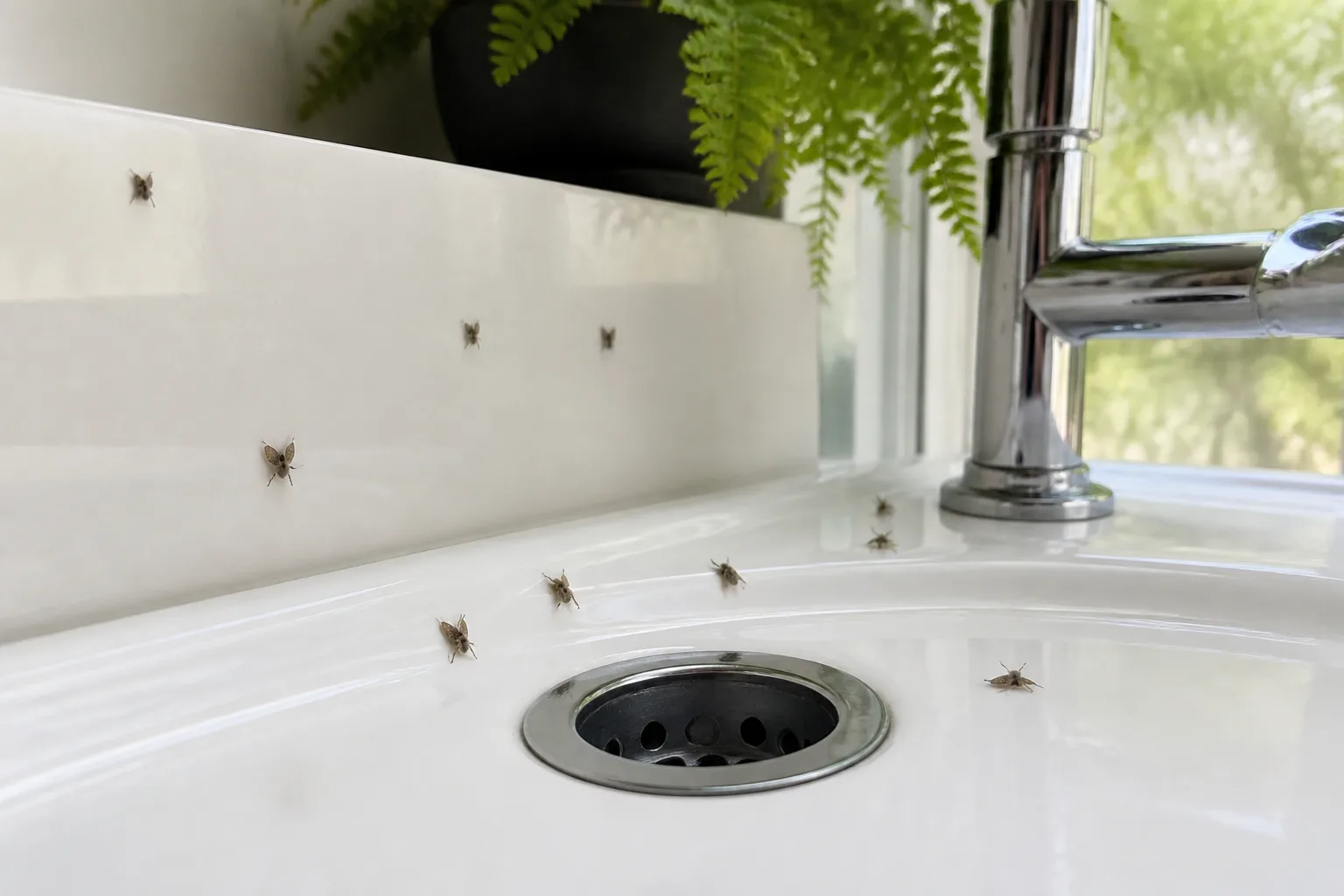
You walk into the bathroom and notice a handful of tiny, fuzzy insects resting on the wall above the sink. They do not buzz like houseflies. They hop. You swat one, and two more appear the next morning. That pattern usually means drain flies—not a random stray, but adults emerging from wet organic slime inside a drain, trap, or hidden moisture pocket.
Drain flies (family Psychodidae) are also called moth flies, sewer gnats, filter flies, and sink flies. The species most homeowners see indoors is often Clogmia albipunctata. They do not bite, they do not chew wood, and they will not sting you. They are a nuisance and a hygiene signal: something nearby is staying wet long enough for bacteria-rich film to build up. The fix is not a fogger. It is finding that film, removing it, and keeping the area dry enough that eggs cannot hatch.
What Drain Flies Are (and Why They Love Your Pipes)
Adult drain flies are roughly 1/8 inch long—about the size of a fruit fly—but they look different up close. Their bodies and wings are covered in fine hairs, giving them a powdery, moth-like appearance. At rest, they hold their wings roof-like over the back. They are weak flyers; UC IPM describes their movement as short hopping flights rather than sustained buzzing.
The larvae are the real problem. Female flies lay eggs in moist to nearly saturated organic matter. Indoors, that is usually the gelatinous biofilm coating drainpipes—hair, soap scum, skin cells, and food residue that never fully washes away. Eggs hatch in about 48 hours; the full life cycle from egg to adult can complete in as little as 8 days or take up to 24 days, depending on temperature. That speed matters: ignoring a bathroom drain for two weeks can mean multiple generations.
Quick ID Checklist: Size, Wings, and Flight Pattern
Use this checklist before you treat the wrong pest:
- Size: About 1/8 inch; similar length to fruit flies but fuzzier
- Color: Pale gray to dark gray or blackish
- Wings: Broad, hairy, held tent-like at rest; parallel wing veins (Psychodidae trait)
- Flight: Weak; short hops from wall to wall near moisture
- Location: Resting on bathroom walls, shower tiles, or inside sink cabinets near drains—not on fruit bowls or plant soil (usually)
If the insect is smooth-bodied and orbiting bananas, you are fighting fruit flies. If it is delicate and rising from damp potting mix, read our fungus gnat guide instead.
Drain Flies vs Fruit Flies vs Fungus Gnats
All three are small, all three annoy people, and all three mean decaying organic matter plus moisture somewhere nearby. The species and the fix differ.
Drain flies breed in drain biofilm, floor-drain traps, sump pits, grease traps, and other wet waste films. Adults cluster within a few feet of the source because they do not fly well.
Fruit flies (Drosophila species) breed in fermenting produce, recycling bins, wine glasses, and garbage. Adults are smoother, often tan or reddish-eyed, and they hover around food—not shower grout.
Fungus gnats breed in damp potting soil, saucers with standing water, and overwatered houseplants. Adults are slender with long legs and are common around plant shelves. If you recently brought home a new pothos and now see tiny flies, check soil moisture before you pour vinegar down the kitchen sink.
Where Each Fly Species Actually Breeds
| Fly type | Typical breeding site | First place to inspect |
|---|---|---|
| Drain fly | Sink/shower drain slime, floor drains, sump pits | Bathroom and kitchen drains in the affected room |
| Fruit fly | Fruit bowl, trash, recycling, dirty dishes | Countertops and waste containers |
| Fungus gnat | Wet potting mix, plant saucers | Houseplants and seed-starting trays |
Getting the ID right saves you a week of useless apple-cider-vinegar traps while larvae keep hatching inside a shower drain.

What Causes Drain Flies in Your Home
Drain flies appear when three conditions overlap: moisture that stays put, organic material that bacteria can colonize, and enough warmth for fly development. Common triggers include:
- Slow or partially clogged drains that let scum accumulate on pipe walls
- Infrequently used drains (guest bath, basement sink, floor drains) where water evaporates slowly but slime remains
- Leaky P-traps or drain lines wetting cabinet floors or wall cavities
- Grease traps, mop sinks, and evaporation pans in kitchens and laundry rooms
- Sump pump pits and elevator pits with standing water and debris
- Overwatered houseplants with saucers holding water and decomposing organic matter—especially in humid bathrooms; see bathroom plant care for moisture balance

- Outdoor sources: compost bins, dirty birdbaths, clogged gutters, kennels, and storm drains holding leaf sludge
- Off-site breeding: large numbers produced at sewage treatment plants and blown toward homes—more flies outside than inside, per UC IPM
A few flies after a long vacation often mean a dry trap that still held slime, not a whole-house infestation. Dozens daily in one room usually mean an active breeding site within that room or directly below it.
Indoor Breeding Sites You Might Be Overlooking
Homeowners fix the obvious kitchen sink and miss the real source. Inspect these if flies persist:
- Shower and tub overflow channels (the small opening under the trip lever)
- Washing machine drain standpipes and utility sink traps
- Refrigerator drip pans and condensate lines
- Dishwasher drain connections and garbage disposal collars
- Floor drains in basements, garages, and laundry rooms
- AC condensate drains and humidifier discharge lines
- Wet lint behind the dryer or in mop buckets left filled
Penn State Extension notes that polluted water and wet organic deposits are the preferred breeding areas—and that the infestation source is usually drains, but not always the drain you assume.
Signs You Have Drain Flies—Not Just a Stray Bug
Occasional insects fly in through an open window. Drain fly problems have repeatable patterns:
- Adults on walls and ceilings within a few feet of sinks, tubs, or floor drains
- More activity in the evening when flies emerge
- Flies that reappear within days after you swat them
- A musty or “drain” area that has been slow to clear
- Tiny worm-like larvae in black slime when you scrape the drain opening
Larvae in the final stage reach about 1/4 inch, with a distinct head and a breathing siphon—tubelike and gray. Finding larvae confirms breeding; finding only adults means you still need to locate the pipe or pit they are exiting.
The Duct-Tape and Inverted-Cup Trap Tests
You need to know which drain is active before you deep-clean every pipe in the house.
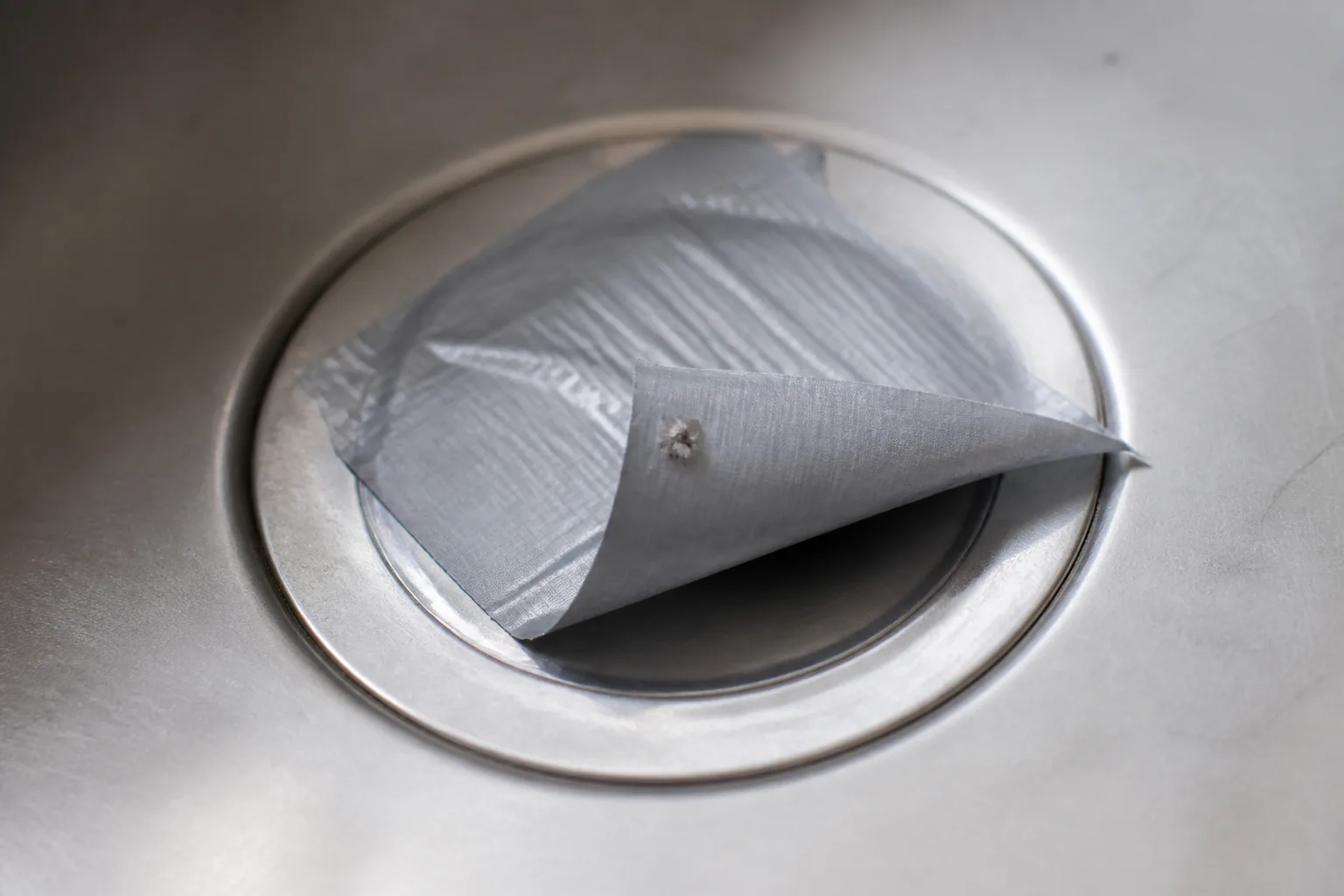
Duct-tape test (quick):
- Dry the sink rim and cover the drain opening with duct tape, sealing the edges.
- Leave overnight or 24 hours.
- Peel back and count flies stuck to the tape underside.
- Repeat on each suspect drain in the room.
Inverted-cup trap (UC IPM method):
- Coat the inside of a cup or jar with petroleum jelly or vegetable oil.
- Invert it over the drain opening so flies exiting stick to the surface.
- Leave 24 hours; check all drains in the infested room.
Move traps every few days until counts drop to zero. If every indoor drain tests clean but flies remain, expand the search to sump pits, crawlspace leaks, and outdoor moisture beds. Heavy outdoor counts with few indoors may indicate an off-site sewage source rather than your kitchen P-trap.
Start by Finding the Source (Before You Spray Anything)
The most expensive mistake in drain fly control is treating adults while larvae keep developing in slime you never removed. UC IPM is explicit: elimination of breeding sites is the key to management. Chemical space sprays kill visible flies for a day; they do not stop tomorrow’s hatch.
Your sequence should be:
- Confirm ID (fuzzy moth fly vs fruit fly vs fungus gnat)
- Trap-test each drain in the affected room
- Scrape and inspect slime at positive drains for larvae
- Physically remove biofilm (brush, trap cleanout, snaking if needed)
- Maintain with enzyme cleaners on a schedule
- Dry ancillary moisture (saucers, drip pans, mop buckets)
- Use adult traps only as monitoring tools, not the primary fix
If you live in a multi-unit building and every drain tests negative, ask management about shared stack lines, grease interceptor maintenance, and trash-room floor drains before you buy indoor foggers.
How to Clean Drains and Remove the Breeding Slime
This is the step that actually ends an infestation. Everything else is support.
Step 1 — Clear mechanical blockages. Slow drains breed flies faster. Snake or plunge first if water pools. For sinks with a U- or J-trap under the cabinet, place a bucket beneath, remove the trap, and scrape out debris. Rinse the trap before reinstalling.
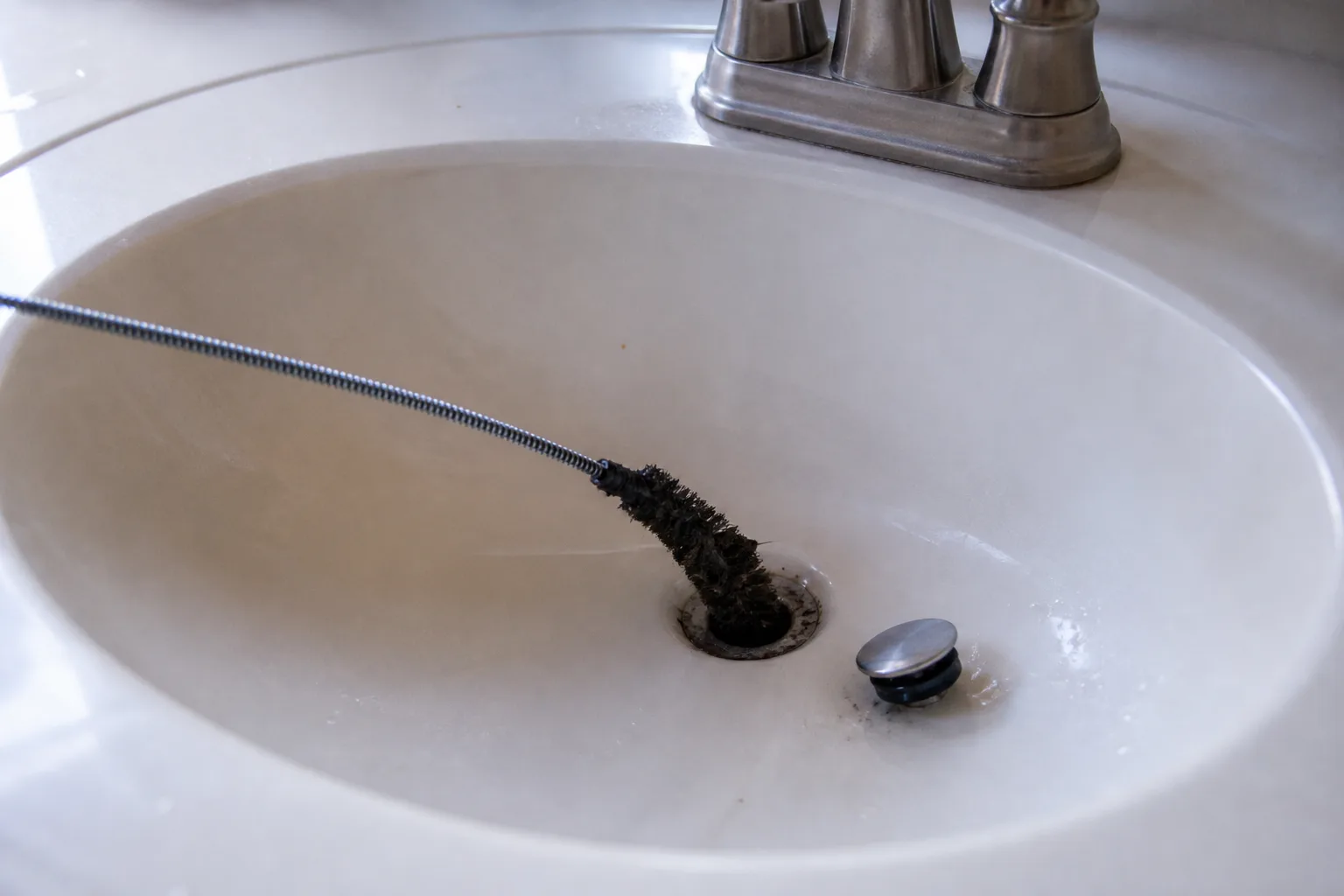
Step 2 — Scrub the pipe opening and upper walls. Remove the drain grate or stopper. Use a long stiff brush or pipe brush to scrape slime from the sides of the drain and the first several inches of pipe. That visible black film is larval habitat.
Step 3 — Flush thoroughly. Run hot (not necessarily boiling) water until flow is fast and even. On metal pipes only, some homeowners follow with a cautious boil flush; UC IPM warns that boiling water and bleach do not remove the organic film and give only short-term relief if you skip brushing.
Step 4 — Enzyme or bacterial drain treatment. After mechanical cleaning, apply an enzymatic or bacterial drain cleaner per label directions. Penn State Extension lists pour-around and foam products that break down gelatinous deposits—the material larvae need. Regular enzyme maintenance helps prevent rebuildup in chronically greasy kitchen lines.
Step 5 — Re-test with tape or cup traps. You should see a sharp drop in emerging adults within several days if the correct drain was cleaned. Persistent catches mean missed branches, a deeper clog, or a second source.
Mechanical Scrubbing, Enzyme Cleaners, and When Boiling Water Helps
Think of biofilm like plaque on teeth: a rinse does not substitute for brushing. Mechanical removal comes first; enzymes second; boiling water last and only on appropriate pipe materials.
On PVC and older plastic drains, skip boiling water—it can soften joints. Warm water plus brushing is safer. On cast iron or copper tailpieces, a single careful boil flush after scrubbing may dislodge remaining residue, but it is not a standalone treatment.
Enzyme gels cling to vertical pipe walls better than a quick liquid pour. For commercial-style floor drains and grease interceptors, foaming applicators reach sidewalls a brush cannot. None of these products are insecticides; they work by removing the food and habitat, which is exactly what you want in a home with septic systems or municipal treatment plants downstream.
Natural Treatments That Kill Adults Without Fixing the Problem
Several pantry methods kill adult drain flies or confirm activity. Use them as monitoring and supplemental tools, not replacements for scrubbing.
Baking soda and vinegar flush: Pour 1/2 cup baking soda (some recipes add 1/2 cup salt) into the drain, follow with 1 cup white vinegar, wait until foaming subsides, then flush with hot water after several hours. This can loosen mild organic buildup and freshen drains after brushing—but it rarely clears a mature slime layer alone.
Apple cider vinegar bowl trap: A few inches of vinegar with a drop of dish soap near the drain catches adults attracted to fermentation odors. It does not reach larvae on pipe walls. Helpful for confirming species when fruit flies are also suspected; compare with our homemade gnat trap methods.
Soap-sugar-vinegar mixture: Similar adult attractant; same limitation.
Essential oil scents (lavender, eucalyptus, mint): May repel some adults temporarily. They do not eliminate breeding material and can create slippery residue in sinks. Treat as optional, not primary control.
If you are still seeing adults two weeks after a thorough scrub and enzyme course, you almost certainly missed a breeding site—not that you need a stronger smell.
What Not to Pour Down Drains
Some popular shortcuts create new problems.
Bleach: May kill a few exposed larvae near the drain mouth but does not reliably remove pipe slime. Bleach harms septic bacteria, corrodes some metals, and produces toxic chlorine gas if mixed with vinegar, ammonia, or alcohol residues still in the line. Skip routine bleach pours for drain flies.
Pesticides and insecticide foggers: Never pour labeled insecticides down drains. They contaminate wastewater, damage plumbing, and kill beneficial organisms in septic tanks and treatment systems. Penn State Extension emphasizes sanitation over pesticides for residential moth flies. UC IPM discourages residential insecticide use when one or two drains are involved.
Repeated harsh caustic drain openers: Strong chemical openers can damage pipes and often punch a hole through a clog without scouring the biofilm where flies breed. Physical cleaning plus enzymes targets the actual habitat.
Boiling water on PVC: Risk of joint damage. Use on metal only, and only after mechanical cleaning.
Eliminate Standing Water and Hidden Moisture
Drain flies are moisture insects. After pipe work, dry the environment so new flies cannot colonize secondary sites.
Inside, check:
- Plant saucers and cachepots — empty standing water; let soil surface dry before re-watering
- Refrigerator and AC drip pans — rinse and dry monthly
- Wet laundry lint and mop buckets — do not store damp mops in filled buckets
- Shower curtains and grout — improve ventilation; squeegee glass to reduce persistent dampness
- Unused drains — run water weekly to keep P-traps full, but also brush traps quarterly so slime does not thicken
Seal gaps around sink bases and dishwasher cabinets if leaks keep particle board damp. A chronically wet cabinet floor can breed flies even when the drain above flows fine.
Outdoor, Plant, and Compost Sources Near the House
Gardeners and plant parents often import flies without realizing the source is outside or in a saucer, not the kitchen.
Inspect:
- Compost bins and worm bins with wet food layers on top
- Clogged gutters and downspout extensions holding leaf sludge
- Birdbaths and pet water bowls with algae and debris
- Rain barrels with organic film on the water surface
- Kennels and outdoor drains with slow flow
- Overwatered outdoor containers and saucers under tropicals on patios
Cleaning and drying these sites matters if indoor drain tests are negative but flies still enter through screens at dusk. Reduce attraction by switching exterior lights near doors to sodium vapor or yellow bug bulbs, and move fixtures away from entryways—moth flies are drawn to lights at night.
When Drain Flies Signal a Bigger Plumbing Problem
Sometimes flies are the symptom of structural moisture, not a dirty stopper.
Call a plumber if you notice:
- Sewage odor with fly activity
- Multiple drains gurgling or backing up
- Wet spots on ceilings or walls below bathrooms
- Persistent flies after every trap in the room was cleaned and snaked
- A crawlspace or slab leak history with new fly counts
Broken drain lines in wall voids or under slabs can breed flies for months while visible drains test clean. Professionals can camera-inspect lines and repair leaks you cannot reach with a brush.
Flies can also explode in number after a sewer backup or when a main line partially blocks. Fix the plumbing first; fly counts fall once flow and cleaning resume.
How to Prevent Drain Flies From Coming Back
Prevention is cheaper than repeating a deep clean.
- Run water weekly through little-used sinks, tubs, and floor drains to maintain trap seals without letting slime thicken unchecked
- Brush high-use kitchen drains monthly; bathroom drains quarterly
- Use enzymatic maintenance on grease-prone lines per product label
- Fix slow drains immediately—partial clogs are fly nurseries
- Keep strainers and disposal splash guards clean
- Empty plant saucers after watering; avoid leaving wet organic debris in laundry and mud rooms
- Screen windows and repair torn mesh; flies are weak but numerous
- Service septic systems on schedule; surfacing effluent attracts Psychodidae outdoors
After travel, flush guest baths and pour a small enzyme dose down basement floor drains before flies establish a two-generation foothold.
When to Call a Plumber or Pest Professional
DIY control succeeds for most single-room infestations tied to accessible drain slime. Escalate when:
- Trap tests stay positive after two thorough cleanings and enzyme cycles on the same drain
- Larvae cannot be found but adult counts remain high (hidden line break likely)
- Commercial kitchens or healthcare settings need documented IPM and non-residual adult control for regulatory reasons
- Off-site sewage plant dispersal floods your building exterior nightly—exclusion (screens, air curtains, lighting changes) may need professional design
- You smell sewer gas or see water damage—this is plumbing, not just flies
Licensed pest professionals can apply non-residual pyrethrin ULV treatments in sterile environments after breeding sites are addressed. They should not sell spray-only programs for residential drain flies when a $15 brush would solve it.
Conclusion
Drain flies are telling you where water and organic waste are staying too long together—usually inside a drain biofilm you cannot see until you scrape it. Identify the fuzzy, weak-flying adults, rule out fruit flies and fungus gnats, trap-test each drain, then brush, flush, and maintain the pipes that test positive. Skip bleach and pesticide pours; dry plant saucers, drip pans, and outdoor sludge sources; and re-test until traps stay clean for a week.
Most home infestations clear within one to two weeks of correct source removal. If flies outlast that timeline, stop repeating vinegar bowls and start looking for hidden leaks, floor drains, or shared lines that need a plumber’s camera—not another can of fogger.



