Best Indoor Plants for Bathrooms With Humidity and Low Light
Find the best bathroom plants that thrive in humidity and low light, with care tips for placement, watering, and choosing the right one for your space.
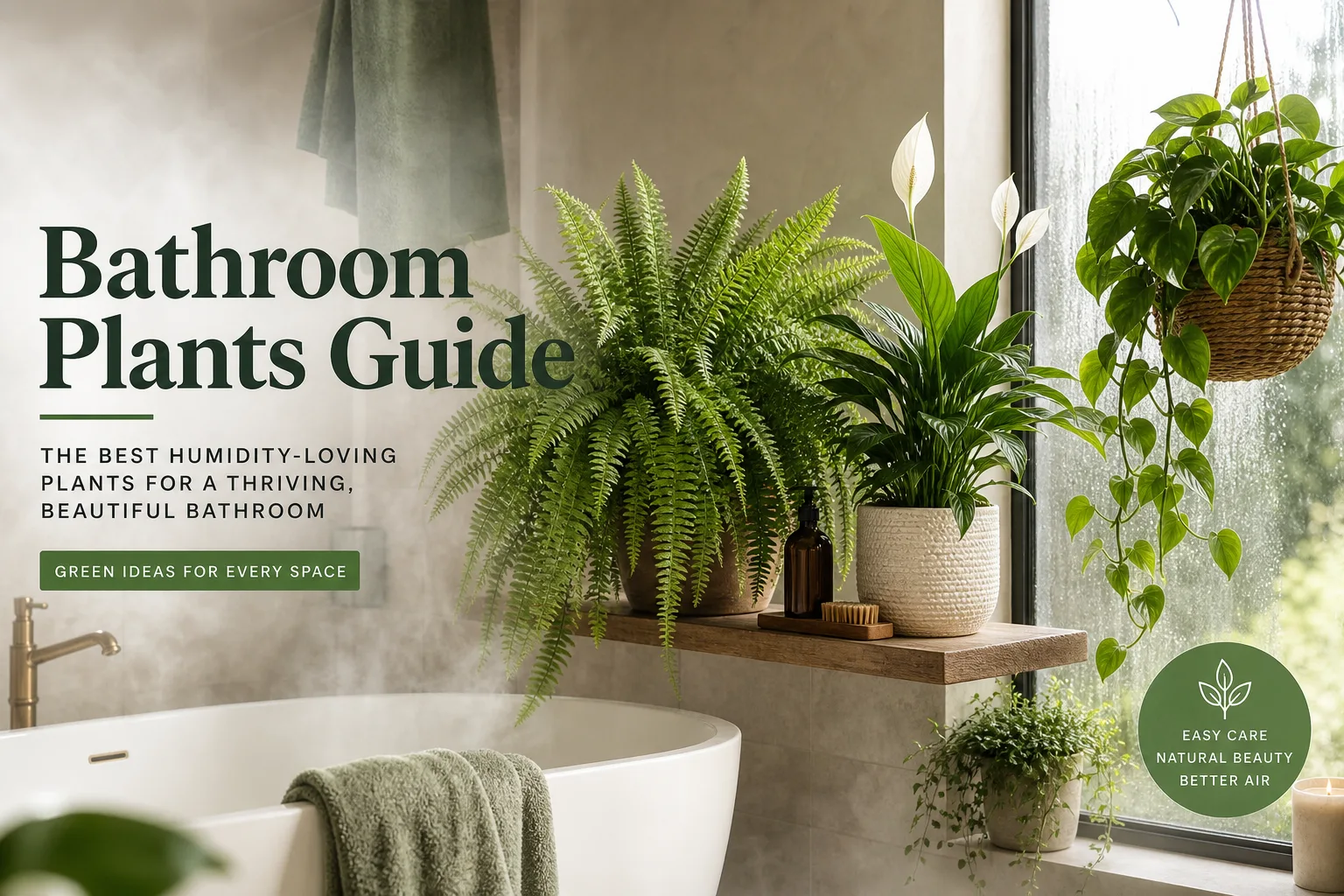
A bathroom with a few well-chosen plants feels more like a retreat and less like a utility room. The warm, steamy air that makes mirrors fog up after a shower is exactly what many tropical houseplants want. And because most bathrooms do not get blazing sun, the plants that work here tend to be the ones that evolved on shady forest floors, not sunny open meadows. As Clemson Cooperative Extension notes, many common houseplants are native to tropical and subtropical regions where humidity is high and light is filtered through a tree canopy. (Clemson Cooperative Extension)
The best bathroom plants handle two things at once: the humidity spike from showers and the lower light most bathrooms offer. That combination rules out succulents and cacti — they will rot or stretch in a steamy, dim room — but it opens the door to ferns, aroids, and other tropical foliage plants that struggle in the dry air of a heated living room.
This guide covers 12 plants that actually thrive in bathroom conditions, how to place them, and mistakes that turn a promising bathroom plant into a dropping, yellowing disappointment.
What Makes a Good Bathroom Plant
A plant earns its spot in a bathroom when it checks three boxes. Humidity tolerance comes first. A plant that needs 60% humidity to avoid brown tips will love the post-shower steam. Low to medium light tolerance matters because most bathrooms have one small window, a frosted window, or no window at all. And compact or trailing growth habits fit better on shelves, counters, and hanging hooks than a six-foot fiddle leaf fig.
The bathroom is not a greenhouse. It is a working room with temperature swings, cleaning product fumes, and sometimes no natural light for hours. Choose plants that handle that reality, not ones that need stable tropical conditions. For a deeper look at how humidity affects houseplants and what levels to aim for, see the houseplant humidity guide.
Light Check Before You Buy
Stand in your bathroom during the brightest part of the day. If you can read a book comfortably without turning on the light, you have enough light for low-light tolerant plants like snake plant, ZZ plant, and pothos. If you can see your shadow on the wall, you have enough for ferns and peace lilies. If you need to turn on the light to see clearly, you need a grow light or you should skip plants entirely.
Bathroom windows are often frosted or small, which cuts usable light by half or more. A north-facing frosted window offers very little — stick to snake plant or ZZ plant. A south-facing clear window in a bathroom is rare but excellent — you can grow almost anything. For bathrooms with no window at all, a small grow light on a timer can make the difference between a plant that survives and one that slowly declines.
Quick Comparison Table
| Plant | Best For | Light | Watering | Difficulty | Pet Safety |
|---|---|---|---|---|---|
| Boston Fern | Classic humidity lover | Low to bright indirect | Keep evenly moist | Medium | Generally non-toxic (ASPCA) |
| Peace Lily | Low-light blooms | Low to medium indirect | Water when drooping | Easy | Toxic if eaten (ASPCA) |
| Golden Pothos | Beginners, trailing | Low to bright indirect | Dry between waterings | Very easy | Toxic if eaten (ASPCA) |
| Snake Plant | Darkest bathrooms | Low to bright indirect | Infrequent | Very easy | Toxic if eaten (ASPCA) |
| Spider Plant | Pet-friendly shelf | Low to bright indirect | When top soil dries | Very easy | Generally non-toxic (ASPCA) |
| English Ivy | Hanging baskets | Low to medium indirect | Evenly moist | Easy to medium | Toxic if eaten (ASPCA) |
| Lucky Bamboo | Countertops, water | Low to medium indirect | Keep roots in water | Very easy | Toxic if eaten (ASPCA) |
| Phalaenopsis Orchid | Blooms, steam | Medium indirect | Weekly soak | Medium | Generally non-toxic (ASPCA) |
| ZZ Plant | Windowless bathrooms | Low to bright indirect | Very infrequent | Very easy | Toxic if eaten (ASPCA) |
| Bird’s Nest Fern | Compact shelves | Low to medium indirect | Evenly moist | Easy to medium | Generally non-toxic (ASPCA) |
| Calathea | Colorful foliage | Low to medium indirect | Keep lightly moist | Medium | Generally non-toxic (ASPCA) |
| Heartleaf Philodendron | Trailing greenery | Low to bright indirect | Dry between waterings | Very easy | Toxic if eaten (ASPCA) |
1. Boston Fern
Best for: Classic humidity-loving statement on a pedestal or hanging basket
Difficulty: Medium
Light: Low to bright indirect; avoid harsh direct sun
Water: Keep soil evenly moist; never let it dry out fully
Best placement: Hanging basket near the shower or on a plant stand near the tub
Pet safety: Generally considered non-toxic to cats and dogs
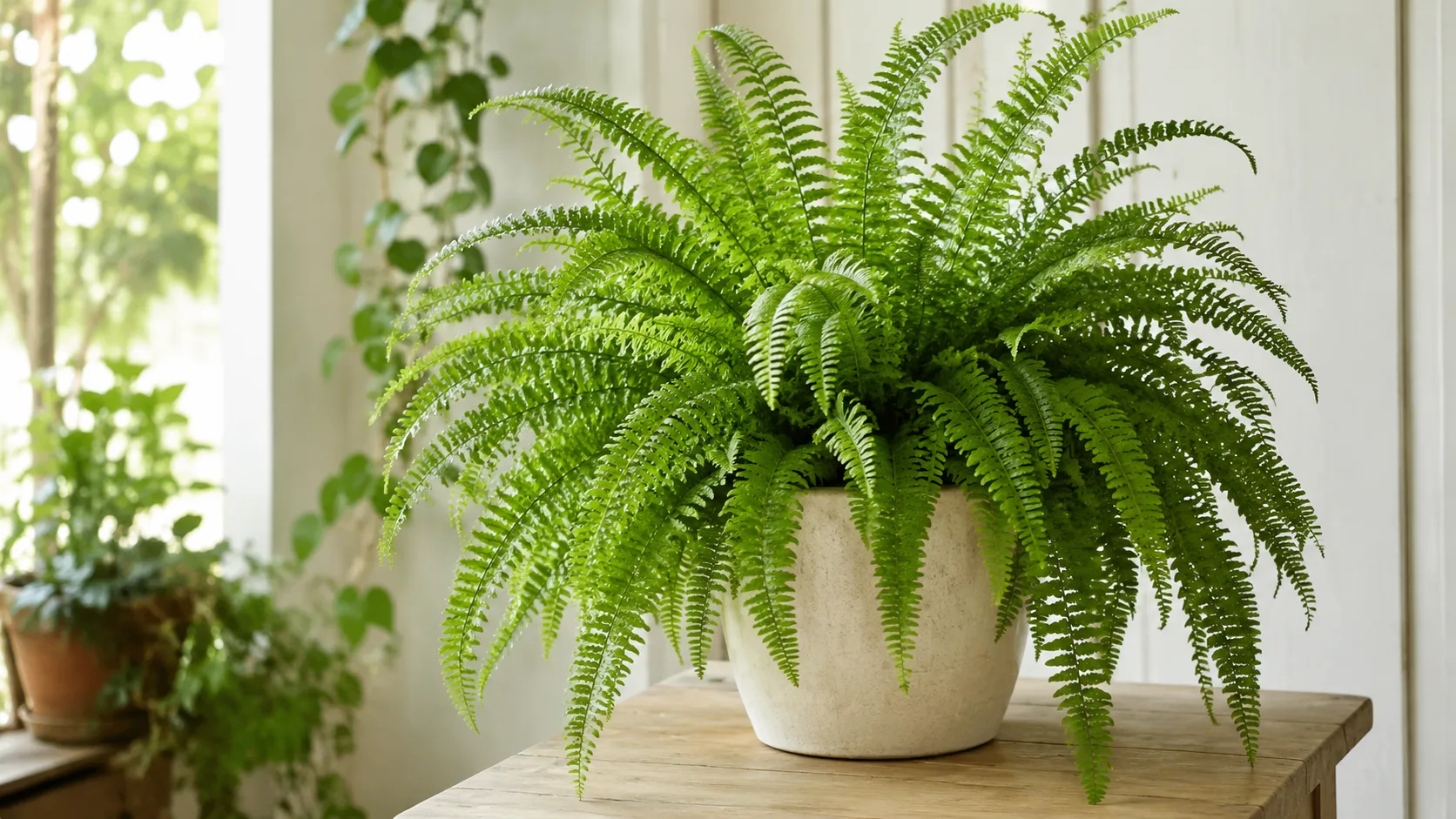
Boston fern is the plant people picture when they think of bathroom greenery. Its arching, feathery fronds look right at home in a steamy room, and that steam is exactly what keeps it from turning into a crispy mess. In a dry living room, a Boston fern drops leaflets everywhere and demands daily misting. In a bathroom where someone showers regularly, it often needs nothing extra.
The trade-off is watering. Boston ferns want consistently moist soil — not soggy, but never bone dry. If your bathroom routine includes forgetting about plants for two weeks, this is not your plant. If you check soil regularly and enjoy the look of a lush, classic fern, it is one of the most satisfying bathroom plants you can grow. For more on keeping ferns happy indoors, see the indoor fern care guide.
Why it works: Steam from showers replaces the daily misting this fern needs in dry rooms. Care tip: Snip off brown or yellow fronds at the base — new ones grow quickly when humidity is right. Common mistake: Letting the soil dry out between showers. A steamy room does not water the roots. Avoid this plant if: You forget to water regularly, or your bathroom has strong AC vents that blast dry air.
Useful care guides:
2. Peace Lily
Best for: Low-light bathrooms with the bonus of white blooms
Difficulty: Easy
Light: Low to medium indirect light
Water: Water thoroughly when leaves begin to droop
Best placement: Floor or low shelf near the vanity
Pet safety: Toxic to cats and dogs if ingested; keep out of reach
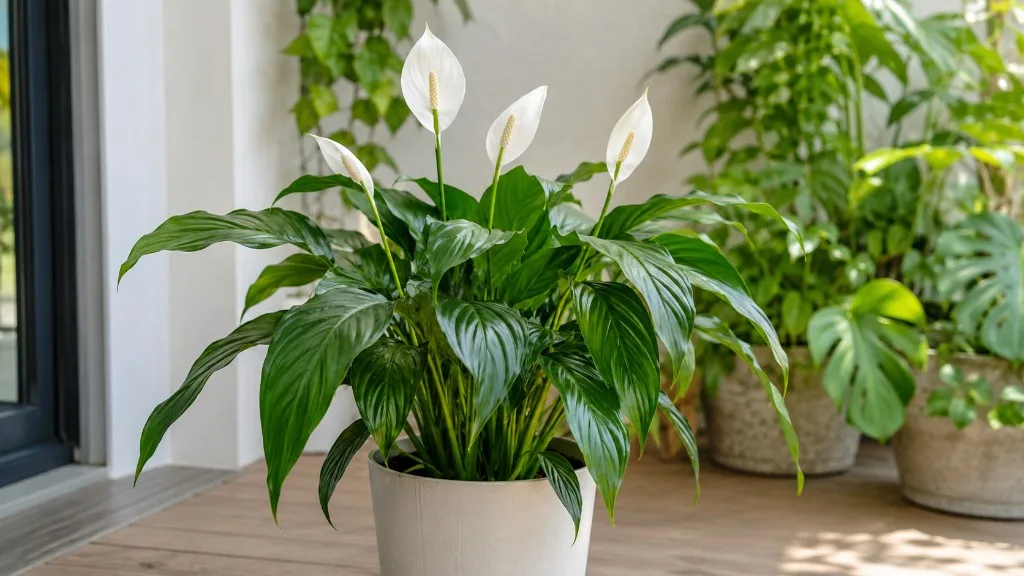
Peace lily is the bathroom plant you can practically ignore until it tells you it needs water — the leaves droop dramatically, you water it, and within hours it perks back up. That built-in signal makes it one of the easiest flowering plants for people who are still learning to read their plants.
The bathroom suits peace lily because it thrives in the same conditions: warm, humid air and indirect light. In a dry living room, peace lily leaf tips often brown and crisp. In a bathroom with regular shower steam, that problem largely disappears. The white spathe flowers appear most reliably in medium indirect light; in very low light, you may get foliage only. Peace lilies are one of the few flowering plants that bloom reliably in lower light, though RHS notes they flower best with brighter indirect light. (RHS)
Why it works: Bathroom humidity prevents the brown leaf tips that plague peace lilies in dry rooms. Care tip: Wipe the large leaves with a damp cloth every few weeks — bathroom dust and product residue settle fast. Common mistake: Waiting until leaves collapse flat before watering. Occasional drooping is fine as a signal, but repeated severe wilting stresses the plant. Avoid this plant if: You have a cat or dog that chews leaves, or your bathroom is consistently cold below 55°F.
Useful care guides:
3. Golden Pothos
Best for: Trailing from a high shelf or hanging basket in any bathroom
Difficulty: Very easy
Light: Low to bright indirect
Water: Let the top inch of soil dry between waterings
Best placement: Hanging basket, top of a cabinet, or trailing across a shelf
Pet safety: Toxic to cats and dogs if ingested
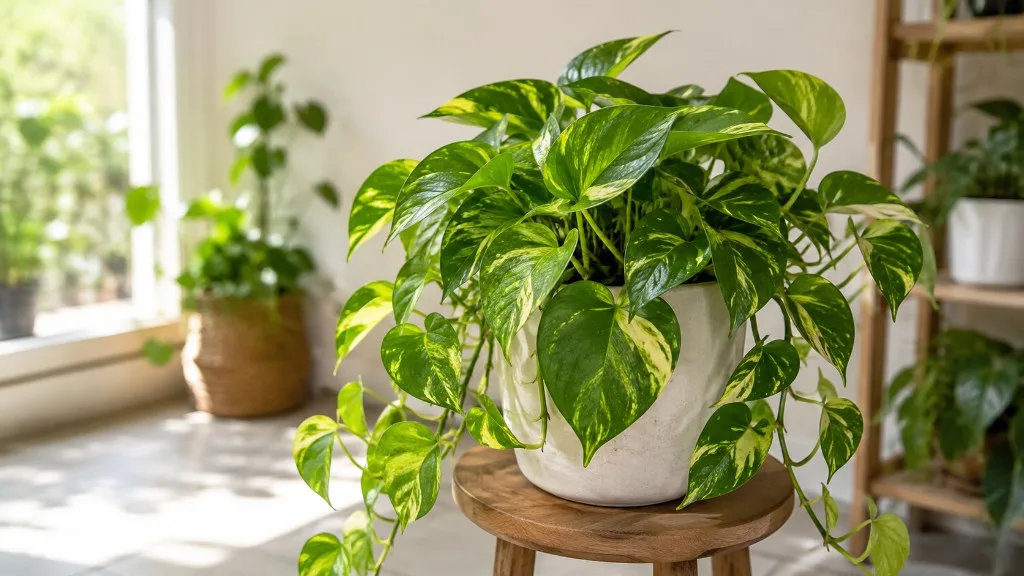
Pothos is the bathroom plant for people who want maximum greenery with minimum effort. Its heart-shaped leaves trail several feet from a hanging pot, turning an ordinary bathroom shelf into a cascade of green. It tolerates low light better than almost any trailing plant, and it forgives missed waterings that would kill a fern.
The bathroom humidity gives pothos an extra boost — leaves stay glossier, vines grow faster, and the plant looks fuller than one kept in dry air. Different varieties offer different looks: golden pothos for classic green-and-yellow variegation, marble queen for white-streaked drama, and neon pothos for bright chartreuse color. All behave the same in bathroom conditions.
Why it works: Thrives in low light, loves humidity, recovers from neglect. Care tip: Trim long vines occasionally to keep the plant full rather than stringy — cut just above a leaf node. Common mistake: Placing a variegated variety in very low light, which causes the variegation to fade. Avoid this plant if: You have a pet that climbs shelves and chews trailing vines.
Useful care guides:
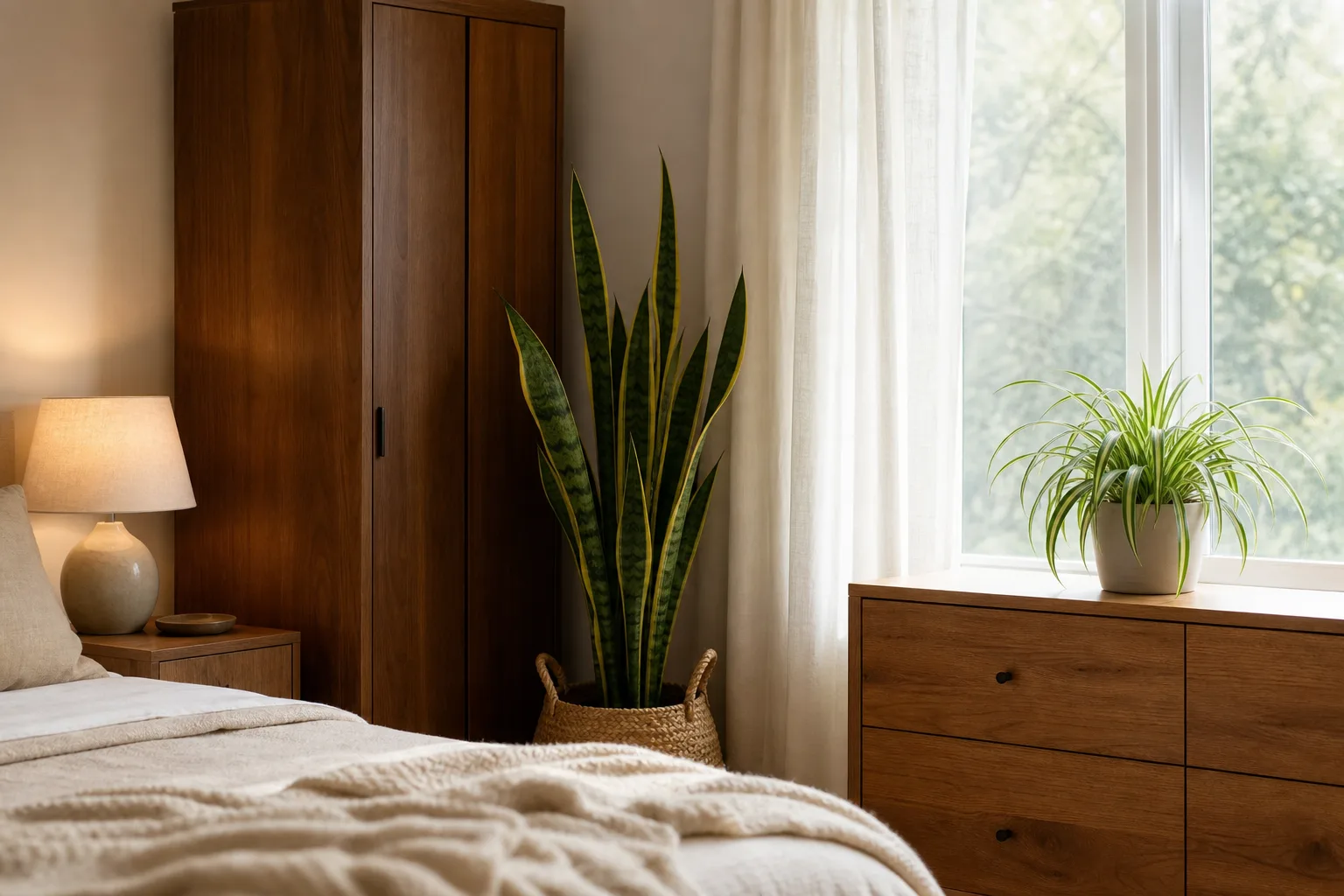
4. Snake Plant
Best for: Dark bathrooms where almost nothing else survives
Difficulty: Very easy
Light: Low light to bright indirect; tolerates fluorescent light
Water: Water sparingly — every 2-4 weeks, only when soil is completely dry
Best placement: Floor or counter, tucked in a corner
Pet safety: Toxic to cats and dogs if ingested
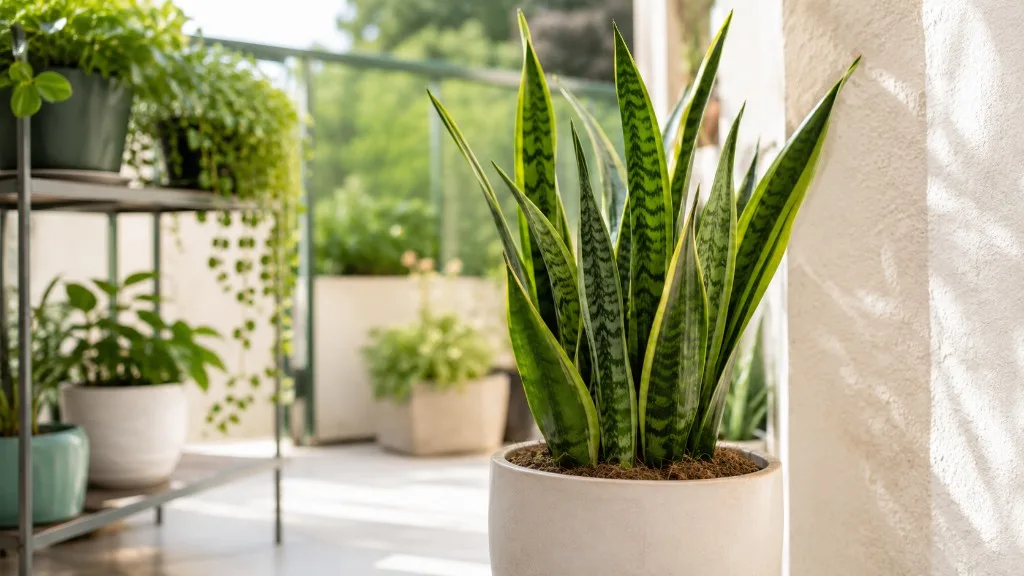
Snake plant is the bathroom plant for people who have a genuinely dark bathroom and do not want to run a grow light. Its stiff, upright leaves store water so efficiently that it can go weeks between waterings. The bathroom steam is a bonus — snake plant does not need humidity, but it certainly does not mind it.
The biggest risk in a bathroom is overwatering, not underwatering. A snake plant in a humid room uses even less water than one in a dry room because less moisture evaporates from the soil. Water it like a succulent: wait until the soil is dry all the way through, then water thoroughly. In a steamy bathroom with low light, that might mean watering once a month.
Why it works: Survives in near-darkness and handles the temperature swings of a bathroom. Care tip: Dust collects on the broad upright leaves — wipe them with a damp cloth every month to keep the plant breathing properly. Common mistake: Watering on a schedule instead of checking the soil. Snake plants rot faster in humid bathrooms if the soil stays damp. Avoid this plant if: You have a pet that nibbles floor-level foliage, or you tend to overwater.
Useful care guides:
5. Spider Plant
Best for: Pet-friendlier shelf plant with trailing babies
Difficulty: Very easy
Light: Low to bright indirect
Water: Water when the top inch of soil feels dry
Best placement: Shelf, counter, or hanging basket where the babies can dangle
Pet safety: Generally considered non-toxic to cats and dogs, though chewing can cause mild stomach upset
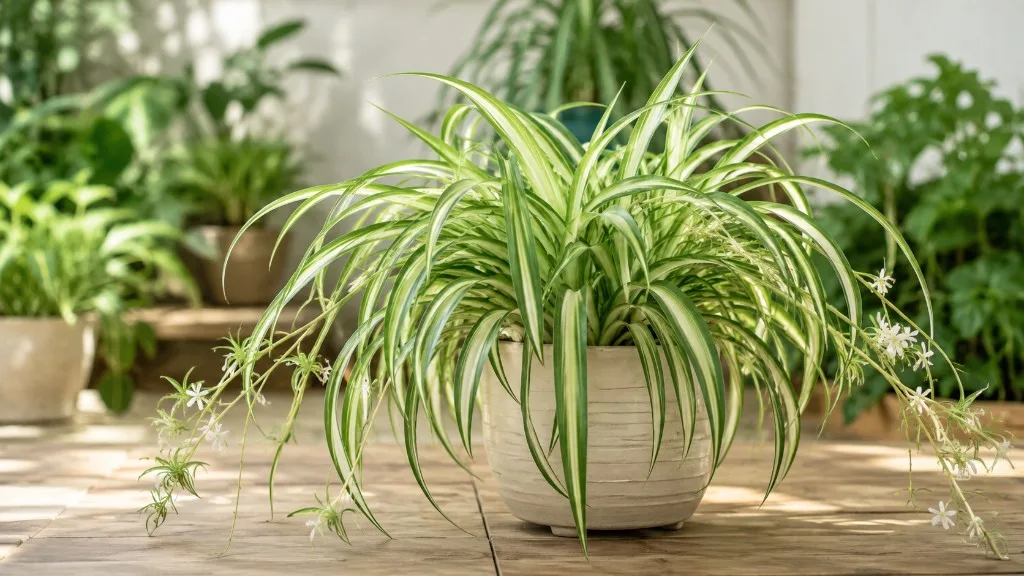
Spider plant is one of the few bathroom plants that is genuinely pet-friendlier and easy to grow. Its arching, ribbon-like leaves look best when the plant produces offsets — the small “spiderettes” that dangle from long stems and can be snipped off and potted up as new plants.
Bathroom humidity helps spider plant avoid the brown leaf tips that are its most common complaint in dry homes. The plant is forgiving about light and watering, though it prefers bright indirect light and will grow more slowly in a dim bathroom. If your spider plant stops producing babies, low light is usually the reason.
Why it works: Humidity prevents brown tips; offsets create a cascading look from shelves. Care tip: If leaf tips brown despite humidity, switch to filtered or distilled water — spider plants are sensitive to fluoride and chlorine in tap water. Common mistake: Assuming brown tips mean the plant is dying. Brown tips on spider plants are cosmetic, not fatal. Avoid this plant if: Your cat obsessively chews plants — spider plant is mildly hallucinogenic to cats, which can make them seek it out.
Useful care guides:
6. English Ivy
Best for: Cascading over the edge of a hanging basket
Difficulty: Easy to medium
Light: Low to medium indirect
Water: Keep soil evenly moist but not soggy
Best placement: Hanging basket or high shelf where vines can trail freely
Pet safety: Toxic to cats and dogs if ingested
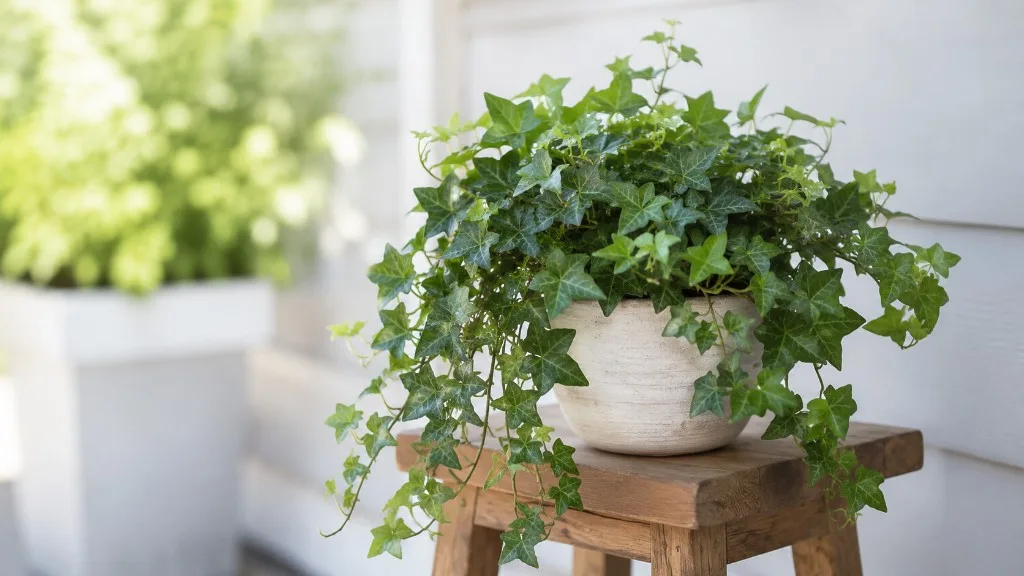
English ivy looks like it was made for bathrooms. Its small, lobed leaves cascade beautifully from hanging pots, and it genuinely prefers the cool, humid conditions most bathrooms provide. In a dry, heated living room, English ivy is a spider mite magnet. In a bathroom with shower steam, it stays healthier with less intervention.
The catch is that English ivy can decline fast if conditions shift. It dislikes hot, dry air and strong direct sun. A bathroom with a frosted window and regular showers is its ideal spot. A bathroom with a south-facing window and no shade might scorch it.
Why it works: Natural bathroom humidity discourages spider mites, the number-one indoor ivy killer. Care tip: Rinse the leaves in the shower every few weeks to knock off dust and any early spider mites before they spread. Common mistake: Keeping English ivy in a dry bathroom with no shower steam — it will decline quickly without humidity. Avoid this plant if: Your bathroom is on the warm side with no window, or you want a plant that thrives on neglect.
Useful care guides:
7. Lucky Bamboo
Best for: Countertop or vanity with a clean, modern look
Difficulty: Very easy
Light: Low to medium indirect
Water: Keep roots submerged in water; change water every 1-2 weeks
Best placement: Bathroom counter, vanity, or window ledge
Pet safety: Toxic to cats and dogs if ingested
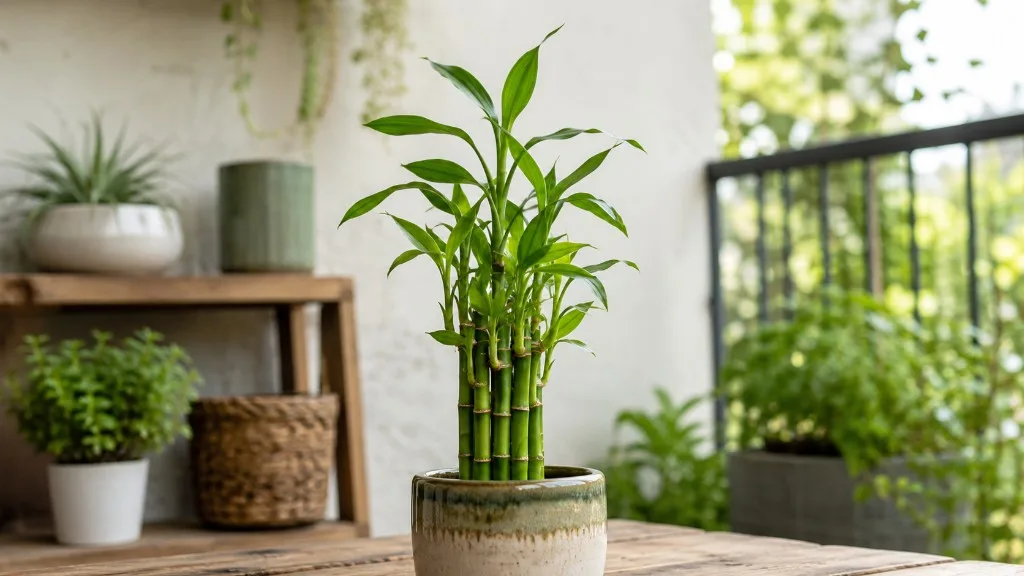
Lucky bamboo is not actually bamboo — it is a type of dracaena — but its upright stalks and minimal care needs make it one of the most popular bathroom plants. It grows happily in a vase of water with pebbles to hold the stalks upright, which means no soil, no repotting, and no guesswork about when to water.
Bathrooms suit lucky bamboo because it prefers moderate light and does not mind humidity. The one thing to watch is water quality: lucky bamboo is sensitive to chlorine and fluoride in tap water. If the leaf tips turn yellow or brown, switch to filtered, distilled, or rain water.
Why it works: Grows in water with no soil, tolerates low light, and fits on any counter. Care tip: Use filtered or distilled water if your tap water is heavily chlorinated — brown leaf tips on lucky bamboo are almost always a water quality issue. Common mistake: Using a vase with no drainage thinking it does not matter. Change the water every week or two to prevent stagnation and algae. Avoid this plant if: You want a plant with soil or you dislike the look of stalks in water.
Useful care guides:
8. Phalaenopsis Orchid
Best for: Elegant blooms on a bathroom vanity
Difficulty: Medium
Light: Medium indirect light
Water: Soak roots weekly, let drain completely
Best placement: Bathroom counter or vanity near a window
Pet safety: Generally considered non-toxic to cats and dogs
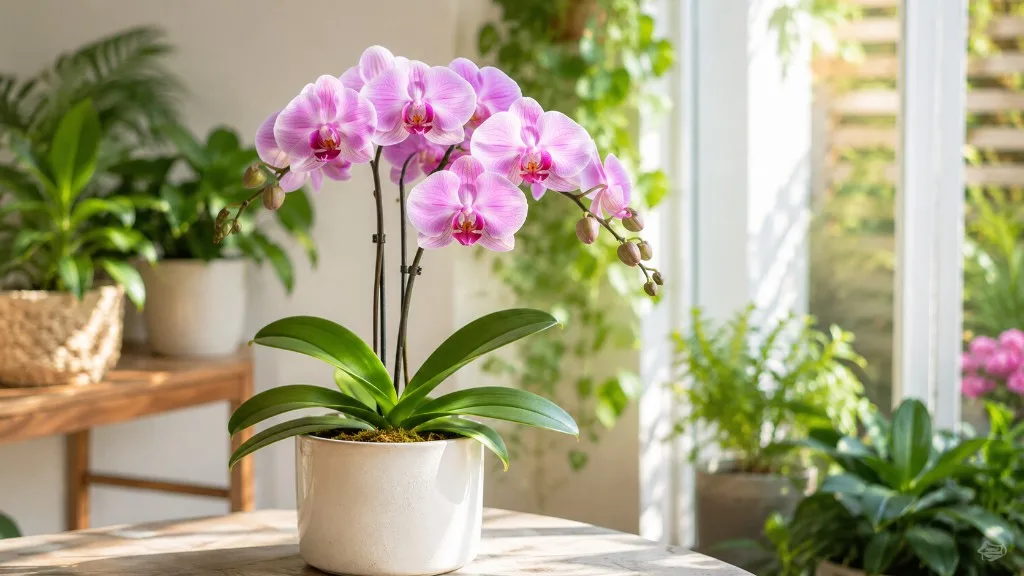
Moth orchids — the common phalaenopsis sold in grocery stores and garden centers — are one of the few flowering plants that genuinely like bathrooms. They are epiphytes, meaning they grow on tree branches in nature, absorbing moisture from humid air through their roots. A bathroom with regular shower steam recreates that environment better than a dry living room.
The key is light. Phalaenopsis orchids need medium indirect light to rebloom. A bathroom with a frosted east or west window is perfect. A windowless bathroom will keep the plant alive but unlikely to flower again. If you want repeat blooms, place the orchid where it gets bright but filtered light.
Why it works: Bathroom humidity keeps aerial roots healthy and extends bloom life. Care tip: Water by running tepid water through the pot for 15-30 seconds, then let it drain completely. Never let the pot sit in standing water. Common mistake: Overwatering. Phalaenopsis roots rot quickly if the potting medium stays soggy. The weekly soak-and-drain method works better than small daily waterings. Avoid this plant if: Your bathroom has no natural light, or you tend to water plants too frequently.
Useful care guides:
9. ZZ Plant
Best for: Windowless bathrooms or the darkest corner
Difficulty: Very easy
Light: Low light to bright indirect; tolerates fluorescent light
Water: Water every 3-4 weeks, only when soil is bone dry
Best placement: Floor or low shelf in the darkest part of the bathroom
Pet safety: Toxic to cats and dogs if ingested
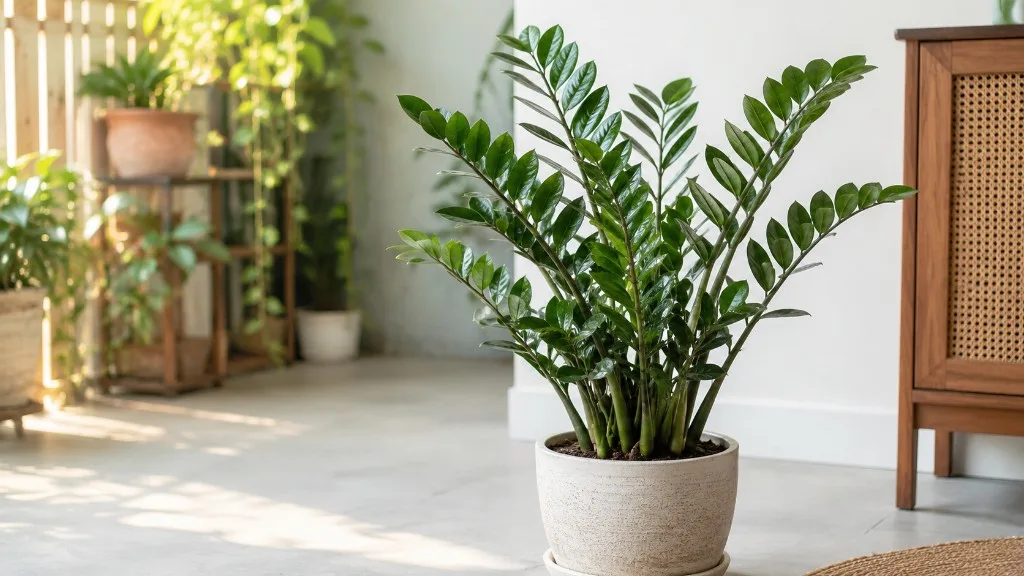
ZZ plant is the ultimate low-light bathroom plant. Its thick, waxy leaves and potato-like rhizomes store water so effectively that it can go a month or more without watering. In a humid bathroom, it needs even less. It tolerates fluorescent light, so a windowless bathroom with lights on for a few hours a day can still support a ZZ plant.
The trade-off is slow growth. A ZZ plant in a dark bathroom may produce only a few new stems a year. That is not a problem — it still looks good — but it will not transform into a jungle. Treat it as a reliable, sculptural green accent rather than a fast-growing showpiece.
Why it works: Survives with almost no light and needs minimal water in humid conditions. Care tip: Wipe the glossy leaves occasionally to maintain their shine — bathroom dust and product residue dull them over time. Common mistake: Watering it like a fern. ZZ plant in a humid bathroom may only need water once a month or less. Avoid this plant if: You have a pet that chews floor-level plants, or you want fast visible growth.
Useful care guides:
10. Bird’s Nest Fern
Best for: Compact countertop greenery with crinkled, apple-green leaves
Difficulty: Easy to medium
Light: Low to medium indirect
Water: Keep soil evenly moist but not waterlogged
Best placement: Bathroom counter, shelf, or windowsill
Pet safety: Generally considered non-toxic to cats and dogs
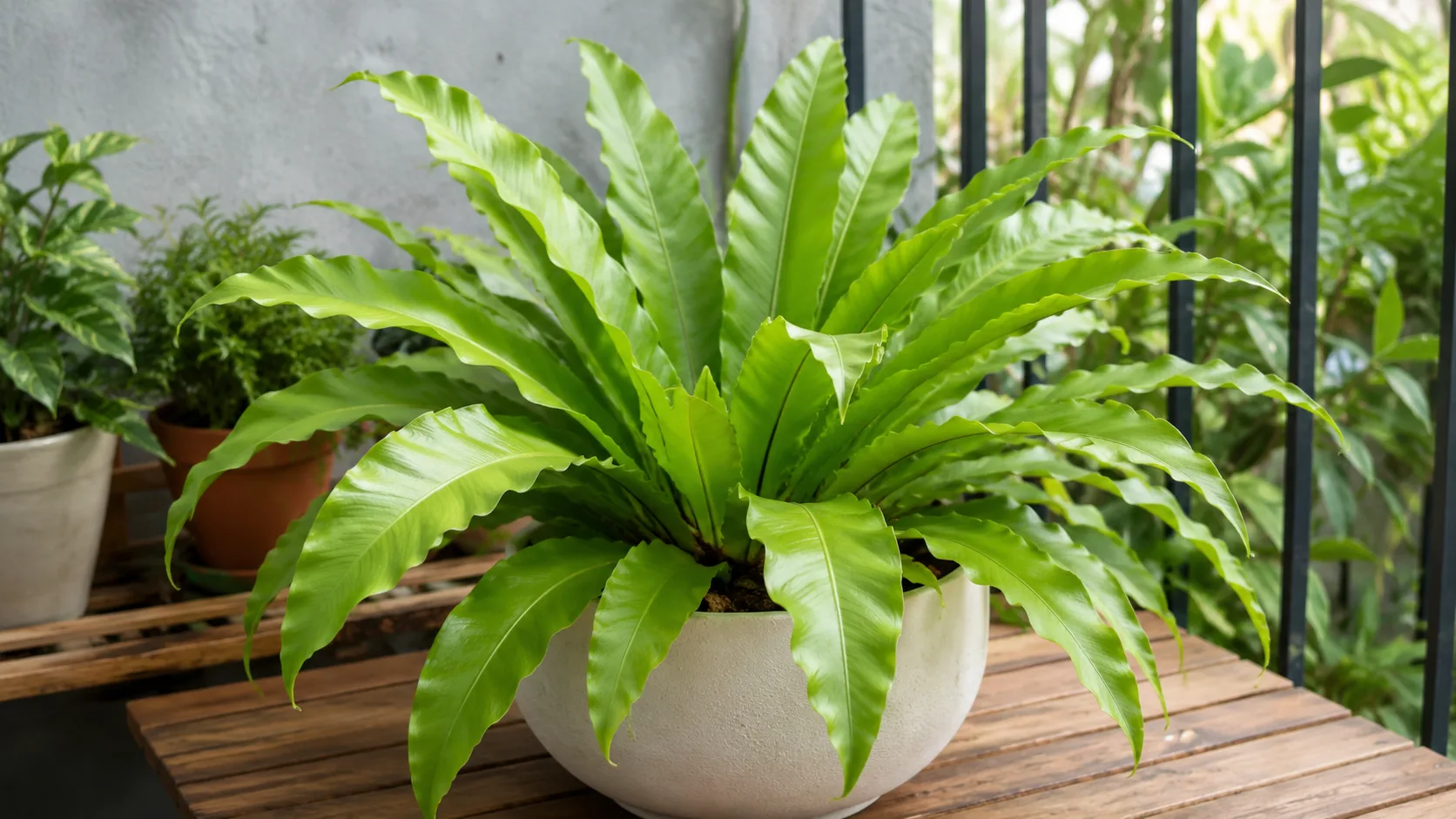
Bird’s nest fern is the bathroom plant for people who want the lush look of a fern without the shedding mess of a Boston fern. Its broad, wavy-edged leaves grow in a rosette from a central nest, staying compact and tidy. Unlike many ferns, it does not drop leaflets everywhere.
The bathroom works because this fern grows on trees and rocks in humid tropical forests. It appreciates the steam and does not demand the daily attention a Boston fern does. The one absolute rule: never pour water into the center rosette. Water the soil around the base, not the nest itself, or the crown will rot.
Why it works: Compact rosette form fits small bathrooms; humidity keeps leaves lush without misting. Care tip: Water the soil, not the center of the plant. If water collects in the crown, tip it out. Common mistake: Pouring water into the crown thinking the plant drinks through its center. This causes rot. Avoid this plant if: Your bathroom is very cold or drafty — bird’s nest ferns prefer temperatures above 60°F.
Useful care guides:
11. Calathea
Best for: Colorful patterned foliage that makes a bathroom feel intentional
Difficulty: Medium
Light: Low to medium indirect
Water: Keep soil lightly moist; avoid drying out completely
Best placement: Shelf or counter with indirect light
Pet safety: Generally considered non-toxic to cats and dogs
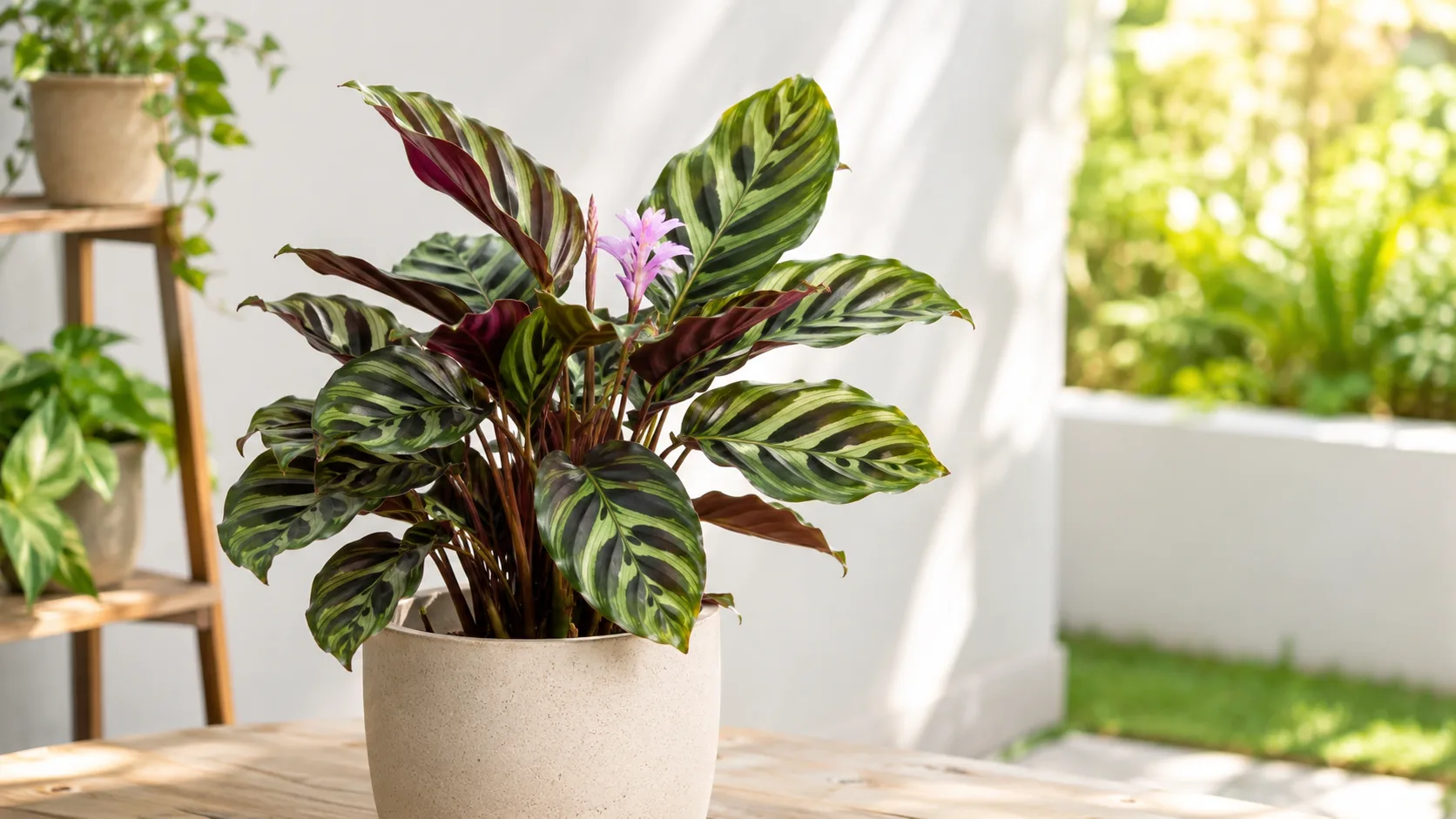
Calathea earns its bathroom spot through sheer visual impact. The leaves — striped, spotted, or feathered with pink, white, and deep green — look more like painted art than foliage. In a dry living room, calatheas crisp and curl within weeks. In a steamy bathroom, they stay lush and vibrant with far less intervention.
The trade-off is that calatheas are particular about water quality, like lucky bamboo and spider plants. They are sensitive to chlorine, fluoride, and hard water minerals, which cause brown leaf edges even in perfect humidity. Filtered or distilled water solves most calathea complaints.
Why it works: Bathroom humidity is the single biggest factor in keeping calathea leaves healthy indoors. Care tip: Use filtered or distilled water — calathea leaf edges brown from tap water chemicals faster than almost any other houseplant. Common mistake: Placing calathea near a drafty bathroom window or AC vent. These plants hate temperature swings. Avoid this plant if: You are not willing to use filtered water, or your bathroom temperature fluctuates widely.
Useful care guides:
12. Heartleaf Philodendron
Best for: Easy trailing greenery that handles almost any bathroom
Difficulty: Very easy
Light: Low to bright indirect
Water: Let the top inch of soil dry between waterings
Best placement: Hanging basket, high shelf, or trailing across a mirror frame
Pet safety: Toxic to cats and dogs if ingested
Heartleaf philodendron is pothos’s slightly softer-looking cousin. Its dark green, heart-shaped leaves trail just as beautifully, and it is just as forgiving. The difference is subtle but matters to people who want a less glossy, more velvety leaf texture and a slightly more delicate trailing habit.
It handles low light, irregular watering, and bathroom humidity without complaint. The vines grow fast in warm, humid conditions, so you may need to trim them back every few months to keep the plant looking tidy rather than overgrown.
Why it works: Nearly as indestructible as pothos, with a softer leaf texture that suits bathroom decor. Care tip: Pinch back growing tips to encourage branching and a fuller plant instead of a few long, thin vines. Common mistake: Confusing it with pothos and treating it identically. Philodendron likes slightly more consistent moisture than pothos. Avoid this plant if: You have a pet that climbs and chews — the trailing vines are tempting targets.
Useful care guides:
- Heartleaf Philodendron care guide
- Heartleaf Philodendron watering guide
- Heartleaf Philodendron light guide
How to Choose the Right Bathroom Plant
Most bathroom plant failures come from choosing before checking. Spend five minutes assessing your actual bathroom before browsing plants.
Light first. This is the non-negotiable filter. Dark bathroom with no window? Your realistic choices are snake plant and ZZ plant, or a grow light. Frosted north-facing window? Add pothos, peace lily, and heartleaf philodendron to the list. Clear east or west window? You can grow almost everything in this guide.
Humidity second. A bathroom used for daily showers creates a completely different environment than a powder room used only by guests. The guest bathroom may be just as dry as any other room, so the humidity benefit disappears. Match your plant to the actual humidity in the room.
Space third. Hanging baskets free up counter space and keep plants away from pets. Small countertop plants like lucky bamboo and bird’s nest fern work in tight bathrooms. Floor plants like snake plant and peace lily need at least a square foot of floor space away from foot traffic.
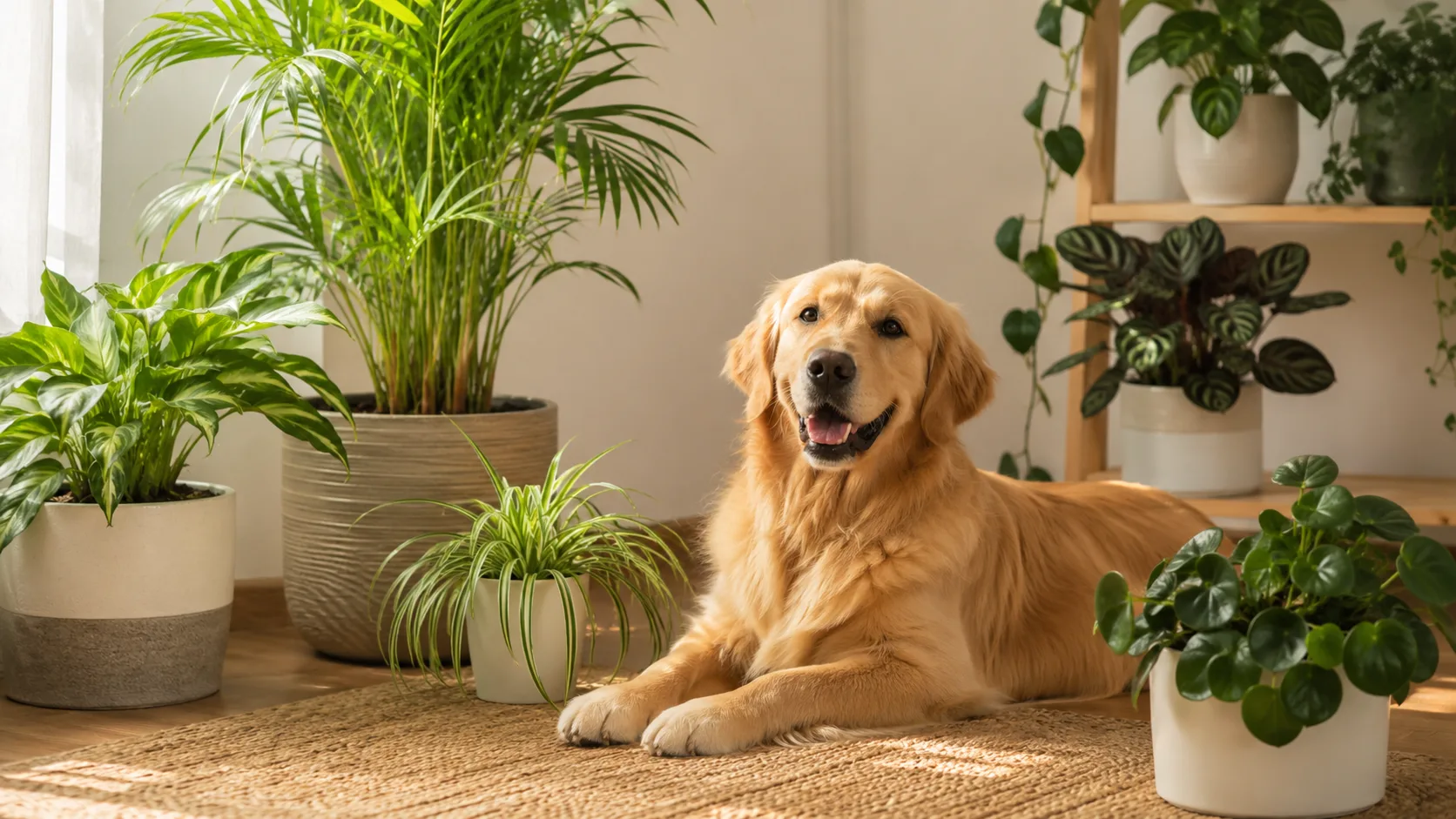
Pets and children last. This should actually come first if you have a cat that climbs everything. Spider plant is the safest trailing option. Boston fern and bird’s nest fern are pet-friendlier floor or shelf choices. Keep all toxic plants — pothos, philodendron, peace lily, snake plant, English ivy — completely out of reach or skip them. The ASPCA maintains a searchable list of toxic and non-toxic plants for cats, dogs, and horses. (ASPCA)
Best Picks by Situation
- Windowless bathroom: ZZ plant or snake plant with a grow light
- Dark bathroom with a small frosted window: Snake plant, ZZ plant, pothos
- Medium light with daily showers: Peace lily, Boston fern, calathea, English ivy
- Bright bathroom with a clear window: Phalaenopsis orchid, bird’s nest fern, spider plant
- Pet-friendly bathroom: Spider plant, Boston fern, bird’s nest fern
- For the forgetful waterer: Snake plant, ZZ plant, pothos
- For the daily plant checker: Boston fern, calathea, English ivy
Common Bathroom Plant Mistakes
Assuming steam waters the plant. Shower steam raises humidity around the leaves. It does not reach the roots. You still need to check the soil and water when it begins to dry. This is the number-one cause of bathroom plant death.
Treating low-light tolerant as no-light. Every plant needs some light to photosynthesize. Snake plant and ZZ plant tolerate low light better than most, but they still need a light source. In a truly dark bathroom, a small grow light on a timer is the difference between a plant that survives and one that slowly declines.
Using pots without drainage. Bathroom humidity means soil dries more slowly. A pot with no drainage hole traps water at the bottom and causes root rot within weeks. Use a nursery pot inside a decorative cachepot, or drill drainage holes.
Ignoring temperature swings. A bathroom that drops to 50°F overnight and spikes to 85°F during a hot shower is hard on tropical plants. Calathea and orchid are especially sensitive. Keep plants away from direct drafts and consider moving sensitive ones out during extreme cold snaps.
Grouping incompatible plants. It looks pretty to arrange different plants together, but a fern that wants constant moisture sharing a tray with a snake plant that wants to dry out means at least one will suffer. Group plants with similar watering needs.
Expecting flowers in low light. Peace lily and phalaenopsis orchid can survive in low light, but they flower best with medium indirect light. If you want blooms in a dim bathroom, bring the plant into a brighter room for a few weeks when it starts forming buds.
Conclusion
The best bathroom plant is the one that matches your actual light and your actual habits, not the one that looks best in a styled photo. For most bathrooms, pothos and snake plant are the easiest wins — they handle low light, forgive missed waterings, and cost very little to try. For bathrooms with a decent window, peace lily and Boston fern unlock the full spa-like look that makes bathroom plants worth the effort.
Start with one plant. See how it does for a month before adding more. A single healthy pothos trailing across a shelf beats five struggling plants crammed onto a counter. If your bathroom has no window at all, a small grow light opens up more options than gambling on a plant in total darkness.
For more on keeping humidity-loving plants happy, see the houseplant humidity guide and the pebble tray setup guide. If you are building a full plant collection across your home, the low-maintenance indoor plants for busy homes guide covers the easiest picks beyond the bathroom door.