Potato Care Guide: Light, Water, Soil and Hilling
Solanum tuberosum
Grow potatoes from seed pieces in full sun, acidic well-drained soil, deep containers or beds, steady moisture, and hilling to prevent green tubers.
Potato Care Guide: Light, Water, Soil and Hilling
Start with wateringThe most common care mistake for PotatoWatering guide → →Potato care essentials
Light
Water
Potatoes need steady moisture while foliage and tubers are developing, but saturated soil can rot tubers. Water deeply when the upper few centimetres begin to dry, keeping the root zone evenly moist rather than cycling between drought and flood.
Soil
Light, fertile, well-drained loam or container mix rich in organic matter. Slightly acidic soil (about pH 4.8–5.5) helps limit common scab; avoid heavy, waterlogged mixes.
Humidity
Temperature
Fertilizer
If plants wilt, yellow, or stall, check soil moisture and tuber exposure before adding more fertilizer.
About Potato
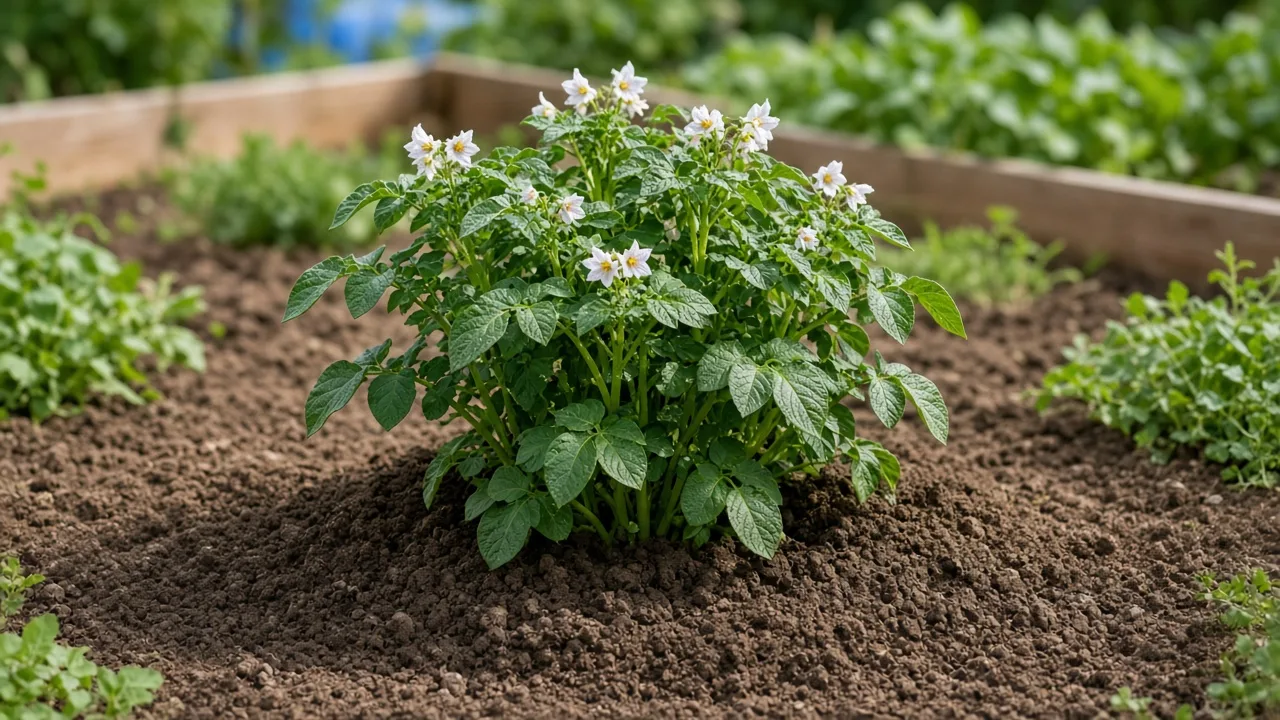
Potato is native to Andes of South America (parts of Argentina, Bolivia, Chile, and Peru), typically reaches 45–90 cm tall and 45–90 cm wide above ground; tubers form on underground stolons indoors, with moderate foliage growth; new potatoes in about 7–8 weeks, mature tubers in 3–4 months growth. Potato has a herbaceous growth habit and part of the Solanaceae family. It is also known as Aloo, Irish Potato, White Potato, and Pomme de Terre.
| Detail | Information |
|---|---|
| Also known as | Aloo, Irish Potato, White Potato, Pomme de Terre |
| Native region | Andes of South America (parts of Argentina, Bolivia, Chile, and Peru) |
| Mature size | 45–90 cm tall and 45–90 cm wide above ground; tubers form on underground stolons |
| Growth rate | Moderate foliage growth; new potatoes in about 7–8 weeks, mature tubers in 3–4 months |
| Growth habit | Herbaceous |
| Scientific name | Solanum tuberosum |
| Family | Solanaceae |
Potato Care Guide: Light, Water, Soil and Hilling
Potato care starts with a simple shift in mindset: you are growing an underground starch crop, not a long-lived leafy houseplant. Solanum tuberosum sends up branching stems and compound leaves, but the harvest forms on stolons below the soil line. Full sun, deep soil, steady moisture, slightly acidic drainage, and repeated hilling (earthing up) matter more than fussing over decorative foliage.
This overview covers identity, mature size, light/water/soil summaries, seed-potato basics, India-friendly cool-season timing, harvest stages, pet and green-tuber safety, and where to go next in the Potato plant hub. Open sibling guides when one variable—light, water, soil, feed, or propagation—needs a deeper fix.
Potato care at a glance
Potatoes want an open, sunny site, soil that drains yet stays evenly moist during growth, and enough depth to bury developing tubers. NC State Extension describes them as performing best in full sun with well-drained, sandy, acidic soil, while poorly drained conditions can rot tubers. The RHS potato guide likewise stresses a sunny, frost-aware planting site and regular watering in dry weather—especially in containers where foliage can shed rain away from the mix.
Above ground, expect roughly 45–90 cm of bushy growth in a productive season; underground, tuber count and size depend on cultivar, depth, moisture, and how well you hill soil around stems. Plan harvest in two modes: tender new potatoes earlier in the season or mature storage tubers after tops senesce—details below and in the Potato propagation guide.
What is a potato plant?
Potato—aloo in much of India—is a herbaceous member of the nightshade family (Solanaceae). NC State Extension notes potatoes are native to parts of South America and are now widely cultivated, with major producers including China, Germany, India, Russia, and the United States. In the garden they are treated as an annual crop grown from tuber pieces, even though the species can persist in mild climates.
The edible part is the swollen underground tuber on stolons. Flowers may appear in white, pink, or purple tones, but fruiting is irrelevant to most kitchen harvests. What matters for care is tuber initiation, bulking, and keeping developing potatoes dark and covered.
Botanical identity: Solanum tuberosum
The accepted name is Solanum tuberosum. Seed packets and extension guides may list common types—early, second early, and maincrop—referring to days to maturity and tuber size rather than a different species. Thousands of cultivars exist for texture and cooking use; home growers usually choose based on season length and local heat, not restaurant russet labels alone.
NC State’s profile also flags high-severity poison characteristics for green plant parts and green-skinned tubers because of solanine—a reason hilling and harvest handling are safety steps, not optional tidying.
Potato versus sweet potato and tomato
Do not confuse Irish potato (Solanum tuberosum) with sweet potato (Ipomoea batatas), a morning-glory relative grown from slips with different soil and warmth needs. Tomatoes share the Solanaceae family and similar alkaloid cautions on green tissue, but tomato care centers on fruit set and support, while potato care centers on stolon tubers and soil depth. If you are comparing crops on a small terrace, allocate the deepest containers to potatoes, not shallow herb trays.
Size, growth habit and harvest types
Potato stems branch upright with pinnately compound leaves. NC State’s quick ID notes six to eight leaflets per leaf and smooth to lightly hairy stems. Growth is moderate: foliage fills out over weeks while tubers swell unseen. LeafyPixels hub data aligns with extension timing—new potatoes in about 7–8 weeks, mature tubers in roughly 3–4 months depending on cultivar and weather.
Foliage above ground
Healthy tops should look sturdy, not spindly. Weak, pale, stretched growth usually points to too little light or heat stress after establishment—see the Potato light guide before assuming a nutrient problem. Yellowing with soggy soil suggests drainage or overwatering; wilting with dry, pulling mix suggests underwatering during hot afternoons on concrete terraces.
New potatoes versus maincrop storage
New potatoes are immature tubers with thin skins, often harvested once plants begin flowering. NC State places them at about 7–8 weeks after planting and describes them as a delicacy with delicate skin. Mature potatoes need the full season—commonly three to four months—and are usually lifted after foliage yellows or dies back, then cured for storage.
Choose your goal when you plant. Digging early reduces total yield from the same plant but gives a quicker kitchen harvest. Holding out for storage tubers means protecting tops from disease and keeping soil moisture steadier through bulking.
Light and temperature
Full sun and heat stress
Potatoes are not shade crops. NC State lists full sun among core requirements, and the RHS advises an open, sunny growing site. On a balcony, give potatoes the least-shaded station you have—ideally six or more hours of direct sun daily where your climate allows.
Extreme sustained heat and water stress can cut tuber quality even when light is strong. In hot lowlands, prioritize cooler months and mulch to moderate soil temperature; do not park containers against a heat-radiating wall without checking moisture twice daily.
Cool-season windows in India and warm climates
In much of the Indian plains, potatoes fit the cool Rabi season when nights are milder—often autumn through winter sowing windows—while hill regions follow local frost calendars. NC State notes potatoes can tolerate a bit of frost on young growth in spring plantings; the RHS warns that young shoots are frost-sensitive in temperate springs, so match protection to your actual lows.
Where summers are fierce, treat potato as a cool-season crop rather than fighting heat with extra fertilizer. If your only open season is hot, consider faster early varieties in deep, shaded-from-afternoon-heat placements only if they still receive strong morning sun—see the dedicated light guide for trade-offs.
Watering basics
Even moisture while tubers bulk
Tubers swell when the root zone stays consistently moist but not waterlogged. The LeafyPixels hub echoes extension guidance: potatoes need plentiful, even moisture during development, yet saturated soil rots tubers. Press a finger into the mix near the stem; if the top 2–3 cm is dry while deeper soil feels cool and slightly moist, water deeply until excess drains from container holes.
The RHS notes that container potatoes need regular watering through the growing season, and rain may not reach the mix under dense foliage. Terrace growers should empty saucers after irrigation so roots do not sit in stale water.
Wet soil versus dry swings
Chronic wetness produces yellowing tops, musty soil, and soft tubers at harvest. Chronic dryness during bulking yields small or knobby tubers and afternoon wilt. If you are unsure which problem you have, check moisture at 10–15 cm depth before adding feed or replanting. The Potato watering guide walks through seasonal rhythm, monsoon wet spells, and first-response steps.
Soil, pH and hilling
Acidic, scab-aware mixes
Potatoes prefer light, fertile, well-drained loam with plenty of organic matter. NC State links acidic soil with reduced bacterial scab risk, aligning with the hub’s pH 4.8–5.5 target; if your mix runs neutral or higher, choose scab-resistant cultivars and avoid fresh high-pH amendments without testing. Heavy clay that stays wet is a poor match—improve drainage with compost and coarse fractions as described in the Potato soil guide.
Why hilling keeps tubers safe
Tubers form along buried stem sections. As shoots grow, mound soil, compost, or mulch around stems so new stolons set tubers underground. NC State recommends hilling once plants are about one foot tall, then once or twice more through the season. The RHS describes earthing up when shoots reach roughly 23 cm, leaving only the top few inches exposed, and repeating as stems lengthen.
Light on tubers turns them green and encourages bitter solanine accumulation. Discard green portions; never eat green-skinned potatoes. Hilling is therefore both a yield practice and a food-safety practice.
Starting from seed potatoes
Certified tubers, chitting, and grocery-store pitfalls
Garden potatoes grow from seed potatoes—small tubers or pieces with eyes—not true botanical seed. NC State advises buying certified disease-free seed to limit problems such as potato late blight, and warns that grocery-store potatoes are often treated with sprout inhibitors and make unreliable planting stock.
The RHS explains optional chitting for early varieties: standing tubers eyes-up in a bright, frost-free place until sprouts reach a few centimetres can speed emergence. Chitting is helpful, not mandatory—maincrop plantings gain less from the extra step.
Cutting, curing cuts, and planting depth
Cut large seed potatoes so each piece has at least two eyes, then let cuts dry and scab over for about a day before planting eyes-up. NC State suggests spacing pieces a few inches apart in trenches or holes with sprouts upward. In containers, the Potato propagation guide covers piece size, sprout orientation, and replanting logic better than this overview can.
Containers, beds and spacing
Depth beats width for potatoes. NC State recommends containers or grow bags at least about 2 feet (60 cm) deep and holding roughly 30 gallons (115 L) for productive growth. Shallower pots may grow foliage but limit tuber set unless you continually top up mix—a form of hilling in a bag.
Raised beds and trenches make hilling easier on the ground. The RHS notes you can grow a few plants in large pots if row space is unavailable—useful on terraces. Leave enough room for final ridge height so tubers stay buried. When stems outgrow a shallow layer, treat that as a signal to read the Potato repotting guide—which in practice means topping up soil rather than lifting the crop mid-season.
Feeding without chasing leaves
Potatoes need fertile soil, but excess nitrogen early can push leafy tops at the expense of tubers. Start with compost-rich mix at planting, then feed lightly and in balance once plants are established—details in the Potato fertilizer guide. The RHS notes container crops benefit from mixed-in organic general-purpose fertilizer because nutrients leach with frequent watering.
If plants stall, verify sun, moisture, and depth before increasing feed. Yellow leaves with wet soil rarely need more nitrogen; they need drainage and a corrected watering rhythm.
Harvest, curing and kitchen use
Lift new potatoes carefully with a fork once plants flower and skins feel thin, taking only what you will cook soon. For storage types, wait until vines yellow or die back, then dig on a dry day, brush off excess soil, and cure sound tubers in a cool, dark, airy place before longer storage.
In the kitchen, peel or cut away green skin, sprouts, and any spoiled areas. Cooked tubers are a staple food; the plant’s leaves, stems, and green berries are not food and should not be fed to pets.
Pets, green tubers and solanine
NC State lists potato as high-severity poison for humans when green plant parts are eaten and identifies problems for cats, dogs, horses, and children exposed to toxic tissue. Green sprouts, foliage, and greened tuber skin contain solanine. Block terrace access to foliage and compost piles; contact a veterinarian promptly if a pet vomits, salivates, or weakens after chewing the plant.
This page is not veterinary advice. The hub’s pet note applies: cooked tuber for people does not make the living plant pet-safe.
Common balcony and terrace mistakes
Using grocery potatoes or too-shallow pots tops the list. Skipping hilling invites green tubers. Irregular watering during bulking produces knobby or small potatoes. Planting in peak summer heat on an unshaded railing without a cool-season plan shortens the crop. Finally, treating potato like a permanent ornamental leads to exhausted soil and disease carryover—rotate containers or refresh mix between seasons when possible.
When to use this page vs other Potato guides
Stay here when you need the whole crop picture: seed choice, season, depth, hilling, harvest stage, and first troubleshooting.
Open a sibling guide when one topic dominates:
- Light — sun hours, heat waves, weak growth
- Watering — finger checks, container rhythm, wilt diagnosis
- Soil — mix recipes, pH, scab-aware choices
- Fertilizer — timing, nitrogen balance, container feeding
- Propagation — seed potatoes, cuts, chitting, spacing
- Repotting — topping up bags and final planting depth
- Pruning — removing diseased tops and managing haulm before harvest
Related Potato guides
Build the cluster as your season progresses:
- Hub: Potato
- Care: light, watering, soil, fertilizer, repotting, propagation, pruning
Start with propagation and soil when planting; add light and watering through bulking; open fertilizer if growth looks pale despite good sun and moisture.
Conclusion
Potatoes reward growers who respect tuber biology: certified seed, full sun, acidic well-drained soil, steady moisture, and repeated hilling to keep tubers dark and safe. Match planting to your cool-season window in hot climates, choose new or storage harvest upfront, and keep green plant parts away from pets. Nail those decisions here, then use the dedicated guides when light, water, soil, or feeding needs a finer adjustment.
How to care for Potato?
When should you water Potato?
Potatoes need steady moisture while foliage and tubers are developing, but saturated soil can rot tubers. Water deeply when the upper few centimetres begin to dry, keeping the root zone evenly moist rather than cycling between drought and flood.
- Press a finger into the soil near the stem - Potatoes need steady moisture while foliage and tubers are developing, but saturated soil can rot tubers.
- water when the top 2–3 cm feels dry while deeper soil stays slightly cool and moist - Water deeply when the upper few centimetres begin to dry, keeping the root zone evenly moist rather than cycling between drought and flood.
- Drain excess water - Water deeply when the upper few centimetres begin to dry, keeping the root zone evenly moist rather than cycling between drought and flood.
What soil works best for Potato?
Light, fertile, well-drained loam or container mix rich in organic matter. Slightly acidic soil (about pH 4.8–5.5) helps limit common scab; avoid heavy, waterlogged mixes.
- 50% quality potting mix or light garden loam - Light, fertile, well-drained loam or container mix rich in organic matter.
- 30% mature compost
- 20% perlite, coarse sand, or coco chips for drainage - Light, fertile, well-drained loam or container mix rich in organic matter.
Grower notes for Potato
Start with certified seed potatoes
Potatoes are usually grown from small tubers or cut pieces with eyes, not true seed. NC State Extension recommends certified disease-free seed potatoes to limit problems such as late blight. Grocery-store potatoes are often treated with sprout inhibitors and are unreliable for planting. Cut pieces so each has at least two eyes, let cuts dry a day to scab over, then plant with eyes facing up.
Give roots depth and steady moisture
Tubers form on stolons below the soil line, so depth matters as much as width. NC State notes that containers or grow bags should be at least about 60 cm deep and hold roughly 115 L (30 gallons) for a productive crop. Keep soil evenly moist during growth; Cornell describes potatoes as needing plentiful, consistent moisture, while poorly drained soil can rot tubers.
Hill soil as the plant grows
Once stems are about 30 cm tall, mound soil, compost, or mulch around the base and repeat once or twice through the season. Hilling buries developing stems so more tubers form along submerged nodes and keeps tubers shaded. Tubers that see light turn green and accumulate toxic solanine—discard green portions and never eat green-skinned potatoes.
Match timing to your climate
In much of India, potatoes fit the cool Rabi season on plains terraces and kitchen gardens, while hill regions may have a different planting window. Plants tolerate light frost on foliage, but tuber quality suffers in heat and water stress. Choose early or maincrop cultivars to match how long you can keep soil cool and moist.
Harvest at the stage you want
New potatoes with thin skins can be lifted about 7–8 weeks after planting, often around flowering. Mature storage potatoes usually need roughly 3–4 months and are harvested after tops yellow or die back. Cure and store sound tubers in a cool, dark, dry place; peel or cut away any green skin, sprouts, or spoiled areas before cooking.
Keep green plant parts away from pets
The starchy tuber is the human crop, but leaves, stems, sprouts, berries, and green potato skin contain solanine and other alkaloids. NC State Extension lists potato as a problem for cats, dogs, horses, and children, with high severity if green plant parts are eaten. Block access to foliage and compost piles, and contact a veterinarian if a pet shows vomiting, weakness, or unusual behaviour after chewing the plant.
Are potato plants safe for pets?
Cooked potato tubers are a human food, but green skin, sprouts, leaves, and stems contain toxic solanine and are not safe for cats, dogs, horses, or other pets.
Green potato skin, sprouts, leaves, stems, and fruit contain solanine and related alkaloids. NC State Extension reports high-severity poisoning in humans and lists the plant as a problem for cats, dogs, horses, and children; ingestion can cause nausea, vomiting, weakness, and respiratory depression. Keep pets away from foliage and seek veterinary care after suspected exposure.
Watering Potato
For Potato, press a finger into the soil near the stem; water when the top 2–3 cm feels dry while deeper soil stays slightly cool and moist and water check every 1–2 days in hot weather; water when the surface dries. Increase frequency during active growth and tuber bulking in warm weather; reduce if cool rains keep soil wet.
| Detail | Information |
|---|---|
| How often | Check every 1–2 days in hot weather; water when the surface dries |
| How to check | Press a finger into the soil near the stem; water when the top 2–3 cm feels dry while deeper soil stays slightly cool and moist |
| Seasonal changes | Increase frequency during active growth and tuber bulking in warm weather; reduce if cool rains keep soil wet |
Signs of overwatering
- persistently wet soil with yellowing foliage
- soft or rotting tubers at harvest
- wilting despite wet roots
Signs of underwatering
- wilted tops in afternoon heat
- small or knobby tubers
- dry, pulling soil in containers
Soil & potting for Potato
Use a mix of 50% quality potting mix or light garden loam, 30% mature compost, 20% perlite, coarse sand, or coco chips for drainage for Potato. Good drainage is essential; standing water promotes tuber rot and root disease. Target soil pH around 4.8–5.5 preferred; use scab-resistant cultivars if pH runs above 6.0. Repot plant seed pieces in the final deep bed, grow bag, or barrel for the season; hill or top up soil as stems grow instead of moving the crop mid-season, ideally in cool-season window in many Indian plains (often autumn–winter); adjust for local frost and heat.
| Detail | Information |
|---|---|
| Recommended mix | 50% quality potting mix or light garden loam, 30% mature compost, 20% perlite, coarse sand, or coco chips for drainage |
| Drainage | Good drainage is essential; standing water promotes tuber rot and root disease |
| Soil pH | 4.8–5.5 preferred; use scab-resistant cultivars if pH runs above 6.0 |
| Repotting frequency | Plant seed pieces in the final deep bed, grow bag, or barrel for the season; hill or top up soil as stems grow instead of moving the crop mid-season |
| Best season to repot | Cool-season window in many Indian plains (often autumn–winter); adjust for local frost and heat |
Signs it needs repotting
- stems reach about 30 cm and need another hilling
- container is shallower than about 60 cm for full-size tubers
- soil has settled and exposes developing tubers to light
Humidity & temperature for Potato
Fertilizer & pruning for Potato
Use if plants wilt, yellow, or stall, check soil moisture and tuber exposure before adding more fertilizer. for Potato.
| Detail | Information |
|---|---|
| Fertilizer type | If plants wilt, yellow, or stall, check soil moisture and tuber exposure before adding more fertilizer. |