Potato Soil Guide for Beds and Grow Bags
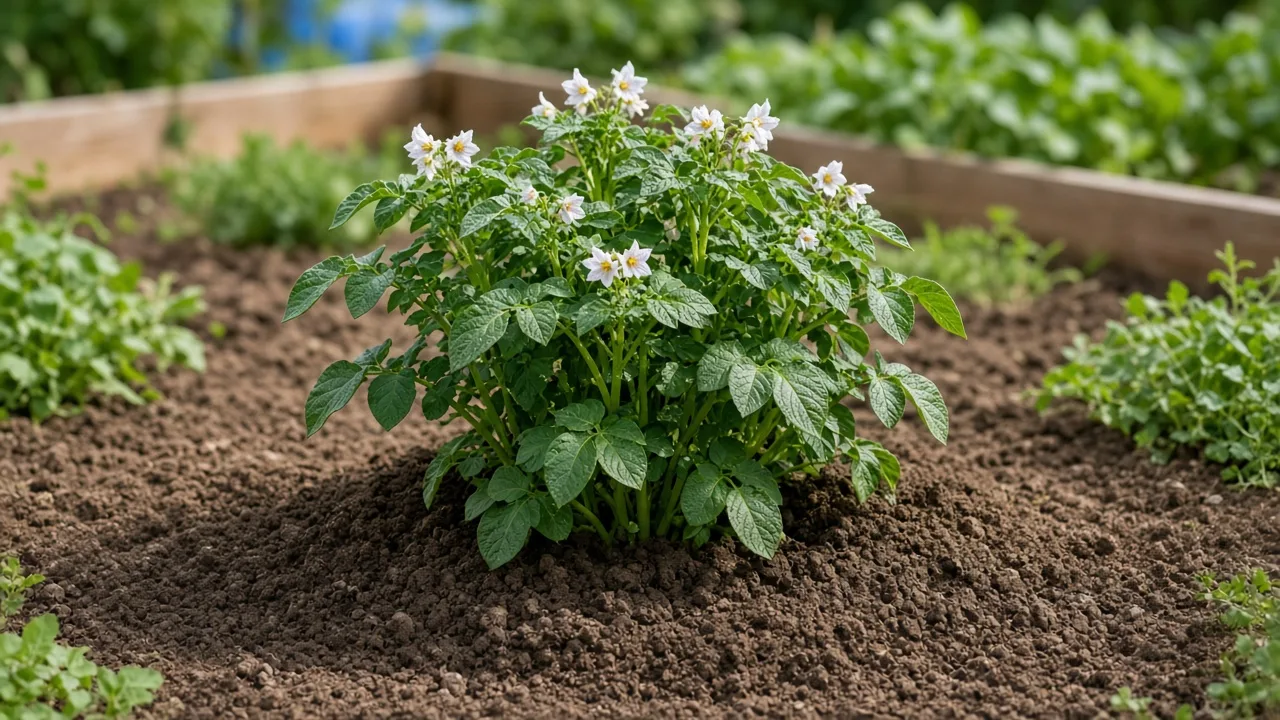
Potato Soil Guide for Beds and Grow Bags
Potato Soil Guide for Beds and Grow Bags
Potato (Solanum tuberosum) is not asking for “houseplant mix.” You are building a temporary underground factory where stolons swell into tubers while tops stay in full sun. The soil must stay moist enough for steady bulking, yet open enough that roots never stew after irrigation or monsoon rain. Get texture, pH, and depth wrong and you pay at harvest — scabby skins, hollow hearts, rot, or green tubers you cannot safely eat.
This page covers mix, acidity, bed preparation, container depth, and hilling soil — not irrigation timing. For when to water, use the Potato watering guide. For the full seasonal picture, start with the Potato overview.
What potato roots and stolons need from soil
Cornell’s potato profile describes the ideal root zone as well-drained, light, deep, loose soil, high in organic matter, with plentiful, consistent moisture. NC State Extension adds that potatoes grow best in full sun and well-drained, sandy, acidic soil, and that poorly drained soil may cause tubers to rot. Light, consistently moist soil helps produce large, evenly shaped potatoes when drainage is still good.
That combination is the decision filter for every bed or bag: fertility for leaf growth that feeds tubers, pore space for oxygen, and a profile that sheds surplus water within hours rather than days.
Why depth matters as much as drainage
Tubers form along buried stems, not only directly under the seed piece. NC State notes that containers or grow bags should be at least about 2 feet (60 cm) deep and hold at least 30 gallons (~115 L) so you can hill soil as stems grow. Shallow pots force tubers toward the surface where light triggers greening and bitter alkaloids. Depth is part of soil management — you need volume to keep adding mix through the season.
The practical pH window for Solanum tuberosum
Unlike many vegetables that prefer near-neutral soil, potatoes are an exception. Cornell lists pH 4.8–5.5 as the performance window, with the note that scab is less of a problem at low pH. LeafyPixels hub data matches that roughly 4.8–5.5 target for home aloo plots. Treat it as a species-specific default, then follow a local soil-test report instead of guessing with sulphur or lime.
If your native soil or terrace mix tests above 6.0, Cornell advises scab-resistant cultivars rather than chasing impossible acidity on limestone-derived ground. Structure still comes first: compacted, airless soil at “correct” pH on paper will not produce clean tubers.
Common scab and why acidity helps
Common scab (Streptomyces species) marks tuber skins when conditions favour the pathogen, often on alkaline or dry patches in the root zone. Lower pH alone is not a guarantee, but it aligns with long-standing extension guidance for potatoes. If scab appears repeatedly despite good drainage, combine acidic tending mix, even moisture, and resistant varieties rather than only adding more compost on top.
Test and prepare ground before planting seed potatoes
Walk the site after a deep soak or heavy shower. Water should infiltrate within minutes; puddles that linger for hours mean fix structure before you plant certified seed pieces. Dig a small inspection hole: soil that glistens, smells sour, or squeezes into a tight shiny ribbon needs organic matter and aeration work, not another layer of raw manure.
In containers, fill the empty bag or pot with your proposed blend, water thoroughly, and confirm surplus exits the base without the mix turning to soup. Blocked outlets or flat terrace paving that seals holes cause more potato failures than “wrong” NPK.
Drainage checks after irrigation or rain
Press your finger into the mix near the stem after watering. The top few centimetres may dry while deeper soil stays cool and slightly moist — that is normal for a well-aerated profile. If the whole column stays muddy for days, add coarse perlite, coco chips, or sand to the next hilling layer and improve outlet clearance before tubers swell.
Warm soil and Rabi timing on Indian plains
Potatoes are a cool-season crop on many Indian plains terraces, often planted in the Rabi window when nights are milder. Soil should be workable and warming, not cold, wet clay worked the day of planting. Prepare beds or fill bags ahead of sowing so you are not compacting wet soil around seed pieces — that mistake shows up as slow emergence and uneven tuber set.
Garden beds, trenches, and raised mounds
RHS potato guidance recommends digging in plenty of organic matter such as garden compost or well-rotted manure before planting, ideally the previous autumn or winter when possible. Spread maturity across the whole planting zone rather than a fertile hole surrounded by hard pan. Trenches about 15 cm deep with seed potatoes set eyes-up, then covered, give a clear path for the first hilling pass later in the season.
Raised beds help on heavy clay because they lift the root zone above a saturated water table. Mounded rows achieve a similar effect in ground plots. Either way, the goal is the same: loose, fertile, drainable soil that you can rake back up around stems as they lengthen.
Organic matter without waterlogging
Use mature compost that smells earthy, not ammonia-sharp. Fresh manure can heat, slump, and hold excess water against stems. RHS also allows a 10 cm layer of compost after planting on no-dig plots — useful when you want fertility without deep tillage. Organic matter feeds soil life and buffers moisture; it cannot replace drainage outlets when monsoon rain arrives.
Rotate potatoes to a fresh plot when you can. RHS notes that moving the crop yearly helps limit disease build-up in soil — especially relevant if you reuse terrace beds for nightshades season after season.
Container and grow-bag soil for aloo on the terrace
Dense garden soil alone is a poor sole ingredient in pots. It compacts, sheds water down the sides, and may carry pathogens. Use a peat-free multipurpose or vegetable potting mix designed for containers, or blend your own. RHS suggests containers at least 30 cm wide and deep as a minimum starting point, with more depth added as shoots grow — early potatoes in small pots are a different game from maincrop tubers in deep bags.
Gardener’s Path stresses large drainage holes and porous materials such as fabric grow bags so water does not pool at the bottom and harbour rot. Pierce commercial compost bags if you repurpose them; standing water at the base is a direct route to tuber decay.
A practical DIY potato potting mix
LeafyPixels hub data suggests a workable blend of about 50% quality potting mix or light garden loam, 30% mature compost, and 20% perlite, coarse sand, or coco chips for aeration. Moisten components before filling, and avoid stomping the mix — firm enough to support stems, loose enough for stolons to expand. Pre-wet and drain an empty bag before planting so you know the blend behaves in your climate.
Store-bought mixes and grow-bag drainage
Choose fresh, clean medium labelled for vegetables or outdoor containers. Avoid waterlogged, sour-smelling bags. “Garden soil” and “topsoil” products are usually too dense as the only ingredient. If a peat-free mix sheds water when first opened, pre-moisten slowly in a tub rather than flooding a planted bag repeatedly.
Hilling, earthing up, and keeping tubers buried
Hilling is soil management, not optional decoration. NC State advises piling soil or mulch around the base once plants are about one foot tall, repeating through the season, because submerged stem sections produce more tubers and tubers exposed to light turn green and produce toxic compounds. RHS describes drawing soil up to leave only the top 10 cm of shoots visible, building ridges 20–30 cm high over time.
In containers, add compost in stages as shoots grow until the level sits just below the rim — the same principle as field earthing up. Your initial soil volume must leave headroom for those additions; that is why shallow planters fail even when the first planting layer looks perfect.
Soil mistakes that show up at harvest
Persistently wet soil, yellowing foliage, and soft or rotting tubers at lift point to poor drainage or over-irrigation on an already heavy mix. Small, knobby tubers often trace back to drought stress or shallow depth, not only “lack of fertilizer.” Green skin means light reached tubers — usually insufficient hilling or too little mix in the container.
Wilting tops can mean dry soil or saturated anaerobic soil. Check moisture several centimetres down and inspect drainage before changing anything. If stems outgrow the bag mid-season, see the Potato repotting guide for topping up and final depth — potatoes are not transplanted like houseplants, but you still add soil volume as they grow.
Heavy clay and monsoon rain
Clay that cracks when dry and seals when wet is hostile to stolons. On Indian plains, combine raised planting, coarse amendments in the lower half of the bag, and clear runoff paths before Rabi planting. After monsoon bursts, pause irrigation until the column dries slightly; repeated flooding on dense mix is how tuber rot starts weeks before you notice it above ground.
Do not rely on a decorative gravel layer at the pot bottom to “fix” clay-heavy fill — it reduces usable depth without aerating the root zone. Work structure into the whole profile, and keep outlets open.
When to use this page vs other Potato guides
Use this soil guide to choose bed versus bag, set a pH target, build a drainable mix, and plan hilling volume. Use the Potato watering guide for finger-check timing and seasonal adjustments, the Potato fertilizer guide for feeding once drainage and depth are right, and the Potato light guide if tops stay pale despite good mix.
For certified seed pieces, chitting, and planting depth, use the Potato propagation guide. Final container sizing and mid-season top-up mechanics live in the Potato repotting guide.
Related Potato guides
The Potato care overview ties together cool-season timing, hilling, harvest stages, and pet safety around green plant parts. The Potato watering guide translates this mix’s drainage rate into an irrigation schedule, while the Potato fertilizer guide covers nutrients after roots, light, and moisture are stable.
Growers starting from seed potatoes can follow Potato propagation before moving plants into the deeper final soil volume described here. Terrace growers who run out of depth mid-season should read Potato repotting for topping up bags without burying foliage.
Conclusion
Good potato soil is loose, fertile, slightly acidic, and deep enough to earth up — in ground or in bags. Test drainage before planting, match pH to scab risk, and reserve volume for hilling so tubers stay dark and safe to eat.
Your first action is simple: water an empty grow bag or inspect the bed after a soak and watch how fast water leaves. That test tells you whether to add aeration, raise the root zone, open an outlet, or plant into soil that is already fit for aloo.