Potato Light Needs: Full Sun Hours & Terrace Tips
Potato Light Needs: Full Sun Hours & Terrace Tips
Potato Light Needs: Full Sun Hours & Terrace Tips
Potato (Solanum tuberosum)—aloo in many Indian kitchens—is a cool-season tuber crop, not a low-light houseplant. The harvest forms on underground stolons, but the engine for that growth is full sun on the leafy tops. NC State Extension lists potatoes as growing best in full sun—defined there as six or more hours of direct sunlight a day—with well-drained, acidic soil. Weak light produces thin, stretched stems and small tubers long before you reach harvest. If you are placing a grow bag on a shaded courtyard wall, read this before you plant; light mistakes show up weeks later as leggy tops and disappointing yields.
For seed-potato prep, hilling, and harvest timing, start with the overview. This page covers how much sun potatoes need, where to place beds and containers on Indian terraces, chitting light, and the first fixes when growth looks weak or tubers peek into daylight.
Potato Light Needs: The Quick Answer
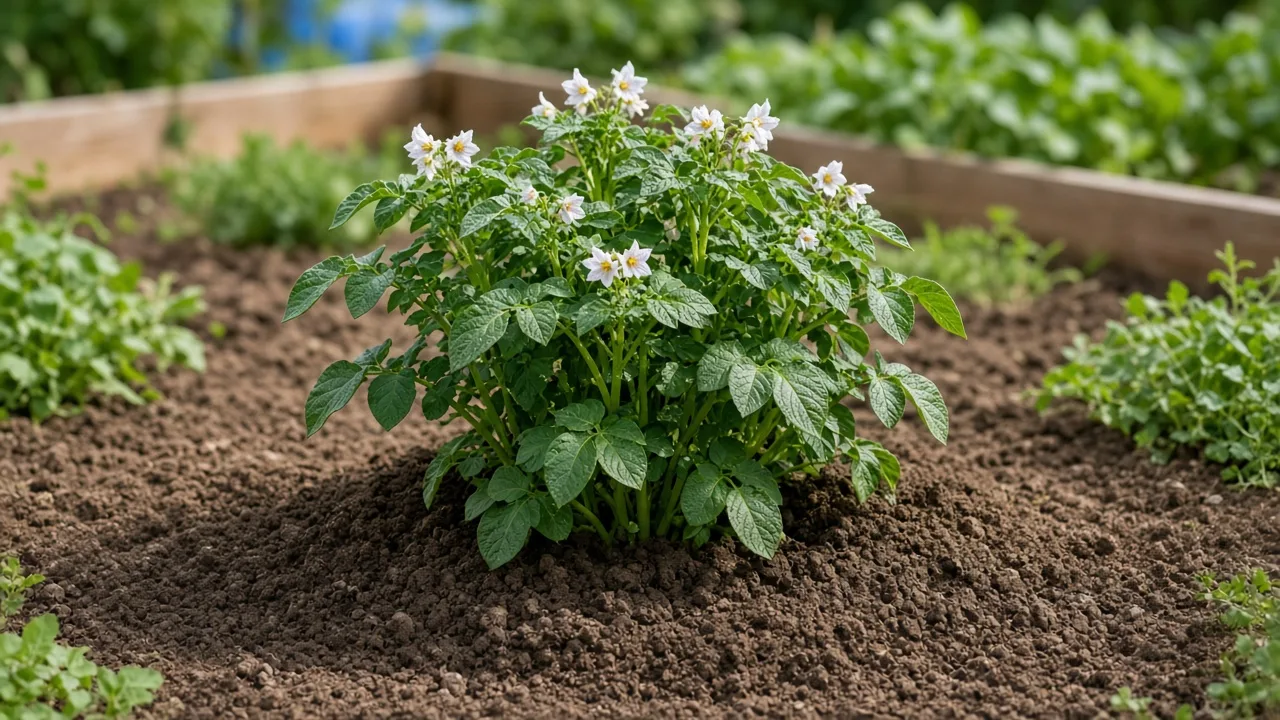
Plan for at least six hours of direct sun on the potato canopy each day as a working minimum. NC State Extension uses that threshold for full sun. The RHS describes potatoes as needing an open, sunny growing site, and UF/IFAS Gardening Solutions instructs gardeners to plant in a spot that receives full sun. On an open Indian terrace, that usually means the sunniest outer edge away from parapet walls, water tanks, and neem trees that throw long afternoon shadows.
Partial shade may keep plants alive but rarely delivers the photosynthesis budget maincrop tubers need. Meanwhile, tubers themselves must stay dark under soil or mulch; NC State Extension warns that tubers exposed to light turn green and produce toxic compounds. Sun on leaves is essential; sun on spuds is a safety problem—see repotting (hilling) once stems grow.
How Much Light Potato Actually Needs
Potatoes are full-sun vegetables through their active growing season. They build compound leaves and branching stems that feed stolon and tuber expansion below ground. Unlike leafy greens that tolerate dim corners, Solanum tuberosum is bred for open-field production under bright skies.
Six hours as the extension baseline
Six hours of unobstructed direct sun—when a sharp hand shadow falls on soil or bag surface—is the baseline NC State Extension cites for full sun. “Bright indirect” light reflected off walls does not substitute; potato leaves need photons on the upper leaf surface for hours, not a briefly lit corner at noon.
Why foliage light drives underground yield
Tuber size tracks how vigorously the canopy photosynthesizes during bulking. Epic Gardening’s potato guide notes that potatoes are productive when given lots of sun along with fertile soil and steady moisture. Shade forces the plant to allocate less energy to stolons, which shows up as small, knobby tubers even when watering looks correct. Fix placement toward open sky before escalating fertilizer.
Two kinds of light: sunny leaves, buried tubers
Light requirements split in two for this crop—an detail many generic “vegetable sun hours” lists skip.
Leaves and stems want maximum direct sun during the growing season. Epic Gardening recommends a location where plants grow in full sun, while noting that green growth is not frost-hardy even though tubers tolerate cool soil.
Developing tubers must stay covered. As you hill or top up containers, you are managing light exclusion, not light delivery. NC State Extension states that tubers turn green and develop toxins if not sufficiently covered; Epic Gardening ties green color to solanine, a mildly toxic chemical that forms when tubers see sunlight. The RHS describes earthing up so developing potatoes are not exposed to light, which makes them green and inedible. Peel or discard green areas at harvest and never eat green-skinned potatoes.
Best terrace, balcony, and grow-bag placement
The RHS advises planting container potatoes in full sun with consistent watering—often one seed piece per about 30 cm pot on a bright site. Replicate that openness on a rooftop: avoid tucking bags into a narrow air shaft that only catches a strip of noon light.
The morning–noon–afternoon shadow test
On a clear day, note when direct sun first hits the bag or bed, whether midday shade from walls or laundry covers the foliage, and whether late-afternoon sun still reaches the top third of the stems. Potatoes bush outward; light at soil level at 9 a.m. does not help if upper leaves sit in shadow by 3 p.m. If all three checks fail, move the crop or choose a different vegetable for that corner.
Raise grow bags on bricks or stands if a parapet ledge blocks low-angle winter sun during Rabi plantings. Pair bright placement with soil depth—NC State Extension suggests containers at least about 60 cm (2 feet) deep and roughly 115 L (30 gallons) so you can hill while keeping tubers buried.
Seasonal light strategy for Indian growers
In much of the Indian plains, potatoes fit the cool Rabi window when nights are milder and days are still bright—see the overview for timing nuance in your region. Hill stations and northern belts may follow different calendars, but the light rule stays the same: cool air plus strong sun beats warm shade.
Rabi cool-season windows and cloudy spells
February–March plantings often catch long, clear days before pre-monsoon haze thickens. Extended overcast weeks still cool the soil but lower daily light integrals; vines may stay green yet bulk tubers slowly. In dim spells, avoid shading the bed further with tall companion plants on the sunward side, and resist extra nitrogen that pushes leafy growth without light to support it.
Late-season heat and glare on containers
Epic Gardening notes that in high heat, potato tops may need protection from intense sun, and that hot weather following cold can cause plants to lighten, dry up, and produce poor tubers. On bare tile terraces, black grow bags can overheat roots even when leaves look fine. Cluster bags where roots get brief afternoon shade from a low wall while foliage still receives morning and midday sun, and keep soil evenly moist per the watering guide—wilting on dry soil in glare is often moisture stress, not a call to move plants into deep shade.
Chitting seed potatoes in bright, cool light
Before planting, many growers chit seed potatoes—encouraging short, sturdy sprouts. Epic Gardening recommends a sunny but cool spot around 10 °C (50 °F) with eyes facing up, sprouting for several weeks before planting. Bright light keeps sprouts stocky; a warm dark cupboard produces long, fragile shoots that break off at planting.
Near Indian plains winters, a bright veranda with cool nights often works better than a hot kitchen shelf. This is indirect preparation light for seed pieces, not a substitute for full outdoor sun after emergence.
Grow lights: only for short indoor starts
Mature potato plants are poor permanent houseplants—they need outdoor photon flux most growers cannot replicate indoors. If you must hold chitted seed indoors briefly before a cold night passes, run full-spectrum LEDs 12–14 hours daily and keep sprouts within a few inches of the lamp to prevent stretching. Transplant to the sunniest outdoor bed or bag as soon as weather allows, using the same hardening mindset as other vegetables in propagation.
Warning signs of too little light
Watch for long internodes, small pale leaves, sparse branching, and tops that lean toward the brightest gap in a wall. Tubers may stay marble-sized despite months in soil. Stems reaching 30 cm with weak color are a signal to shift bags into open sky or prune competing shade—then hill per pruning and repotting guidance—before adding feed.
Leggy indoor chits need brighter, cooler light or sooner planting outdoors—not more fertilizer.
Warning signs of too much sun or heat stress
Bleached or silvered leaf patches, crisp margins, and midday collapse on dry soil point to radiation plus moisture stress, especially on young transplants or heat-stressed bags. Wilting with wet soil suggests root issues—check soil drainage—not insufficient sun.
If upper leaves fry during a heat wave but roots stay moist, use brief afternoon shade cloth on foliage only for a few days—do not bury the crop in permanent shade. Green skin on tubers poking through soil means light hit the spud, not the leaf; cover immediately with compost or soil.
Light, hilling, and keeping tubers covered
Hilling is how you reconcile “maximum sun upstairs” with “zero light downstairs.” NC State Extension recommends piling soil once plants are about 30 cm (one foot) tall and repeating through the season. The RHS describes repeating earthing up until ridges are 20–30 cm high, leaving only the top growth exposed.
Each time soil settles in a bag or exposes a swelling tuber, top up before daylight reaches it. Bright sun on the canopy plus dark cover on tubers is the pairing that keeps yields and food safety aligned.
When to use this page vs other Potato guides
- Potato overview — identity, Rabi timing, certified seed, and harvest stages before you tune light.
- Potato watering — moisture checks when full sun dries grow bags faster than shaded corners.
- Potato soil — acidic, well-drained mixes and pH when wilting may be waterlogging, not light stress.
- Potato fertilizer — feeding after you confirm the canopy receives enough sun.
- Potato repotting — hilling and topping up containers so tubers stay buried.
- Potato propagation — seed pieces, chitting, and transplant into full sun.
- Potato pruning — managing tops without stripping leaves that feed tubers.
Related Potato guides
- Potato overview — tuber crop basics and Indian cool-season context
- Potato watering — even moisture when bright sun increases transpiration
- Potato soil — light, fertile mixes that support sun-driven bulking
- Potato repotting — hilling depth that blocks light from tubers
- Potato propagation — chitting and planting into the sunniest site you have
Conclusion
Potatoes reward open, all-day sun on the foliage and complete darkness on developing tubers—not a permanently shaded balcony or a dim indoor corner. Aim for at least six hours of direct light on the leafy canopy, place grow bags where walls do not steal afternoon rays, and hill or top up soil the moment tubers threaten to green. Chit seed potatoes in bright, cool light, then move the crop outdoors as soon as weather allows. When new leaves stay deep green and stolons swell underground, your light plan is working; when stems stretch and tubers stay small, fix sun before you change anything else.