Potato Pruning Guide: Flowers, Foliage & Safe Cuts
Potato Pruning Guide: Flowers, Foliage & Safe Cuts
Potato Pruning Guide: Flowers, Foliage & Safe Cuts
First, cut out only diseased, mushy, or clearly dead foliage with clean scissors or pruners—snip into healthy green tissue and bag the debris instead of composting it. Do not pinch flowers, thin the canopy, or cut stems to the ground until you know whether the problem is blight, beetles, or normal lower-leaf senescence. For planting depth, hilling, and container timing, see the Potato overview.
Quick answer
Potato (Solanum tuberosum) is an annual tuber crop, so “pruning” means foliage management, not shaping woody branches. NC State Extension describes potatoes as herbaceous plants grown for underground tubers on stolons; the leaves above ground feed that harvest. Your first cut is always disease or pest cleanup. Mid-season, flower pinching is optional—The Spruce notes flowers are not required for tubers and that removing blooms may redirect a little energy while preventing toxic green berries around pets and children. Late in the season, let tops yellow naturally or cut stems about one to three weeks before digging storage potatoes so skins can set (UF/IFAS). Keep watering even after minor trims, maintain full sun for recovery, and use hilling—not aggressive leaf stripping—to protect tubers from greening.
What pruning does for potatoes
Home growers search “potato pruning” for three different jobs:
Sanitation removes late-blight lesions, beetle-chewed leaves, and mushy stems so spores and pests do not spread. Flower management pinches showy blooms (and potential berries) while tubers bulk underground. Season-ending top removal slows the plant deliberately so skins toughen before harvest.
Unlike vining crops, potatoes do not need a trained canopy. Each compound leaf exports sugars to stolons. NC State Extension notes that new potatoes can be harvested once plants begin flowering, usually about 7–8 weeks after planting, while mature tubers often need 3–4 months and are lifted after tops die back. Pruning cannot fix shallow soil, drought stress, or heat that shuts tuber growth—it only helps you manage what is already on the plant.
Cleanup vs flower pinching vs end-of-season cuts
| Situation | Action | Timing | What to expect |
|---|---|---|---|
| Water-soaked leaf edges, white sporulation, or rapid collapse | Disease cleanup; remove affected shoots | As soon as spotted | Slower spread; may not save crop if blight is advanced |
| White or purple flowers; pets or kids nearby | Pinch flower clusters at stem tips | When blooms open | Fewer toxic green berries; optional yield effect |
| Dense lower leaves touching wet soil | Remove lowest leaf tier for airflow | Dry morning during active growth | Less splash onto foliage; do not strip the whole plant |
| Storage harvest planned; skins still thin | Cut or senesce tops before digging | ~1–3 weeks pre-harvest | Firmer skins; no regrowth from cut stems |
When to trim potato tops
Mid-season maintenance
Scout every few days in humid Rabi-season weather on Indian terraces and in monsoon-adjacent pockets where leaves stay wet. NC State Extension recommends scouting often and removing infected plants and tubers when late blight appears—early removal is your most practical home-garden tool.
Pinch flowers when they open if you want to follow Gardenary guidance on blocking berry formation and nudging energy toward tubers. If blooms are out of reach of pets and you enjoy them, leaving flowers is also valid; The Spruce stresses that many cultivars flower lightly or not at all without hurting yield.
End-of-season vine cuts
For new potatoes, dig when tubers size up—often around flowering—without topping the whole plant first. For storage potatoes, let foliage yellow naturally or cut stems after tubers reach full size. UF/IFAS advises vine killing 7 to 21 days before harvest to improve skin set on table-stock types. Home growers can simply snip stems at soil level with shears instead of using commercial desiccants.
What you can remove anytime
Fully brown, frost-nipped, or beetle-defoliated leaflets can be taken whenever you see them. Emergency blight removal should happen immediately, even in wet weather—then wash tools and hands before touching healthy nightshades.
What to check before cutting
Walk the row or container with these four checks:
- Lesion pattern: Late blight shows dark, water-soaked leaf spots with pale borders and sometimes white spores on undersides (NC State Extension). Confine cuts to affected stems; do not shear the whole patch if only one stem shows symptoms.
- Tuber stage: Flowering and bulking mean photosynthesis still matters. Heavy pruning during active bulking shrinks tubers more often than flower pinching helps.
- Soil coverage: Green tubers mean light reached stolons—hill with soil or compost (repotting and hilling guide) before you blame size on “too many leaves.”
- Moisture rhythm: Wilting with wet soil points to rot risk; pair any foliage removal with corrected watering, not more cutting.
If stems are tall, spindly, and pale, open light and ease nitrogen before structural trimming—potatoes rarely respond like bushy ornamentals.
The first cut to make
Identify the worst single stem with blight, rot, or beetle stripping. Trace it to where tissue turns firm and green, then cut one node below the last healthy leaflet. Bag that stem and any fallen leaf bits; late blight sporangia travel easily on wet tools and hands (NC State Extension).
Only after infected material is gone should you pinch flowers or remove crowded lower leaves. If every plant looks collapsed, skip cosmetic work and plan harvest or crop removal instead of chasing a tidy canopy.
How to pinch potato flowers
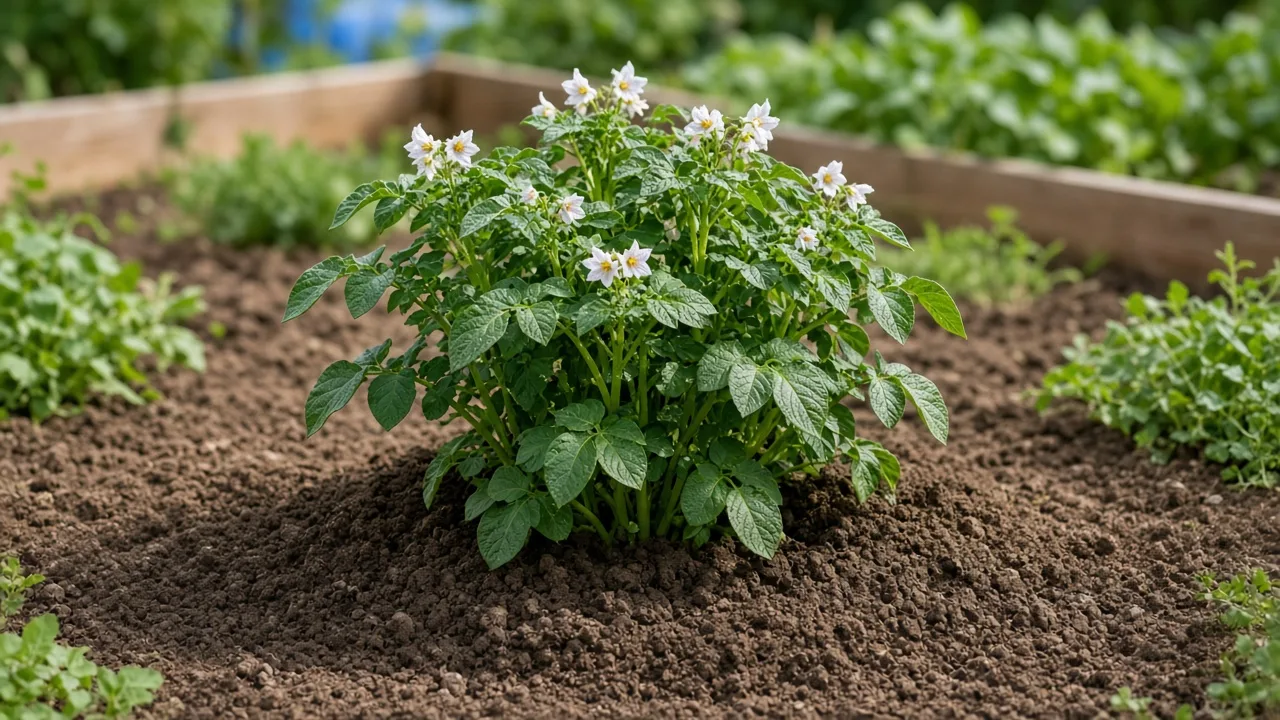
When clusters of white, pink, or purple blooms appear, grasp the flower stem and pinch or snip just above the top leaf node on that lateral. Gardenary recommends removing blooms to keep energy heading toward tubers and to prevent poisonous green berry formation. The Spruce adds that flowering is a normal sign of maturity and that yield changes are minor on many cultivars—treat pinching as optional unless berries or seed saving matter to you.
Leave a few flowers only if you are deliberately saving true potato seed and can keep children and pets away from the fruit.
Thinning foliage for airflow (limited)
Dense, humid canopies invite foliar disease. You may remove one lower leaf tier on individual plants when leaves touch soggy soil or block air at the bag rim. Cut petioles near the main stem without peeling bark.
Do not hedge-trim the entire plot. The Spruce allows trimming only when excess foliage blocks sun or air—and even then, take the minimum green tissue needed. If Colorado potato beetle larvae already defoliated sections, focus on pest control and soil health rather than compensating with fertilizer.
End-of-season top removal
When tubers are full-sized and skins still slip when rubbed, prepare for storage harvest:
- Stop adding nitrogen-rich feed (see fertilizer timing).
- Either allow natural yellowing or cut stems 10–15 cm (4–6 in) above soil with clean shears.
- Wait roughly one to three weeks so skins set (UF/IFAS).
- Dig carefully to avoid skinning tubers; cure sound potatoes in a cool, dark, dry space as described on the overview.
NC State Extension notes mature harvest when plants dry down—natural senescence works if disease pressure is low. Manual top cuts mimic commercial vine kill on a patio scale.
How much is safe to remove
Use these limits during active growth:
- Blight or rot: Only infected stems plus one healthy node margin—never half the plot in one afternoon unless abandoning the crop.
- Flowers: All visible clusters on a plant are fine to pinch; that is a few grams of tissue, not the canopy.
- Airflow thinning: One lower tier per plant per week maximum.
- Season-ending cut: Entire aerial portion once—after that, the plant will not refoliate.
If tubers are still sizing and foliage looks healthy, err on keeping leaves. Potatoes store energy underground; stripping tops early is a harvest decision, not a shaping trick.
Tools, sanitation, and handling safety
Use sharp bypass pruners or scissors for stems and flower stalks. Wipe blades with 70% isopropyl alcohol before you start and when moving between plants, especially after blight removal.
NC State Extension lists high-severity poison characteristics for green plant parts—leaves, stems, flowers, and green berries contain solanine. Wear gloves if you handle lots of trimmings, keep cuttings away from dogs, cats, and children on terraces, and wash hands before touching seed pieces for propagation. Cooked tubers are the edible crop; green skin still needs peeling or discarding.
Aftercare following trims
After any cut:
- Keep soil evenly moist but not waterlogged so regrowth and tuber fill continue (watering guide).
- Hill if stolons peek through the mix after disturbance.
- Pause high-nitrogen feeds briefly after heavy cleanup; resume balanced nutrition only when new leaves look firm and dark green.
- Monitor daily for new lesions—second blight strikes often appear within a week in humid weather.
Minor flower pinching rarely needs extra care beyond normal rhythm. Season-ending top cuts mean harvest is the next step, not foliar recovery.
Recovery and signs pruning helped
Flower pinching: New leaves keep emerging; tubers continue sizing; no green berries form on pinched plants.
Disease cleanup: Lesions stop climbing the stem; healthy upper leaves stay rigid; spread slows to neighboring plants.
Airflow thinning: Lower stems look drier after irrigation; fewer new water-soaked spots appear on lowest leaflets.
End-of-season cut: Skins resist rubbing after the waiting period; tubers do not sunburn if soil stayed covered.
Signs you cut too much or too early: Wilting despite moist soil, stalled tuber growth, sun-greened tubers, or plants that do not re-leaf after a mid-season “haircut.”
Mistakes to avoid
- Shearing healthy plants for appearance during bulking—leaves feed tubers.
- Composting blight-infected trimmings—bag and trash them (NC State Extension).
- Assuming flowers must go on every cultivar—optional unless berries or seed are concerns (The Spruce).
- Digging immediately after topping—skins need days to set (UF/IFAS).
- Ignoring hilling while obsessing over leaf count—light on tubers causes toxic greening (NC State Extension).
- Using dull, dirty tools that tear stems and carry spores between pots.
When not to prune
Delay cosmetic work when plants are heat-stressed, waterlogged, or newly hilled—let them stabilize first. Skip aggressive thinning during peak flowering if you are timing a new potato harvest and still want the signal of bloom. Do not cut tops while tubers are undersized unless disease forces early termination. If late blight is widespread, focus on removal and harvest timing rather than trying to manicure each leaflet.
Related Potato guides
- Potato overview — seed pieces, season timing, and harvest stages
- Light — full sun for sturdy tops and better tuber fill
- Watering — even moisture after foliage loss
- Soil — acidic, well-drained mixes that limit scab
- Fertilizer — when to ease nitrogen before vine kill
- Repotting and hilling — burying stems instead of canopy shearing
- Propagation — certified seed potatoes and cut-piece handling