Potato Watering Guide: Checks, Schedule & Signs
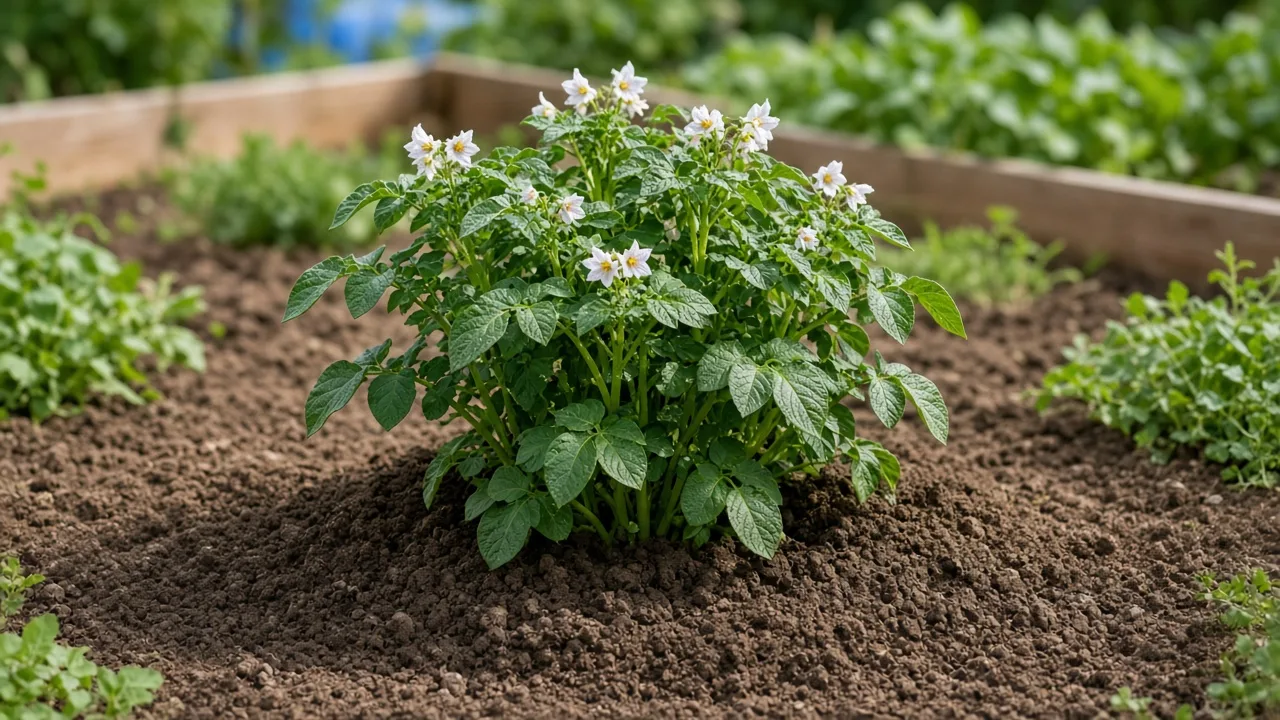
Potato Watering Guide: Checks, Schedule & Signs
Potato Watering Guide: Checks, Schedule & Signs
A potato plant can look thirsty in afternoon heat while its tubers still sit in damp soil—or stay upright at dawn while the root zone has already gone too dry for even bulking. That is why potato watering should start with the soil around stolons and tubers, not a fixed calendar or the appearance of the leaves alone. Solanum tuberosum—aloo, Irish potato, or white potato—forms the harvest underground on stolons, so moisture swings hit tuber size and shape before they show up as a neat weekly rule.
The target is evenly moist, freely drained soil from sprouting through tuber fill, then a deliberate taper only when you are finishing a storage crop. NC State Extension notes that poorly drained soil may cause tubers to rot, while light soil that stays consistently moist can help produce large, evenly shaped potatoes (NC State Extension - Solanum tuberosum). This guide shows how to judge moisture in beds and deep grow bags, how Indian cool-season (Rabi) heat and monsoon rain change the schedule, and what to do first when tops wilt or tubers feel soft at harvest.
Potato watering: the quick answer
Water when the upper 2–3 cm of soil begins to feel dry, then soak the root zone thoroughly so moisture reaches stolons below—not just the surface crust. Do not let a bulking plant bake completely dry in a shallow pot, and do not keep soil soggy for days, which invites tuber decay. Many guides cite roughly 1–2 inches (2.5–5 cm) of water per week from rain and irrigation combined as a planning benchmark during active growth, with more frequent checks—not automatic daily floods—when tubers are sizing (Hunker - How Often Should You Water Potato Plants).
Treat “every four days” or “twice a week” as possible outcomes of your soil check, not commandments. A mulched row in cool weather may go longer; a sun-baked grow bag on a terrace may need a morning check every day in heat while still watering only when the top layer dries. Your finger, pot weight, and recent rain decide whether today is a watering day.
Why potatoes need steady moisture under the soil line
Potatoes are not watered for pretty leaves alone. After shoots emerge, the plant sends out stolons that swell into tubers along buried stems. If soil swings between dust and flood, tubers may stay small, form knobs, or crack when rain finally arrives. Hilling—mounding soil, compost, or mulch around stems—adds depth where tubers form and blocks light that would turn skins green and bitter; it also changes how fast the bed dries, so watering must follow the whole mound, not just the rim of the pot.
NC State recommends containers or grow bags at least about 60 cm (2 feet) deep and holding roughly 115 L (30 gallons) so stems can be hilled and tubers stay covered (NC State Extension - Solanum tuberosum). Shallow mixes heat and dry unevenly, which is a watering problem as much as a soil-volume problem. Pair steady moisture with the Potato soil guide when water sits on the surface or drains straight through.
Tubers on stolons and why hilling changes drying
Each time you hill, you bury more stem and encourage more tuber sites, but you also add a layer that must wet through when you irrigate. Water slowly enough that the mound absorbs moisture rather than shedding it down the sides. If only the top inch is damp after a quick sprinkle, stolons deeper in the bag may still be dry while leaves look fine. That mismatch is a common reason for disappointing harvests in containers even when growers “watered often.”
How to check soil moisture before you water
Push a finger 2–3 cm into the mix or bed away from the stem. Water when that layer feels dry to the touch while deeper soil still feels cool and slightly moist—not when the whole profile is already parched. In pots, lift after a full soak and compare weight daily; a noticeably lighter bag usually needs water if the surface check agrees. A wooden skewer inserted toward the bottom and left briefly can confirm moisture at depth when hilling makes finger tests awkward.
Check in the morning when possible. Afternoon droop on hot terraces is not always a call to water; if soil is moist and plants recover overnight, another soak may reduce oxygen around roots. Combine touch, weight, and recovery rather than reacting to one wilted leaflet at 3 p.m.
Finger test, pot weight, and skewers
Very dry peat- or coir-based mix can shed water down the sides of a grow bag, leaving a wet rim and dry center. If water runs out instantly with little absorption, pause and apply a second slow pass a few minutes later, or bottom-soak the bag once, then fix the soil mix before the next cycle. The goal is one thorough wetting per dry-down, not ten teacup splashes that never reach stolons.
How often to water potatoes through the season
Frequency follows growth stage, weather, and container depth. Young plants with limited roots need steady moisture without waterlogging. As canopy expands and tubers bulk—often around flowering for many cultivars—demand rises and dry spells hurt yield more quickly. Toward harvest of storage potatoes, you deliberately ease off as vines yellow so skins can set; new potatoes dug early still need adequate moisture until you lift them.
After planting seed pieces
Right after planting certified seed potatoes, moisten the soil to settle it around pieces with eyes facing up, then keep the root zone evenly damp while shoots emerge. Gardening Know How suggests watering after covering seed in bags, then maintaining moisture so young sprouts do not stall in dry mix (Gardening Know How - Growing Potatoes in Bags). Cold, saturated soil is as risky as drought for slow spring plantings; aim for damp and airy, not swampy.
Bulking when tubers swell
When plants are actively filling tubers, shorten the interval between checks, not blindly between soakings. Editorial guides often move from roughly weekly totals toward watering every two to three days in dry weather while tubers form, still guided by soil dryness rather than the calendar alone (Hunker - How Often Should You Water Potato Plants). The Spruce notes that container potatoes may need daily inspection in heat, and sometimes more than one watering on exceptional days, but only when an inch-deep check shows dryness (The Spruce - Growing Potatoes in Containers).
Cutting back before harvest
For mature storage potatoes, reduce irrigation as foliage yellows and dies back naturally so tubers cure and skins toughen before digging. Do not stop water while plants are still green and actively bulking unless you are intentionally lifting a few new potatoes and leaving the rest to grow. Regional extension calendars often describe tapering before harvest for storage crops; apply that advice to plant stage, not a fixed month on the calendar.
Watering potatoes in beds, trenches, and grow bags
In-ground rows and trenches hold more moisture than small pots, but heavy clay that stays wet still rots tubers. Raised beds and sandy loam dry faster and may need deeper, less frequent soakings that still wet the full root zone. In grow bags, The Spruce recommends checking at least once a day, sticking a finger about an inch in, and watering deeply until excess drains from the bottom (The Spruce - Growing Potatoes in Containers). Gardening Know How advises watering bag-grown potatoes every two to three days, with possible multiple passes on the hottest summer days when sprouts would fail in dry mix (Gardening Know How - Growing Potatoes in Bags).
Avoid towers so tall that water never reaches the lower seed layer evenly; very deep stacks are hard to irrigate uniformly. If you use sacks or bins, confirm drainage holes are open and elevate bags slightly so they never sit in a puddle after monsoon bursts.
Watering potatoes on Indian terraces and in monsoon weather
On many Indian plains, potatoes fit the cool Rabi window when nights are milder; terrace grow bags still heat quickly on clear days, so plan to check every one to two days in warm spells even if you water less often. Morning irrigation lets foliage dry and matches when you can catch early wilt that signals real dryness.
During monsoon weeks, your job is often to withhold irrigation while improving drainage. Stop routine watering when rain keeps the root zone moist. Clear blocked pot holes, empty saucers, and divert roof runoff that dumps extra water into one corner of a bed. Resume only when a finger test shows the upper few centimetres drying despite humid air. Humidity does not replace soil moisture in a sheltered bag whose leaves shed rain like an umbrella—a point the RHS makes for outdoor containers that may need water even in wet spells (RHS - How to Grow Potatoes).
Best time and method to irrigate potatoes
Morning watering is practical for home growers: tubers get moisture before midday heat, and any splash on leaves has time to dry. Apply water at soil level with a can, drip line, or soaker hose rather than blasting the canopy; wet foliage in cool, stagnant air can encourage disease on crowded plants. Drip or trickle irrigation also keeps moisture steadier than overhead bursts that wet only the top inch.
Mulch between rows or over bag tops after soil warms can slow evaporation and soften dry-wet swings. Mulch does not fix poor drainage—if water pools, fix structure first. When you do soak, wet the full hilled volume once, then wait for the approved dryness before repeating.
Overwatering signs on potato plants
Persistently wet soil, yellowing lower leaves, and wilting despite heavy, cold mix point toward oxygen-starved roots rather than drought. Tubers may smell sour or turn soft at harvest; NC State links poorly drained conditions to tuber rot (NC State Extension - Solanum tuberosum). Algae on constantly wet mix, water standing in saucers, or a bag that never lightens after days without rain strengthens the diagnosis.
First response: pause irrigation, improve drainage, and let the root zone begin to dry before the next deep soak. Do not pile on nitrogen hoping to green plants up while roots are struggling in anaerobic soil. If stems collapse suddenly with dark lesions during humid weather, consider disease separately from simple overwatering.
Underwatering signs and knobby tubers
Dry soil several centimetres down, a feather-light grow bag, and wilt that persists into the cool morning usually mean the plant needs water. Tubers may stay small, develop knobs, or show cracks if a dry spell ends with heavy rain or one huge corrective soaking. Leaves may roll or scorch along edges in extreme heat when roots cannot supply enough water.
Water thoroughly in one or two slow passes so the hilled soil rewets, then return to steady moisture rather than alternating flood and famine. Extremely dry organic mix that repels water needs rewetting and often a better soil blend for next season.
Wilting with wet soil vs dry soil
Afternoon wilt on a hot terrace with moist soil and overnight recovery is often heat stress, not a command to water again. Morning wilt with dry soil at 2–3 cm is a clear irrigation signal. Morning wilt with wet, heavy soil suggests root injury, rot, or compaction—watering more will usually worsen the problem.
If unsure, check moisture at depth, note whether plants recover by the next morning, and inspect drainage before adding another soak. Container growers should confirm the lower half of the bag is not a dry column under a damp top.
Common potato watering mistakes
- Watering on a calendar only: replace “every Tuesday” with “check every one to two days in heat; water when the top 2–3 cm dries.”
- Shallow, frequent sprinkles: wet the full hilled depth, then wait for appropriate dryness.
- Ignoring bag depth: shallow pots dry unevenly; match volume to NC State’s deep-container guidance or accept more frequent checks.
- Stopping all water because leaves droop at noon: confirm soil moisture and morning recovery first.
- Flooding after drought: rehydrate evenly; repeated emergency soakings invite cracking and rot.
- Skipping drainage in monsoon: pause irrigation and fix standing water before tubers sit in warm, saturated mix.
- Forgetting hilling when judging dryness: probe the mound, not just the rim of the bag.
When to use this page vs other Potato guides
Use the Potato overview for the full crop picture—seed sources, timing, toxicity, and harvest stages. If water pools or drains too fast, start with the Potato soil guide for pH, texture, and mix recipes; watering cannot compensate for heavy, airless clay or a mix that sheds water.
Weak growth despite suitable moisture may trace to Potato light exposure or Potato fertilizer balance. Potato repotting covers hilling, bag top-up, and depth rather than mid-season moves. Potato propagation explains seed-piece prep; Potato pruning addresses canopy and vine management where relevant.
Related Potato guides
- Potato overview — whole-plant habit, harvest stages, and pet safety
- Potato soil — drainage, acidity, and scab-aware mixes
- Potato light — sun needs for strong tops and tuber fill
- Potato fertilizer — feeding without excess nitrogen
- Potato repotting — hilling, bag depth, and topping up soil
- Potato propagation — certified seed potatoes and planting pieces
- Potato pruning — canopy management through the season
Conclusion
Successful potato watering means evenly moist, well-drained soil around developing tubers, not a single schedule for every pot and bed. Check 2–3 cm below the surface, soak the full hilled root zone when that layer begins to dry, and let weather, bag depth, and growth stage set how often you repeat the check. Containers on Indian terraces need closer attention in heat; monsoon weeks call for restraint and open drainage.
Steadier moisture supports smoother tubers and fewer preventable rots, but cultivar, soil structure, hilling, and harvest goal still matter. Protect drainage, avoid dry-to-flood cycles, and adjust toward storage harvest only when vines naturally decline—not while green plants are still bulking your aloo crop.