How to Grow and Care for Sweet Potato Vine
Learn how to grow and care for sweet potato vine in containers or beds, including cultivar choice, watering, pruning, propagation, overwintering, and pest fixes.
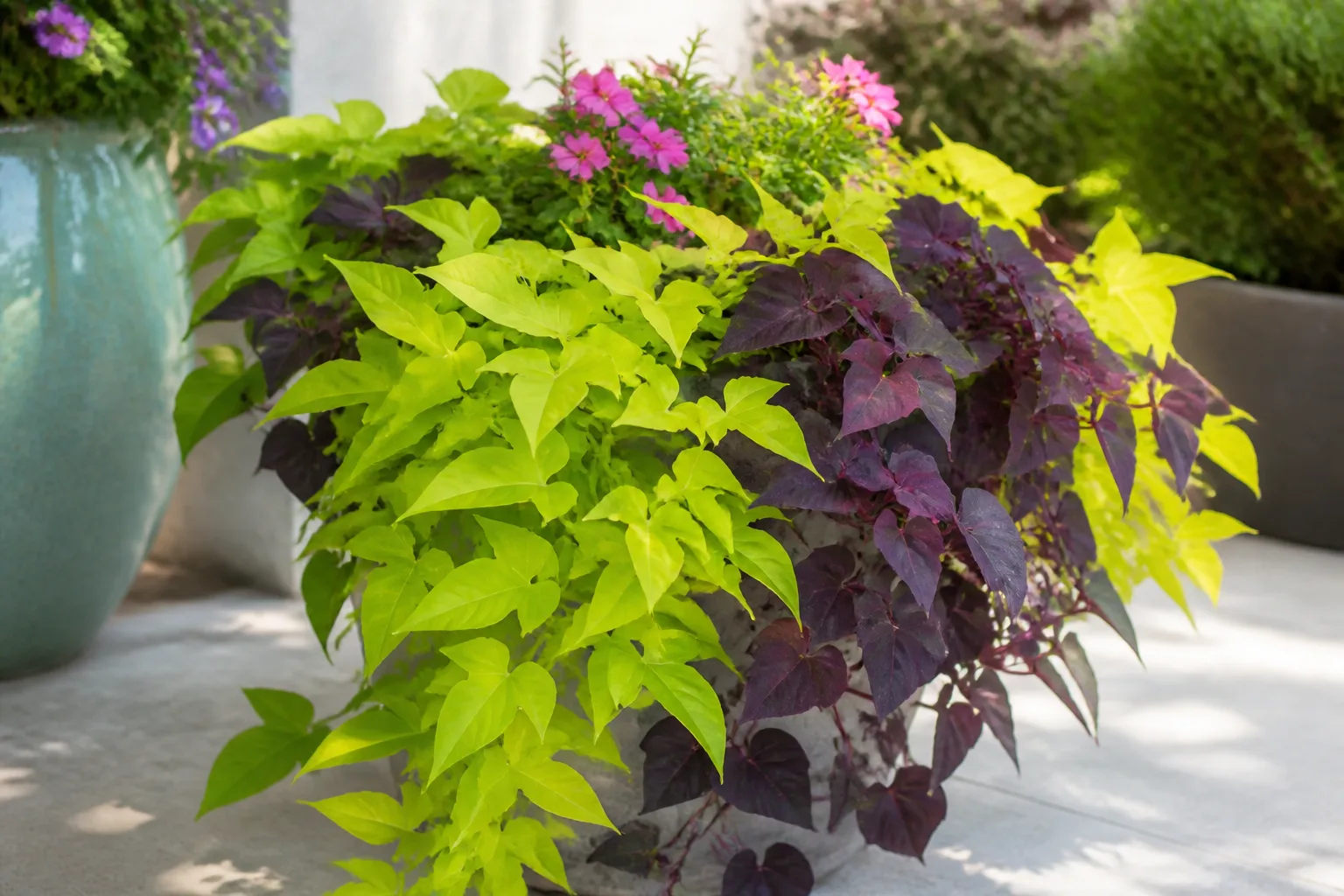
Sweet potato vine (Ipomoea batatas) is a warm-season foliage plant that earns its keep by filling space quickly. Chartreuse, bronze, purple, black-purple, and variegated cultivars can spill from a hanging basket, run across a sunny bed, or climb a trellis when you give them support.
The same speed that makes this plant useful creates its main care challenge: a vine that is happy can outgrow a pot, dry a container faster than expected, or turn a small watering mistake into root trouble. The reliable formula is warm soil, bright light, evenly moist but well-drained soil, and regular tip-pruning. In frost-prone areas, treat it as an annual or save healthy cuttings before cold weather rather than waiting for frost to decide for you.
Quick Answer: What Sweet Potato Vine Needs
Give sweet potato vine full sun to partial shade, a loose potting mix or garden soil that drains freely, and enough water to keep the root zone slightly moist without staying saturated. Full sun usually produces the strongest foliage color, while a little afternoon shade can prevent stress in very hot, reflective locations.
Plant outdoors only after frost has passed and the soil has warmed. In USDA Zones 9–11, ornamental forms can behave as tender perennials; elsewhere, they are generally grown as warm-season annuals. Missouri Botanical Garden describes ornamental cultivars as easy in average, medium, well-drained soil, with the best leaf color usually in full sun. Its plant profile for ‘Sweet Caroline Sweetheart Lime’ is a useful cultivar-specific reference, but your plant’s tag still matters because growth habit and vigor vary.
| Care factor | Practical starting point | Adjust when… |
|---|---|---|
| Light | 6 or more hours of sun for strong color | Hot walls, paving, or extreme afternoon heat scorch leaves |
| Water | Soak thoroughly when the top inch of mix is dry | Small pots and hanging baskets may need checks every day |
| Soil | Airy, fertile, well-drained mix | Heavy clay or a pot without drainage needs fixing first |
| Feeding | Light, occasional balanced fertilizer | Excess nitrogen makes long, soft vines that need more pruning |
| Pruning | Pinch or cut tips above a node as they run | Hard-cut tired vines need good light and moisture to refill |
| Winter | Cuttings or dormant tubers before frost | Warm climates may leave healthy roots in the ground |
For broader container decisions, the principles in this guide to caring for spiller plants in containers apply well: match the plant’s eventual spread to the pot, and make sure the container can be moved or trimmed before it becomes unmanageable.
Ornamental or Edible? Start With the Right Plant
Ornamental and edible sweet potatoes are the same species, but they are selected for different jobs. Food cultivars are bred to produce useful storage roots. Ornamental cultivars are bred primarily for leaf color, leaf shape, compactness, or vigorous trailing, so their roots may be small, fibrous, starchy, or bitter.
That distinction matters at harvest and at the nursery. A purple-leaved ‘Blackie’ or lacy ‘Midnight Lace’ can form tuberous roots, but the presence of a root does not make it a good food crop. Missouri Botanical Garden notes that ornamental roots are technically edible but less tasty than cultivars bred for food. If you want dinner, buy a clearly labeled edible variety and grow it as a vegetable; if you want a dramatic spiller, buy the ornamental form and do not treat its tubers as a dependable kitchen harvest.
The plant is also sometimes confused with a regular potato. Sweet potato is a tuberous-rooted member of the morning glory family, Convolvulaceae; it is not the same plant as an Irish potato. The University of Georgia Extension bulletin on sweet potato production describes sweet potato as a frost-sensitive perennial in its native warm climates and an annual in temperate regions. That lifecycle explains why cold, not lack of fertilizer, is often the true end of the season.
Choose a Cultivar by Color, Habit, and Heat
Choose by the space you need to fill, not by leaf color alone. A narrow, upright container, a hanging basket, and a garden bed each reward a different habit, and a cultivar that looks restrained at the garden center may produce several feet of vine once nights stay warm.
Trailing types are the classic spillers. ‘Sweet Caroline’ selections come in shades from lime green to bronze and purple, while ‘Blackie’ is known for very dark, maple-shaped foliage. ‘Margarita’ or ‘Marguerite’ is a bright chartreuse choice that can mound first and then trail; its color shifts with light, becoming greener in deeper shade.
Mounding or finer-leaved forms are easier to keep in a pot. Illusion cultivars such as ‘Emerald Lace,’ ‘Garnet Lace,’ and ‘Midnight Lace’ tend to be less aggressively spreading and suit baskets where a dense edge matters more than maximum length. Narrow or deeply divided leaves also create more texture beside broad-leaved annuals.
Some cultivars can be trained upward, but do not assume every sweet potato vine will grip a trellis like a twining climber. A simple support and loose ties can guide long stems, while a container edge lets trailing forms do what they naturally do. Proven Winners’ profile of ‘Sweet Caroline Upside Key Lime’ illustrates the useful middle ground: a selection can climb when guided and still trail from a pot. For a wider cultivar comparison, Epic Gardening’s sweet potato vine guide is a useful practical reference for leaf forms and vigor.
Trailing, mounding, and climbing forms
Use a trailing cultivar to soften a wall or spill over a raised planter, a mounding type to keep a window box visually full, and a vigorous climber only where you can reach it for repeated training. If the vine will share a container with flowers, give it its own edge and check weekly that it is not shading or smothering slower companions.
When to Plant Sweet Potato Vine
Plant after the last frost when nights are reliably mild and the soil no longer feels cold. A warm-season plant can sit still in chilly spring soil, and a late cold snap can blacken new growth even if the afternoon feels pleasant. In a container, black plastic and dark paving can heat roots quickly, so warm does not mean overheated.
In cooler climates, start with a nursery plant or rooted cutting and wait for a suitable outdoor window. If you are using a dormant tuber to produce slips, start it indoors several weeks before planting, but do not rush a soft, weak sprout into cold ground. In warm, frost-free climates, planting can extend beyond spring; the practical limit is whether the site remains warm enough for active growth.
Check the forecast for more than one night. A protected patio may be safe at 45°F, while an exposed bed can suffer at the first frost. If the plant is valuable to you, take cuttings before the first cold night rather than trying to rescue blackened stems afterward.
How to Plant It in a Container or Garden Bed
Set the plant at the same depth it was growing in its nursery pot, loosen circling roots gently, and water the root ball in. Leave room for the vine to run: a groundcover planting can spread several feet, and some vigorous selections travel much farther when nodes touch moist soil. Missouri Botanical Garden lists ornamental groundcover spread as potentially broad, so space based on the cultivar label and your willingness to prune, not on the size of the starter plant.
For a bed, improve heavy soil by raising the planting area or adding organic matter through the bed rather than creating a small pocket of rich soil. A pocket can hold water around the roots while the surrounding soil drains poorly. Keep the crown near the soil surface, avoid burying lower leaves, and mulch lightly after the soil is warm; thick, wet mulch against stems can keep the base damp.
Choose a pot with a drainage hole in the bottom, not only a decorative cachepot with no outlet. Use a quality potting mix amended with compost if it is very lean, but do not fill a container with garden soil; it can compact and drain slowly. You do not need a gravel layer in the bottom to create drainage. The drainage hole, an airy mix, and a pot sized for the root ball do that job more reliably. PlantCareToday’s container guidance also emphasizes checking outdoor pots more often because they dry faster than in-ground plants.
Place the container where the trailing stems have space but where you can still turn or move it. A small pot in full afternoon sun may need daily checking in summer, while a larger pot or in-ground plant may go several days between deep waterings after rainfall. Water until it drains from the bottom, then empty the saucer so the roots are not left standing in runoff.
Light for Strong Color and Fuller Growth
Aim for at least six hours of direct sun for the strongest color and compactest growth. Most cultivars tolerate partial shade, but purple and chartreuse foliage often loses intensity in deep shade, and low light encourages long gaps between leaves. If a vine is thin, pale, and reaching toward one side, move it toward brighter light before feeding it.
Hot climates need a timing adjustment, not necessarily a shade-loving cultivar. Morning sun with afternoon shade can protect a pot on a west-facing balcony or beside light-colored masonry. Proven Winners notes that cultivar performance and habit can differ, so watch the leaves: bleaching, crisp patches on the sun-facing side, or sudden midday wilt points to heat load, while overall legginess points more often to insufficient light.
Acclimate a greenhouse or indoor plant gradually. Give it bright morning light for several days, then extend exposure, because leaves adapted to filtered conditions can scorch when moved straight into intense sun. A few damaged leaves may be replaced after the plant establishes; do not repeatedly move a healthy plant between deep shade and harsh sun.
Soil and Drainage That Prevent Root Trouble
Sweet potato vine prefers soil that holds some moisture but still has air spaces. In a container, that means a loose potting mix that wets evenly and drains freely. In the ground, a raised or gently mounded bed is safer than a low pocket where rain collects.
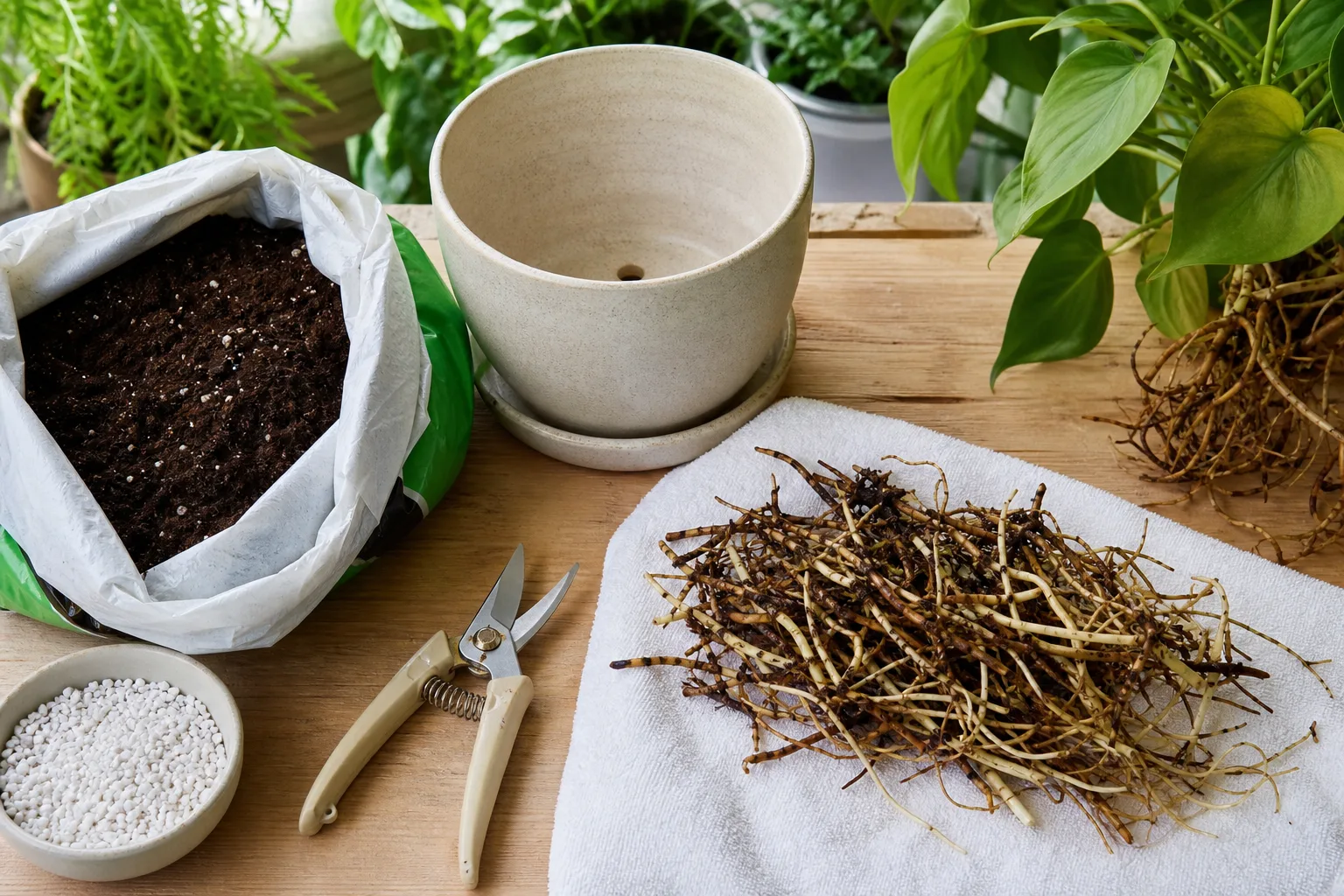
If the mix stays wet for days, do not solve the problem with more fertilizer. Test the container: push a finger about an inch into the surface and lift the pot after watering. A pot that remains heavy and cold long after the top looks dry may have a compacted root zone. Repot into fresh, airy mix only when the plant can recover in warm, bright conditions; repeated disturbance during cold weather adds stress.
Root rot is not simply “too much water” in the abstract. NC State Extension explains that Phytophthora diseases are favored by prolonged irrigation, poor drainage, and standing water, and that affected roots may be brown, black, or mostly decayed. If a vine wilts while the soil is wet, remove it from the pot and inspect the roots instead of watering again. Where a disease has been confirmed, remove infected material, improve drainage, sanitize tools and pots, and avoid replanting the same kind of vine in contaminated soil without local diagnosis.
Watering Without Keeping the Roots Soggy
Water deeply when the top inch of soil is dry, then let excess drain. This is a better starting rule than watering every Sunday because a hanging basket in wind, a shaded bed after rain, and a small pot on hot paving lose water at very different rates.
During establishment, check every day or two and keep the root ball from drying completely. Once roots have filled the container or run into the bed, the plant becomes more forgiving, but drought tolerance does not mean it looks its best when repeatedly wilted. Leaves that fold, droop, or feel less firm in the morning are a signal to check moisture; leaves that wilt while soil is saturated suggest root damage or heat stress instead.
Water the soil rather than repeatedly wetting the foliage late in the day. Good spacing and air movement lower disease pressure. If a pot dries out so thoroughly that water runs down the sides, water slowly in two passes so the mix can rehydrate instead of letting the first stream escape unused.
Fertilizer: Feed for Foliage, Not Just Length
Start with a modest feeding program. A compost-enriched mix or a balanced slow-release fertilizer applied according to its label is often enough for a container season, and an established bed may need little extra fertilizer if the soil is fertile. Sweet potato vine is vigorous; fertilizer can make it longer faster than it makes it healthier.
If growth is pale and slow after you have corrected light and watering, use a balanced liquid fertilizer at the label rate during active growth. Avoid repeatedly applying high-nitrogen feed to chase size. Soft, very long internodes, green color without sturdy branching, and constant pruning can mean the plant is receiving more nitrogen than the space can support.
Do not fertilize a wilted, heat-stressed, freshly transplanted, or root-rotted plant. Correct water and root conditions first. Feeding damaged roots can add salt stress and make recovery harder.
Pruning and Training a Fast-Spreading Vine
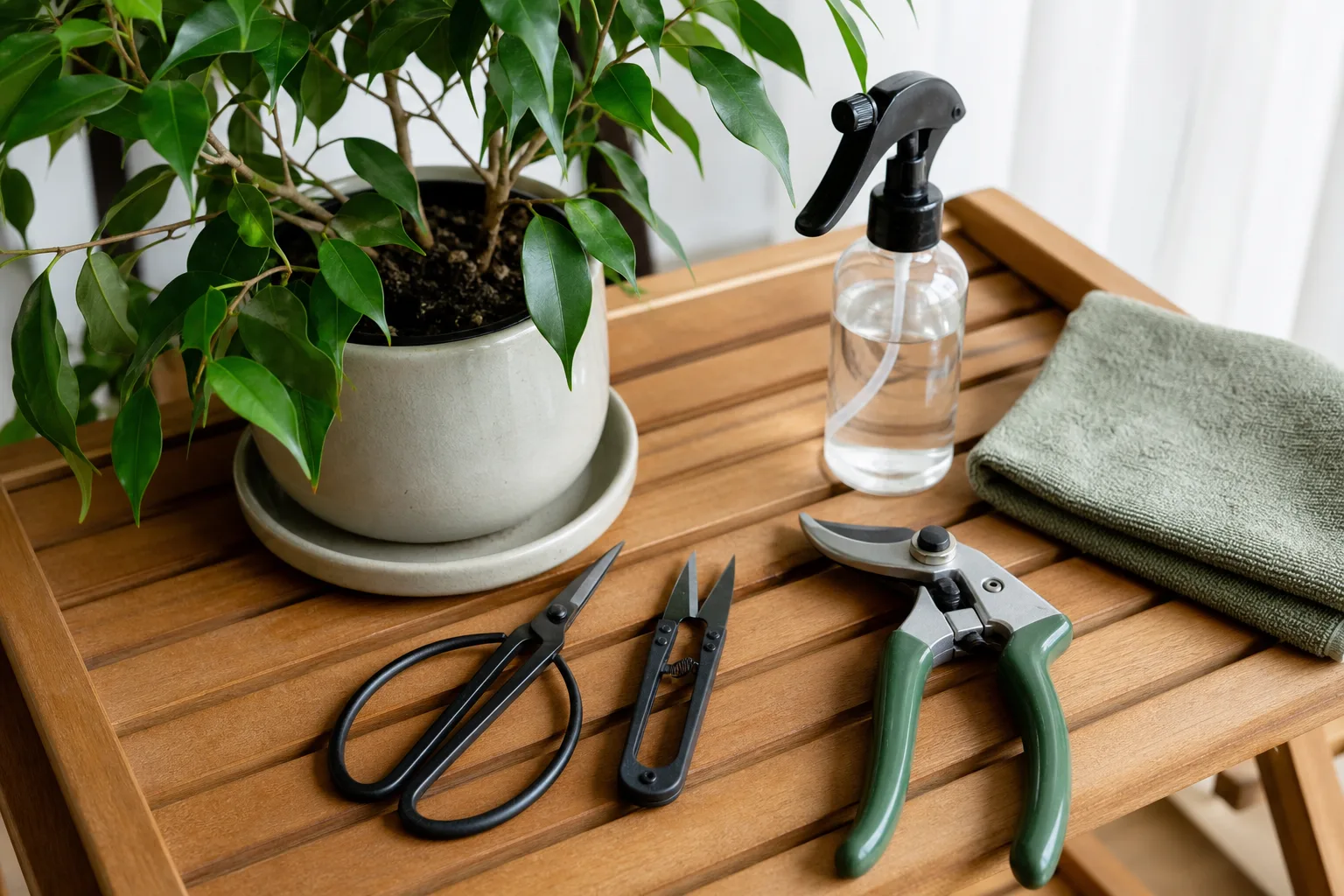
Prune whenever the vine crosses its boundary, shades its companions, or becomes sparse at the base. Use clean, sharp snips and cut just above a healthy leaf node; that is where new side shoots can emerge. Removing the soft tip breaks apical dominance and redirects growth into branches, which makes a container look fuller instead of merely longer.
Do not remove every leaf in one pass from a plant that is already weak. Start by shortening the longest runners by about one-third, leave enough foliage to support recovery, and then reassess after two or three weeks of warm weather. A hard cut is reasonable for a vigorous, healthy plant before overwintering, but a stressed plant needs light, water balance, and time.
Clean shears between visibly diseased plants. The University of Georgia Extension emphasizes healthy planting material, sanitation, and rotation as part of managing sweet potato diseases and pests in production. For a home container, that translates into removing fallen debris, not sharing dirty soil or tools between pots, and discarding a plant with spreading, unexplained decline rather than propagating every piece of it.
Healthy trimmings are useful cuttings. If you want a denser display, root several four- to six-inch tip cuttings and plant them around the edge of the same container once they have roots.
Propagate From Stem Cuttings
Stem cuttings are the quickest, most dependable way to carry a favorite ornamental cultivar into a new pot or through winter. Choose a vigorous non-flowering tip with several nodes, cut just below a node, remove the lower leaves, and leave two or three leaves at the top. A four- to six-inch cutting gives you enough stem to anchor while keeping the leaf load manageable.
Place the lower node in clean water or insert it into a lightly moist, airy rooting mix. In water, keep leaves above the surface and change the water when it becomes cloudy or develops an odor. Set the jar in bright indirect light at a warm indoor temperature; direct hot sun through glass can heat the water and wilt the cutting.
Roots may appear quickly in warm conditions, but do not transplant because you see the first white nubs. Wait until the cutting has several roots and then pot it into moist mix. Water it in, keep humidity moderate rather than sealing it in a constantly wet enclosure, and increase light gradually. Water-rooted cuttings need a short transition to soil because roots formed in water are not automatically adapted to a drying potting mix.
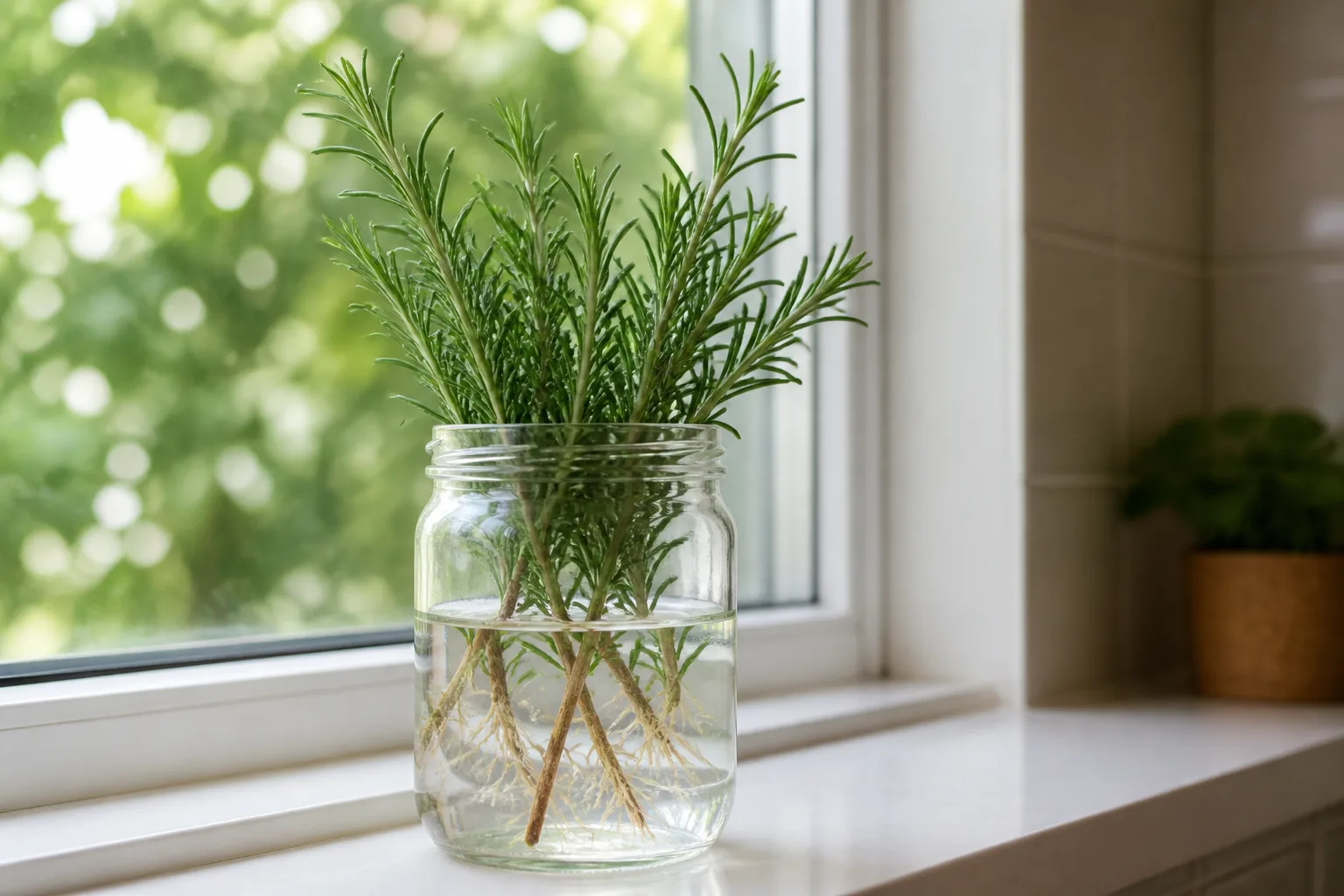
For an indoor winter plant, pot rooted cuttings instead of leaving them in water for months. A water jar is excellent for starting roots and monitoring progress, but potting gives the plant a more stable root environment and makes spring hardening-off easier.
Grow New Plants From Tubers or Slips
A tuber can produce sprouts, but it is slower and more variable than a stem cutting. In early spring, suspend a healthy sweet potato so the lower portion touches water and the upper portion remains exposed, or place it in a warm, lightly moist propagation medium. Once shoots develop, let them grow several inches, then detach them with a small section of stem and root them in water or mix.
For dormant overwintered tubers, inspect before planting. Discard any that are soft, leaking, moldy, or deeply discolored. Cut a firm tuber only if each section has a visible eye or sprout, let cut surfaces dry briefly, and plant after frost in warm, well-drained soil. The method works, but tuber pieces can rot when planted too deeply or kept wet.
Use clean, reliable planting material. UGA Extension’s production guidance shows why this matters: sweet potato pests and diseases can move with roots, slips, soil, and equipment. A home gardener does not need commercial fumigation schedules, but should not plant a questionable stored root next to a valuable collection or move soil from a failing bed into clean containers.
Overwintering: Annual, Perennial, or Indoor Project?
In frost-free climates around USDA Zones 9–11, a healthy vine may return from its tuberous roots. Even there, a wet winter, a rare freeze, or a diseased crown can prevent a comeback. In colder climates, frost kills the top growth and the plant is usually treated as an annual unless you save it.
The easiest insurance is a handful of stem cuttings taken before the first frost. Root them, pot them, and place them in a bright window or under a grow light. Keep the indoor plant warm and bright enough to remain healthy, but reduce watering if growth slows; winter indoor light is weaker, and constantly wet soil is a common cause of decline.
You can also lift dormant tubers. Before frost, cut back the vines, dig carefully, brush off soil, and let the roots dry briefly in a shaded, airy place. Store firm tubers in a cool, dark, dry location packed so they do not touch, using vermiculite, peat, or another dry medium. Check periodically and remove any soft or rotting root before it affects its neighbors.
Missouri Botanical Garden recommends digging and storing tubers for cultivars grown as annuals in cold regions, and also notes that rooted cuttings or container plants can be overwintered indoors. Choose cuttings when you want a named foliage color with low storage risk; choose tubers when you have a large, vigorous plant and enough cool, dry storage space.
Flowers and Foliage: What to Expect
The foliage is the main attraction. Leaves may be heart-shaped, maple-like, deeply divided, or lacy, and color changes with cultivar and light. A plant can be perfectly healthy without producing a single flower.
When flowers appear, they are usually funnel-shaped and resemble small morning-glory blooms in pink, lavender, or violet. Ornamental cultivars often flower rarely, particularly when long days and vigorous foliage growth dominate. Missouri Botanical Garden lists many ornamental forms as rarely flowering, so do not increase fertilizer or water dramatically to force blooms.
If you do see flowers, enjoy them and remove spent blooms only if they look messy. The plant’s performance should be judged by healthy leaves, strong stems, and manageable growth, not by whether it makes seed. Many ornamental plants are easier to reproduce from cuttings than from seed, and seed may not preserve the parent’s leaf color or habit.
Pests and Diseases: Find the Pattern First
Start with the pattern, not the product. Look on the undersides of leaves, along tender tips, and at the soil line; note whether damage is chewing, sticky, stippled, water-soaked, or associated with wet soil. A fast-growing vine can tolerate minor leaf damage, so broad pesticide use is rarely the first or best response to a few holes.
UGA Extension lists soil pests such as sweet potato weevil, wireworms, grubs, and root-knot nematodes alongside foliar pests including caterpillars, aphids, and whiteflies in sweet potato production. Home ornamental containers will not experience every production pest, but the pattern is useful: some problems begin in the roots, while others are visible on leaves and shoots.
Holes, sticky leaves, and distorted growth
Small shot holes usually point to flea beetles or another chewing insect. Ragged edges and missing sections suggest caterpillars, while a leaf covered in honeydew, ants, or black sooty residue suggests sap-feeders such as aphids or whiteflies. Inspect before spraying, rinse small colonies from foliage, remove badly infested tips, and give beneficial insects a chance to work.
If whiteflies flutter when the plant is disturbed or aphids cluster on new growth, isolate a container and repeat inspections over several days. Treat only with a product labeled for the plant and pest in your location, following the label exactly; “natural” does not mean harmless to bees, aquatic life, or the plant. Do not use a commercial field schedule on a home ornamental without local advice.
Root-feeding pests are harder to diagnose from leaves alone. Persistent wilting, poor growth despite adequate moisture, or deformed roots at repotting calls for a closer inspection and, when the problem spreads, an extension diagnosis. Do not propagate from a plant with unexplained root decline until you know the cause.
Yellow, brown, wilted, or black leaves
Yellow leaves at the base can be ordinary aging, but widespread yellowing with wet soil and a sour smell points toward root stress. Let the mix drain, inspect roots, and remove black or mushy tissue if the plant still has firm roots and healthy stems. NC State Extension cautions that Phytophthora symptoms can resemble other diseases, so a confirmed diagnosis may require your local extension office or plant clinic.
Brown, crisp edges on a dry plant usually call for more consistent watering or relief from reflected heat. Brown or black, soft leaves after a cold night are more consistent with frost injury. Cut damaged tissue back to healthy growth once the weather warms, but do not expect a frost-killed vine to recover from tissue that has turned mushy.
Wilting in dry soil is a watering problem until proven otherwise; wilting in saturated soil is a root problem until proven otherwise. If only a few leaves are affected and new growth is strong, correct the environment and monitor. If decline moves rapidly from the crown, multiple stems collapse, or roots decay, discard the plant and soil rather than repeatedly watering or feeding it.
Conclusion
Grow sweet potato vine as a warm-season foliage plant with room to run and a plan to cut it back. Choose the cultivar for its habit, give it bright light, plant it in soil that drains, water when the surface begins to dry, and feed lightly so you produce sturdy color rather than endless weak length.
Prune above nodes to keep the plant full, save healthy cuttings before frost, and use tubers only when you can store them dry and inspect them carefully. The ornamental form may make edible-looking roots, but a labeled food cultivar is the right choice for eating. With those distinctions in place, sweet potato vine becomes a forgiving, high-impact container or garden plant instead of a runaway tangle or a soggy-root mystery.