How to Grow and Care for Philodendron Birkin
Keep Philodendron Birkin healthy and well-striped with a clear routine for light, dry-downs, airy soil, feeding, pruning, propagation, pest, and pet safety.
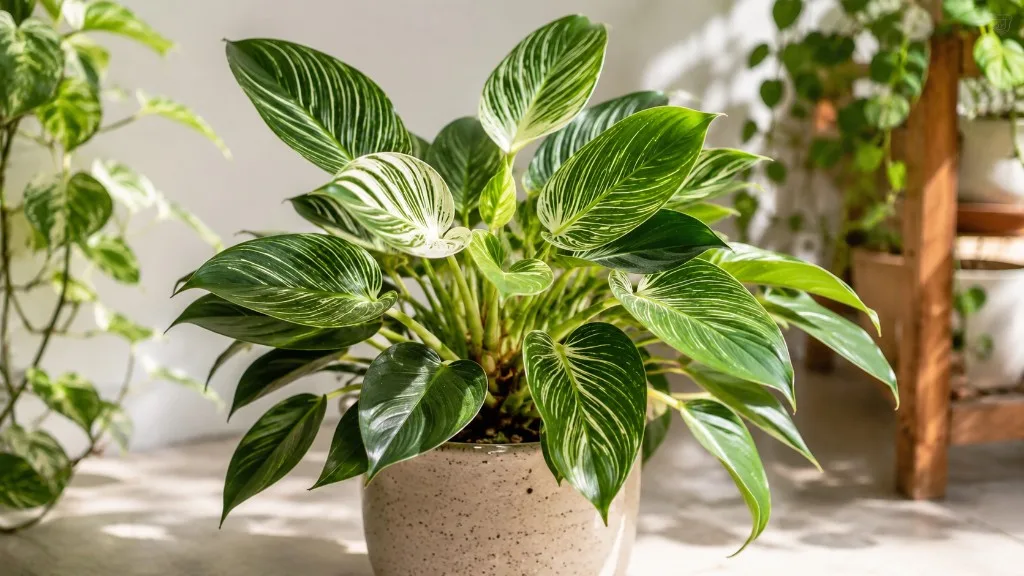
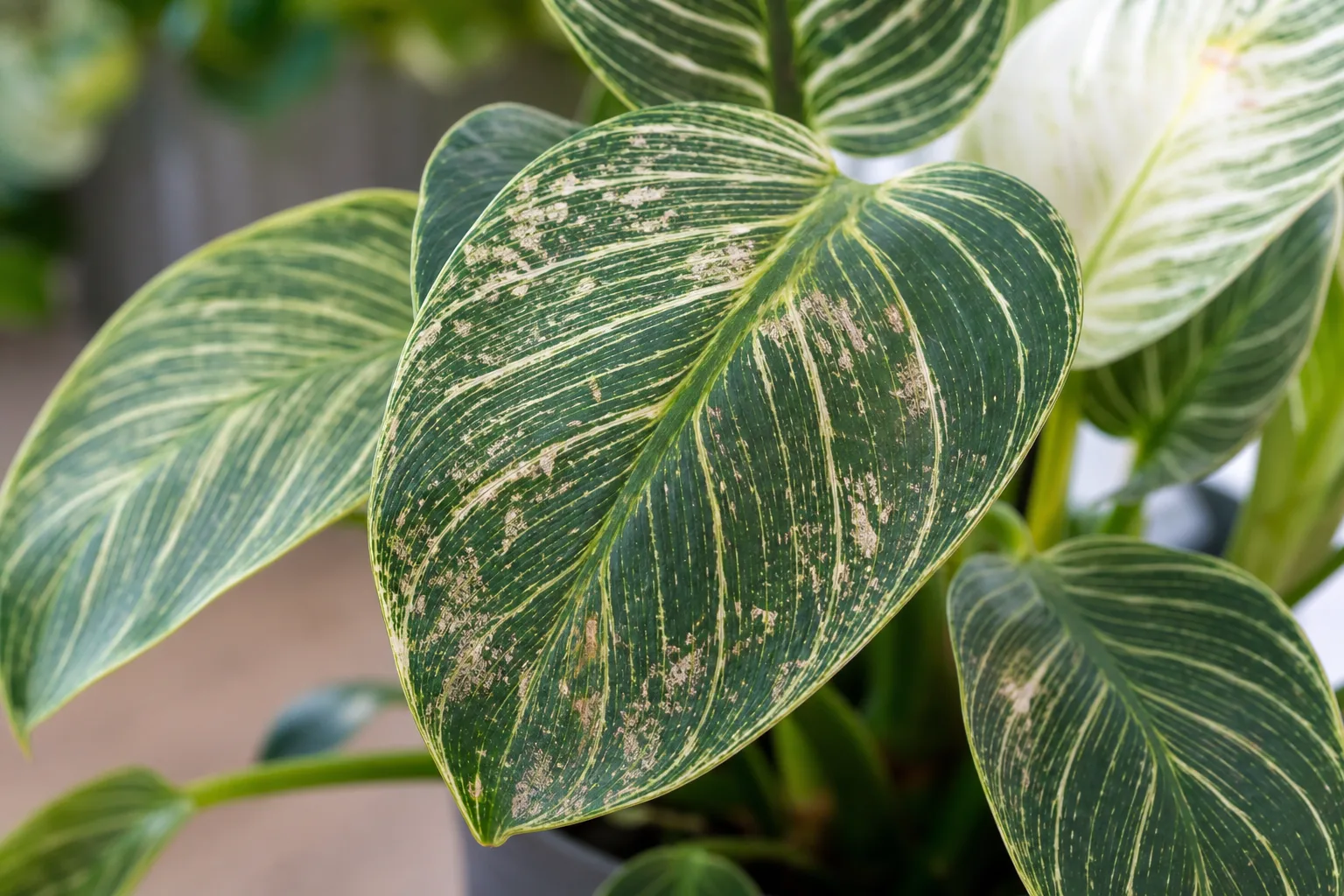
Philodendron ‘Birkin’ is a compact, upright houseplant grown for dark green leaves marked with fine cream or white pinstripes. It is a self-heading philodendron, so it grows from a short central stem rather than behaving like a trailing heartleaf vine. That makes it a good fit for a shelf or plant stand, but the white pattern also makes its care less forgiving visually: low light, harsh sun, and unstable growth show up quickly in the newest leaves.
The reliable routine is simple: give it bright filtered light, let the upper part of the potting mix dry before watering thoroughly, use a mix that drains while staying lightly moist, and keep it warm. The important detail is sequence. If a Birkin looks unhappy, check light and root-zone moisture before adding fertilizer, misting constantly, or cutting healthy leaves.
Is Philodendron Birkin Right for Your Space?
Choose a Birkin if you want a foliage plant with a mostly upright habit and are willing to give it a bright location. It is not a true low-light plant just because it can survive a dim room. In weak light, growth often slows, spaces between leaves lengthen, and the newest leaves may arrive greener than the leaves that made you buy the plant.
NC State Extension classifies ‘Birkin’ among non-climbing or self-heading philodendrons and describes the genus as a warm, moisture-loving group that prefers bright indirect light and well-drained soil. The NC State Extension philodendron profile also notes that philodendrons vary widely in size, so a Birkin’s final dimensions should not be confused with those of a large tree-form or vining species.
The RHS profile for Philodendron ‘Birkin’ describes a compact upright plant that may need support as it becomes top-heavy, with a mature height of roughly 1–1.5 meters under its stated growing conditions. Indoor plants are often smaller and slower, especially in winter. Think of “mature size” as a capacity, not a deadline.
Quick Care Snapshot
| Care factor | Practical starting point | What to watch |
|---|---|---|
| Light | Bright indirect or filtered light for most of the day | Scorch on the window side or greener, stretched new leaves |
| Water | Check the top 1–2 inches of mix; then soak and drain | Persistent wetness, a heavy pot, or a soft stem |
| Soil | Airy aroid mix with organic matter and coarse drainage material | Mix that stays muddy or collapses into a dense block |
| Temperature | About 65–85°F (18–29°C); protect from cold drafts | Curling, sudden droop, or stalled growth after a cold event |
| Humidity | Average home humidity can work; moderate-to-higher is helpful | Crisp new edges in a dry room, especially near heat |
| Feeding | Dilute balanced houseplant fertilizer during active growth | Salt crust, brown tips, or yellowing after frequent feeding |
| Form | Upright and self-heading, not a trailing vine | Leaning as the crown becomes heavy |
| Safety | Keep away from chewing pets and young children | Oral irritation or drooling after contact or ingestion |
Use this table as a starting point, not a watering or feeding calendar. A bright, warm Birkin in a small porous pot can dry several days faster than a large plant in a cool room.
Understand Its Self-Heading Growth and Variegation
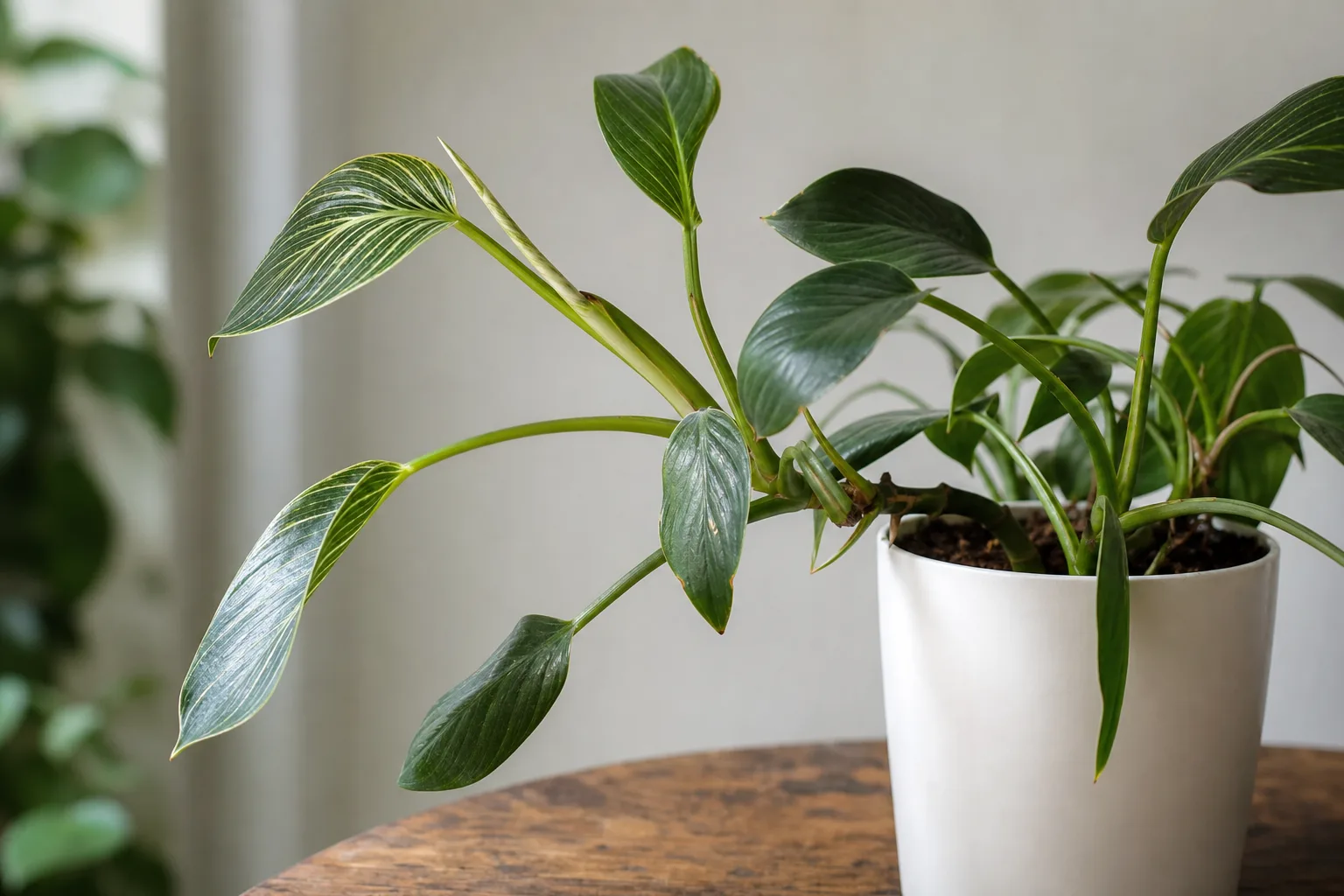
Birkin’s central stem produces leaves in a compact rosette-like arrangement. It does not need a moss pole to climb, and forcing a pole into the pot can disturb roots without solving the real issue. A small stake can help if the plant leans, but support is a balance aid, not a growth requirement.
The cultivar’s white striping is naturally variable. One leaf may have many thin lines, another may have broader cream sectors, and a new leaf can show a reddish or pink cast before it hardens. The RHS description calls out creamy yellow streaks and the possibility of green-white flowers on a mature plant; indoor flowering is uncommon and should not be used as a care scorecard.
What normal new growth looks like
Fresh Birkin leaves often emerge paler, softer, and less patterned than they will look after hardening. Do not judge the final variegation while the leaf is still unfurling. Avoid touching or manually pulling a stuck leaf; the tissue can tear at the sheath and leave damage that looks like a disease later.
Judge the plant by a trend across the last two or three mature leaves. Tight spacing, firm stems, and steady new growth matter more than whether every stripe matches. Older leaves at the base may yellow and decline as the plant reallocates resources; one aging lower leaf is different from several leaves yellowing throughout a wet root ball.
What “reversion” really means
When a new leaf is mostly green, first check the environment. Brightness is often the easiest variable to improve, especially after a move into a darker room or during a winter light drop. Move the plant closer to a bright filtered window or add a carefully positioned grow light, then wait for new leaves; already-green tissue will not turn white later.
Light cannot guarantee a return of the pattern. Variegation in a cultivar like Birkin is unstable, so some leaves can be less striped even when care is excellent. If an entire new growth sequence is solid green, do not remove it immediately. Confirm that light is adequate, inspect for pests or stress, and prune only if you understand where healthy variegated growth can resume and the stem still has viable nodes.
Choose the Right Light for White Pinstripes
Place Birkin in bright, indirect light or behind a sheer curtain. An east-facing window is often an easy starting point because it provides gentler morning sun. A south- or west-facing window can work if the pot is pulled back from intense midday rays; direct hot sun can bleach or scorch the pale parts of the leaves.
Low light may keep the plant alive but does not give the best appearance. Watch for smaller new leaves, long gaps between leaves, a crown that tilts toward the window, and greener new foliage arriving alongside slower growth. Move the plant gradually if it has been in a dark room. A sudden jump from dim light to strong glass-filtered sun can scorch leaves even though the final location is suitable.
The practical test is the newest growth, not a light meter number copied from another room. If the plant is compact and the newest leaves are developing a stable pattern, leave it alone. If it stretches, rotate the pot a quarter turn every week or two and improve brightness before increasing fertilizer.
Build an Airy Mix and Drainage Setup
Birkin roots need both water and oxygen. Use a commercial aroid or chunky houseplant mix, or combine a quality potting mix with orchid bark and perlite or pumice. The exact recipe matters less than the finished structure: water should move through the pot, the mix should not turn into a dense paste, and a small amount should remain available around the roots after drainage.
A practical starting blend is two parts all-purpose potting mix, one part orchid bark, and one part perlite or pumice. Adjust it for your room. If the pot stays wet for a week in a cool, dim space, add more coarse material or use a smaller watering volume only after checking that the roots are healthy. If the mix dries hard within a day and pulls from the pot edge, it may be too coarse, the pot may be too small, or the plant may be warmer and brighter than expected.
Always use a container with an open drainage hole. A decorative cachepot can hold the nursery pot, but empty the cachepot after watering. A drainage hole does not rescue a mix that stays waterlogged, and a layer of stones inside a pot does not create a better-draining root zone; it simply moves the saturated zone higher.
Water by Dry-Down, Not Calendar
Water when the upper 1–2 inches of mix have dried and the pot feels noticeably lighter, then water slowly until a little drains from the bottom. Let the pot finish draining before returning it to its saucer. This follows the core principle that roots need air between waterings while still preventing a Birkin from remaining bone-dry for long periods.
Check more than the surface. Push a finger into the mix near the rim, use a wooden stick if the texture is hard to read, and lift the pot to learn its dry weight. A moisture meter can be a useful second opinion, but do not let a single reading overrule a pot that is obviously heavy, cool, and wet near the bottom.
Watering frequency changes with light, pot size, root density, season, and indoor temperature. In winter, lower light and cooler rooms usually slow uptake, so the same weekly routine can create root stress. In a hot bright room, the plant may need checking more often. The RHS growing guidance for philodendrons recommends keeping the compost moist but well drained and watering more moderately outside active growth; use that as a seasonal principle rather than a fixed interval.
If water runs straight down the sides, the mix may be hydrophobic or severely compacted. Re-wet it gradually, or repot into a fresh structured mix if the root ball is old and compressed. If the pot never seems to dry and lower leaves turn yellow, stop adding water and inspect the roots before changing light or fertilizer.
Keep Temperature, Humidity, and Airflow Balanced
Aim for ordinary warm indoor temperatures, roughly 65–85°F, and protect Birkin from cold drafts, heat vents, and rapid swings. NC State Extension describes philodendrons as cold-sensitive and places their ideal range around 65–85°F. A plant pressed against a cold winter pane or sitting in the blast of air conditioning can curl or droop even when the soil is correctly moist.
Humidity helps leaves unfurl cleanly, but it is not a substitute for light and drainage. Average household humidity is often survivable. If the air is very dry, group plants, use a clean humidifier, or place the pot on a correctly built pebble tray with the pot above the waterline. A tray changes the immediate microclimate only modestly and should never keep the root ball sitting in water.
Airflow matters as humidity rises. Avoid a sealed, stagnant corner where wet leaves stay damp overnight. Direct a fan across the room rather than straight at the foliage, and wipe dust from broad leaves with plain water. Misting can wet the surface briefly, but it is a poor replacement for stable room humidity and can increase leaf-spot risk when ventilation is weak.
Fertilize Lightly During Active Growth
Feed only when the plant is actively growing and the potting mix is already lightly moist. A balanced liquid houseplant fertilizer diluted according to its label every four to six weeks is a reasonable starting rhythm in spring and summer. Do not use a stronger solution to chase white stripes; fertilizer cannot manufacture variegation and excess salts can damage roots.
Skip feeding when the plant is cold, very dim, newly repotted, or recovering from root loss. Those roots are not ready to process a heavy nutrient load. If you see a crust on the mix, brown tips after several feedings, or sudden leaf-edge damage, pause fertilizer and flush the pot thoroughly with plain water if the mix drains well. If the root zone is compacted or the stem is soft, repotting into fresh mix is more appropriate than repeated flushing.
Repot Without Setting Back the Plant
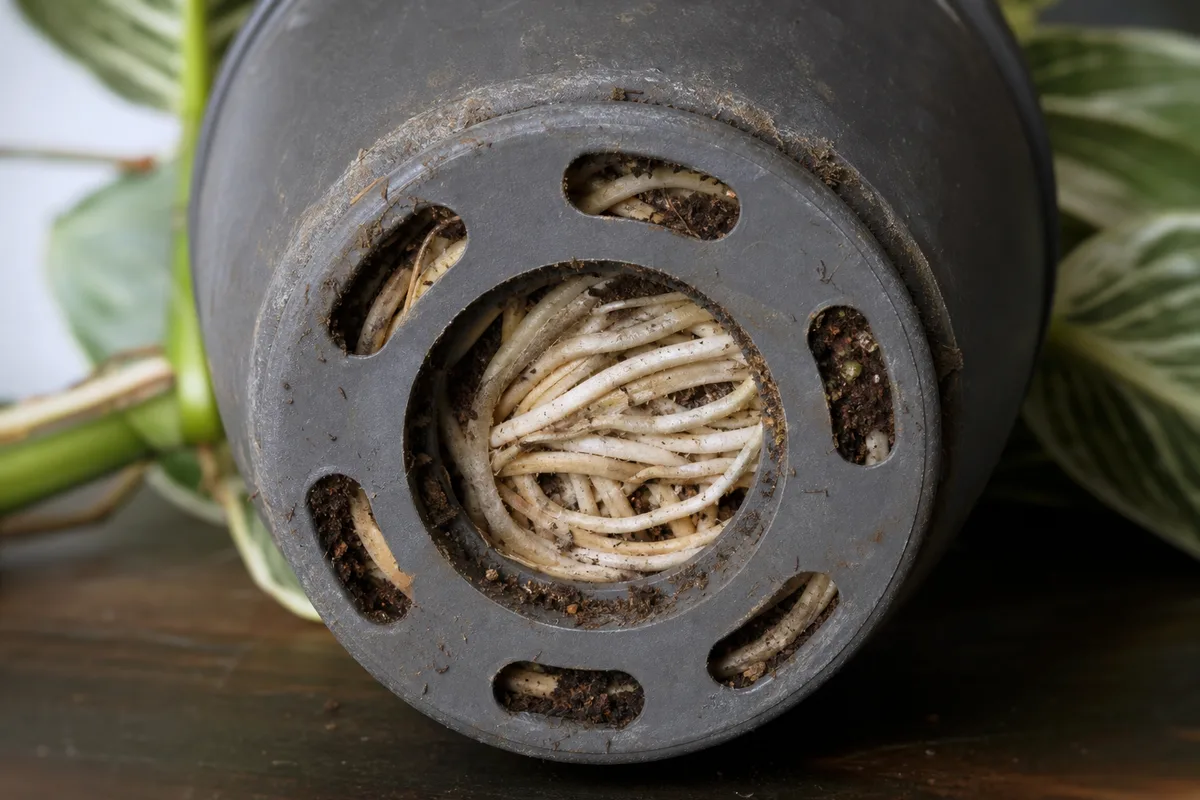
Repot when roots circle densely, emerge from the drainage hole, the mix has collapsed, or water no longer moves through evenly. A Birkin that is growing steadily in a structured mix does not need annual pot changes simply because the calendar says so. Spring or the beginning of active growth is the gentlest window, but a failing, waterlogged root zone should be corrected whenever necessary.
Choose a pot only one size larger, usually about 1–2 inches wider. Oversizing leaves a large volume of wet mix around a relatively small root ball and raises the odds of slow drying. Slide the plant out, inspect roots, and trim only roots that are black, mushy, or clearly dead with clean scissors. Firm pale roots are worth preserving.
Set the crown at the same depth as before. Fill around it with fresh mix without packing it tightly, water once to settle the mix, and let the excess drain. A little droop after repotting can be transplant stress; worsening softness, sour-smelling wet soil, or a soft stem points to a root problem rather than normal adjustment.
Prune, Support, and Keep It Full
Pruning is mostly cosmetic and sanitary. Remove fully yellow, brown, or damaged leaves at the base of the petiole with clean, sharp scissors. Do not strip healthy green leaves just because they are less variegated; they still photosynthesize and help the plant recover.
To keep a multi-stem pot looking full, protect the crown and avoid cutting the only growing point. A nursery pot may contain several young plants, which creates a bushier look without special pruning. If your Birkin has become sparse, check light first. Pruning a stretched plant without fixing the dim placement only creates a shorter stretched plant.
Use a slender stake if the crown leans or becomes top-heavy. Tie loosely with soft material and leave room for the stem to thicken. A moss pole is unnecessary for normal Birkin growth, although a simple support can steady a tall specimen.
Propagate from a Stem Cutting
Propagation succeeds only when the cutting includes a node. A leaf without a node can remain green for a while but cannot produce a new stem. The safest time is active growth, when the parent plant is hydrated and the cutting can receive warm, bright indirect light.
Choose a healthy stem section with at least one visible node and one or two leaves. Make a clean cut just below the node, remove any leaf that would sit in water or mix, and keep the cutting out of direct sun. Do not take a large section from a stressed, pest-covered, or freshly repotted plant.
Water propagation
Place the node in a clear container of water while keeping the leaves above the waterline. Change the water every few days or whenever it becomes cloudy. Bright indirect light and warmth matter more than adding a rooting product.
When several roots are established and roughly 1–2 inches long, move the cutting into a small pot of lightly moist, airy mix. Expect a pause while water roots adapt to soil. Keep the mix a little more evenly moist than you would for a mature plant, but still use a pot with drainage and never leave it standing in runoff.
Soil propagation and division
For soil propagation, place the node against or just below the surface of a lightly moist, airy mix. Enclose the pot loosely in a clear bag only if the room is very dry, and open it regularly for airflow. Condensation should not remain heavy enough to keep the mix saturated.
Division is possible when a nursery pot contains genuinely separate rooted offsets. Unpot the plant, trace the roots, and separate only where each section has its own roots and a growing point. Do not pull apart a single stem with one shared root system just to create more pots; that creates damage without a viable division.
Practical propagation guidance from Get Busy Gardening and Sprouted in Soil agrees on the essentials: use mature stem material with nodes, keep leaves out of the water, change cloudy water, and allow a rooted cutting time to adjust after potting. The exact rooting time varies with warmth, light, cutting size, and the plant’s condition.
Troubleshoot Yellow, Brown, Curling, or Drooping Leaves
Start with the pattern, pot weight, and stem condition rather than treating a color in isolation.
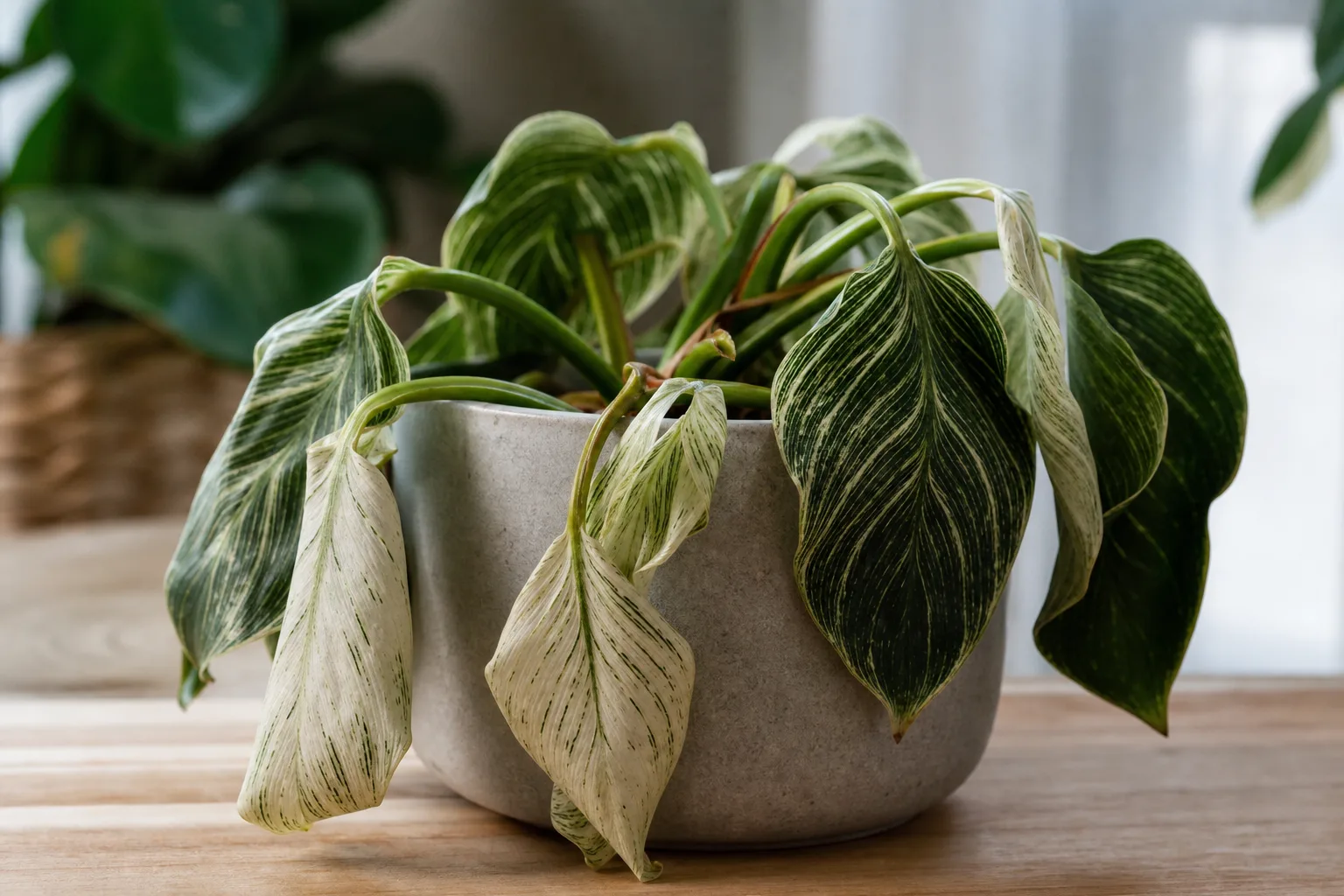
- One old lower leaf turns yellow: If new growth is firm and the mix dries normally, natural aging is plausible. Remove the leaf once it is mostly yellow.
- Several leaves turn yellow while the pot stays heavy: Suspect overwatering, compacted mix, poor drainage, or root damage. Pause watering and inspect the root zone if the condition continues.
- Crisp brown tips with otherwise firm leaves: Check dry air, missed watering, salt buildup, and hot direct sun. Correct the cause; trimming the brown tissue only improves appearance.
- Soft brown patches or a mushy stem: Treat this as urgent root or stem rot territory. Unpot, cut away mushy tissue, and repot only healthy material in fresh, airy mix.
- Leaves curl but the mix is bone-dry: Water thoroughly and check whether the pot is root-bound or the mix has become water-repellent. If the mix is wet, curling may instead reflect cold stress, root injury, or pests.
- The whole plant droops after repotting: Give it stable warmth and indirect light while checking drainage. Repeated watering to correct transplant shock can turn a temporary pause into root rot.
Do not change five variables at once. If the soil is wet, solve the root-zone problem. If it is dry and the leaves are crisp, water and improve the environment. If the newest leaves are small and stretched, address light before feeding.
Manage Pests and Prevent Leaf-Spot Problems
Inspect new leaves, petioles, and the undersides of leaves when you bring a Birkin home and again during routine watering. NC State Extension lists mealybugs, aphids, scale, thrips, and spider mites among philodendron problems; the RHS Birkin profile also flags scale and glasshouse red spider mite.
Look for cottony clusters from mealybugs, firm bumps from scale, fine stippling or webbing from spider mites, and silvery scarring or black specks from thrips. Isolate the plant before treatment. Wipe visible pests away, rinse foliage if the plant and room allow it to dry quickly, and use a labeled insecticidal soap or other registered product exactly as directed. Test any product on a small area first, especially on pale variegated leaves, and never increase concentration because the first treatment did not work.
Repeat inspections because eggs and hidden adults can outlast one treatment. Avoid routinely spraying leaves with oils or alcohol without checking the product label and plant tolerance. For leaf spots, improve airflow, keep leaves from remaining wet overnight, and remove badly damaged tissue with clean tools. If spotting spreads rapidly or stems soften, move from cosmetic treatment to a root and disease assessment.
Pet and Child Safety
Treat Philodendron ‘Birkin’ as toxic if chewed. The ASPCA listing for Philodendron identifies insoluble calcium oxalates and lists oral irritation, pain and swelling of the mouth, tongue, and lips, excessive drooling, vomiting, and difficulty swallowing as possible clinical signs in animals.
Keep the pot behind a barrier or high enough that a curious cat, dog, or child cannot reach the leaves. Hanging a plant is not automatically safe if a pet can jump to it or fallen leaves collect below. If a pet may have chewed the plant, contact a veterinarian or an animal poison-control service promptly rather than waiting for symptoms or trying a home remedy.
Conclusion
Good Philodendron Birkin care is a steady balance between brightness and restraint. Give it enough filtered light to support compact, patterned new growth, but protect the pale leaves from hot sun. Water deeply after a real dry-down, then let the pot drain; do not keep the root ball permanently wet in pursuit of tropical humidity.
Use an airy mix, a drainage hole, light seasonal feeding, and a pot only modestly larger when repotting. When something changes, read the whole pattern: new leaves versus old leaves, wet soil versus dry soil, crisp tissue versus soft tissue, and a leaning crown versus a damaged stem. That sequence will solve far more Birkin problems than adding more fertilizer, mist, or water by habit.