3 Perennials to Skip Planting in Fall
Which perennials should wait until spring? Learn why broadleaf evergreens, slow-rooting woody plants, and tender bulbs struggle in fall—and what to do instead.
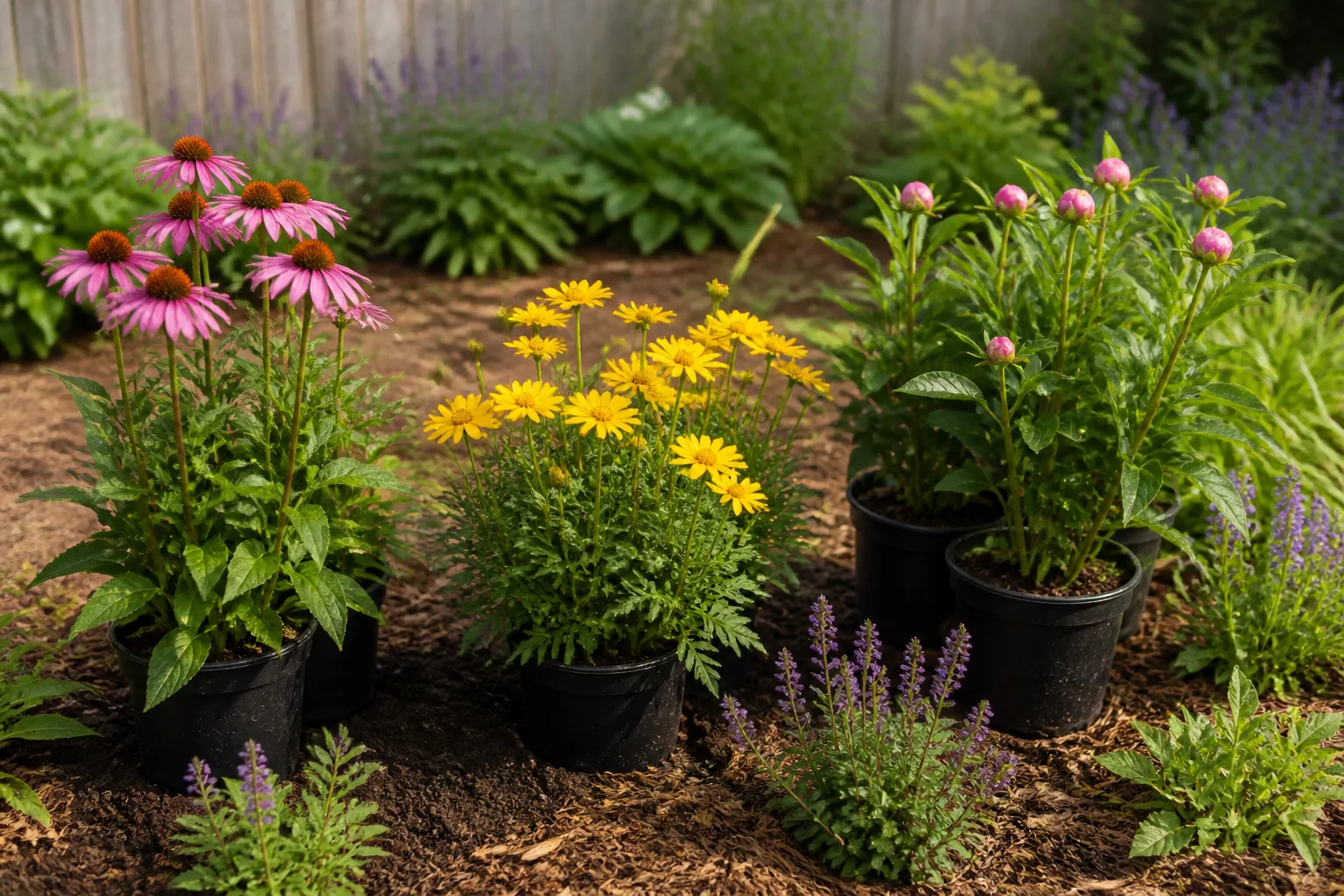
The safest short answer is to wait until spring with late-fall broadleaf evergreens, slow-establishing woody plants with thick or easily disturbed roots, and tender summer-flowering bulbs, corms, and tubers. Those plants enter winter with the wrong combination of risk: a small root system, exposed foliage that keeps losing water, or underground storage tissue that is easily damaged by cold and wet soil.
That does not make fall a bad planting season. Cool air, warmer soil, and dependable autumn moisture can help many hardy deciduous trees, shrubs, and herbaceous perennials establish before spring growth begins. The mistake is treating “fall” as a single window that works equally well for a boxwood, a magnolia, a dahlia tuber, and a hardy daffodil.
One terminology note helps keep the advice honest: boxwoods, magnolias, oaks, and similar plants are woody shrubs or trees, not herbaceous perennials. Gardeners often group them together because they are long-lived landscape plants, and that is how they are commonly discussed in seasonal planting advice. The useful question is not the label; it is whether the plant can make enough healthy roots, handle winter water loss, and tolerate the soil conditions it will face.
The real question is not “fall or spring?”
Fall planting works when the root system can keep functioning after the top growth slows. Roots do not need a leafy canopy to grow, but they do need unfrozen, aerated soil and enough time to occupy new soil beyond the original pot or rootball. A plant that goes into the ground early in fall can spend weeks making that quiet underground adjustment while the air is cool and evaporation is lower.
The risk rises when the calendar advances faster than the roots. Winter wind and sunshine can pull water from leaves and stems while frozen soil prevents roots from replacing it. Purdue Extension describes this winter desiccation as a particular problem for evergreens, especially broad-leaved types, and notes that fall-planted stock needs extra attention before winter arrives (Purdue Extension).
Spring is usually the better season when the plant needs warm soil to restart, has a high water-demand canopy, is unusually slow to establish, or has a tender organ that should be stored dry and frost-free. It also gives a newly planted specimen an entire growing season to build roots before the first winter, which is a meaningful advantage in cold or erratic climates.
Quick decision table: plant now, wait, or protect
Use the table as a first pass, then check the plant tag and local extension guidance. “Fall” can mean a long, mild season in one garden and a two-week countdown to frozen soil in another.
| Plant or plant part | Fall can work when… | Wait for spring when… |
|---|---|---|
| Broadleaf evergreen shrub or tree | It is early fall, container-grown, healthy, well watered, sheltered from drying wind, and hardy for the site. | It is late fall, the site is exposed or dry, the plant is marginally hardy, or the ground will freeze soon. |
| Deep- or fleshy-rooted woody plant | It is a small, undisturbed container plant, the site drains well, and several weeks of root-friendly weather remain. | It is a large transplant, bare-root stock, magnolia, tuliptree, ginkgo, oak, or another slow starter with little time before winter. |
| Dahlia, canna, gladiolus, caladium, or other tender summer organ | Only when the exact cultivar is proven hardy in the local site and the soil stays reliably free-draining. | When buying dormant stock in autumn, planting close to frost, or gardening where winter soil is cold and wet. |
The third row is deliberately conservative. RHS guidance separates tender summer-flowering bulbs from spring-flowering and hardy summer-flowering bulbs: tender types are planted in early spring, while hardy types such as lilies and alliums can be planted in autumn (RHS bulb planting guidance).
1. Broadleaf evergreens that keep losing water
Broadleaf evergreens are the clearest “wait” category when fall is already turning cold. Boxwood, holly, rhododendron, gardenia, and evergreen magnolia keep leaves through winter, so a newly planted specimen can lose water from its canopy even after the soil surface looks damp. The roots, meanwhile, have had little time to move beyond the rootball and may be slow or unable to replace that loss.
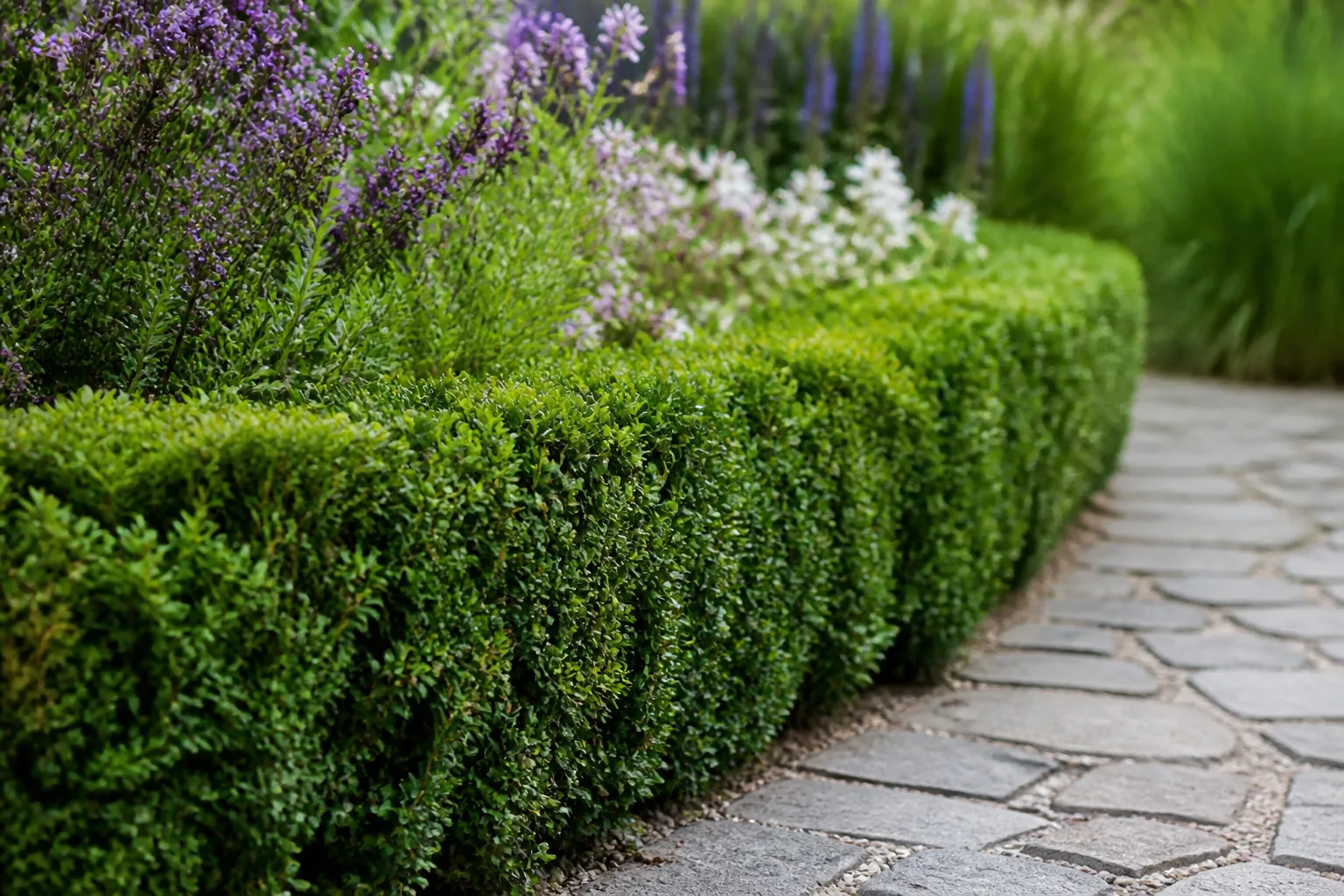
Southern Living makes the same distinction between deciduous plants and broadleaf evergreens: dry winter winds continue to expose the leaves of boxwoods, hollies, gardenias, and Southern magnolias, creating water stress before a new root system is established (Southern Living). That is a more useful rule than “never plant an evergreen,” because many narrow-leaved conifers and hardy deciduous plants can be planted successfully in a good early-fall window.
Why leaves are a winter liability
Every living leaf exchanges gases and loses some water. In summer, the plant can usually replace that water through active roots, and the soil is warm enough to support new root growth. In winter, bright sun and moving air can increase water loss while frozen or nearly frozen ground slows uptake. A recently installed broadleaf evergreen has the worst of both conditions: a functioning canopy above and an incomplete root system below.
Wind exposure matters as much as the thermometer. A boxwood in a protected courtyard is not facing the same winter as one on a ridge or beside a reflective south-facing wall. Cold hardiness on a label also describes an established plant under ordinary conditions; it does not guarantee that a freshly disturbed rootball will tolerate the same extremes in its first winter.
The most common failure is not an immediate freeze-kill. Foliage may look fine when the ground freezes, then turn bronze or brown after a sequence of sunny, windy days in late winter. By the time the damage is obvious, the issue is often water loss from tissue that could not be replenished rather than a single overnight low.
How to tell whether a fall evergreen is too late
Do not use the first calendar day of autumn as the cutoff. Ask how many weeks of workable soil remain, whether the rootball is moist all the way through, and whether the plant can be protected from wind while it establishes. A regional benchmark from Purdue Extension is that soil should be well above 55°F at roughly 6 inches deep when planting; the exact date varies with location, exposure, and year (Purdue fall planting guidance).
If the soil is still warm, the plant is small and container-grown, and your area normally has a long mild autumn, planting may be reasonable. Water it thoroughly, keep competing grass away, and continue checking moisture until the ground freezes. If the soil is cooling rapidly, the site is exposed, or the plant is a marginal evergreen for your zone, hold it in a protected container and plant in spring instead.
Do not assume a layer of mulch makes a late planting safe. Mulch buffers soil temperature and slows evaporation, but it cannot give a broadleaf evergreen roots that it never had or stop a desiccating wind from reaching the leaves. It is a support measure, not a substitute for an adequate establishment window.
2. Slow-establishing, deep- or fleshy-rooted woody plants
The second group is not “every plant with a taproot.” It is the group of woody plants whose root architecture, size, or transplant history makes rapid re-establishment difficult. Magnolia, tuliptree, birch, ginkgo, oak, sweetgum, and some other trees are often better saved for spring, especially when they are large or have been moved from the ground.
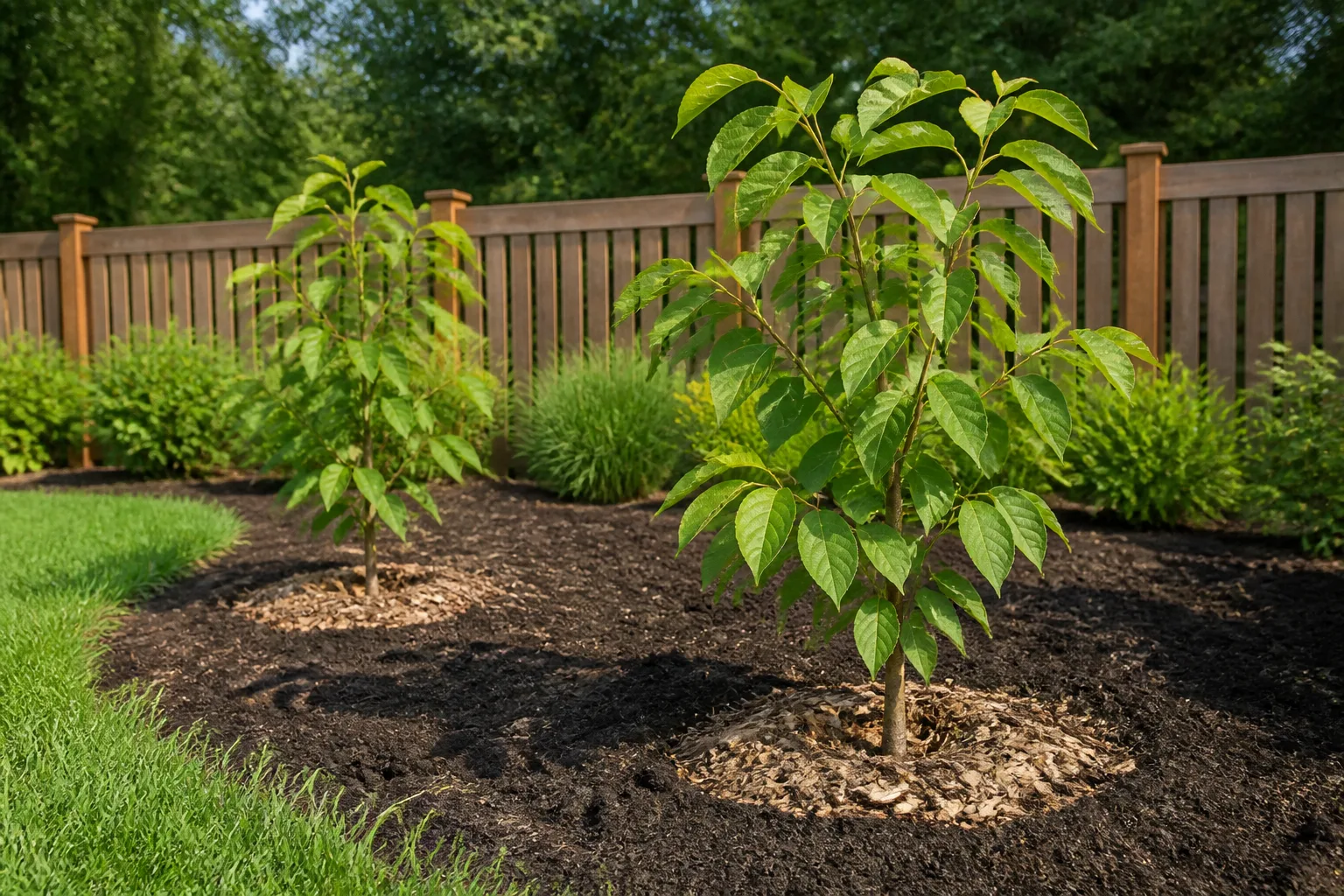
The distinction between a small nursery container and an established tree matters. A young plant that has grown in its container may have a relatively intact root system. A mature tree that has been dug, hauled, and replanted may lose a large share of its absorbing roots even if a central root remains. The University of Washington’s Elisabeth C. Miller Library, quoting extension guidance on fall transplanting, notes that plants with shallow, fibrous roots are generally easier to move than plants with fewer, larger roots; magnolia and tuliptree are cited as difficult examples (University of Washington Miller Library).
Why roots, not dormancy, set the limit
A dormant top does not mean the roots are ready for disruption. A plant can look asleep above ground while its newly cut roots are still trying to seal wounds, grow fine feeder roots, and make contact with surrounding soil. Thick, fleshy roots also do not branch and recover as quickly as a dense fibrous root system, so the plant may enter winter with too little functional absorbing surface.
This is where “taproot” becomes an imperfect shortcut. Root systems vary by species, cultivar, age, soil, and nursery production. The practical warning is about slow root recovery, not about a single root shape. If a rootball is large, freshly dug, badly pot-bound, or missing fine roots, the risk is high even if the plant is technically container-grown.
Winter adds two more problems. Repeated freezing and thawing can heave a shallow or poorly seated rootball, leaving roots exposed to air. Heavy winter soil can stay saturated around damaged roots, reducing oxygen and encouraging rot. The RHS recommends avoiding waterlogged or frozen ground, planting no deeper than the root system, and setting the first root flare at the final soil level (RHS trees and shrubs planting guide).
Species and situations that deserve a spring window
Purdue Extension lists magnolia, dogwood, tuliptree, sweet gum, red maple, birch, hawthorn, poplars, cherries, plums, and many oaks among plants best saved for spring. The University of Washington’s extension-backed reference also names fir, American hornbeam, yellowwood, ginkgo, larch, hophornbeam, willow, bald cypress, and hemlock as slow-to-establish examples. These lists are useful warning signs, not a universal ban.
Give spring priority when one or more of these conditions apply:
- The plant is a large specimen or an established tree being transplanted from another location.
- It is sold bare-root but is not yet in its normal dormant planting window.
- The local winter is severe, windy, unpredictable, or likely to freeze the soil soon after purchase.
- The site is compacted, poorly drained, exposed, or prone to frost heave.
- The plant is near the edge of its hardiness range, so one cold event could exceed its recovery capacity.
Conversely, a small, healthy, container-grown deciduous plant in a mild region can sometimes be planted in fall even when its species appears on a cautious list. That is why the tag, root condition, soil, and local extension office deserve more weight than a blanket internet rule.
3. Tender summer-flowering bulbs, corms, and tubers
The third group is the easiest to mishandle because gardeners hear “bulbs” and automatically think “plant in fall.” But bulb is often a catch-all word for true bulbs, corms, tubers, and rhizomes. The season depends on the organ’s cold tolerance and the plant’s natural growth cycle, not on the underground shape.
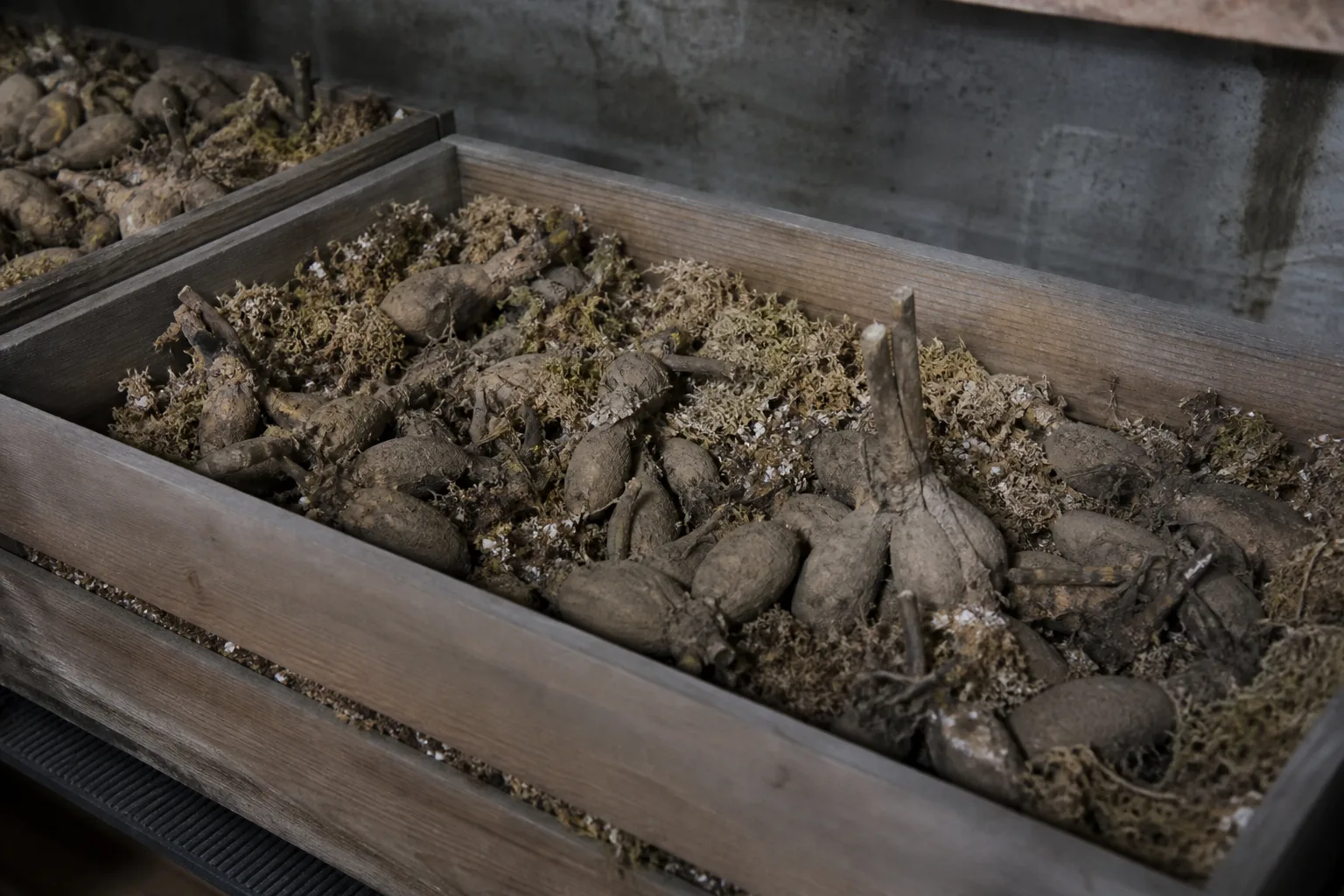
Dahlias, cannas, many garden gladiolus, caladiums, colocasias, and similar summer plants are commonly planted after winter has loosened its grip. Their dormant organs may rot in cold, wet soil, or suffer direct cold injury before they have formed roots. Better Homes & Gardens also separates tender perennials from hardy plants and recommends spring planting for cannas, dahlias, and gladiolus, with storage or digging in cold climates (Better Homes & Gardens).
What to do with dahlias, cannas, gladiolus, and caladiums
Plant these outdoors in spring after the danger of damaging frost has passed and the soil is warming. If you want an earlier display, start dormant dahlias or cannas in pots in a protected, frost-free place, then harden them off before moving them outside. The extra step gives the organ warmth and moisture control without asking it to survive winter in the bed.
RHS guidance describes dahlias as tender perennials grown from tubers. Stored tubers can be started in containers in spring and planted into their flowering positions after frost; direct outdoor planting can wait until the soil is safe and the shoots will emerge after the coldest nights (RHS dahlia growing guide). In a very mild climate with light, free-draining soil, some gardeners leave dahlia tubers in the ground, but that is an overwintering choice—not a reason to plant newly purchased dormant tubers in autumn.
Cannas grow from rhizomes and gladiolus from corms. Many popular gladiolus hybrids are not fully hardy and are lifted in autumn, dried, and stored frost-free; RHS recommends spring planting for most corms while acknowledging that a few hardy types can overwinter in well-drained, warmer sites (RHS gladiolus growing guide). Caladiums and colocasias are even more sensitive to cold in many North American gardens and are usually best treated as spring-started plants unless a local source confirms otherwise.
The hardy-bulb exception gardeners miss
Do not remove every bulb from your fall shopping list. Spring-flowering daffodils, crocuses, hyacinths, and many tulips are planted in autumn because their growth cycle includes a cool dormant period. RHS recommends autumn planting for spring-flowering bulbs, and it also lists hardy summer-flowering bulbs such as lilies, alliums, and crocosmia as autumn options in suitable conditions (RHS bulb planting advice).
Daylilies are another important correction. They are hardy herbaceous perennials that grow from rhizomes, and a well-timed fall planting can be successful where the soil remains workable. Calling every summer-blooming plant a tender “summer bulb” would send gardeners to the wrong season. Check the exact genus and cultivar, then separate “hardy underground organ” from “tender underground organ” before you dig.
When a “do not plant in fall” rule is too broad
Hardiness zone is a starting point, not a planting appointment. Zones describe average extreme winter temperatures, while establishment depends on this year’s frost date, the plant’s size, the stock type, drainage, wind, and whether the plant is already actively rooted. A plant can be hardy in your zone and still fail when planted two days before the ground freezes.
The nursery form changes the decision too. A bare-root plant is intentionally lifted while dormant and is normally handled in a specific dormant-season window. A container-grown plant may be moved with most of its roots intact. A root-balled plant may be available only in autumn or winter but still needs prompt planting and careful moisture management. Treating all three as “a plant in a pot” hides the risk.
The old shortcut “no leaves, no planting” is also unreliable. Dormant bulbs and bare-root stock are supposed to be leafless when planted, while a dormant tender tuber in cold soil may be a poor bet. Use the plant’s natural schedule, not its appearance alone.
A frost-date and soil-temperature test for borderline cases
When the answer is not obvious, run this five-question test before buying or digging:
- What is the plant’s winter strategy? Does it keep a water-losing canopy, die to the ground, or store energy in a tender organ?
- What kind of stock is it? Container-grown, root-balled, bare-root, or a large established transplant?
- How much workable weather remains? Compare the current date with your average first hard frost and with the time your soil usually stays unfrozen.
- What is the soil doing? Dig a small test hole. If it is waterlogged, compacted, or already close to freezing, fix the site or wait.
- What happens if the forecast turns early? If one cold snap would leave the plant unprotected, spring is the more forgiving choice.
For hardy, small container plants, several weeks of cool root growth can be enough. For a broadleaf evergreen, slow-rooting specimen, or tender tuber, set a higher bar. Purdue’s 6-inch soil-temperature benchmark can help in regions where it applies, while the RHS emphasizes workable, non-waterlogged soil and correct root placement rather than a single calendar date.
Do not use a printed average frost date as a guarantee. It is a planning statistic, not a promise about this winter. If the plant is expensive, unusually large, or marginally hardy, a local cooperative extension office or knowledgeable nursery can give a more defensible recommendation than a generic zone chart.
If you already bought the plant, save it this season
An autumn purchase is not automatically a lost plant. The priority is to keep roots from drying out, avoid encouraging soft new growth, and move tender organs into the correct storage or starting environment. The right response depends on what you bought.
Container, bare-root, and root-balled rescue plans
Container-grown broadleaf evergreen or woody plant: If the planting window is still early and the site is suitable, plant promptly rather than letting the rootball cycle between dry and saturated. If the window is closing, keep the plant outdoors in a sheltered spot, protect the container from severe freeze-thaw swings, and check moisture by hand. Do not park a hardy outdoor plant in a heated room for weeks; warm indoor conditions can disrupt dormancy and reduce light.
Bare-root plant: Keep the roots cool and damp, never exposed to sun or drying wind. If you cannot plant immediately, heel the roots into loose soil or follow the supplier’s storage directions, then plant during the proper dormant-season window. RHS notes that bare-root stock should be planted promptly or temporarily heeled in so the roots do not dry out (RHS planting guidance).
Root-balled plant: Do not leave the rootball sitting above ground to freeze and thaw repeatedly. Ask the nursery whether it can be heeled in or planted in spring, and keep the wrapping and rootball according to the seller’s instructions. If it must be planted, choose a well-drained site, set the root flare correctly, water thoroughly, and avoid late fertilizer.
Already planted too late: Water deeply while the soil is still open, but do not create a saturated hole. A 2- to 4-inch layer of mulch can buffer temperature swings after the plant is fully dormant and the soil is cold; keep mulch away from the trunk or stems. Purdue recommends continuing to supply moisture as needed until the ground freezes, while the RHS warns that overwatering in poor-draining soil can cause root rot and mimic drought stress (Purdue winter watering advice; RHS aftercare guidance).
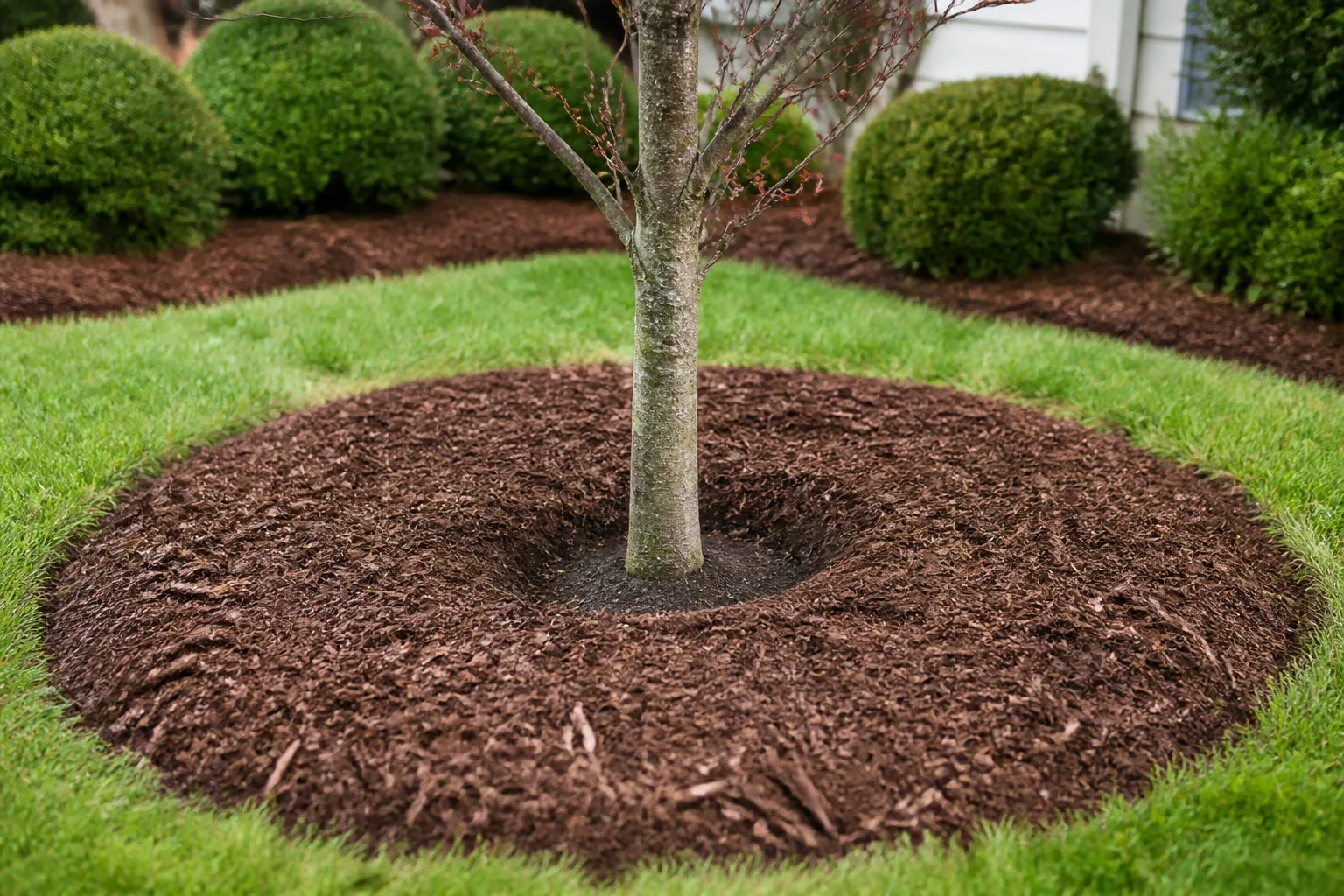
For a newly planted broadleaf evergreen in an exposed location, a temporary breathable windbreak can reduce drying, but do not wrap foliage tightly in plastic or leave protection on during mild weather. Skip heavy pruning and late-season fertilizer; the goal is stable roots, not a flush of tender growth before winter.
Storage rules for tender underground organs
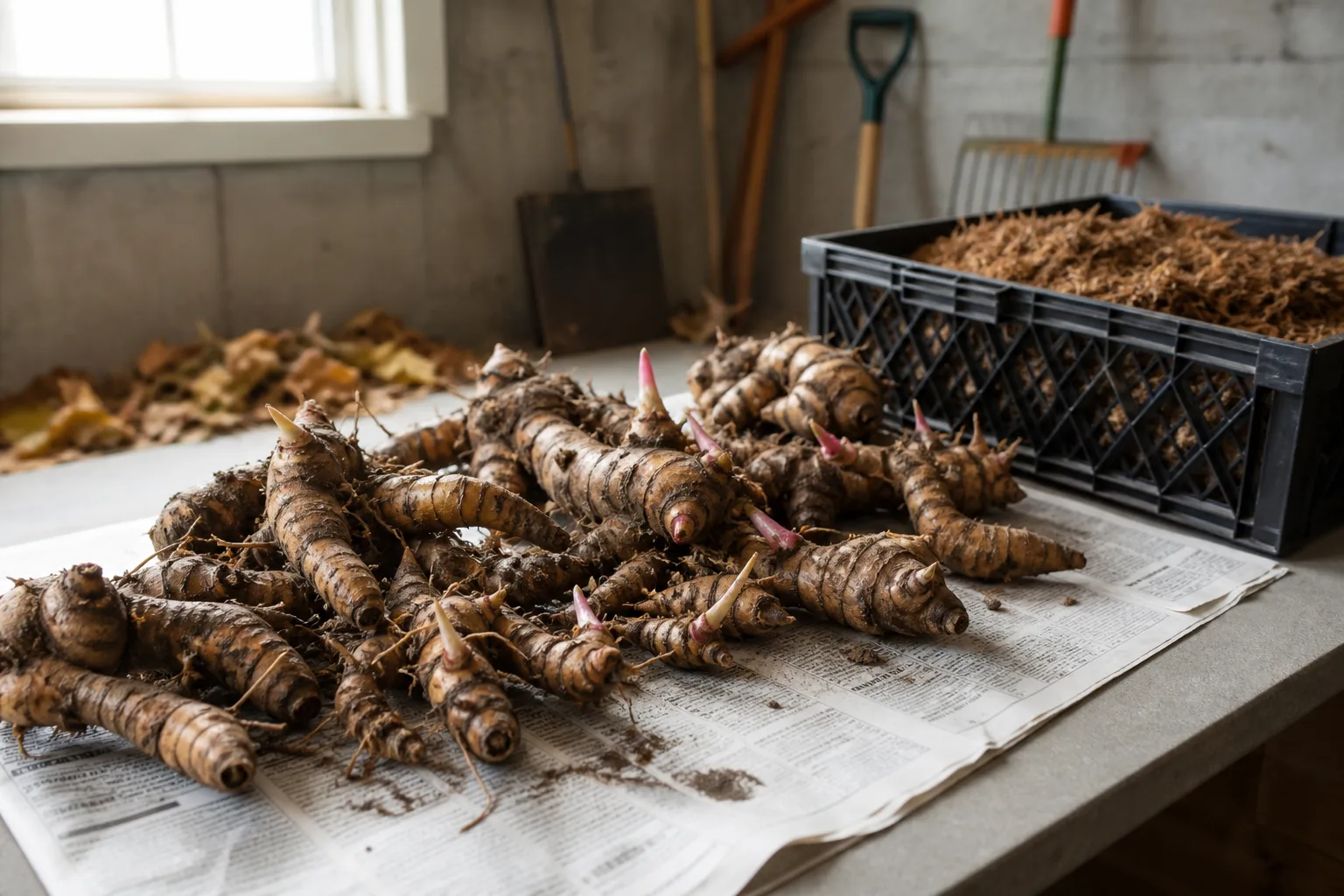
If you bought dahlia tubers, canna rhizomes, or non-hardy gladiolus corms in fall, do not bury them and hope the word “perennial” will protect them. Inspect each organ, discard soft or diseased pieces, let surface moisture dry as appropriate for the plant, and store in a cool, dark, frost-free, ventilated place according to the cultivar’s directions.
Dahlia tubers should be protected from freezing and excessive wetness. Gladiolus corms are commonly lifted before the foliage has completely disappeared, dried, and stored dry; RHS recommends checking stored corms and removing rotten ones. In spring, start them in pots if you want to lengthen the season, or plant outdoors after frost when soil conditions match the plant’s needs.
Do not seal damp tubers in an airtight plastic bag, put them beside a heater, or water dormant organs heavily. Heat can wake them too early, while trapped moisture encourages rot. Labeling cultivars at storage time also saves a surprisingly common spring problem: a box of anonymous tubers that no longer tells you which plants need sun, support, or different planting depths.
Better fall purchases and spring substitutes
Fall is still an excellent time to shop; it simply rewards the right targets. Look for healthy, hardy container-grown deciduous trees and shrubs, established herbaceous perennials suited to your climate, and spring-flowering bulbs that need a cool rest. The RHS notes that many container-grown trees and shrubs are easier to care for when planted in autumn or winter because they need less watering than spring or summer plantings, provided the ground is workable and not waterlogged.
If you want the visual job of a plant that should wait, choose a safer seasonal substitute:
- For a broadleaf evergreen hedge or foundation planting, use a hardy deciduous shrub now and install the evergreen in spring when you can monitor it through a full growing season.
- For summer color, plant hardy fall bulbs or spring-flowering bulbs now, then reserve dahlias, cannas, caladiums, and most gladiolus for spring.
- For a tree with long-term structure, choose a smaller, healthy container plant only when the species and local timing support fall planting; otherwise prepare the site now and plant in spring.
- For a perennial border, divide or plant only species known to establish well in your climate, and leave marginally hardy experiments until spring.
The best bargain is the plant that matches your actual planting window. A discounted tender tuber that spends winter rotting in a cold bed is more expensive than a full-price spring purchase that grows immediately.
A simple planting checklist for the right season
Before you put any perennial, shrub, tree, bulb, corm, or tuber in the ground, confirm six details:
- Identify the organ and the plant’s winter strategy. True bulb, corm, tuber, rhizome, fibrous root, and woody rootball do not share one calendar.
- Check hardiness at the cultivar level. Use the plant tag, a regional extension source, and the site’s wind and drainage—not the zone number alone.
- Check stock condition. A small container plant may be ready when a large transplant or bare-root plant is not.
- Measure the window. Compare soil temperature and workable soil with the first hard frost and the date the ground normally freezes.
- Plant for roots. Keep the root flare at grade, loosen compacted soil, avoid a waterlogged hole, and do not bury the crown or top of a tuber deeper than recommended.
- Plan aftercare before planting. Have water, mulch, wind protection, and a storage or frost-free space ready before you bring a tender purchase home.
If any answer is uncertain, pause. Preparing the bed, labeling the spot, and waiting for spring is a gardening action—not a failure to garden.
Conclusion
The three groups most worth postponing are late-fall broadleaf evergreens, slow-establishing or heavily disturbed woody plants, and tender summer-flowering bulbs, corms, and tubers. They fail for different reasons: winter water loss, inadequate root recovery, or cold-and-wet damage to the plant’s storage organ.
Fall remains a strong season for the plants that are hardy, correctly timed, and able to establish in your soil. Match the plant’s biology to the window in front of you, then choose between planting, protecting, or storing with intention. That small pause is often what turns a tempting autumn bargain into a healthy spring garden.



