Perennials to Cut Back in Fall: A Gardener's Guide
Irises, peonies, phlox, and 30 more perennials often benefit from fall cutback. Use this disease-first checklist before you clean the whole bed.
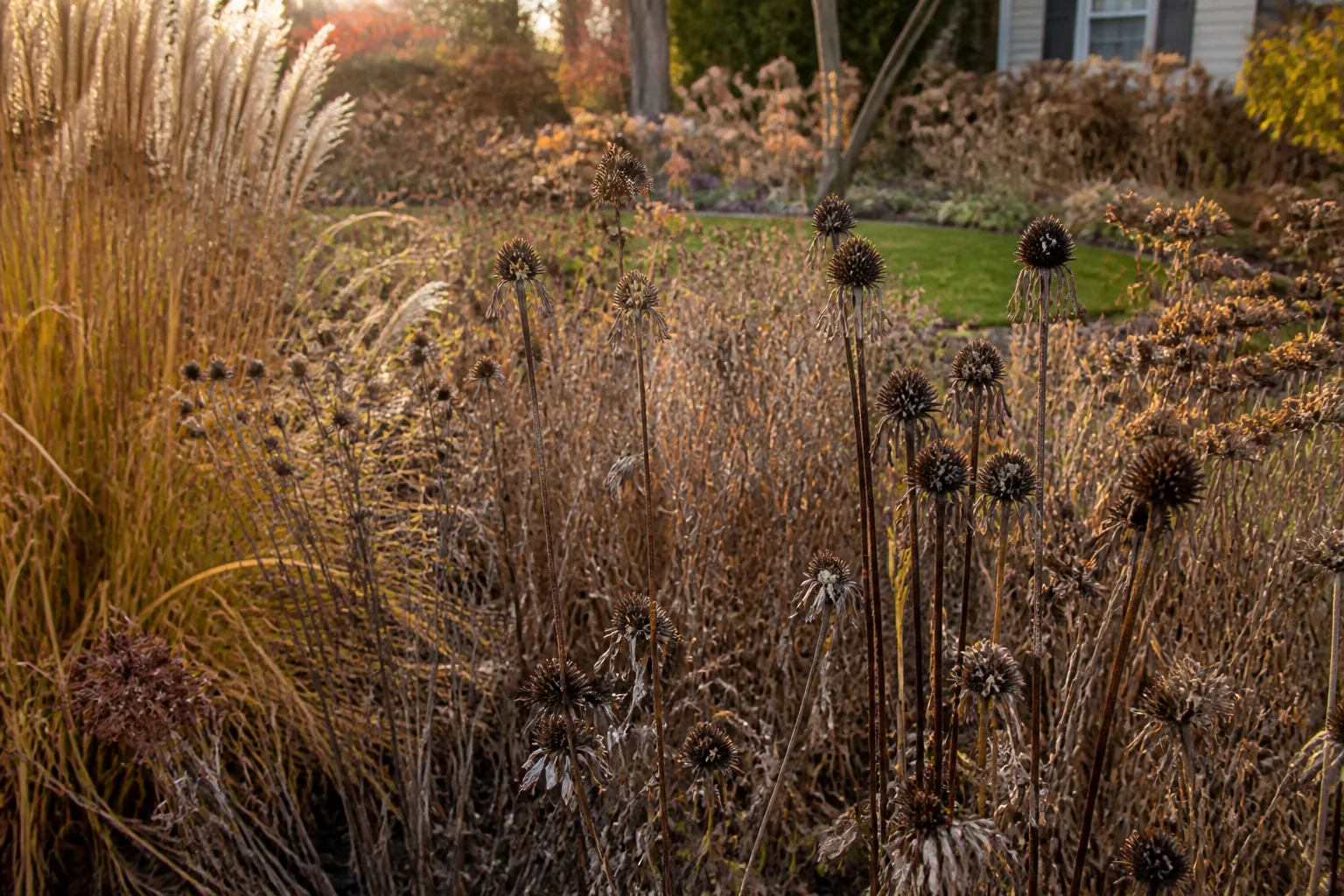
Fall cleanup tempts you to level the whole perennial border. That looks satisfying for about a week, then spring arrives with fewer seedheads for birds, fewer hollow stems for native bees, and sometimes weaker crowns where you stripped protection too early. The better question is not whether to cut back perennials in fall, but which perennials earn a fall cut—and why.
Thirty-three common flowering perennials regularly belong on a fall cut list. They are not grouped here because tidiness is virtuous. They are here because their spent foliage commonly carries disease, collapses into a wet mat over the crown, or spreads seed you do not want. Everything else is optional until spring.
The short answer: cut for disease and decay, not for a bare bed
Cut perennials in fall when their top growth is diseased, insect-infested, or turning to mush after frost. Healthy structural plants—many coneflowers, ornamental grasses, and late seedheads—can stay up unless they block paths or reseed aggressively. Fall cutback is sanitation and crown protection, not a race to bare soil.
Why fall cutback became controversial
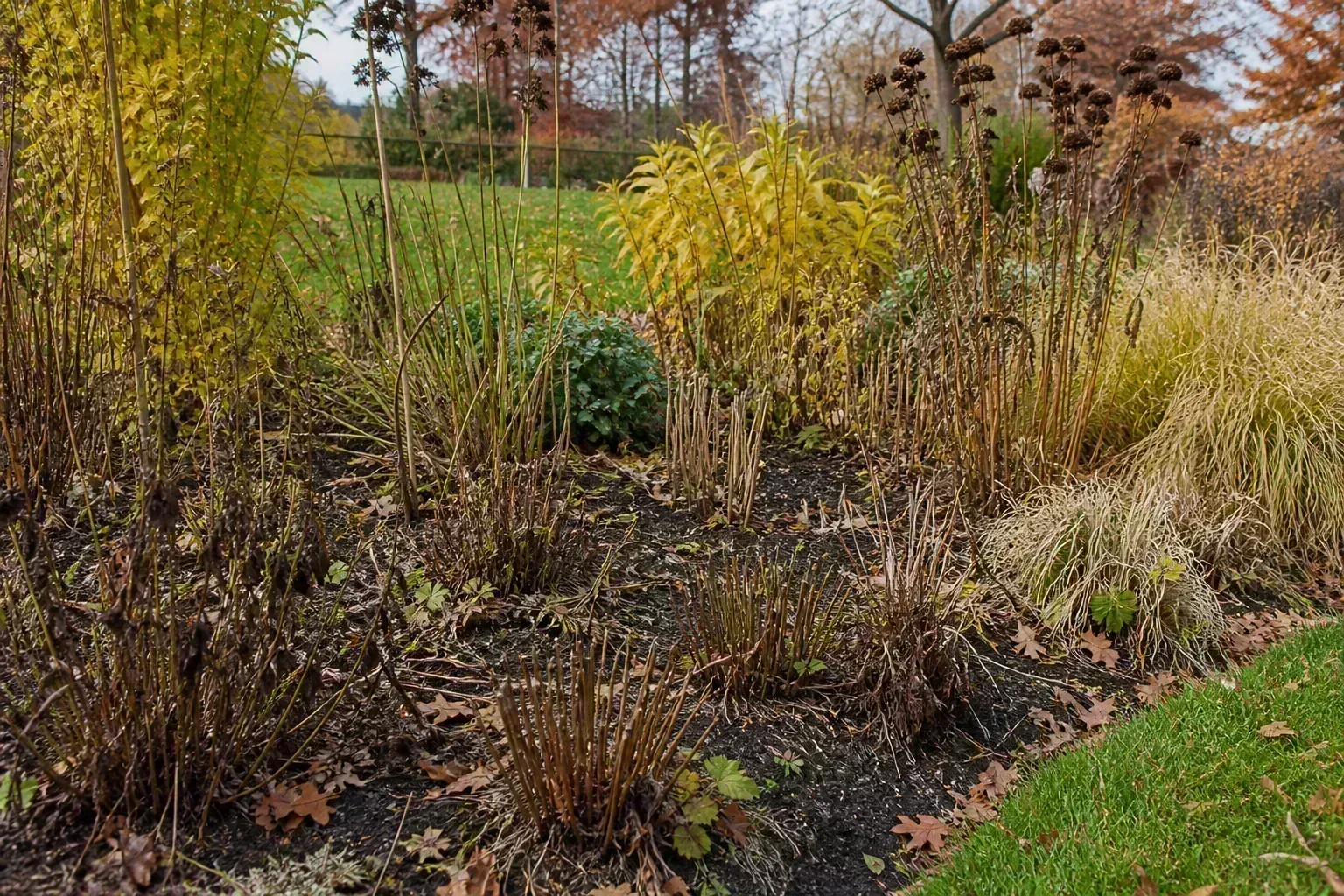
Extension and ecology-minded gardeners now push back on the old “razed bed” approach. Gardening Know How notes that leaving standing material supports winter interest and wildlife, while disease-prone plants still need prompt removal. The modern middle path is selective: remove what threatens next year; leave what feeds the garden ecosystem.
The three reasons that justify a fall cut
Disease and pest carryover is the strongest reason. Powdery mildew on phlox, leaf spot on iris, and botrytis-prone peony foliage can all leave spores on dead leaves that survive winter on the soil surface. Decay is the second: frost-blackened Japanese anemone leaves, slimy ground clematis, and collapsed leopard plant foliage hold moisture against the crown. Self-seeding or flop control is the third: plume poppy, ladybells, and meadow rue can spare you hundreds of unwanted seedlings or a split clump if you trim before seed matures.
When fall cutback actually helps your garden
Fall pruning pays off when the plant’s top growth has finished its job and is now a liability. For many summer bloomers, that moment comes weeks after the last flower—not on the first yellow leaf.
Disease and pest carryover you can remove now
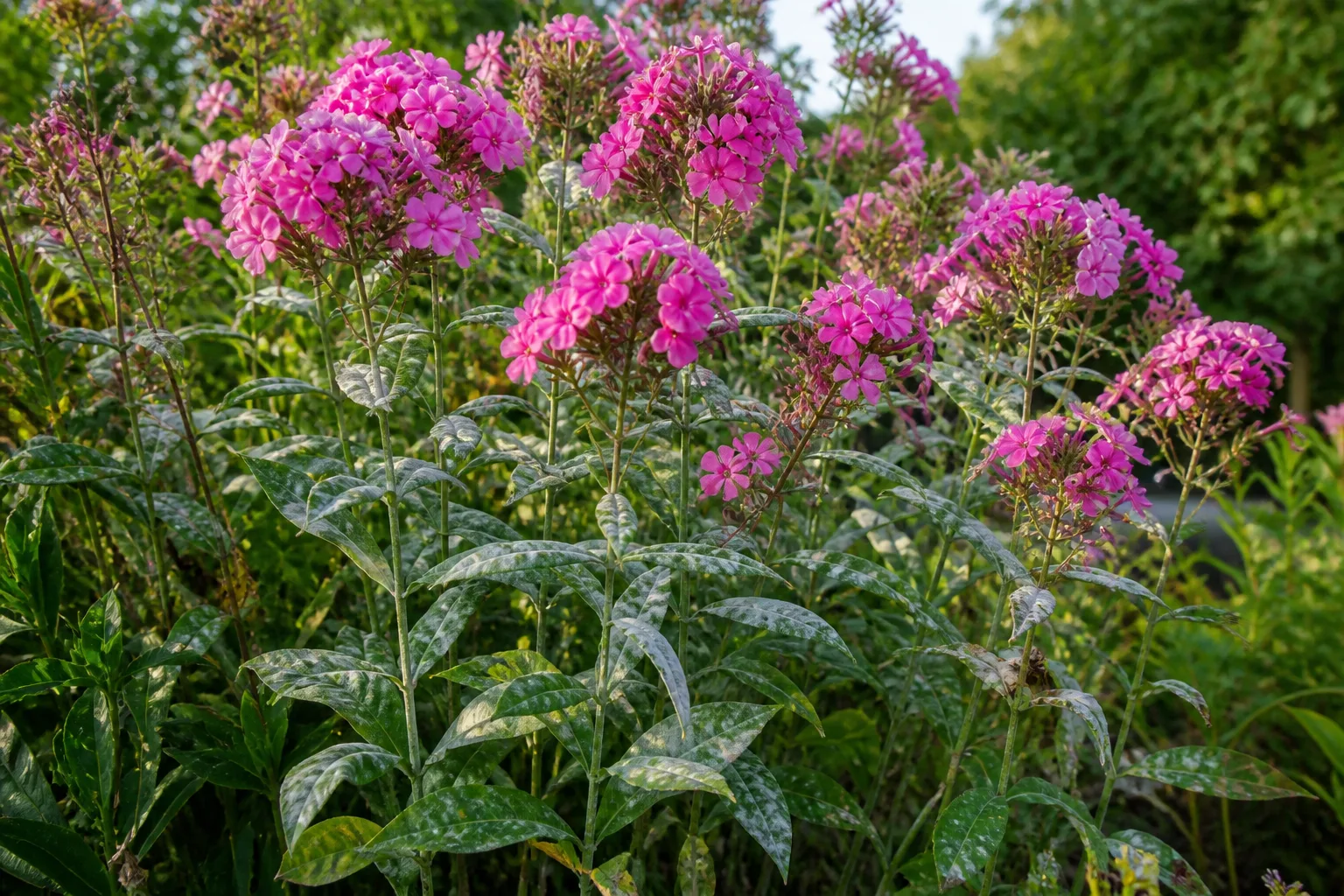
Iris borers and leaf spot overwinter on bearded iris foliage, which is why Coastal Maine Botanical Gardens treats fall cleanup as the most critical borer-management step. Garden phlox with powdery mildew should be cut and removed rather than composted, per Iowa State University Extension guidance. Peonies with mildewed foliage follow the same rule: infected leaves belong in the trash, not the compost pile, according to University of Nebraska–Lincoln Extension.
Mushy foliage that traps moisture on crowns
Hardy begonia (Begonia grandis) collapses after frost, and Penn State Extension notes that wet, decaying tissue encourages crown rot when left piled on the plant. The same logic applies to Siberian bugloss (Brunnera macrophylla), ground clematis (Clematis recta), and false indigo (Baptisia australis) after a hard freeze turns foliage black. Removing the mush keeps air moving around the crown through wet winters.
Self-seeding and flopping stems you do not want next year
Corydalis (Corydalis lutea), ladybells (Adenophora liliifolia), plume poppy (Macleaya cordata), and blackberry lily (Iris domestica) can self-sow far beyond the original planting. Cutting spent stems in fall—before seed shatters—saves spring weeding. Tall perennial sunflowers (Helianthus hybrids) and penstemon with flopped summer stems also benefit from a clean crown before snow loads break them further.
When to leave perennials standing until spring
Not every perennial on a “fall cut” roundup must be cut the day after Halloween. Many gardeners do a partial cleanup: disease and mush out; structure and seed in.
Seedheads, grasses, and wildlife value
Standing stems feed finches and offer nesting sites for stem-nesting bees. If mildew is absent and stems are sturdy, you can leave coneflowers, black-eyed Susans, and ornamental grasses until spring perennial cleanup. National Gardening Association fall guidance still recommends cutting back many perennials, but also notes value in leaving seed-bearing plants for birds when they are healthy.
Semi-evergreen foliage in mild climates
Japanese anemone foliage may stay green in warm zones. Bee balm with clean leaves can remain until spring if you only thin congested stems. Masterwort (Astrantia major) with no yellowing can wait. Cut when foliage actually fails—not because the calendar says October.
How this pairs with spring cleanup
Think of fall as urgent sanitation and spring as shape and emergence. Our spring cutback guide covers the long list of perennials that overwinter better with standing stems. If you are unsure, default to removing only diseased and collapsed material in fall, then finish the aesthetic cut once new growth shows in spring.
Your five-step cutback decision test
Run every clump through this before you cut:
- Is there active disease or insect damage on the stems or leaves? If yes, cut now and bag it.
- Has a hard frost turned the foliage mushy or black? If yes, cut to healthy tissue or the basal rosette.
- Is moisture sitting on the crown because foliage collapsed? If yes, clear the debris.
- Will seed scatter where you do not want it? If yes, remove flower stalks before they shatter.
- Is the plant still green, upright, and healthy? If yes, you can wait until spring.
If steps 1–4 are all “no,” put the pruners down. Tidiness alone is not a good reason to cut a healthy perennial in fall.
How to cut back perennials in fall without damaging crowns
Tools, cut height, and crown protection
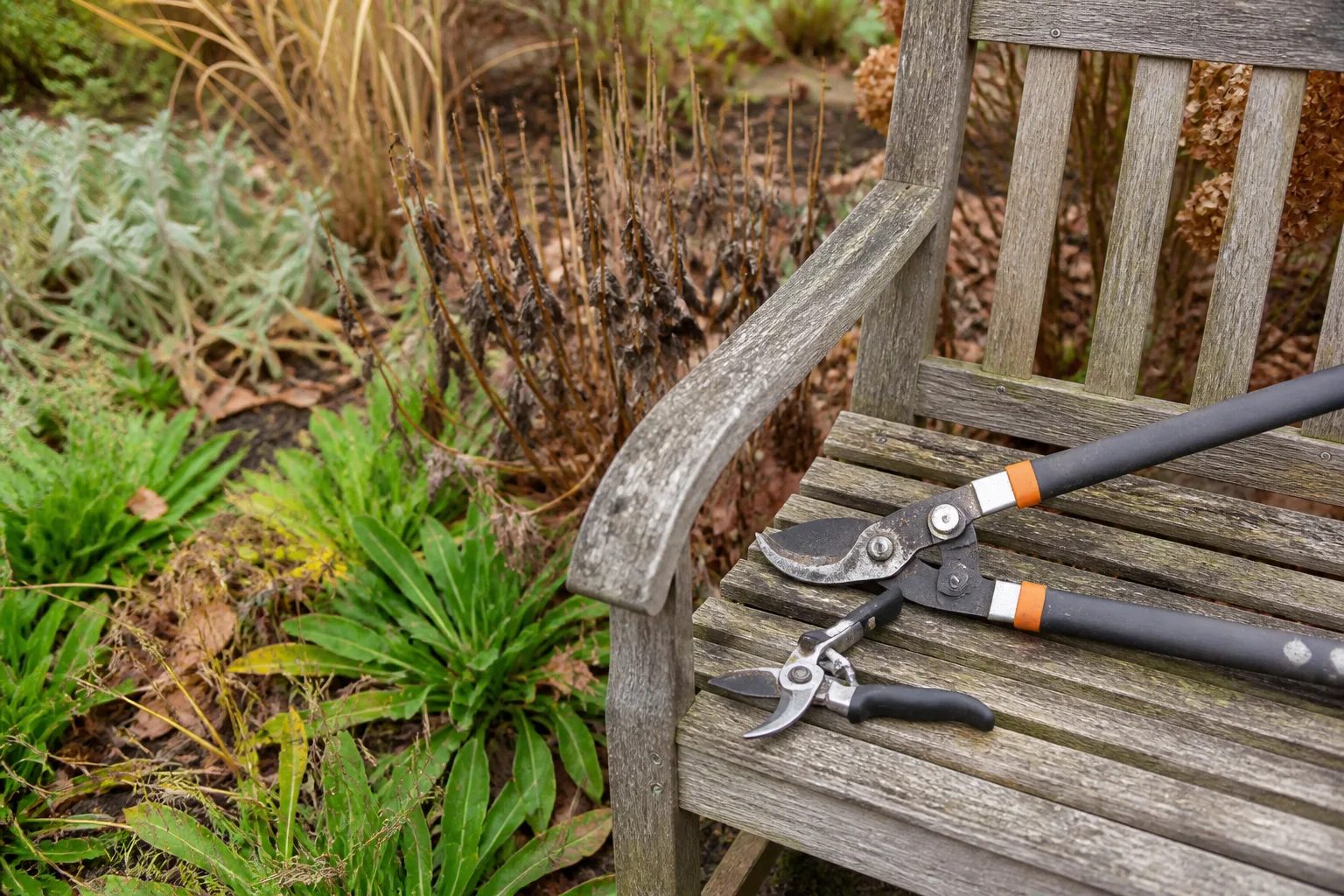
Use sharp bypass pruners for pencil-thick stems and loppers for woody daylily scapes or false indigo. Cut above the crown, not through it. For most herbaceous perennials, leave 2 to 6 inches of stub or cut to the basal rosette where new leaves emerge. Bearded iris is the exception: trim leaves into a short upright fan about 3 to 4 inches tall, as Maine Botanical Gardens recommends, so no leaf tips touch wet soil.
Pull gently on dead iris or daylily leaves that release cleanly. If a leaf resists, cut it—do not yank and lift the rhizome or crown.
Sanitize blades between diseased plants
Wipe pruner blades with rubbing alcohol or a 10% bleach solution when moving from mildewed phlox to healthy sedum. Disease spreads on tools faster than most gardeners expect.
What to do with clippings: compost, bag, or burn
Healthy, pest-free foliage can go in the compost pile or be chopped in place as mulch if your pile heats well. Mildewed, spotted, or borer-affected material should be bagged and trashed. Home compost rarely reaches temperatures that reliably kill fungal spores.
Woody or bulky stems that slow composting can be chipped, burned where legal, and returned as ash, a practice National Gardening Association mentions for tough stalks. Never compost iris leaves with visible borer damage.
Best timing: after frost, before the ground freezes
Wait for a killing frost on tender foliage before you shear the whole clump. Cutting actively photosynthesizing leaves too early steals energy the plant would bank for next year. Columbine (Aquilegia), painted daisy (Tanacetum coccineum), and yarrow (Achillea) can keep green basal growth late into fall; remove only what has browned.
Finish crown cleanup before the soil freezes so you can see the plant base and rake debris without stepping on saturated beds. In mild climates, that may be late fall; in cold zones, aim for the window between first hard frost and consistent freeze.
Disease-prone perennials that should come down in fall
Bearded iris, blackberry lily, and iris relatives
Bearded iris (Iris germanica) should have flower stalks removed after bloom, but the main fall job is stripping dead leaves and trimming the fan to remove borer eggs and leaf-spot inoculum. Dispose of iris foliage off-site. Blackberry lily (Iris domestica) follows the same collapse logic—limp leaves invite crown rot and drop seed.
Peonies, phlox, bee balm, and other mildew magnets
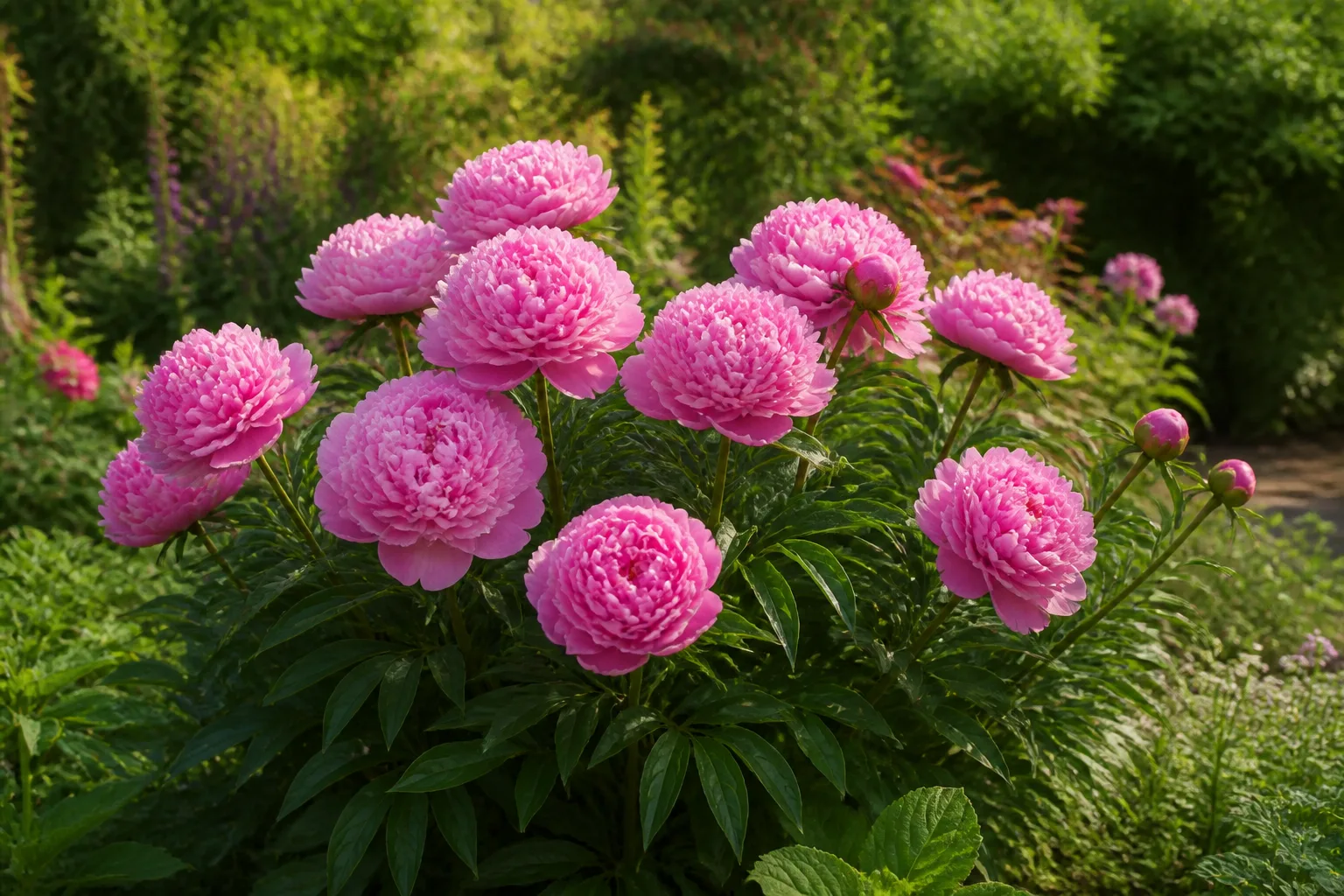
Cut peonies after foliage turns gold or shows mildew. Thin congested garden phlox (Phlox paniculata) and remove all stems if white mildew coats the leaves. Bee balm (Monarda didyma) with powdery mildew should be cut to the ground; clean plants can keep stems until spring if you want seedheads for birds. Sneezeweed (Helenium autumnale) often finishes blooming in mid-fall already mildewed—shear by half once flowers fade, then remove diseased leaves.
Goldenstar (Chrysogonum virginianum) and yarrow in wet autumns also merit early removal when foliage flops and holds moisture.
Mushy or collapsing perennials after the first hard frost
These are the “wet petunia” plants—fine until frost, then a slick mess:
- Ground clematis (Clematis recta) — blooms on new wood; cut dead stems to the ground.
- Siberian bugloss (Brunnera macrophylla) — blackened leaves hide early spring shoots.
- Japanese anemone — defoliates in cold zones; trim black leaves, leave green foliage in warm zones per University of Wisconsin Division of Horticulture regional notes.
- Leopard plant (Farfugium japonicum) — mushy after unexpected frost in marginal zones.
- Mountain bluet (Centaurea montana) — turns black with first frost unless only basal leaves remain.
- Hardy begonia (Begonia grandis) — frost-blackened leaves invite crown rot if left in place.
Daylilies (Hemerocallis) are not always mush, but shearing browned foliage in fall saves a messy spring rake. Remove only diseased portions if part of the clump stays green.
Wet-crown risks: plants that should not sit in soggy debris
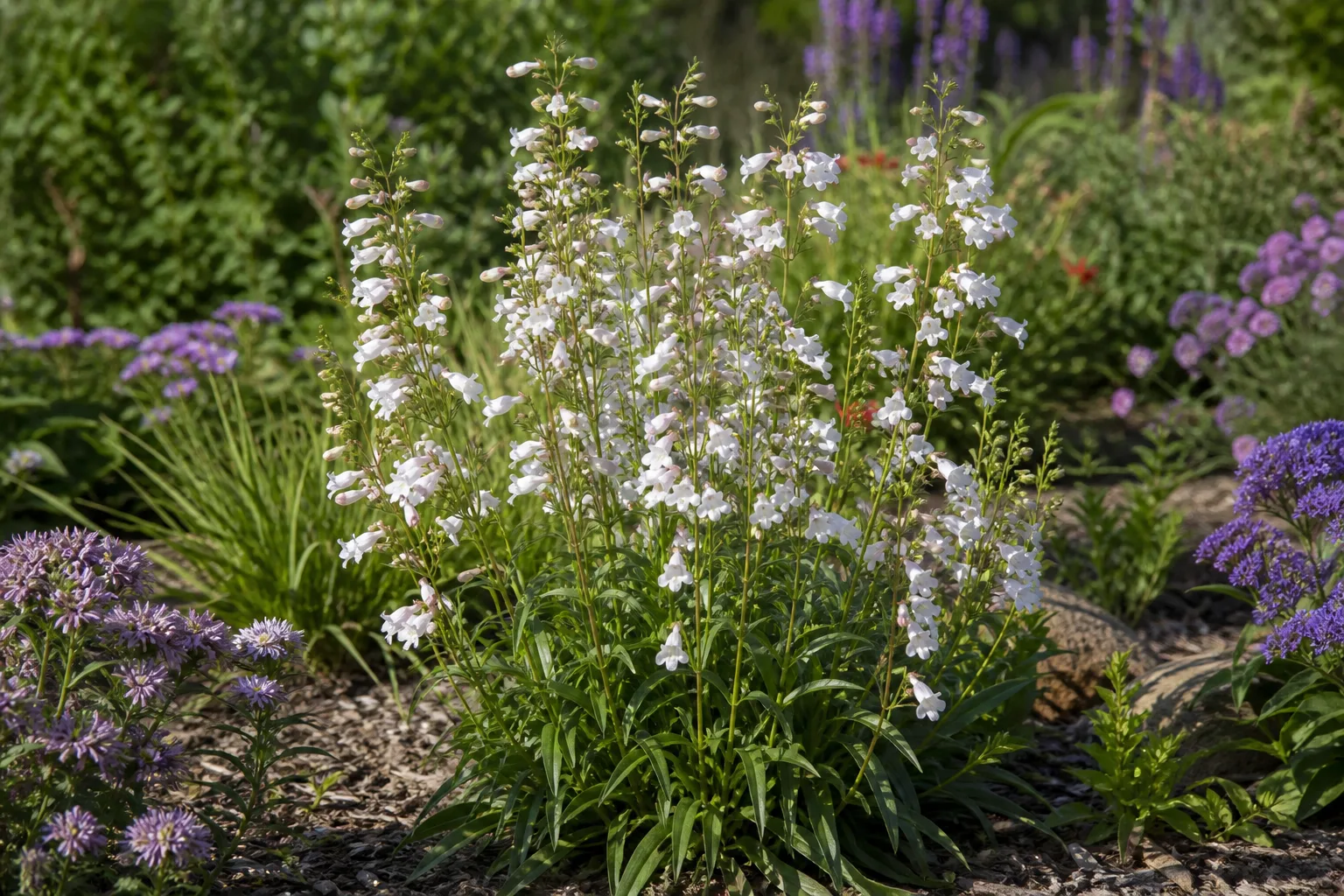
Penstemon (Penstemon barbatus), yarrow, blanket flower (Gaillardia × grandiflora), and catmint (Nepeta) dislike cold, wet crowns under a mat of old stems. Cut flopping growth to basal foliage before repeated freeze-thaw cycles pack ice against the plant.
Salvia (Salvia nemorosa) responds well to cutting back to fresh basal rosettes once fall bloom slows. Spiked speedwell (Veronica spicata) can be sheared to the ground when flowering ends so blackened stems do not persist.
Self-seeding and aggressive spreaders to trim before seed drops
Remove seed heads on corydalis, ladybells, plume poppy, meadow rue (Thalictrum), and blackberry lily if you do not want volunteers. Meadow rue timing is flexible for plant health, but fall cutting stops self-sowing.
False indigo seed pods are attractive, yet many gardeners cut the plant in fall once foliage blackens to avoid staking split clumps. If you keep pods for interest, stake early so snow does not wrench the crown.
The full fall cutback list: 33 flowering perennials
Use the five-step test on each name below. “Cut in fall” means once frost or disease marks the plant—not on a fixed calendar date.
| Perennial | Fall cut trigger | Cut to |
|---|---|---|
| Bearded iris | Borer, leaf spot, floppy leaves | 3–4 in. fan |
| Bee balm | Mildew or finished stems | Basal rosette |
| Blackberry lily | Collapse or seed control | Ground |
| Blanket flower | Spent floppy stems | Basal growth |
| Catmint | Frost-killed or worn foliage | Basal rosette |
| Columbine | Leaf miner damage, post-frost cleanup | Basal leaves |
| Corydalis | Heat-damaged or seedy stems | Basal foliage |
| Crocosmia | Dead leaves and stalks | Near crown |
| Daylily | Brown foliage or disease | 2–4 in. or ground |
| Golden marguerite (Anthemis) | Spent bloom, worn stems | Crown |
| Goldenstar | Mildew | Ground |
| Ground clematis | Post-frost slime | Ground |
| Hardy begonia | Frost-blackened leaves | Crown |
| Perennial sunflower (Helianthus) | Flopped tall stems | Ground |
| Hollyhock mallow (Malva alcea) | After bloom, worn stems | Basal foliage |
| Japanese anemone | Black leaves in cold zones | Near crown |
| Leopard plant | Frost mush | Crown |
| Ladybells | Seed control | Basal foliage |
| Masterwort | Yellow drought-stressed leaves | Crown if yellowed |
| Meadow rue | Seed control (optional health cut) | Variable |
| Mountain bluet | Frost-blackened tops | Basal if needed |
| Painted daisy | Post-frost brown foliage | Basal rosette |
| Penstemon | Flopped stems, wet crown risk | Basal rosette |
| Peony | Gold fall color or mildew | Ground |
| Garden phlox | Mildew or thinning for airflow | Ground if infected |
| Plume poppy | Seed control | Ground |
| Salvia (S. nemorosa) | Bloom finished | Basal rosette |
| Siberian bugloss | Frost-blackened leaves | Ground |
| Sneezeweed | Mildew after bloom | Half then clean |
| Solomon’s seal | Bare stems after leaf drop | Ground |
| Spiked speedwell | Spent bloom, black stems | Ground |
| False indigo | Blackened foliage or split stems | Near crown |
| Yarrow | Flop, disease, wet soil | Basal rosette |
Perennials you may split between fall touch-up and spring cleanup
Bee balm, masterwort, and Japanese anemone can be fall-trimmed only where diseased or ugly, with the rest left for winter structure. Crocosmia may keep seed heads for interest if foliage is dry and healthy. Meadow rue performance does not depend on fall versus spring timing—choose based on seed you want or spring workload.
If your garden runs dry in late summer, wait until plants yellow before shearing. A green plant is still working.
Common fall cutback mistakes
Cutting everything on one October weekend removes wildlife habitat and sometimes strips semi-evergreen protection. Composting mildewed phlox or iris borer leaves reintroduces problems next year. Cutting too high leaves diseased stubs; cutting into the crown invites rot. Pulling resistant stems heaves shallow crowns on columbine and penstemon.
Another frequent error is confusing fall sanitation with spring shaping. Lavender, Russian sage, and many grasses belong on a spring list, not this one. When in doubt, remove only what is clearly dead, diseased, or slimy now.
Utah State University Extension emphasizes removing diseased debris and selective perennial cutback as part of putting the garden to bed—along with mulching after cleanup, not before crowns are cleared of wet foliage.
Conclusion
Fall perennial cutback works best as a targeted sanitation pass, not a scorched-earth cleanup. Cut bearded iris, peonies, phlox, yarrow, and the rest of the 33-name list when disease, mush, seed, or flop makes the top growth a liability. Leave healthy seedheads and sturdy stems when you can, especially if you also practice spring cutback on structural plants.
Mark the plants on the table that live in your beds, walk the five-step test at each clump, and finish while the soil is still workable. Next spring you will spend less time fighting mildew, digging out self-sown volunteers, and peeling rotten leaves off crowns—and more time watching new shoots emerge on plants that overwintered cleanly.