Keep Spiller Plants Lush All Summer With Less Work
Keep spiller plants lush in containers with a low-maintenance routine for light, deep watering, smart feeding, and selective deadheading—plus a quick limp-plant diagnosis.
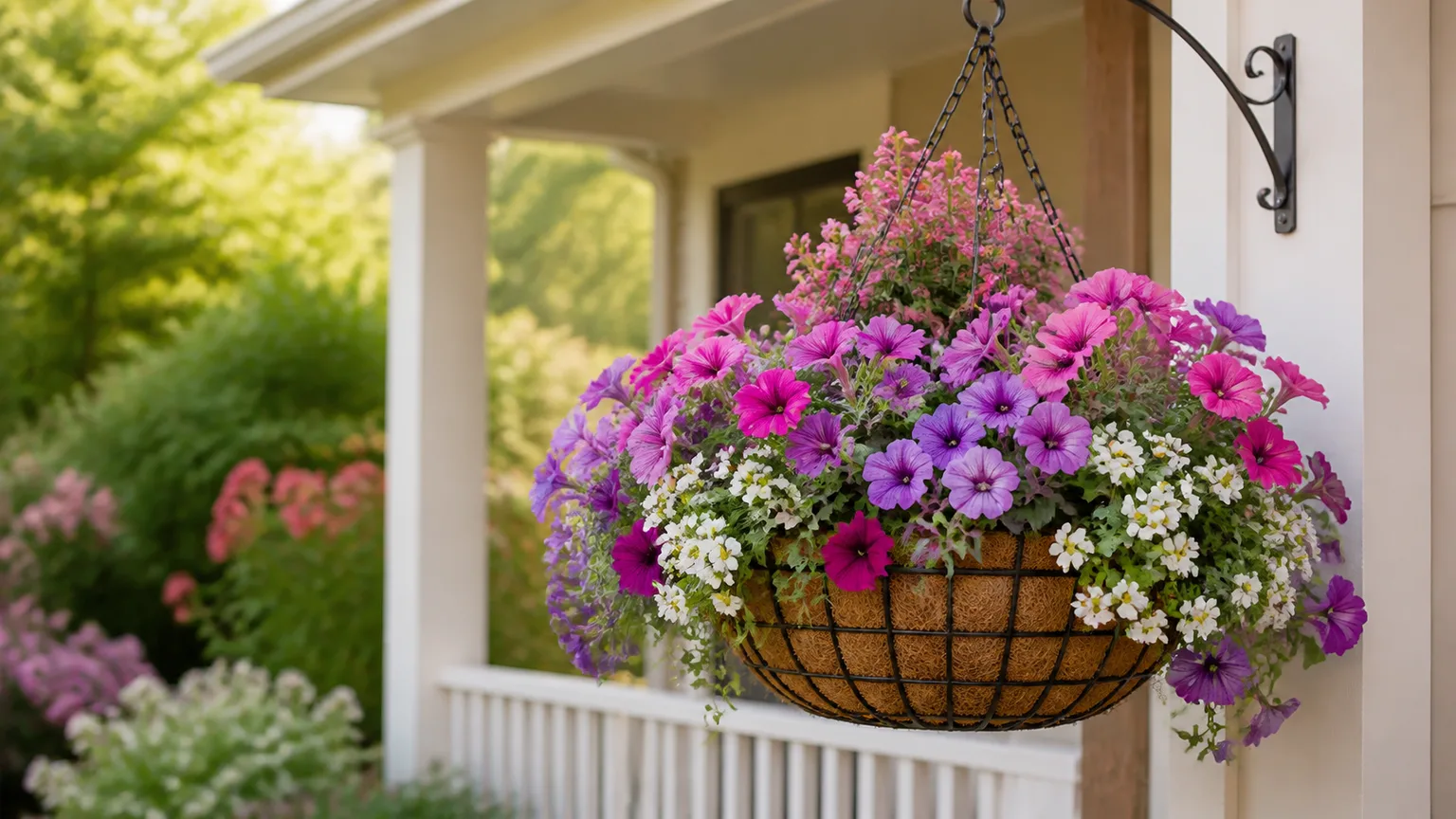
The fastest way to burn out on container gardening is treating every trailing stem like a houseplant that needs a splash of water and a snip every morning. Spiller plants stay lush when the pot, light, and feeding schedule work together so you are checking conditions once or twice a week—not reacting to wilt all day. Once you match the container to the plant, water by root-zone feel instead of habit, and buy varieties that do not demand constant deadheading, most of the summer care becomes predictable.
That shift matters because spillers fail for different reasons than upright thrillers in the same pot. A leggy sweet potato vine is usually a light problem. A petunia basket that collapses by 3 p.m. is often a volume-and-heat problem. A lobelia that stops blooming in July may need a hard trim, not more fertilizer. The sections below give you a single routine that covers all three without turning your patio into a second job.
What Spiller Plants Actually Do in a Container
In the thriller-filler-spiller formula used in professional container design, the spiller is the plant that trails over the rim and softens the edge of the pot (Proven Winners container design guidance). It is not filler—that role belongs to mid-height plants that bulk out the center. Spillers create movement, hide the pot lip, and draw the eye downward so the arrangement looks finished rather than stiff.
Common summer spillers include trailing petunias, calibrachoa (million bells), lobelia, bacopa, dichondra, sweet potato vine, and creeping Jenny. Some are heavy bloomers that need regular fuel and occasional renewal cuts. Others are foliage-first trailers that mainly need space and consistent moisture. Knowing which group you are growing determines how much deadheading and feeding you can realistically skip.
The Low-Maintenance Summer Routine That Keeps Spillers Full
Think of summer spiller care as four linked checks you run on the same day each week: light placement, root-zone moisture, nutrient status, and stem length. Daily panic watering is a symptom that something upstream—usually pot size, mix, or placement—is wrong. Fix those once and the weekly pass takes minutes.
Match the Container Size Before You Match the Plant Tag
University of Georgia Extension guidance on container gardening notes that small pots restrict roots, limit top growth, and require much more frequent watering than containers holding several gallons of mix (UGA Extension Circular 787). Spillers in 10-inch hanging baskets look full at the nursery and starved six weeks later because there is almost no soil reservoir left once roots fill the liner.
For a single trailing annual or a thriller-filler-spiller combo, aim for at least 3 to 5 gallons of mix for a patio pot and avoid the smallest coco-lined baskets unless you accept daily checks in hot weather. Drainage holes are non-negotiable; if you love a decorative pot without holes, double-pot with an inner nursery container elevated on gravel. More guidance on why small pots dry out faster lives in our container summer drying guide.
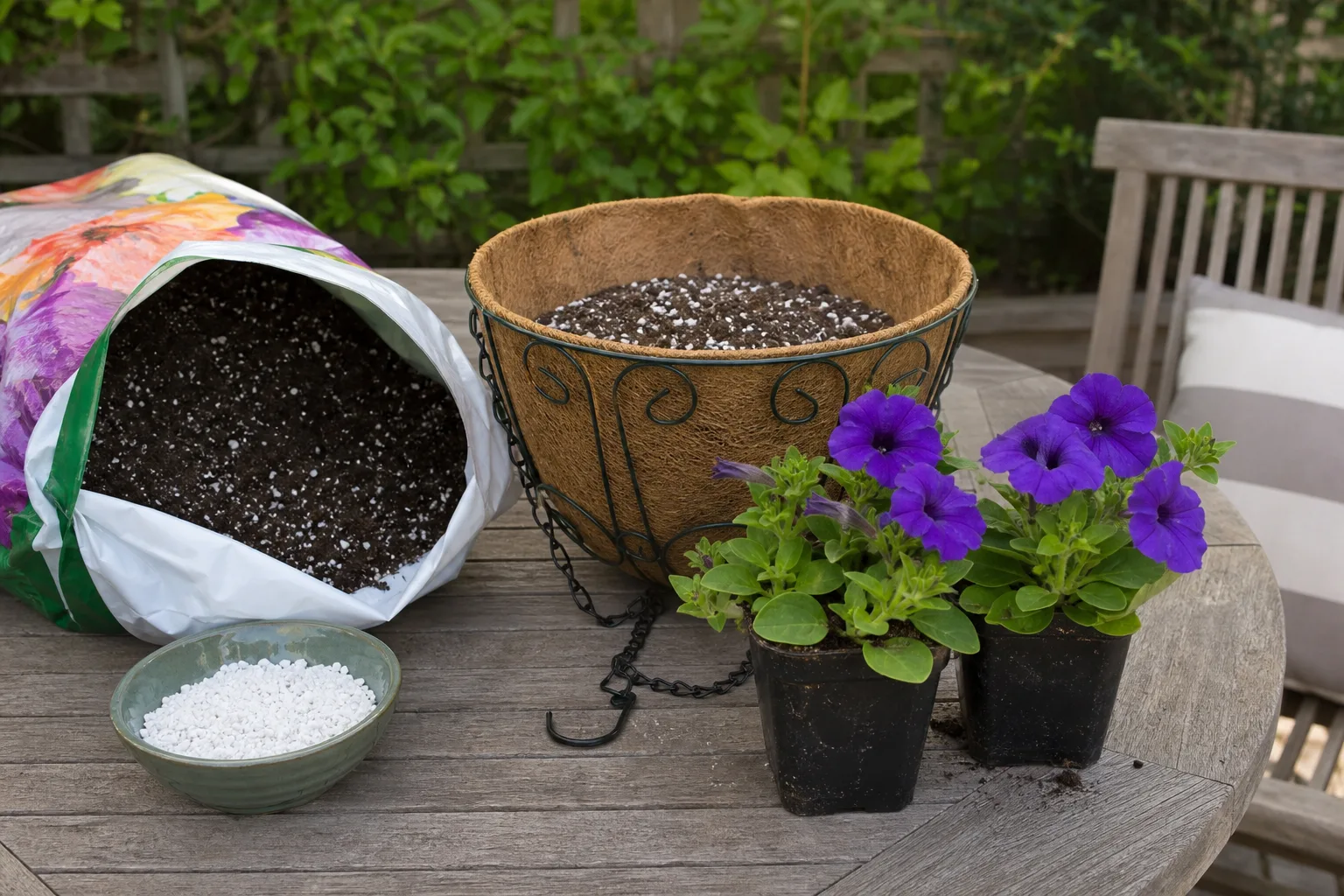
Set a Weekly Check Schedule Instead of a Daily Panic Watering Habit
Pick one morning—after the mix has cooled overnight—and walk every spiller container with the same three questions: Is the top inch dry? Are stems stretching toward light? Are flowers or leaves telling you feed or trim is due? Water only when the answer to dryness is yes, and water deeply enough that excess runs from the drainage holes.
Grouping pots by sun exposure helps. Full-sun baskets on a south-facing rail will need more frequent checks than shade porch combos, but even sun pots should not need shallow sprinkles twice a day if the volume and mix are right. If you are watering daily despite a large pot, suspect compacted mix, rootbound roots, or a basket hanging in drying wind—not simple thirst.
Light: The Hidden Reason Trailing Plants Go Leggy
Insufficient light is the most overlooked cause of thin, limp spillers. Trailing stems stretch toward the brightest window or open sky, producing long weak shoots with fewer leaves and flowers. Most sun-loving bloomers—petunias, calibrachoa, verbena, portulaca—want at least six hours of direct sun daily. Less than that and you get length without density.
Full-Sun Spillers vs Shade-Tolerant Trailers
Petunias and calibrachoa perform best in full sun with good air movement; too much shade produces leggy growth and fewer blooms (Gardening Know How petunia care). Sweet potato vine and creeping Jenny tolerate partial shade but color is brightest with morning sun and afternoon protection in hot climates. Lobelia and bacopa often prefer bright indirect light or morning sun with relief from harsh afternoon heat, which is why they fail on the same full-blast wall where petunias thrive.
Match the spiller to the site before you buy. A shade lobelia on a west-facing brick wall will never look lush no matter how often you water it.
Rotate Pots and Baskets So One Side Does Not Starve
Hanging baskets under eaves, on porch hooks, or against walls often receive strong light on one face and heavy shade on the other. The sunny side blooms; the shaded side goes bare. Quarter-turn the basket every week so all sides see light over time. For large floor containers, rotate the entire pot if one trailing side is thinning.
Also watch for the pot itself casting afternoon shadow across half the root ball. Elevating baskets slightly or shifting them a foot can even out growth without any extra deadheading.
Water Deeply Once, Then Stop Guessing
Container mix dries from the top down and from the sides inward. Shallow watering wets the surface while the center stays dry, which is why spillers wilt again hours later. Deep watering—slow enough that moisture reaches the bottom and exits the drainage holes—encourages roots to grow through the full mix and makes plants more resilient on hot days.
UGA Extension recommends leaving about two inches of headspace below the rim so water can soak the mix without running off the surface (Circular 787). Apply water until it drains freely, then stop. If runoff happens in seconds, pause and water again in ten minutes so shrunken peat can re-expand.
The One-Inch Finger Test That Beats a Fixed Calendar
Push your finger about one inch into the mix near the rim, not against the outer wall where mix dries first. If it feels dry at that depth, water. If it still feels cool and slightly moist, wait—even if the plant looks a little soft in midday heat. Temporary afternoon wilt on a well-watered container often resolves by evening; chronic overnight limp means the roots are dry.
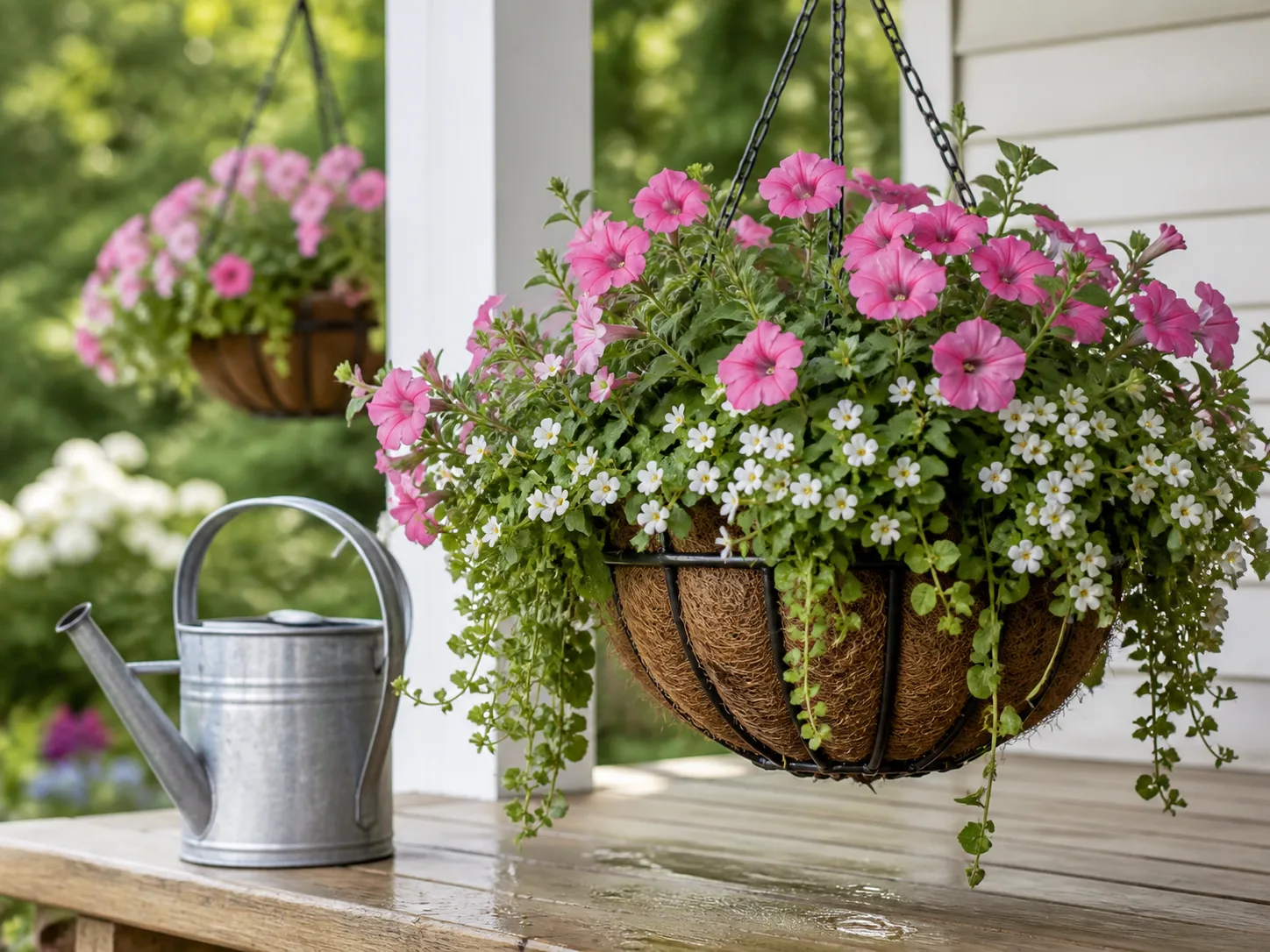
For a deeper look at summer drying patterns and hydrophobic mix, see why container plants dry out faster in heat.
When Limp After Watering Means Compacted Mix, Not Thirst
If a spiller collapses more after you water, the mix may be compacted or hydrophobic—water is channeling around the root ball instead of soaking it. Aerate the surface lightly with a fork, then bottom-soak the pot in a bucket until bubbles stop. Let it drain fully before returning it to the hook.
Chronic wet limp with sour-smelling mix points to poor drainage and possible root stress. Back off watering, confirm holes are open, and consider refreshing the outer mix rather than adding more water. UGA Extension warns that poorly drained container mix invites root problems under excess moisture and poor aeration (Circular 787).
Feed on a Calendar, Not Every Time You Feel Guilty
Every deep watering leaches nutrients from the limited mix in a pot. Without replenishment, spillers yellow, bloom less, and look tired by mid-July even when moisture is fine. The goal is steady nutrition on a schedule, not a burst of fertilizer every time stems look weak—which often causes fast, leggy growth instead of flowers.
If your potting mix includes slow-release fertilizer, UGA Extension notes you can usually skip additional feed for the first two to three weeks after planting (Circular 787). After that, nutrients drop because plants use them and watering washes them out.
Slow-Release vs Liquid Fertilizer for Spillers
Slow-release pellets mixed into the top inch at planting or scratched in at midsummer give low-maintenance background feed for six to twelve weeks, depending on product rate and watering frequency. They suit foliage spillers and mixed containers where you want fewer chores.
Water-soluble fertilizer applied every two to three weeks—or weekly for heavy-blooming spreading petunias—delivers faster bloom response (Gardening Know How). Use a balanced formula early season, then switch toward a bloom-promoting analysis if stems grow faster than flowers. Always apply at label dilution and stop if leaf tips brown or growth becomes unnaturally soft.
Overfeeding is a common reason spillers look lush but floppy. If you are fertilizing weekly and still seeing long bare stems, cut feed before you cut more flowers.
Deadheading Less Without Sacrificing Bloom
Deadheading redirects energy from seed production back into flowers—but not every spiller needs you to pinch faded blooms daily. Grandiflora petunias with large flowers benefit from regular removal of spent blooms. Many modern ** spreading and milliflora types** shed old flowers and bloom on without constant attention.
The low-maintenance move is to read the plant label at purchase. Words like “self-cleaning,” “no deadheading needed,” or series names bred for continuous bloom signal fewer chores. If you hate deadheading, do not buy old-fashioned large-flower petunias for a hanging basket you pass every day.
Self-Cleaning Varieties Worth Buying
Wave, Supertunia, and similar spreading petunia lines are bred to keep blooming with minimal pinching. Calibrachoa often outperforms traditional petunias in small baskets because flowers are smaller and plants stay dense with regular feed and sun. For foliage spillers like sweet potato vine and creeping Jenny, deadheading is irrelevant—pruning length is the maintenance task.
When you do deadhead, snip the flower stem back to the first set of healthy leaves rather than pulling petals off and leaving a bare stick. That small habit reduces bare stems and extends bloom without a daily basket session. More on petunia bloom renewal in our petunia dead flower guide.
Strategic Pruning Beats Constant Pinching
A mid-season hard trim often keeps spillers fuller than weeks of individual pinches. For tired petunias or calibrachoa, cut long stems back by up to half, just above a leaf node, when bloom drops and stems look stringy. Water deeply and apply diluted liquid feed; new branching usually appears within two weeks.
Sweet potato vine responds the same way—when one runner dominates the pot, cut it back to balance the cascade rather than letting it smother fillers. Lobelia that browns in heat may revive from a sharp cut and cooler repositioning; treat it as a reset, not a failure.
One or two intentional cuts per season replace daily cosmetic snipping and produce a denser cascade than endless tip pinching.
Spiller Care by Plant Type
Generic “water and feed” advice breaks down once you compare a sun-hungry petunia basket with a shade lobelia on the same porch. Use the branches below as quick reference, then adjust for your climate.
Trailing Petunias and Calibrachoa
These are sun lovers and heavy feeders in containers. Full sun, deep watering when the top inch is dry, and bloom-focused fertilizer on a two-week cycle (weekly for spreading types) keep them dense. Choose self-cleaning cultivars to skip daily deadheading.
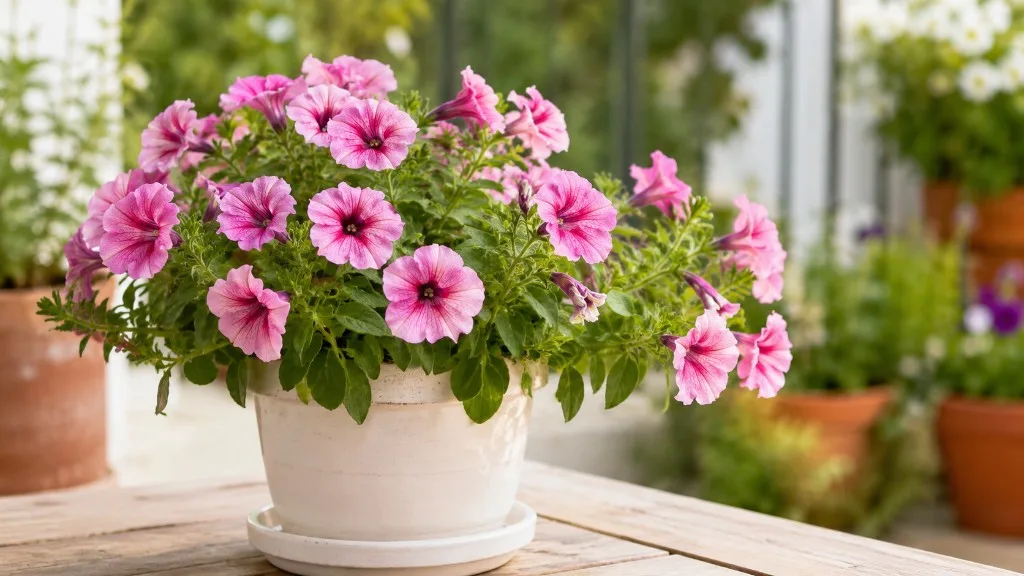
If stems exceed the pot lip by more than a foot with bare centers, shear back and feed rather than adding more water. Our container petunia fullness guide walks through variety choice and spacing in more detail.
Sweet Potato Vine and Creeping Jenny
These foliage spillers prioritize root room and even moisture over bloom fertilizer. They tolerate partial shade but need bright light for best color. Prune aggressive runners that swamp neighbors, and watch for rot if the center stays soggy.
Creeping Jenny is perennial in many zones and may return; sweet potato vine is typically treated as an annual foliage plant. Both can become rootbound in the same pot year after year if you overwinter them.
Lobelia, Bacopa, and Dichondra
These fine-textured spillers prefer cooler roots and protection from afternoon scorch. They often stall in peak heat even with adequate water—shift pots to morning sun, mulch the surface lightly, and trim back when bloom pauses. Bacopa and dichondra need steady moisture but suffer in waterlogged mix; drainage matters as much as frequency.
When Rootbound Perennial Spillers Need a Bigger Pot
Annual spillers die with the season; perennial trailers like creeping Jenny, ivy, or overwintered sweet potato vine keep expanding roots. When water runs straight through, stems weaken despite feeding, or you see roots circling the drain hole, move up one pot size—typically every two to three years for vigorous perennials.
Refresh the outer mix, loosen circling roots lightly, and water in thoroughly with two successive soaks if needed (UGA planting guidance). Repot in mild weather, not on a 95°F afternoon when stress is highest.
Signs often mistaken for underwatering—sunken soil level, pale leaves, daily wilt—sometimes disappear after repotting because the root zone can hold air and water again.
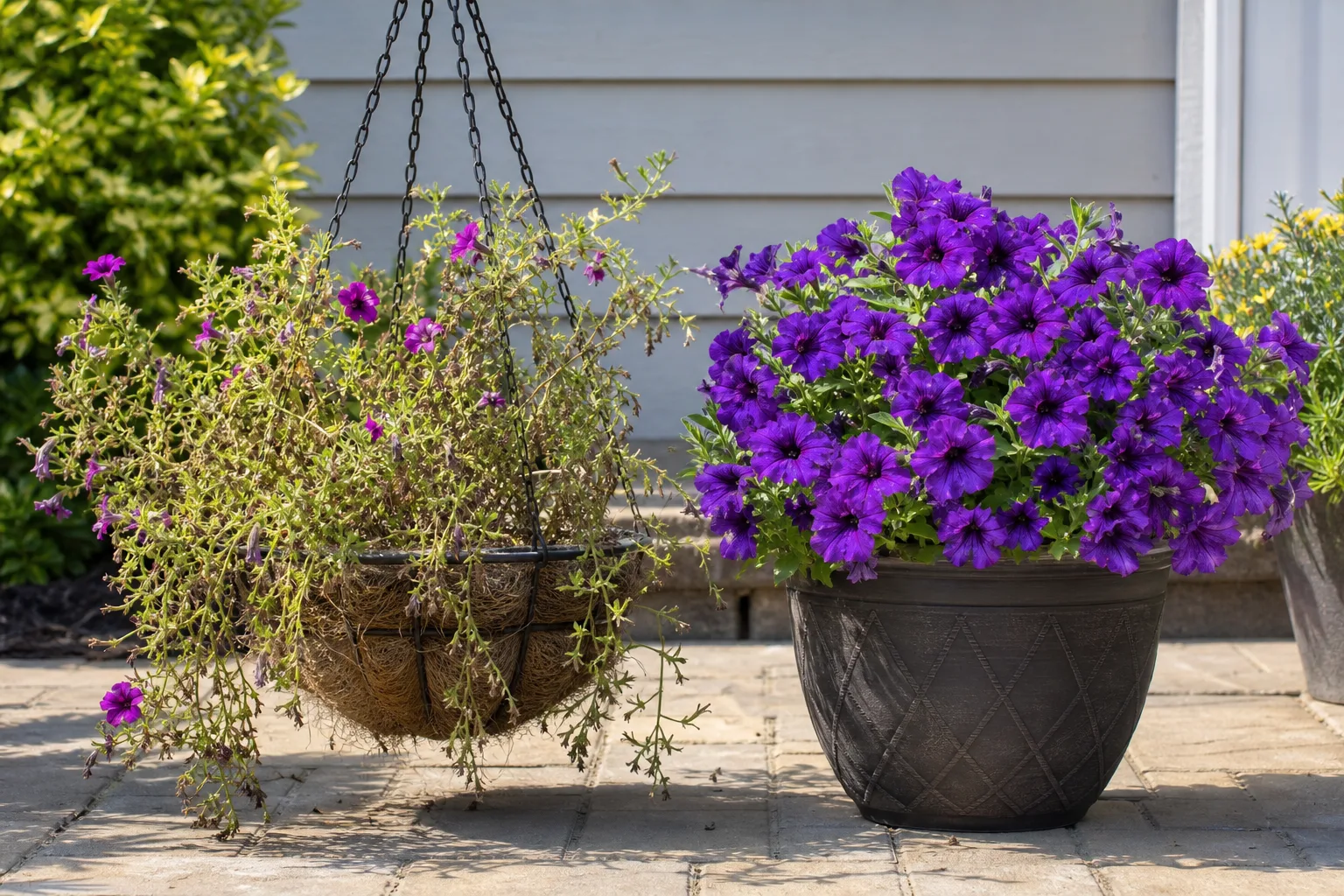
Quick Troubleshooting: Limp, Bare, or Brown
Use this short decision path before you change everything at once:
Limp in dry mix: Deep soak until drainage; check pot size next if it happens daily. Limp in wet mix: Improve drainage, aerate, reduce water. Limp right after watering: Bottom-soak compacted mix; fork the surface. Long stems, few flowers: Add sun or rotate; reduce nitrogen feed. Brown centers, green tips: Heat stall—trim, shift to morning sun, resume feed lightly. One bare side: Rotate weekly; nothing else will fix one-sided shade.
Most “failed” spillers are a mismatch between plant type and site, not a missing secret product. Fix light and container volume first; deadheading and fertilizer second.
Conclusion
Lush spillers all summer do not require you to live with a watering can in one hand and scissors in the other. Start with enough pot volume, the right sun for that species, and deep watering only when the top inch is dry. Feed on a calendar, buy self-cleaning bloomers when you want to skip deadheading, and reset leggy plants with one strategic cut instead of endless pinching.
Run the weekly four-point check—light, moisture, feed, stem length—and use the limp-when-dry versus limp-when-wet split before you react. Get those foundations right and trailing petunias, sweet potato vine, lobelia, and the rest of the cascade stay full with a fraction of the daily fuss.



