Container Plants Dry Out Faster in Summer Heat
Learn why container plants dry out faster in summer and the pro moves—deep watering, better pots, mulch, and placement—that cut frantic daily watering.
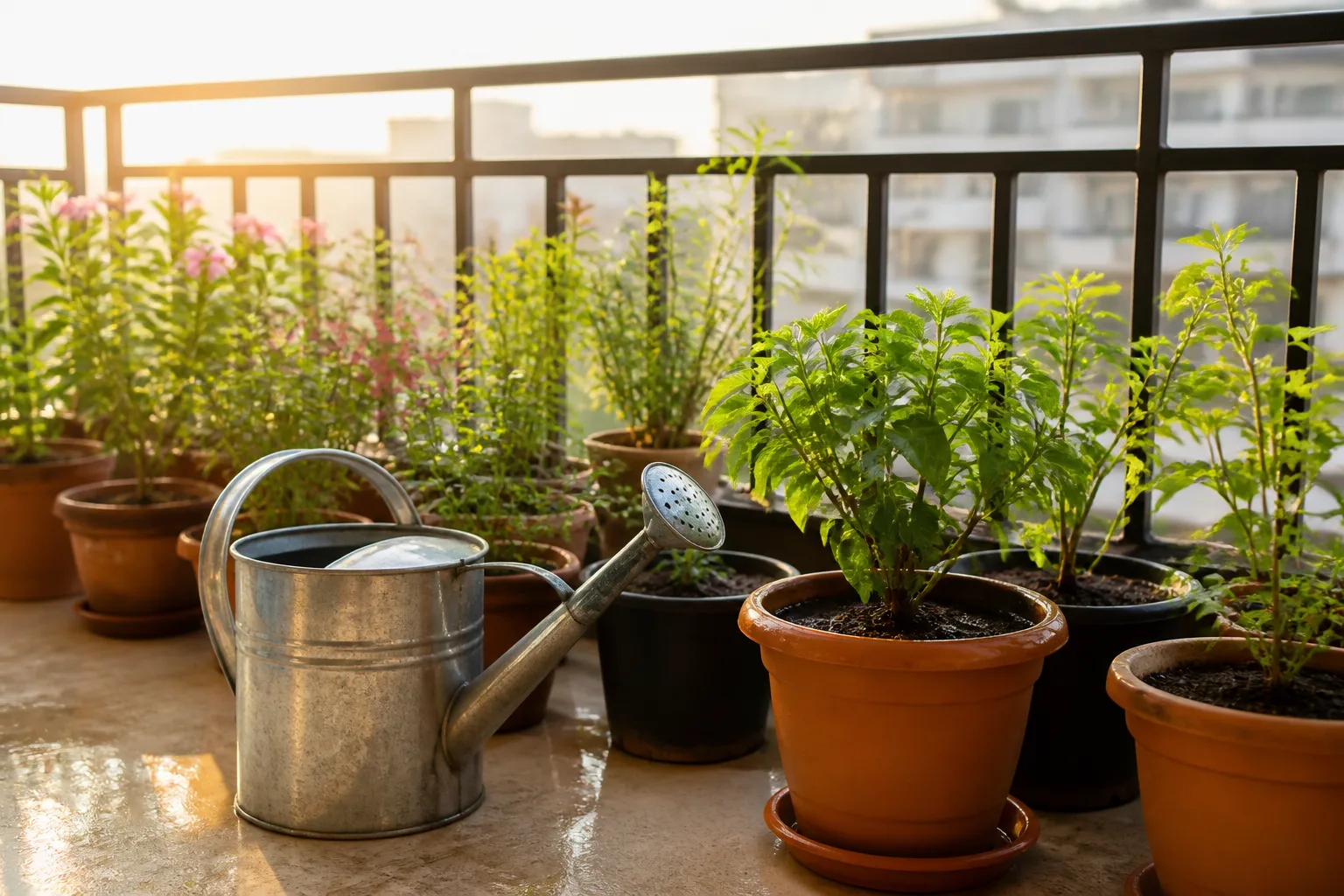
If your patio pots wilt by mid-afternoon even after a morning soak, the problem usually is not that you forgot to care. Container plants dry out faster in summer because their entire root zone sits in a small, exposed reservoir that heat, wind, and thirsty foliage drain much quicker than in-ground soil moderates. Once you understand that physics, the fix stops being “water more often on autopilot” and becomes a short checklist: check the root zone, soak deeply, upgrade the pot or mix if needed, and reduce evaporation where you can.
That distinction matters because many gardeners add shallow sprinkles that wet the surface while the middle of the root ball stays dry. Others see runoff at the drainage hole and assume the job is done when hydrophobic peat has already pulled away from the pot walls. The sections below walk through why summer containers lose moisture so fast, how professionals keep them hydrated longer, and what to do when a plant keeps failing despite daily attention.
Why Your Potted Plants Need Water Again Before Dinner
In-ground plants tap a deep, buffered soil profile where moisture and temperature change slowly. A container plant lives in the opposite situation: a finite slab of potting mix surrounded by air on every side. The University of Connecticut’s home-garden guidance notes that unglazed clay dries faster than plastic or glazed pots, and that plants in pots too small for their root mass need water more often because there is simply less mix to hold it (UConn houseplant watering recommendations). Summer amplifies every one of those weaknesses.
Limited Soil Volume and Root Competition
A 12-inch pot might hold only a few gallons of mix. Tomatoes, hydrangeas, and fast-growing annuals can consume that reserve in a single hot afternoon once their leaf surface area expands. Shallow-rooted lettuce can survive in less soil; deep-rooted vegetables and shrubs cannot. More leaf area plus less soil equals more frequent watering—not because you are doing it wrong, but because the math is stacked against small pots.
As the season progresses, roots fill the container and displace mix. Extension educators often describe this as a pot with more roots than soil, which limits water storage exactly when summer demand peaks. If watering frequency jumped sharply in July, root crowding is a likely culprit alongside heat.
Heat, Wind, and Exposed Pot Walls
Dark plastic and metal planters absorb solar heat and warm the root zone from the outside in. Unglazed terracotta and fabric grow bags lose water through porous walls as well as from the surface—a trade-off that helps in cool, wet springs and hurts in July. Wind strips moisture from leaves through transpiration and pulls water vapor from the mix surface, which is why a lone pot on an open balcony dries faster than the same plant tucked into a grouped display.
Concrete patios radiate heat upward, so pots sitting directly on hot pavement lose moisture from the bottom too. Elevating containers on pot feet, bricks, or a plant trolley breaks that contact and improves drainage airflow. For a deeper comparison of how materials behave, see our guide on terracotta vs plastic pots.
When Root-Bound Pots Run Out of Sponge
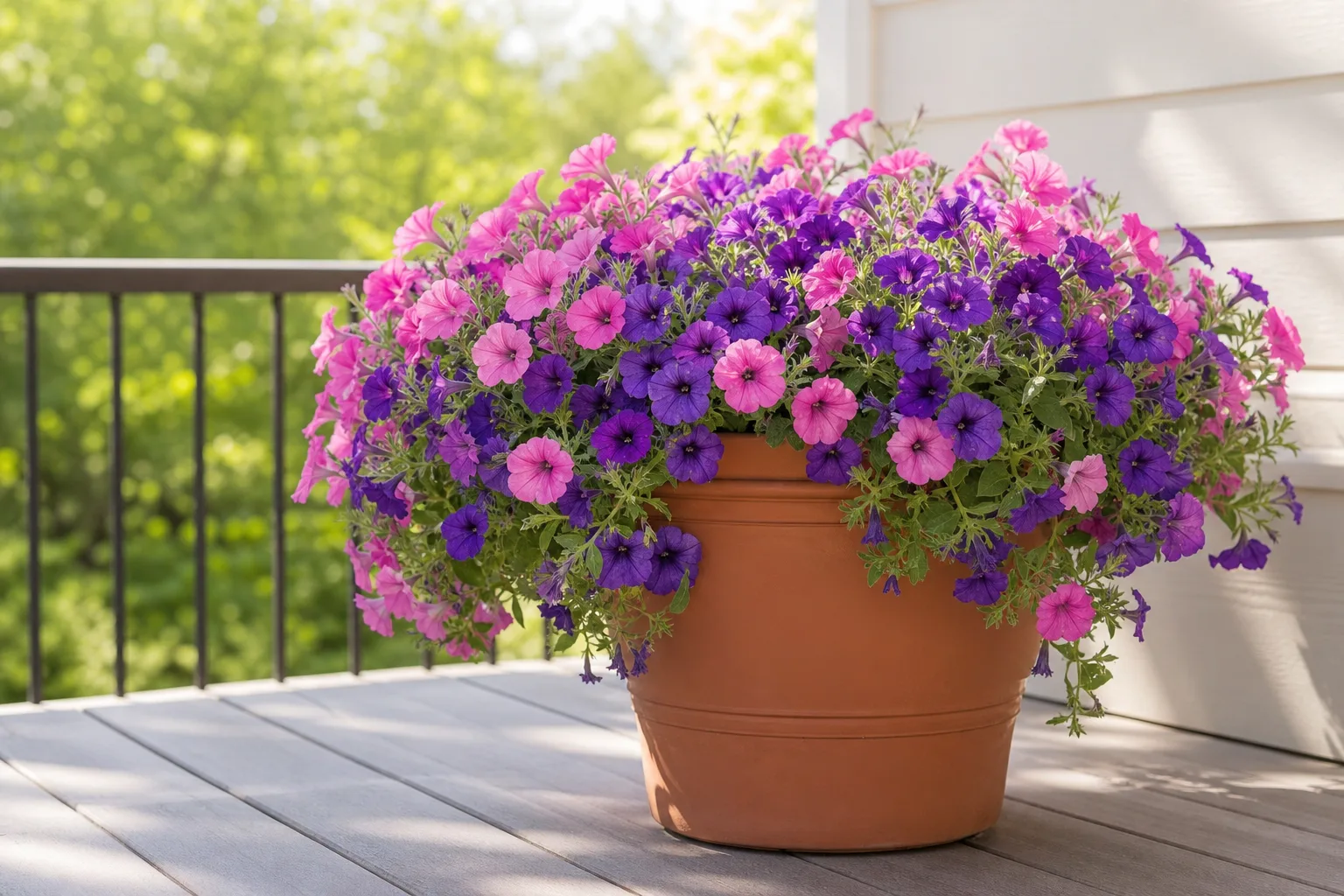
Root-bound containers dry in a vicious cycle: less mix holds less water, so you water more often; frequent shallow watering encourages roots to hug the pot edges; the center dries first. You may see potting mix pulling away from the sides, a gap that lets water run down the interior wall and out the drain hole without rewetting the root ball. Repotting into the next size up—or refreshing the outer root mass and replacing spent mix—restores storage capacity. Our when to repot indoor plants framework applies to outdoor containers too, though timing is easiest in mild morning weather rather than at peak heat.
A 60-Second Moisture Check That Beats a Calendar
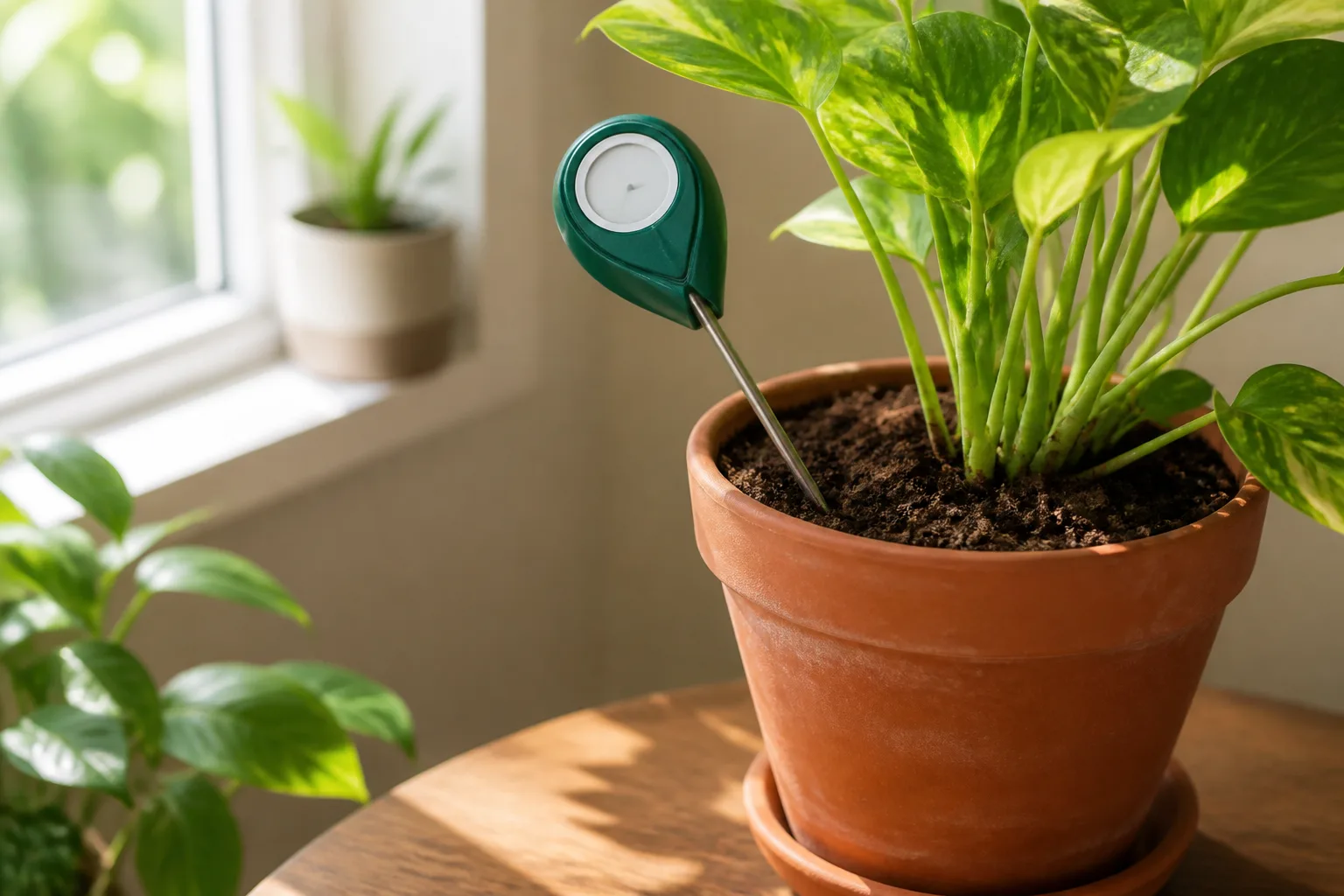
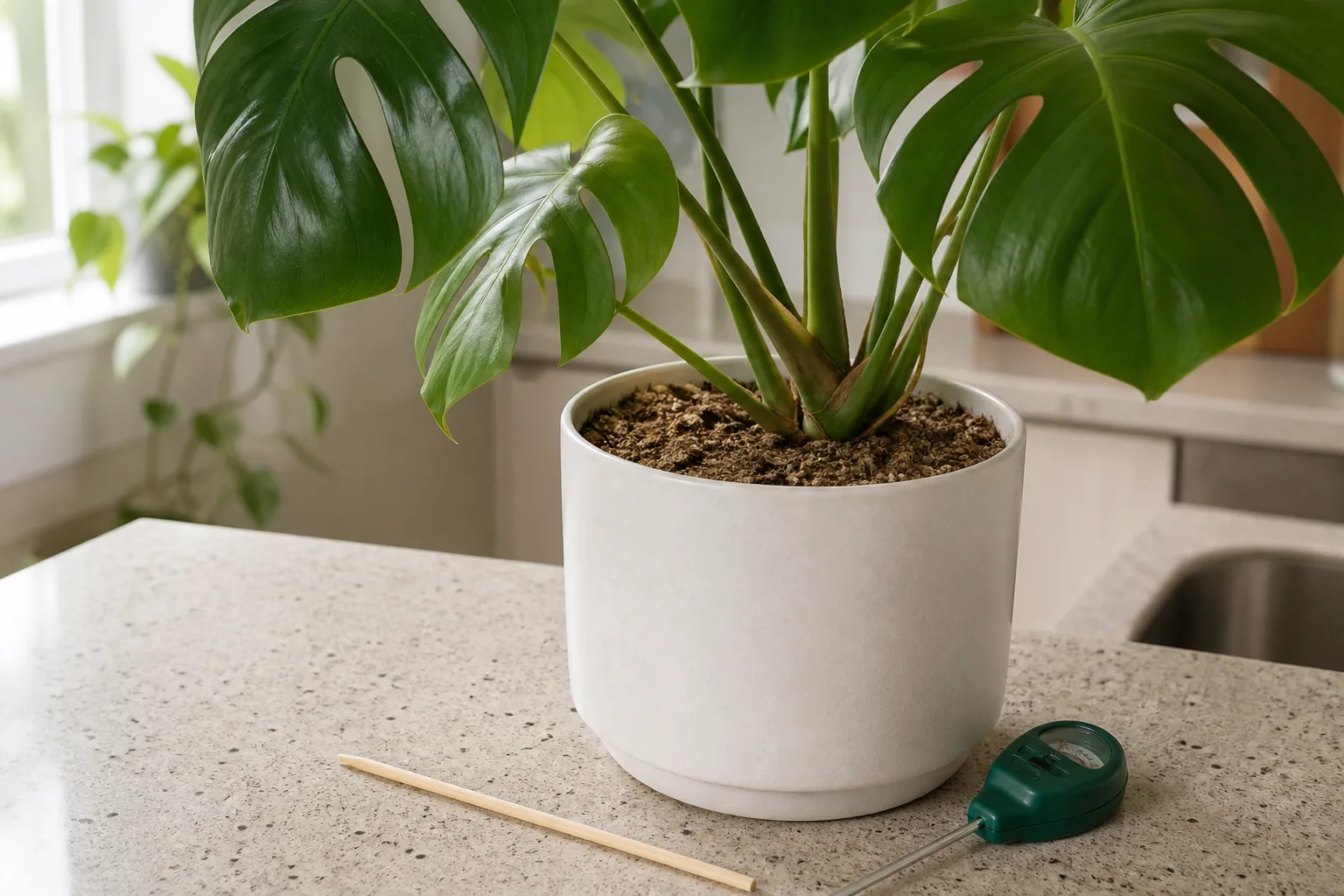
“Daily watering in summer” is a starting guess, not a rule. Some glazed pots in partial shade need water every two days; a small terracotta pot in full sun may need twice daily checks. Check the plant, not the calendar, as UConn recommends: stick your finger into the mix about an inch below the surface and assess moisture at root depth (UConn houseplant watering recommendations).
Why the Top Inch Lies to You
Peat-heavy mixes can look dark on top while the core is dry, or feel dusty while the bottom is soggy if drainage is poor. Mulch, decorative stones, and crusted surfaces hide what is happening underneath. Push past the surface layer before deciding. If the top is dry but an inch down still feels cool and damp, wait—overwatering suffocates roots just as drought wilts leaves.
The Finger Test and the Lift Test
The finger test works for most pots: dry at depth means soak; damp means wait. For smaller containers, lift the pot after a thorough watering and note the weight when properly hydrated. A noticeably lighter pot on a hot afternoon usually signals real dryness, not just afternoon heat droop. Combine both checks before you haul the hose out a second time.
A Five-Step Triage Before You Pick Up the Hose
When a pot looks stressed at 4 p.m., run through this sequence before adding water. First, push past mulch and test an inch down—dry means continue, damp means stop. Second, lift the pot if size allows; feather-light weight confirms drought better than leaf posture alone. Third, look for mix shrinkage along the rim; gaps mean top watering may fail until you bottom-soak. Fourth, check whether wilt clears by evening; recovery without new water points to heat droop, not thirst. Fifth, inspect pot color and placement; a dark pot on west-facing concrete may need shade before it needs another gallon.
That workflow prevents the two classic summer mistakes: drowning a plant that only needed afternoon shade, and sprinkling a plant whose peat has already gone hydrophobic. Write down which pots fail step one by noon—that short list becomes your true daily watering queue instead of every container on the patio.
Deep Watering That Actually Reaches the Root Ball
Light sprinkles train roots toward the surface and leave the bottom half of the pot chronically dry. Deep watering means applying water slowly until it drains freely from the bottom, confirming the whole root zone has been moistened. UConn advises enough water that excess appears at drainage holes within about a minute, then emptying any saucer within an hour so roots are not sitting in stagnant water (UConn houseplant watering recommendations).
University of Maine Cooperative Extension notes that raised beds and containers typically need at least 1¼ to 1½ inches of rain or supplemental irrigation per week to mature a vegetable crop, with drip or soaker hose preferred because it targets the root zone instead of wetting foliage overnight (UMaine Bulletin #2761). Translate that baseline into “deep soak when dry,” not “a splash every morning.”
Fixing Hydrophobic Peat and Soil Shrinkage
When mix shrinks from the pot wall, water follows the gap straight out the bottom. Peat moss is especially prone to becoming hydrophobic when fully dry—it repels water until it is re-saturated. If runoff happens seconds after you start watering, pause and bottom-soak instead of repeating the same failed top pass.
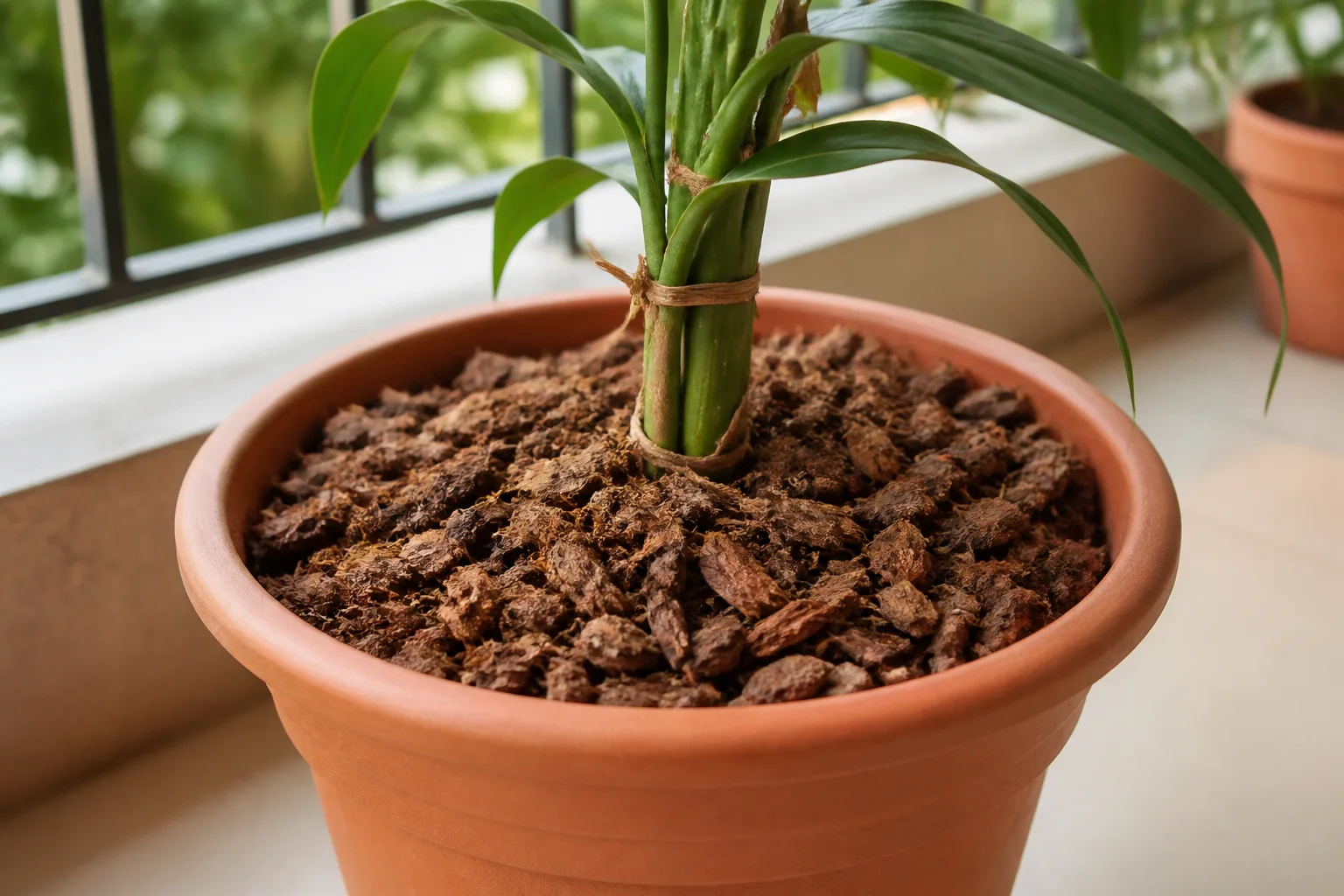
Slow top watering also helps: add water in pulses, let each pulse absorb, then add more until the whole column wets evenly. A thin layer of straw, bark, or lava rock mulch on the surface reduces evaporation and crusting; keep mulch off plant stems to avoid rot. Better Homes & Gardens recommends mulching container gardens in hot weather for exactly this reason (BHG container moisture tips).
Bottom Soaking for Crashed Containers
When a pot is completely desiccated, submerge the whole container in a bucket, sink, or kiddie pool until air bubbles stop rising—UConn’s standard rewetting method for shrunken mix (UConn houseplant watering recommendations). Let it drain fully before returning it to the saucer. Garden Betty uses the same capillary trick for heat-wave recovery on patios, noting that large dry pots may need thirty minutes to several hours to wick water back upward (Garden Betty container drying guide). Bottom soaking is a rescue tool, not a daily routine, but it is the fastest way to restore water-holding ability to peat-based mix.
Choose Pots That Match Your Climate and Plant
Pros choose pots for moisture behavior first and aesthetics second, then adjust placement through the season. A beautiful black ceramic pot in all-day sun may cook roots; a breathable terracotta pot in a windy corridor may need watering twice as often as a glazed neighbor.
Terracotta vs Plastic vs Glazed Ceramic
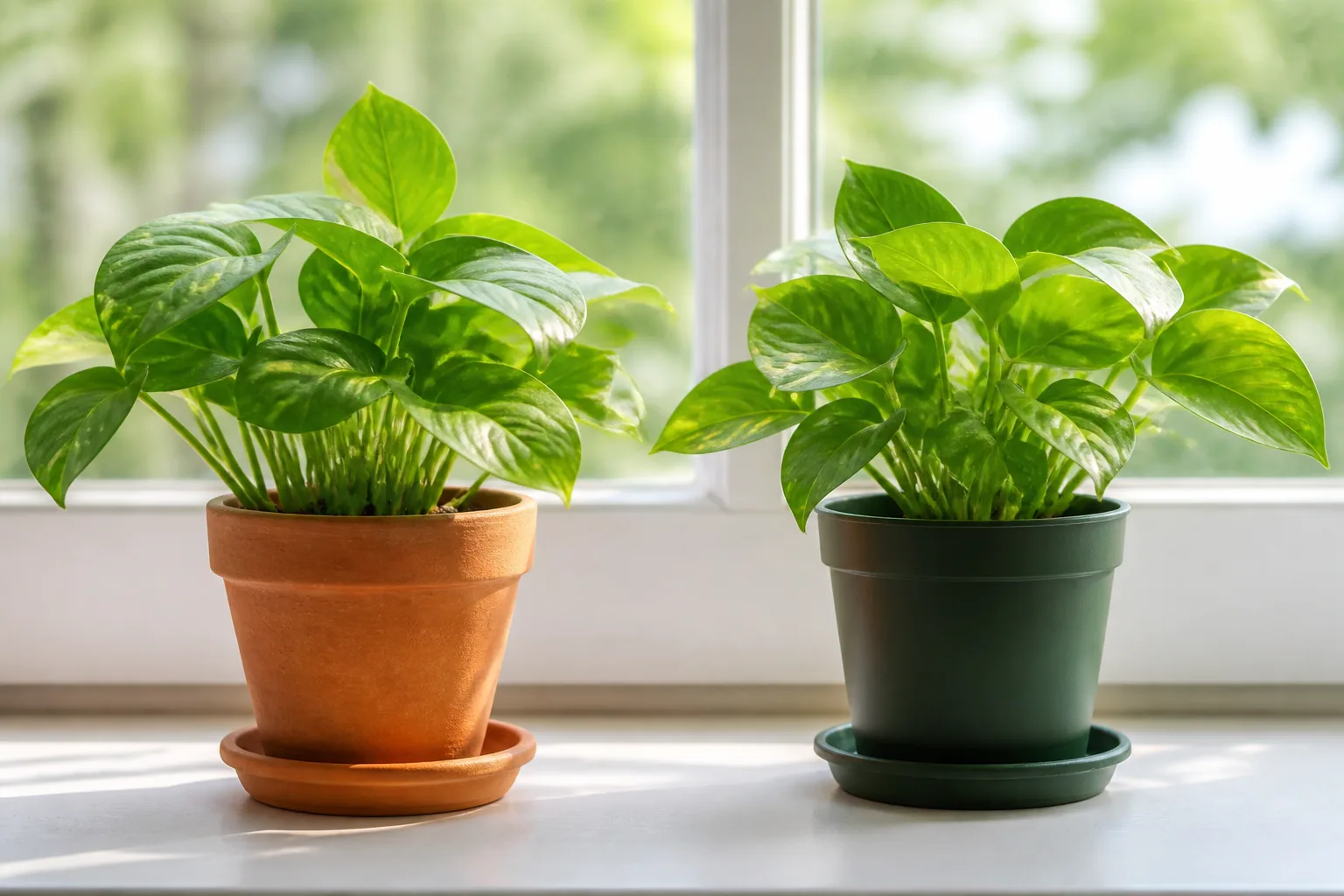
Unglazed terracotta and fabric pots breathe and wick moisture through their walls—excellent for Mediterranean herbs and succulents in moderate climates, demanding for thirsty annuals in full sun. Plastic and thin metal retain mix moisture longer but overheat quickly in dark colors. Glazed ceramic sits in the middle: less sidewall evaporation than terracotta, more weight and stability for top-heavy shrubs. Match material to plant and microclimate instead of using one pot type for everything.
| Container material | Moisture behavior in summer | Best for | Watch out for |
|---|---|---|---|
| Unglazed terracotta | Wicks water through walls; dries fastest | Herbs, succulents, partial shade | Thirsty annuals in full sun without daily checks |
| Fabric grow bags | Breathable; fast drying, air-prunes roots | Vegetables, temporary seasonal plantings | Needs larger volume than hard pots for same crop |
| Glazed ceramic | Moderate retention; stable weight | Flowering shrubs, design-focused patios | Heavy when soaked; verify drainage holes |
| Plastic | Retains mix moisture longer | Travel-heavy gardeners, hanging inserts | Dark colors overheat roots on pavement |
| Metal | Heats quickly; thin walls | Short-term displays | Root cooking against sun-heated sides |
Size Up Before Roots Outgrow the Mix
Garden Betty’s rule of thumb for vegetables: shallow greens in smaller pots, but tomatoes and zucchini want at least 10 gallons, with 20-gallon fabric or half-barrel planters buying real time between waterings (Garden Betty container drying guide). Perennials and shrubs deserve more root room than the cute 6-inch pots they arrive in from the nursery. Upsizing before midsummer heat prevents the “watering three times a day” trap. If you grow heavy feeders in large containers, our container petunia spacing and soil guide illustrates how volume and mix quality interact—even for different crops, the principle is the same: more mix, more forgiveness.
Use Outdoor Potting Mix—Not Garden Soil
Container mix is engineered for drainage, aeration, and moisture retention in a confined space. Garden soil and pure compost compact in pots, shed water poorly, and introduce pathogens you cannot manage on a balcony. UMaine’s raised-bed guidance uses equal parts garden soil, organic matter, and porous amendment when building beds; in pots, use a labeled outdoor container mix rather than digging yard dirt (UMaine Bulletin #2761).
Indoor, soilless mixes drain too fast for exposed patio conditions. Outdoor blends include more compost or coir to hold water while still draining. Read the bag: “for outdoor containers” matters. For the full distinction, see potting soil vs garden soil.
When Moisture-Retaining Additives Help (and Hurt)
Polymers and “moisture control” mixes hold water and release it slowly—useful for hanging baskets of thirsty annuals, risky for lavender, rosemary, and other plants that rot in constantly damp mix. Do not swap a drought-tolerant plant into heavy moisture-retentive soil just to skip watering; give it a larger, well-drained pot instead. If you rely on polymers, still check soil moisture—gels do not replace drainage holes or empty saucers.
Placement, Shade, and Grouping for Less Evaporation
Move pots when you can. Morning sun with afternoon shade lowers both leaf transpiration and sidewall heating for many flowering containers. A 30–50% shade cloth draped over supports during heat waves cuts stress without turning the patio into a cave. Group pots so leaves shelter one another and raise local humidity slightly—Garden Betty treats clustered containers as a microclimate strategy, not just a design choice (Garden Betty container drying guide).
Water in the early morning so roots absorb moisture before peak evaporation. During extreme heat, a second deep soak in late afternoon or evening is fair game if the finger test says dry—do not let a wilted plant wait until morning out of myth alone. Midday watering will not “burn” leaves; heat-stressed plants take relief when they need it. Our hot-weather plant watering guide covers triage when temperatures spike across the whole garden.
Mulch, Double Potting, and Drip Shortcuts
Organic mulch on the pot surface is one of the cheapest moisture savers. UMaine recommends keeping mulch an inch away from stems and using 1–3 inches of compost, bark, or pine straw on raised beds; the same logic applies to containers (UMaine Bulletin #2761). Double potting—sliding a slightly smaller planted pot inside a larger outer pot with moist sphagnum between—slows sidewall evaporation on porous clay, exactly as UConn describes for houseplants (UConn houseplant watering recommendations).
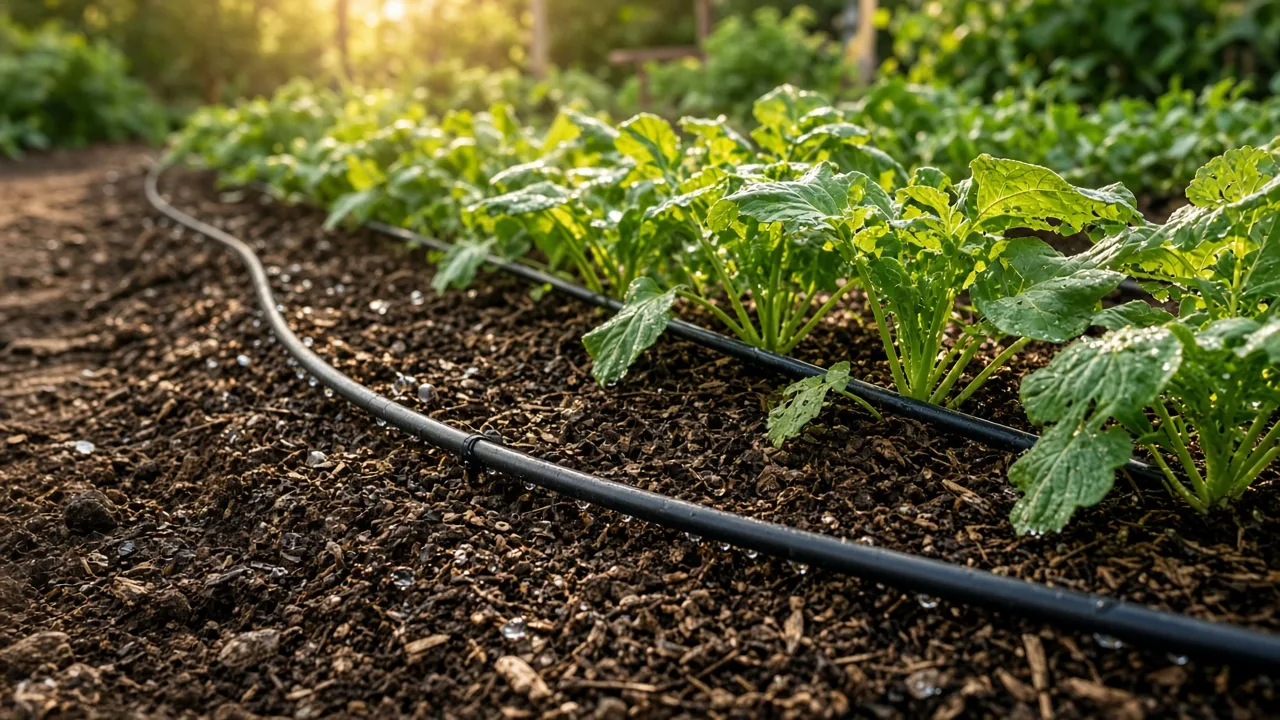
For collections on a drip zone, emitters on a timer beat hand watering for consistency. UMaine recommends drip or soaker hose because it directs water to the root zone instead of wetting foliage that stays damp overnight (UMaine Bulletin #2761). Start with one or two emitters per large tub, run a short cycle in the morning, then adjust after a week of finger tests—not after one hot afternoon.
Soaker hose loops on half-barrel planters deliver slow, root-targeted moisture with less runoff than a handheld nozzle. If you automate, still walk the line every few days: clogged emitters, kinked tubing, and pots that have outgrown their schedule are common reasons automated systems fail silently. Self-watering reservoirs help travel weeks but still need occasional top flushing to prevent salt buildup—see self-watering pots for houseplants for how reservoirs behave (the same physics applies outdoors at smaller scale).
Dehydration Signs—and When Wilting Is Misleading
True drought shows wilting that does not recover overnight, dry mix at depth, brown leaf edges, flower or bud drop, and a pot that feels light. Potting mix pulling away from the container wall and a dusty, crusted surface are late-stage signals that rewetting will take bottom soaking, not another quick pass with the hose.
Some afternoon wilt on hot days is temporary heat droop—leaves flag when transpiration outpaces uptake even if mix is moist. If the plant perks up by evening, hold off on doubling water; improve shade or airflow instead. If it stays limp with wet soil, suspect root damage from earlier overwatering or heat-cooked roots against a dark pot, not simple thirst.
Lower leaves often yellow and drop first as the plant sacrifices older tissue to protect new growth—a pattern extension specialists see when containers cycle between drought and crash rewetting. Flower or bud drop is another stress signal: the plant sheds reproductive tissue to protect roots when water supply is unstable.
Use this quick read on wilt before you react. Evening recovery + damp mix at depth suggests heat or light stress—add shade or move the pot, do not double water. Overnight limp + dry mix means soak deeply or bottom-wet if shrunken. Overnight limp + wet mix suggests root damage, heat-cooked roots against a dark pot, or old overwatering injury—fix drainage and shade before adding more water. Crispy leaf edges with light pot weight is classic underwatering; mushy stems with sour smell is rot from the opposite mistake.
Chronic failure after upsizing, shade, mulch, and deep watering may mean the species wants in-ground life, not another rescue soak. Some shrubs and fruiting crops simply outgrow balcony containers by midsummer—that is a planning signal for next year, not a personal failure.
Conclusion
Container plants dry out faster in summer because they store less water, lose it from every exposed surface, and face heat and wind without the buffer of surrounding earth. Pros keep them alive by checking moisture at root depth, soaking until the whole root ball is wet, choosing pots and outdoor mix that match the plant, and cutting evaporation with mulch, grouping, shade, and slow irrigation.
Your next hot afternoon should start with a finger test, not guilt. If mix has shrunk from the walls, bottom-soak once, then mulch and upsize before the next heat wave. When those steps still fail, swap the pot material or move the plant—hydration is a system problem, and fixing the reservoir beats watering harder on a setup that cannot hold moisture.