How to Make a Yellow Jacket Trap That Works
Build a bottle yellow jacket trap with the right seasonal bait, safe placement 20+ feet from patios, and maintenance steps that keep it catching wasps all season.
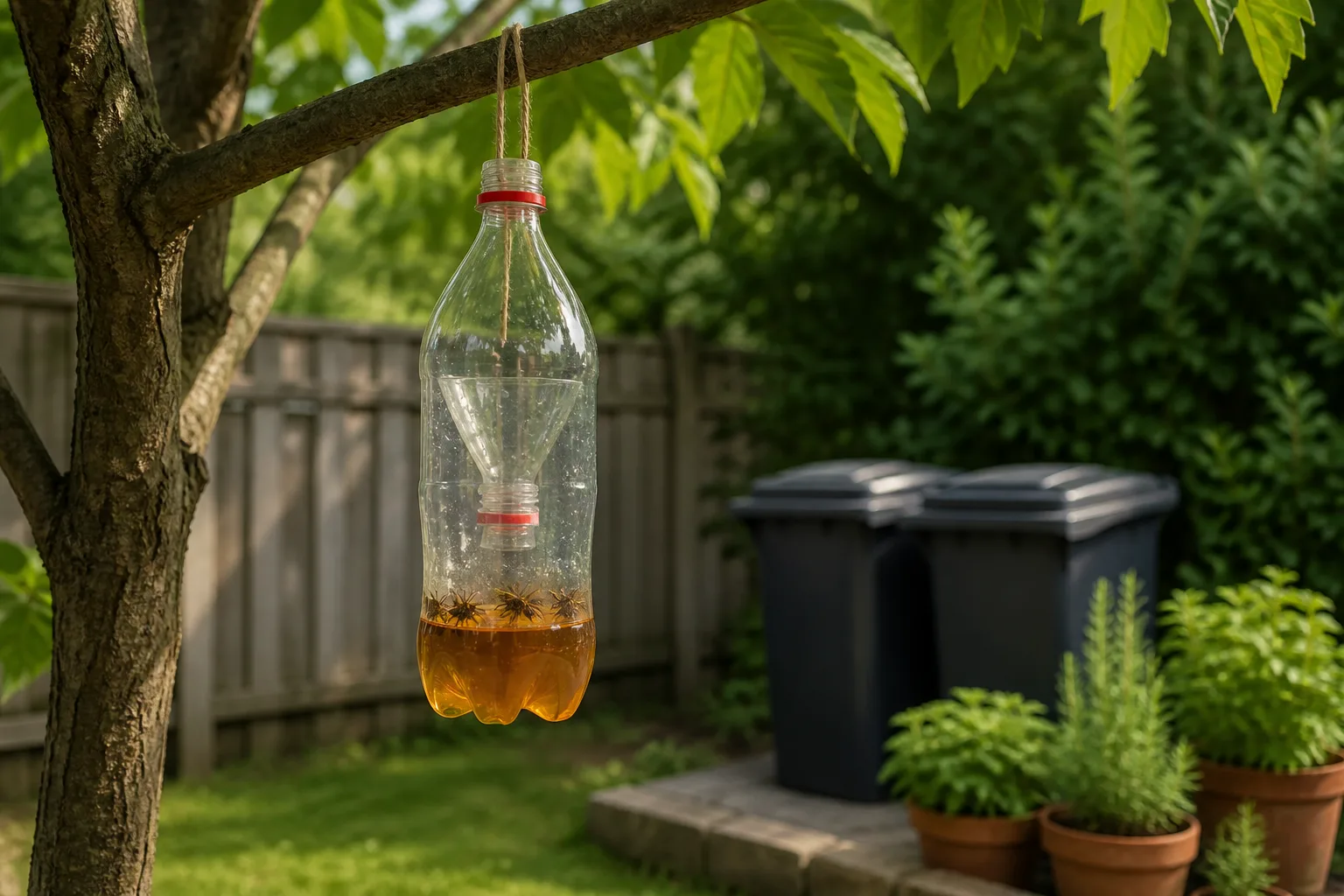
A yellow jacket trap built from a soda bottle costs almost nothing and can pull dozens of scavenging wasps away from your grill—but only if bait, build, and placement match how yellow jackets actually hunt across the season. Most homemade traps fail before the first wasp lands because they use fall-sugar bait in spring, hang beside the picnic table, or fill with corpses until live wasps can climb out on the bodies.
This guide walks through the inverted-funnel bottle trap that consistently outperforms a jar of vinegar alone, the seasonal bait switch colony biology demands, and the perimeter placement rules extension entomologists recommend. You will also learn when trapping is the right tool—and when a full nest still needs direct treatment or professional help.
What a Yellow Jacket Trap Actually Catches (and What It Cannot)
Homemade traps target foraging yellowjackets—the bold, banded wasps in the genera Vespula and Dolichovespula that scavenge protein in spring and sugar in late summer. According to UC IPM Pest Notes on yellowjackets, trapping can reduce localized foraging around patios and picnic areas when traps sit on the property perimeter, not beside food. It does not eliminate an established colony, kill the queen inside a wall void, or replace nest treatment when steady traffic flows to one ground hole.
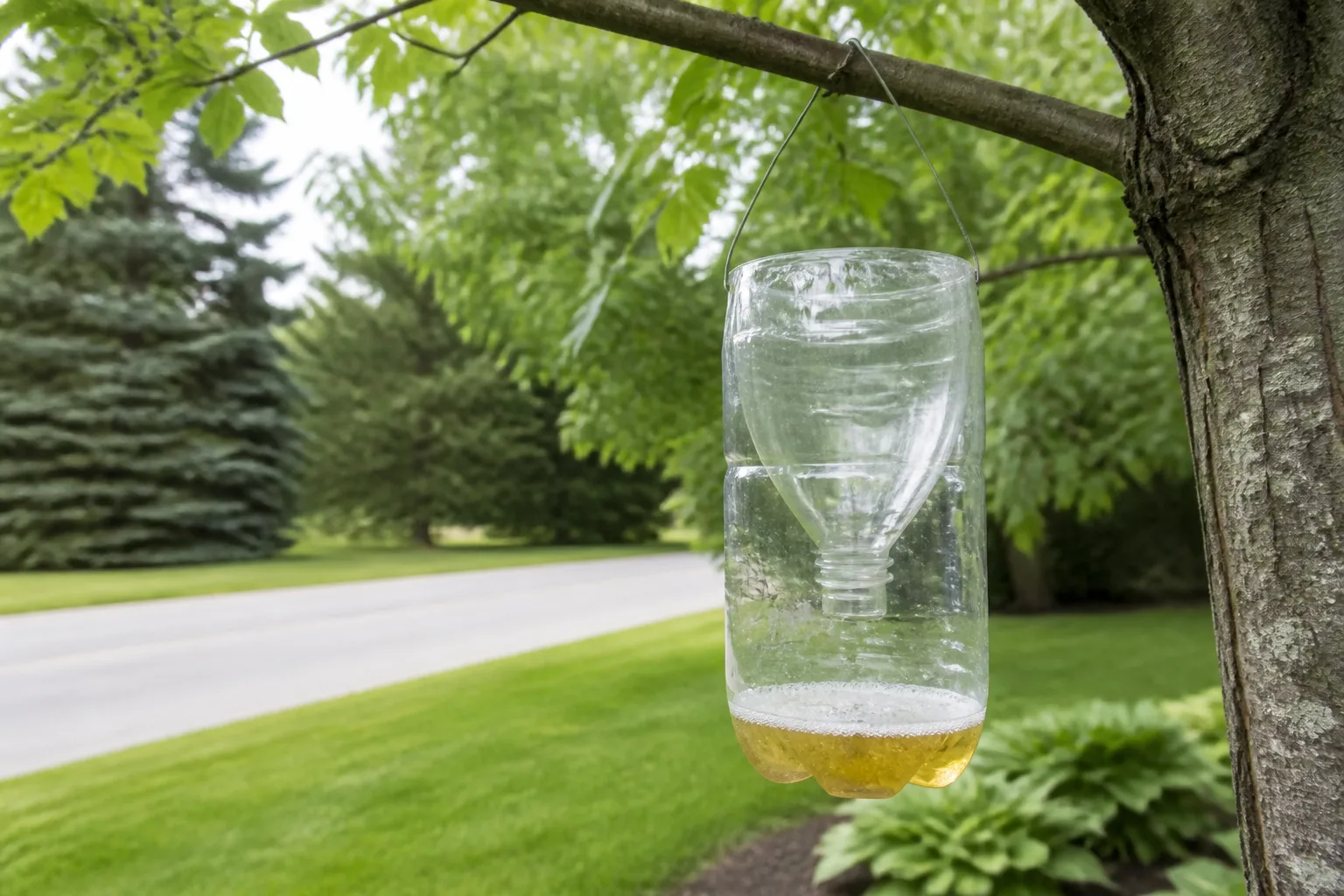
The physics are simple. A wasp crawls down through a narrow downward-facing opening to reach bait. When it tries to leave, instinct drives it upward toward light—not back down through the small hole. A few drops of dish soap in liquid bait breaks surface tension so wasps that fall in drown instead of skating across the top. Smear a thin film of cooking oil inside the funnel and fewer wasps get enough grip to walk back out.
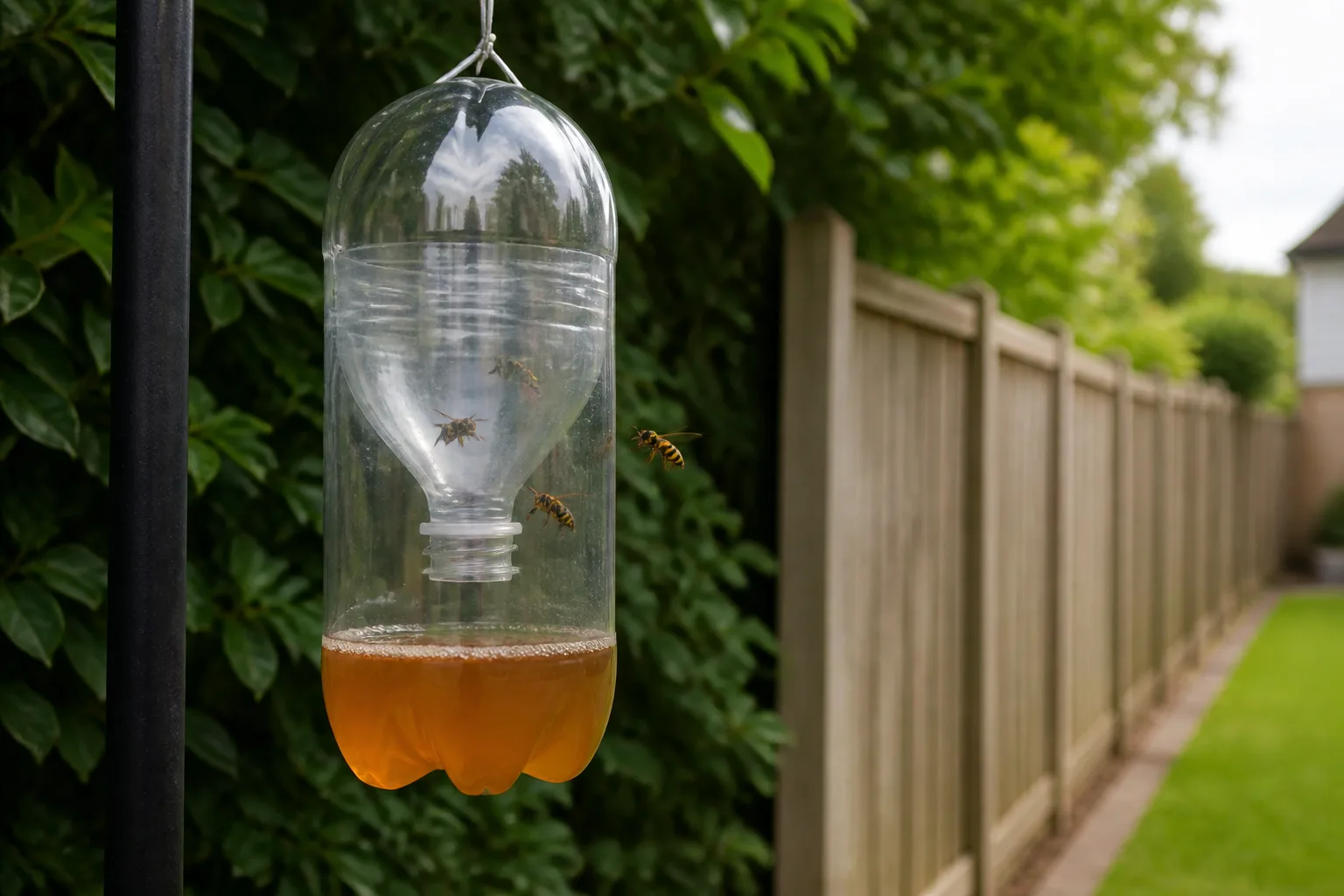
Foraging workers vs the nest underground
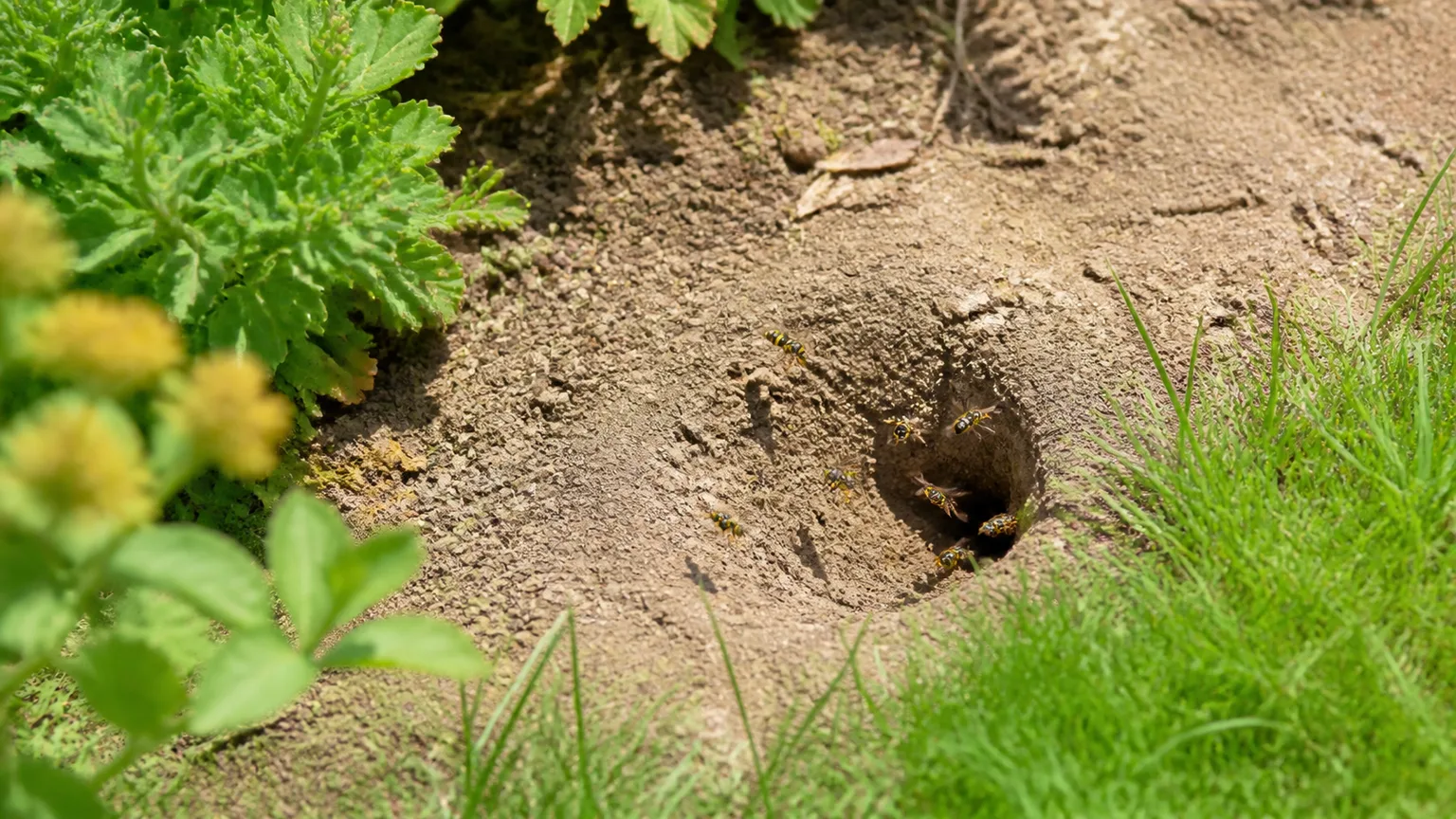
Think of a trap as intercepting commuters, not demolishing the office. A colony may hold thousands of workers by fall; your bottle might catch fifty in a good week. That can make a patio bearable without touching the nest—but it will not stop new workers from emerging until cold weather or nest treatment ends the colony. If you see wasps streaming in and out of one hole in the lawn, a trap on the fence line is supplemental. For nest-focused methods, see our how to get rid of ground wasps guide.
Know Your Target: Yellow Jackets vs Other Wasps
Before you cut plastic, confirm what is bothering you. Yellowjackets scavenge human food and respond well to baited traps. Paper wasps (Polistes) hunt live insects and rarely enter bait traps in useful numbers. Hornets vary—some species scavenge like yellowjackets; others require nest-specific control.
Yellowjackets are compact, bright yellow-and-black, and relatively hairless compared with honeybees. They fly with legs tucked under the body and often nest in ground burrows, wall voids, or compost heaps. Honeybees are fuzzier, slower at picnics, and far less likely to dive into open soda unless trapped. If you need a side-by-side comparison, our hornet vs wasp guide walks through nest shape and behavior cues.
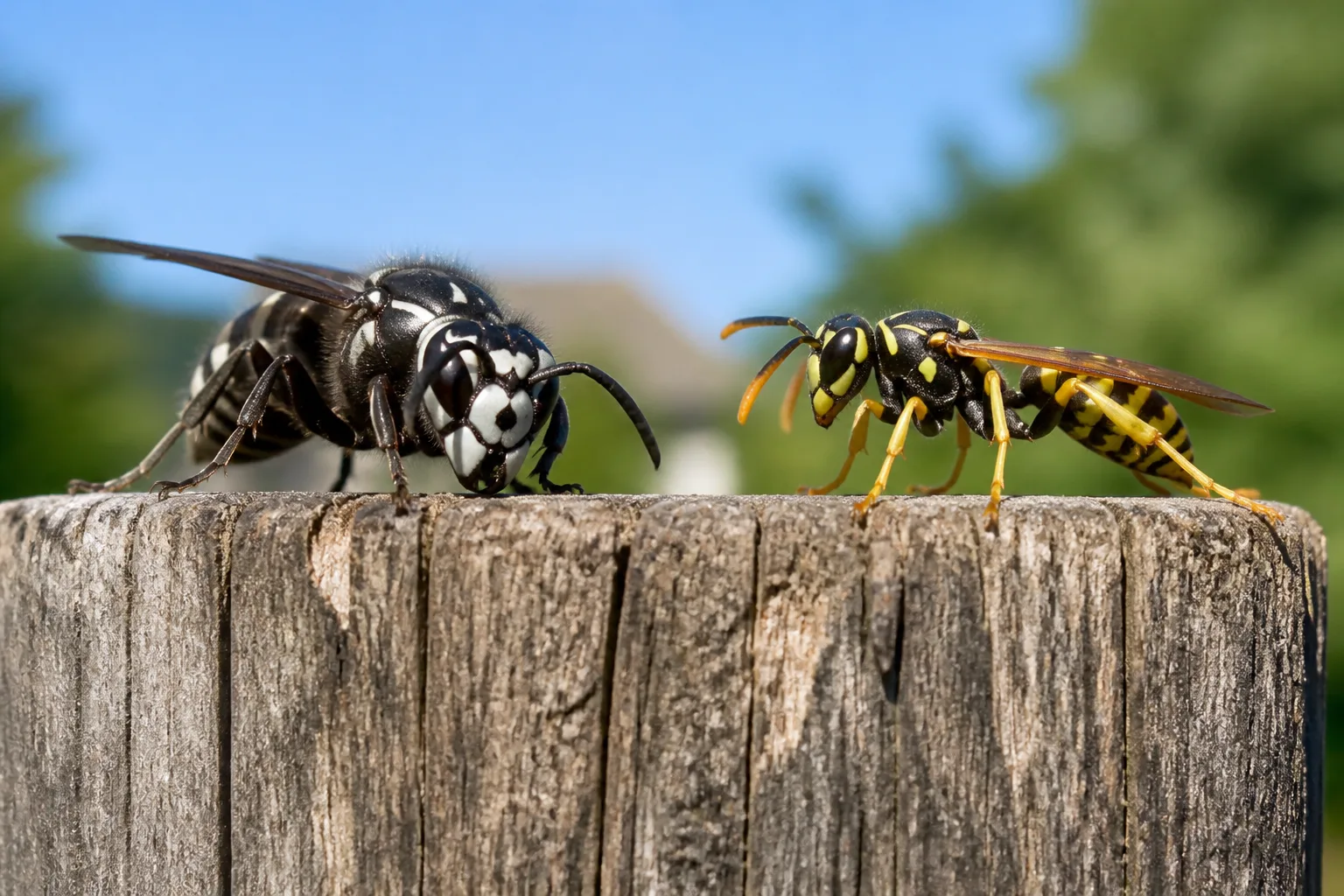
Commercial lure traps often use heptyl butyrate, which UC IPM notes attracts primarily the western yellowjacket—not every species in your yard. Homemade bait lets you adjust for German yellowjackets, V. vulgaris, and local scavenging pressure by switching protein and sweet recipes through the year.
Materials for the Classic Inverted-Funnel Bottle Trap
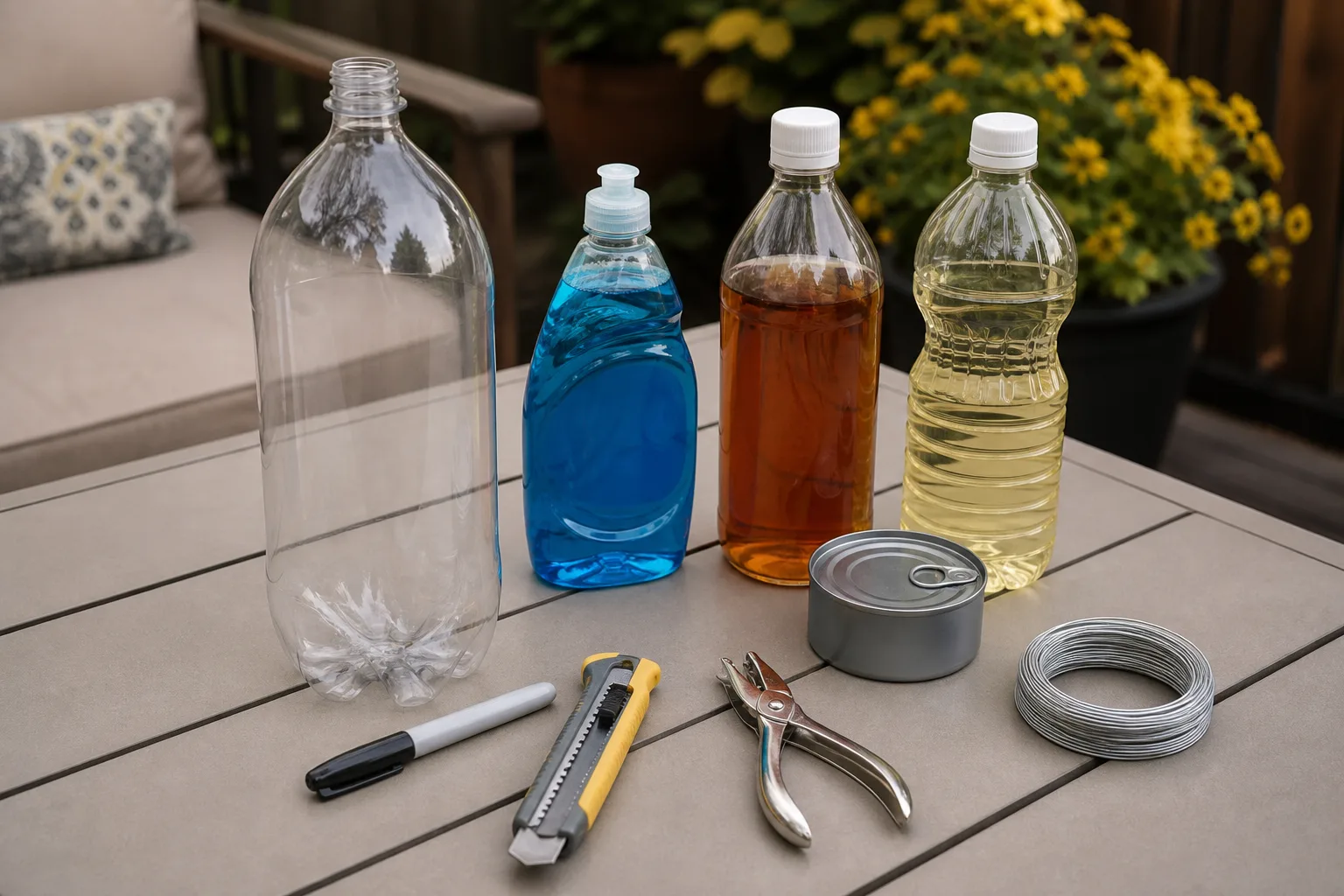
Gather these before you start:
- Empty two-liter soda bottle (straight sides cut more cleanly than narrow water bottles)
- Permanent marker and optional rubber band as a cutting guide
- Sharp utility knife, box cutter, or sturdy scissors
- Dish soap (about half a teaspoon per batch of liquid bait)
- Season-appropriate bait (protein or sweet—details below)
- Apple cider vinegar for sweet-season mixes when bees are active
- Cooking oil (a tablespoon to coat the inside of the funnel)
- Hole punch or awl, plus wire or sturdy string for hanging
- Tape, twist ties, or staples to secure the funnel rim on windy sites
- Optional: grape jam, fruit juice, lunch meat, or raw chicken for bait variations
Wear long sleeves and closed shoes when you hang or service traps, even if you are not allergic. Wasps trapped alive in a dry funnel can still sting. Anyone with a known sting allergy should let someone else service traps and keep an epinephrine auto-injector accessible per medical guidance.
Build the Trap Step by Step
Total active time is about ten minutes once materials are on hand. Work on a stable surface and cut away from your body.
Cut, invert, and secure the funnel
Mark a line just below the shoulder of the bottle where the straight sides begin to curve. Cut through the plastic with a utility knife or scissors, producing a funnel-shaped top and a deep base. Remove the cap—you want an open funnel, not a sealed chamber.
Pour your bait mixture into the base, filling to roughly one-third depth so drowned wasps do not reach the funnel mouth. Invert the funnel and seat the neck inside the base. Punch two or three aligned holes through both layers along the rim and thread twist ties or wire through them to lock the funnel in place. For hanging, add a wire handle through opposite holes.
Coat the funnel and add entrance lure
Wipe a thin film of cooking oil around the inside of the funnel. Yellowjackets that land on oiled plastic lose footing and slide into the bait below. At the funnel mouth, smear a tiny dab of grape jelly, syrup, or jam—this entrance lure pulls wasps to the opening without needing them to smell liquid bait from across the yard. Gardening Know How uses a similar jam-and-vinegar sweet mix in their DIY build and reports strong late-season catches when the trap sits away from seating areas.
Test the assembly with water first if you are new to cutting bottles. A wobbly funnel gap lets wasps exit along the seam—tighten ties until the rim sits flush.
Match Bait to Yellow Jacket Season
Yellowjacket colonies shift diet as the season progresses. From spring through midsummer, larvae need protein—workers hunt insects and carrion. By late summer and fall, colonies crave sugar to feed the queen and remaining workers, which is when scavengers mob trash cans, ripe fruit, and open drinks. Bait that ignores this calendar is the number-one reason traps “do not work.”
| Season | Colony need | Best trap bait | Notes |
|---|---|---|---|
| Late winter–early spring | Queen founding | Protein over soapy water | Bucket trap shines for queens |
| Spring–midsummer | Larval protein | Lunch meat, tuna, cat food, raw chicken | Refresh every 2–3 days in heat |
| Late summer–fall | Adult sugar | Juice, soda, jam + vinegar + soap | Peak patio nuisance season |
| Cool fall days | Mixed | Sweet bait still effective | Activity drops with frost |
Sweet liquid baits for late summer and fall
When yellowjackets harass your patio, use a liquid sweet bait with drowning insurance:
- 1 cup water
- ¼ to ½ cup apple cider vinegar
- 1 teaspoon grape jam or a splash of fruit juice
- ½ teaspoon dish soap
The vinegar adds fruity scent without using honey—which would attract honeybees. Yellowjackets are drawn to the sugar and fermentation notes; dish soap ensures they sink. Beer or wine can work as partial replacements for juice—red wine’s sweetness is a common backyard experiment—but replace the mix every three to five hot days before it turns to vinegar soup that repels wasps.
Protein baits for spring and early summer
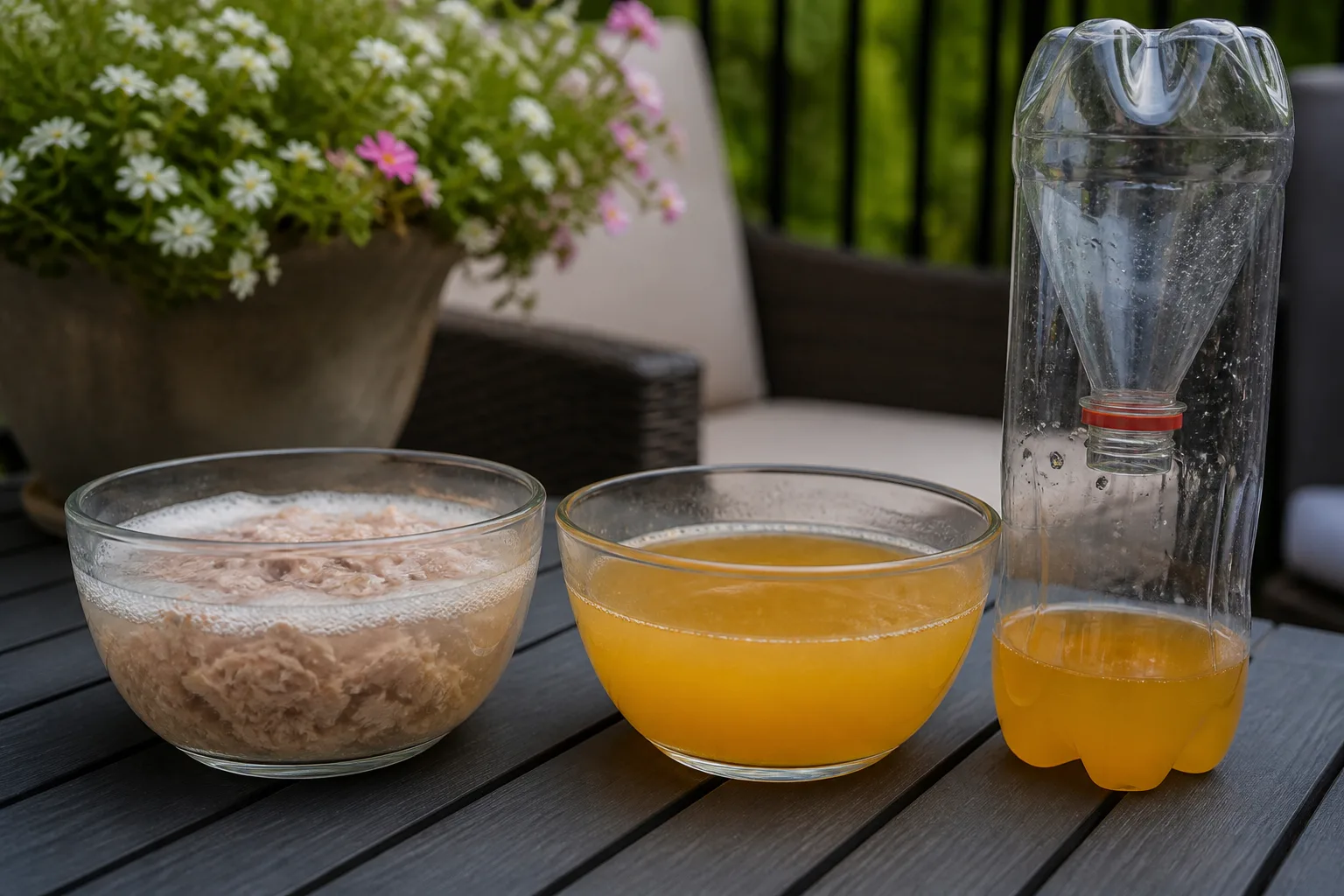
From spring through early summer, suspend fresh protein above soapy water rather than drowning meat in a bottle:
- Raw chicken neck, turkey scrap, tuna, or cat food chunk
- Hang on a string 1–2 inches above soapy water in a five-gallon bucket
- Cover the bucket with wide mesh so raccoons cannot steal bait
UC IPM describes this meat-over-water design as especially useful for queen trapping in late winter through early spring and for reducing foragers later when placed away from seating. Replace meat frequently—yellowjackets are not attracted to rotting bait, and rancid protein repels them while stinking up the yard.
For a bottle trap during protein season, float a small piece of lunch meat on the soapy water surface inside the base. Add less water so the meat stays visible. Expect faster bait spoilage; check every two to three days in hot weather.
The Meat-and-Water Bucket Trap (When Bottles Fill Too Fast)
High yellowjacket pressure fills soda bottles in a day. Switch to a five-gallon bucket trap: fill two-thirds with water plus a generous squirt of dish soap, suspend protein bait above the surface, and screen the top. Wasps cut off a piece, become overweight on takeoff, and drop into the water.
Place bucket traps at the property edge, never beside the patio they are meant to protect. Like bottle traps, they catch foragers—not the underground nest—but handle volume better during peak fall scavenging. Empty by pouring through a strainer at dawn or dusk, double-bag dead wasps, and rebait with fresh protein.
Where to Hang or Place Your Trap for Real Results
Placement matters as much as bait. Yellowjackets forage roughly a quarter mile from the nest, according to UC IPM. Your trap must sit between the nest direction and the area you want to protect—along the flight path, not on the picnic table.
Perimeter placement for backyards and patios
Follow these rules:
- Hang or place traps at least 20 feet from doors, patios, grills, play structures, and pet bowls—30 feet is better in heavy pressure years
- Position traps 4 to 6 feet above ground on a fence post, tree branch, or shepherd hook
- Use two to four traps around a typical suburban lot during peak season rather than one hero trap
- Choose morning sun and afternoon shade when possible; yellowjackets stay active in warm weather but bait ferments slower in partial shade
- In large parks, extension guidance suggests traps about 200 feet from protected zones and roughly 150 feet apart along the perimeter
The National Park Service emphasizes keeping food covered and garbage sealed because wasps return to locations where they previously found meals. Traps complement sanitation—they do not replace it.
Placement Mistakes That Make the Problem Worse
Hanging a trap on the porch railing is the most common DIY error. You are advertising sugar beside the people you want to protect. Wasps investigate the bait, fail to enter, and then discover your potato salad three feet away.
Other failures:
- Trap beside flowering plants in full bloom — sweet bait plus nectar increases honeybee bycatch risk
- Downwind of seating — scent carries toward guests before wasps reach the trap
- Single trap in a large yard — insufficient interception; add perimeter units
- Leaving a full corpse pile — drowned wasps form a raft live wasps can climb to escape; empty before the pile reaches the funnel
- Setting traps near known nest entrances — disturbs defenders and increases sting risk without killing the colony
If catch counts stay near zero after three days, move the trap 15 feet toward visible flight lines—along the shed roofline, compost bin, or fruit tree where wasps already cruise.
Maintain, Empty, and Rebait Without Getting Stung
Service traps at dawn or full dark when yellowjackets are least active. Wear gloves, long sleeves, and closed shoes. Approach calmly—quick vibrations trigger defensive behavior even away from the nest.
Sweet bait: empty and rebait at least weekly; every three to five days during heat waves or when the trap is more than half full of bodies.
Protein bait: refresh every two to three days in summer heat; never let meat rot in the trap.
To empty, seal the trap in a plastic bag, freeze for an hour if you want extra caution, or knock remaining live wasps into soapy water before opening. Rinse the bottle, rebuild with fresh bait, and rehang. A trap that smells like dead wasps still catches—until the corpse pile lets newcomers walk out.
Keep Honeybees and Beneficial Pollinators Out of the Trap
Yellowjackets are beneficial predators that eat caterpillars and crop pests in spring; traps are for human safety at food zones, not wiping out every wasp in the ecosystem. Our is it bad to deter wasps from the garden guide covers the trade-off in more depth.
To limit honeybee bycatch:
- Never use honey as bait
- Add ¼ cup apple cider vinegar per cup of sweet mix—bees are less attracted than wasps to vinegar-heavy ferments
- Avoid hanging sweet traps beside flowering plants at peak bloom
- Use protein bait in spring when bees ignore meat baits entirely
- Check catches the first few days; if bees appear, relocate away from blooms and increase vinegar slightly
A few accidental bee captures can happen with any sweet trap. Persistent bee bycatch means the trap is too close to the hive flight path—move it toward yellowjacket scavenging zones like trash storage, not the pollinator garden.
Yard Habits That Reduce Yellow Jacket Pressure
Traps work better when the yard is not competing with easier meals. UC IPM and the National Park Service both stress sanitation:
- Cover outdoor food and drinks; clear plates promptly after eating
- Rinse picnic tables and grill surfaces to remove sticky residue
- Pick up fallen ripe fruit and exposed compost scraps
- Keep garbage cans tightly lidded and wash sticky bins regularly
- Avoid floral perfumes and bright floral clothing at outdoor meals when wasps are active
- Clean immediately if you squash a yellowjacket—crushed wasps release alarm pheromone that recruits nest mates
Combine perimeter traps with these habits and you address why wasps kept returning after the trap filled. For broader context on attractants, see what attracts wasps.
When to Skip the Trap and Treat the Nest Instead
Call a professional or switch to nest treatment when:
- Anyone allergic to stings uses the yard regularly
- Wasps defend a single entrance aggressively within a few feet of daily foot traffic
- Trap catches stay high for weeks but nuisance at the patio does not improve—likely a nest between trap and house
- The colony lives in a wall void, attic, or underground beside a child’s play area
UC IPM recommends professional help for nest elimination because partial treatments agitate colonies and intoxicated wasps may sting far from the entrance. Local vector-control districts in some regions remove nests at no charge—search your county before paying for service.
A bottle trap is a pressure-relief valve for outdoor meals, not a colony killer. Use it when you see scattered foragers, not when a nest must go. For faster knockdown options beyond trapping, our how to get rid of wasps fast guide compares next steps. If you want the broader bottle-build reference with overlapping bait detail, see how to make a DIY wasp trap—the mechanics are the same, but yellowjacket seasonality and perimeter math are what make this page work.
Conclusion
A yellow jacket trap that really works is less about clever plastic and more about seasonal bait, perimeter placement at least 20 feet from people, and relentless maintenance before corpse piles let wasps escape. Build the inverted-funnel soda bottle, coat the funnel with oil, match protein or sweet bait to the calendar, and run two or more traps along property edges during peak fall scavenging. Protect honeybees by skipping honey bait and adding vinegar to sweet mixes. When steady traffic still flows to one nest entrance—or someone allergic shares the yard—step up to nest treatment or professional removal instead of hanging another bottle beside the grill.



