How to Get Rid of Wasps and Keep Them Away
Learn how to get rid of wasps safely: identify the nest, remove attractants, use traps correctly, and know when to call a professional.
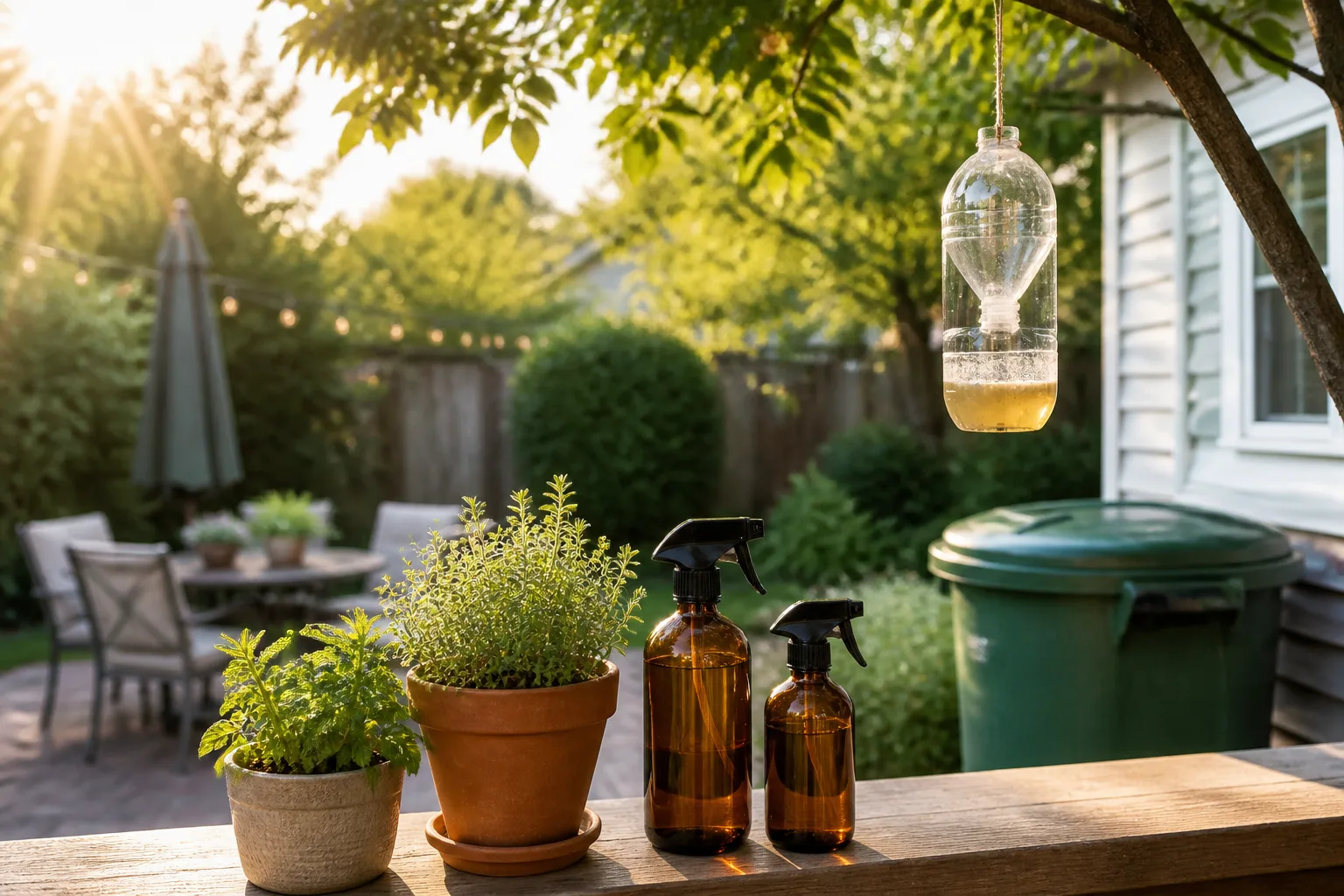
If wasps keep returning, killing the ones you see is usually treating the symptom. The durable fix is to work out whether they are foragers looking for food and water or defensive workers coming from a nest, then choose a response that matches that problem.
Use this order: remove attractants, use a lure trap only when it fits the species and situation, discourage new nests before they are established, and remove or outsource a nest only when its location creates a genuine sting hazard. No method can guarantee that another colony will never appear, but this sequence stops a surprising number of repeat visits without turning your patio into a pesticide zone.
Start with the real problem: foragers or a nest?
A single wasp circling a drink, flowering plant, trash can, or fallen apple does not prove that a nest is on your property. Wasps can travel to food, water, and prey from elsewhere. Penn State Extension recommends first separating a foraging problem from a nest problem because the safest and most effective choices are different for each one.
Foragers are often scattered and focused on a resource. Nest defenders follow a repeated flight line, disappear into one hole or crack, or repeatedly return to one sheltered structure. If you watch from a distance and see traffic converging on one location, stop mowing, trimming, drilling, or spraying near that spot until you have identified the risk.
Signs a nest is nearby
Look for a consistent stream of insects entering the same opening rather than occasional visitors landing on flowers. The entrance may be a paper nest under an eave, a small hole in soil, a gap around siding, a vent or soffit, or a crack in a retaining wall. Buzzing in a wall or ceiling, especially when paired with insects appearing indoors, is another reason to stop probing and call for help.
Do not stand beneath a suspected nest to count insects. Observe from roughly 10 to 15 feet away if you can do so safely, note the flight path, and make a quick sketch or photograph from a protected distance. That information is more useful to a pest professional than a close inspection that triggers a defensive response.
Where wasps are nesting
Nest location predicts both the insect and the safest response. An open, umbrella-like comb under a porch roof is more likely to be a paper-wasp nest. A gray, enclosed paper ball or teardrop under a soffit may be an aerial yellowjacket nest, often called a bald-faced hornet nest. A steady stream from a ground hole points toward yellowjackets, while a nest inside a wall, attic, or roof void is a structural job.
| What you see | Likely situation | Best first move |
|---|---|---|
| A few wasps on drinks, fruit, or trash | Foraging workers | Remove the food source and cover what remains |
| Open comb under an eave | Paper wasps | Keep people away; decide whether the location is tolerable |
| Many shiny black-and-yellow wasps at one soil hole | Ground-nesting yellowjackets | Mark the area and keep lawn equipment, children, and pets away |
| Large enclosed nest, wall entry, or attic activity | Large or concealed colony | Use a professional rather than a ladder or improvised spray |
Identify the wasp before choosing a fix
“Wasp” covers thousands of species, and most are not the aggressive picnic pests people have in mind. The important distinction for a homeowner is whether the insect is a social wasp defending a colony or a solitary species that is passing through, hunting prey, or using a small mud or plant-stem cavity.
Paper wasps and aerial nests
Paper wasps have slender bodies and long legs that often hang during flight. Their open-comb nests look like a small paper umbrella, commonly attached beneath eaves, railings, porch ceilings, window corners, or sheltered plant structures. Colonies are usually smaller than yellowjacket colonies, but a nest in a doorway or beside a seating area still deserves respect because the wasps defend the nest when it is disturbed.
The nest is not automatically an emergency. If it is high above an unused corner and no one needs to work around it, leaving it alone can preserve pollinators and natural control of caterpillars and other insects. If it sits above a door, beside a child’s play area, or where pruning and painting are unavoidable, the location—not the mere presence of wasps—is the reason to consider removal.
Yellowjackets and hidden nests
Yellowjackets are usually shorter, shinier, and more compact than paper wasps. Depending on the species, they nest underground, inside wall cavities, in roof spaces, or in enclosed aerial nests. They become especially troublesome in late summer and early fall as colonies shift from feeding larvae with insect prey to scavenging sugary foods, drinks, garbage, and fallen fruit.
The Illinois Division of Research Safety describes yellowjackets as repeat-stinging wasps that can build colonies with thousands of workers, and notes that late-season food scarcity can make encounters around trash and picnics more likely. Treat a ground hole as a live nest even if you cannot see the paper structure below it; pouring water into it, digging it up, or running a mower over it can provoke the colony.
Mud daubers and solitary wasps
Mud daubers make narrow mud tubes or clusters of cells, while other solitary wasps use holes in soil, wood, hollow stems, or existing cavities. They do not cooperate to defend a large colony in the way social wasps do, and many are unlikely to sting unless handled or trapped.
Their presence can be beneficial: wasps prey on caterpillars, aphids, flies, spiders, or other insects, and adults of many species visit flowers for nectar. BBC Gardeners’ World Magazine offers useful context on this behavior—removing every wasp you see is not the same as solving a household hazard. Identify the nest and the traffic pattern before reaching for a spray.
Fix 1: remove food, water, and shelter
Start here when wasps are scattered around a patio, deck, pool, compost area, or outdoor kitchen. Penn State Extension notes that foraging stinging insects may be responding to food, water, or another resource even when their nest is far away. Removing that resource can end the visit without touching the insects.
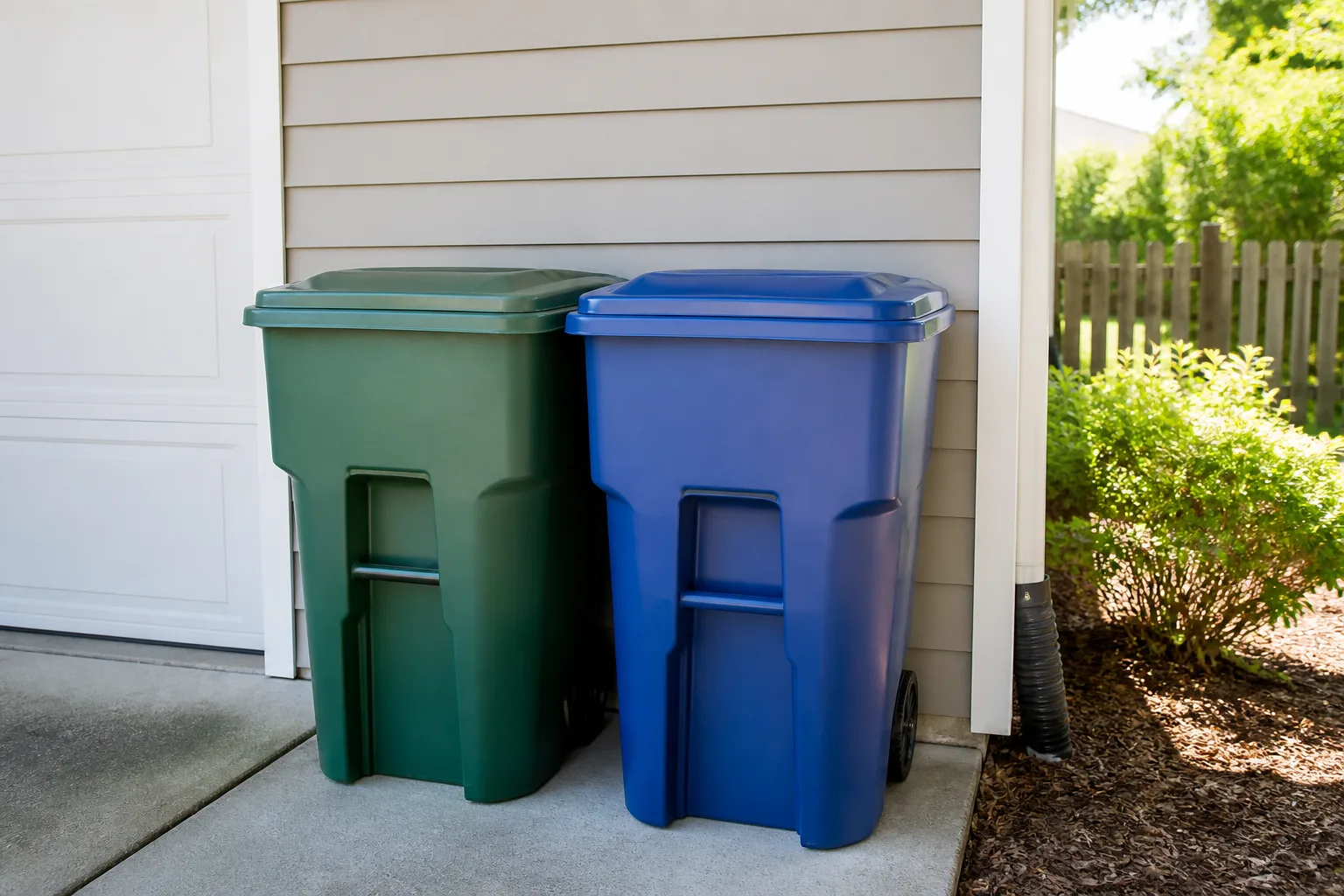
Do a ten-minute attractant sweep:
- Wipe up soda, juice, beer, syrup, barbecue sauce, and melted desserts as soon as they spill. Check under table edges and chair legs, not just the visible tabletop.
- Keep garbage and recycling lids shut, rinse sticky containers, and clean residue from the bottom of bins. Bag meat scraps and ripe fruit rather than leaving them exposed overnight.
- Pick up windfall apples, pears, grapes, figs, and other soft or fermenting fruit. If a tree is heavily dropping fruit, harvest more often or move the eating area farther away while the crop ripens.
- Bring pet food indoors between meals. Cover drinks and food at gatherings, and use clear cups so you can see what you are about to drink.
- Repair dripping hose connections, outdoor faucets, irrigation leaks, and overflowing birdbaths. If wasps are drinking at a pool, offer water farther from the seating area and keep people from swatting at insects on the surface.
- Reduce sheltered nesting options near the house by moving unused tarps, cushions, scrap wood, cardboard, and dense clutter away from porches and sheds. Seal gaps only after you are certain there is no active colony inside.
Do not remove flowering plants simply because they attract pollinators. Instead, place highly attractive blooms, fallen-fruit trees, compost, and trash farther from doors and eating areas when your space allows. Gardening Know How also recommends acting early, cleaning outdoor surfaces, and limiting food and shelter before a queen establishes a nest, but scent sprays and “repellent plants” should be treated as optional experiments—not a substitute for sanitation or nest management.
Fix 2: use a trap only for foraging yellowjackets
A lure trap can reduce the number of yellowjackets visiting a patio, but it does not remove a colony. Penn State Extension is explicit that traps may thin foraging workers while failing to solve an established nest. The distinction matters: if insects keep emerging from one hole, a trap may catch a few workers while leaving the source untouched.
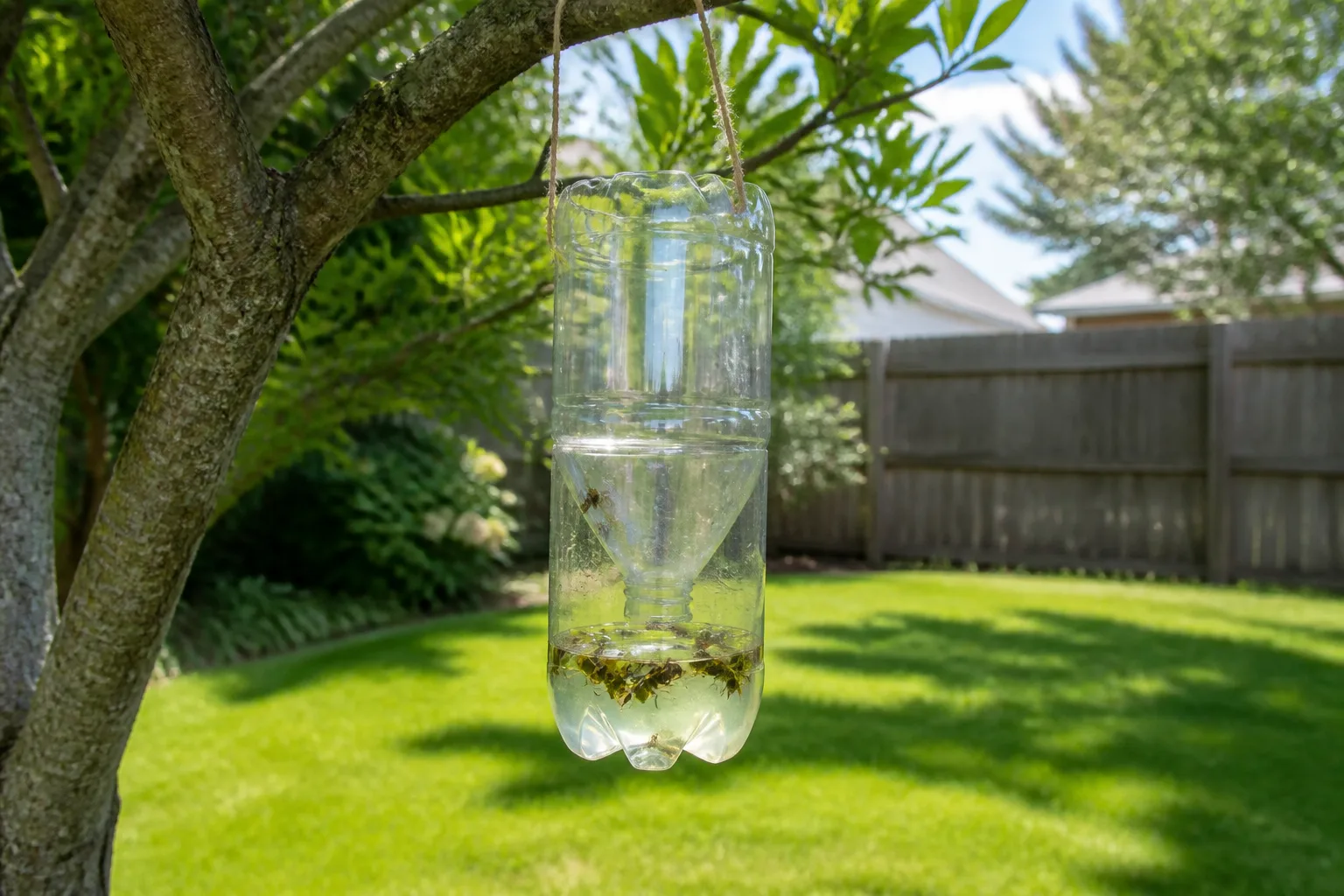
Traps are most useful when the problem is a steady stream of yellowjackets scavenging food around an outdoor meal, especially when you cannot remove every attractant immediately. They are not a good reason to approach a nest, hang bait beside a door, or assume that a full trap proves the colony is gone.
How to place a trap
Buy a trap labeled for the type of yellowjacket in your region or make one only if you can place and service it without entering the insects’ flight path. Lures are not universal: USDA Agricultural Research Service material notes that heptyl butyrate attracts western yellowjackets but does not work for eastern Vespula species. Follow the product’s instructions rather than assuming any sweet liquid attracts every wasp equally.
Place the trap away from the people you are protecting, never above the picnic table or beside a frequently used door. Put it where workers are already foraging, keep it away from children and pets, and follow the manufacturer’s replacement and disposal instructions. If activity increases around the trap or the insects are coming from a nest nearby, stop using it in that location and change to nest triage.
A home trap recipe often uses a cut plastic bottle, water, fruit bait, vinegar, and a small amount of dish soap. Gardening Know How’s practical yellowjacket-trap guide demonstrates that setup, but even that kind of trap is a forager-reduction tool, not a nest treatment. Wear gloves when handling a full trap, wait for the low-activity period stated by the instructions, close or bag it before moving it, and keep your face away from the container.
Fix 3: deter new nests early
Prevention works best before a colony is established. In spring, inspect porch ceilings, eaves, shed overhangs, play structures, fence rails, and quiet corners behind stored items from the ground. Remove abandoned paper debris and correct gaps or sheltered voids only when no insects are using them.
Keep doors, windows, vents, and soffit openings screened or sealed where practical. Store materials off the ground, trim vegetation that touches the house, and move outdoor furniture or covers so you can inspect behind them. These steps reduce the number of convenient sites without coating the whole yard in insecticide.
What decoy nests can and cannot do
Fake wasp nests are based on a territorial theory: a queen looking for a nesting site may avoid a spot that appears occupied. They are sometimes suggested for covered porches, but they do not evict an existing colony and cannot protect an area from ground-nesting yellowjackets.
More importantly, the evidence is weak. Penn State Extension reports no clear evidence that decoy nests prevent paper wasps or yellowjackets from nesting, including observations of multiple nests close together. If you hang a decoy as a low-risk experiment early in the season, treat it as a visual cue with uncertain benefit, not a guarantee. Do not postpone cleanup, sealing, or professional advice because a paper bag is hanging from the eaves.
Fix 4: remove a nest only when it is a real hazard
The safest removal plan depends on nest size, insect identity, access, and the people who use the area. A nest in a rarely visited back corner may be safer to leave until the annual colony declines. A nest beside a front door, in a wall next to a bedroom, near a child’s play area, or under a roofline that must be repaired is a different decision.
Small exposed nests
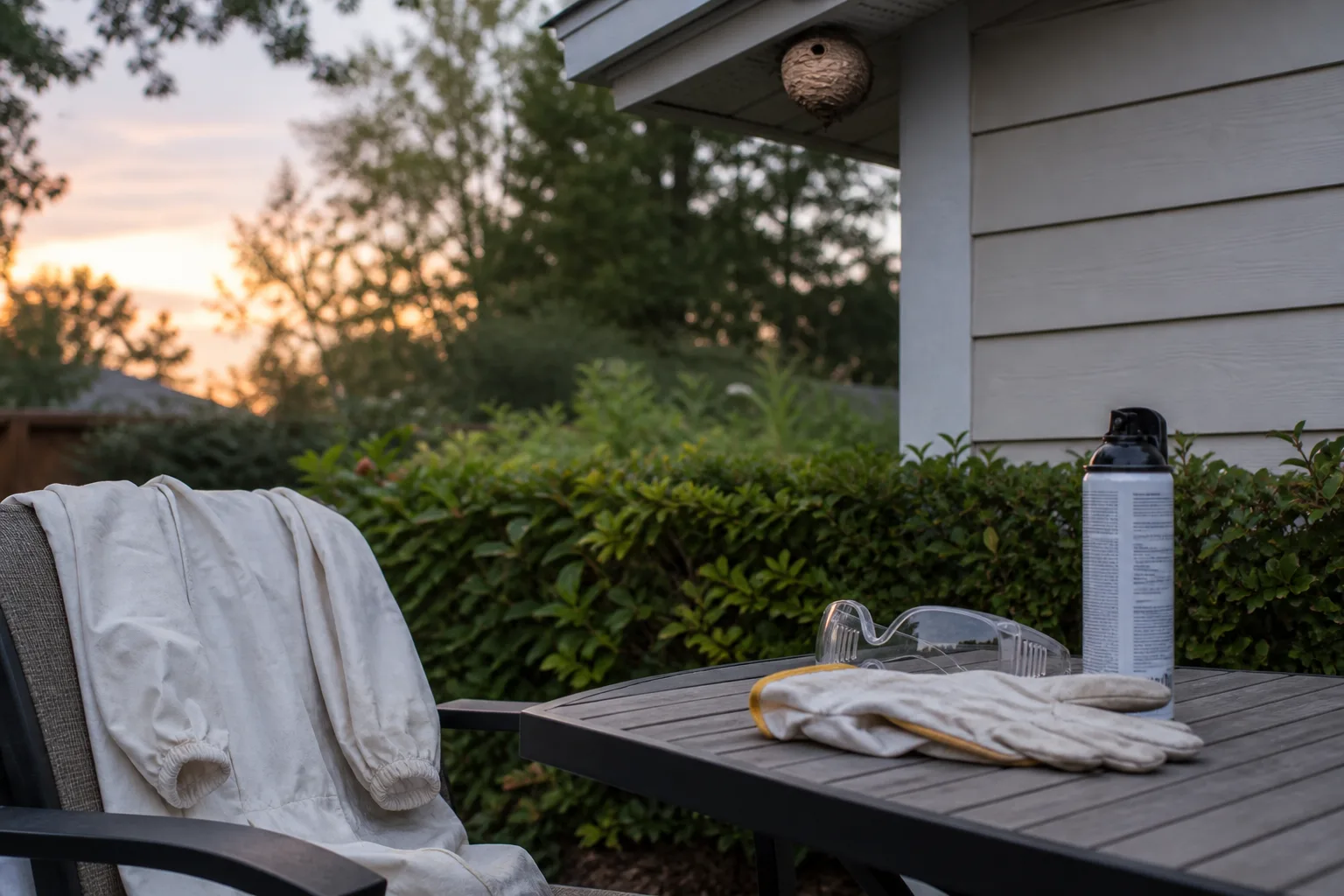
For a genuinely small, exposed paper-wasp nest that is reachable from the ground, a healthy adult with no sting allergy may choose a ready-to-use product specifically labeled for wasps and the intended site. Read the entire label first, keep people and pets away, wear the required protective clothing, and plan an unobstructed retreat. Apply only when the label permits and when most workers are in the nest, commonly during a low-activity period such as dusk or night.
Do not stand directly underneath the nest, climb a ladder while holding an aerosol, spray from a doorway that blocks your escape, or improvise a stronger concentration. After the label’s waiting period, confirm that activity has stopped before removing the nest as directed. A nest that remains active after treatment is a reason to stop repeating the attempt and call a professional, not a reason to move closer.
Large, underground, or wall nests
Do not dig up a yellowjacket nest, flood it, seal an active entrance, burn it, or inject household chemicals into a wall. Penn State Extension warns that liquid or foam insecticides in structural cavities can damage drywall, wood, or electrical components, and that leaving a treated nest inside a wall can create odor, staining, insulation, and scavenger problems.
Large enclosed nests, nests above a ladder’s safe reach, nests inside a wall or attic, and colonies beside a door or walkway belong on the professional side of the decision. A licensed pest professional can identify the insect, choose a labeled treatment for the nest type, plan an escape route, and address the entry point and nest remnants so the same void does not become a recurring problem.
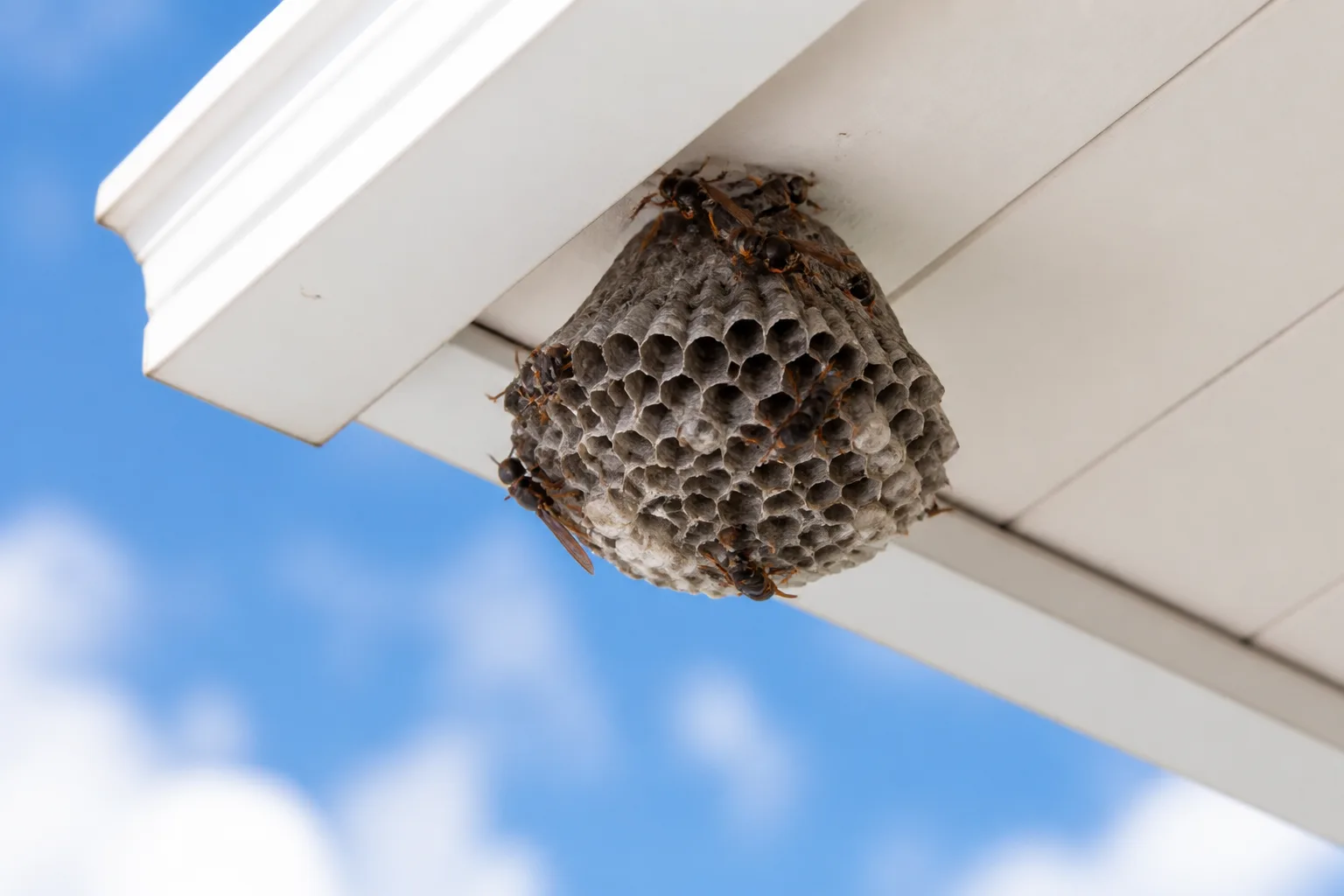
If you are unsure whether the insects are wasps, honey bees, or bumble bees, do not spray first. Bees and wasps can look similar at a distance, and a professional or local extension office can help identify the colony before treatment. When a nest is safe to avoid, leaving it preserves pollination and natural pest control while removing the chance of a risky intervention.
What not to do with an active nest
Several popular “fast fixes” make the situation less safe:
- Do not swat or crush wasps near their nest. Distressed or injured social wasps can release alarm signals that draw other workers into the defense.
- Do not use a trap as a nest treatment. It catches some foragers but does not reach the queen, brood, or paper structure.
- Do not pour boiling water, gasoline, kerosene, or other household liquids into a nest. Fire and flammable liquids can cause property damage, toxic exposure, and serious injury; Penn State Extension specifically identifies fire as an inappropriate nest-control method.
- Do not seal an active hole in a wall or building. The insects may find another route, potentially into the living space.
- Do not spray flowers, herbs, or broad areas of the yard with essential oils or insecticide just because wasps visit them. That can harm bees and other beneficial insects without treating the nest.
- Do not use a ladder for a colony you cannot safely reach from the ground. A fall plus multiple stings is a preventable emergency.
The goal is not to make every insect disappear. It is to stop a hazardous interaction while preserving harmless activity where the location allows it.
When to call a professional
Call a qualified pest professional without attempting DIY removal if anyone who may be exposed has a known sting allergy, if the nest is large or concealed, if it is above a safe ground-level reach, or if you cannot identify a reliable escape route. Also outsource the work when children, pets, older adults, or people with respiratory or cardiac conditions use the area and the colony cannot be isolated.
Ask what insect they believe they are treating, where the nest is, which product or method is proposed, how they will protect pollinators and pets, whether the nest and nesting material will be removed, and how they will close or repair the entry after the colony is inactive. A treatment that kills workers but leaves a wall void, odor-producing nest, or open access point is not a complete answer.
Season matters too. Penn State Extension explains that social wasp colonies start in late spring or early summer and die off over winter. A 2025 review indexed by PubMed likewise emphasizes early detection and adaptive, targeted management rather than indiscriminate control. A nest discovered late in the season may be close to its natural decline, while a small nest found in May or June has much more time to grow. That does not make a dangerous nest safe, but it does help you weigh the benefit of immediate removal against the risk of disturbing it.
If you are stung
Move away from the nest or flight path without swatting. Wash the site with soap and water, apply a cold compress, and follow the directions of any over-the-counter medicine you already know is safe for you. Honey bees can leave a stinger, but wasps generally can sting repeatedly; do not waste time searching for a stinger when the insect did not leave one.
Seek emergency help for trouble breathing or swallowing, swelling of the lips, tongue, face, or throat, faintness, widespread hives, confusion, or other signs of a severe allergic reaction. The University of Illinois Division of Research Safety also advises prompt medical attention for multiple stings when the person begins to feel ill and for a very large local reaction. Anyone with a known severe sting allergy should follow their clinician’s emergency plan and carry prescribed epinephrine.
If several wasps are attacking, cover your mouth and nose and run indoors or into a vehicle rather than jumping into water or waving your arms. Once safe, wash away any sting-site residue and get medical help if symptoms spread or intensify. A close encounter is a reason to improve the plan, not to return immediately with a larger spray can.
Conclusion
The answer to recurring wasps is rarely a stronger repellent. First find out whether you are seeing foragers or nest defenders. Then remove food, water, and shelter; reserve traps for foraging yellowjackets; treat decoy nests as unproven; and remove a colony only when its location makes it an unacceptable hazard.
Small exposed nests may be manageable under a product label and with a clear retreat, but underground, high, structural, large, or uncertain colonies deserve professional treatment. Clean up attractants and inspect likely nesting sites again in spring, and you can make the same patio or doorway much less inviting without treating every beneficial wasp in the garden as an enemy.



