How Long Do Orchids Live? A Practical Guide
How long do orchids live? Learn why a well-cared-for Phalaenopsis can last 15 years or longer, plus the root, light, water, and rebloom rules that matter.
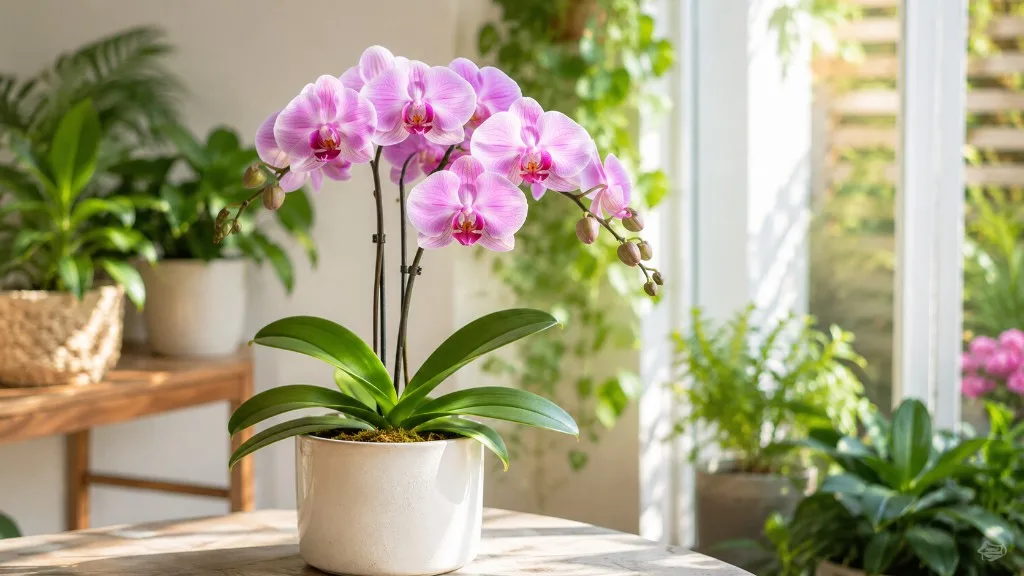
If your orchid has lost its flowers, it may look finished while the actual plant is still healthy. A grocery-store Phalaenopsis, or moth orchid, can live for 15 years or longer with suitable care; a University of Florida IFAS orchid specialist uses that figure as a realistic long-term benchmark, not a promise that every plant will reach it. (UF/IFAS)
The part that determines whether you get years instead of one disappointing bloom cycle is usually below the leaves. Orchids need roots that receive both moisture and air, light strong enough to support new growth, and a potting medium that does not collapse into a wet block. Once you stop treating the flower display as the whole plant, orchid care becomes a series of manageable checks.
The short answer: 15 years or longer is possible
There is no dependable expiration date shared by all orchids. Orchidaceae is a huge family containing plants with different growth habits, temperature preferences, water-storage structures, and flowering cues. “15 years or longer” is a useful answer for many common indoor orchids, especially Phalaenopsis, but it should be read as a well-cared-for specimen’s potential rather than an average guaranteed lifespan.
An orchid can also outlive the person who first bought it or the pot it came in. The American Orchid Society describes care as a balance of light, water, fertilizer, temperature, humidity, and air movement; that balance matters more than a single trick or a rigid weekly schedule. (American Orchid Society)
The practical takeaway is simple: do not replace an orchid because it has gone flowerless. Replace it, or stop trying to rescue it, only after you have assessed the crown, leaves, roots, and potting medium.
Why orchid age is not the same as bloom duration
An orchid flower is a temporary reproductive display; the leaves and roots are the long-term engine. A Phalaenopsis may spend weeks or months in bloom, then pause while it grows roots and leaves before producing another spike. That quiet interval is not evidence that the plant died.
The plant’s condition matters more than the number of open flowers. Firm green leaves, a stable crown, and active root tips are better signs of life than a bare spike. Conversely, a flowering orchid can be in serious trouble if its roots are rotting underneath a decorative cachepot.
Monopodial versus sympodial growth
Most grocery-store moth orchids are monopodial: they grow upward from one central stem, with new leaves emerging from the crown and roots appearing below them. They do not have the thick pseudobulbs that store water in many other popular orchids, so a Phalaenopsis should be watered when its medium is nearly dry rather than being left bone-dry for long periods. (Iowa State University Extension)
Many Dendrobiums, Cattleyas, and Oncidiums are sympodial. They spread through a chain of growths and often have pseudobulbs or canes that hold reserves. These orchids may tolerate, or even need, a more complete dry-down between waterings than a Phalaenopsis. The label on the plant is not decoration; it tells you which watering logic to use.
Which common orchids tend to last in homes
The easiest orchid to keep for many years is the one whose natural preferences fit your room. A bright, warm apartment may suit Phalaenopsis, while a cooler sunroom can be a better match for some Cymbidiums or other cool-growing types. Iowa State Extension lists Phalaenopsis, Oncidium, Dendrobium, Cattleya, and Paphiopedilum among orchids suitable for home growing, but suitable does not mean interchangeable. (Iowa State University Extension)
Phalaenopsis, the familiar moth orchid
Phalaenopsis is the common beginner orchid because it handles ordinary indoor conditions better than many specialty genera. Give it bright filtered light, a warm but not overheated location, a porous medium, and a thorough watering followed by a near-dry period. Its flower spikes may rebloom, but the plant is still healthy even if it chooses to rest.
For a Phalaenopsis, the crown is the central point where leaves meet. Keeping water out of that tight growth point reduces the risk of crown rot. A clear inner pot can make it easier to see the roots and the condensation or dryness in the medium, but clear plastic is a tool for observation, not a cure by itself.
Dendrobium, Cattleya, Oncidium, and Paphiopedilum
Dendrobiums and Cattleyas often carry water reserves in canes or pseudobulbs, so their care may include a clearer dry rest than a Phalaenopsis. Oncidiums can also have pseudobulbs and may respond poorly to constant wetness, while Paphiopedilums generally prefer a more even moisture supply. When in doubt, identify the genus before changing the watering routine.
This is why a universal instruction such as “water twice a week” or “let the orchid dry completely” fails so many plants. Pot size, medium, season, light, humidity, airflow, and growth stage all change how quickly the roots use water. The American Orchid Society’s watering guidance specifically warns that the symptoms of overwatering and underwatering can look similar, so inspect the roots rather than guessing from the leaves alone.
The four failures that cut an orchid’s life short
Long-lived orchids usually do not die of old age first. They decline because a correctable stress is repeated until the roots or crown can no longer support the leaves.
- Roots stay wet too long. Airless, saturated medium suffocates orchid roots and encourages rot. A plant can look thirsty while its damaged roots are unable to absorb water.
- Light is too low. The orchid may keep its leaves but fail to build enough energy for new growth or flowers. Very dark green leaves and long pauses without a spike can point toward inadequate light.
- Water sits in the crown or the pot. Crown water can rot new growth, while a cachepot that holds runoff keeps the root zone wet even when the top of the bark looks dry.
- Care changes are stacked together. Moving the plant, repotting, fertilizing, and increasing water all at once makes it easy to worsen the original problem and impossible to tell what helped.
The most useful long-term habit is to change one major variable, then watch new roots and leaves. Old damage will not reverse, but new growth tells you whether the plant is recovering.
Light: enough to grow, filtered enough to avoid scorch
Most common indoor orchids want bright light without the harshest direct midday rays. An east window is a good starting point; a south or west window may work behind a sheer curtain or farther from the glass. Iowa State notes that insufficient light often leaves orchids dark green and flowerless, while a medium grassy green is a better sign that the plant is receiving useful light. (Iowa State University Extension)
Use the leaves and the room to adjust. A bleached patch, tan spot, or hot leaf on the window side means the plant is receiving more intensity than it can use at that distance. A soft, stretched plant with very dark leaves and no new spike needs more usable light, not more fertilizer.
Orchids can adapt to a new window, but move them gradually if the light jump is large. A plant that spent months in a dim store display can scorch when placed directly against bright summer glass, even if the final location is appropriate after acclimation.
Water: use the medium and roots, not the calendar
Watering is the decision most likely to shorten an orchid’s life. Orchid roots are adapted to an alternating supply of air and moisture; they are not ordinary soil roots that can remain in a compact, saturated mix. The AOS explains that the spongy outer layer of an epiphytic root stores water, but staying wet too long can deprive the living center of oxygen and lead to rot. (AOS watering techniques)
For a Phalaenopsis, water thoroughly when the bark or moss is nearly dry, before the leaves become badly wrinkled. For a Cattleya or Oncidium with obvious pseudobulbs, a more complete dry period may be appropriate. A plant grown in sphagnum may need water less often than one in coarse bark, and a pot near a bright window may dry much faster than one in a cool, dim room.
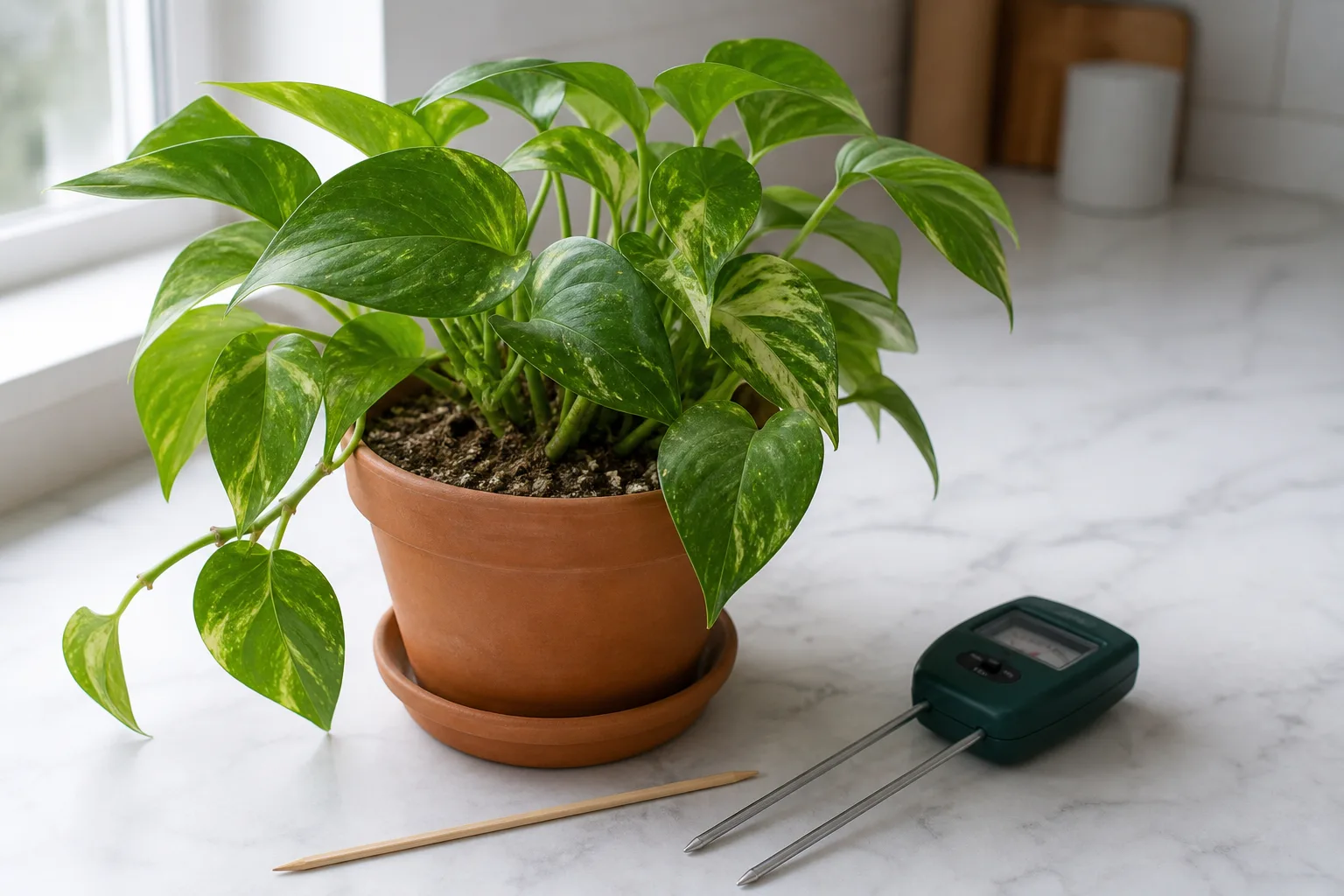
The safest watering routine
Take the inner pot to a sink. Run room-temperature water through the medium until it drains freely, let the pot finish draining, and empty the outer container or saucer. Water in the morning when possible, keep water out of the crown, and do not leave the plant standing in a pebble tray or decorative pot.
Check moisture with a wooden skewer, pot weight, the color of bark or roots in a clear pot, and the plant’s recent growth. A calendar can help you remember to inspect, but it should not decide whether the plant gets water. Iowa State Extension recommends thorough drainage and warns against allowing orchids to sit in water; it also notes that ice-cube watering does not remove the need to judge moisture and drainage correctly. (Iowa State orchid guide)
If leaves are wrinkled, do not automatically water more. First ask whether the pot is dry or waterlogged. Dry, firm-to-hollow roots suggest dehydration; brown, soft, or collapsing roots suggest rot. In the second case, adding water can accelerate the problem.
Pot and medium: air around roots is non-negotiable
Most common houseplant orchids are grown in coarse bark, sphagnum moss, or a blend that holds moisture while leaving air spaces. Ordinary indoor potting soil is usually too dense for an epiphytic orchid. The University of Connecticut recommends a bark-based mix and explains that old bark breaks down over time, while Iowa State compares bark’s quicker drainage with sphagnum’s greater moisture retention and higher overwatering risk. (UConn Home and Garden Education Center)
Choose the container for the roots, not the flower display. Drainage holes in the bottom are essential; side holes or a net inner pot can help air movement, but they do not compensate for a mix that has collapsed into sludge. A snug pot is often safer than a large one because an oversized container stays wet around a relatively small root ball.
Repotting is usually a refresh, not a dramatic size upgrade. The AOS gives a broad one-to-three-year repotting range for Phalaenopsis, while Iowa State suggests two to three years for many indoor orchids; use the condition of the medium and roots as the deciding evidence. Repot after flowering when possible, but repot immediately if the mix is sour, decomposed, infested, or keeping the roots wet for too long.
Temperature, humidity, and airflow
The safest indoor location is stable rather than extreme: bright filtered light, no heater blast, no cold draft, and enough air movement that moisture does not linger on leaves or in the crown. Iowa State groups orchids into cool, intermediate, and warm growers and notes that a day-to-night temperature drop can support growth and flowering; that is why the genus matters before you chase a number. (Iowa State orchid guide)
Humidity helps, but a humid room without airflow can become a disease-friendly room. Iowa State gives a broad indoor target of about 40% to 70%, while the AOS lists higher humidity for Phalaenopsis in suitable conditions. You do not need to turn your living room into a greenhouse: measure with a hygrometer, group plants if useful, run a humidifier safely, and keep air moving gently.
Pebble trays can modestly change the air immediately around a plant, but the pot must sit above the waterline. Misting is not a substitute for a suitable medium or a humidifier, and repeated wetting of the crown is a poor trade for a small humidity increase. If the room is dry because a vent blows directly across the leaves, moving the plant away from the draft is often the first and most effective fix.
Fertilizer: small, regular, and diluted
Orchids need nutrients to build roots, leaves, and flower spikes, but more fertilizer cannot repair poor light or rotten roots. A practical indoor approach is dilute feeding during active growth, following the product label and the needs of the genus, with occasional plain-water flushing to reduce salt buildup. Iowa State recommends low-dose feeding and a regular plain-water flush; it also advises wetting very dry medium before fertilizer reaches the roots. (Iowa State orchid guide)
Skip fertilizer when the plant is diseased, severely dehydrated, or freshly repotted with damaged roots. A white crust on the pot or medium, burned root tips, or worsening brown leaf tips after feeding can indicate salt stress. Stabilize moisture and roots first, then resume a weak routine when new growth shows the plant is using resources again.
How to read the roots before you change care
Roots are an orchid’s report card. In a clear pot, active roots may look green when wet and silver or gray as they dry; the exact shade depends on the root’s age, exposure, and the medium. What matters most is texture: a healthy root is firm, while a rotted root is soft, hollow, brown, or collapses when gently touched.
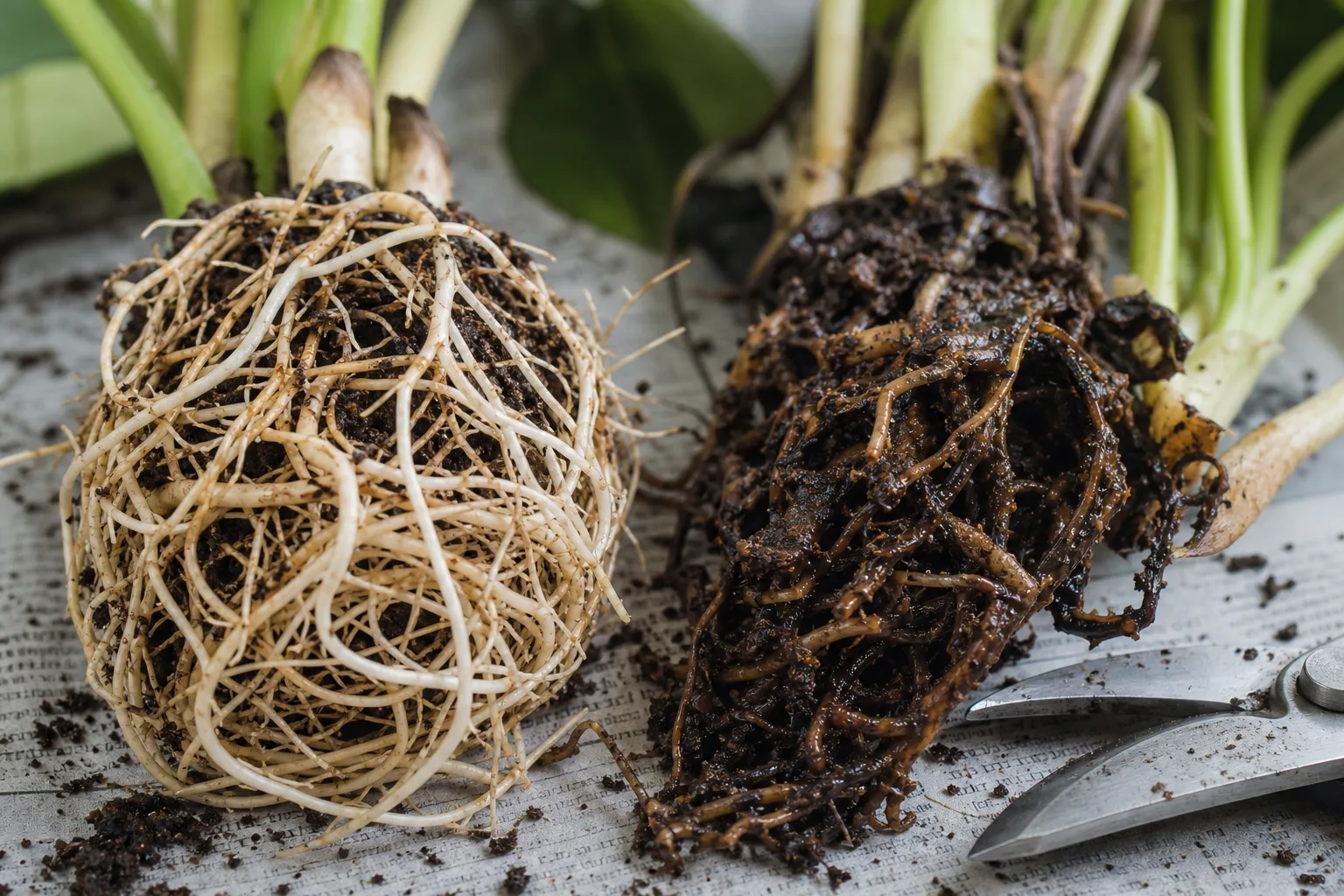
Inspect when symptoms do not fit the watering history. Wrinkled leaves in a wet pot, yellowing leaves alongside slow drainage, a sour smell, or a plant that never perks up after watering are reasons to slide the orchid out of its pot. Do not pull hard on attached roots; loosen the medium gradually and look for the living root mass.
Cut only roots that are clearly dead, mushy, or hollow, using a clean, sharp tool. Preserve firm roots even if they are silver, aerial, or growing outside the pot. Repot into fresh, appropriately sized medium, anchor the plant so the crown stays above the mix, and give it a calm recovery period with careful moisture rather than a flood of fertilizer.
After flowering: how to keep the plant for another cycle
When the last flower falls, inspect the spike before cutting. A brown, dry spike can be removed at the base. A green Phalaenopsis spike may be cut above a node to attempt another flush, or cut down if the plant is weak and needs to direct energy into roots and leaves. Other orchid genera often flower from new growths and are better treated according to their own care sheet; do not assume every green spike should be shortened in the same place.
Use sterilized shears and avoid cutting healthy leaves or aerial roots for appearance. UConn notes that a Phalaenopsis may produce new flowers in roughly six to nine weeks after the right cut, while Iowa State gives eight to twelve weeks as a possible rebloom window; those are useful observations, not guarantees. (UConn orchid care)
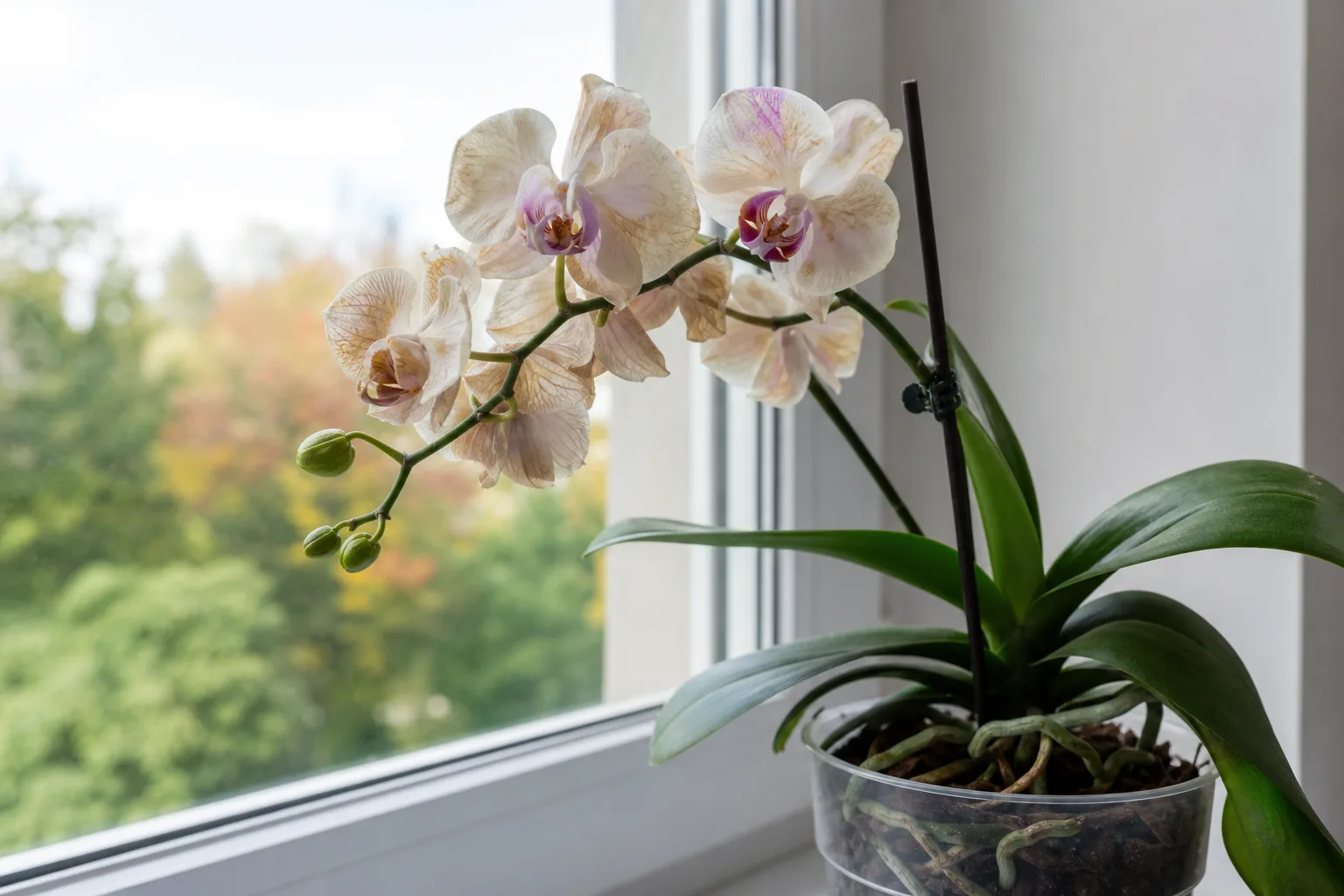
The next few weeks are a recovery phase. Keep the plant in good light, adjust watering to the medium, check roots, and repot if the bark has broken down. A flowerless orchid with firm leaves and roots is still doing the work that makes its next bloom possible.
No blooms? Diagnose the trigger, not the age
Insufficient light is the first rebloom question. A Phalaenopsis on a table far from a window may stay alive but lack the energy to initiate a spike; very dark green leaves can support that diagnosis. Move it closer to bright filtered light, then give the plant time rather than adding a stronger fertilizer immediately.
Temperature and day length can also provide flowering cues. The AOS explains that many Phalaenopsis initiate spikes as autumn nights cool and the light period shortens; a plant in a uniformly warm, dim interior may miss that signal. (American Orchid Society reblooming guidance)
Other possibilities include root loss, a collapsed medium, recent relocation, pest damage, or a plant that is still building leaves. Buds that drop can follow drafts, temperature swings, dehydration, root stress, or crown problems. Diagnose the environment and the roots before deciding that the orchid is too old.
When to repot, rescue, or replace
Repot soon when the medium has decomposed, water runs through without wetting the root ball, the pot smells sour, or the roots stay wet far beyond the plant’s normal dry-down. You do not need a larger pot unless the living root mass truly needs it; fresh medium in the same cleaned container is often the better long-term choice.
Rescue when the crown is firm, at least some roots remain alive, and the damage is limited to a manageable section. Remove rotten material, clean the container, use fresh medium, improve drainage, and keep the plant stable. Recovery is measured in new roots and leaves, not in how quickly the old wrinkled leaf becomes smooth.
Stop trying to save it when the crown is fully soft or black, rot is spreading through the stem, all roots have collapsed, or the plant has no viable growth point. A nearly rootless orchid with a firm crown can sometimes recover under careful specialist conditions, but a rotten crown cannot produce a healthy plant just because it still has one green leaf. Discard diseased material responsibly and disinfect tools before touching another orchid.
Conclusion
So, how long do orchids live? For a common Phalaenopsis, 15 years or longer is realistic with consistent care, and some plants can continue far beyond the first person who bought them. The life of the plant is longer than the life of its flowers, so a bare spike is a pause—not a death certificate.
Protect that lifespan by giving the orchid bright filtered light, a porous medium, thorough but timed watering, a dry crown, stable temperatures, gentle airflow, and restrained fertilizer. Check the roots whenever the leaves and watering history disagree, repot when the medium fails, and judge recovery by new growth. If the crown is firm and the roots are still partly alive, the orchid usually deserves a chance to grow into its next decade.