How to Protect Houseplants From Winter Dry Air
Winter dryness browns leaf tips and invites spider mites. A pro-level plan: measure humidity, fix drafts, water correctly, and choose the right humidity tool.
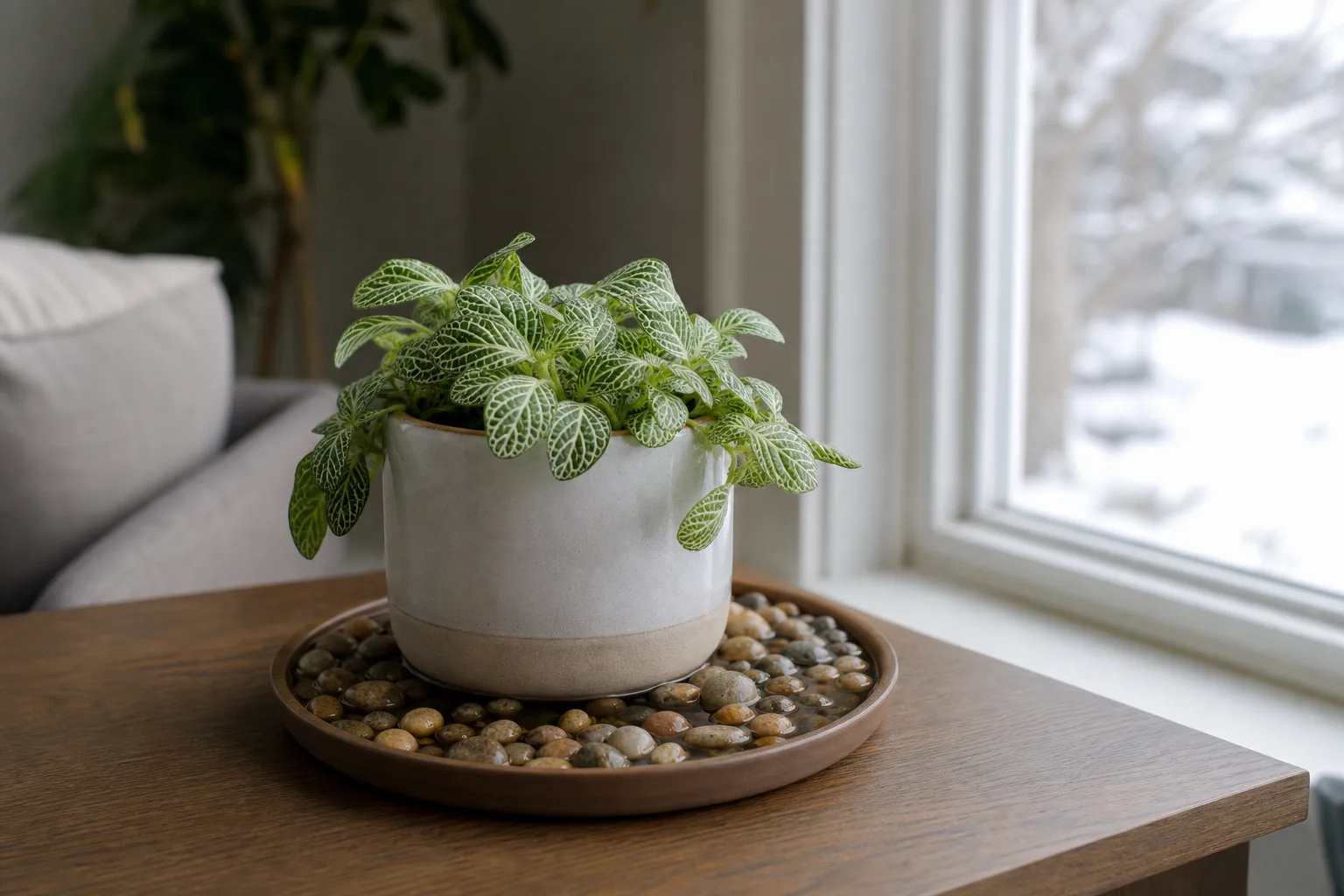
If your calathea looked flawless in September and now has paper-thin brown edges in January, the problem is probably not that you “forgot to love it.” Winter dry air is a physics problem: cold outdoor air carries little moisture, your furnace strips out even more, and tropical leaves lose water faster than roots can replace it. The fix is not one magic spray bottle. It is a short stack of habits—measure humidity, place pots intelligently, run the right tool for your room, and water like it is winter—that experienced growers repeat every heating season.
This page is the humidity-focused slice of winter care. For the full seasonal checklist (light, pests, fertilizing), start with winter houseplant care. If a plant is already declining, read why houseplants struggle in winter before you buy hardware.
Why Winter Indoor Air Dries Out So Fast
Relative humidity (RH) is the percentage of moisture the air is holding relative to what it could hold at that temperature. Warm air holds more water vapor than cold air. When outdoor January air at 20°F and moderate RH gets pulled inside and heated to 70°F, the same amount of water molecules now occupy a much larger “bucket.” RH crashes—often into the 20–35% band common in forced-air homes.
Penn State Extension notes that while ASHRAE recommends indoor RH between 30% and 60% for human comfort, heated winter homes routinely fall below 30%. That is tolerable for people and for many cacti. It is stressful for rainforest understory plants evolved in 60–90% canopy humidity.
What Happens to Leaves When Humidity Drops
Plants move water from roots to leaves through transpiration—tiny pores release vapor into the air. When RH is low, transpiration speeds up. The plant cannot pull water fast enough, and you see brown, crispy leaf margins, cupped or curled foliage, stuck leaf unfurling, and sometimes flower bud drop on blooming species like peace lily.
Dry air also partners with stress pests. Spider mites thrive when humidity is low and foliage is dusty—exactly the combo forced-air heat creates. Fixing humidity is as much about prevention as aesthetics.
Measure Before You Buy Anything
A grower who runs a humidifier without checking RH is guessing. Spend $10–15 on a digital hygrometer and place it at leaf height near your most sensitive plant—not on the floor, not inside the humidifier mist plume.
Log readings for a week at the same time each evening when heat has been running. You are looking for patterns:
- Above 45% at the shelf: Many common tropicals will coast. Focus on light and watering.
- 35–45%: Borderline for ferns, calatheas, and fittonias. Grouping and a tray may be enough for a small cluster.
- Below 35% for days: Plan on a portable humidifier for the room where tropicals live, especially if multiple plants show tip burn.
Whole-room numbers matter, but so does microclimate. A hygrometer on the windowsill above a radiator may read 25% while a grouped shelf three feet away holds 42%. Measure where the leaves are.
Humidity Targets by Plant Type
There is no single perfect RH for every pot on the sill. Use these practical bands from extension guidance and botanical references—then adjust based on what your leaves tell you:
| Plant group | Examples | Winter RH target at leaf height |
|---|---|---|
| High humidity | Calathea, fern, fittonia, anthurium | 50–70% |
| Moderate tropical | Monstera, pothos, philodendron, fiddle-leaf fig | 40–55% |
| Forgiving / dry-tolerant | Snake plant, ZZ plant, succulents, cacti | 30–40% often fine |
The EPA cautions against pushing whole-home RH above 50% for long periods because mold, dust mites, and window condensation risk rise. That is why pros humidify the plant room or a grouped zone—not necessarily every square foot of the house. Deeper targets live in houseplant humidity guide.
Fix #1: Run a Humidifier Where Your Plants Actually Live
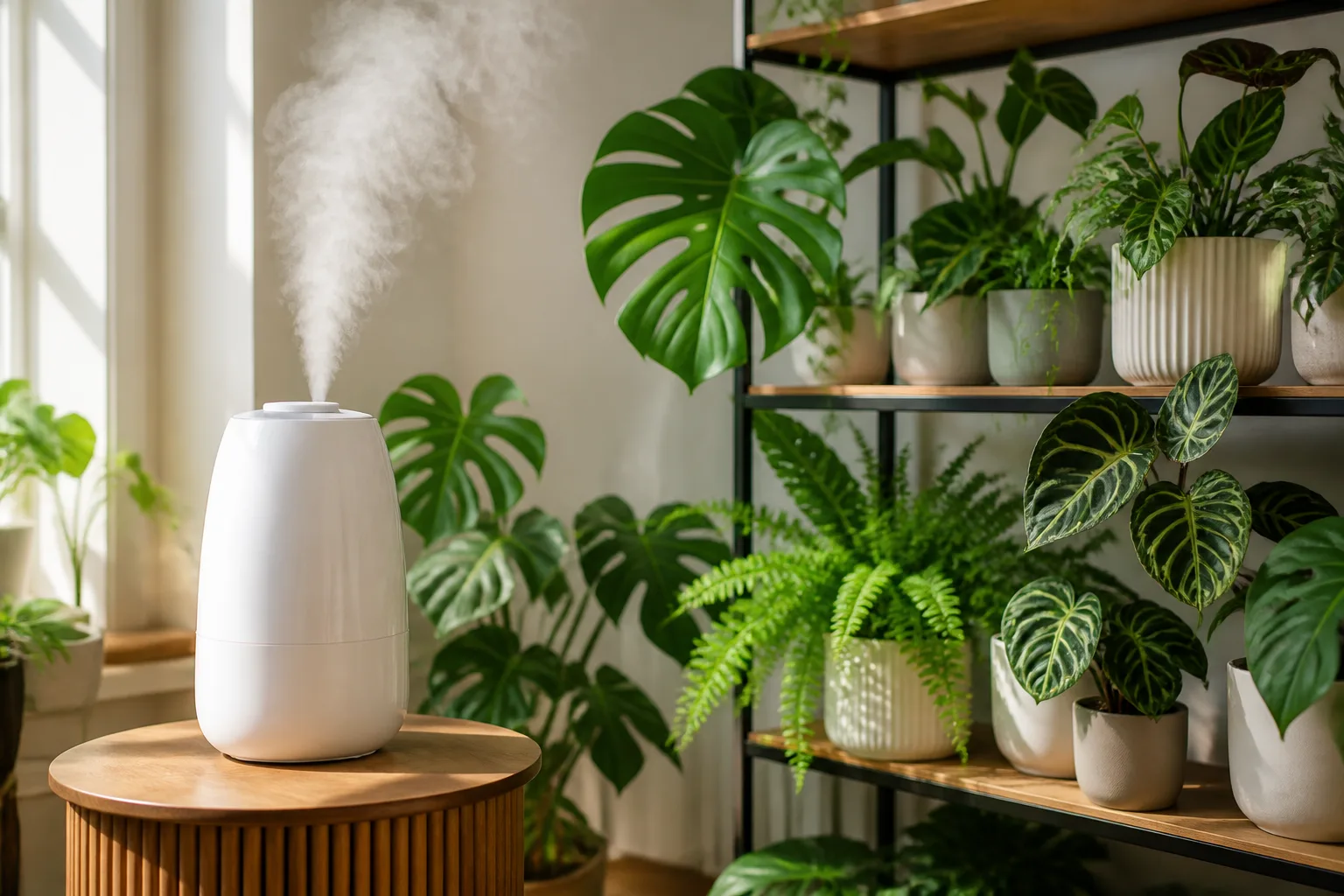
If RH at leaf height stays low despite grouping, a humidifier is the most reliable fix—the one intervention that can move a room’s moisture budget instead of a few square inches above wet stones. Penn State Extension ranks portable and whole-house humidification above misting and pebble trays for real impact. PlantTalk Colorado likewise points to humidification devices for tropical collections in heated homes.
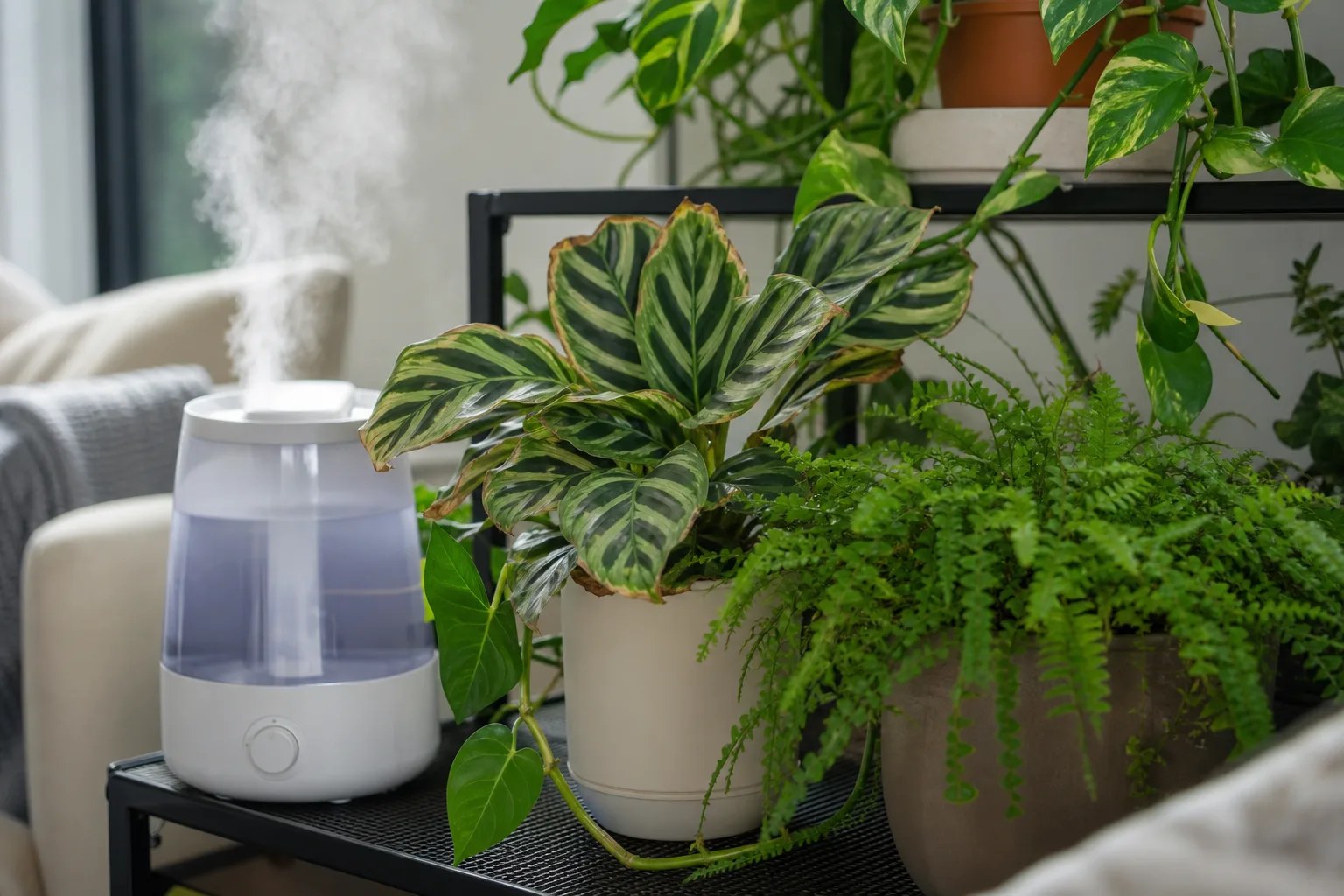
Practical approach many collectors use: run one unit in the room with the densest tropical shelf, and move humidity-sensitive pots into that room for the heating season if you cannot humidify the whole home. The same wattage raises RH more in a 12×12 bedroom than in an open great room.
Room Size, Run Time, and Placement Rules
- Run time: Expect several hours daily—often overnight in the plant room—until the hygrometer at leaf height stabilizes in the target band. Timers and built-in humidistats reduce guesswork.
- Distance: Start 3–6 feet from foliage so mist disperses before it soaks leaves. Wet crowns overnight invite fungal spots.
- Elevation: Place the unit 2–4 feet off the floor so vapor mixes into the plant zone instead of pooling near the carpet.
- Maintenance: Use distilled or low-mineral water in ultrasonic models to limit white dust on leaves and scale in tanks; clean weekly per CDC portable humidifier guidance.
- Model choice: See best humidifiers for plants for room-size picks and humidifier placement for houseplants for fine-tuning.
A whole-house furnace humidifier helps people and plants but rarely delivers rainforest RH to every corner. Treat it as a baseline boost, not a substitute for a portable unit at the collection.
Fix #2: Group Plants Into a Shared Microclimate
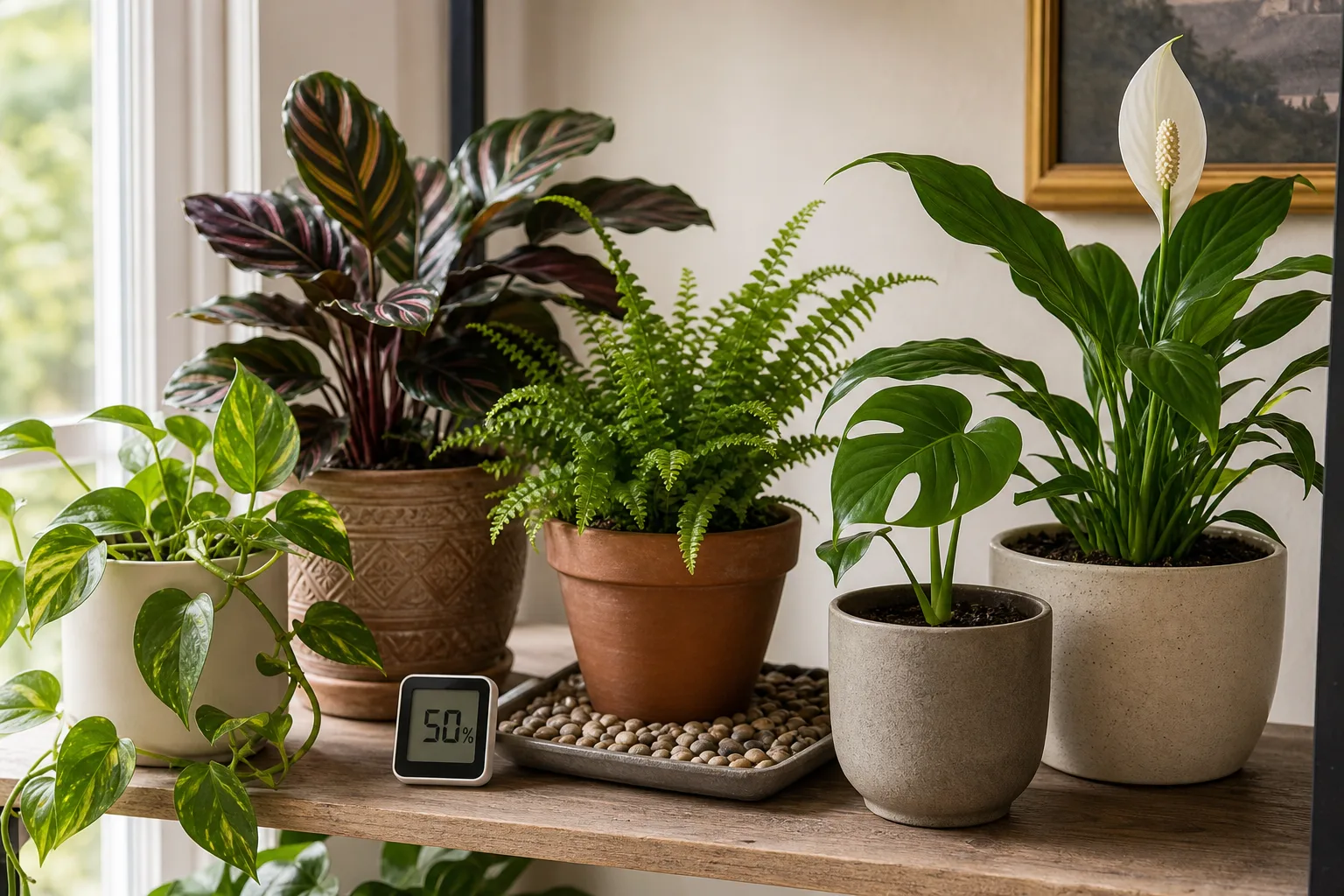
Clustering pots is the cheapest upgrade and the one pros still use even when they own humidifiers. Each pot releases moisture through transpiration and evaporation from the soil surface. Pots placed 6–12 inches apart on a single bench or shelf share that vapor layer.
Grouping works best when:
- The shelf is away from heating vents and cold window glass.
- You combine several moderate-to-high humidity plants rather than one lonely fern in a dry living room.
- The room is small enough that the shared layer does not immediately disperse into the whole house.
It is not a cure-all in a vaulted living room with constant air exchange—but it is a sensible first step while you test whether RH needs machine backup. For a side-by-side test log, see pebble tray vs humidifier.
Fix #3: Use Pebble Trays Honestly—Local Help, Not Magic
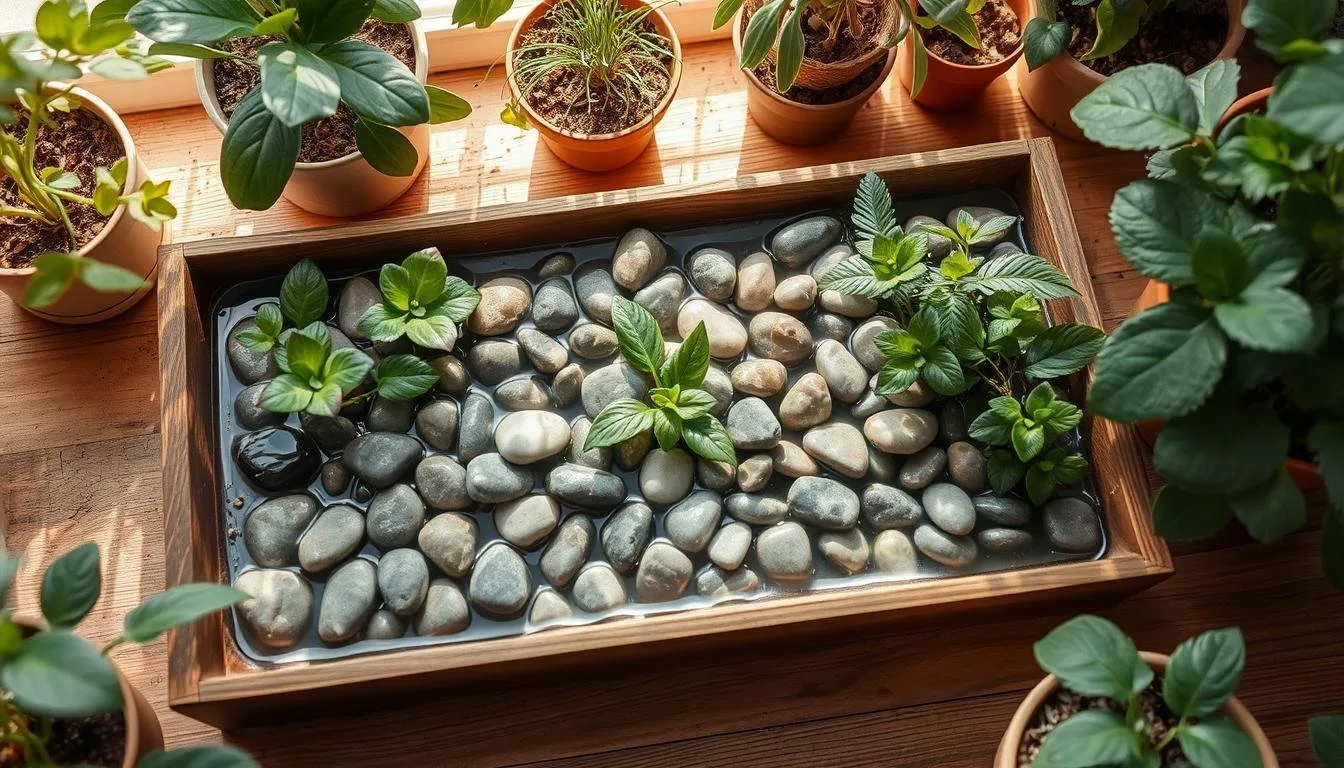
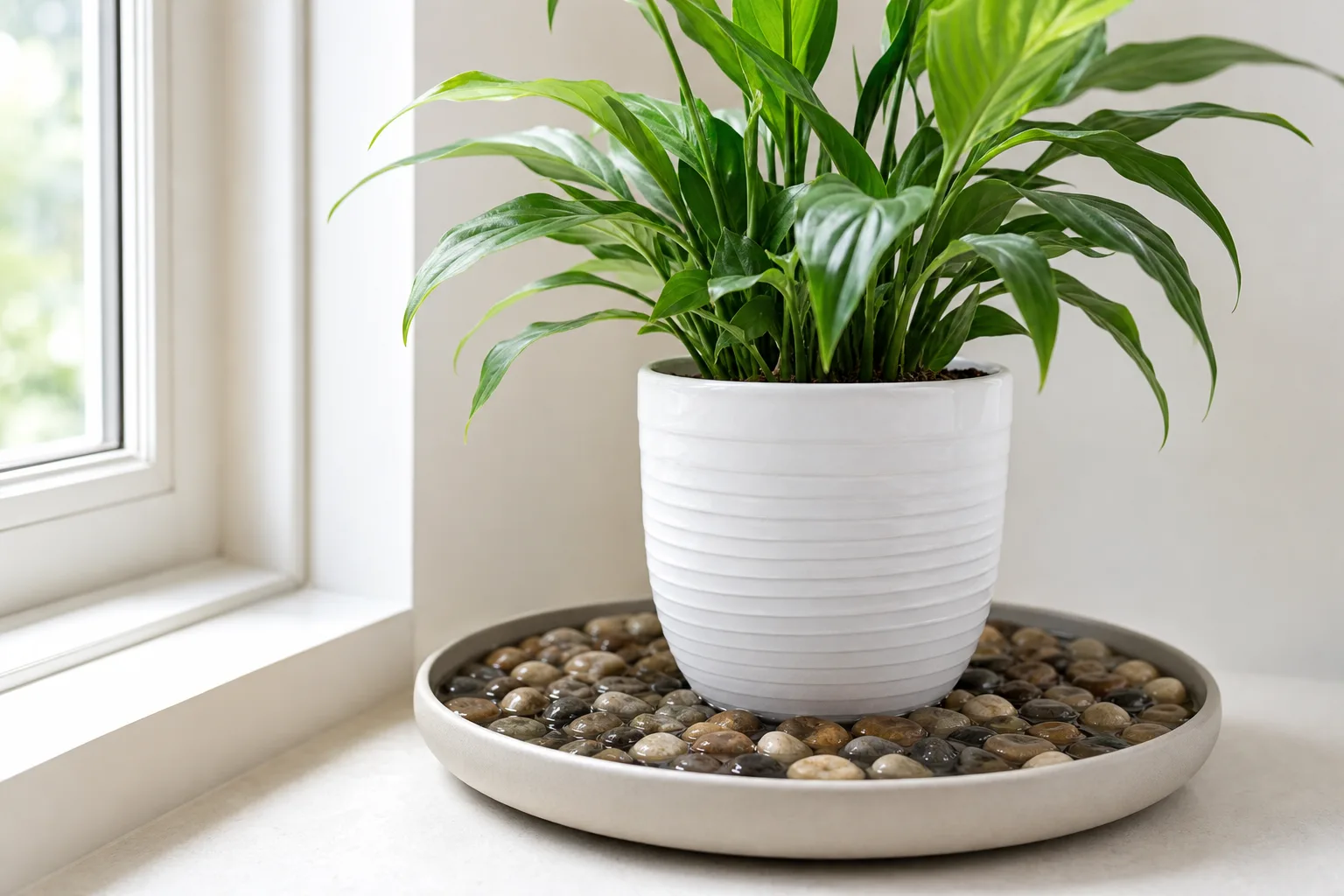
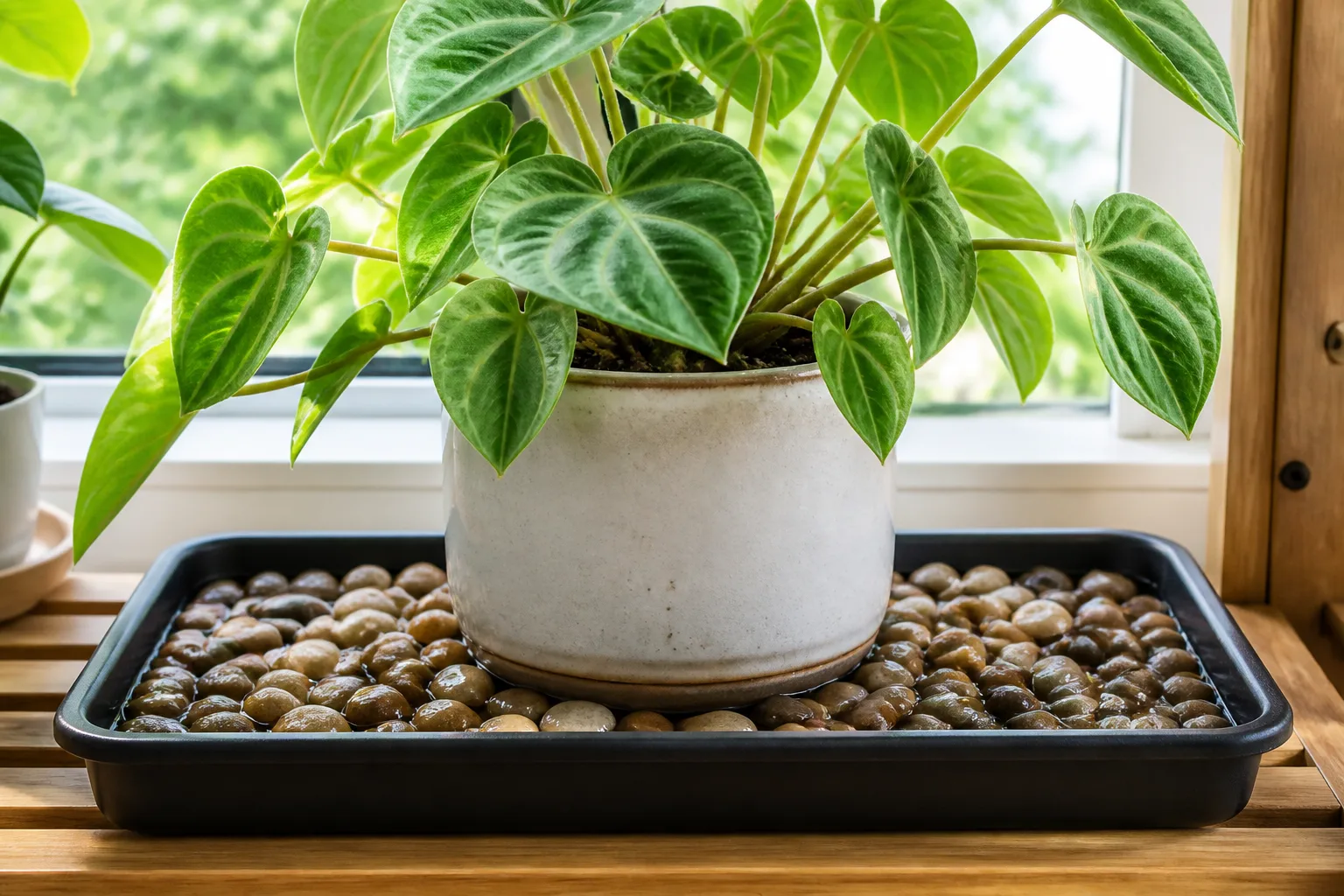
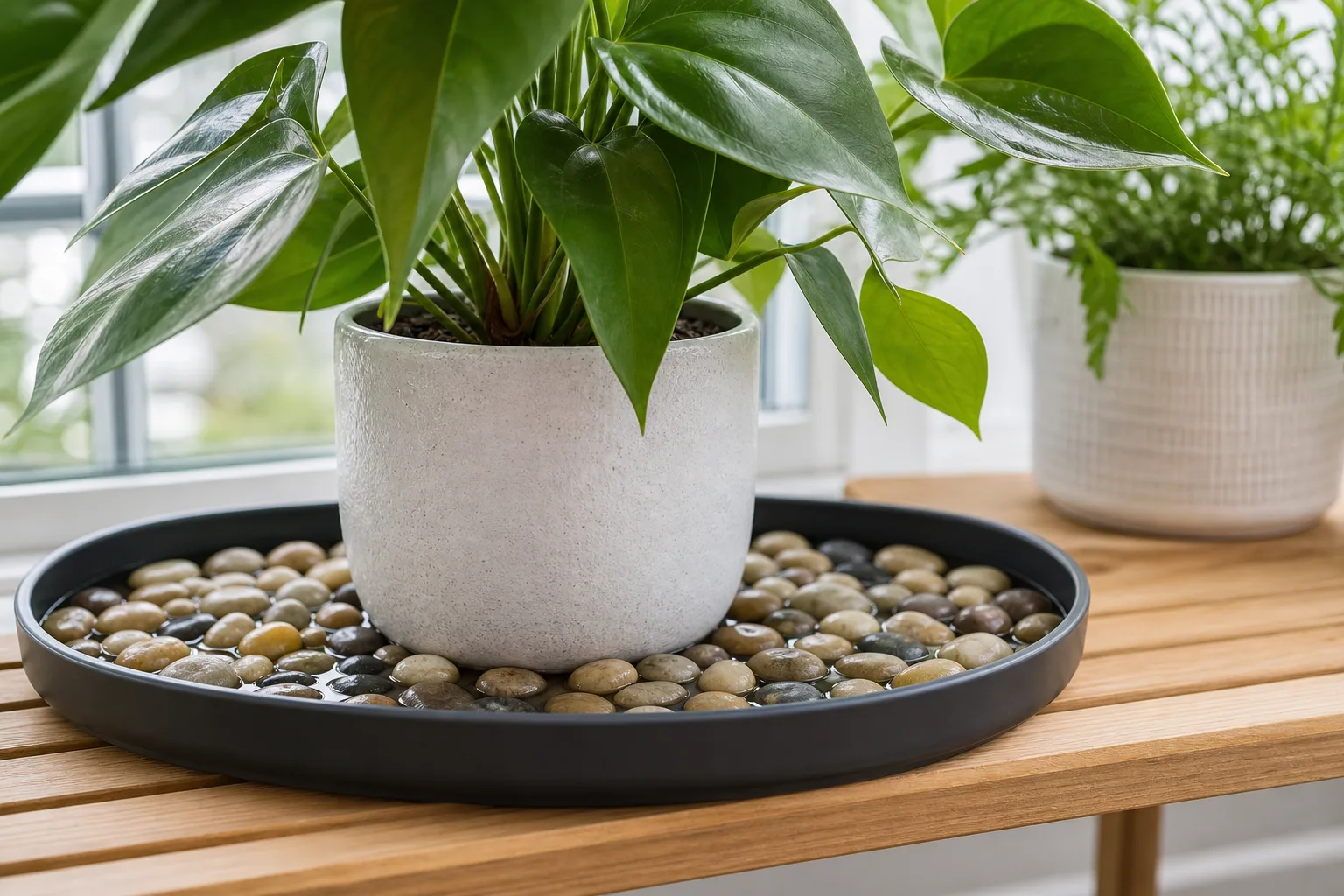
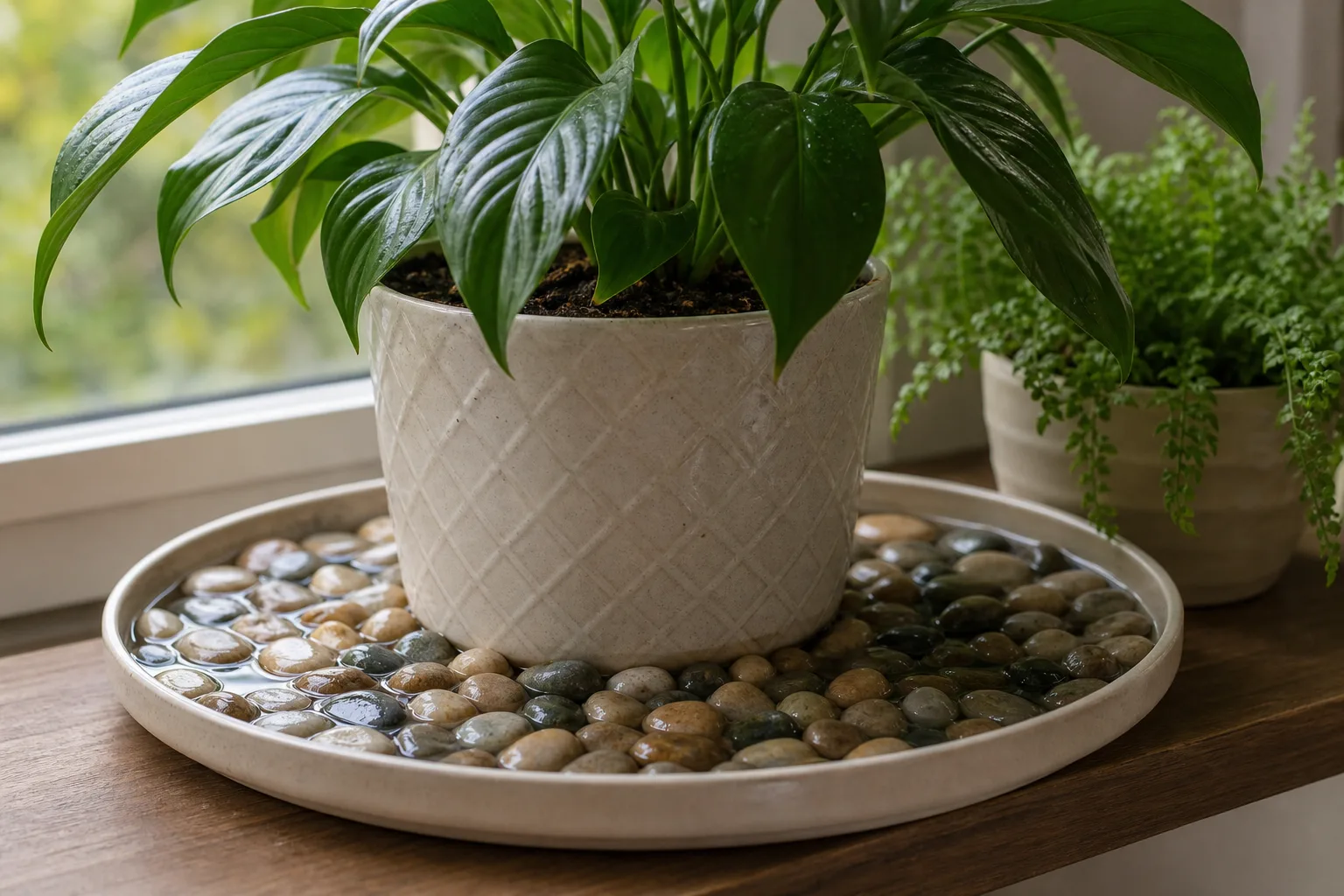
Pebble trays (a shallow saucer of gravel with water below stone level, pot resting on top) raise humidity in the air immediately above the tray—not across the room. Penn State Extension is skeptical that evaporation from a tray changes whole-room RH; vapor diffuses and equilibrates. That matches what many growers observe on hygrometers.
That does not mean trays are useless. It means you deploy them with correct expectations:
- Pot base above the waterline—drainage holes must never sit submerged or you trade brown tips for root rot.
- Tray wider than the pot by a few inches so evaporation has surface area.
- Refill and scrub weekly to prevent algae, mold, and fungus gnat larvae in stagnant water.
- Best for low, compact plants (fittonia, small ferns, seedlings) where the foliage sits close to the tray.
The RHS still recommends standing pots on moist gravel as one tool among several—because locally, it can help.
When a Tray Beats a Machine
Reach for a pebble tray instead of (or before) a humidifier when:
- You have one or two humidity-sensitive plants on a desk, not a whole collection.
- RH is borderline (high 30s to low 40s) and a tray nudges the immediate zone enough.
- You need a silent, zero-electric boost in a small bathroom or kitchen shelf with decent light.
- You are already running a humidifier elsewhere and want extra insurance under a drama queen calathea.
For build steps and stone choice, see best pebbles for a DIY pebble tray and budget-friendly pebble tray DIY.
Fix #4: Dial Back Heat Without Freezing the House
Warm air holds more absolute moisture, but relative humidity is what leaves feel. When you heat cold dry air aggressively, RH plummets. Many growers find that setting the thermostat to a moderate 65–68°F (18–20°C) instead of 72°F+ keeps RH a few percentage points higher while slowing transpiration stress.
PlantTalk Colorado classifies common houseplant temperature bands as cool (40–50°F), intermediate (60–75°F), and warm (above 75°F). Most tropicals sit in the intermediate band. roasting them at 75°F under dry heat forces weak, thirsty growth in low winter light.
You do not need to freeze yourself. Even a 2–3°F reduction plus grouping can shift RH enough that leaf edges stop progressing. Pair with humidifier run time rather than chasing 80°F room temperatures.
Shield Plants From Drafts and Heat Vents
Placement is free humidity insurance. Forced-air vents, radiators, fireplaces, and space heaters create hot, dry microclimates that can drop RH locally into the teens while the rest of the room reads 40%.
Cold drafts matter too. A pot on a windowsill behind a curtain gap gets blasted with 40°F air at night, then baked by morning sun—a temperature swing tropicals never see in nature. The RHS warns that radiators dehydrate leaf margins and that cold drafts can collapse sensitive species.
Pro placement rules:
- Keep pots at least 3–6 feet from supply vents and active radiators when possible.
- Use window insulation film or move pots 6–12 inches inward from cold glass in hard-freeze climates.
- Rotate pots weekly so one side is not always against a cold pane.
- Never trap plants between curtain and glass on winter nights—the air pocket can freeze.
Winter Watering in Dry Air (Without Rotting Roots)
Dry air tricks even careful growers into overwatering. Leaves look thirsty, so you reach for the watering can—while roots in cool, slow-growth soil sit wet for days. That is how winter root rot starts.
Dry air and dry soil are different problems. A well-hydrated plant tolerates low RH better than a drought-stressed one, but “well-hydrated” means moist root zone when the top inch is dry, not soggy 24/7.
Winter watering habits that pair with humidity work:
- Check soil with your finger or a moisture meter before every pour. Most tropicals want the top 1–2 inches dry in winter.
- Reduce frequency compared to summer—growth is slow; see should you fertilize houseplants in winter.
- Water thoroughly when you do water, then empty saucers after 15 minutes so roots are not standing in cold runoff.
- If soil goes hydrophobic (water runs down the sides), bottom-water once to rehydrate the core, then resume top watering.
Powder-dry potting mix from constant heat may need an occasional deep soak, but that is a soil issue—not permission to water on a calendar.
Why Misting Is a Band-Aid, Not a Strategy
Misting is the most shared “humidity hack” on social media and the least dependable. Penn State Extension notes that any RH rise from misting lasts only until the droplets evaporate—often minutes. Epic Gardening’s winter humidity coverage agrees: misting does not sustainably raise room RH and can spread foliar disease if leaves stay wet in cool, low-airflow rooms.
Limited exceptions exist. Some growers mist air plants (Tillandsia), and a quick rinse in the shower can wash dust that blocks light and attracts mites. For daily humidity, misting is a poor substitute for trays, grouping, or machines. Read should you actually mist your plants before you adopt a spray schedule.
Dry-Air Symptoms That Look Like Something Else
Not every brown tip is humidity. Before you buy a second humidifier, rule out look-alikes:
| What you see | Often actually… | Quick check |
|---|---|---|
| Brown tips and margins on multiple tropicals | Low RH / heat stress | Hygrometer below 40%; leaves near vent |
| Uniform wilting with dry soil | Underwatering | Pot light; soil dusty throughout |
| Yellowing lower leaves with wet soil | Overwatering in cool season | Soil smells sour; roots dark |
| Speckled yellow stippling | Spider mites | Webbing under leaves; wipe test |
| Brown patches after misting | Fungal leaf spot | Spots follow water sitting on leaves |
If symptoms are plant-wide and sudden, check roots and soil first. If edges crisp on humidity lovers while pothos nearby looks fine, RH is the lead suspect.
A Pro’s Weekly Winter Humidity Checklist
Run this once a week through heating season—takes ten minutes and prevents the slow decline most collectors blame on “winter mood”:
- Read the hygrometer at leaf height on the main shelf. Log it.
- Scan leaf edges on your canary plant (a calathea or fern tells the truth first).
- Refill pebble trays and dump any stagnant water; scrub if slimy.
- Top off the humidifier; quick-clean if scale or odor appears.
- Rotate windowsill pots away from cold glass.
- Finger-test soil on each pot before watering day.
- Inspect leaf undersides for mite stippling—dry air season is mite season.
- Dust leaves with a damp cloth on large specimens; clean leaves photosynthesize better in weak winter light.
If RH stays below target for two weeks and tips keep progressing, escalate: longer humidifier run time, tighter grouping, or moving the thirstiest plants into the humidified room.
Conclusion
Winter dryness is predictable, which means it is manageable. Measure RH at leaf height, know which of your plants actually need help, and apply fixes in order of impact: humidifier for the plant room, grouping for shared vapor, pebble trays for localized nudges, smarter heat and placement for everything else. Misting will not save a calathea in a 25% living room. Overwatering will not either.
The growers who sail through January with glossy foliage are not running a greenhouse—they are running a small, repeatable system and adjusting when the hygrometer or the leaf edges say so. Start with one shelf, one week’s readings, and one change. Your plants will tell you if it was enough.