Should You Fertilize Houseplants in Winter?
Most houseplants need less fertilizer in winter. Learn the exceptions, safe dilution, salt-buildup warning signs, and when to restart in spring.
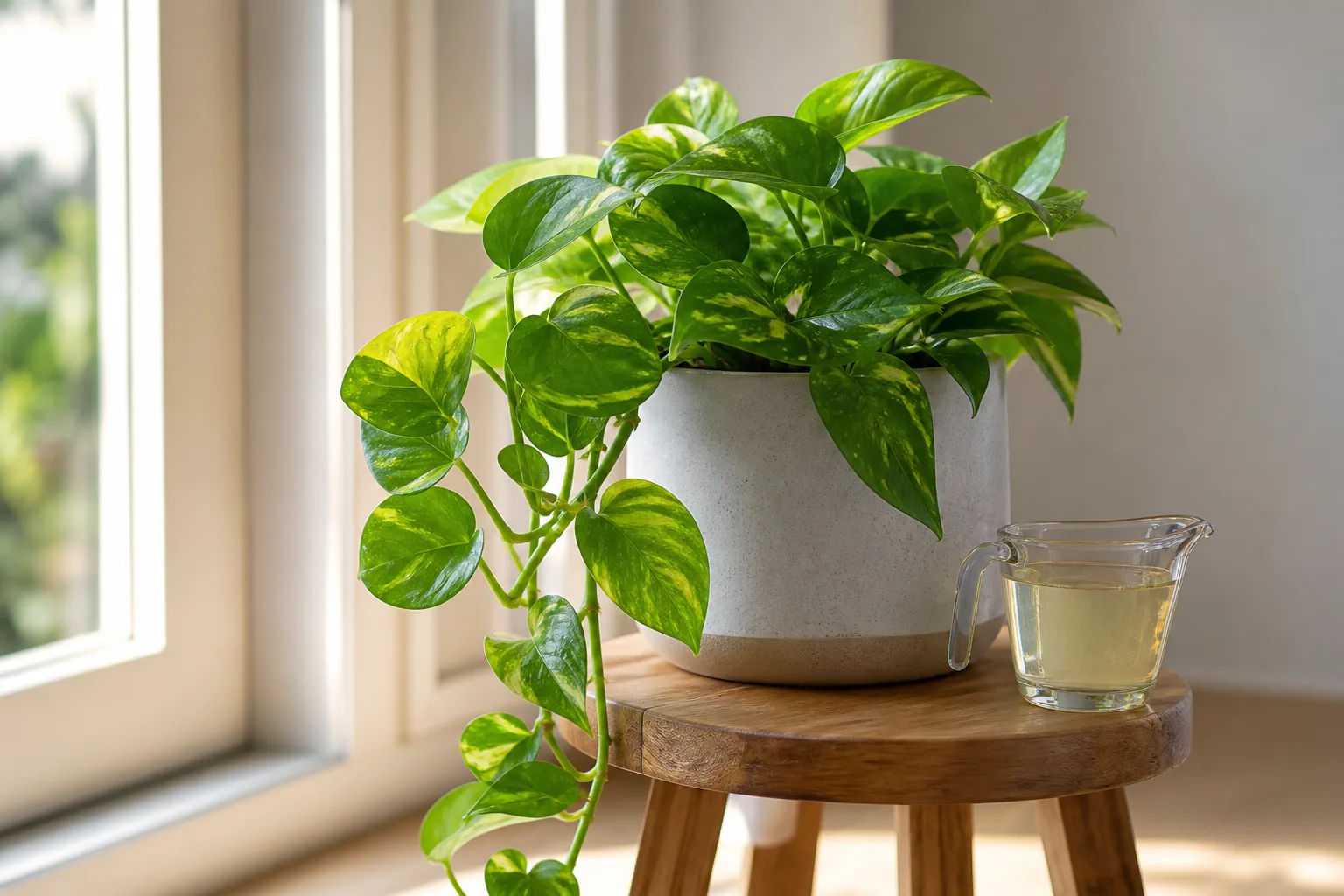
For most houseplants, pause fertilizer in winter. The better rule is not “never feed between December and February,” though; it is feed only when the plant has enough usable light, warmth, healthy roots, and active growth to use the nutrients.
That distinction covers both sides of the question. A pothos in a dim room with wet soil usually needs less water and no fertilizer. A leafy plant under a strong grow light, a bright south-facing window, or a winter-blooming cycle may keep using nutrients. Your plant’s growth and its growing conditions are more reliable than the calendar.
The short answer: feed growth, not the calendar
Houseplants do not stop needing nutrients simply because the season changes. They do, however, often slow down because shorter days and weaker sunlight provide less energy for photosynthesis. If a plant is making little or no new growth, added fertilizer has fewer places to go and a greater chance of remaining in the potting mix as soluble salts.
The default winter plan is therefore simple: stop routine feeding when growth slows, keep the plant in its best available light, and restart when sustained new growth returns. The exception is a plant that is visibly growing under sufficient light and stable temperatures. In that case, use a conservative, label-based feed rather than treating winter as permission to continue a summer routine unchanged.
The University of Connecticut’s houseplant guidance places the common active-growth window roughly from March through October and recommends withholding fertilizer during dormant periods. The RHS similarly lists regular feeding for foliage houseplants from March to October, while noting that orchids have a different year-round feeding pattern. (University of Connecticut Home and Garden Education Center; RHS)
Why winter changes the fertilizer equation
Fertilizer supplies mineral nutrients; it does not supply the energy a plant needs to turn those nutrients into new tissue. That energy comes largely from photosynthesis, so a plant placed farther from a winter window may be receiving much less usable light than the same plant received in summer, even if the room feels bright to you.
Growth also affects water use. A slower plant usually pulls less water through its roots, and a pot that stays wet longer has less oxygen available to those roots. Adding fertilizer to that combination can compound the problem: the plant is using nutrients slowly while the concentration of dissolved salts rises as water evaporates or drains away.
The RHS advises keeping fertilizer use to a minimum and treating container feeding as a targeted need, not an automatic ritual. WSU Hortsense explains why restraint matters in containers: high salt levels can injure roots, reduce water uptake, and cause brown leaf tips, wilting, and a crust on the soil or pot.
Light is the first gate
Think of light as the gate that determines whether fertilizer can help. A plant may remain green in a low-light room for months, but survival is not the same as active growth. Long spaces between leaves, smaller new leaves, leaning stems, and a pot that dries unusually slowly all suggest that light—not fertilizer—is the constraint.
Distance from a window matters more than the window label alone. A plant directly beside a clear, bright window may keep growing in winter, while one several feet back receives a fraction of that light. Curtains, overhangs, balconies, tinted glass, cloudy weather, and short days change the amount that reaches the leaves.
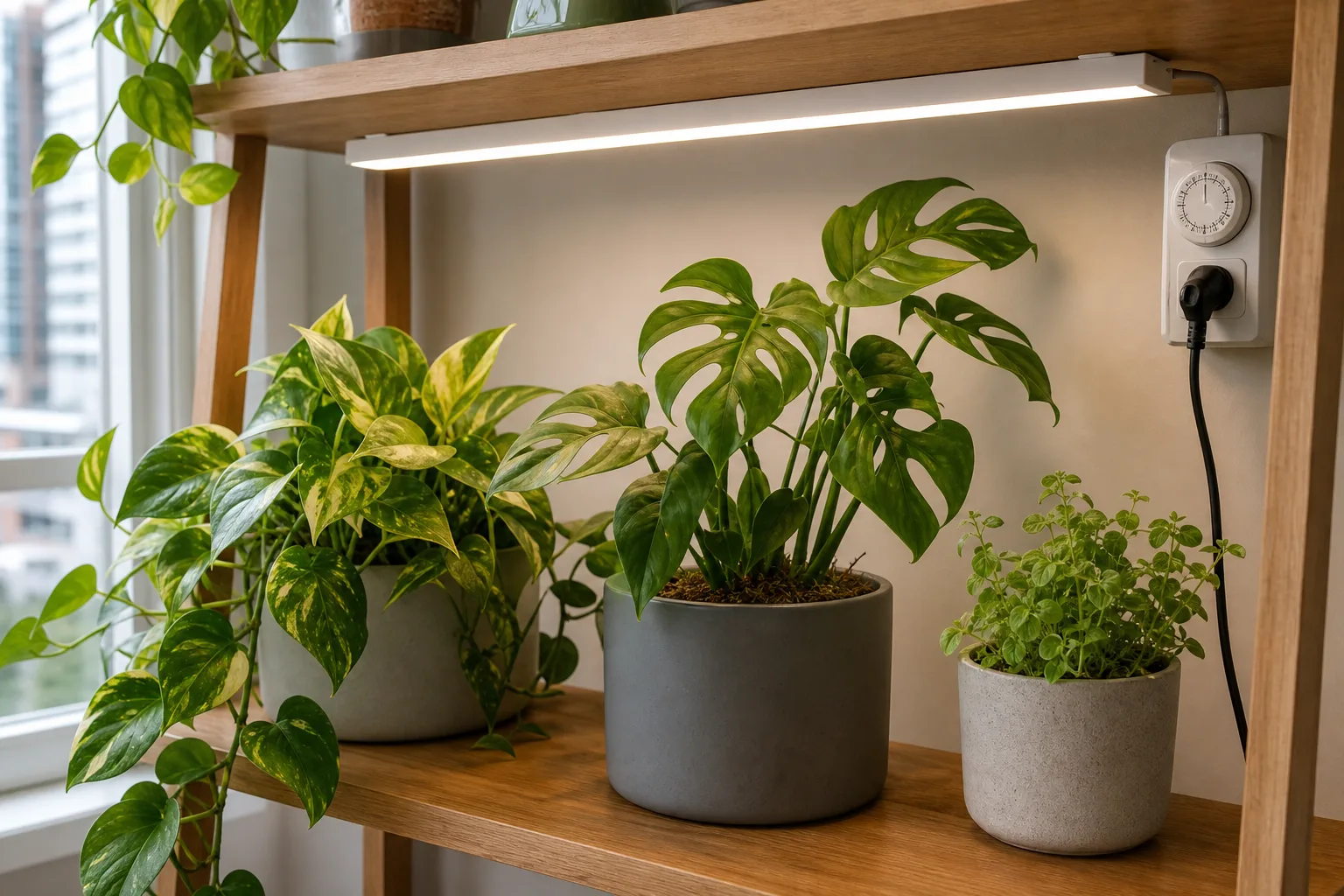
If natural light is weak, a properly positioned grow light can change the decision. But a lamp used for an hour now and then is not the same as a consistent light schedule. Fertilize in response to the growth the plant is actually producing, not the presence of a decorative bulb.
Use a four-question winter feeding test
Before mixing fertilizer, answer these questions in order. If the answer to the first two is no, stop there and keep the fertilizer in the cupboard.
| Check | Green light to feed | Pause and reassess |
|---|---|---|
| New growth | New leaves, shoots, buds, or steady root activity | No change for weeks, normal seasonal rest, or declining growth |
| Usable light | Bright window or consistent grow-light coverage | Dim room, stretched growth, or occasional supplemental light |
| Root zone | Pot drains freely and dries at a normal rate | Wet mix, sour smell, damaged roots, or a pot without drainage |
| Existing nutrients | No recent fertilizer, slow-release pellets, or fresh pre-fertilized mix | Recently purchased, recently repotted, or already heavily fed |
This is a decision aid, not a species diagnosis. Some plants grow slowly even when healthy, and some nutrient symptoms resemble low light, root damage, pests, cold stress, or hard-water deposits. Use the table to decide whether fertilizer is even a reasonable next step before trying to identify a specific deficiency.
Is the plant growing, rooted, and already supplied?
Visible growth is the most useful home signal, but read it with the root zone and fertilizer history. A new leaf that is expanding normally is stronger evidence than a pale older leaf by itself. New growth can also be weak or stretched when the plant is reaching for light, so inspect its shape and spacing rather than counting any change as success.
Check the pot before you feed. If the mix stays wet for many days longer than usual, the plant may be using less water because light or temperature has dropped—or because roots are damaged. Fertilizer will not repair root rot, improve drainage, or make a cold, saturated mix safe.
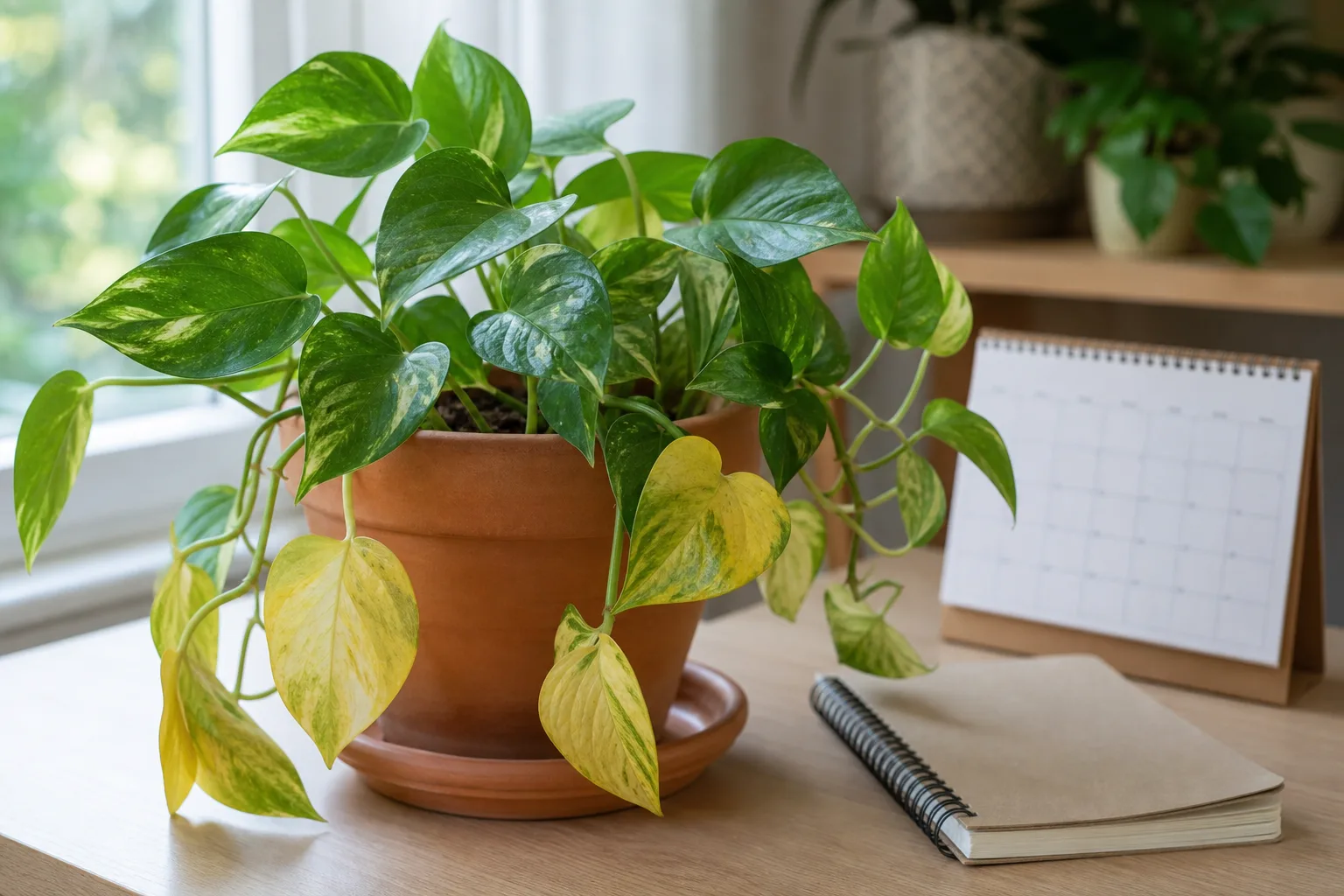
Also check what is already in the pot. Nursery plants may arrive in a mix containing controlled-release fertilizer. Fresh potting mix may contain starter nutrients. A recent top-dressing, fertilizer spike, or “plant food” watering counts too. Adding a new dose before the old one is used is one of the easiest ways to turn a cautious winter feed into a salt problem.
When a winter feed makes sense
Winter fertilizer can be reasonable when the plant is actively growing in strong light, the root zone is healthy, and you are not stacking products. This is most common in warm homes with bright windows, indoor growing shelves, sunrooms, or consistent artificial lighting.
Even then, “can use fertilizer” does not mean “needs the summer rate.” Growth may be slower than it was in July, and a lower concentration or longer interval may be enough. Watch the plant’s response over several waterings before repeating the application.
Grow lights and bright windows
Plants grown under a consistent grow light may continue producing leaves through winter because the seasonal light drop has been reduced. BHG’s winter guidance recommends considering diluted fertilizer for plants that are actively growing under grow lights, and Gardening Know How likewise ties winter feeding to adequate light, warmth, and ongoing growth. (BHG; Gardening Know How)
The same logic applies to a plant in a genuinely bright window, but be honest about what “bright” means. A plant pressed against clear glass in a strong winter window may keep growing; a plant on a shelf across the room may not. If stems stretch toward the glass or new leaves shrink, improve the light before increasing fertilizer.
Keep grow lights high enough and far enough away to avoid heat or bleaching, and use a consistent schedule appropriate to the plant and fixture. The purpose is not to force maximum growth. It is to give the plant a usable energy supply before you ask it to use extra nutrients.
Winter bloomers and plants kept in active growth
Some plants have a winter or early-spring flowering cycle, and some homes keep flowering plants growing year-round. Orchids are a clear example of a group the RHS treats differently from ordinary foliage plants, recommending a specialist liquid orchid feed throughout the year. That does not cancel the label or the need to check whether the orchid is actively growing; it means a blanket “no fertilizer in winter” rule is too broad. (RHS)
Holiday cacti, African violets, amaryllis, cyclamen, and other flowering plants may need a species-specific schedule when they are producing buds or flowers. Homes & Gardens identifies winter-blooming orchids, amaryllis, and cyclamen as examples that can benefit from winter feeding, while also recommending reduced strength and frequency rather than automatic summer feeding. (Homes & Gardens)
Do not choose a high-phosphorus product just because a plant is flowering. Flower production depends on light, temperature, roots, water, plant age, and the plant’s natural cycle. Use the product recommended for that plant, and treat the label’s rate as a ceiling rather than a target to exceed.
When to skip fertilizer completely
Skip routine winter fertilizer when a plant is not making healthy new growth, receives weak or inconsistent light, or is already stressed. This is especially important for foliage plants that have slowed down but still look healthy. A quiet plant does not need to be pushed into growth just to satisfy a feeding calendar.
Pause as well after a major repot, a move into a much darker room, a cold snap, severe underwatering, pest damage, or any period when the pot stays saturated. Give the roots stable moisture, air, temperature, and light first. Once the plant resumes normal growth, reconsider fertilizer from the beginning rather than automatically resuming the old schedule.
Stress is not hunger
Yellow leaves are not a fertilizer prescription. An older lower leaf can yellow as part of normal aging; several yellow leaves in wet soil can indicate root stress; pale new leaves with green veins can suggest an availability issue; and yellow stippling can point to pests. Those patterns need different actions.
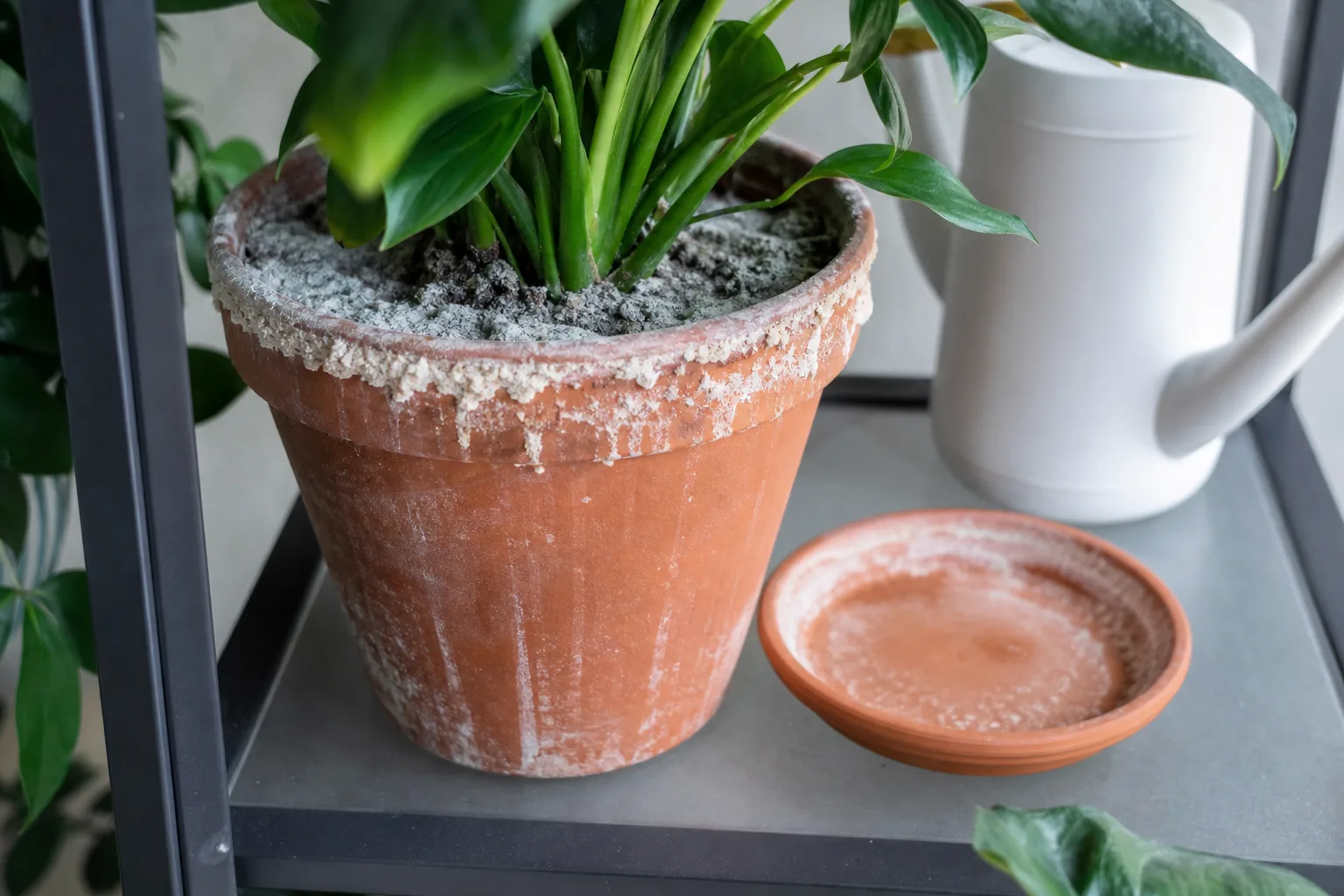
The same caution applies to brown tips. WSU Hortsense lists high salt levels alongside reduced water uptake, slowed growth, wilting, and brown tips or margins. Colorado State PlantTalk adds that salts can come from water—especially softened water—as well as fertilizer, and that a whitish crystal buildup around the pot rim or soil surface is a useful clue. (WSU Hortsense; Colorado State University PlantTalk)
If the plant is pale or slow, check light, moisture, roots, pests, temperature, and fertilizer history before adding nutrients. A plant cannot use fertilizer efficiently while its roots are damaged, its mix is oxygen-poor, or its leaves are receiving too little light. For a deeper diagnosis, compare the symptoms with the houseplant nutrient lockout guide and not-enough-light guide.
If you do feed, lower the risk
Winter feeding should be easy to stop and easy to evaluate. A dilute liquid or water-soluble fertilizer is usually more controllable than a spike or a new layer of slow-release granules because you can change the next application as soon as growth slows.
Choose, dilute, and apply a fertilizer you can measure
Start with a complete houseplant fertilizer that lists nitrogen, phosphorus, potassium, and—when possible—micronutrients. The three NPK numbers describe the fertilizer analysis, not a promise of performance. UConn explains that nitrogen supports leafy growth, phosphorus is involved in flowering and root growth, and potassium supports stem strength and stress tolerance; those functions do not mean a high number is automatically better.
For a foliage plant, a balanced or mildly nitrogen-leaning formula is usually enough. Do not switch to a concentrated “bloom booster” just because winter flowers are your goal. Extra phosphorus cannot compensate for insufficient light or a root problem, and high nitrogen in weak light can encourage soft, stretched growth.
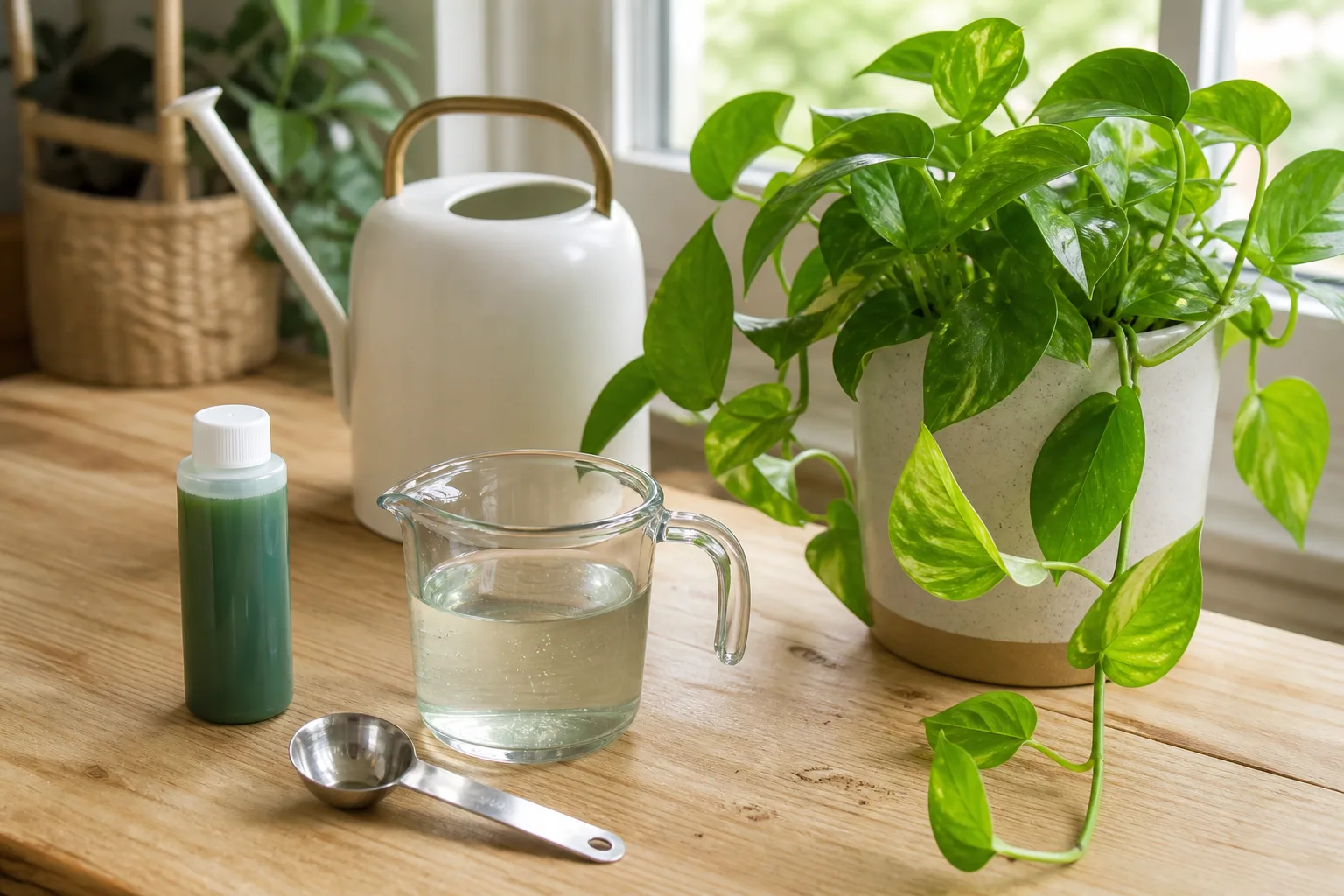
Follow the exact product label. If the label gives a rate for houseplants, use that rate as the maximum and start lower—often one-quarter to one-half strength—only when the plant is actively growing and the product can be safely diluted. Never assume that “organic,” “natural,” or “slow-release” means the product cannot burn roots.
Apply fertilizer to already moist potting mix, not to bone-dry roots. If the pot is dry, water it normally first and feed at a later watering, or use a product label that specifically allows feeding with the irrigation water. Make sure the pot drains freely, empty the saucer, and keep fertilizer off leaves and crowns.
Let the plant set the next interval
Do not schedule a second winter feed until you have seen how the plant responds. Continue only if it keeps producing healthy growth, the mix dries at a reasonable pace, and there are no new brown tips, white deposits, or moist-soil wilting. If growth slows, stop; a pause is safer than trying to compensate with a stronger dose.
There is no universal winter interval. A bright, fast-growing plant may use a diluted feed monthly, while a slower plant may need one light application or none until spring. The RHS gives once- or twice-monthly feeding for foliage houseplants during its March-to-October schedule, but the relevant lesson for winter is to follow plant group, season, and label—not to carry a frequency over blindly. (RHS)
Be more cautious with slow-release products. Their release continues after you change your mind, and a winter move into dim light can make yesterday’s reasonable dose too much for today’s plant. If you cannot identify how much fertilizer is already in the mix, waiting is the cleaner decision.
Salt buildup: the winter problem people mistake for deficiency
Soluble salts are left behind when water evaporates or when fertilizer is applied more often than the plant can use it. Winter makes this easier to miss because pots often dry slowly, watering may be less frequent, and gardeners can keep feeding by habit even though the plant’s uptake has dropped.
Look for a combination of clues: white or brown crust on the soil surface, pot rim, or drainage area; brown leaf tips or margins; wilting while the mix is still moist; and slowed growth after fertilizer was added. One symptom alone is not proof. A white crust can also reflect minerals in irrigation water, and brown tips can come from dry air, root trouble, direct sun, or physical damage.
Read the pattern before adding more
Fertilizer burn often appears fairly evenly across the plant because the root-zone problem affects water uptake throughout the pot. Pest damage, sun scorch, and some diseases tend to have more localized patterns. The timeline matters too: new tip burn or moist-soil wilting shortly after a feed is a reason to stop and inspect the root zone, not to add a deficiency product.
Check your water source as part of the history. PlantTalk notes that softened water can contribute salts, and the hard-water houseplant guide explains why a crust may persist even when you have not recently fertilized. Changing water without reviewing fertilizer can create a second problem, though: very low-mineral water may require a complete fertilizer during active growth.
If salt buildup is plausible, stop fertilizer and remove visible crust. Do not scrape deeply into the root ball, and do not apply a vinegar, Epsom salt, coffee-ground, or “detox” mixture to counteract an unknown salt level. The safest first correction is clean water, free drainage, and a pause while you observe the plant.
How to flush a pot safely
Leaching can reduce soluble salts when the pot has open drainage and the fertilizer is a quick-release or liquid type. WSU Hortsense specifically warns that heavy watering is not a complete solution for ongoing slow-release products, because more fertilizer may continue to enter the root zone. If slow-release pellets are involved and the plant is badly affected, fresh potting mix may be more reliable than repeated flushing. (WSU Hortsense)
Use this sequence for a drainable pot:
- Move the plant to a sink, tub, or outdoor spot where runoff can drain away. Remove the saucer and confirm that the drainage holes are open.
- Brush or scrape off the visible crust on the soil surface and pot rim. Remove only a shallow surface layer if needed; avoid cutting roots.
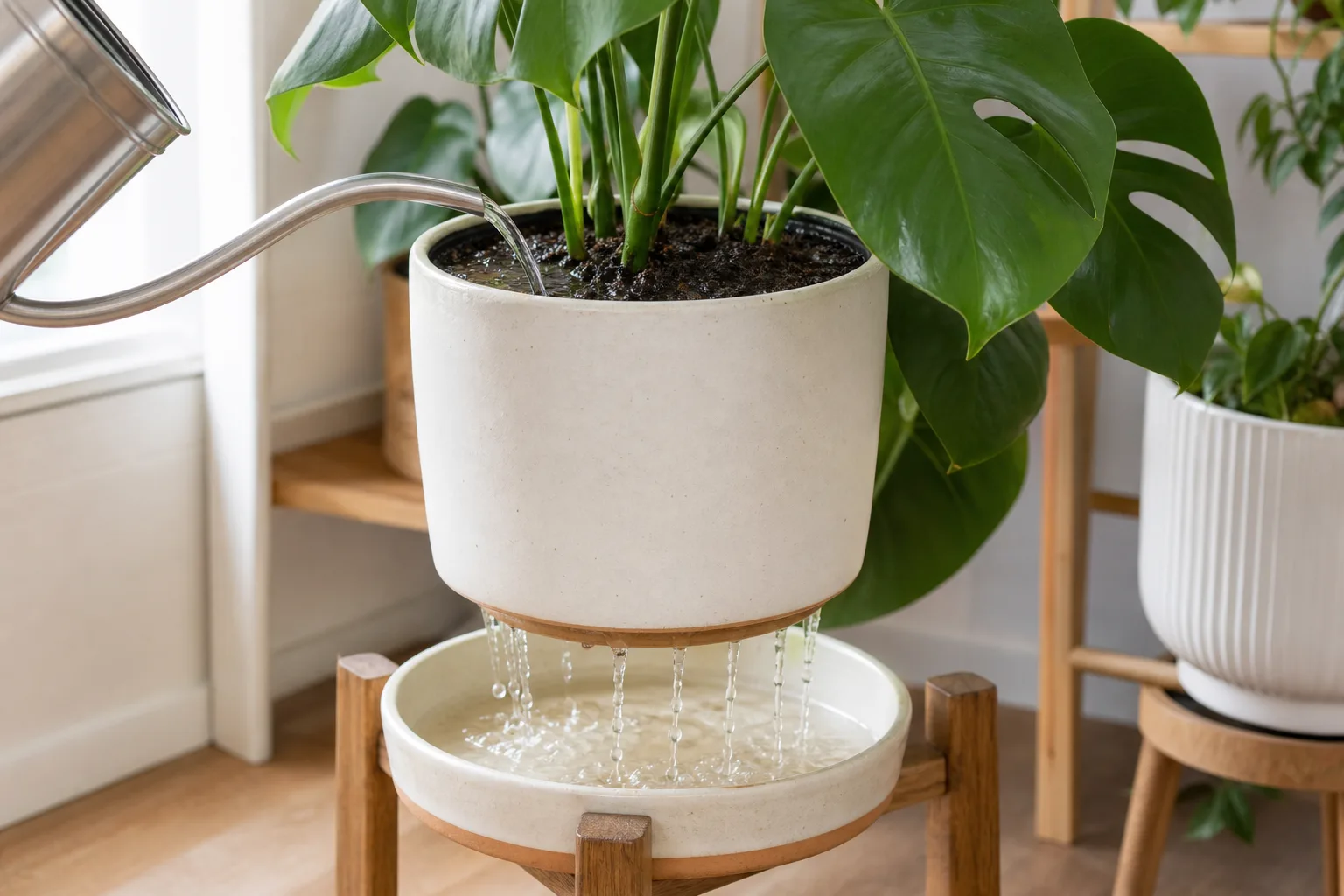
- Pour tepid, low-salt water slowly over the mix until it runs from the drainage holes. Let the pot drain well, then repeat the rinse once or twice.
- Empty runoff from the saucer and let the pot drain completely. Never leave the plant standing in the collected water.
- Return to normal watering based on root-zone dryness, and hold fertilizer until the plant is stable and producing healthy new growth.
Colorado State PlantTalk recommends filling the pot to the top a couple of times with tepid water, allowing it to drain between rinses, and cleaning salt from the pot and saucer. UConn similarly recommends leaching with copious water when drainage is free, or repotting into fresh medium when excess fertilizer is severe. (Colorado State University PlantTalk; University of Connecticut Home and Garden Education Center)
What to change instead of fertilizer
If a winter plant looks tired, improve the environment before changing the nutrient routine. Move it closer to the brightest safe window, rotate it so one side does not stretch, or add a consistent grow light. Clean dusty leaves with a damp cloth when the plant tolerates it; cleaner foliage can make better use of the light that is available.
Check temperature and drafts. A plant beside a heater may lose water quickly from the leaves while its root ball remains cool or wet. A plant pressed against cold glass can also slow down even when the rest of the room feels comfortable. Keep winter placement stable, protect tropical plants from cold drafts, and avoid moving a stressed plant through several abrupt changes at once.
Water by the mix and the plant, not by the summer calendar. Lower light and cooler conditions often mean a longer dry-down, but a heated, bright room can still dry a small pot quickly. The winter houseplant care guide and why houseplants struggle in winter guide cover the broader light, temperature, humidity, and watering adjustments.
Finally, inspect leaf undersides and stems for pests before calling the problem nutritional. Spider mites, scale, mealybugs, and thrips can all weaken growth or discolor leaves, and fertilizer will not remove them. Diagnosis first is slower than pouring feed, but it is much less likely to turn a reversible winter slowdown into root damage.
Restart feeding in spring
Do not restart because a date on the calendar says spring has arrived. Restart when light is improving and the plant shows sustained healthy new growth—for example, a leaf that is expanding normally, fresh shoots appearing, or a flowering plant actively building buds under suitable conditions.
Begin with a light application at the low end of the label range, especially if the plant has spent several months unfertilized or recently received fresh potting mix. Watch the next growth cycle, then gradually return to the plant’s normal active-season schedule if it continues to grow well. UConn’s March-to-October window is a useful starting point for many homes, not a command to feed a plant that remains dim, cold, wet, or dormant.
Before the first spring feed, check whether the pot needs repotting, whether roots are circling, and whether the old mix has collapsed or become hydrophobic. Do not combine a major repot, aggressive pruning, a new fertilizer product, and a sudden move into harsh sun on the same day. Stable care makes the plant’s response easier to read.
Conclusion: let light and growth set the schedule
Most houseplants do best with no routine fertilizer during a dim, slow winter. The exceptions are plants that are genuinely growing under strong natural or artificial light, flowering plants with an active winter cycle, and species-specific cases such as orchids that have a different feeding pattern.
Use the order that prevents the most mistakes: check growth, confirm usable light, inspect roots and moisture, review existing fertilizer, then feed weakly only if the evidence points that way. If you see crust, brown tips, or wilting in moist soil, stop feeding and correct the salt or root-zone problem before adding anything else. When spring light returns and new growth is steady, resume gradually.