Signs Your Houseplants Need More Light
Diagnose not enough light with a symptom cluster, leaf-height readings, and a 5-minute check. Etiolation won’t reverse — new growth is the scoreboard.
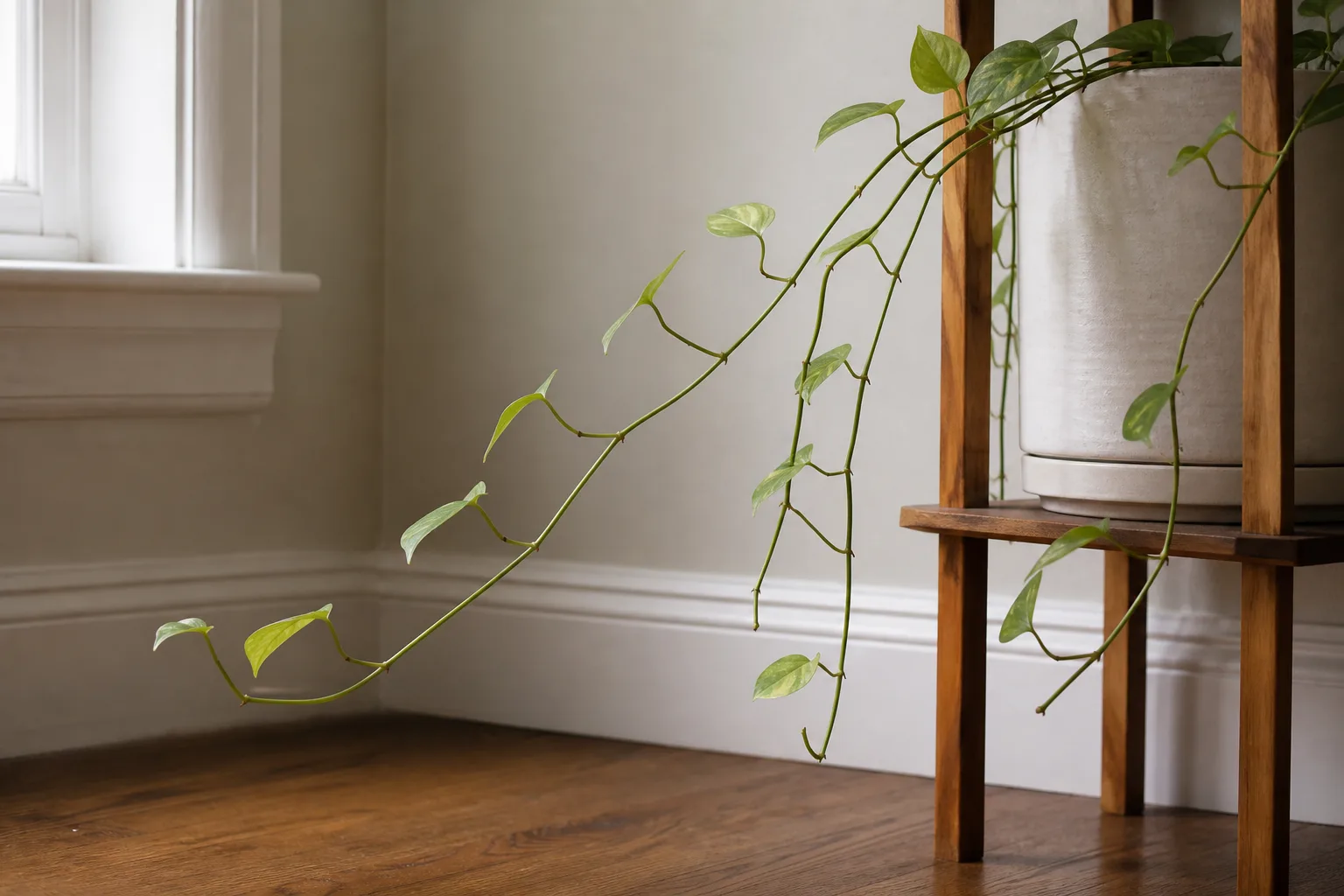
Your plant looks “fine” until you look closely. New leaves are smaller. Stems lean hard toward the glass. Gaps between leaves keep getting longer. The room still feels bright to you, so you water more, feed more, or buy another pot — and nothing improves. That pattern is usually not enough light, not a mystery nutrient gap.
Light is the energy source behind every leaf a houseplant builds. When intensity or duration falls short, the plant does not stop trying. It stretches, pales, sheds older foliage, and slows new growth while soil stays wet longer than it should. Missouri Botanical Garden notes that indoors the usual problem is too little light, and plants in that condition turn pale and stretch toward whatever light they can find. (Missouri Botanical Garden) This guide walks through the signs, how to confirm the diagnosis with a meter, how to place plants at real windows, when to add grow lights, and what recovery looks like on a two-week scoreboard — including measured readings from rooms we actually checked.
Why Your Eyes Misjudge Indoor Light
Your eyes adapt as you walk from a bright window to a dim corner. Within minutes both spots can feel “okay.” Plants do not get that adaptation. UF/IFAS Gardening Solutions explains that human vision is a poor judge of intensity: a desk by a window can be many times brighter than a workspace across the hall, yet both may look like “bright indirect light” after your eyes adjust. (UF/IFAS Gardening Solutions) That mismatch is why so many houseplants land in decorative corners that look lived-in to people and near-dark to foliage.
University of Georgia Extension puts light first among indoor growth factors: plants need light to make food, and more usable light generally means more food for growth. (University of Georgia Extension) The Royal Horticultural Society describes the same biology in plain terms — without enough light, plants cannot produce the sugars they need, so you see weak, pale, spindly growth and fewer flowers. (RHS) Low light also couples with watering mistakes. A dim plant uses water slowly, so a summer watering habit becomes winter root stress even when light was the original problem.
The Classic Low-Light Symptom Cluster
Low-light stress rarely shows as one dramatic event. It stacks as a pattern across several new growth points. Use the list below as a cluster check, not a single-symptom diagnosis.
- New internodes are clearly longer than older ones on the same stem.
- New leaves are smaller, thinner, or lighter than mature leaves.
- Stems lean or stretch toward the brightest window.
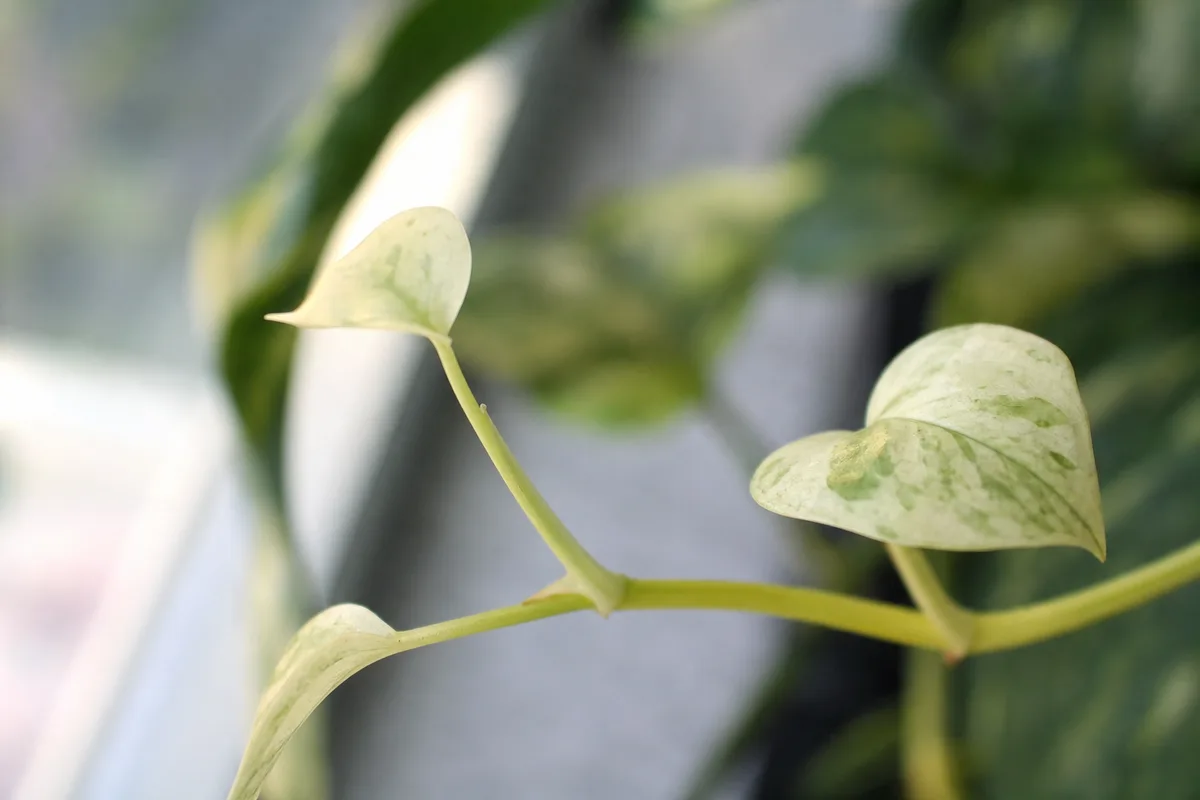
- Variegated plants put out greener, less patterned new leaves.
- Soil stays wet for days longer than it used to in the same pot.
- Flowering species stall or skip blooms despite “normal” care.
RHS troubleshooting guidance flags weak, spindly growth, pale leaves, poor flowering, and sometimes lower leaves yellowing and falling when light is inadequate. (RHS) UGA Extension lists the same diagnostic cluster: no growth, longer internodes on new wood, smaller new leaves, lighter green new foliage, and older leaves dying. (University of Georgia Extension) For a species-agnostic symptom overview after you confirm the pattern here, use the not enough light symptom hub.
Leggy Growth and Long Internodes
Etiolation is the technical name for the stretched, spindly look. University of Maine Cooperative Extension defines it as elongated, spindly stems and pale leaves from low-light conditions, and notes genetics and overwatering do not appear to drive that pattern. (University of Maine Cooperative Extension) The plant is allocating energy into reach instead of compact leaf production. Compare the last three internodes with older internodes on the same stem. If the new run is consistently longer and thinner, you are looking at light search behavior, not “fast growth.”
Not every open or trailing plant is leggy. A healthy golden pothos with evenly spaced mature leaves is doing what vines do. Concern rises when spacing widens on new growth while leaf size shrinks. For stretch-focused rescue steps after you fix light, use the leggy plants guide.
Pale Leaves, Lost Variegation, and Smaller New Growth
Pale new leaves often mean the plant cannot build enough chlorophyll under the light it has. On variegated cultivars, white or cream areas contain little or no chlorophyll, so those plants need brighter conditions to compensate. RHS notes that when a variegated plant reverts toward all-green, light levels are often too low. (RHS) Smaller new leaves are another reliable signal: the plant is budgeting limited energy into survival-scale foliage rather than full-size blades. If shrinking leaves are your main complaint, pair this page with why new leaves are small.
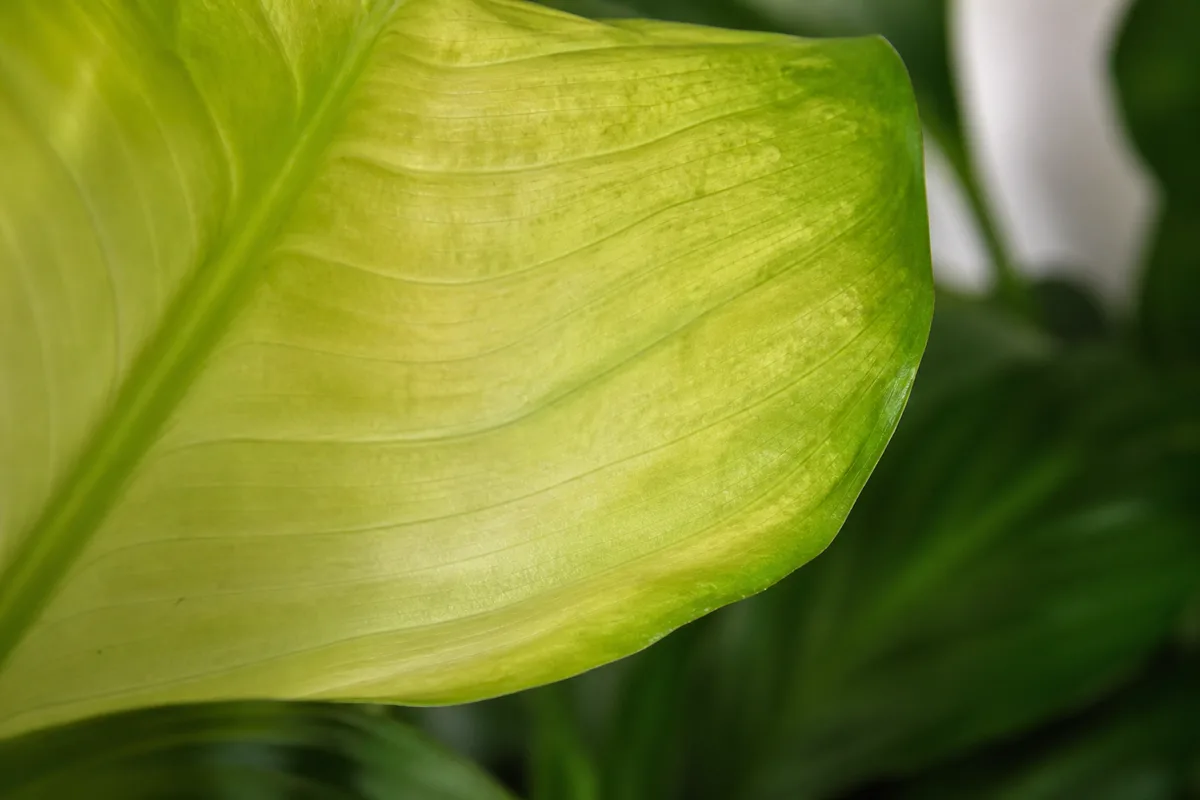
Pale can also come from nutrient issues or root damage, so check soil moisture and root health before you only move the plant. Pale plus stretch plus wet soil that never dries is still usually light first, with watering as the follow-on correction.
Leaning, Leaf Drop, and Stalled Flowering
One-sided lean is the plant’s compass pointing at usable light. Rotate weekly if the window is your only source, but rotation alone does not fix a spot that is simply too dim. Older leaves may yellow and drop as the plant reallocates sugars to newer growth when photosynthesis cannot keep up — UGA Extension describes that triage under insufficient light. (University of Georgia Extension) Flowering and fruiting plants need more energy than foliage-only plants, so buds abort or never form when intensity is marginal. If growth has stopped entirely rather than stretching, switch diagnostics to the plant not growing guide.
Light vs Water vs Fertilizer vs Pests
Before you buy a grow light or slash fertilizer, run a short differential. Low light and overwatering overlap because both produce yellowing, limp leaves, and stalled growth. The separating clue is context.
| Clue | Low light | Overwatering | Underwatering | Mites / scale |
|---|---|---|---|---|
| New internodes | Longer, thinner than old wood | Usually normal length | Usually normal length | Normal length |
| New leaf size / color | Smaller, paler | Soft yellow, often older leaves first | Crispy edges, dull | Stippling or sticky residue |
| Soil | Stays wet longer than before | Wet, heavy, may smell sour | Dry, pot feels light | Moisture varies |
| Directional lean | Strong lean toward window | Weak or none | Weak or none | None |
| Leaf texture | Thin, weak new blades | Soft / mushy | Papery / crisp | Speckled or sticky undersides |
A light-starved plant usually has wet soil that stays wet, stretch toward a window, and smaller pale new leaves. An overwatered plant in adequate light may wilt with soft yellow leaves while sitting in heavy, sour soil — without progressive internodal stretch. Underwatering shows dry, light pots and crispy tissue, not long pale internodes. For the watering side of that overlap, see overwatered plant and how to water indoor plants the right way.
Fertilizer does not replace photons. Feeding a dim plant often worsens salt stress because growth is too slow to use the nutrients. Hold fertilizer until new growth resumes under better light, then resume a light feeding program. Also rule out pests that cause pale stippling (spider mites) or sticky residue (scale); those leave different leaf textures than clean stretch and pale new growth. If the plant is collapsing with wet soil and mushy roots, treat root rot first, then revisit light once the root system is stable.
Measure Light Where the Leaves Sit
Guessing from across the room fails. Measure at leaf height, midday, on a typical weather day for your season. UF/IFAS recommends a handheld meter that reads foot-candles or lux; phone apps are useful for relative comparisons but less precise as absolute numbers. (UF/IFAS Gardening Solutions) Take three readings: at the current pot location, one foot closer to the window, and on the sill. The jump between those points tells you whether a small move will help or whether you need supplemental light.
Foot-Candles Explained (UF/IFAS vs UGA Bands)
Ranges differ slightly by source, but the order of magnitude is consistent. UF/IFAS groups midday indoor levels roughly as low (25–100 ftc), medium (100–500 ftc), high (500–1000 ftc), and direct sun (over 1000 ftc). (UF/IFAS Gardening Solutions) UGA Extension uses a related home split for about eight hours daily: low 25–75 ftc, medium 75–200 ftc, high above 200 ftc without direct sun, and sunny areas with at least four hours of direct sun. (University of Georgia Extension) Outdoors on a bright day, UGA cites about 10,000 ftc in open sun versus 250 ftc or less under a large tree — which is why “it looks bright in here” is not a useful plant metric.
Use this for decisions: treat readings under ~75–100 ftc as low light for most foliage plants, aim for roughly 100–500 ftc for medium-light species, and expect high-light or variegated plants to want the brighter end of that medium-to-high band or carefully managed direct sun. Match your plant’s labeled preference to a measured band, not to how the room feels after your eyes adapt.
Phone Apps vs Handheld Meters
Phone light-meter apps are good for ranking spots (sill vs sofa vs hallway). They are weaker as absolute foot-candle truth because camera sensors, case shadows, and conversion math vary by device. UF/IFAS notes app accuracy varies and recommends treating them as approximations. (UF/IFAS Gardening Solutions) A cheap handheld lux/foot-candle meter is enough for houseplants. Do not treat phone “PPFD” estimates as lab-grade photosynthetic photon flux density — those conversions are rough. If two spots differ by a large factor on the same phone at the same hour, trust the relative ranking even if the absolute number is soft.
Window Placement: Aspect, Distance, and Seasonal Moves
Most recovery starts with a better seat, not a new product. Clean the glass, pull sheer curtains during the brightest hours if the plant needs more intensity, and move the pot into the brightest safe zone for that species. In winter, RHS advises moving many houseplants closer to south- or west-facing windows when sunlight is weaker, and wiping dust off leaves so more light reaches the surface. (RHS) Seasonal moves are normal care, not panic. Dust film, tinted glass, outdoor trees, and roof overhangs are quiet light thieves — clean glass and wipe leaves before you assume the room is “maxed out.”
North, East, South, and West Windows
UGA Extension’s aspect summary is still the practical map for most homes in the Northern Hemisphere. East windows give strong morning light with cooler temperatures and are often the best default for many foliage plants. South windows deliver the largest seasonal swing: deep winter sun across the room, higher summer angles that may miss the sill if eaves are wide. West windows bring hotter afternoon intensity that some plants love and others scorch in. North windows provide the least light and heat year-round; a northern sill can sit near 200 ftc on a clear winter day, which suits some green-leaved plants but struggles for variegated or high-light species. (University of Georgia Extension) If your only good light is a north room, choose plants adapted to that band or plan on grow lights — browsing best low-light indoor plants and plants that grow without direct sunlight is smarter than forcing a sun-hungry fiddle-leaf fig into a hallway.
Distance From the Glass Matters
Intensity falls off fast as you move back from the window. A plant two feet from bright glass can still be in a workable medium-light band; the same plant six to eight feet back may drop into low light even if the room “looks airy.” Furniture, tinted film, outdoor trees, and roof overhangs all cut usable light further. Measure at the leaf, not at standing height in the center of the room. If the only decorative spot is deep in the room, treat grow lights as infrastructure, not optional décor.
When Windows Are Not Enough: Grow Lights
Windows fail for real reasons: north exposures, interior rooms, winter latitude, apartment courtyards, and tall buildings. Supplemental light is not cheating. UF/IFAS confirms plants can grow entirely under appropriate artificial light when the source is bright enough and runs long enough. (UF/IFAS Gardening Solutions) Prefer full-spectrum LED or quality fluorescent fixtures over hot, inefficient household bulbs for long daily runtimes. Clemson HGIC likewise notes that fluorescent and LED options suit indoor growing better than heat-heavy incandescent lamps for extended photoperiods. (Clemson HGIC)
UGA Extension notes that extending light hours can help when intensity is limited — for example, about 16 hours of light and 8 hours of dark — because plants accumulate photosynthetic opportunity over the day. (University of Georgia Extension) Most foliage houseplants do well on a timer around 12–14 hours; keep a real dark period rather than running lights 24/7. Starter height rule: begin about 12 inches above the canopy for a typical full-spectrum bar or clamp LED aimed at foliage plants, then adjust — raise the fixture if new leaves bleach, crisp, or look washed; lower it (or add hours) if stretch continues after two weeks. Broad-spectrum white LEDs labeled for plant growth are usually easier to live with than harsh single-color bars in living spaces. For fixture shopping, distance charts, and photoperiod detail, use the grow lights complete guide.
Fix Order: Move, Supplement, Then Prune
Work in this order so you do not prune a plant back into the same dim corner.
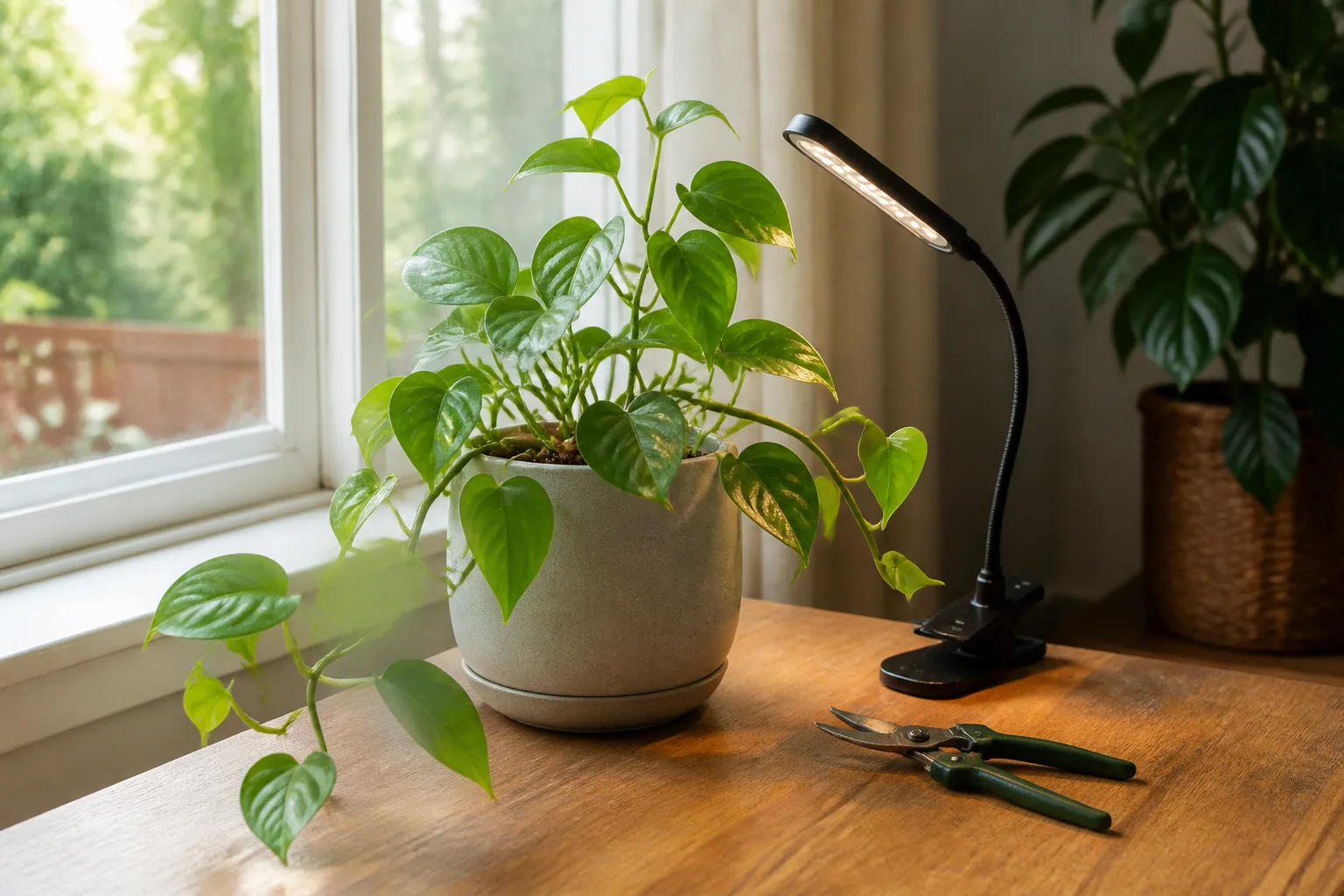
- Confirm the symptom cluster and measure light at leaf height.
- Move the plant closer to a better window over several days, not in one harsh jump.
- Add a grow light if the best window still measures below the plant’s needs.
- Adjust watering: brighter light usually means faster dry-down.
- Hold fertilizer until healthy new growth appears.
- Prune or propagate stretched stems only after light is corrected.
Existing etiolated stems will not shorten. University of Maine guidance for light-starved plants emphasizes providing enough light and acclimating gradually when moving toward stronger sun to avoid scorch. (University of Maine Cooperative Extension) Missouri Botanical Garden makes the same caution: a sudden move from shade into bright sun can sunburn leaves even on a sun-tolerant plant, though new leaves may adapt later. (Missouri Botanical Garden) Watch west glass for heat stress after “just move closer,” and watch LEDs for bleach when fixtures sit too close. Judge success on the next two or three leaves, not on old stretched wood.
First-Hand Notes: Measured Rooms and Recovery Timelines
These are LeafyPixels editorial notes from plants we track in real rooms (handheld lux meter converted to foot-candles; midday readings on clear days). They are not lab trials — they show the scale of the problem and what recovery looked like.
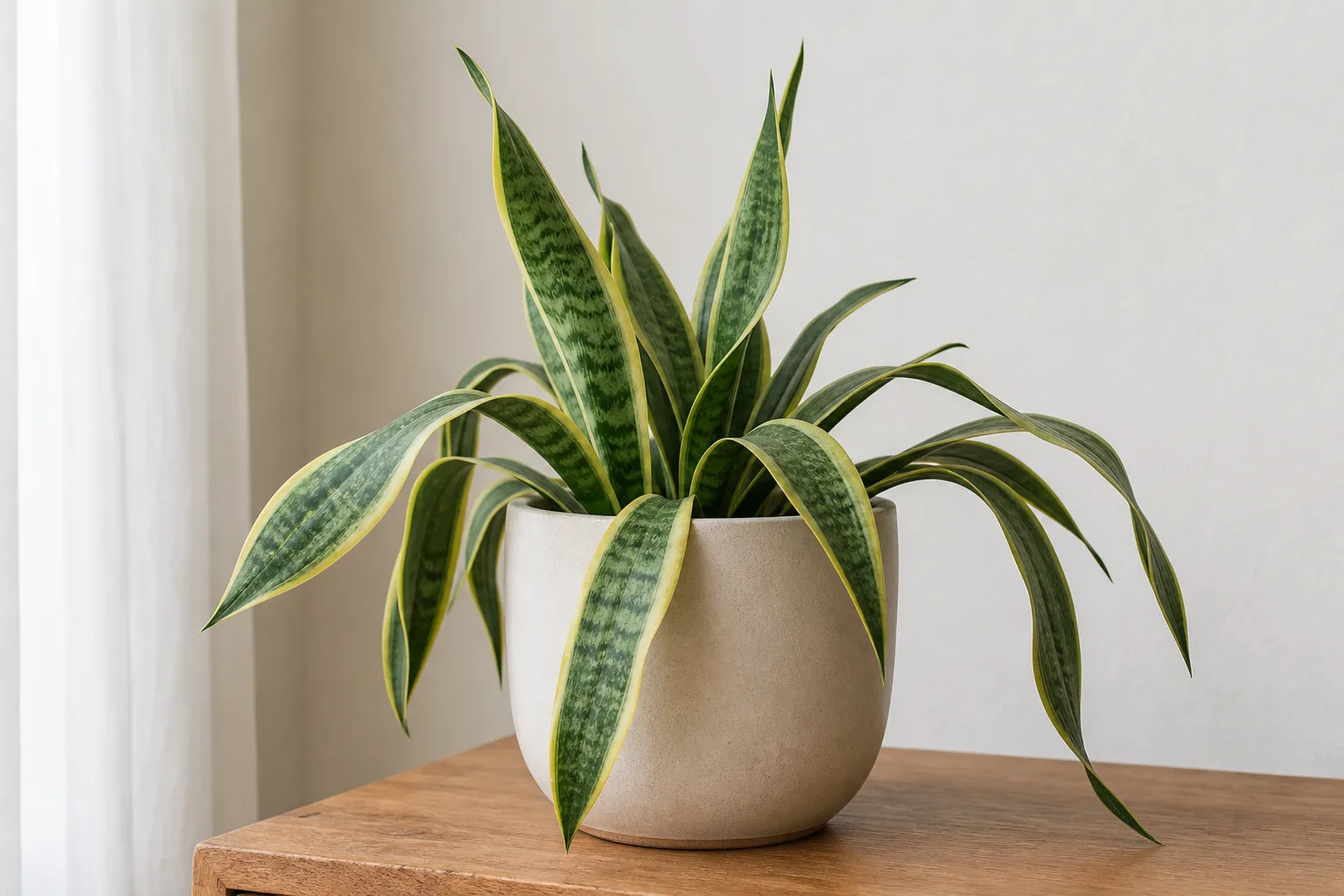
North bedroom, late winter (Bengaluru apartment). On the sill of a north-facing bedroom window we measured about 190–220 ftc at leaf height for a snake plant. Six feet back on a bookshelf in the same room, the reading dropped to about 40–55 ftc. The bookshelf plant had not stretched much (snake plants hide stretch), but new leaves were thinner and the mix stayed damp 10–12 days between waterings. Moving the pot to within two feet of the sill brought readings near 120–150 ftc; dry-down shortened to about a week within three weeks.
Golden pothos under a clamp LED. A golden pothos on a north desk measured ~60 ftc at the canopy and had produced three long, pale internodes. We added a 20W-class full-spectrum clamp LED about 12 inches above the newest node on a 13-hour timer. After three weeks, the next two leaves were darker and closer to mature size; after five weeks, new internodes matched older spacing. The stretched run did not shorten — we later pruned it for cuttings once light was stable.
Peace lily winter south-window move. A peace lily that had sat six feet from an east window was moved in mid-winter to within two feet of a bright south sill over four days. Midday leaf-height readings rose from roughly 80 ftc to 350–450 ftc (brief soft sun, not hard noon blast). Soil dry-down changed from about 10 days to 4–5 days. The next spathe arrived six weeks later; older pale leaves stayed pale.
Recovery checkpoints we use: week 1 — acclimate and watch for scorch or bleach; weeks 2–4 — new leaf size and color should trend toward normal; weeks 4–8 — spacing and vigor stabilize if intensity and hours are enough. Old etiolated stems remain history.
Species Light Bands for Common Houseplants
Use these as decision aids, not hard promises. Bands follow the reconciled UF/IFAS / UGA ranges above and typical label language for each plant.
| Plant | Prefer roughly | Notes |
|---|---|---|
| Snake plant, ZZ plant, cast-iron plant | Low to low-medium (~50–150 ftc) | Survive dimmer spots; still decline in true hallway gloom |
| Golden pothos, heartleaf philodendron | Medium (~100–400 ftc) | Stretch and reversion when kept under ~75–100 ftc long-term |
| Monstera deliciosa | Medium-bright (~150–500 ftc) | Fenestration and leaf size stall in deep shade |
| Peace lily | Medium (~100–400 ftc) | Blooms poorly in low light even if foliage survives |
| Fiddle-leaf fig | High / bright (~300+ ftc, some soft sun) | Hallway placements usually fail without grow lights |
UNH Extension reminds growers that indoor light is often the limiting factor for houseplants and that matching plant to available light prevents chronic decline. (University of New Hampshire Extension)
Common Mistakes and When to Switch Plants
The first mistake is trusting your eyes. The second is treating stretch with fertilizer. The third is blasting a shade-grown plant onto a hot south or west sill overnight. The fourth is watering on a fixed calendar after light drops in winter, which invites root problems while the real issue is shorter, weaker days — see winter houseplant care for seasonal stacking of light, humidity, and watering. The fifth is pruning for “shape” without changing light, which only restarts the stretch cycle from fresh buds. The sixth is assuming “low-light plant” means “no-light plant.” Even tough species need some usable intensity to maintain foliage over months.
Some rooms will never support high-light plants without fixtures. That is a design constraint, not a personal failure. Put snake plants, ZZ plants, cast-iron plants, or other truly low-light species in the dimmest corners, and reserve bright sills for variegated, flowering, or sun-hungry plants. If you love a plant that needs more light than the room can give, commit to a grow light on a timer rather than watching it decline for a year. Matching plant to place prevents most “mystery decline” stories before they start.
Related Guides
- Why is my plant leggy? — stretch and pruning after light is fixed
- Grow lights for indoor plants — fixtures, distance, and photoperiod
- Best low-light indoor plants — choose plants that fit dim rooms
- Winter houseplant care — seasonal light drop and watering adjustments
- How to water indoor plants the right way — adjust watering after light changes
Conclusion
5-minute light check
- Compare the last three internodes and newest leaf size/color to older growth.
- Note lean toward a window and whether soil stays wet longer than before.
- Measure at leaf height midday: current spot, one foot closer, and the sill.
- If readings sit below the plant’s band, move closer over several days — or plan a grow light.
- Hold fertilizer; adjust watering as dry-down speeds up; prune only after light is fixed.
2-week recovery scoreboard
| Checkpoint | What “good” looks like |
|---|---|
| Days 1–7 | No new scorch or LED bleach; plant settled in new seat or under timer |
| Days 7–14 | Newest leaf emerging darker/larger than the previous pale leaf, or stretch slowing |
| Weeks 3–4 | Internode length trending toward older wood; dry-down interval shorter if light rose |
| Weeks 4–8 | Compact new growth is the win — old stretched stems stay history |
New growth is the scoreboard. Old etiolated stems stay history — but once light is honest for the species, the next leaves can look like the plant you meant to grow.