Why Is My Plant Leggy? Light and Growth Issues Explained
Is your plant leggy? Learn why houseplants get long, spindly stems, how to fix etiolation with better light and pruning, and how to prevent stretched growth.
Quick Answer: Fix the Light Before You Fix the Shape
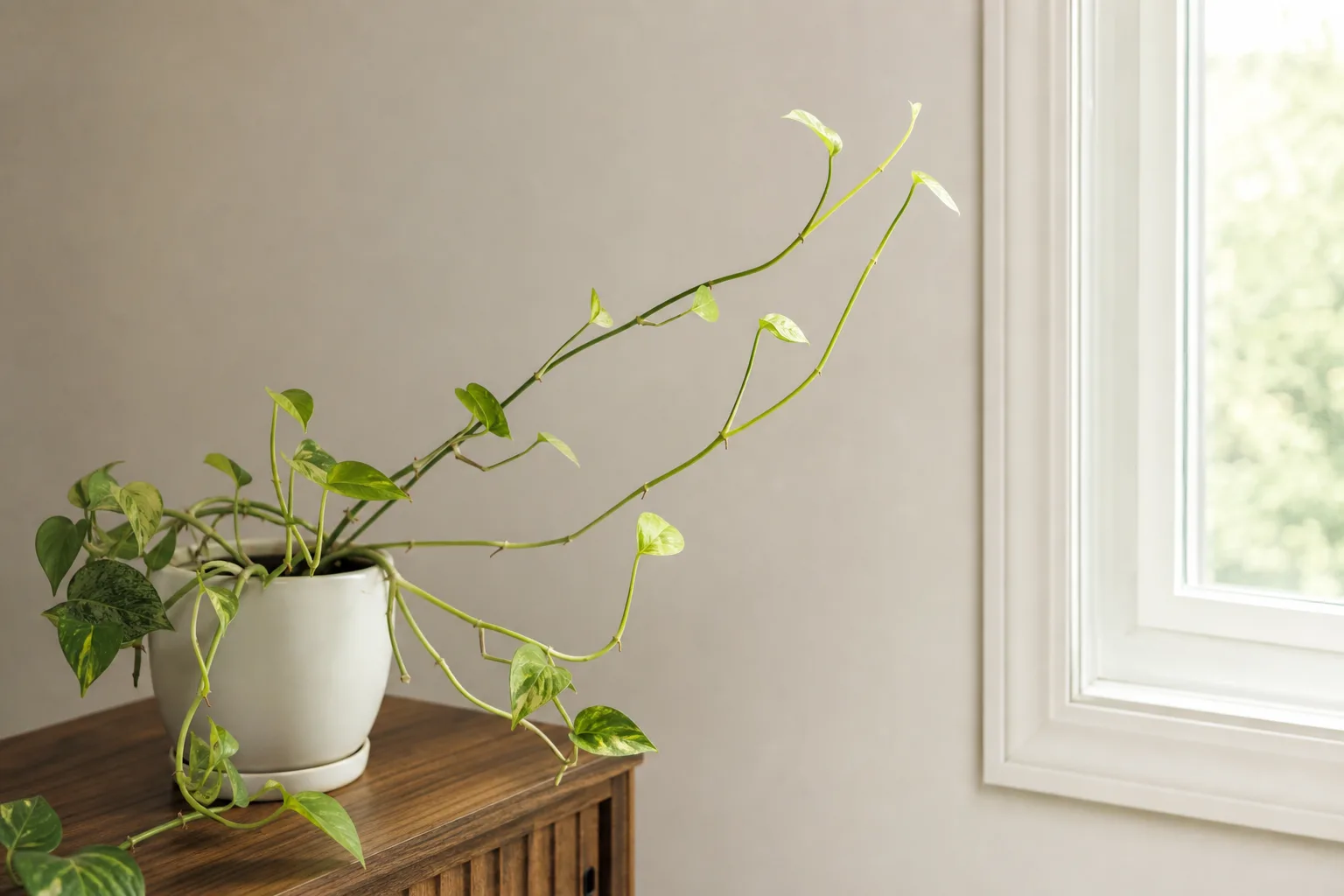
A leggy plant has long, thin stems with unusually large gaps between leaves, often with smaller or paler new growth and a distinct lean toward the nearest window. The scientific term is etiolation, and the University of Maine Cooperative Extension defines it as a plant with elongated, spindly stems and pale leaves caused by low-light conditions. (University of Maine Cooperative Extension) The plant is not diseased — it is stretching toward whatever light it can find, sacrificing compact form for reach.
Use this order:
- Confirm the plant is leggy, not just naturally open or vining.
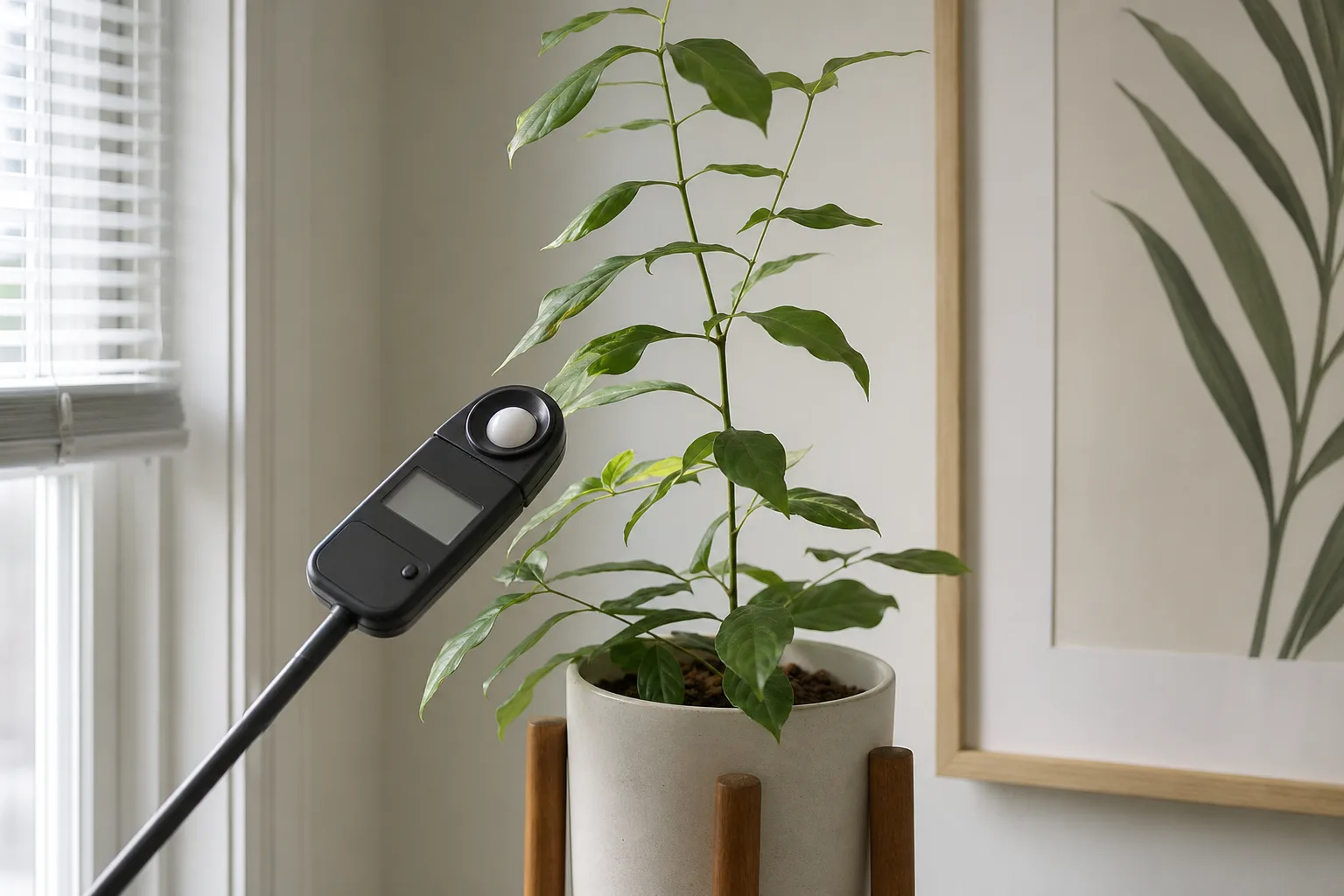
- Measure light at leaf height with a meter or phone app.
- Move the plant gradually into stronger indirect light.
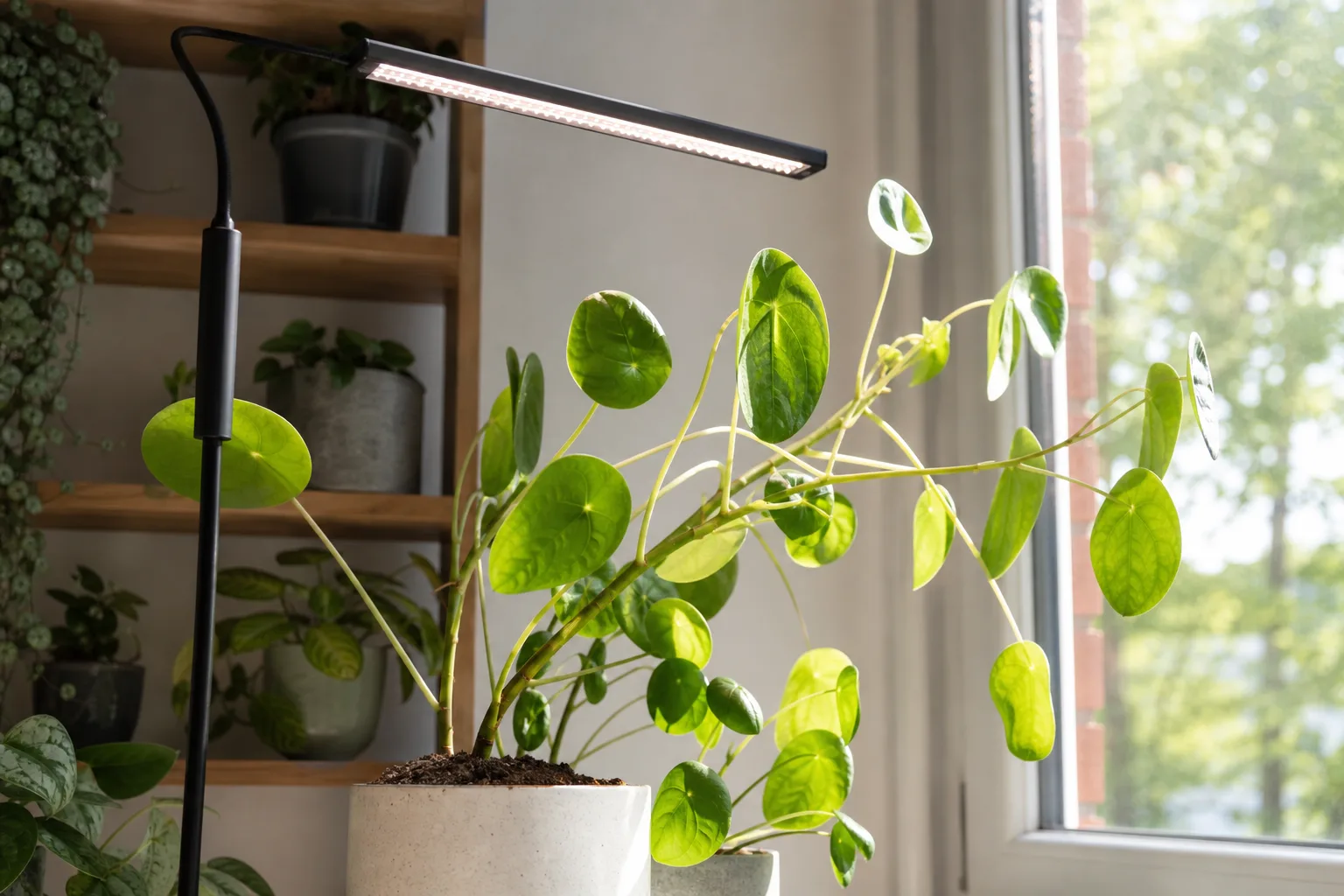
- Add a grow light if the window cannot provide enough intensity.
- Prune stretched sections only after light conditions improve.
- Propagate viable cuttings if the old structure is too sparse to keep.
Existing stretched growth will not reverse. Recovery shows in the next leaves and internodes. Pruning and propagation change the old shape, but only better light prevents the next round of stretching.
What “Leggy” Actually Means
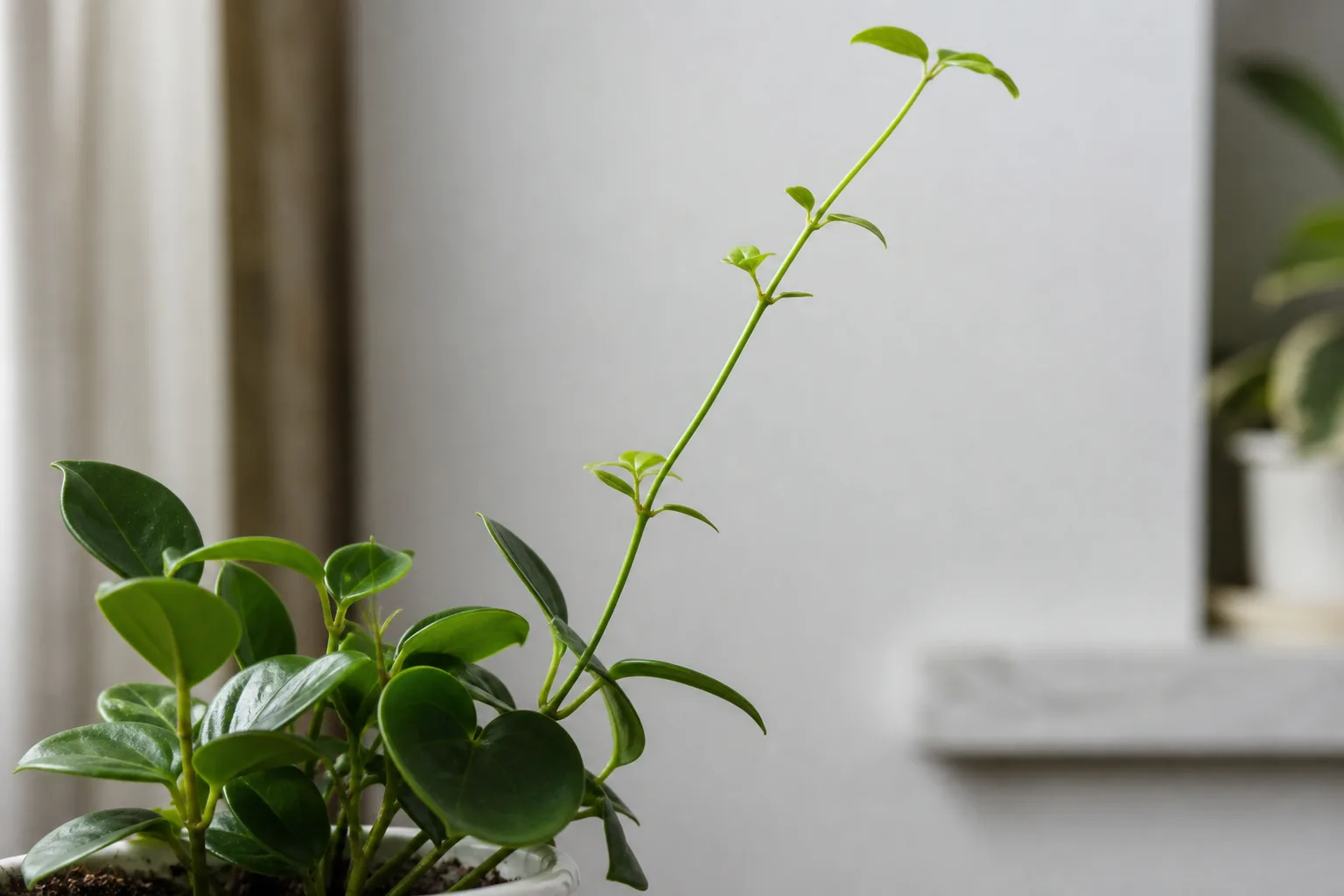
Legginess is not one awkward stem. It is a pattern across multiple new growth points: stems that are visibly thinner than older ones on the same plant, internodes — the stem sections between leaves — that are noticeably longer, new leaves that come in smaller than the ones before them, and a general lean or reach toward the brightest light source. On variegated plants, new leaves may lose their patterning and emerge more green as the plant tries to maximize chlorophyll to capture more energy from limited light.
University of Maryland Extension describes insufficient light as the cause of spindly or leggy growth and notes that one-directional light can make plants lean. (University of Maryland Extension) A plant that used to produce compact, full growth and now sends out thin runners with small leaves every few inches is not just growing fast — it is searching.
Not Every Open Plant Is Leggy
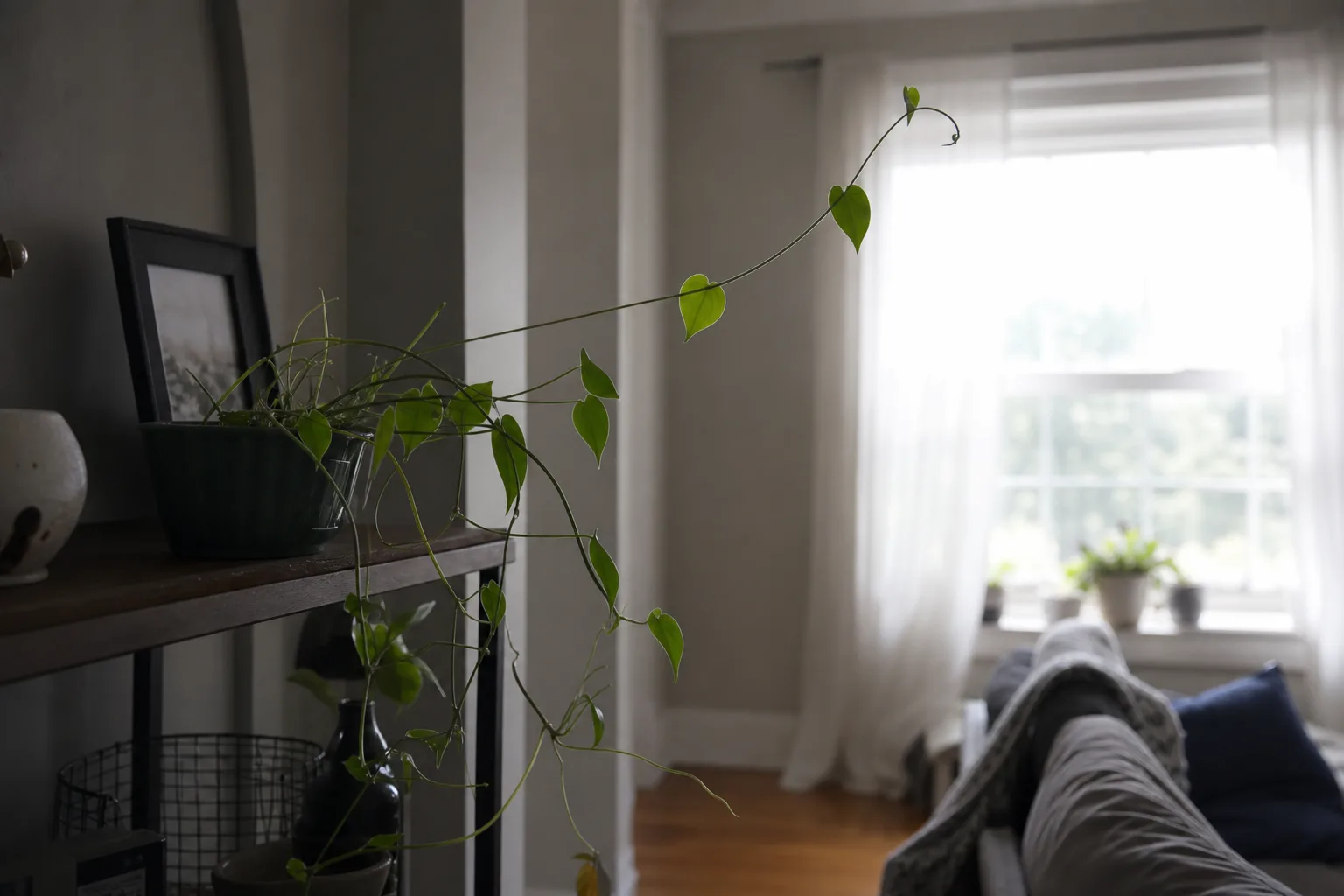
Some plants are naturally open or vining. A pothos with long trailing vines and evenly spaced, healthy leaves is not leggy — that is its growth habit. A monstera with large gaps between leaves that were previously closer together, with smaller new leaves and thinner stems, is leggy. A spider plant sending out long stolons with babies at the ends is normal. A rubber plant with a bare lower stem and a tuft of leaves only at the top may be leggy or may just be a mature specimen that has dropped older lower leaves over time.
The diagnostic test is a comparison on the same plant. Measure the last three internodes on a newer growth segment and compare them with three mature internodes lower on the same stem. If the new run is consistently much longer and the associated leaves are smaller, the plant is stretching. Context matters: a ZZ plant or snake plant that grows slowly with wide spacing is not necessarily light-starved — those are naturally slow, open growers. Concern rises when a previously compact plant changes its growth pattern across several consecutive nodes.
Why Plants Get Leggy
The cause stack for etiolation is almost always insufficient usable light. Other factors — watering, fertilizer, temperature — can compound the problem or produce additional symptoms, but they do not cause the characteristic long internodes and thin stems on their own.
Too Little Light Is the Primary Driver
Plants use photoreceptors in their stem tips to detect light quantity and quality. When those receptors signal that light is inadequate, the plant redirects energy toward stem elongation — growing longer and thinner in an attempt to reach brighter conditions. This is an adaptive response, not a malfunction. The problem is that indoors, there is no brighter spot to reach, so the plant keeps stretching without finding better light.
Room brightness is a poor proxy for leaf-level light. A spot that feels bright to human eyes may deliver far less photosynthetically active radiation than the plant needs. University of Maryland Extension notes that outdoor direct sunlight peaks at about 10,000 foot-candles, while UF/IFAS Gardening Solutions reports that a typical indoor spot several feet from a window may only provide 10–100 foot-candles. (University of Maryland Extension) (UF/IFAS Gardening Solutions) That several-order-of-magnitude gap explains why growth stalls and stretches in what feels like a well-lit room.
Light Intensity Falls Off Fast
The single most overlooked variable in indoor plant placement is distance from the window. Light intensity follows the inverse square law — doubling the distance from the source quarters the light. A plant on a shelf six feet from a south-facing window may receive a small fraction of the light that hits the sill, even though the room feels bright. The canopy height also matters: a tall plant whose upper leaves sit above the windowsill receives more light than its lower leaves, which may be getting next to nothing.
Window direction, outdoor obstructions like trees or neighboring buildings, and the type of glass all matter. A north-facing window in a city apartment with a building across the alley provides dramatically less usable light than an unobstructed east-facing window in a suburban home. The only way to know what your plant is actually getting is to measure.
Other Factors That Compound the Problem
While light is the primary cause, several other conditions can make leggy growth worse or produce similar-looking symptoms that confuse the diagnosis.
One-directional light without rotation. A plant that receives strong light from only one side will grow toward it unevenly. The stems on the lit side stay more compact, while the shaded side stretches. Rotating the pot a quarter turn every week or two distributes light more evenly and prevents the one-sided lean that often accompanies leggy growth.
Temperature. Warm temperatures combined with low light can accelerate stem elongation. The plant’s metabolism runs faster in warmth, but without enough light to fuel compact growth, that energy goes into stretching rather than leaf production. This is why plants often get leggier during winter when they sit in heated rooms with short daylight hours.
Overcrowding. When plants are packed tightly together, lower leaves and stems get shaded by neighboring foliage. The plant may stretch upward to compete for light, producing a tall, thin form with sparse lower growth. Spacing plants so that each one’s canopy has a clear sightline to the light source helps prevent this.
Fertilizer timing. Adding nitrogen-rich fertilizer to a plant that is already light-limited can worsen legginess by pushing stem growth without the light energy to build strong, compact tissue. Penn State Extension notes that Monstera becomes leggy in lower light, and the fix is better placement, not more feeding. (Penn State Extension) Hold fertilizer until the light problem is resolved.
Diagnosing Leggy Growth in Your Plant
Before reaching for pruning shears or a grow light, confirm that light is actually the problem. Work through this sequence.
Step 1: Measure internode spacing. Use a flexible tape or ruler to record the last three internodes on new growth. Compare with three mature internodes on the same stem from an earlier growth period. If the new run is consistently 50% longer or more, the plant is stretching.
Step 2: Check new leaf size. Are the newest leaves noticeably smaller than older leaves on the same plant? A gradual decline in leaf size across several nodes, especially paired with longer internodes, strengthens the light-deficiency diagnosis.
Step 3: Note the direction of growth. Is the plant leaning or reaching toward a window? Stems that angle sharply toward one light source are a clear signal that the current position is not providing enough all-around intensity.
Step 4: Measure light at leaf height. A light meter — a dedicated handheld unit or a smartphone app — gives you objective data. For most common foliage houseplants, you want at least 250–1,000 foot-candles at the leaf surface during the growing season for compact growth. Below 100 fc, etiolation is likely regardless of species.
Step 5: Rule out other problems. Check the soil moisture, inspect for pests, and feel the stems. A plant that is leggy but otherwise firm-stemmed, pest-free, and drying normally between waterings is dealing with a light deficit. A plant that is leggy and also has soft stems, wet soil, or visible pests has a compound problem — address the most urgent issue first.
Leggy Growth vs. Normal Dormancy
A plant that stops growing entirely during winter, with no new stems at all, is dormant — not leggy. Legginess requires active growth in low light. A dormant plant conserves resources and produces nothing new. A leggy plant continues to grow but produces weak, stretched growth because it cannot find enough light to build properly. If your plant has not put out any new growth in months and looks otherwise healthy, the issue may be season, temperature, or root constraints rather than etiolation — see the plant not growing guide for that diagnostic framework.
How to Fix a Leggy Plant
The fix has a strict sequence: improve light first, then decide whether pruning or propagation is needed. Changing the shape without changing the light produces another round of leggy growth from whatever stems remain.
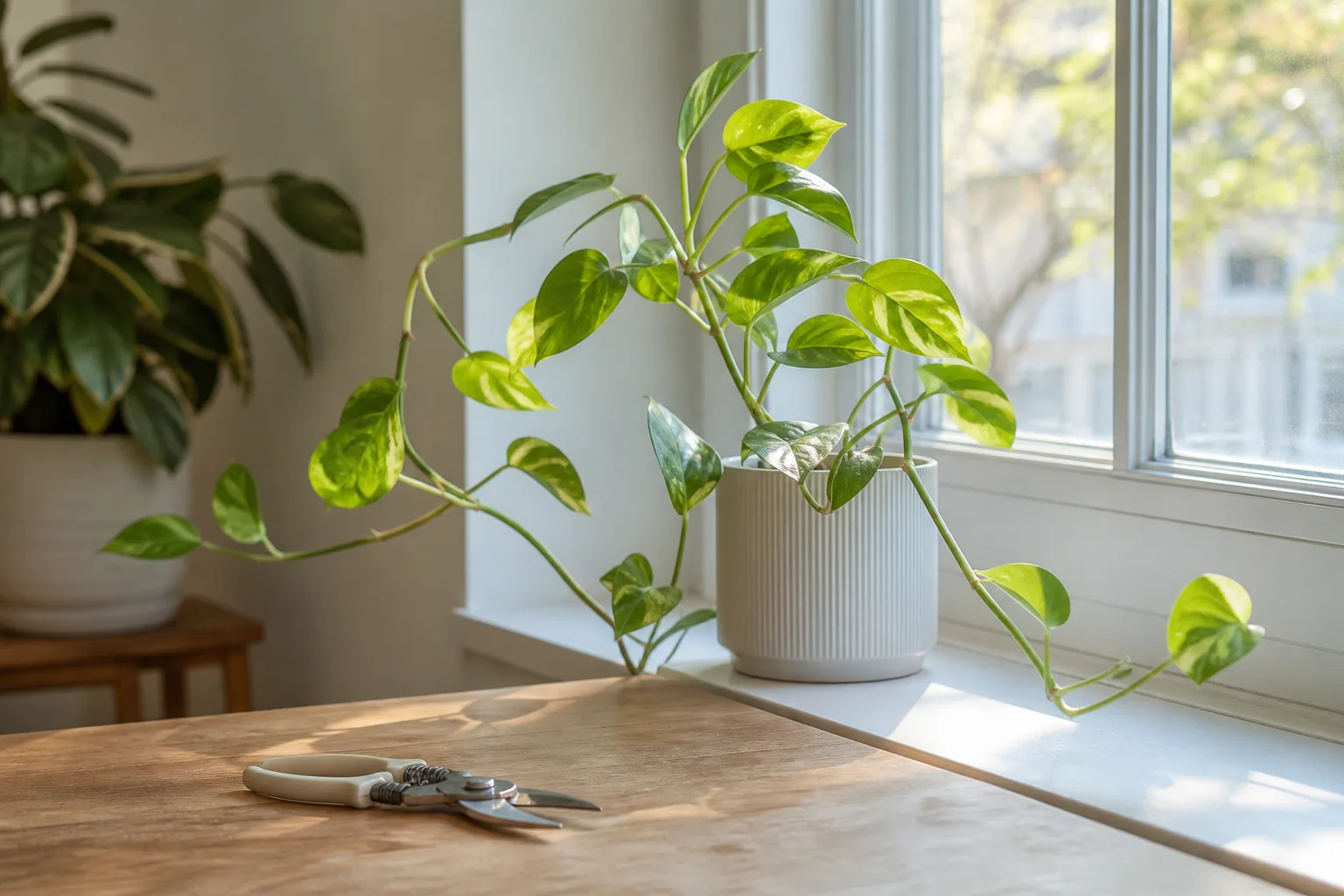
Step 1: Move the Plant into Better Light
Identify the brightest suitable window in your home. An east-facing window gives gentle morning light that works for most houseplants. A south or west window provides more intensity but may need a sheer curtain to filter harsh midday sun, especially in summer. Move the plant closer to the glass. Even cutting the distance from six feet to two feet can multiply the light the leaves receive.
Acclimate the plant gradually. University of Maine Cooperative Extension advises slowly exposing plants to increasing amounts of sun over several days — for example, one hour of indirect sunlight on day one, two hours on day two, and so on. (University of Maine Cooperative Extension) A plant that has been in low light for months has leaves adapted to those conditions, with thinner cuticles and fewer protective pigments. A sudden jump into bright direct sun can scorch them. Move the plant to a spot with roughly double the current light, wait a week, check for any bleaching or browning on the leaves, then move it closer if needed.
Watch the next two or three new leaves. If internodes are shorter and leaves are larger than the previous few, the light correction is working. Old stretched sections will not change, but the trend in new growth tells you whether the placement is right.
Step 2: Add a Grow Light If the Window Cannot Deliver
Some spaces simply cannot provide enough natural light — north-facing apartments, rooms with small or shaded windows, or winter months with short daylight hours. In these cases, artificial light is the practical solution. A full-spectrum LED grow light positioned 6–12 inches above the foliage and run for 10–14 hours per day on a timer can deliver enough intensity for compact growth.
Choose full-spectrum white LEDs rather than the older red-blue panels. White light provides the wavelengths plants need for both vegetative growth and overall health, and it lets you see the plant’s true condition. Position the light so it covers the full canopy — a tall plant may need additional side lighting or a fixture that can be adjusted as the plant grows. Start with the light farther away and move it closer over several days, watching for leaves that curl or bleach as signs that the light is too intense or too close.
University of Maryland Extension advises no more than 16 total hours of illumination because plants need darkness as part of normal development. (University of Maryland Extension) A simple outlet timer set to 12–14 hours removes the need to remember to switch the light on and off. For a deeper dive into fixtures, placement, and measurement, see the grow lights complete guide.
Step 3: Prune Only After Light Conditions Improve
Do not prune a light-starved plant and expect the new growth to be compact. The remaining stems will still be in low light, and the new shoots will stretch just like the old ones. Improve light first, give the plant a few weeks to show that new growth is coming in tighter, and then decide what to prune.
For most foliage houseplants, cut just above a node — the point on the stem where a leaf attaches and where dormant buds sit ready to activate. Cutting above a node signals the plant to push growth from that point, often producing multiple new shoots that create a fuller appearance. Use clean, sharp scissors or pruning shears to make a clean cut without crushing the stem.
How much to remove depends on the plant and your goal. For vining plants like pothos and philodendron, you can cut back leggy runners by one-third to one-half without harming the plant. For upright plants like rubber trees or fiddle-leaf figs, you can cut the main stem back to the height you want, and new branches will emerge below the cut. The general rule is to leave at least a few healthy leaves on the plant to sustain photosynthesis while it recovers. For detailed cut placement by plant type, see the pruning indoor plants guide.
Step 4: Propagate Viable Cuttings
Propagation turns the problem of leggy growth into an opportunity. Long, stretched stems with healthy nodes can become new plants. For vining plants like pothos, philodendron, and tradescantia, cut the stem into sections with one or two nodes each, remove the lower leaves, and place the cuttings in water or moist potting mix. Roots typically form within two to four weeks in warm, bright conditions.
For upright plants that do not propagate as easily from stem sections, a top cutting with several leaves and a section of stem may root in water or moist medium. Once the cutting has developed roots an inch or more long, pot it up and treat it as a new plant.
Several rooted cuttings of the same plant can be returned to the parent pot to create a denser, fuller display. This works especially well for pothos, philodendron, and tradescantia, where multiple rooted stems in one pot create the bushy look that a single vine cannot achieve on its own.
Step 5: Rotate and Maintain
Once the plant is in better light and the shape is corrected, prevent recurrence with simple maintenance. Rotate the pot a quarter turn every one to two weeks so all sides of the plant receive even exposure. This prevents the one-sided lean that often precedes or accompanies leggy growth.
Adjust watering to match the new light conditions. A plant in brighter light uses water faster than the same plant in dim light. Check the soil moisture by feel rather than sticking to an old schedule. Resume a moderate fertilizing routine only when the plant is actively producing healthy new growth in adequate light.
Prevention: Keeping Plants Compact From the Start
Preventing leggy growth is simpler than fixing it, and it starts with placement. Position plants where the leaf canopy — not just the pot — receives adequate light. A plant on a low table may have its leaves below the windowsill, effectively in shade even though the pot is near the window. Raise short plants on stands or shelves to bring their foliage into the light zone.
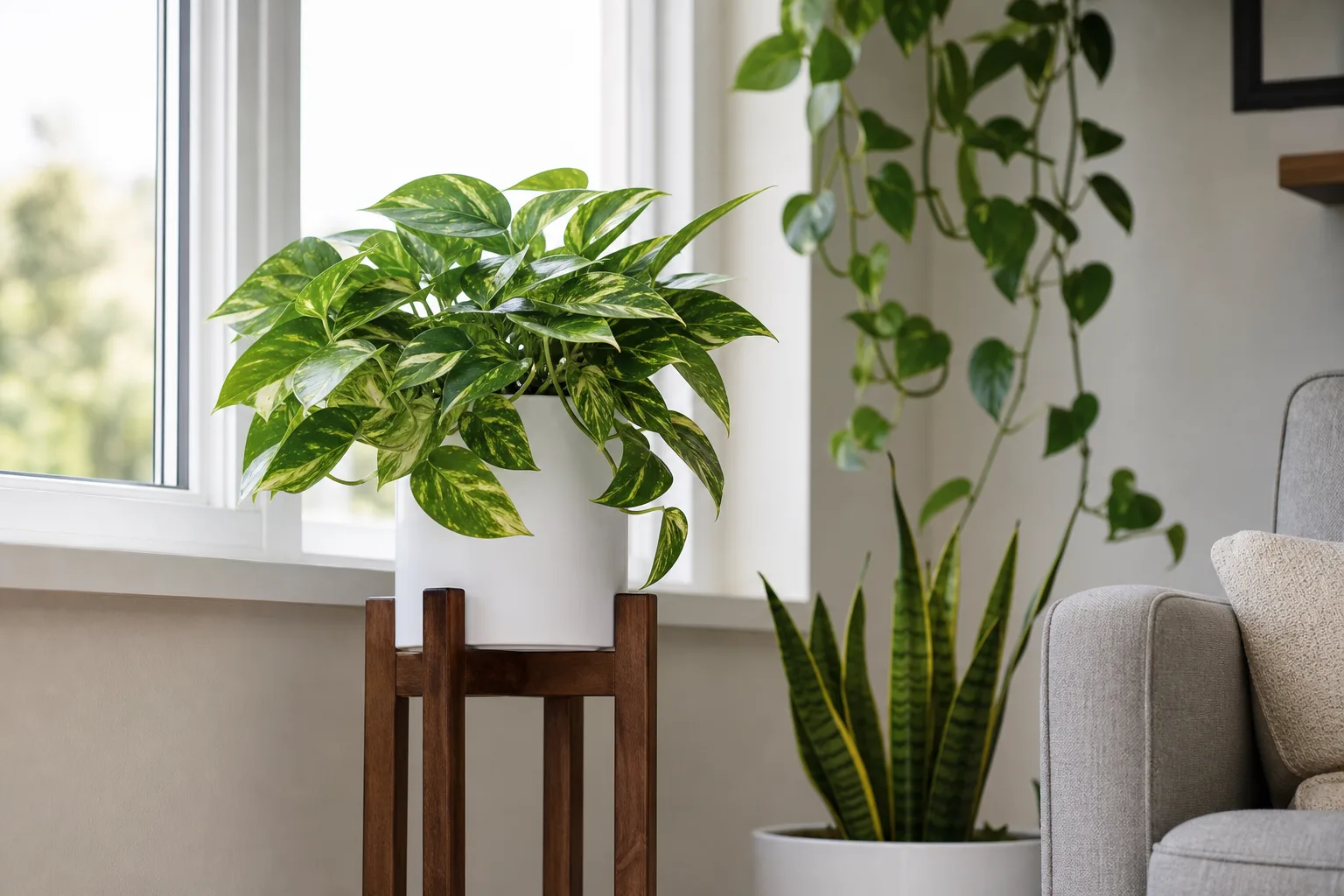
Choose the right plant for the light you have. If your space provides only low light, select plants that genuinely tolerate those conditions without stretching — snake plants, ZZ plants, cast iron plants, and some ferns maintain their form better in dim conditions than light-hungry species like succulents, fiddle-leaf figs, or most flowering plants.
Space plants so they do not shade each other. A crowded plant shelf may look lush, but the plants in the back rows are receiving dramatically less light than the ones at the front. Rotate positions periodically so all plants get time in the brighter spots.
If you use grow lights seasonally, set them up before the plant starts stretching — not after. A plant that enters winter in good light and gets supplemental light through the short-day months will not develop leggy growth in the first place. Catching up after months of etiolation is far harder than preventing it.
Species-Specific Notes
Different plants express legginess differently, and the right fix varies by growth habit.
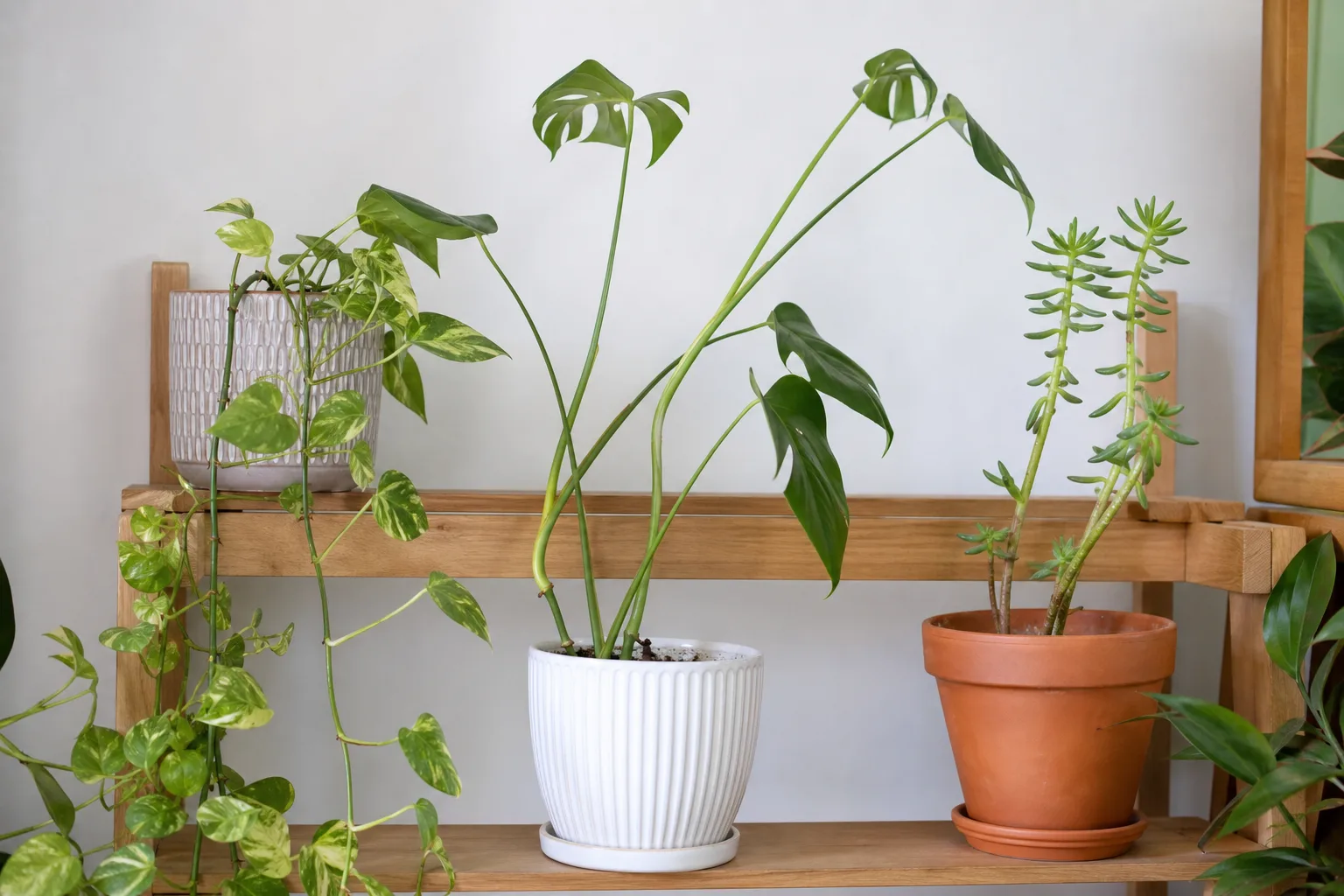
- Pothos and philodendron: These vining plants naturally produce long runners, but in good light the leaves stay large and closely spaced. In low light, internodes lengthen, leaves shrink, and the vine looks sparse. Pruning runners back by one-third to one-half and moving to brighter light restores compact growth. Propagate the cuttings to fill out the pot.
- Monstera deliciosa: Leggy Monsteras show wide internode spacing, smaller leaves with fewer fenestrations, and a distinct reach toward light. They also need vertical support — a moss pole gives the climbing vine a direction. For the full five-step recovery workflow specific to Monstera, see the leggy Monstera guide.
- Rubber plant (Ficus elastica): An upright grower that becomes leggy when light is low, producing a tall bare stem with leaves only at the top. Pruning the main stem back by one-third to one-half in spring or early summer, combined with brighter light, encourages branching below the cut. The bare lower trunk will not regrow leaves, but the new branches create a fuller crown.
- Succulents and cacti: These are among the most light-demanding houseplants and etiolate dramatically in indoor conditions. A succulent that was compact and rosette-shaped and is now stretching upward with wide gaps between leaves needs significantly more light — usually a grow light or a south-facing windowsill. The stretched section will not compact, but the top cutting can be removed and rerooted in bright conditions to start fresh.
- Tradescantia (inch plant): Grows fast and leggy in low light, producing long bare stems with leaves only near the tips. Regular pruning — pinching back growing tips — combined with brighter light keeps them compact. Cuttings root easily in water and can be returned to the pot.
- Fiddle-leaf fig (Ficus lyrata): A tall plant that becomes leggy and top-heavy in insufficient light, sometimes leaning dramatically. Move into brighter light gradually and prune the main stem to encourage branching. A plant that has become tall and sparse may need significant pruning to rebuild a balanced shape.
- Herbs grown indoors: Basil, mint, and other culinary herbs become leggy quickly without strong light. A south-facing windowsill or a dedicated grow light positioned close to the foliage is usually necessary. Pinching back growing tips regularly encourages bushy growth.
Related Guides
- Plant Not Growing? Light, Roots, Soil, and Season Explained — diagnostic framework when growth stalls entirely rather than stretching.
- Leggy Monstera: Causes and Fixes for Fuller Indoor Growth — species-specific five-step recovery for Monstera deliciosa.
- Grow Lights Complete Guide for Indoor Plants — how to choose, position, and schedule artificial light.
- Pruning Indoor Plants — cut placement, timing, and species-specific pruning limits.
- Monstera Light Requirements — light measurement and window placement for Monstera.
- Indoor Plant Watering Basics — adjust watering after changing light conditions.
- How to Make Your Monstera Bushier — density techniques for a fuller container display.
Conclusion
A leggy plant is a plant asking for more light. The stems are long, the leaves are sparse, and the shape is stretched — all because the plant has been trying to reach brighter conditions and could not find them. Fix the light before you fix the shape. Move the plant gradually into stronger indirect light, add a grow light if the window cannot provide enough intensity, and then decide how much of the old stretched structure to prune away or propagate into new plants.
The evidence is in the new growth. If the next leaves emerge closer together, larger, and better oriented, the correction is working. Existing stretched stems will remain as they are — that is the permanent record of past conditions, not a sign that the fix failed. With better light and basic maintenance, the next round of growth will tell a different story.