Why Is My Plant Growing Slowly? Diagnose and Fix Slow Growing Plants
Slow growing plants got you frustrated? Learn which plants are naturally slow, how to diagnose what's holding your plant back, and 9 proven ways to speed up indoor plant growth.
Quick Answer: Is Your Plant Naturally Slow, or Is Something Wrong?
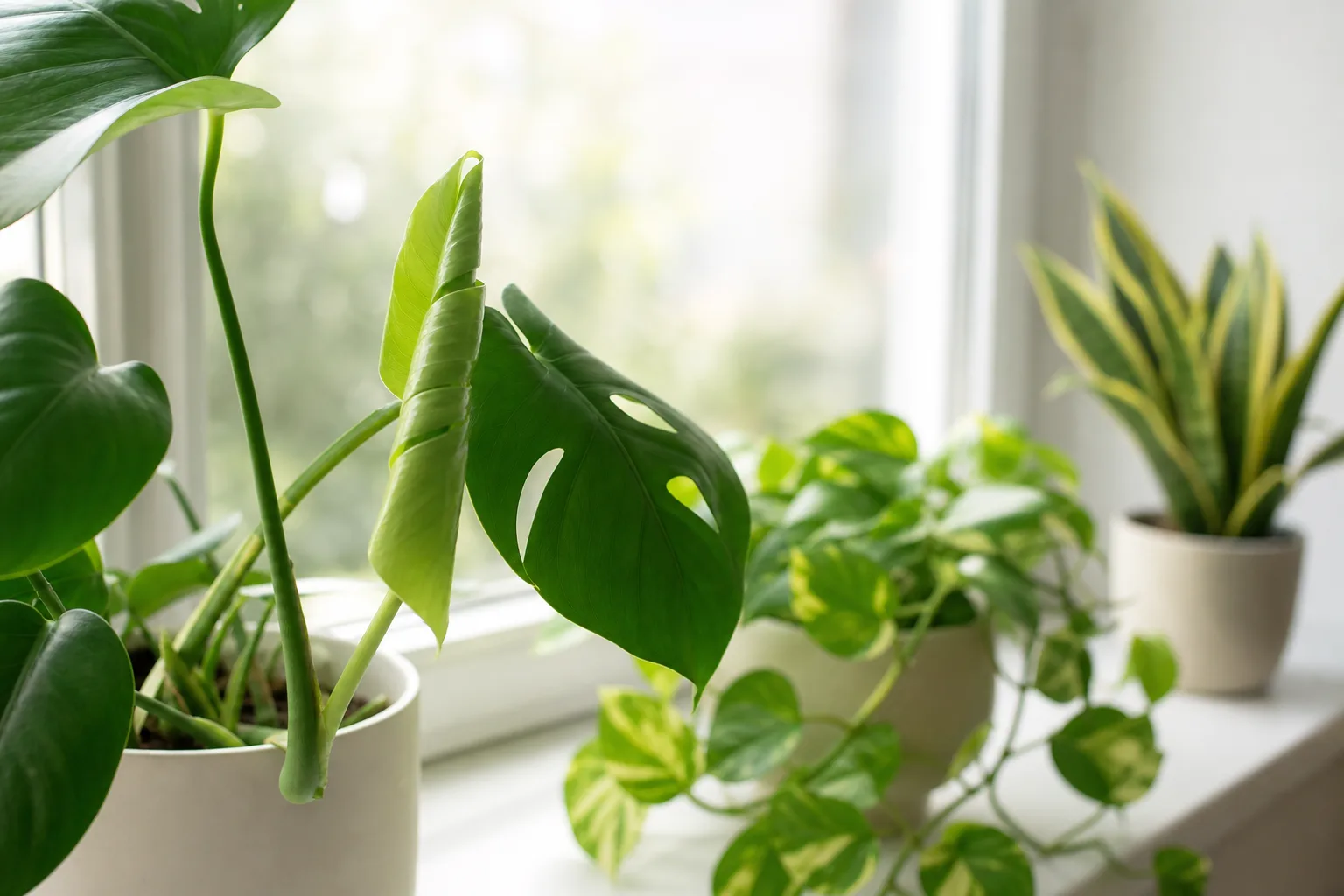
Slow growing plants fall into two categories, and mixing them up leads to a lot of unnecessary worry. The first category is plants that are slow by nature — species like snake plants, ZZ plants, cacti, and hoyas that put out only a handful of leaves per year even in perfect conditions. The second category is plants that should be growing steadily but have slowed down — a pothos that used to push a new leaf every week and now takes a month, or a monstera that unfurled leaves regularly and then went quiet.
If you own a naturally slow grower and it looks healthy, you probably do not have a problem. If you own a moderate or fast grower and it has decelerated noticeably, something in its environment has changed, and the rest of this guide covers how to find it and fix it.
Know What Growth Rate to Expect
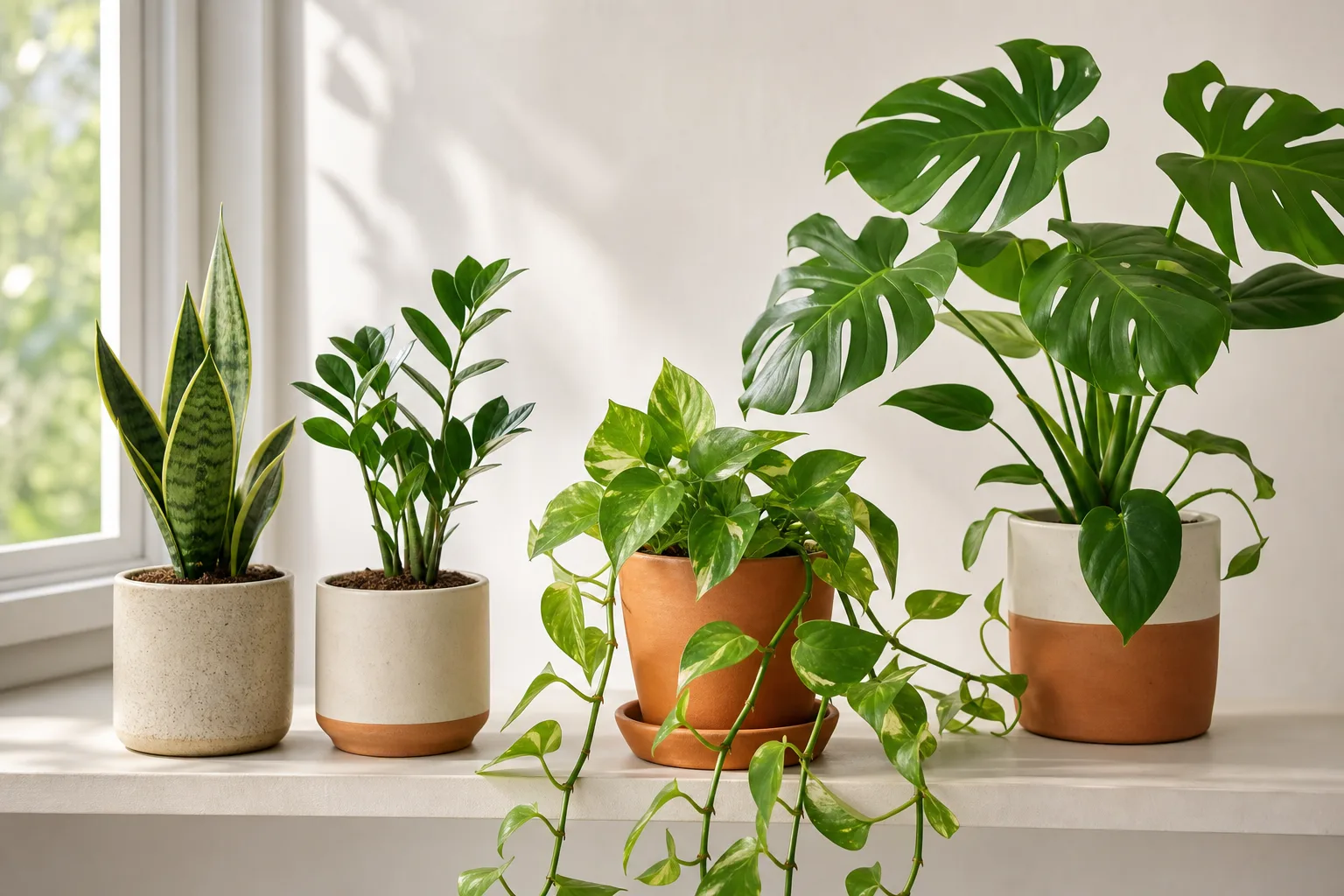
Before diagnosing a problem, calibrate your expectations. Growth rate varies enormously across common houseplant species, and a plant that seems sluggish to you may be performing exactly as its biology dictates.
| Growth Rate | What to Expect | Examples |
|---|---|---|
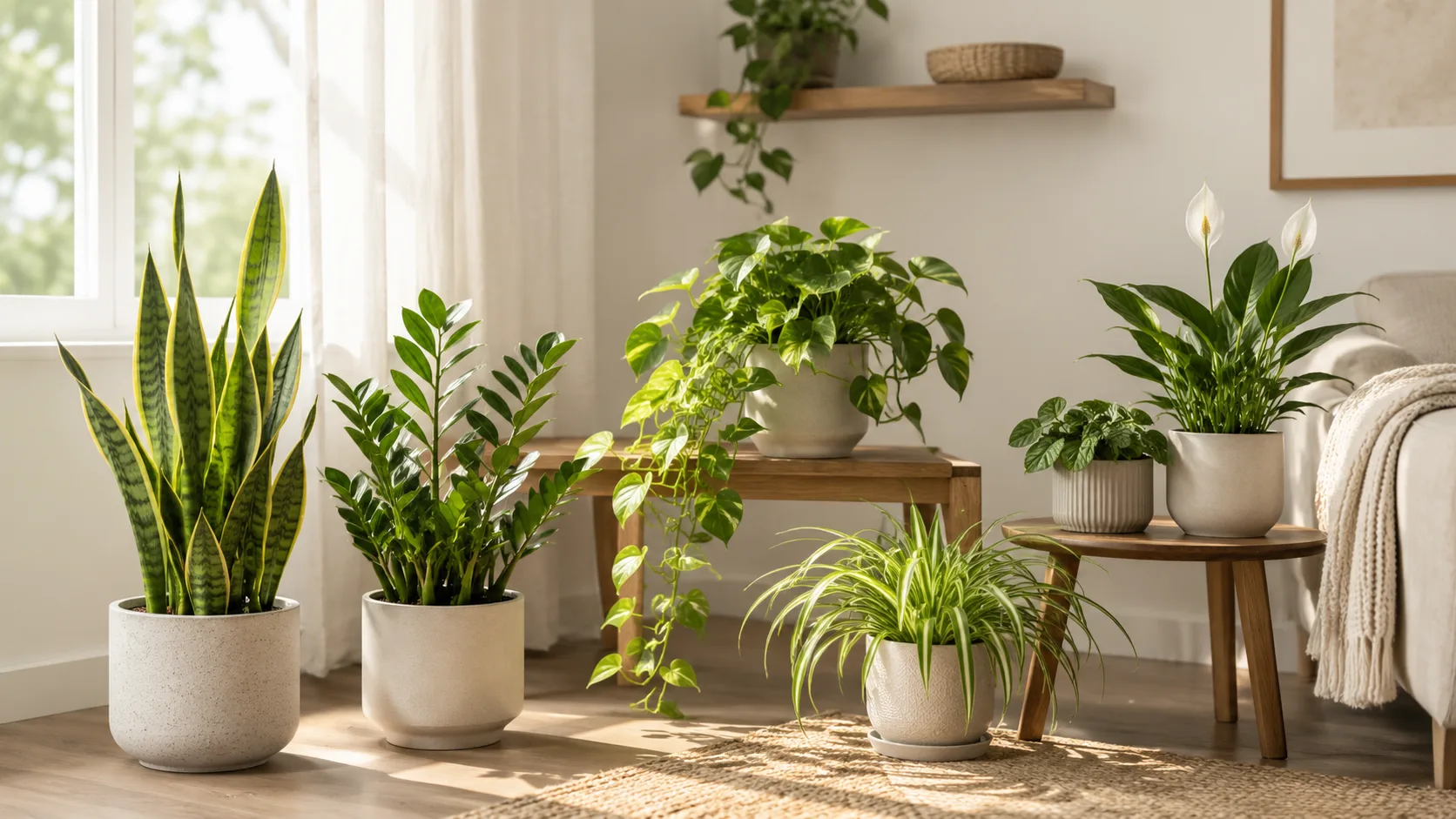
| Very Slow | 1–3 new leaves per year; change is measured in months, not weeks | Snake plant (Sansevieria), ZZ plant (Zamioculcas zamiifolia), cast iron plant (Aspidistra), most cacti and succulents, hoya species |
| Slow | A new leaf every 4–8 weeks during the growing season | Jade plant (Crassula ovata), rubber plant (Ficus elastica), fiddle-leaf fig (Ficus lyrata), aloe vera, peace lily slow phase |
| Moderate | A new leaf every 2–4 weeks during the growing season | Monstera deliciosa, anthurium, calathea, most philodendrons, aglaonema, dracaena |
| Fast | A new leaf every 1–2 weeks during the growing season; vines may extend several inches per month | Pothos (Epipremnum aureum), tradescantia, heartleaf philodendron, syngonium, spider plant offsets |
These are growing-season benchmarks. All plants slow down in fall and winter regardless of category. A fast grower that goes quiet from November through February is not broken — it is following a seasonal cycle. The plants to investigate are the moderate and fast growers that have decelerated during spring or summer, when they should be at peak activity.
The Four Factors That Control Growth Speed
Growth rate is determined by how much energy a plant can produce through photosynthesis and how efficiently it can use that energy to build new tissue. Four factors dominate the equation: light, nutrients, root space, and water. Check them in that order because each one determines whether the next one matters.
Factor 1: Light — The Speed Governor
Light is the primary energy input. A plant in low light photosynthesizes slowly, which means it produces carbohydrates slowly, which means it builds new leaves slowly. No amount of fertilizer, repotting, or watering optimization can override a light deficit because the plant simply does not have the energy budget to use those additional resources.
SDSU Extension lists slow or no new growth, small leaves, yellowing, and a leggy appearance as the primary signs of insufficient light. (SDSU Extension) UF/IFAS Gardening Solutions notes that a bright sunny day outdoors can reach 10,000 foot-candles, while a typical indoor spot several feet from a window may only provide 10–100 foot-candles — a 100x to 1000x difference that explains why plants that grow vigorously in a greenhouse slow to a crawl in a living room. (UF/IFAS Gardening Solutions)
How to diagnose: Use a light meter or a phone app at plant height at midday. If the reading is below the plant’s growth range — below 250 foot-candles for most foliage houseplants — light is limiting growth speed. A room that feels bright to human eyes can be dim to a plant because human eyes adjust to ambient light levels automatically, while plants cannot.
The fix: Move the plant closer to a bright window. An east-facing windowsill, within 2 feet of a south or west window, or directly in an unobstructed north window (for low-light species) are the best natural-light positions. If moving closer is not enough or not possible, supplement with a full-spectrum LED grow light positioned 6–12 inches above the foliage and run for 12–14 hours per day on a timer. Acclimate plants gradually over one to two weeks — a sudden jump from deep shade to bright light can scorch leaves that have thinned their protective layers in response to low light.
Factor 2: Nutrients — The Building Blocks
Once light is adequate, the next bottleneck is usually nutrients. Potting mix is a soilless medium with limited nutrient reserves. Within 6–12 months of planting, the available nitrogen, phosphorus, potassium, and micronutrients are either consumed by the plant or leached out by watering. A plant running on depleted soil will grow slowly because it lacks the raw materials to build new tissue.
UConn Extension notes that nitrogen deficiency causes a general yellowing that starts with older, inner leaves and moves outward, while phosphorus deficiency produces purpling leaf margins and stunted growth, and potassium deficiency shows as brown scorched edges on older leaves. (UConn Home & Garden) If your plant is slow-growing with pale older leaves, nitrogen is the most likely gap.
The fix: Apply a balanced liquid fertilizer at half the recommended strength every two to four weeks during the active growing season (spring and summer). A balanced NPK ratio such as 10-10-10 or 6-4-5 works for most foliage houseplants. If the soil is more than 12–18 months old, repotting with fresh mix is more effective than fertilizing depleted medium — the organic components that hold nutrients and maintain soil structure have broken down, and adding fertilizer to degraded mix produces diminishing returns.
What not to do: Do not fertilize a plant that is in low light, root-bound, or recovering from overwatering. The plant cannot use the nutrients, and the unused fertilizer accumulates as salts that can burn roots. Fix the primary bottleneck before adding nutrients.
Factor 3: Root Space — The Physical Constraint
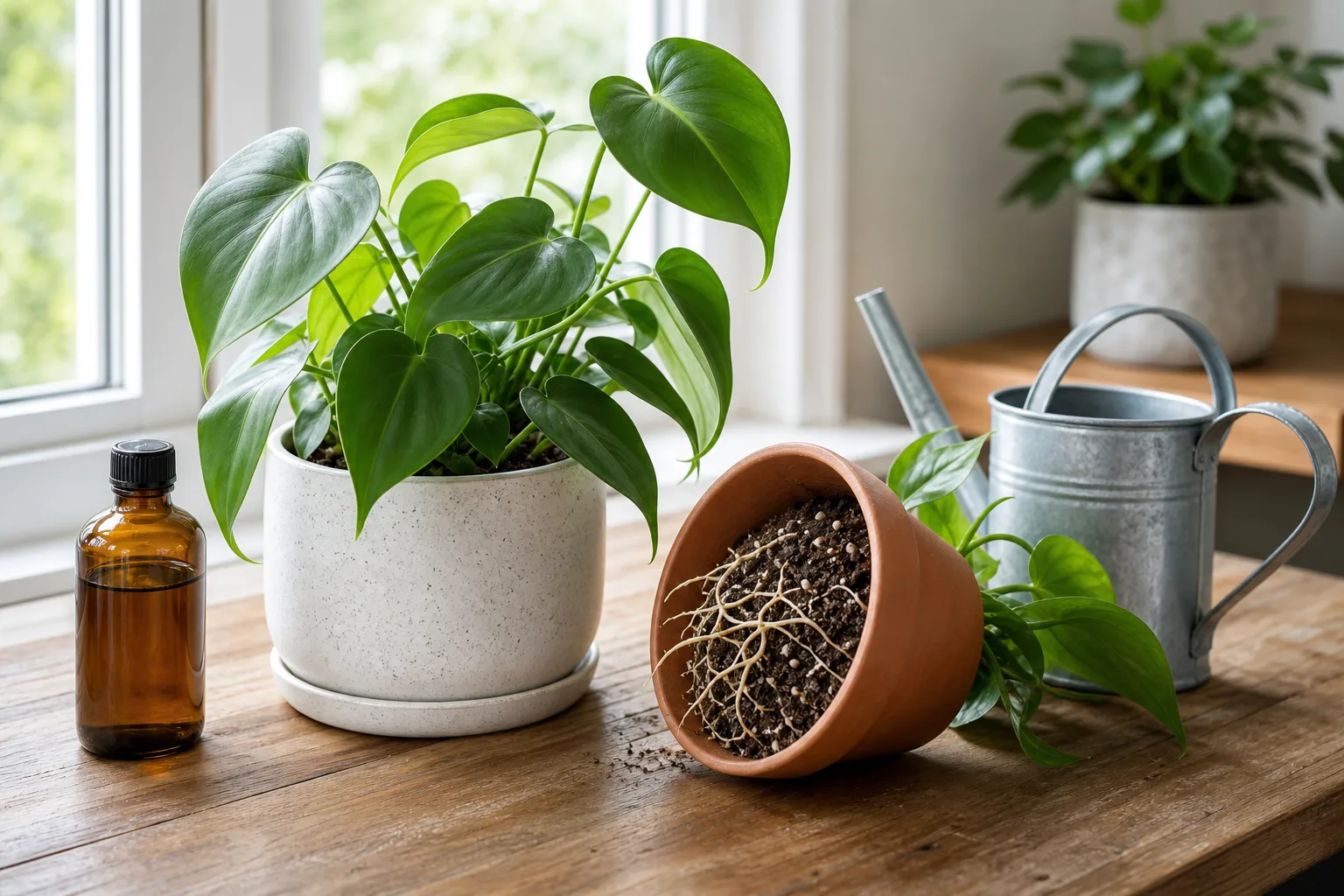
A plant whose roots have filled the container shifts resources away from leaf production and toward root exploration. The result is a plant that looks healthy above the soil line but grows at a fraction of its potential speed. Penn State Extension recommends sliding the plant out of its pot to inspect the root ball directly: if roots are circling densely around the outside and you can barely see potting mix in the bottom third, the plant needs a larger container. (Penn State Extension)
Signs of a root-bound plant include roots emerging from drainage holes, water running straight through the pot without soaking in, the pot drying out noticeably faster than it used to, and progressively slower growth despite good light and fertilizing.
The fix: Repot into a container one to two inches wider in diameter — roughly one size up. A pot that is too large creates a volume of unused soil that stays wet too long, inviting root rot. Gently loosen circling roots with your fingers before planting. For severely matted roots, make a few shallow vertical cuts through the outer root layer with a clean knife to sever the circling pattern and encourage outward growth.
When to repot: Spring or early summer is ideal, when increasing light and warmth help the plant re-establish quickly. Repotting during fall or winter extends the recovery period because the plant is metabolically slow. A severely root-bound plant that is visibly suffering should be repotted regardless of season.
Factor 4: Water — The Consistency Problem
Watering affects growth speed indirectly through root health. Roots need both water and oxygen, and the balance between the two determines how efficiently they function. Soil that is constantly wet suffocates roots and slows nutrient uptake. Soil that dries out completely between waterings stresses the plant into conservation mode.
SDSU Extension notes that too little water causes wilting, dry soil, and brown leaf tips, while too much water — the main reason most houseplants die — causes leaves to drop, moldy stems, and foul odor from the root zone. (SDSU Extension) University of Maryland Extension identifies overwatering as a primary cause of poor growth and root rot in indoor plants. (University of Maryland Extension)
The fix: Water thoroughly when the top 2–5 cm of soil feels dry — not on a calendar schedule. Check moisture with a finger or wooden skewer before each watering. When you water, apply enough that it runs freely from the drainage holes, then empty the saucer after 15–30 minutes. A plant growing in consistently appropriate moisture will grow faster than one cycling between drought stress and saturation.
The pot size factor for watering: An oversized pot retains moisture longer than the roots can use it, creating a perpetually wet zone that slows root function. Stick to the one-size-up rule when repotting. A plant in a pot proportioned to its root system dries at a healthy rate between waterings, which supports faster growth.
Temperature and Seasonal Effects
Temperature sets the metabolic ceiling. Most tropical houseplants grow fastest between 65–80°F (18–27°C) . Below 60°F (15°C) , growth slows noticeably. Below 50°F (10°C) , growth effectively stops and cold damage becomes likely. UConn Extension notes that even when the thermostat reads warm enough, cold drafts from windows, poorly insulated walls, or air conditioning vents can create microclimates around individual plants that are 5–10°F colder than the room average. (UConn Home & Garden)
Plants near drafty windows in winter, on cold floors, or in the direct path of air conditioning vents will grow more slowly than plants in stable, warm locations. A plant stand or riser adds enough separation from a cold floor to make a measurable difference.
Seasonal slowdown is normal and expected. Most houseplants reduce growth from October through February in response to shorter days and cooler ambient temperatures. During this period, reduce watering frequency, stop fertilizing entirely unless the plant is under grow lights and actively pushing growth, and wait for spring. Attempting to force growth during dormancy by increasing water or fertilizer will stress the plant and can damage roots.
Nine Ways to Speed Up Slow Growing Plants
If your plant is a moderate or fast grower that has slowed down, and you have worked through the four-factor diagnosis above, here are the nine interventions that reliably increase growth rate, ordered from highest to lowest impact.
1. Maximize light within the plant’s tolerance. This is the single most effective growth accelerator. Move the plant as close to a bright window as its species tolerates without leaf scorch. For most tropical foliage plants, an east-facing windowsill or within 1–2 feet of a south or west window is ideal. UF/IFAS Gardening Solutions notes that light intensity drops off sharply with distance from the glass — moving just a couple of feet back from a bright window can cut the usable light reaching the leaves by half or more. (UF/IFAS Gardening Solutions)
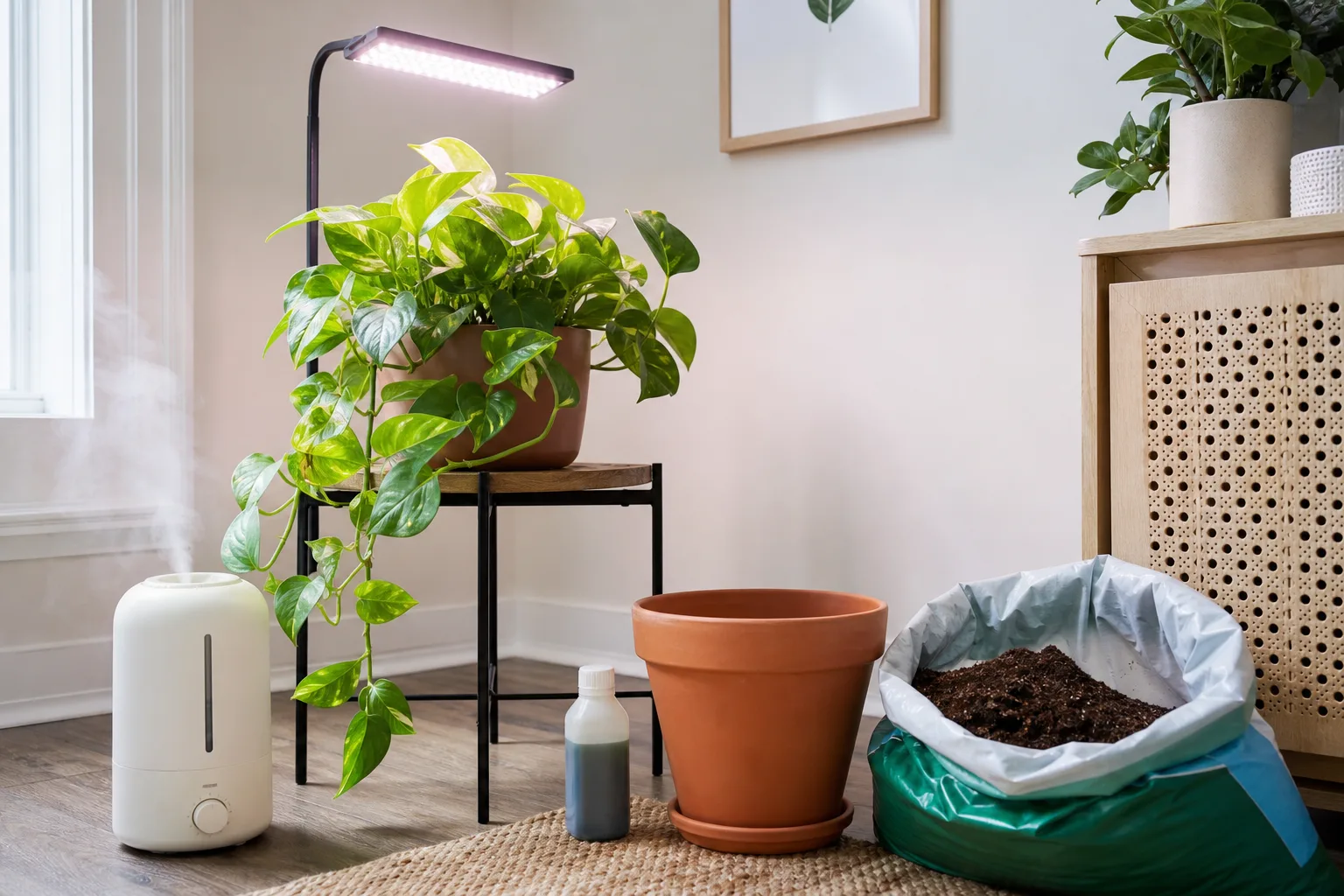
2. Add a grow light for winter or dim rooms. Full-spectrum LED panels or bulbs positioned 6–12 inches above the foliage and run for 12–14 hours daily can deliver 500–1,500 foot-candles at the leaf surface. Use a timer to keep the photoperiod consistent. This is the most reliable way to maintain growth through winter or in north-facing rooms.
3. Fertilize on a schedule during the growing season. A half-strength balanced liquid fertilizer applied every two to four weeks from March through September provides a steady nutrient supply without risking salt buildup. Stop in October and resume in March unless the plant is under grow lights and actively growing year-round.
4. Repot before the plant becomes root-bound. Annual root checks in spring catch the constraint before it slows growth. If you wait until the plant is visibly stalled, you have already lost weeks or months of potential growth. Fast growers like pothos and monstera may need repotting every 12–18 months.
5. Refresh soil annually or biennially. Even if repotting is not needed, replacing the top few centimeters of potting mix with fresh material replenishes nutrients and improves aeration. For plants in the same pot for more than 18 months, a full soil replacement is more effective than top-dressing.
6. Water consistently — not on a schedule, but not haphazardly. Check soil moisture before each watering. A plant that receives water exactly when it needs it, rather than when it is convenient or when the grower remembers, maintains steady root function and grows faster than a plant cycling between wet and dry extremes.
7. Maintain humidity above 40% for tropical species. Low humidity does not directly stop growth the way low light does, but it adds stress that reduces the plant’s overall vigor. A humidifier, pebble tray, or grouping plants together raises local humidity and supports faster growth in species like calathea, ferns, and anthurium.
8. Keep temperatures stable and within the growth range. Avoid placing plants near drafty windows in winter, directly in air conditioning airflow in summer, or on cold floors year-round. A consistent temperature above 65°F (18°C) supports steady metabolism and growth.
9. Prune strategically to redirect energy. Removing old, damaged, or yellowing leaves redirects the plant’s resources toward new growth rather than maintaining declining tissue. For vining plants like pothos and philodendron, periodic tip pruning encourages branching and fuller growth rather than long, sparse vines.
Common Mistakes That Keep Slow Growing Plants Stuck
Several well-intentioned responses to slow growth actually make it worse.
Over-fertilizing to “jump-start” growth. Adding more fertilizer than the plant can use causes salt accumulation in the soil, which burns root tips and further reduces growth. Half-strength is safer and more effective than full-strength for most houseplants.
Repotting into a dramatically larger pot. Moving from a 6-inch to a 10-inch pot creates a large volume of soil that stays wet, promotes root rot, and diverts the plant’s energy into root exploration at the expense of leaf production. One size up is the rule.
Overwatering in response to slow growth. The instinct to “do something” often manifests as extra watering. A slow-growing plant uses less water than a fast-growing one, and keeping the soil constantly wet is a direct path to root rot.
Fertilizing a light-starved plant. The plant cannot photosynthesize enough to use the nutrients, so salts accumulate. Fix light before adding fertilizer.
Moving a plant from deep shade to full sun in one step. Leaves adapted to low light burn in direct sun. Acclimate over one to two weeks by moving the plant incrementally closer to the target light level.
Expecting winter growth to match summer growth. Seasonal slowdown is a biological program, not a problem. Judge growth rate year-over-year for the same season, not across seasons.
The Growth Rate Diagnostic Sequence
Work through these checks in order. Each one rules out the most impactful constraint before moving to the next.
- Identify the species and its expected growth rate. Is this a naturally slow grower? If yes, accept the baseline and optimize conditions without expecting dramatic acceleration. If it is a moderate or fast grower that has decelerated, proceed.
- Measure light at leaf level at midday. Below 250 foot-candles? Fix light first — nothing else will help until the energy budget is adequate.
- Check the roots. Slide the plant out. Circling, dense roots? Repot one size up. Brown, mushy, or sour-smelling roots? Address root rot before anything else.
- Assess soil age and nutrient status. Soil older than 12–18 months? Replace or refresh. Pale older leaves? Start half-strength fertilizing during the growing season.
- Review watering consistency. Is the soil cycling between bone-dry and saturated? Switch to checking moisture before each watering rather than following a fixed schedule.
- Check temperature and seasonal timing. Is it fall or winter and the plant otherwise looks healthy? Seasonal slowdown is normal — wait for spring. Is the plant in a cold draft or AC path? Relocate to a stable, warm spot.
By the time you complete this sequence, you will have found the constraint in nearly every case.
Related Guides
- Plant not growing? Light, roots, soil, and season explained — when the plant has stopped growing entirely rather than slowed down.
- Why are my new leaves small? — diagnosing shrinking leaf size, a related signal of growth constraints.
- Fertilizing indoor plants: complete care guide — feeding schedules, NPK ratios, and seasonal adjustments.
- How to water indoor plants the right way — moisture checking, drainage, and avoiding the over/under cycle.
- Repotting houseplants — when, how, and what size pot to use.
- Best potting mix for indoor plants — soil ingredients that support healthy root zones and steady growth.
- Signs your houseplants need more humidity — when dry air is limiting vigor.
Conclusion
Slow growing plants are either slow by nature or slow by constraint. The first step is knowing which category your plant falls into. If you own a snake plant, ZZ plant, or cactus, slow growth is normal and your plant is likely fine. If you own a pothos, monstera, or philodendron that has slowed from its previous pace, the constraint is almost always light, nutrients, root space, or watering consistency — in that order.
Fix the light first because it determines whether the plant can use any other improvement you make. Then address nutrients, root space, and watering. During the growing season, you should see faster growth within two to four weeks of correcting the primary bottleneck. During winter, seasonal slowdown is expected, and patience is the correct response.
The plant is not broken. It is operating at the speed its current conditions allow, and now you know which condition to improve first.