10 Best Low-Light Indoor Plants for North-Facing Rooms and Dark Corners
Compare 10 low light indoor plants that actually stay healthy in dim rooms, with real placement tips, pet safety notes, watering mistakes to avoid, and which ones genuinely thrive vs. barely survive.
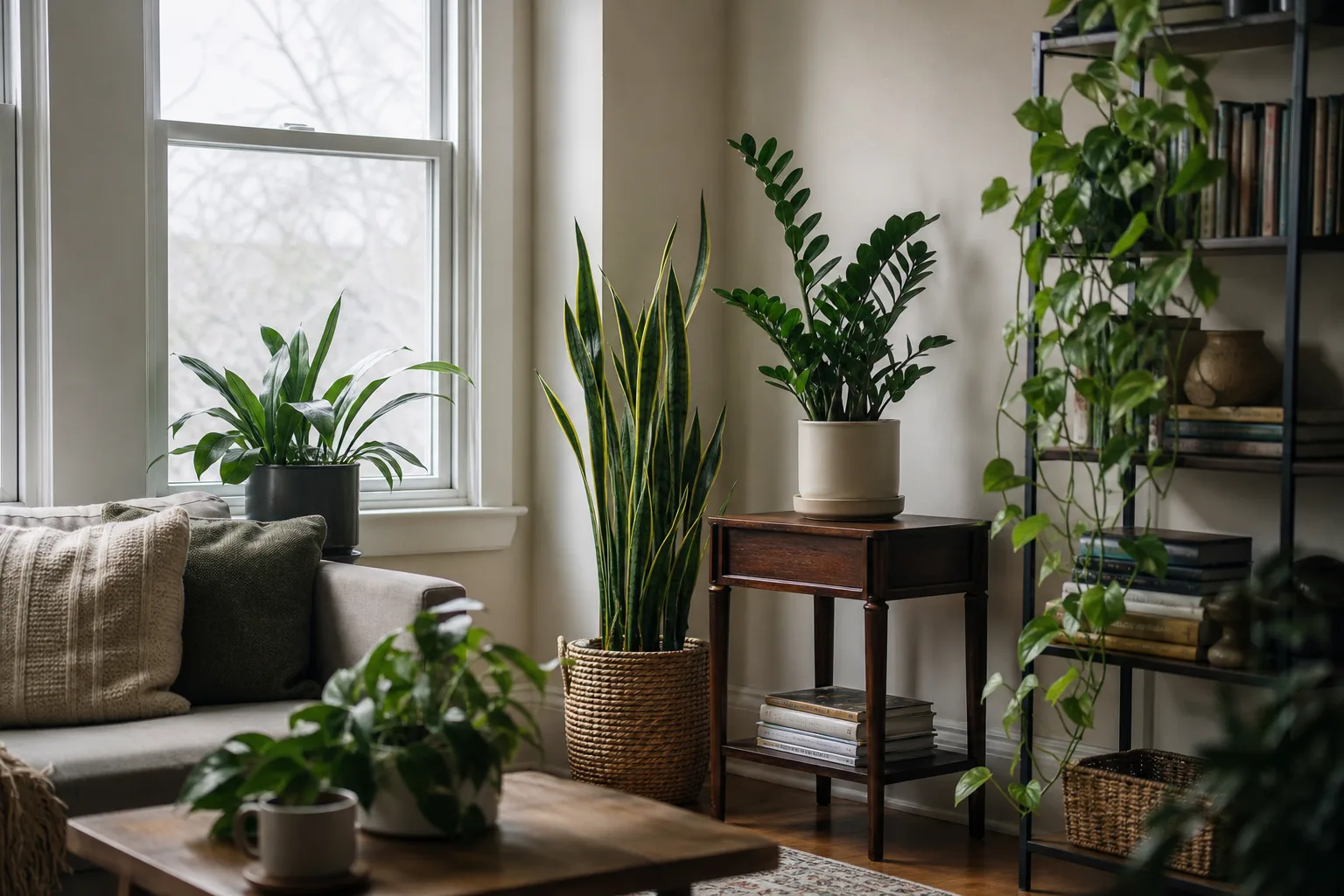
Buying a “low light indoor plant” and watching it slowly stretch, fade, and die three months later is one of the most common indoor gardening disappointments. The problem is usually not the plant. It is the gap between what “low light” means on a nursery tag and what your room actually provides.
This guide is for people with north-facing windows, small apartments, shaded corners, office cubicles, and rooms where the light feels dim even during the day. Every plant on this list can genuinely survive in lower light than most tropical houseplants — but “survive” means different things for different plants, and no plant on Earth grows in a truly dark room.
If you want a filterable quick list from LeafyPixels plant metadata, start with Best Low-Light Indoor Plants. This guide goes deeper: what low light actually measures in foot-candles, how far from a window is too far, pet safety per plant, the watering trap that kills low-light plants fastest, and which of these 10 actually thrives versus just tolerates dim conditions.
What “Low Light” Actually Means Indoors
“Low light” is not a feeling. It is a measurable drop in light intensity. University of Maryland Extension classifies low-light indoor plants as those needing 50 to 250 foot-candles, and notes that indoor light drops sharply with distance from a window. A plant six feet from a north-facing window may receive 10 times less light than the same plant on the windowsill. (University of Maryland Extension)
University of Missouri Extension goes further: under artificial light, some low-light plants can be maintained at as little as 10 foot-candles — but “maintained” means alive, not growing vigorously. (MU Extension)
This matters because most homes have far less usable light than people think. The human eye adapts to dim rooms, making them feel brighter than they actually are. A shadow test helps: hold your hand 12 inches above the spot where you want to place the plant during the brightest part of the day. If the shadow is soft but still visible, many low-light plants in this list can work there. If there is barely a shadow, you are in the “survival only” zone for even the toughest plants.
The Critical Difference: Tolerate vs. Thrive
The plants on this list fall into two real-world categories:
- True survivors (50-100 fc): Snake plant, ZZ plant, cast iron plant — they can stay green and hold their shape for months or years in dim rooms, even if they grow slowly.
- Best in moderate low light (100-250 fc): Pothos, heartleaf philodendron, peace lily, aglaonema, parlor palm, spider plant, dracaena — they look fuller, grow faster, and hold variegation better when light is toward the brighter end of “low.”
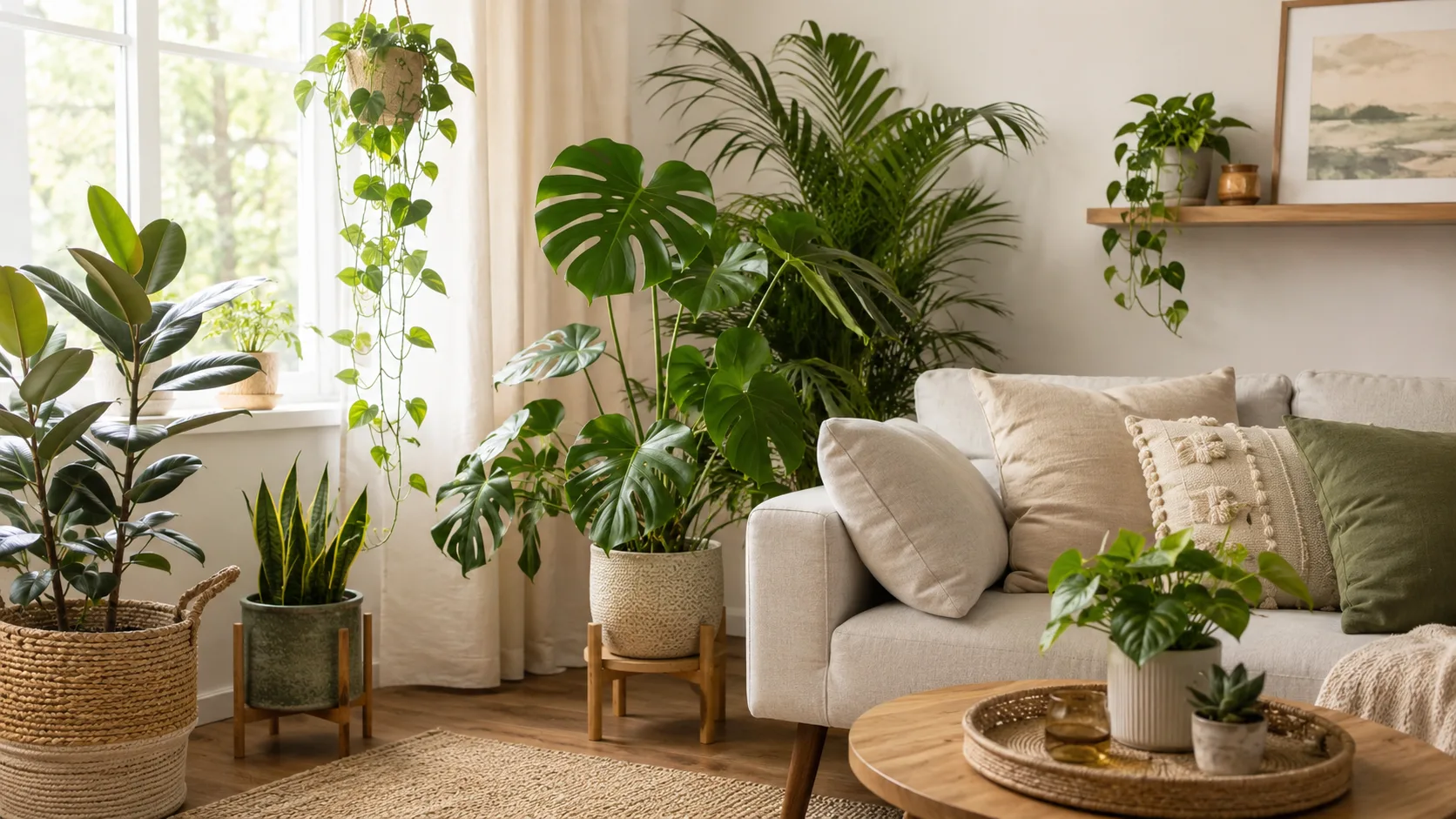
Some guides list calathea, monstera, fiddle leaf fig, or rubber plant as low-light plants. They are not. Monstera in low light produces small, unsplit leaves on stretched stems. Rubber plant drops lower leaves and loses its shape. Calathea needs humidity precision that dim rooms rarely provide. This list excludes them because the goal is plants you can buy today and still have alive next year.
Can Any Plant Survive a Room With No Windows?
No plant genuinely thrives with zero natural light. Snake plant and ZZ plant come closest — they can survive for months in windowless offices with consistent fluorescent or LED lighting, but growth will be near-zero and leaves may thin over time. For truly windowless rooms, a small grow light on a timer is the difference between a living plant and a slow decline. See the grow lights complete guide for placement and spectrum basics.
How These 10 Plants Were Selected
These ten were chosen for actual survival in 50-250 foot-candle rooms — not because a marketing label says “low light” on the pot. The filtering criteria:
- Documented low-light tolerance from extension sources and botanical garden references
- Available in standard North American nurseries and big-box stores
- Pest-resistant enough for indoor life without constant intervention
- Care difficulty ranging from very easy to easy-medium (no high-humidity or precision-watering plants)
- Mix of growth habits: upright statement plants, trailing vines, compact desk plants
- Every plant link goes to an existing LeafyPixels care hub with watering, light, and problems guides
Plants excluded despite common “low light” labeling: monstera (gets leggy without bright indirect), fiddle leaf fig (needs bright light to hold leaves), rubber plant (prefers medium-bright), calathea and prayer plant (fussy about humidity and water quality), Boston fern (messy in dry indoor air), English ivy (spider mite magnet indoors), lucky bamboo (often mislabeled — needs more light than people think).
Low-Light Indoor Plants Comparison Table
| Plant | Best For | Light Floor | Watering | Pet Safety | Care Level |
|---|---|---|---|---|---|
| Snake plant | Forgetful owners, corners | 50+ fc | Dry thoroughly | Toxic (ASPCA) ⚠️ | Very easy |
| ZZ plant | Windowless rooms, travel | 50+ fc | Deep dry-down | Toxic (ASPCA) ⚠️ | Very easy |
| Pothos | Trailing vines, shelves | 100+ fc | Top half dry | Toxic (ASPCA) ⚠️ | Easy |
| Heartleaf philodendron | Soft trails, cabinets | 100+ fc | Top inch dry | Toxic (ASPCA) ⚠️ | Easy |
| Cast iron plant | Dark neglected corners | 50+ fc | Partly dry | Non-toxic ✓ | Very easy |
| Peace lily | Wilt signal beginners | 100+ fc | Just before wilt | Toxic (ASPCA) ⚠️ | Easy-medium |
| Spider plant | Pet-conscious hanging | 100+ fc | Dry top inch | Non-toxic ✓ | Easy |
| Aglaonema | Colorful dim foliage | 75+ fc | Dry partway | Toxic (ASPCA) ⚠️ | Easy |
| Dracaena | Sculptural height | 75+ fc | Dry between water | Toxic (ASPCA) ⚠️ | Easy |
| Parlor palm | Graceful palm look | 100+ fc | Light consistent moisture | Non-toxic ✓ | Easy-medium |
Use this table to shortlist by your weakest constraint. If you forget to water for weeks: snake plant or ZZ plant. If pets chew leaves: cast iron plant, spider plant, or parlor palm. If you need trailing coverage: pothos or heartleaf philodendron.
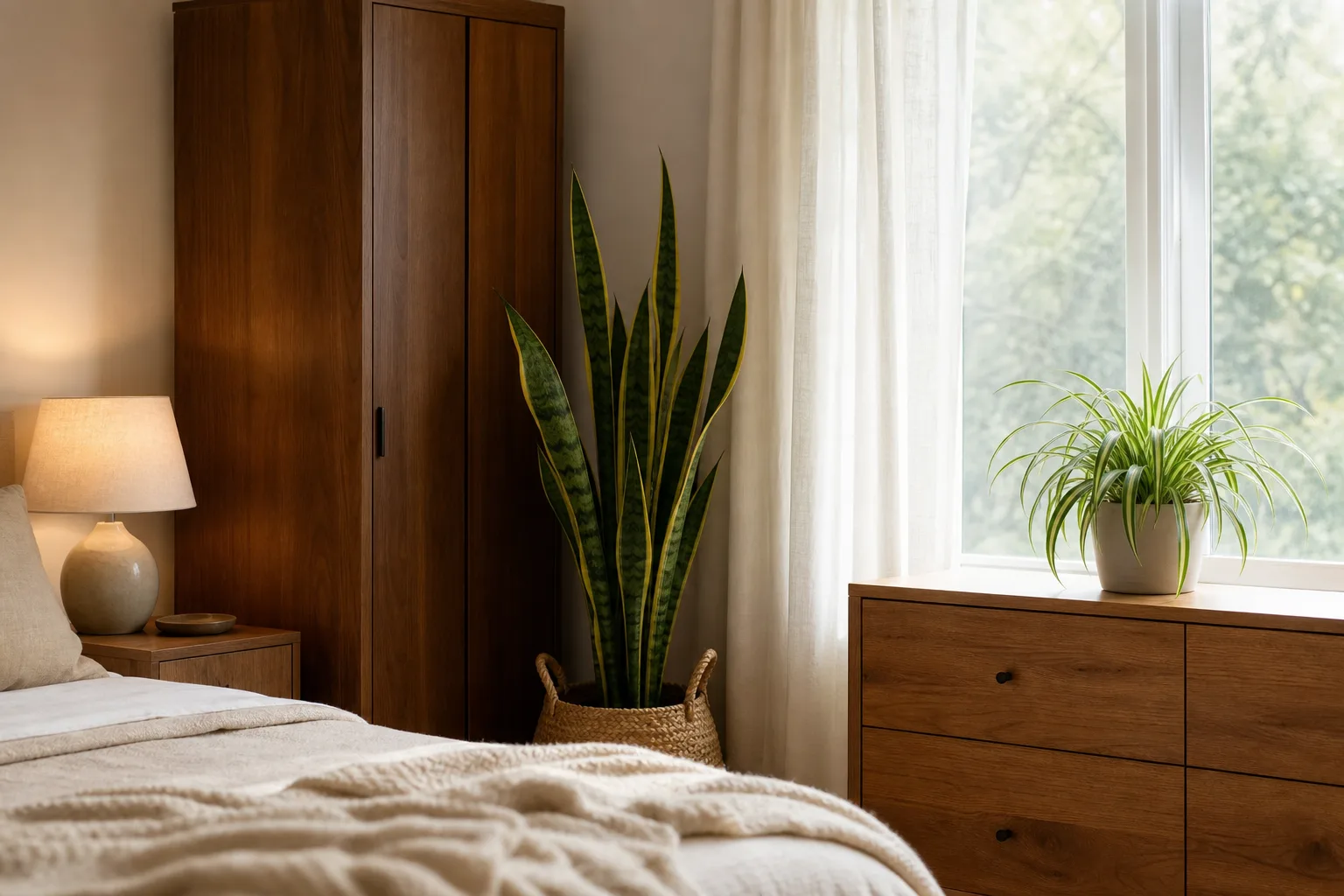
1. Snake Plant
Best for: Forgetful waterers, narrow corners, bedrooms, offices Difficulty: Very easy Light: 50+ fc; tolerates fluorescent-only offices Water: Let soil dry completely between waterings Best placement: Floor corner, hallway, bedroom, desk, bathroom Pet safety: Toxic to cats and dogs — saponins cause nausea, vomiting, diarrhea per ASPCA
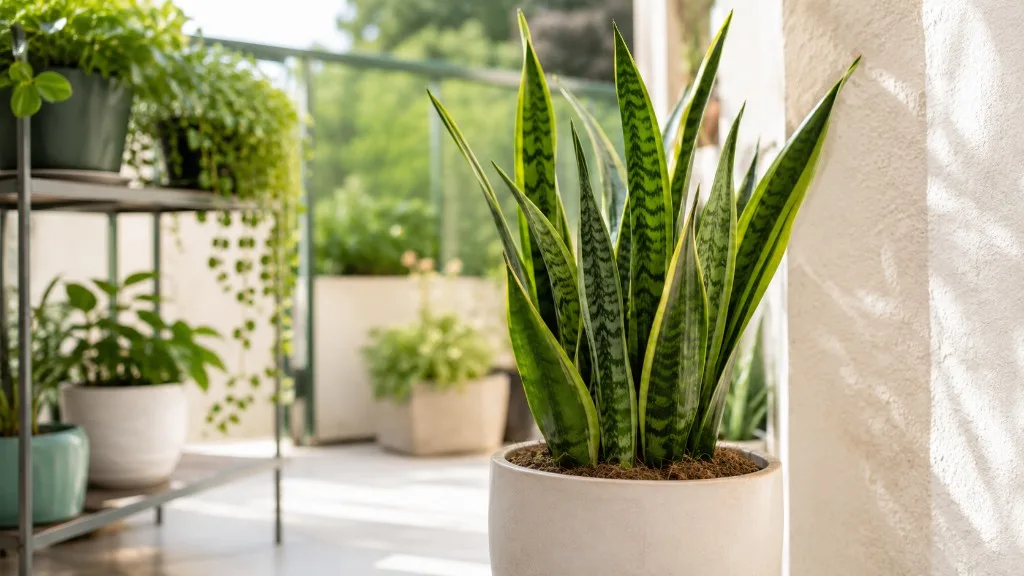
Snake plant is the default answer to “what survives in my dark apartment” for a reason. Its upright, sword-shaped leaves hold their form in conditions that make other houseplants collapse. ASPCA confirms snake plant is toxic to both dogs and cats, with saponins as the toxic principle. (ASPCA Snake Plant) Penn State Extension notes it is forgiving in low light but grows stronger in bright indirect — and its real vulnerability is overwatering, not dim rooms. (Penn State Extension)
New York Botanical Garden confirms snake plants can survive the less-than-ideal lighting of an office space but will not grow without moderate sunlight. (NYBG LibGuides)
Why it works: Thick succulent leaves store water for weeks. If the room has enough light to read by, snake plant can stay green. Care tip: Use a pot with drainage holes and gritty, fast-draining soil. Watering once a month in winter is often enough. Common mistake: Watering weekly on a schedule. In low light, snake plant uses water so slowly that wet soil sits against roots and causes rot. Avoid this plant if: You have a chewing pet at floor level and cannot place the plant out of reach. Also skip if you want fast visible growth — snake plant in low light is a slow, steady companion, not a fast grower.
Useful care guides:
- Snake plant care guide
- Snake plant watering guide
- Snake plant light guide
- Snake plant propagation guide
- Snake plant problems guide
2. ZZ Plant
Best for: Windowless offices, frequent travelers, dim apartments Difficulty: Very easy Light: 50+ fc; survives on fluorescent office lighting alone Water: Let soil dry deeply between waterings — rhizomes store water Best placement: Office desk, dim hallway, bedroom corner, bathroom Pet safety: Toxic to cats and dogs per ASPCA — keep out of reach. (ASPCA ZZ Plant)
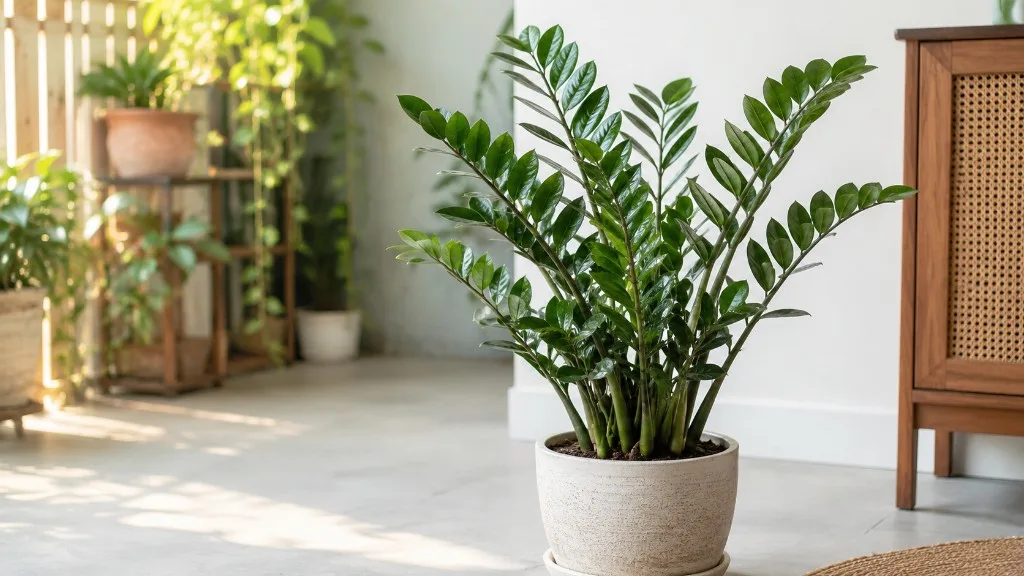
ZZ plant is arguably the single most shade-tolerant houseplant available. Missouri Botanical Garden notes Zamioculcas zamiifolia tolerates low light and drought — matching the exact use case of someone who wants a living plant in a room where other plants fail. (Missouri Botanical Garden)
Its underground rhizomes act as water and nutrient reserves, so a ZZ plant can go weeks without attention and show no visible stress. The glossy, waxy leaflets look polished even when the plant has been ignored.
Why it works: Rhizomes buffer against both drought and low light. A ZZ plant can sit in a dim corner for a month while you travel and look exactly the same when you return. Care tip: Lift the pot when dry — it feels noticeably lighter. If the pot still feels heavy, wait longer. Overwatering is the only reliable way to kill a ZZ plant. Common mistake: Treating glossy leaves as a sign the plant is happy and needs more water. Glossy leaves are ZZ’s default state. Water only when the soil is dry deep into the pot. Avoid this plant if: You have a pet that chews anything green at floor or shelf level. ZZ plant is not a safe free-access plant for cats or dogs.
Useful care guides:
- ZZ plant care guide
- ZZ plant watering guide
- ZZ plant light guide
- ZZ plant propagation guide
- ZZ plant problems guide
3. Pothos
Best for: Trailing vines on shelves, hanging baskets, fast visual payoff Difficulty: Easy Light: 100+ fc for best growth; tolerates lower light with slower growth Water: Let top half of soil dry, then soak and drain Best placement: Hanging basket, high shelf, top of bookcase, kitchen cabinet Pet safety: Toxic to cats and dogs per ASPCA — contains insoluble calcium oxalates. (ASPCA Pothos)
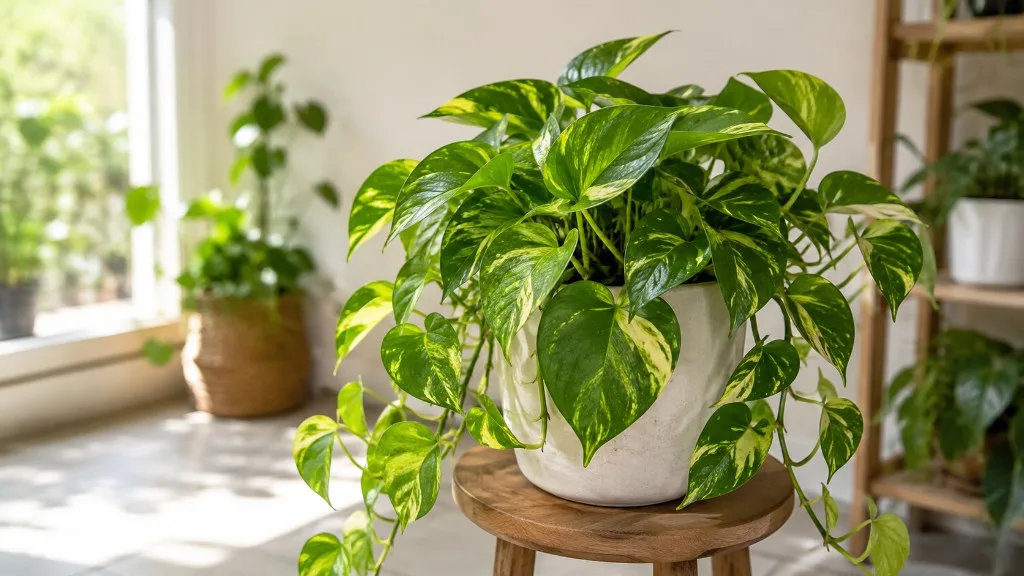
Pothos is the best trailing plant for low-light rooms because it grows faster than heartleaf philodendron in similar conditions and gives visible feedback — leaves droop slightly when thirsty, then recover within hours of watering. It is the plant equivalent of a clear fuel gauge.
In very dim rooms, variegated pothos varieties (Golden Pothos, Marble Queen) may revert toward solid green as the plant maximizes its limited chlorophyll. If you want variegation to hold in low light, choose a brighter spot or accept that the plant will trend greener over time.
Why it works: Pothos adapts to a wide range of conditions. It grows in offices, apartments, and dorm rooms where light is poor but not absent.
Care tip: Trim long bare vines to encourage fuller growth near the pot. Pothos cuttings root easily in water — you can fill out a sparse pot with your own trimmings.
Common mistake: Keeping soil constantly wet because pothos looks “tropical.” Pothos roots need air. Soggy soil in a dim room is a direct path to yellow leaves and stem rot.
Avoid this plant if: Your cat or dog has access to trailing vines at any height. Pothos is a common cause of oral irritation calls due to its calcium oxalate content.
Useful care guides:
- Pothos care guide
- Pothos watering guide
- Pothos propagation guide
- Pothos light guide
- Pothos problems guide
4. Heartleaf Philodendron
Best for: Soft trailing greenery on cabinets and shelves, softer look than pothos
Difficulty: Easy
Light: 100+ fc; lower end may slow growth noticeably
Water: Let top inch or two of soil dry between waterings
Best placement: Bookshelf, cabinet top, hanging basket near indirect light
Pet safety: Toxic to cats and dogs — contains insoluble calcium oxalates per ASPCA. (ASPCA Heartleaf Philodendron)
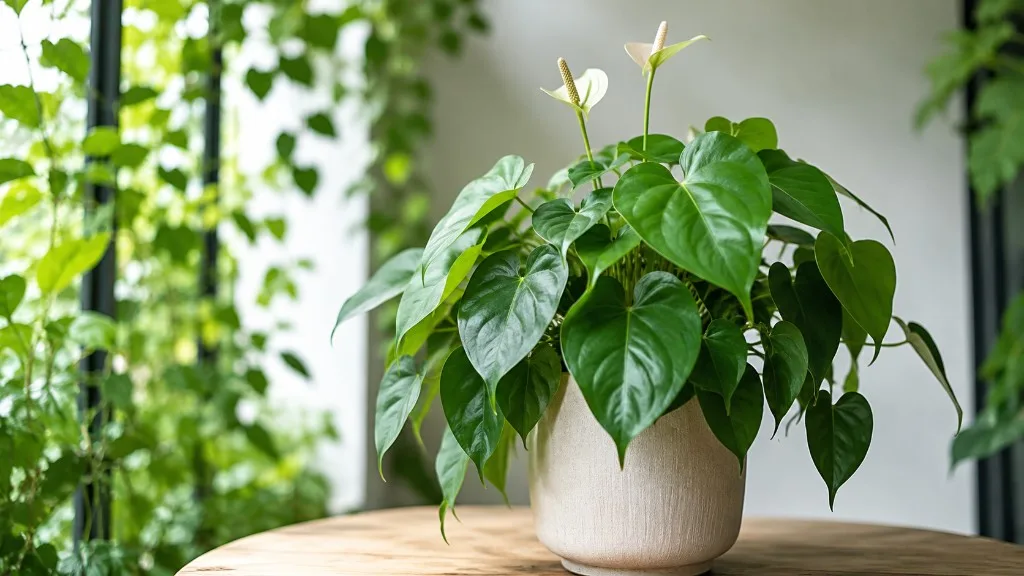
Heartleaf philodendron is pothos’s softer, more delicate-looking cousin. Its leaves are heart-shaped rather than waxy and pointed, giving a gentler visual effect in the same trailing arrangement. Both plants tolerate similar low-light conditions, but heartleaf philodendron grows slightly slower and prefers the brighter end of “low light” to look full.
If your room is bright enough to read without a lamp during the day, heartleaf philodendron will trail steadily and look healthy. In genuinely dim corners, pothos holds its form better over time.
Why it works: Classic trailing vine with softer foliage than pothos; handles normal indoor humidity and average light without daily attention.
Care tip: Yellow leaves with damp soil are a classic overwatering signal in low light. The plant uses less water when it receives less light — reduce watering frequency in winter and in dim rooms.
Common mistake: Buying heartleaf philodendron for a very dark corner where only ZZ plant or snake plant would hold up. It needs the brighter end of “low light” to maintain fullness.
Avoid this plant if: You have a floor-level pet that chews vines, or your room is truly dim (below 75 fc) and you need a plant that stays full without a grow light.
Useful care guides:
- Heartleaf philodendron care guide
- Philodendron watering guide
- Philodendron light guide
- Philodendron propagation guide
- Philodendron problems guide
5. Cast Iron Plant
Best for: Neglected dark corners where every other plant has died Difficulty: Very easy Light: 50+ fc; one of very few plants that genuinely tolerates deep shade indoors Water: Let soil partly dry between waterings Best placement: Dark corner, hallway, north-facing room, under stairwell with ambient light Pet safety: Non-toxic to cats and dogs per ASPCA — Aspidistra elatior ✓
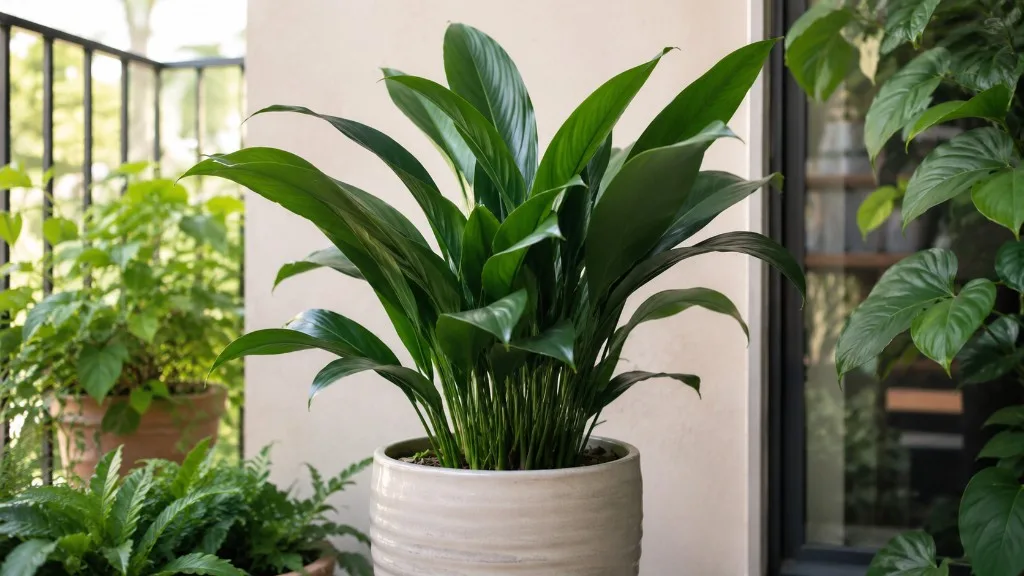
The common name is not marketing. Cast iron plant earned it by surviving Victorian parlors with coal-gas fumes, dim gaslight, and irregular care — conditions far harsher than a modern north-facing apartment. ASPCA lists Aspidistra elatior as non-toxic to cats and dogs, making it one of the few genuinely dim-room survivors that is also pet-safe. (ASPCA Cast Iron Plant)
The trade-off? Cast iron plant grows slowly. If you buy a small plant for a dark corner, expect it to look roughly the same size a year later. Buy a fuller plant at purchase if you want immediate visual impact.
Why it works: Extreme tolerance for low light, irregular watering, temperature swings, and low humidity — combined with pet-safe status.
Care tip: Wipe broad leaves with a damp cloth every month or two. Dust accumulates faster in dim rooms because there is less air movement, and dusty leaves absorb even less of the already-limited light.
Common mistake: Over-caring — watering weekly and fertilizing monthly on a plant that barely grows. Cast iron plant rewards restraint. Water when the soil feels dry an inch down, and fertilize only once or twice during the active growing season.
Avoid this plant if: You want fast growth, dramatic foliage changes, or a plant that fills out noticeably within a year. Cast iron plant is a long-game companion, not a fast visual upgrade.
Useful care guides:
- Cast iron plant care guide
- Cast iron plant watering guide
- Cast iron plant light guide
- Cast iron plant propagation guide
- Cast iron plant problems guide
6. Peace Lily
Best for: Beginners who need a visible “water me” signal
Difficulty: Easy to medium
Light: 100+ fc; tolerates lower but blooms rarely in very dim rooms
Water: Water when leaves begin to droop slightly — before full wilt
Best placement: Living room, bedroom, office desk away from drafts
Pet safety: Toxic to cats and dogs — contains insoluble calcium oxalates. (ASPCA Peace Lily), but it earns its place because of one unique trait: it visibly wilts when thirsty and recovers dramatically within hours of watering. That visible feedback loop teaches beginners when to water better than any schedule-based advice.
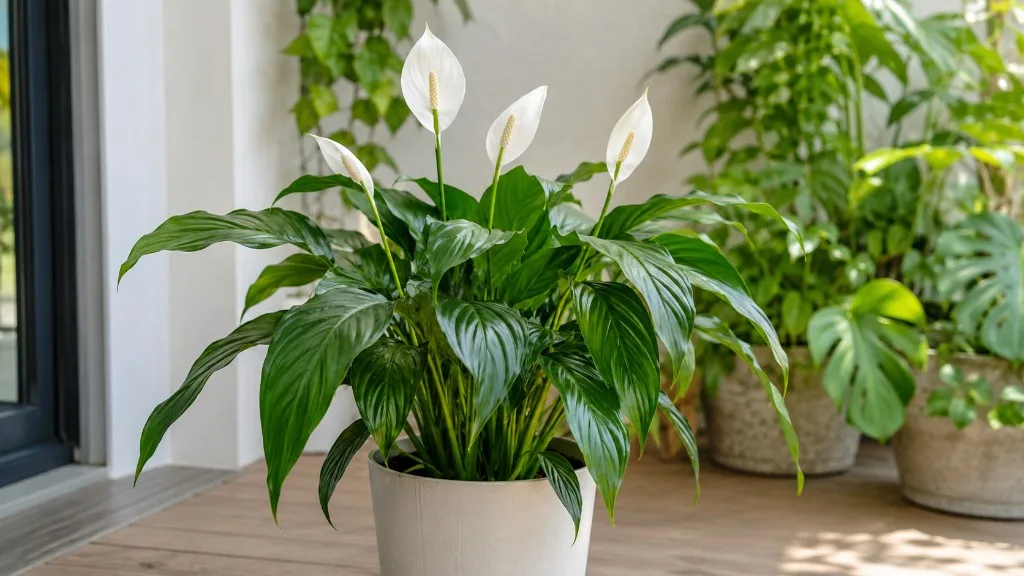
In low light, peace lily leaves stay green and healthy but blooms are less frequent. The white “flowers” are actually modified leaves (spathes), and the plant prioritizes foliage over blooms when light is limited. If you want regular flowers, place it closer to a window or under a grow light.
Why it works: Dramatic wilt-recovery cycle makes watering mistakes visible before they become root rot. The plant tells you what it needs.
Care tip: Water when the leaves first begin to dip, not when the plant is fully collapsed. Repeated severe wilting weakens the plant over time. Use filtered or distilled water if your tap water is hard — peace lily is sensitive to fluoride and chlorine, which cause brown leaf tips.
Common mistake: Treating peace lily like snake plant or ZZ plant in terms of drought tolerance. Peace lily cannot go weeks without water in the same way. It is “easy” because it communicates, not because it tolerates neglect.
Avoid this plant if: You travel frequently for 10+ days without a plant sitter, or if chew-prone pets have ground-level access.
Useful care guides:
- Peace lily care guide
- Peace lily watering guide
- Peace lily light guide
- Peace lily propagation guide
- Peace lily problems guide
7. Spider Plant
Best for: Pet-conscious homes, hanging baskets, fast-growing plantlets
Difficulty: Easy
Light: 100+ fc; brighter end of low light keeps variegation crisp
Water: Let top inch or two of soil dry between waterings
Best placement: Hanging basket near a north-facing window, high shelf, macrame hanger
Pet safety: Non-toxic to cats and dogs per ASPCA — safe choice ✓. (ASPCA Spider Plant)
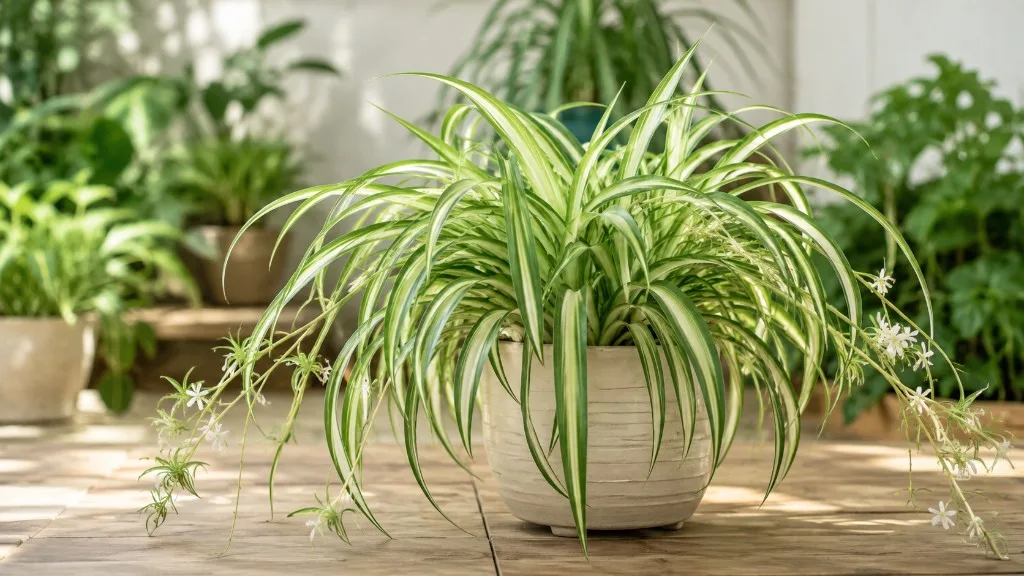
Spider plant is one of the best pet-friendly low-light options because it combines hanging-basket appeal with verified non-toxic status. Cats are often attracted to the arching, grass-like leaves and dangling plantlets, but ingestion typically causes mild stomach upset rather than toxicity. Keep it hanging rather than on a table if your cat treats plants like toys.
In very dim rooms, variegated spider plants may lose their white stripes over time as the plant produces more chlorophyll to capture limited light. Solid green varieties are slightly more shade-tolerant than variegated ones.
Why it works: Fast-growing, pet-safer, produces baby plantlets you can propagate and share — a confidence-building plant for new indoor gardeners.
Care tip: Brown leaf tips are often caused by fluoride or chlorine in tap water, not underwatering. If tips brown despite correct watering, switch to filtered, distilled, or rainwater.
Common mistake: Confusing brown tips (water quality issue) with underwatering and soaking the soil in response. Check soil moisture first. Brown tips alone do not mean the plant is thirsty.
Avoid this plant if: Your room is very dim (below 75 fc) and you want the classic full, cascading spider plant look — it will grow thin and sparse without adequate light.
Useful care guides:
- Spider plant care guide
- Spider plant watering guide
- Spider plant light guide
- Spider plant propagation guide
- Spider plant problems guide
8. Aglaonema
Best for: Colorful foliage in dim rooms where most colorful plants fade
Difficulty: Easy
Light: 75+ fc; silver and red varieties hold color better in moderate low light
Water: Let top half of soil dry between waterings
Best placement: Living room side table, bedroom, office desk, entryway
Pet safety: Toxic to cats and dogs — contains insoluble calcium oxalates. (ASPCA Chinese Evergreen), is the best low-light plant for people who want foliage color without a grow light. Most colorful houseplants (croton, coleus, polka dot plant) lose their color or die outright in dim rooms. Aglaonema varieties with silver, pink, or red variegation hold their patterning at lower light levels than almost any other tropical foliage plant.
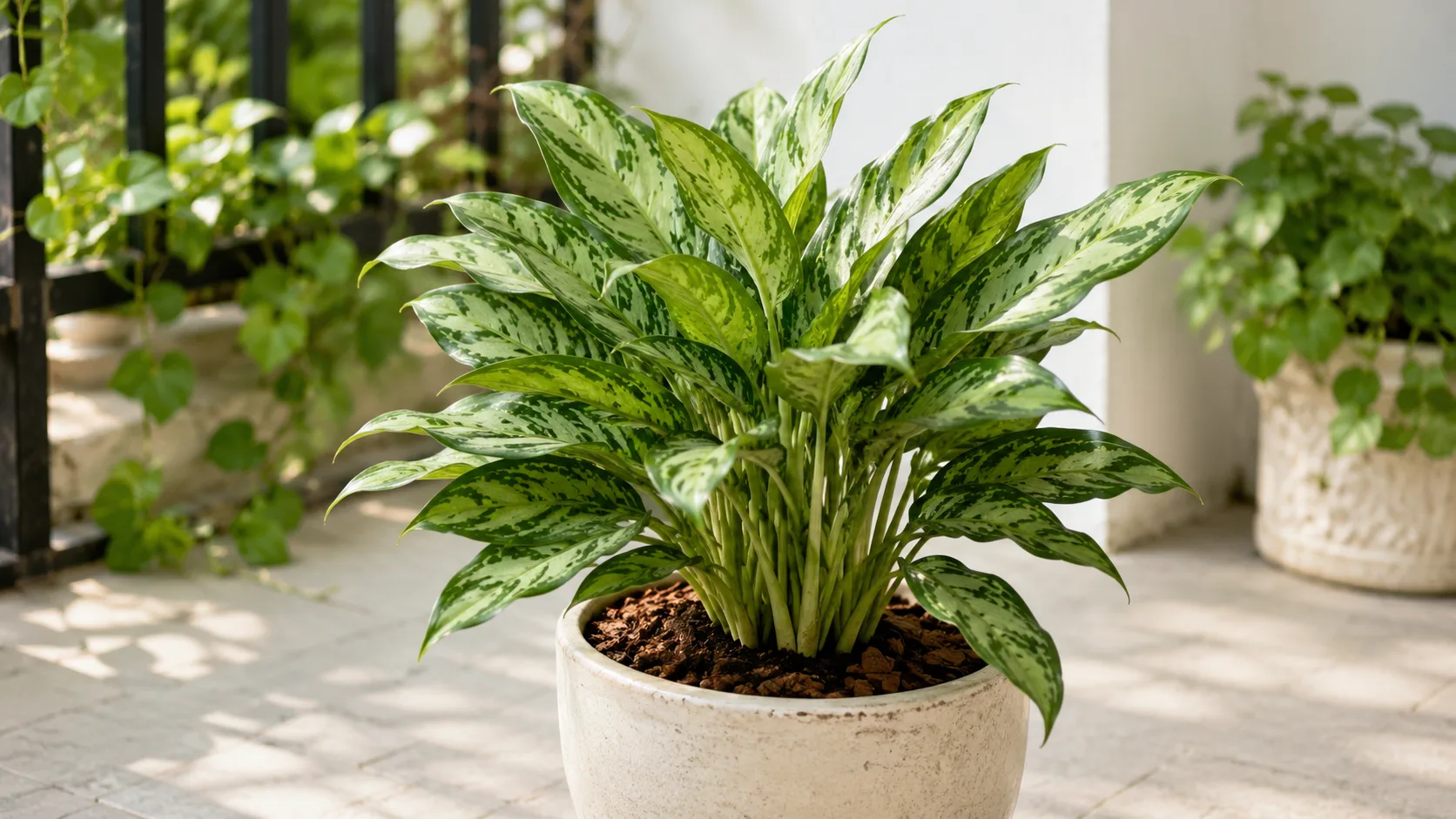
Red and pink varieties (like ‘Siam Aurora’ or ‘Red Valentine’) need slightly more light to maintain color intensity than silver-green types. If your room is genuinely dim, choose a silver or dark-green variety for better long-term color retention.
Why it works: Rare ability to maintain foliage color in moderate low light where other colorful plants turn solid green or drop leaves.
Care tip: Aglaonema is sensitive to cold drafts and temperatures below 60°F. Keep it away from drafty winter windows and air conditioning vents.
Common mistake: Placing a red or pink aglaonema in a very dim corner and expecting the color to stay vibrant. The plant will survive, but the red pigment fades as chlorophyll production increases to compensate for low light.
Avoid this plant if: You have a cold, drafty room in winter. Aglaonema tolerates low light better than low temperatures.
Useful care guides:
- Aglaonema care guide
- Aglaonema watering guide
- Aglaonema light guide
- Aglaonema propagation guide
- Aglaonema problems guide
9. Dracaena
Best for: Sculptural height without width in narrow dim spaces
Difficulty: Easy
Light: 75+ fc; tolerates lower but growth slows significantly
Water: Let top few inches of soil dry between waterings
Best placement: Narrow corner, hallway, beside a desk, entryway
Pet safety: Toxic to cats and dogs per ASPCA — contains saponins. (ASPCA Dracaena)
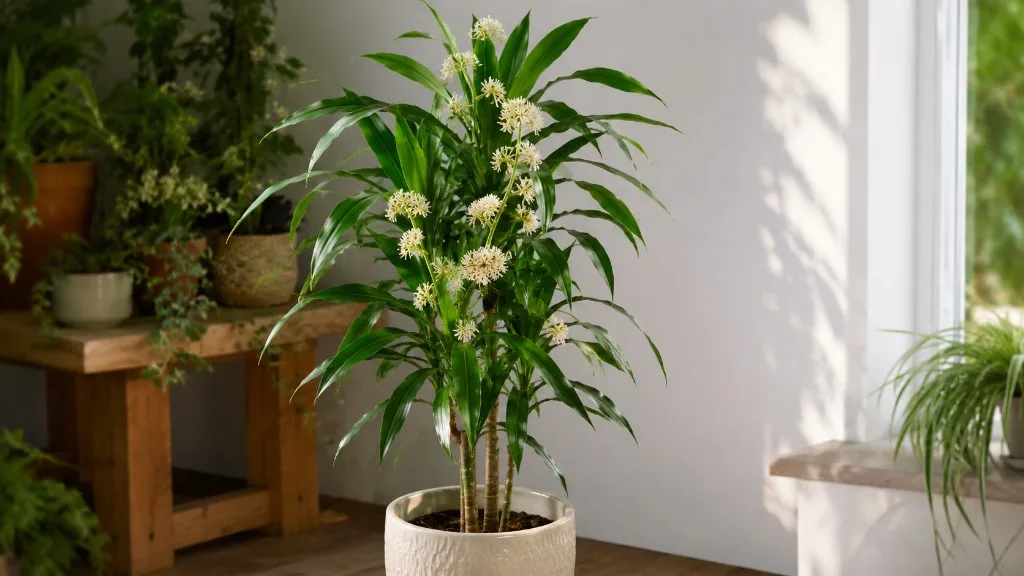
Dracaena gives vertical height without demanding the floor space of a fiddle leaf fig or monstera. Its slim canes topped with strappy leaves fit into narrow corners where broader plants would crowd the room. In low light, dracaena grows more slowly and uses less water — which is actually an advantage for people who tend to overwater.
The marginata variety (Dracaena marginata) with its thin, spiky red-edged leaves is particularly useful for low-light spaces because its narrow leaf surface area reduces water loss and transpiration stress in dry indoor air.
Why it works: Maximum height per square foot — fits where snake plant feels too short and any wider plant would block walkways.
Care tip: Overwatering kills dracaena faster than low light. Check soil moisture at depth — the top can feel dry while the root zone is still wet in large pots. Use a moisture meter or your finger pushed 2-3 inches down.
Common mistake: Placing dracaena in a decorative cachepot with no drainage exit hole. Water pools at the bottom, roots sit in stagnant water, and the plant declines from the roots up with no visible warning until leaves yellow.
Avoid this plant if: Your pet can reach the foliage at any height — dracaena is toxic and some cats are attracted to the grass-like leaf texture.
Useful care guides:
- Dracaena care guide
- Dracaena watering guide
- Dracaena light guide
- Dracaena propagation guide
- Dracaena problems guide
10. Parlor Palm
Best for: Graceful palm look in a low-light living room or bedroom
Difficulty: Easy to medium
Light: 100+ fc; prefers brighter end of low light for full fronds
Water: Light, consistent moisture — never soggy, never bone dry
Best placement: Living room corner, bedroom with filtered north light, office lobby
Pet safety: Non-toxic to cats and dogs per ASPCA ✓. (ASPCA Parlor Palm)
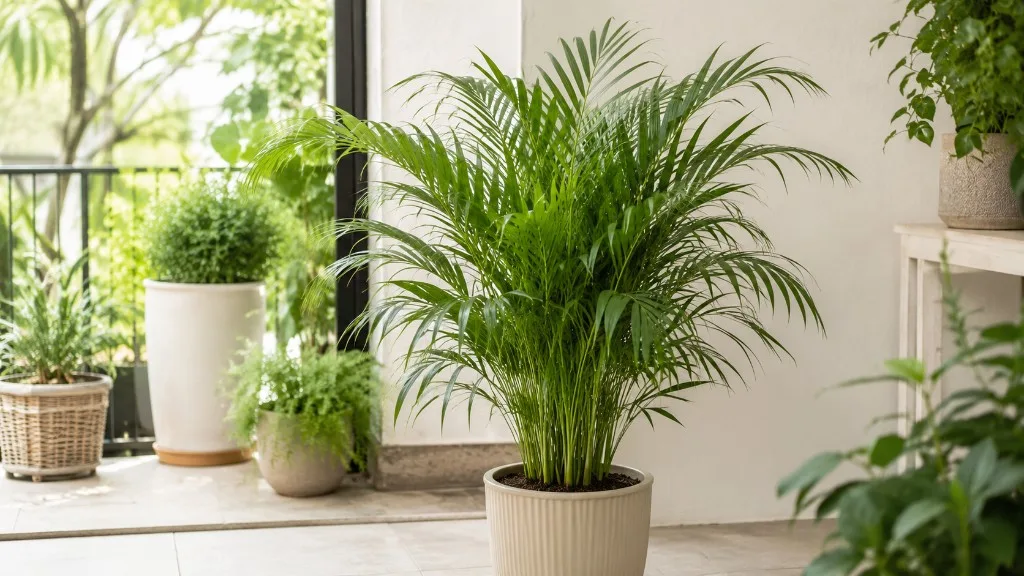
Parlor palm (Chamaedorea elegans) is one of the few true palms that tolerates indoor low-light conditions without rapidly declining. Most palms sold as houseplants — majesty palm, areca palm, kentia palm — need bright indirect light to stay healthy. Parlor palm is the exception, having evolved as an understory plant in Central American rainforests where it naturally grows beneath taller canopy trees in filtered light.
It is also one of three pet-safe options on this list (with cast iron plant and spider plant), which makes it especially useful for homes with cats or dogs where a taller plant is desired.
Why it works: True palm with graceful, arching fronds that tolerates lower light than any other commonly sold indoor palm — plus pet-safe status.
Care tip: Parlor palm prefers consistent light moisture but rots quickly in soggy soil. Use a well-draining mix and a pot with drainage. Water when the top inch of soil feels dry, not on a fixed schedule.
Common mistake: Letting parlor palm swing between bone-dry and soaking-wet. Inconsistent moisture causes frond tip browning, and the damage is permanent on affected fronds.
Avoid this plant if: You are an extreme forgetful waterer — ZZ plant or snake plant are better matches. Parlor palm needs more consistent moisture attention than the “very easy” plants on this list.
Useful care guides:
- Parlor palm care guide
- Parlor palm watering guide
- Parlor palm light guide
- Parlor palm propagation guide
- Parlor palm problems guide
How to Choose the Right Low-Light Plant for Your Room
Match the plant to your specific room conditions, not to the plant you wish you could grow.
By Light Level
- Very dim (50-75 fc) — reading light needed during the day: snake plant, ZZ plant, cast iron plant. These are your only reliable options below 75 fc without a grow light.
- Moderate low light (75-150 fc) — comfortable reading light without a lamp: All 10 plants can work here. Pothos, aglaonema, and heartleaf philodendron look fuller. Dracaena and parlor palm hold their shape.
- Upper low light (150-250 fc) — bright-feeling north-facing room: All 10 plants will actively grow. Peace lily may bloom, spider plant produces plantlets, variegated varieties hold color.
By Watering Style
- I forget to water for weeks: Snake plant, ZZ plant, cast iron plant.
- I check weekly and water as needed: Pothos, heartleaf philodendron, aglaonema, dracaena, spider plant.
- I prefer a plant that tells me when it is thirsty: Peace lily — visible wilt signal before damage occurs.
By Pet Safety
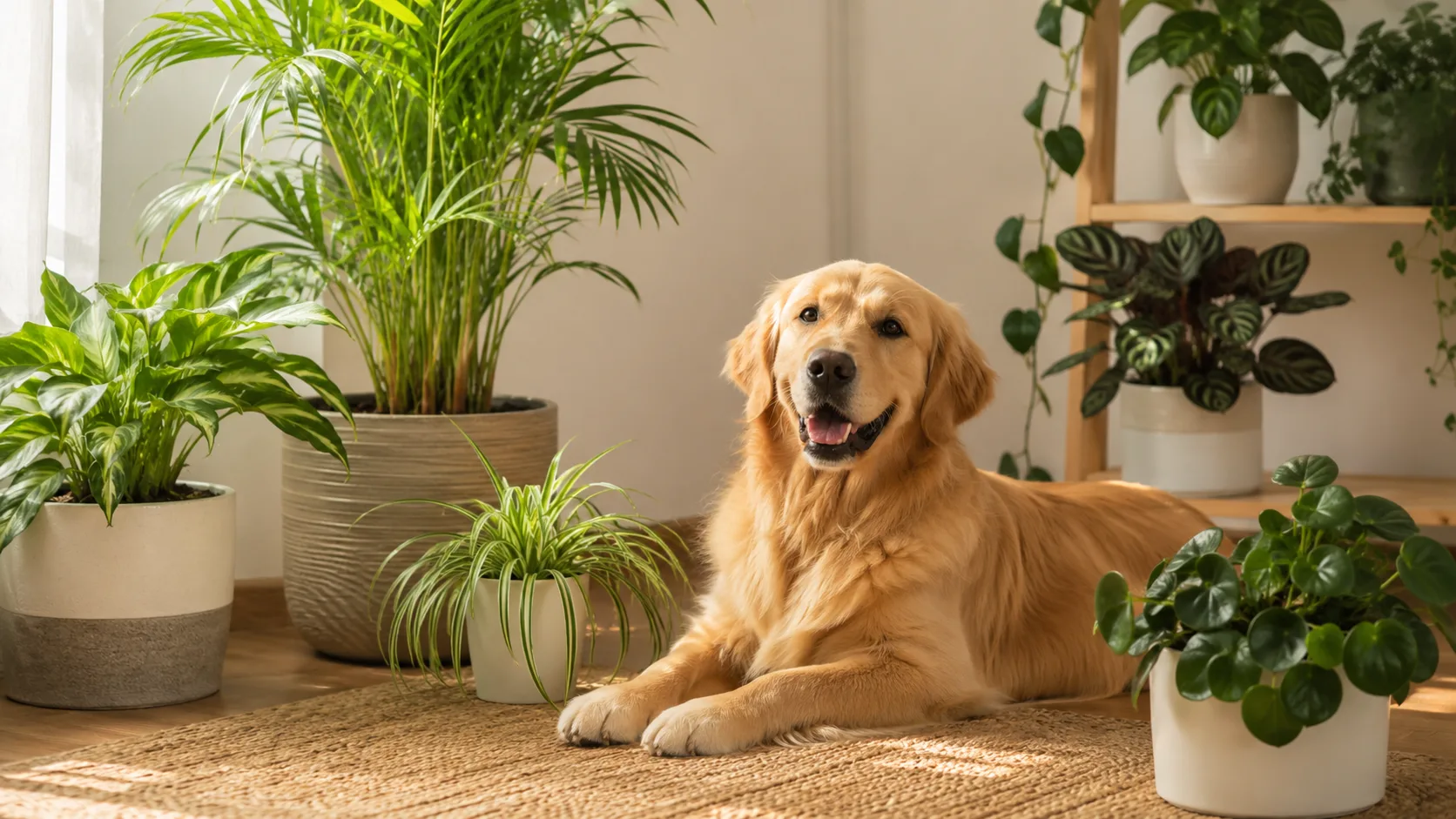
- Pets that chew anything green: Cast iron plant, spider plant, parlor palm — all three are ASPCA-listed non-toxic. Hang spider plant to keep plantlets out of direct reach.
- Pets that ignore plants or plants placed out of reach: Any plant on this list works. Use hanging baskets for toxic trailers (pothos, philodendron). Place toxic upright plants on stands or shelves above pet height.
By Growth Habit
- Trailing or hanging: Pothos, heartleaf philodendron, spider plant.
- Upright and architectural: Snake plant, dracaena.
- Bushy and full: Aglaonema, cast iron plant, peace lily, parlor palm.
Common Mistakes That Kill Low-Light Plants
Watering on a fixed calendar. In low light, plants use water slowly. A snake plant in a dark corner might need water once every 3-4 weeks in winter — not weekly. University of Georgia Extension identifies low light and overwatering as the most common causes of stress in indoor plants. (CAES Field Report) Check soil moisture before every watering, regardless of how many days have passed.
Placing variegated plants in very dim rooms. Variegated leaves have less chlorophyll. In low light, the plant compensates by producing more green tissue or dropping variegation entirely. If you buy a Marble Queen pothos or variegated spider plant for a dark room, expect it to trend toward solid green within months.
Using pots without drainage. This kills low-light plants faster than any other mistake. Without drainage, water pools at the bottom, roots suffocate, and rot begins. Always use a nursery pot with holes inside a decorative cachepot, and empty the outer pot after watering. See how to water indoor plants the right way for the full soil-check routine that prevents this.
Confusing brown leaf tips with underwatering. Brown tips on spider plant, peace lily, and dracaena are often caused by tap water minerals (fluoride, chlorine) or dry air — not dry soil. Check soil before adding water. If soil is moist and tips are brown, the fix is better water quality or higher humidity, not more frequent watering. For humidity guidance, see the houseplant humidity guide.
Rotating too rarely or never at all. Plants in low light grow toward the nearest light source. Without rotation, they lean permanently. Turn pots a quarter turn every 2-4 weeks.
Expecting “low light” to mean “no light.” Even the toughest plants on this list — snake plant, ZZ plant, cast iron plant — need enough ambient light to read by during the day. For truly windowless rooms, add a small full-spectrum grow light on a timer. See the grow lights complete guide for wattage, distance, and spectrum recommendations.
Buying for looks before light. A dark burgundy rubber plant or pink aglaonema labeled “low light” at the nursery will still lose color in a dim apartment. The nursery grew it in greenhouse-level light. Buy the plant for the light you have, not the color the nursery achieved.
Conclusion
Start with the room, not the plant. If your space is very dim (50-75 fc), begin with snake plant, ZZ plant, or cast iron plant — they are the three plants on this list that genuinely tolerate the deepest shade without losing their form. If you have chewing pets, lead with cast iron plant, spider plant, or parlor palm. If you want trailing coverage at shelf height, pothos is the fastest and most forgiving. If you want a plant that teaches you to water correctly, peace lily’s wilt-recovery cycle is the best trainer on the market.
For most people asking “what low light indoor plant should I buy,” the answer is snake plant if you want upright architecture and near-zero maintenance, pothos if you want fast trailing coverage, or ZZ plant if you want something that looks polished in an office or dim apartment with almost no attention.
Once you choose, open that plant’s care hub from the links in each section above — light, watering, and problems pages will keep your plant alive long after this guide ends.
Related Guides
- Low-maintenance indoor plants for busy homes — if your dim room also means you forget to water for weeks
- Grow lights complete guide for indoor plants — when low light is really no light and you need artificial support
- How to water indoor plants the right way — soil-check routine that prevents the #1 cause of low-light plant death
- Houseplant humidity guide — humidity targets for plants that sulk in dry dim rooms
- Best Pet-Safe Indoor Plants — filterable pet-safe shortlist if cast iron plant, spider plant, and parlor palm are not enough
- 10 Low-maintenance indoor plants for busy homes — full writeup on easy plants for forgetful owners