Plant Cuttings as Gifts: DIY Guide for Plant Lovers
Turn houseplant trimmings into thoughtful gifts. Learn which plants root fast, how to package cuttings, and what care notes to include.
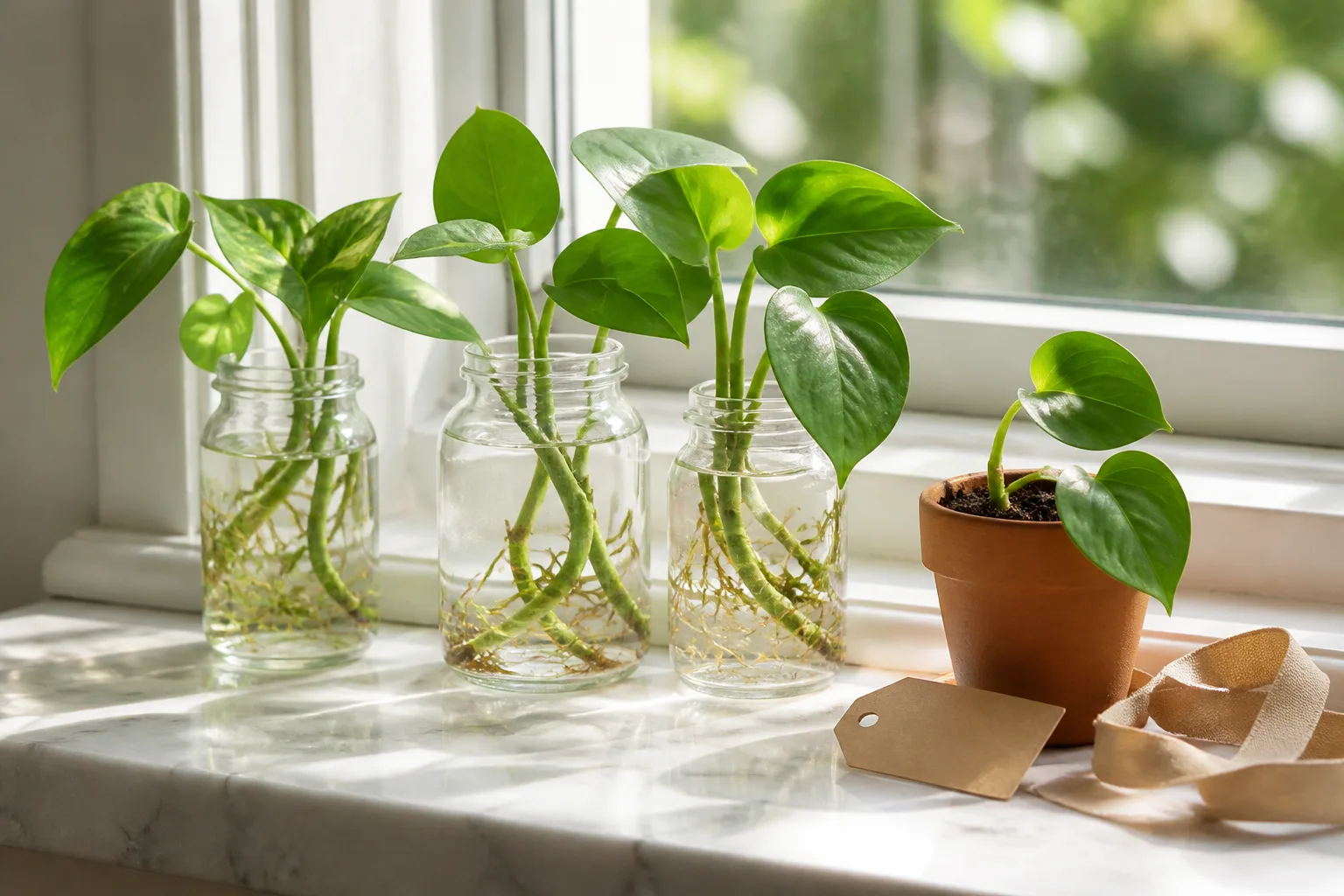
The best plant gift I ever received was not from a nursery. It was a jam jar of pothos stems my neighbor rooted on her kitchen windowsill — cuttings from the same vine that had climbed her grandmother’s bookshelf for decades. No ribbon required. I still have descendants of that plant in three rooms.
Giving plant cuttings as gifts costs almost nothing if you already grow houseplants, yet it can feel more personal than a $40 ceramic pot from a big-box store. The catch is that a thoughtful gift and a stem that rots in transit are separated by a few practical decisions: which plant, whether to root first, how far ahead to start, and what to tell the recipient so the cutting survives week two. This guide walks through that full workflow so your gift lands as a living plant, not a guilt trip in a vase.
Why Plant Cuttings Make Better Gifts Than You Think
Store-bought houseplants are convenient, but cuttings solve problems a retail plant cannot. You are sharing a clone of something you already grow successfully — proof the plant works in a real home, not just under grow-lights at a garden center. The RHS notes that propagated houseplants can extend your collection, green your space, and make great gifts — which is the whole point here, but with better execution than “snip and hope.”
Sentimental Value and Living Heirlooms
Cuttings turn plants into memory keepers. A stem from your mother’s prayer plant, a division from a friend’s first apartment monstera, or a spider-plant pup from a coworker’s desk becomes a living heirloom the recipient can propagate again. That emotional layer is why plant people light up at cuttings in a way they rarely do at scented candles. You are not giving decor; you are giving continuity.
The sentimental angle also lowers the pressure to impress with packaging. A labeled jar with a handwritten note about where the parent plant lived often outperforms an overwrapped nursery specimen — as long as the cutting is healthy and the care instructions are clear.
Low Waste, Low Cost, and Real Environmental Upside
Cuttings are about as close to a zero-waste gift as gardening gets. No plastic grow pot, no shipping carton, no impulse-buy foil wrap. If you already own scissors, a spare jar, and a houseplant worth sharing, your cash outlay can be literally zero. Even if you add a small terracotta pot or propagation vessel, the total still undercuts most retail houseplant gifts.
There is an environmental honesty worth naming: you are not eliminating impact — the parent plant still consumed water, potting mix, and energy in your home — but you are avoiding new production and freight for another full-size plant. For friends trying to build collections on a budget, that matters.
Rooted vs. Unrooted: Choose Before You Cut
This is the first fork in the road, and it determines your timeline. Both formats work. The wrong choice is picking one at the last minute because roots are not ready — or potting up a cutting two days before the party because you feel rushed.
Gift Water-Rooting Jars When You Want the Recipient Involved
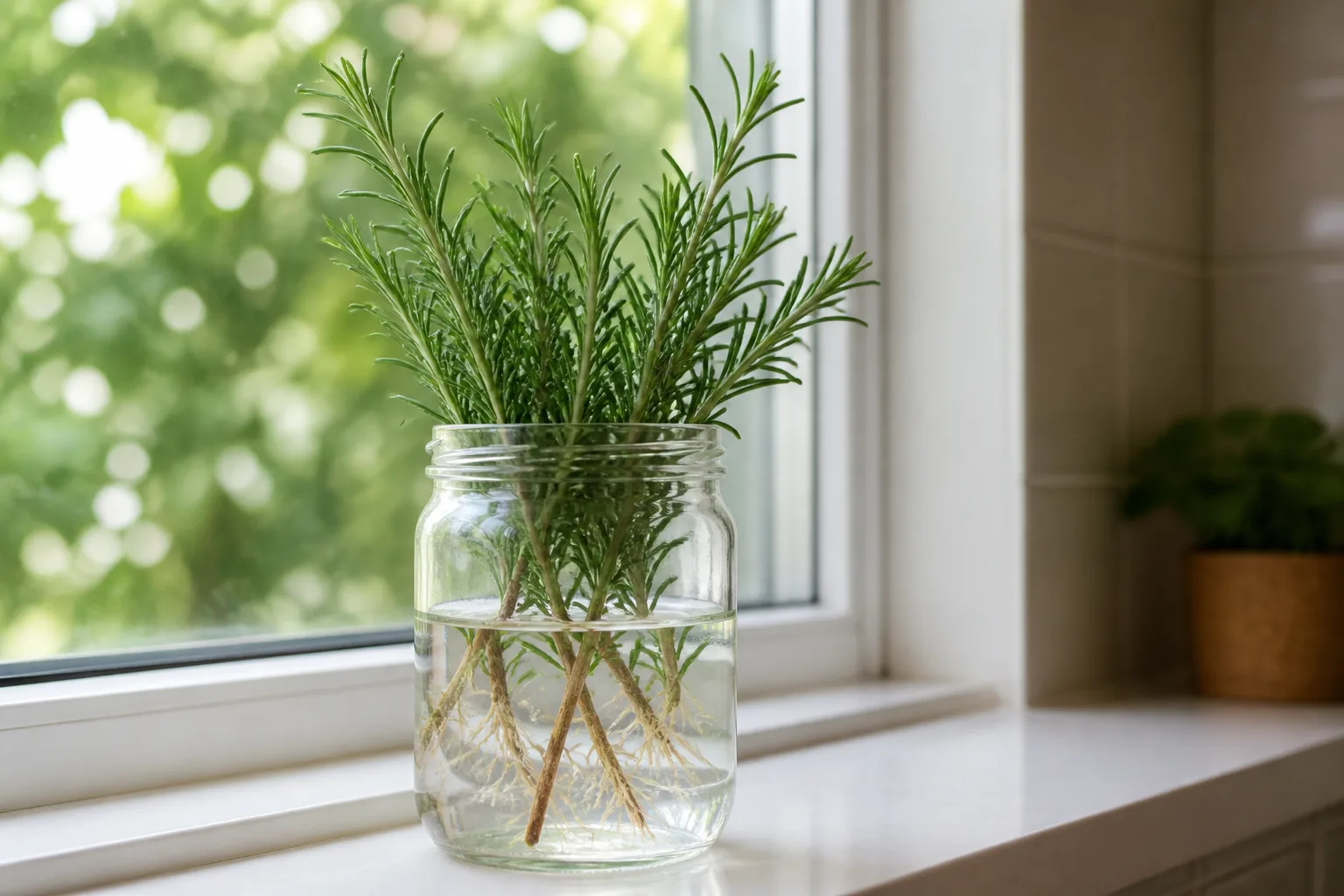
Unrooted or partially rooted cuttings in water suit recipients who enjoy watching roots form. Water propagation is visual, beginner-friendly, and doubles as countertop decor while roots develop. The RHS recommends popping prepared cuttings into a glass or jar with water just below the leaves; many common houseplants root in three to four weeks in bright, indirect light.
Choose the jar format when:
- You have at least two to three weeks before the gift date (longer in winter).
- The recipient likes hands-on projects or is new to plants.
- You want to gift multiple varieties in one propagation station.
- The plant roots readily in water (pothos, philodendron, tradescantia, coleus).
Include a note to change water every few days and keep leaves out of the waterline. Submerged leaves rot and foul the jar — the most common reason water gifts fail.
Pot Up First When You Want a Finished-Looking Present
Rooted cuttings planted in small pots read as “real plants” immediately. They work better for housewarmings, office gifts, and anyone who would rather not babysit a jar. The trade-off is time: you need to start earlier and verify roots before wrapping.
Pot up when:
- The gift date is within a week and roots are already an inch or longer.
- The recipient is busy, skeptical of “projects,” or has pets that knock over glassware.
- You are gifting succulents or plants that dislike long water rooting.
- You want the presentation to photograph well for a card or social moment.
A rooted gift does not need to be huge. A 3- to 4-inch pot with two or three rooted stems often looks fuller than a single leggy nursery plant — and you grew it.
Best Plants to Gift as Cuttings—and Realistic Rooting Timelines
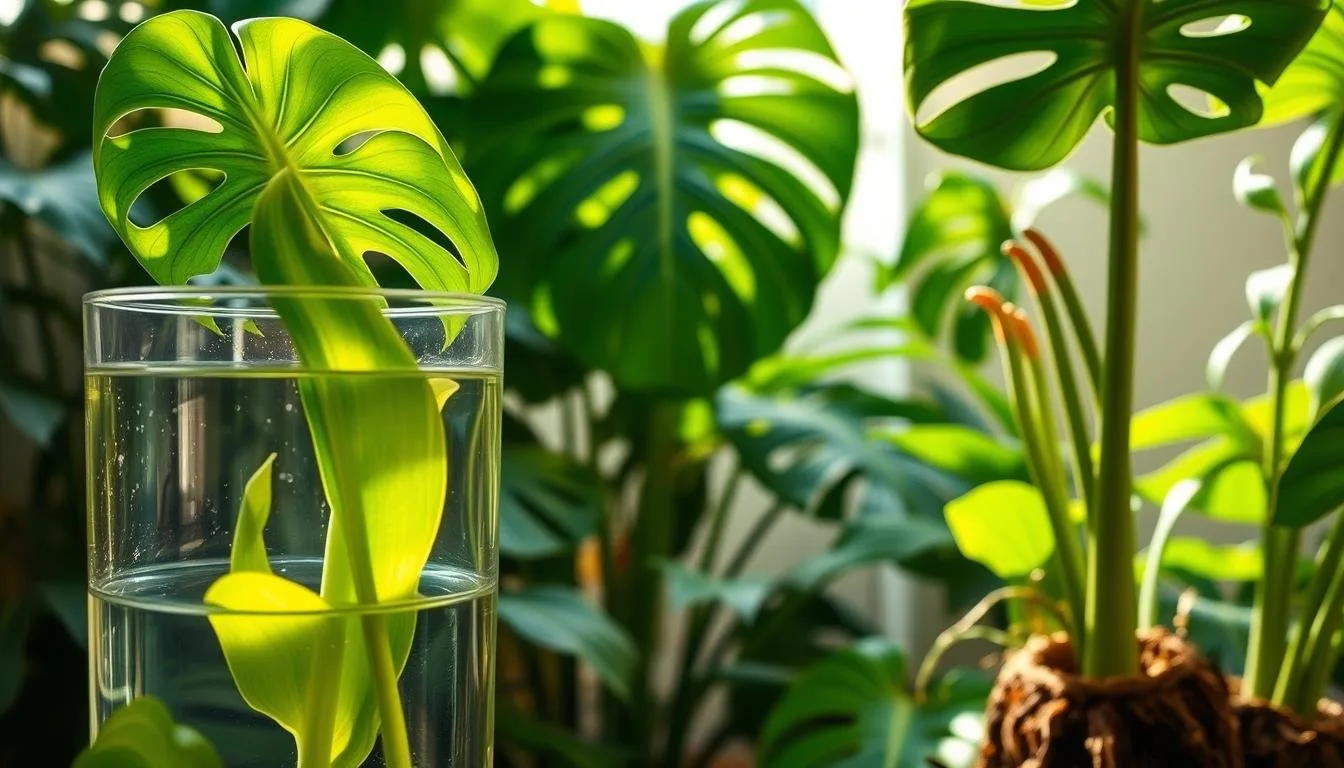
Not every houseplant makes a good cutting gift. Match the plant to your deadline and the recipient’s patience.
Fast Winners for Beginner Gifters
These are the plants to reach for when you want high success rates and short timelines:
- Pothos and heartleaf philodendron — Stem cuttings with nodes root in water in one to three weeks during active growth; pot up at one to two inches of root length.
- Tradescantia (inch plant) — Often roots in days to two weeks; pinches root so readily you can gift a small bouquet of stems.
- Spider plant offsets — Not a stem cutting, but ideal gifts: snap off a pup with tiny aerial roots and pot or water-root immediately.
- Pilea (Chinese money plant) — Pups separate cleanly; water rooting is reliable and photogenic.
- Coleus and basil (for kitchen-garden friends) — Soft stems root fast in water or moist mix.
The RHS lists pothos, spider plant, tradescantia, and pilea among the easiest houseplants to propagate — which makes them the easiest to gift.
Timing rule of thumb: For fast rooters, start cuttings four to six weeks before a fixed gift date if you want them potted. For water jars, two to three weeks is often enough to show visible roots that excite a beginner.
Worth the Wait: Hoya, Succulents, and Woody Stems
Some plants make excellent gifts but punish rushed timelines:
- Hoya — Can root in water or soil but often takes several weeks to months; gift as a water jar with a “be patient” card.
- Monstera — Nodes root reliably but need warmth; winter gifts should stay in water longer or wait for spring.
- Succulents and jade — Leaf or stem cuttings need a callus period of several days before soil contact; never gift a wet freshly cut succulent stem in a sealed bag.
- Woody dracaena, rubber plant, fiddle-leaf fig — Better as established rooted cuttings or air-layered starts; bare woody stems can take months.
If your calendar is tight, do not force a slow plant into a fast slot. Gift a fast rooter proudly, or give an unrooted hoya jar with honest timing notes. Pretending everything roots in a week sets your friend up for disappointment.
How to Take Cuttings That Actually Survive the Gift
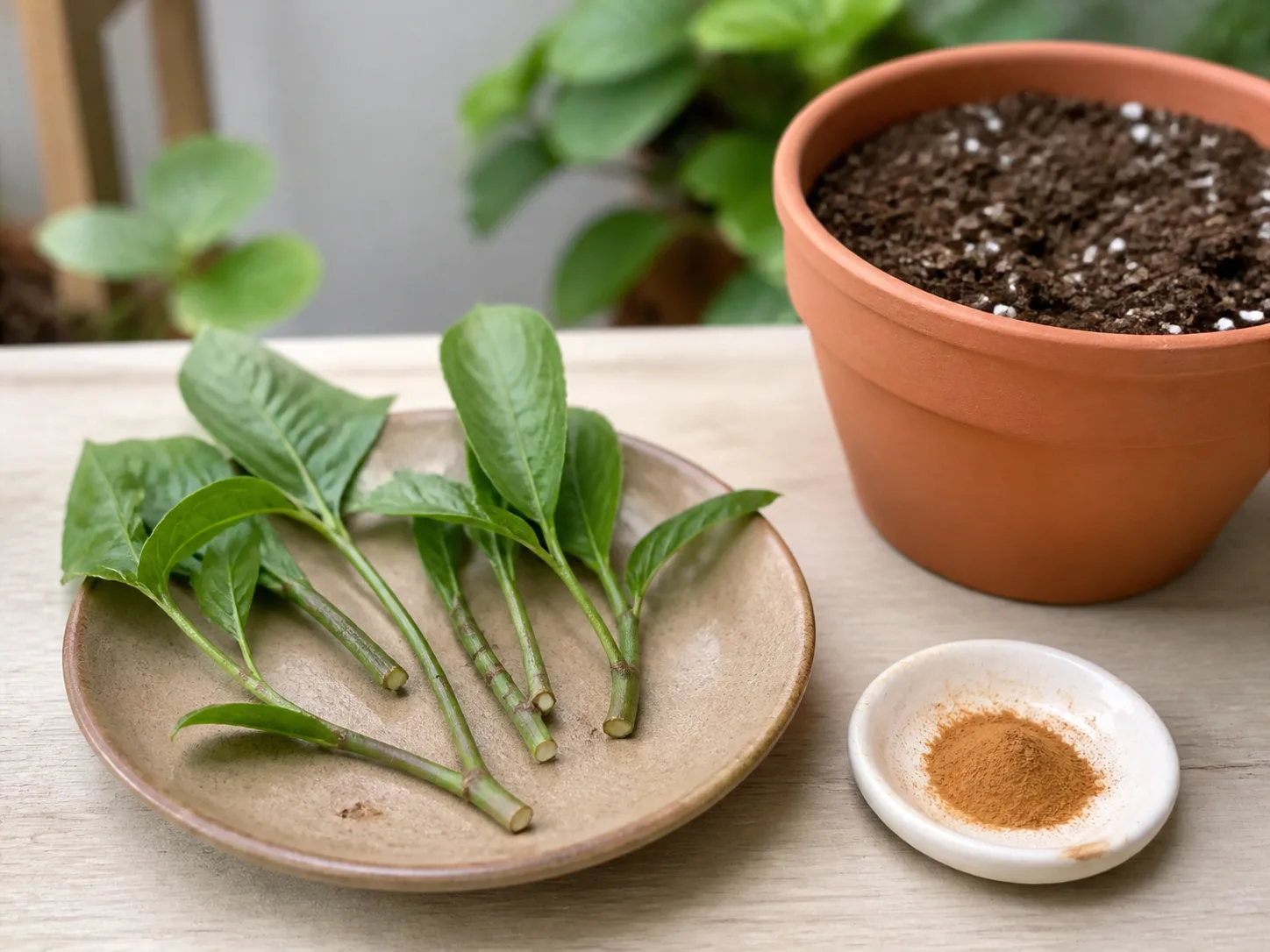
A gift cutting is still a propagation cutting. The sentimental wrapping does not change plant biology.
Locate the Node and Make a Clean Cut
Roots form at nodes — the slightly swollen points where leaves and side shoots emerge — not from bare stem or leaf tissue alone. Use sharp, clean scissors or secateurs and cut about half an inch below a node. Aim for a piece with at least one node and one or two healthy leaves; remove any leaves that would sit underwater or buried in soil.
For most vining houseplants, a cutting 8 to 10 cm (3 to 4 inches) long with two nodes gives backup if the tip struggles. Take two or three cuttings per gift when possible. One may rot; the others carry the present.
Critical exception: Variegated snake plant leaf cuttings often grow back solid green because variegation sits in outer leaf tissue. To preserve stripes, gift a division from the rhizome, not a leaf slab. That is a gift-quality detail most generic articles skip.
Sanitize Tools and Take From Healthy Parents Only
Wipe blades with rubbing alcohol between cuts and between plants. A single dirty cut is a common reason cuttings turn mushy instead of rooting. Take material only from plants that are actively growing, well hydrated, and free of obvious pests, rot, or widespread leaf spots. You are not doing a friend a favor by gifting spider mites in a pretty jar.
Water the parent plant the day before if soil is dry. Morning cuts from hydrated stems hold up better if there is a delay before you pot or jar them. The RHS emphasizes choosing healthy, pest-free material and potting cuttings within hours when possible — good gift hygiene too.
Work Backward From Your Gift Date
Propagation rewards planners. Build your calendar from the event backward.
Sample Timeline for Holidays, Birthdays, and Housewarmings
Use this framework and adjust for your climate (rooting slows below about 60°F / 15°C):
| Gift format | Fast rooters (pothos, tradescantia) | Moderate (monstera, hoya) | Succulents |
|---|---|---|---|
| Water jar, visible roots | Start 2–3 weeks ahead | Start 4–8 weeks ahead | Callus 3–7 days, then jar or soil |
| Potted, gift-ready | Start 4–6 weeks ahead | Start 8–12+ weeks ahead | Start 3–5 weeks ahead |
| Unrooted stems in jar (recipient roots) | Cut 1–3 days before | Cut 1–3 days before | Cut, callus, ship or hand off dry |
Holiday example: For a December 25 gift of potted pothos, take cuttings around early November, root in water on a bright kitchen counter, pot up when roots reach one to two inches, then let the plant settle two weeks before wrapping. For a last-minute party, gift water jars with stems cut three days prior and a care card — still valid, still thoughtful.
If roots are not ready, downgrade the format, not the plant. A beautiful unrooted jar with honest instructions beats a prematurely potted cutting that collapses.
Packaging That Feels Special, Not Slapdash
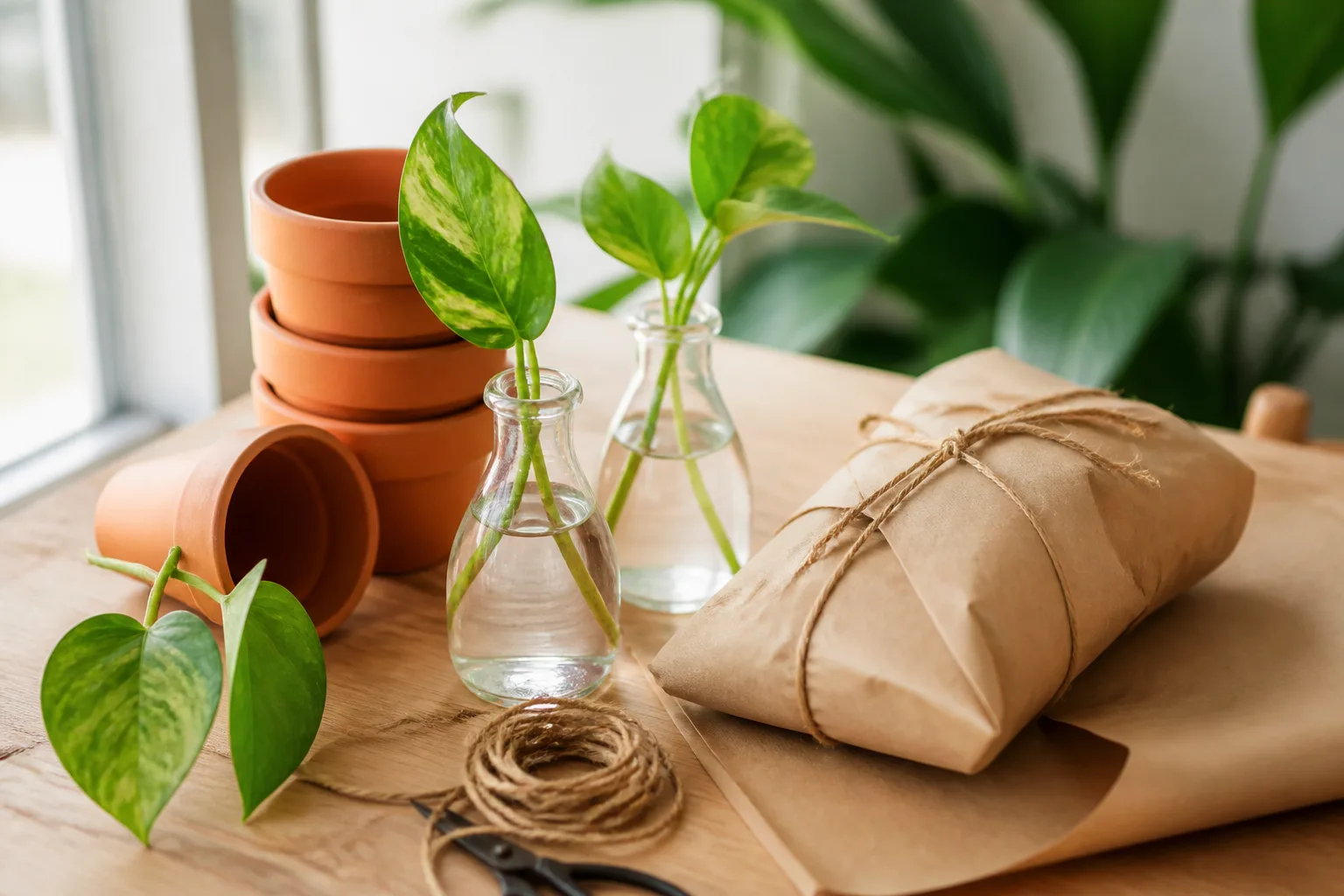
Presentation signals that you took the gift seriously. It does not require a craft-store spree.
Containers, Labels, and Care Cards Recipients Will Use
Container ideas that work:
- Clear glass jars or bud vases for water propagation (weighted bottoms help around cats).
- Small terracotta pots with saucers for rooted gifts — breathable and classic.
- Test tubes in a wooden stand for multi-cutting “propagation stations.”
- Upcycled spice jars, apothecary bottles, or tea tins (clean, with drainage holes if potted).
Label what matters:
- Plant name (common and botanical if you know it).
- Date cuttings were taken.
- Parent plant story, if there is one — “From the pothos in our kitchen since 2019.”
- Water-change schedule or soil moisture cue.
- Light needs: “Bright indirect light, no direct hot sun.”
A care card beats a generic “good luck” tag. Write five lines the recipient can tape inside a cabinet:
- Change water every 3–4 days (or keep soil lightly moist, not soggy).
- Bright indirect light; avoid radiators and drafty windows.
- Roots ready to pot at 1–2 inches long.
- Use a small pot with drainage; do not bury leaves.
- Text me if it goes mushy — I have more cuttings.
That last line turns a failed cutting into a social moment instead of silent guilt.
Recipients who do not own plants yet need different defaults than collectors. Keep instructions plain.
For water-rooting gifts: Water level just below leaves. No leaves submerged. Warm room speeds rooting. Algae in the jar is cosmetic — change water and rinse the stem. When roots are an inch or longer, pot into loose, well-draining mix in a small pot. Hold off fertilizer for a month.
For potted rooted gifts: Water when the top inch of soil dries. A mug’s worth of water is often enough for a small pot. No direct afternoon sun through glass. Yellowing lower leaf on one stem is normal stress; mushy stem at the base is not.
For offsets and divisions: Plant at the same depth they grew before. Spider plant pups can root in water first or go straight into moist mix if small roots are visible.
House of Kōjō’s propagation guidance sums up why water gifts work for beginners: the method is simple, visual, and forgiving when you keep the jar clean — exactly what a new plant parent needs.
What Not to Gift: Patents, Pests, and Problem Plants
Generosity has boundaries.
Patented or PPA-protected cultivars: Many named houseplant cultivars — especially trendy variegated clones — are protected by plant patents or Plant Variety Protection. Propagating them for sale can violate federal law in the U.S.; gifting one rooted copy to a friend for personal use sits in a grayer zone, but mass-producing patented plants for holiday giveaways is not responsible. When in doubt, gift species-level plants (plain pothos, spider plant) or ask whether your cultivar carries restrictions. Gardening Know How maintains an accessible overview of patents and home propagation.
Pests and disease: Never gift from a plant with active mealybugs, scale, fungus gnats swarming soil, or mystery leaf spots. Quarantine and treat first, or choose another plant.
Stressed parents: Do not take cuttings from a plant you are trying to save from root rot or severe underwatering. Weak cuttings make weak gifts.
Misidentified plants: If you are unsure what it is, label it “tradescantia-like vine” rather than inventing a cultivar name. Honesty protects your friend’s future care research.
Mailing or Handing Off Cuttings Without Killing Them
Hand delivery is always safer. If you must mail:
- Ship fast rooters early in the week with minimal transit time.
- Wrap damp (not dripping) paper towel around cut ends for unrooted stems; bag loosely for humidity with air exchange.
- Succulents ship best callused and dry, not wet.
- Check state agricultural rules — some jurisdictions restrict soil or certain species. USDA APHIS publishes guidance on moving plants and plant products domestically; when crossing state lines, clean bare-root or unrooted material is simpler than mailing potted soil.
- Label the package “live plants — keep upright” and avoid extreme weather weeks.
For local handoffs, keep cuttings in a warm car, not a freezing trunk. A hour in cold air can stall rooting for weeks.
Conclusion
Plant cuttings as gifts work because they combine practicality with meaning: low cost, low waste, and a story the recipient can grow forward. The difference between a cherished present and a soggy disappointment is not talent — it is choosing the right plant, picking rooted or unrooted honestly, starting early enough, and writing care notes a beginner can follow.
Once you are comfortable with one cutting, bundles add wow without much cost: a kitchen garden starter (pothos jar plus rooted basil), a memory garden of three jars from the same parent plant, a propagation station kit with jars and perlite, or an heirloom division in a thrifted pot with a story tag. The RHS suggests cuttings can even double as wall-gallery decor before potting — a stylish intermediate stage you can photograph for the gift tag.
Start with a fast rooter from a healthy parent plant. Work backward from your gift date. Package simply, label clearly, and skip patented or pest-ridden material. Whether you hand over a rooted terracotta pot or a row of jars on a windowsill, you are giving something store-bought houseplants rarely match: a living piece of your garden and the confidence to keep it alive.