Signs You Need to Aerate Your Lawn
Thin patches, puddles, or hard soil? Learn the seven signs your lawn needs core aeration, how to confirm with simple tests, and when not to aerate.
Brown grass, puddles after rain, and thin patches all show up on the same list of “signs you need to aerate your lawn.” That overlap is why so many homeowners rent an aerator, run it once, and still wonder why the turf looks the same six weeks later. Lawn aeration fixes a specific root-zone problem — compaction and restricted air and water movement — not every symptom that makes grass look tired.
Before you treat color, run three quick checks in the worst-looking area and one healthy-looking area for comparison. If the soil is hard, water sits on top, and roots are stuck in a shallow layer, core aeration may be the highest-return job on your calendar. If the issue is shade, drought, disease, or a thick thatch mat that needs measured removal, aeration alone will not deliver what you expect.
What Lawn Aeration Actually Fixes Underground
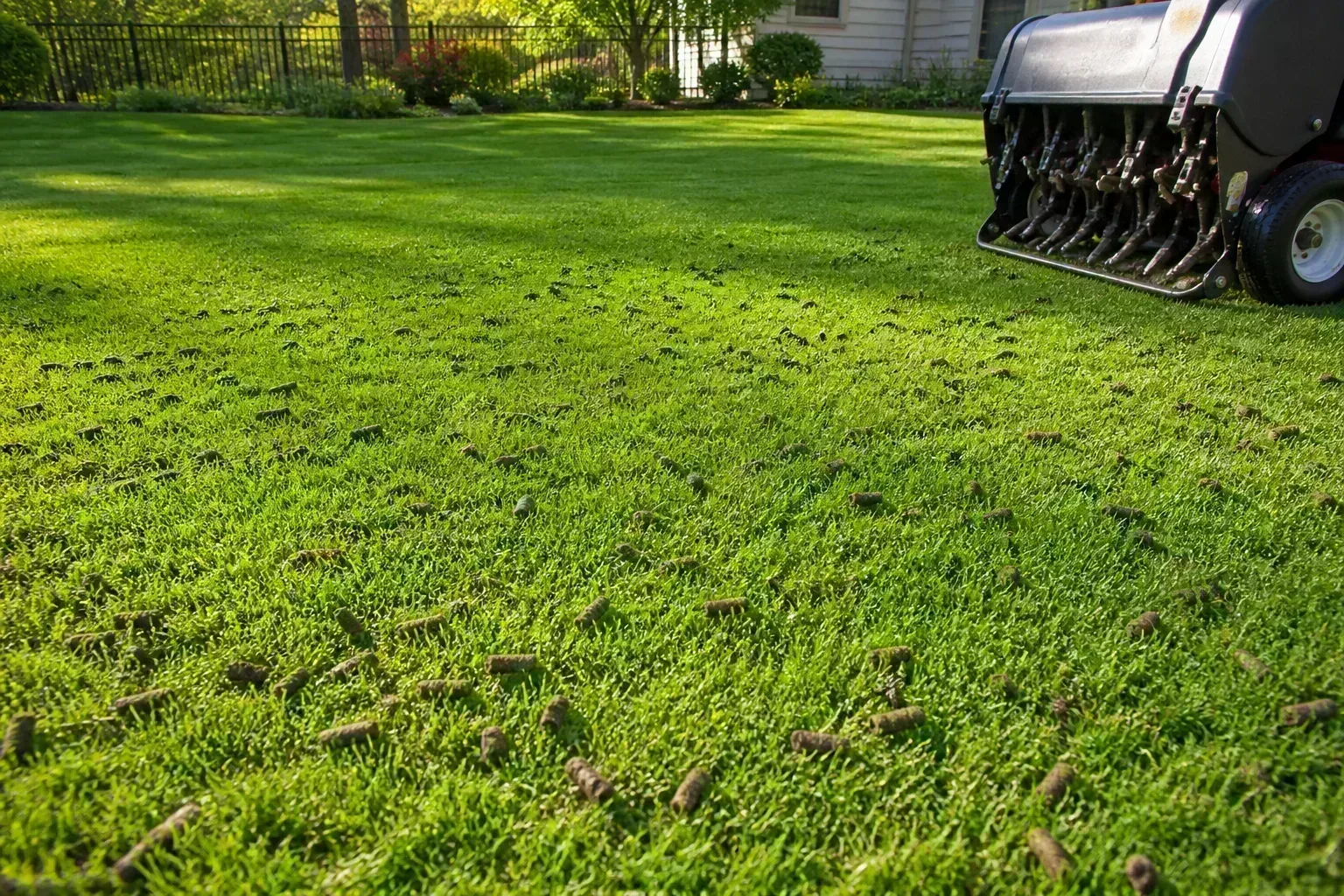
Core aeration — also called core cultivation — pulls small cylinders of soil from the lawn and leaves holes behind. Penn State Extension defines aeration as removing soil plugs to create large pores that carry moisture, lime, and nutrients into the profile while alleviating compaction and reducing thatch. Colorado State University Extension’s PlantTalk guidance describes the same process as supplying the soil with air, reducing compaction, helping control thatch, and moving water and fertilizer into the root zone.
Healthy turf thickness is a root story. Grass spreads through tillers and, depending on species, rhizomes or stolons. Those structures need oxygen, moisture, and nutrients in the top few inches of soil. When that zone is tight and airless, roots stay shallow, crowns weaken, and the stand opens — especially after a season of backyard traffic, construction, or repeated mowing on wet ground.
Aeration is not a universal repair. It will not fill dead bare soil without seed, replace shade-intolerant grass under trees, kill existing weeds, or correct chronic overwatering. It opens the door for roots to grow deeper and for water to penetrate. What you do in the weeks after aeration — overseeding, watering, mowing high — determines whether the lawn actually looks better.
Compaction vs Thatch: Know Which Problem You Have
Compaction and thatch produce some of the same surface symptoms, but they are different layers and sometimes need different tools. Compaction is hard mineral soil with little pore space. Thatch is a layer of living and dead organic material — stems, stolons, rhizomes, and roots — sitting between the green blades and the soil.
WVU Extension notes that compacted soils from foot traffic, pet routes, or construction equipment restrict water, air, and nutrients, with pooled water after rain as a common symptom. Thatch, meanwhile, can act like a sponge on top of the soil: water may run off the surface or sit in the mat while roots grow into dry, dead material instead of mineral soil.
Core aeration helps both problems to a degree — it fractures compacted soil and introduces soil microbes that break down thatch. But a lawn with more than about an inch of thatch may need dethatching or a renovation sequence, not aeration alone. Our dethatcher vs. aerator guide walks through how to cut a plug, measure the layer, and choose the right machine.
Run a 10-Minute Lawn Test Before You Rent Equipment
Do not diagnose from a single brown patch. Walk the whole yard and note whether problems follow sprinkler gaps, tree shade, driveway edges, pet paths, or low spots. Take a photo, write down recent rain, heat, mowing height, and any fertilizer or herbicide applications. A pattern is evidence; a random color change is a clue that needs testing.
Avoid testing immediately after a storm, when every lawn feels soft, and do not drag heavy equipment across saturated soil. The goal is to confirm whether the soil profile is the bottleneck before you commit to a rental weekend.
The Screwdriver or Soil-Probe Test
Push a long screwdriver or soil probe into the worst area and a healthy area at the same moisture level. On uncompacted turf, it should slide several inches with moderate pressure. If it stops abruptly an inch or two down — especially across a large section — compaction is likely limiting root depth.
Repeat the test in three spots along a suspected traffic path and three spots in open lawn. Consistent resistance in high-use zones points to localized compaction that aeration can target. Resistance in only one corner may instead indicate buried debris, tree roots, or a sprinkler coverage gap.
The Footprint and Water-Shedding Test
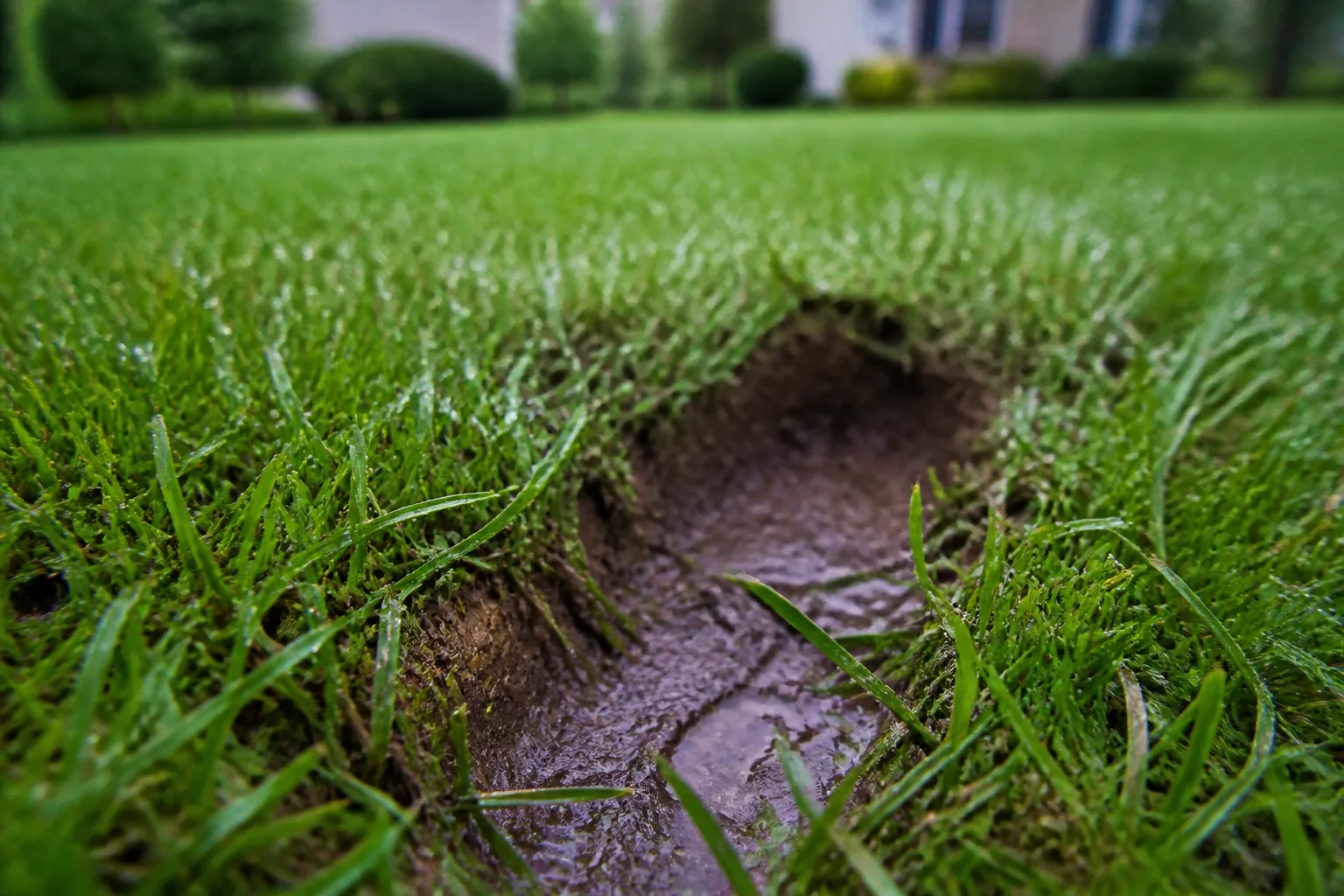
On a normal day — not right after irrigation — walk across the lawn and look back. If your footprints remain visible for more than an hour on cool-season grass during the growing season, the soil may be compacted or the turf may be drought-stressed. Combine this with the screwdriver test: hard soil plus lingering footprints strengthens a compaction diagnosis.
For water movement, watch the lawn during or right after a moderate rain. Water should soak in within a short time. If it sheets across the surface or sits in shallow puddles on level ground, the profile may be too tight for roots to access moisture even when you irrigate faithfully.
Cut a Plug and Measure Thatch
Use a sharp spade or soil knife to cut a square about 3 inches deep. Lift it carefully and look for a distinct brown, felt-like layer between green shoots and mineral soil. Measure only that layer, not the entire root mat or surface debris.
Extension guidance varies by region and grass type, which is useful rather than contradictory. Many sources treat up to about ½ inch of thatch as acceptable or even beneficial. Penn State Extension recommends mechanical thatch removal when the layer is 1 inch or deeper. Between those numbers, inspect turf vigor before choosing aeration, light dethatching, or improved maintenance alone.
If the plug shows roots growing mainly in thatch rather than soil, aeration plus cultural changes may help. If the mat is thick and dry, read our signs of an unhealthy lawn guide before you assume compaction is the only issue.
Sign 1 — Thinning or Bare Patches That Won’t Fill In
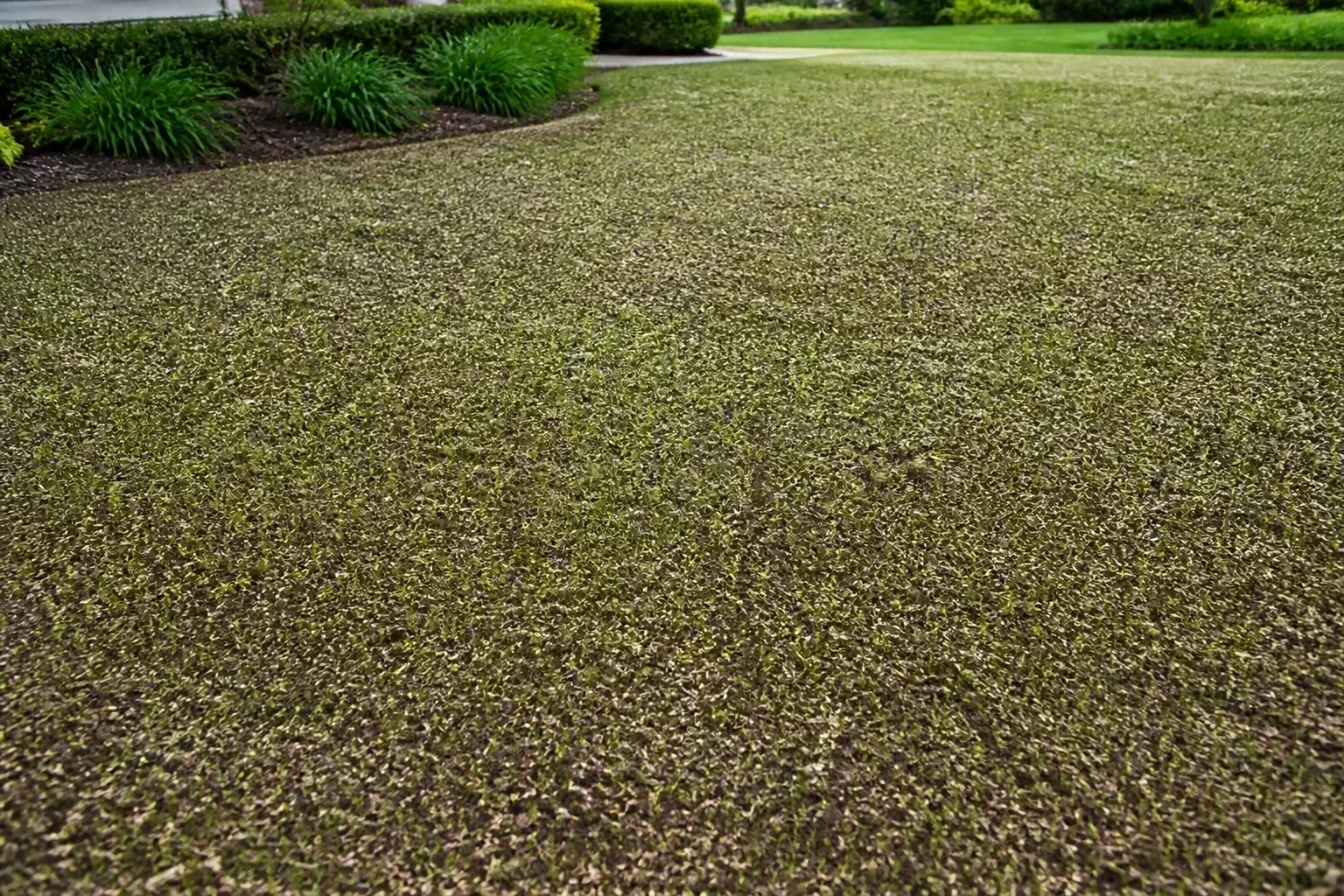
Thinning grass is the symptom homeowners notice first, but it is never a diagnosis on its own. Patches open when crowns die, seed cannot reach soil, or roots cannot support new tillers. Compaction contributes when fertilizer sits on the surface, water never reaches functioning roots, and existing plants cannot spread into worn areas.
Aeration helps thinning when the plug test shows hard soil or shallow roots and the grass species is capable of recovery in your light and climate. It does not help when the patch is pure shade, repeated dog urine, grub damage, or disease — those need targeted fixes first. For open soil, pair aeration with overseeding rather than expecting holes alone to fill in. See how to repair a bare patch on your lawn for the full recovery sequence.
Sign 2 — Dry, Crispy Grass Despite Regular Watering
Dry-looking grass with a sprinkler running on schedule frustrates every homeowner. Before you aerate, confirm the soil is actually dry several inches down in the affected zone. A coverage gap, clogged head, or slope that sheds water can mimic compaction.
When the screwdriver stops early and the surface browns between waterings faster than the rest of the yard, compaction may be preventing deep infiltration. Roots stay shallow and burn up in heat. Core aeration creates channels so irrigation and rain move into the profile instead of running off or evaporating from the blades.
If the soil is already wet and grass still collapses, suspect overwatering, root disease, or poor drainage — adding holes will not fix saturation. Our guide on grass turning yellow covers the other common causes.
Sign 3 — Water Pools on the Surface After Rain
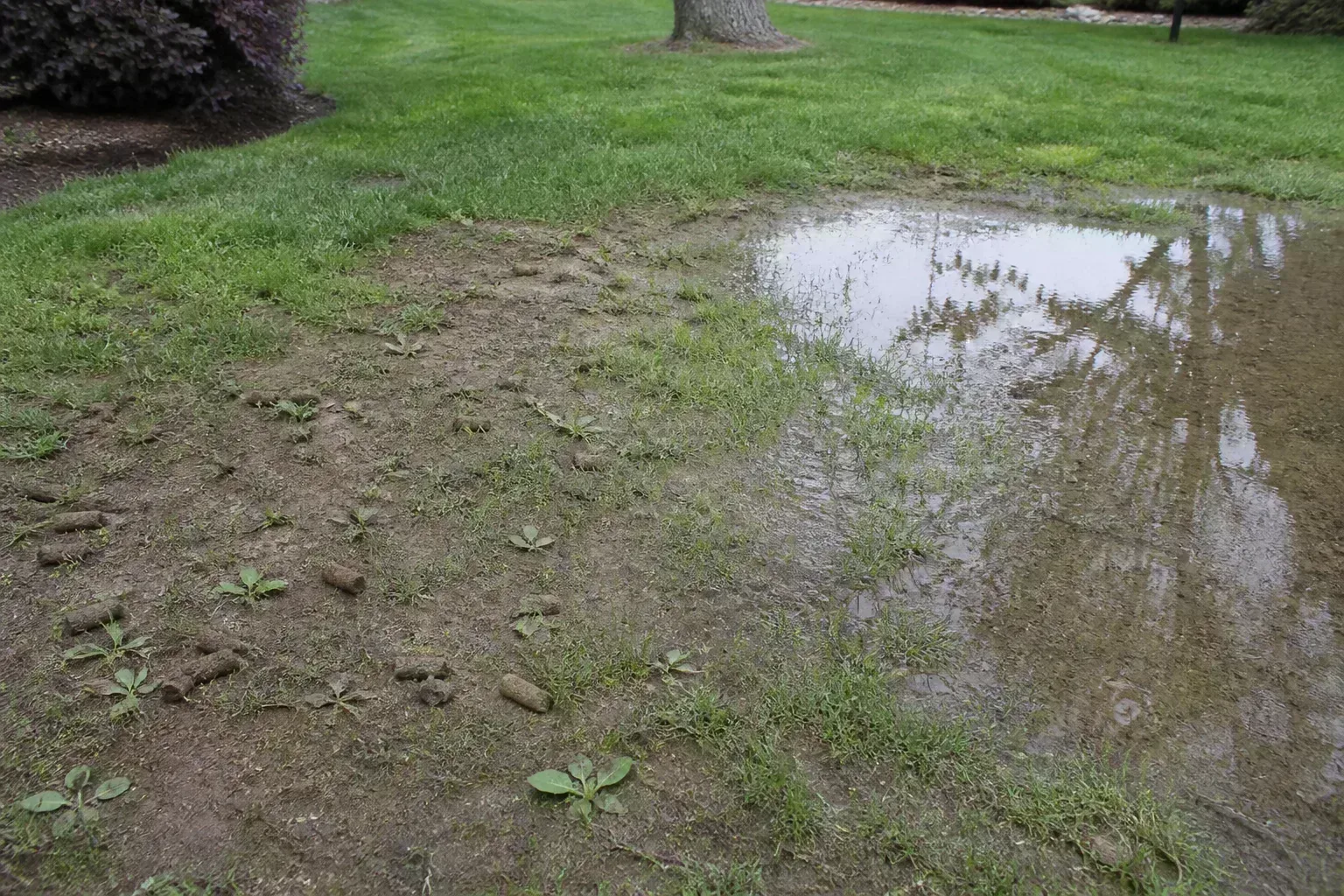
Puddling is one of the clearest visual signs of restricted infiltration. WVU Extension specifically lists water pooling on the surface and slow drainage as compaction symptoms. On level lawn, shallow standing water after a normal rain suggests the pore spaces in the top few inches are collapsed.
Low spots, gutter discharge, and clay bowls can also hold water without widespread compaction. Check whether puddles appear only in depressions or across entire traffic zones. Widespread pooling on flat areas plus a hard screwdriver test makes aeration a strong candidate.
Do not aerate while the lawn is muddy. Colorado State University Extension recommends aerating when soil is moist but not frozen or extremely hot and dry. Mud smears holes shut; slightly moist soil lets hollow tines pull full plugs.
Sign 4 — Footprints and Tire Marks Linger for Hours
Turf recovers from foot traffic when crowns are hydrated and soil has resilience. When prints remain long after you walk across the yard during active growth, the lawn may be drought-stressed, overwatered, or growing on a compacted profile with shallow roots.
Combine footprint persistence with the probe test. If the soil is brick-hard and prints linger in high-use areas, aeration can restore pore space so roots deepen and the sward rebounds faster after traffic. If the soil is soft and saturated, footprints mean something else entirely — usually too much water or weak roots from disease.
Sign 5 — Heavy Traffic Paths Look Worn Before the Rest
Kids cutting the same route to a swing set, mail carriers crossing the edge, and repeated mower turns along a fence line compress soil slowly and invisibly. Those paths often thin out first while the open lawn still looks acceptable.
Targeted core aeration — sometimes twice in crossing patterns — relieves localized compaction better than treating only the prettiest section. Heavy traffic areas may need aeration every year or two, while low-use sections can go longer between passes. After aeration, keep traffic off the lawn until it recovers, and vary mowing patterns so wheels do not follow the same track all season.
Sign 6 — Thick Thatch or a Spongy, Bouncy Feel
A spongy lawn can mean excess thatch, but a thin thatch layer over compacted clay may still feel firm rather than bouncy. That is why the plug test matters. When the organic mat is thick, roots grow into it and dry out quickly while the surface feels soft.
Core aeration helps by introducing soil microbes on the plug surfaces that break down thatch biologically. Penn State Extension notes aeration can significantly reduce thatch while alleviating compaction. For mats approaching an inch or more, aeration may be part of the plan — but severe buildup often needs dethatching or renovation, especially if water and fertilizer never reach mineral soil.
Sign 7 — Dense Clay Soil That Stays Hard When Dry
Clay is not automatically a problem; many healthy lawns grow on clay when pore space is maintained. Trouble starts when fine particles pack together so tightly that water cannot enter and roots cannot penetrate. Clay that cracks when dry and turns sticky when wet is especially prone to compaction under traffic.
Aeration fractures the hard layer and gives roots temporary channels to deepen. It works best as part of a longer plan: mow high, improve drainage in low spots, overseed with appropriate species, and avoid working the lawn when wet. One aeration pass will not permanently transform clay, but it can reset the profile enough for seed and fertilizer to work again.
Signs That Look Like Aeration Needs but Aren’t
Several problems mimic compaction and send homeowners to the rental counter too early:
- Dormant or heat-stressed turf in summer — grass browns from heat, not always from hard soil. Aerating dormant cool-season grass in July can stress crowns without meaningful recovery.
- Active disease such as brown patch — opening the canopy and wounding plants can spread stress. Diagnose and treat disease before cultivation. Start with brown patch on lawns if rings expand after warm, humid nights.
- Shade thinning — no amount of aeration makes turf dense under heavy tree cover without shade-tolerant seed or alternative ground covers.
- Grub or animal damage — sod that lifts like carpet points to root feeding, not compaction. Inspect before aerating.
- Pure thatch overload — a thick mat may need vertical mowing or dethatching, not holes alone.
- Brand-new sod or seed — young lawns need time to knit; aerating too soon can tear unanchored roots.
When multiple signs appear, list them in order of evidence from your tests, not in order of worry.
How Often to Aerate and the Best Season for Your Grass
Most residential lawns benefit from core aeration every one to three years, with high-traffic yards on the shorter end. Golf-level use paths may need annual attention in small zones. Aeration is maintenance, not an annual mandatory chore — measure compaction signs instead of marking a fixed calendar date.
Timing matters as much as frequency. Aerate when your grass type is actively growing so crowns recover quickly. Colorado State University Extension lists spring and fall as the best windows and notes heavy-traffic areas require more frequent aeration. Penn State Extension recommends aeration during cool weather in early to mid-spring or late summer to early fall for rapid recovery.
Cool-Season vs Warm-Season Timing
Cool-season lawns — Kentucky bluegrass, tall fescue, perennial ryegrass — usually recover best from aeration in early fall or early to mid-spring after two or three mowings. Fall often wins because weeds germinate less aggressively and roots grow well in cool soil.
Warm-season lawns — bermudagrass, zoysia, St. Augustine — should be aerated during late spring through summer when the turf is fully green and growing. WVU Extension advises aerating warm-season grasses in fall in some climates and cool-season types in early spring or fall. Match the window to local growth, not a national meme.
If you plan to overseed for thickness, read our spring aeration and overseeding guide before applying crabgrass pre-emergent — many products block turf seed germination the same season.
Five Aeration Mistakes That Undo the Job
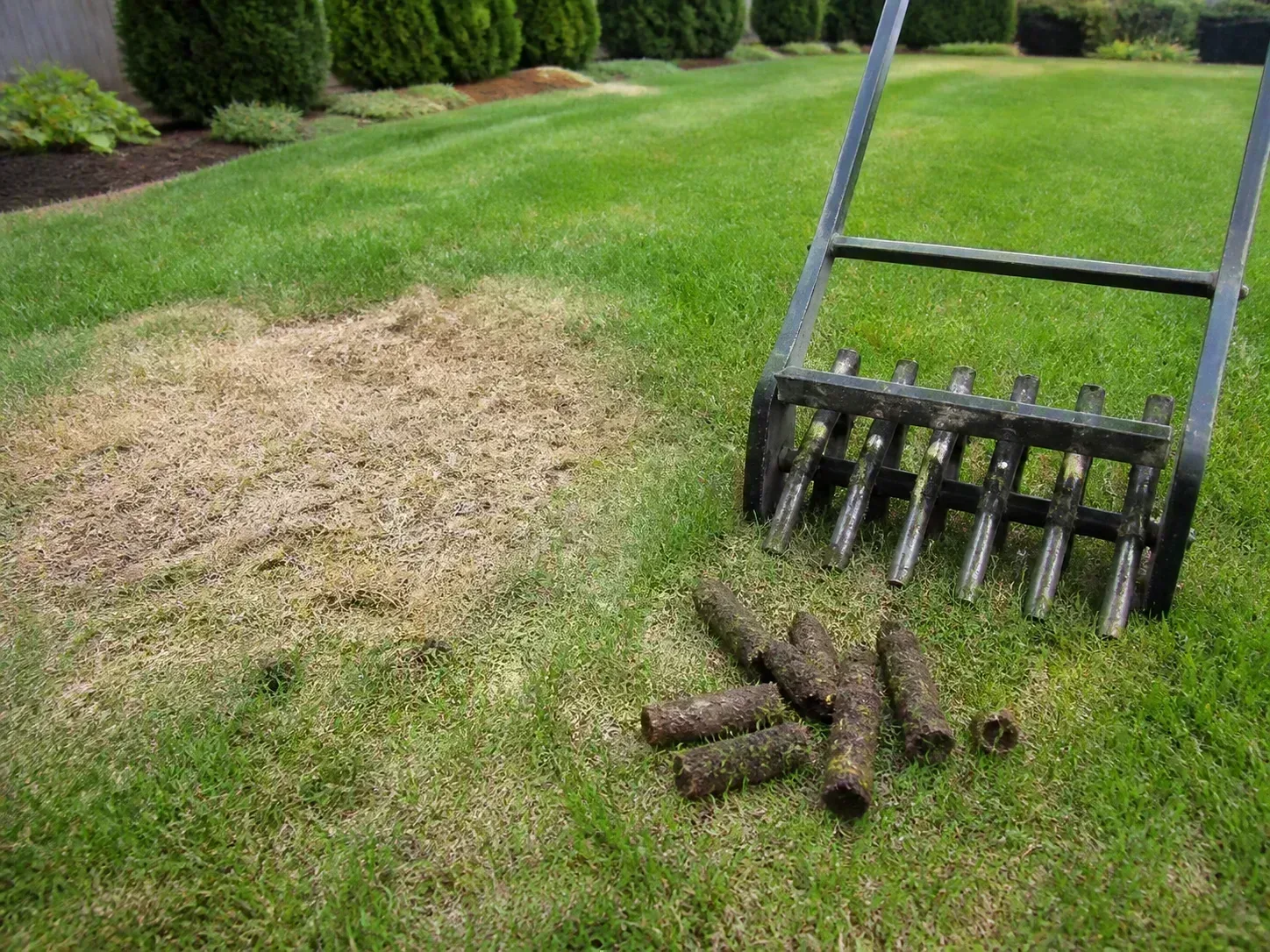
Using a spike aerator on heavy clay. WVU Extension recommends plug aerators because they remove a core rather than poking holes that can compress soil around each opening. Penn State Extension is explicit that solid-tine spike equipment should not be mistaken for core aeration. Spikes can help a tiny soft patch; they are the wrong default for serious compaction.
Aerating bone-dry or soaking-wet soil. Dry soil resists tines and produces shallow holes. Saturated soil smears and seals. Water deeply the day before so plugs pull 2–3 inches deep, as Colorado State University Extension recommends.
Making only one pass. Rental machines cover a fraction of the lawn per pass. Plan two to four crossings in different directions on compacted areas.
Ignoring irrigation heads and shallow lines. Mark sprinklers, shallow cables, and irrigation lines before you start. Hollow tines can snap heads and cut lines.
Skipping recovery steps. Leaving plugs is fine — mow them after they dry to break them up. If you need thickness, overseed the same day, keep seed moist, and delay heavy traffic until the lawn recovers. Aeration without follow-through is an expensive way to make holes.
What to Do Right After You Aerate
Let soil plugs dry for a day or two, then mow normally to shatter them. The cores return organic matter and microbes to the surface — Colorado State University Extension notes that on lawns with more than ½ inch of thatch, leaving cores on the lawn helps them work back into the grass.
If the lawn is thin, overseed immediately into open holes while seed-to-soil contact is high. Apply starter fertilizer only if your soil test or maintenance plan calls for it. Water lightly and frequently enough to keep the seed zone moist without creating puddles.
Hold off on aggressive herbicides until new grass establishes. For broader lawn recovery habits — mowing height, watering depth, fertilizing on a grass-type calendar — see how to help your lawn grow faster.
Conclusion
The seven signs your lawn may need aeration — thinning patches, droughty appearance despite water, puddling, lingering footprints, worn traffic paths, spongy thatch, and hard clay — all point to the same underlying question: can roots get air, water, and nutrients in the top few inches of soil? The screwdriver test, footprint check, and plug sample answer that question more reliably than any symptom list alone.
When tests confirm compaction or restricted movement, schedule core aeration during active growth for your grass type, use a plug machine on moist soil, cross the lawn multiple times, and follow with overseeding and careful watering if density is the goal. When tests point to shade, disease, grubs, or a thatch mat that needs removal first, fix that cause — aeration is a powerful tool, but only when the diagnosis fits.