8 Common Lawn Problems and How to Fix Them
Learn what brown patches, thatch, weeds, puddles, grubs, and shallow roots are telling you—and the safest first fix for each lawn problem.
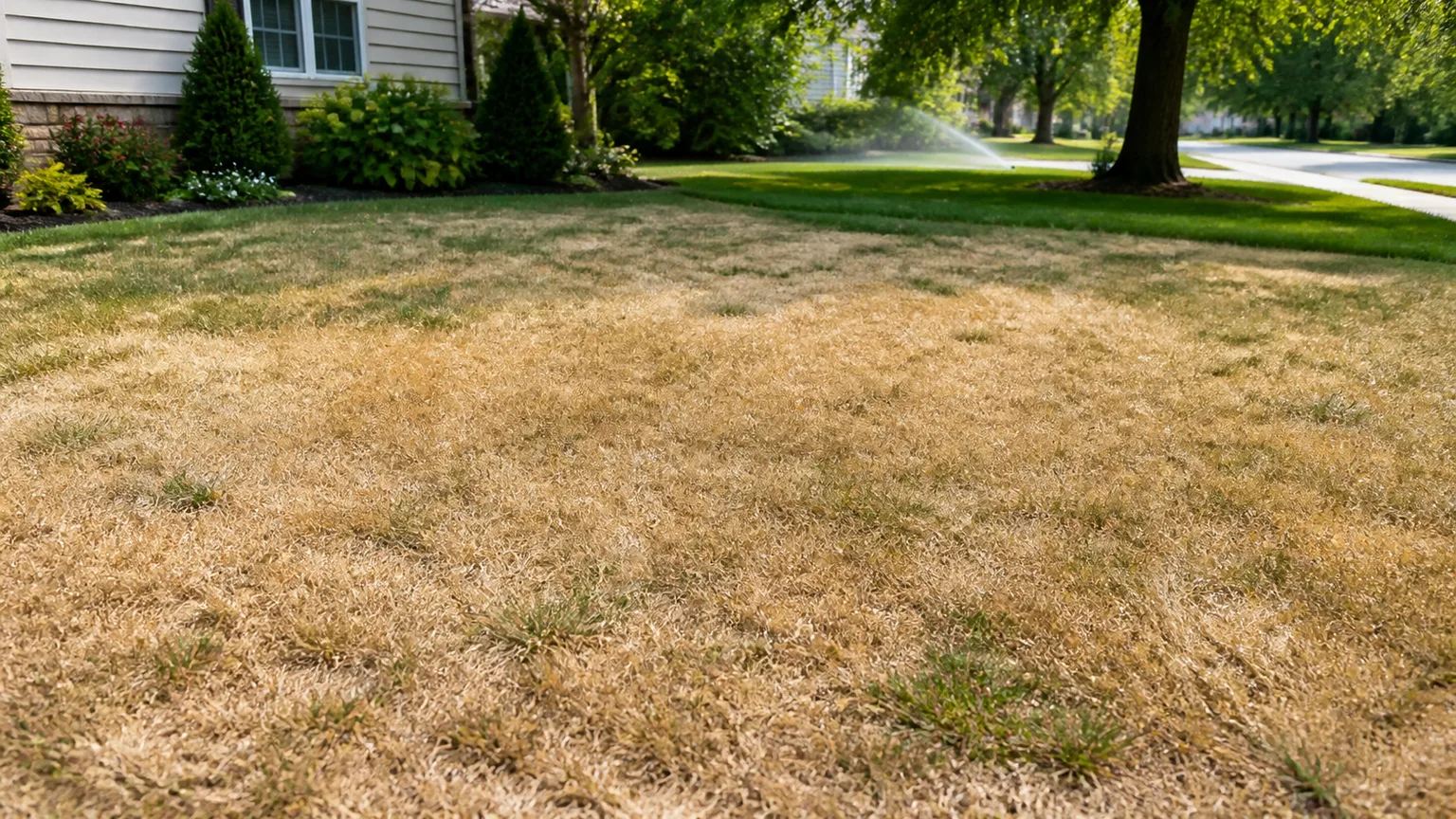
An unhealthy lawn rarely needs more of everything. Brown grass can be thirsty, waterlogged, diseased, or disconnected from its roots; a weed-filled lawn may have a soil or mowing problem underneath. The fastest way to waste money is to treat the color before you identify the cause.
Use the symptoms below as a diagnosis-first checklist. Start with the least disruptive test—look at the pattern, feel the soil, check irrigation coverage, and inspect a small edge sample—then choose a repair that matches what you find. The right answer also depends on grass type, shade, soil texture, climate, and season, so the goal is a reliable first decision rather than a universal lawn-care recipe.
The 10-Minute Lawn Triage: Diagnose Before You Treat
Walk the entire lawn before focusing on the worst-looking patch. Note whether the problem is in a low spot, under a tree, beside a driveway, along a sprinkler route, in a high-traffic path, or spread evenly across the yard. A pattern is evidence: a broad dry area that follows a sprinkler’s missed zone suggests a different problem from small expanding rings after warm, humid nights.
Do not water, fertilize, seed, or spray while the diagnosis is still a guess. Take a quick photo, mark the date, and write down recent rain, mowing, irrigation, heat, construction, pet traffic, and chemical applications. A three-day record is often more useful than a single glance because stress symptoms can appear after the event that caused them.
Check the Pattern, Timing, and Soil Moisture
Push a screwdriver or soil probe into both healthy and damaged areas. If it enters easily in one spot but stops at a hard layer in another, compaction or a shallow root zone may be limiting water and air. If the soil is dry several inches down, the lawn may need a measured soaking; if it is cool, slick, or muddy, adding water can make the problem worse.
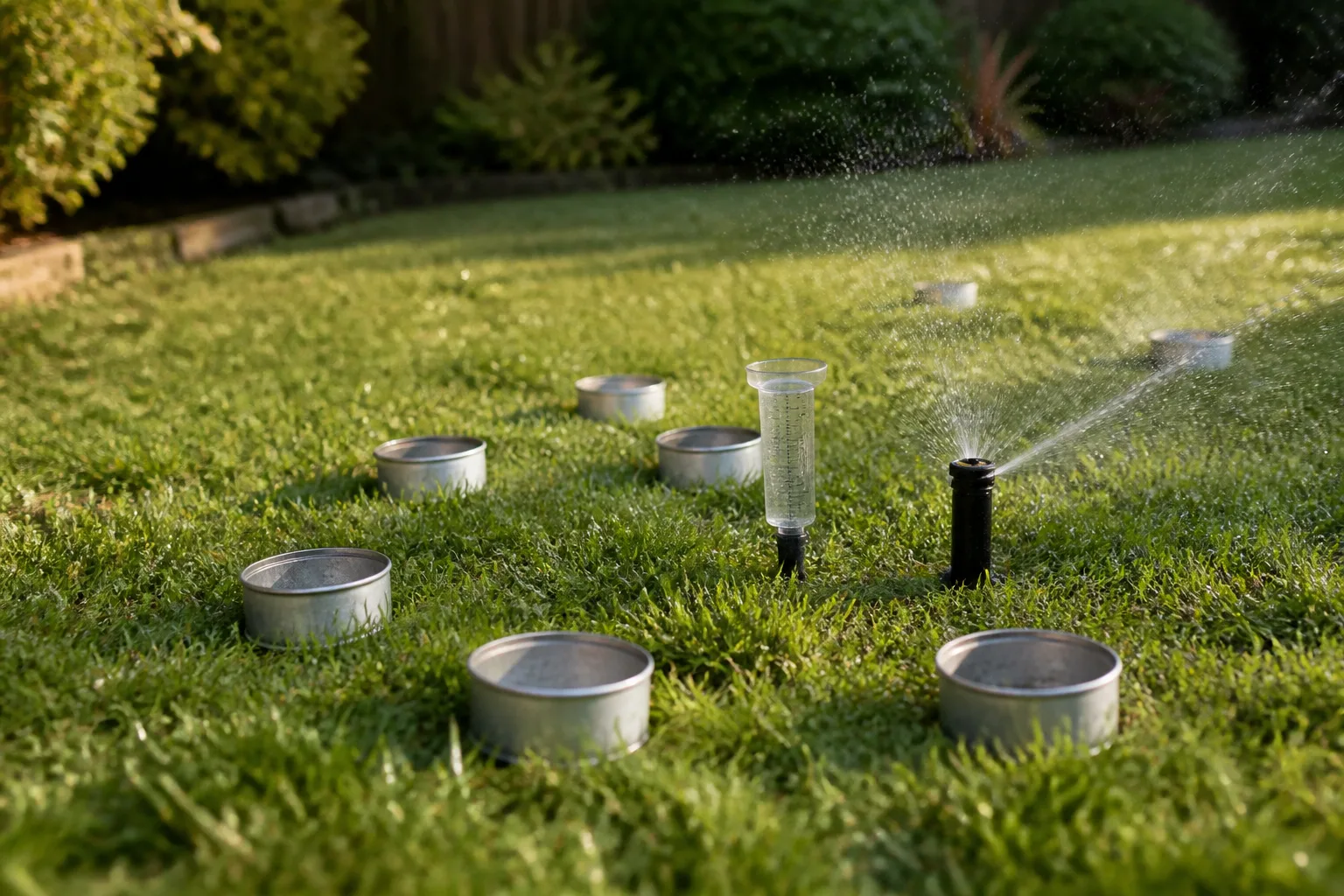
Test the irrigation system with several shallow, straight-sided containers placed across the lawn. Run the system for a normal cycle, compare the amounts collected, and move or repair heads that leave dry strips or create puddles. Rainfall and irrigation are not interchangeable: a schedule based only on minutes tells you how long the system ran, not how much water reached each section.
Use the Lift-and-Pull Test at a Damaged Edge
At the border between healthy and damaged turf, cut a small square with a knife or spade and lift it carefully. Look at the roots, soil, thatch, and moisture rather than judging only the blades. Healthy turf should resist a gentle pull because the roots anchor it; grass with missing roots may peel back in a sheet.
This test is not a license to dig up the whole lawn. One small sample can reveal whether you are dealing with a dry root zone, saturated soil, excessive thatch, poor rooting, or possible grub damage. Replace the piece after inspection and use the result to decide whether a soil test, irrigation repair, pest identification, or professional diagnosis is the next step.
1. Brown or Yellow Patches That Keep Spreading
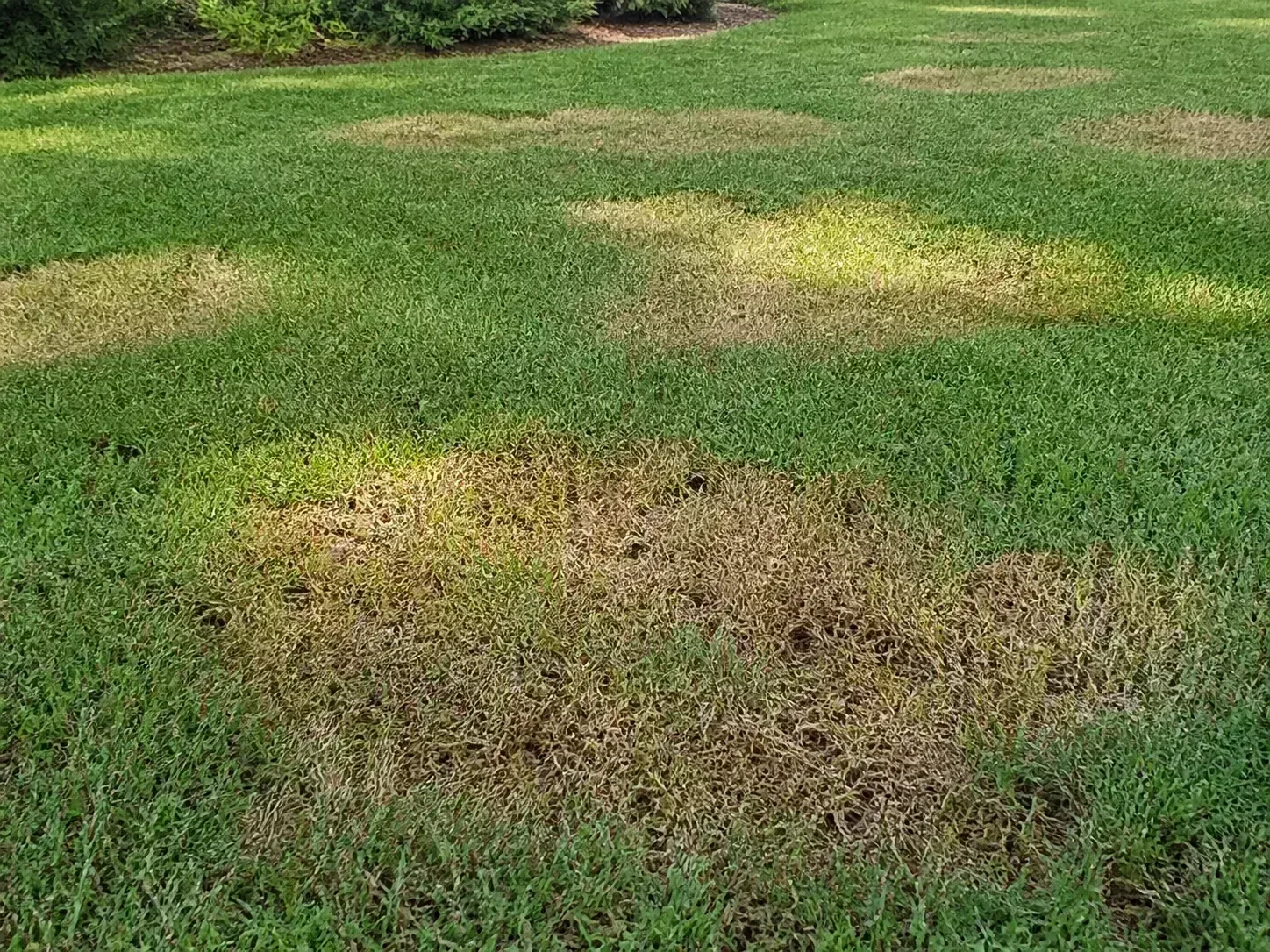
Brown or yellow patches are a symptom, not a diagnosis. A dry, crisp patch in a sprinkler blind spot points toward drought stress; soft dark grass in a low, saturated area points toward drainage or oxygen loss; an expanding patch after warm, humid weather can fit a turf disease; and turf that lifts easily with few roots raises the grub question.
Penn State Extension describes brown patch as a summer foliar disease that can affect home lawns, but a patch should not be labeled fungal from color alone. Disease identification depends on grass type, weather, pattern, and sometimes a laboratory or extension diagnosis. Spraying a fungicide “just in case” can waste money and may complicate future diagnosis.
Distinguish Drought, Drainage, Disease, and Grubs
Use these clues to choose the first check:
- Drought or missed irrigation: Blades look dry, roll or wilt, and recover somewhat after a thorough soaking. The soil is dry below the surface, and the patch may follow a sprinkler’s coverage gap or a hot, exposed edge.
- Poor drainage or flooding: Grass is soft, mushy, dark, or foul-smelling, and the soil remains wet. University of Minnesota Extension identifies standing water and saturated soil as causes of brown-to-black grass in low or poorly drained areas.
- Disease: Patches may expand or form rings during a period of warm, humid weather. Look for a repeatable pattern and symptoms on the blades or crowns, but confirm the likely disease before choosing a product.
- Root-feeding insects: The turf feels loose and lifts from the soil because roots have been eaten. Confirm with a small edge sample rather than assuming that every brown patch contains grubs.
Once the cause is reasonably clear, repair in order. Correct a broken sprinkler or drainage issue first, remove and replace severely dead turf only after the soil condition is workable, then reseed with a grass suited to the site. For a small bare patch, loosen the surface, add a thin layer of compatible soil or compost if needed, spread appropriate seed, press it into contact, and keep the surface consistently damp until germination. Repeatedly reseeding a patch that is still shaded, flooded, compacted, or being scalped only creates another failed patch.
2. Thin Grass and Bare Soil
Thin turf is often blamed on low fertility, but fertilizer cannot solve deep shade, constant foot traffic, poor drainage, compacted soil, mowing too short, or a grass species that does not fit the site. Bare soil is also an invitation for weeds, which is why weed control alone rarely creates a durable lawn.
Compare a thin area with the healthiest nearby grass. Is the light different? Does water sit there after rain? Do people or pets cross it? Are mower wheels dropping into a depression or scalping a crown? Those observations tell you whether to prune a competing branch, redirect traffic, improve drainage, adjust mowing, or test the soil before adding nutrients.
Repair the Cause Before You Reseed
Start with a soil test when thin growth is widespread or has not responded to corrected watering and mowing. A test can identify pH and nutrient conditions, but it will not diagnose every lawn problem; it should be paired with an inspection of compaction, shade, roots, and irrigation. Add only what the test and the grass’s needs justify—more nitrogen is not a substitute for oxygen, light, or a living root system.
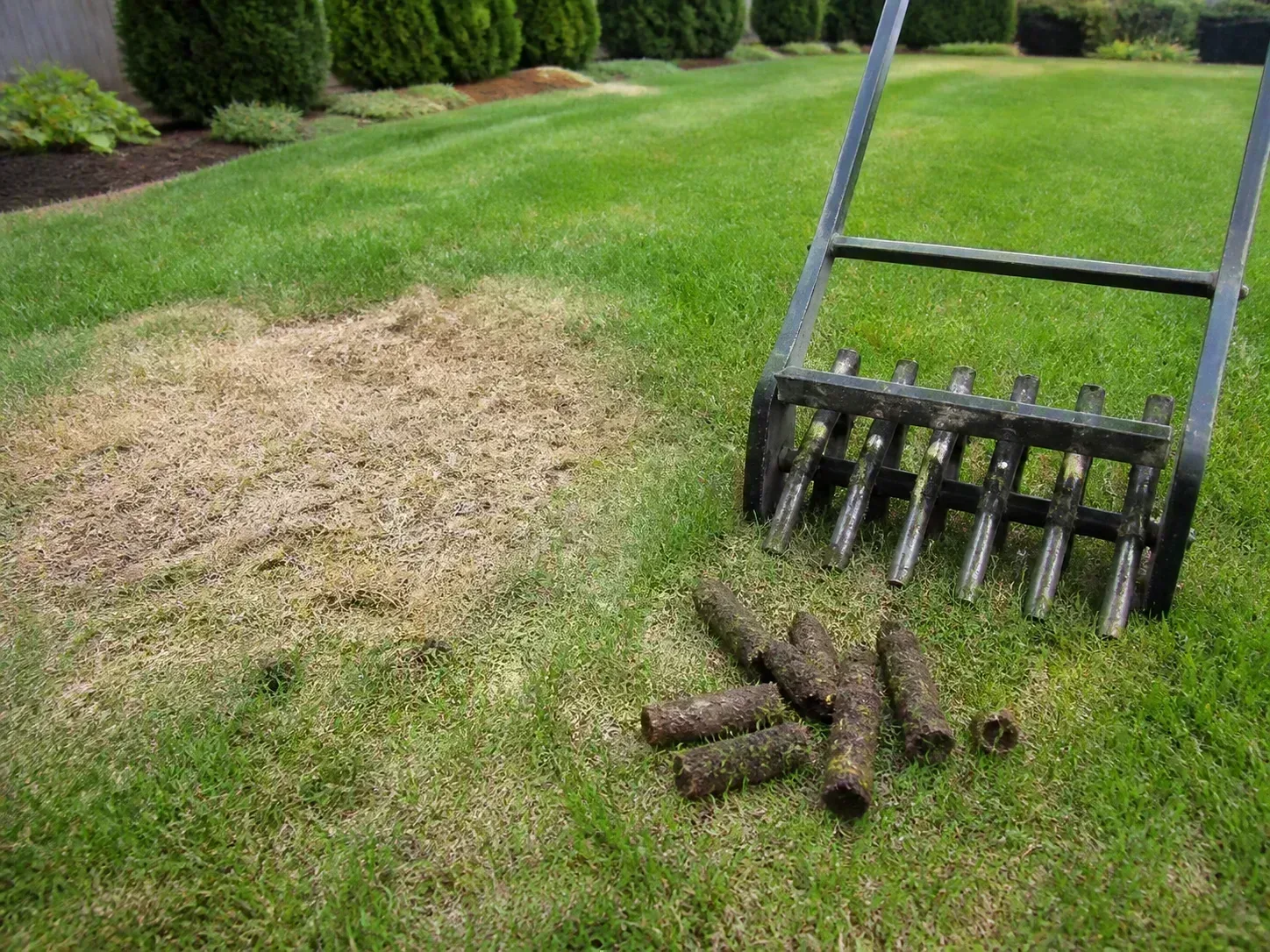
Core-aerate compacted soil when the turf is actively growing and the soil is moist enough to form a core but not so wet that equipment smears it. Follow with overseeding during the window that suits your grass type. Keep seed in contact with soil, protect it from washout, and use shallow, frequent moisture only during establishment; once seedlings are rooted, transition to deeper, less frequent watering.
3. A Spongy Lawn or Thick Thatch Layer
A lawn that feels springy underfoot can be carrying too much thatch, staying too wet, or both. Thatch is the intermingled layer of living and dead stems, shoots, and roots between green growth and the soil surface. A thin layer is not automatically a problem: Penn State Extension’s thatch guidance notes that about one-half inch or less can help insulate turf and soften the surface, while a layer over an inch is much more likely to interfere with air, water, mowing, and root health.
Do not confuse grass clippings with the main cause of thatch. Soil organisms generally break down fine clippings quickly; persistent buildup is more closely related to stem and root tissues, grass species, soil conditions, compaction, aggressive nitrogen use, and reduced biological activity. Leaving clippings on a healthy lawn is not the same as piling a thick layer of undecomposed material on the soil.
Measure Thatch Before Dethatching
Cut a small wedge through the turf and measure the brown, fibrous layer between green blades and soil. If the layer is thin, improve the conditions that help it decompose: avoid overfertilizing, address compaction, keep the soil pH in the grass’s appropriate range, and maintain steady growth. Core aeration can improve air movement and remove some thatch while helping soil organisms work through the layer.
If thatch is an inch or more and the turf is otherwise strong, mechanical removal may be appropriate. Use a vertical mower or power rake carefully, start at a shallow setting, and make a test pass in an inconspicuous area. Penn State warns against removing thatch when turf is weak or under heat or drought stress; aggressive removal can thin the stand and slow recovery. For cool-season turf, late summer or early fall is often safer than a stressful spring or hot summer operation, while warm-season timing depends on active growth and local conditions.
4. Water That Runs Off or Puddles
Puddles and runoff mean the soil is accepting water more slowly than the weather or irrigation is delivering it. Compaction, heavy clay, a low spot, a thick thatch layer, a blocked drain, or a slope can all contribute. The visible water is the result; the useful diagnosis comes from finding out whether the water is trapped at the surface, perched above a hard layer, or flowing to a low point.
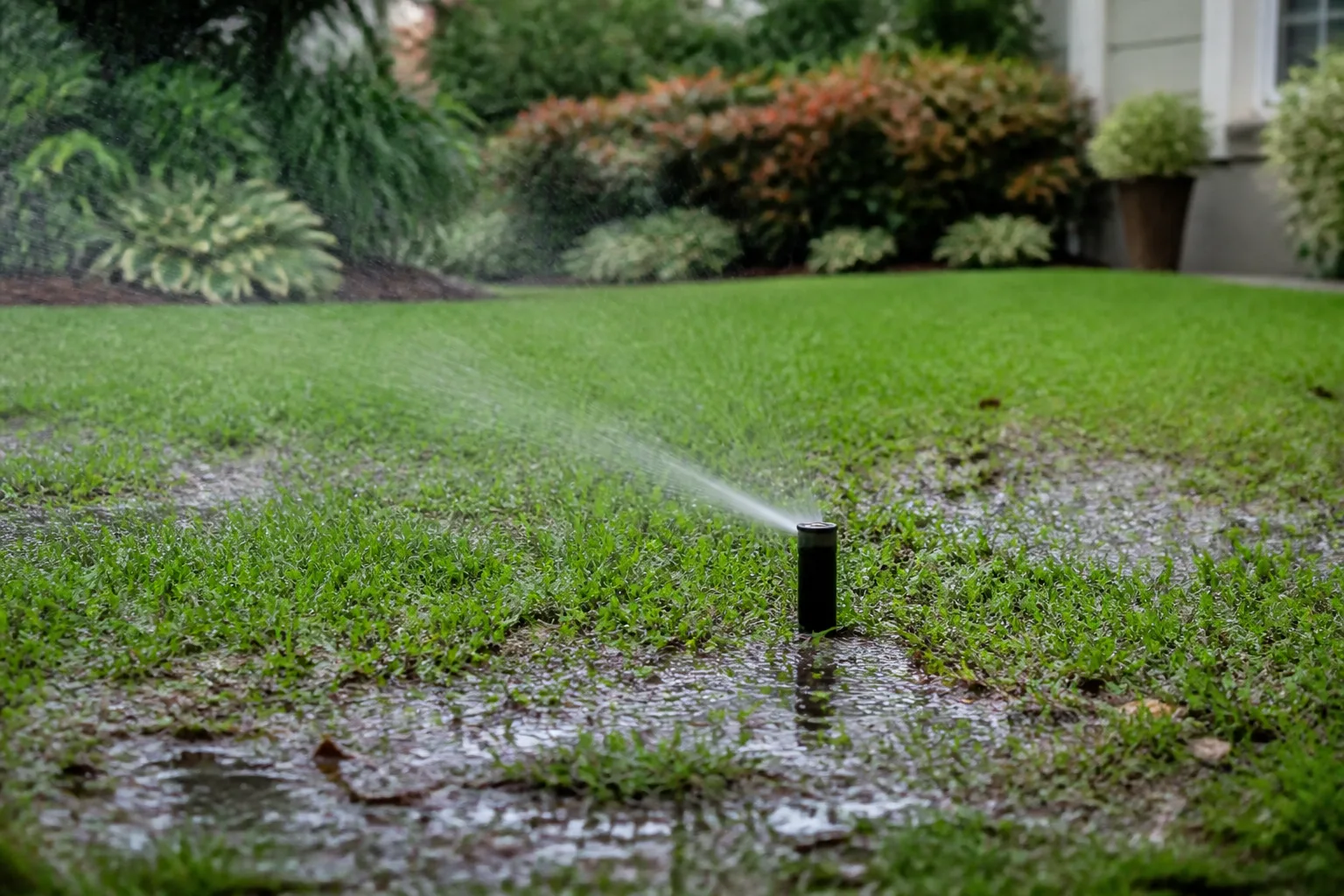
First stop automatic watering in the affected area until the surface is no longer saturated. Check whether downspouts, roof runoff, or a neighboring paved area sends water onto the lawn. On a small compacted section, core aeration during suitable growing conditions may improve infiltration. On a persistent low spot or yard-wide drainage problem, grading or a designed drainage solution may be necessary; dumping a thick layer of soil over living turf can bury crowns and create a second problem.
A spongy surface after rain does not prove thatch is the only cause. University of Minnesota Extension’s turf diagnosis describes brown, mushy grass and soft, muddy soil after saturation as a flooding-related symptom, so give wet areas time to drain and improve the water path before adding irrigation, seed, or fertilizer.
5. Wilting, Brittle Blades Despite Watering
If grass remains wilted after you water, check whether the water reached the roots. Sprinkler heads may be clogged, tilted, blocked by a shrub, or overlapping unevenly. Compacted soil can also make water run across the surface while the root zone stays dry, and a thatch layer can hold water above the soil instead of letting it move down.
Penn State Extension gives one inch of rain per week as a general starting point for many in-ground plants, but that number is not a lawn prescription. Sandy soil, heat, wind, shade, grass type, dormancy, recent rainfall, and local water rules all change the need. Measure rainfall with a rain gauge and irrigation with catch cups, then probe the soil before adding more.
Water slowly enough for infiltration, preferably during a period that allows the leaf surface to dry before night, and divide a long cycle into shorter runs when runoff begins. Do not “catch up” with a flood after weeks of missed watering; a severely dry, hydrophobic surface may need several gentle passes before it absorbs evenly. If the soil is wet but blades remain brittle, inspect roots and crowns instead of increasing irrigation.
6. Weeds Taking Over Open Areas
A sudden wave of weeds is often a report on the turf canopy. Weeds exploit bare soil, thin grass, compaction, excess moisture, poor light, and mowing stress. Some weeds also prefer conditions that turf dislikes, so their location can help you diagnose the site: moisture-loving weeds in a puddling section suggest drainage; weeds concentrated along a traffic path suggest compaction; weeds under dense shade may be telling you that the grass is the wrong groundcover for the light.
Remove weeds before they set seed, but pair that work with a plan to close the opening. Improve soil and irrigation, adjust mowing for the grass type, overseed at the right time, and reduce repeated traffic. A broad herbicide application is not a substitute for identifying the weed, reading the product label, checking temperature and rainfall restrictions, and protecting people, pets, desirable plants, and waterways.
Hand-pull or dig isolated broadleaf weeds when the soil is moist and the root can come out intact. For a large infestation, identify the weed first and use an integrated approach. A thicker, better-adapted turf can suppress new seedlings, but it will not eliminate established perennial weeds if the underlying stress remains.
7. Grass That Pulls Up Like a Carpet
Turf that peels up easily is a root-zone warning. University of Minnesota Extension recommends examining a square-foot sample along the border between healthy and damaged grass when white grubs are suspected. When many grubs are present, roots may be missing and the turf can roll back like carpet; half- to one-inch white larvae may or may not be visible in the sample.
Look for other explanations before treating. Skunks, raccoons, birds, and moles can disturb turf while searching for insects, and animal digging does not prove that the lawn has enough grubs to justify control. The University of Minnesota also cautions that controlling grubs does not repair damage caused by skunks or moles.
If you find larvae, identify the grub or ask an extension service or qualified professional for help before choosing a product. Timing and species matter, pesticide labels are legally binding, and a fall application may miss grubs that have moved deeper into the soil for winter. Repair the surface only after the root problem and traffic or drainage issues are addressed.
8. Short, Shallow Roots
Short grass is not automatically shallow-rooted grass. To check root depth, lift a small plug from a stressed area and compare it with healthy turf. Roots that stop at a hard layer, remain concentrated in a thick thatch layer, or are sparse after repeated shallow watering will not support the same drought and heat tolerance as roots that explore the soil.
Common causes include mowing too low, watering lightly and frequently after establishment, compacted soil, excess thatch, poor drainage, and a grass species that is not suited to the site. Use the highest practical mowing height recommended for your grass type and avoid removing more than about one-third of the blade in a single mowing. Raise the mowing height before heat or drought rather than waiting for the grass to turn brittle.
Deep roots come from a functioning soil profile, not from one product. Improve compaction when the turf is actively growing, let the root zone dry slightly between established-lawn irrigations without allowing severe wilt, and correct saturated conditions. If roots remain shallow after those changes, a soil test and an in-person turf assessment can reveal whether the lawn needs renovation or a better-adapted grass.
A Recovery Plan That Works Across Seasons
The most reliable lawn recovery plan is a sequence: observe, measure, correct the site, then rebuild density. The order matters because seed, fertilizer, and pesticides are support tools—not substitutes for usable soil, suitable light, and even water.
What to Do This Week
- Photograph the symptoms and map where they occur.
- Check soil moisture in healthy and damaged areas several inches down.
- Test irrigation with catch cups and repair obvious coverage gaps.
- Lift one small turf sample at the edge of a problem area.
- Pause unnecessary watering, fertilizer, fungicide, and insecticide until the evidence points to a cause.
- Clear leaves and debris that are matting the turf, but do not aggressively dethatch stressed grass.
- Schedule a soil test if thinning is widespread or recurring.
What to Reserve for the Right Season
Schedule aeration, dethatching, overseeding, and major renovation when the grass can recover quickly. Cool-season grasses generally recover best during their cooler active-growth window, while warm-season grasses need active warm growth; local extension calendars are more useful than a generic national date. Avoid major mechanical disturbance during heat, drought, or dormancy unless a professional has a specific reason and recovery plan.
Use compost top-dressing as a measured soil-building option, not a cure-all. Savvy Gardening describes spreading roughly one-quarter to one-half inch over an established lawn; keep the layer thin enough that it does not bury the blades, and do not use top-dressing to cover a drainage failure, severe thatch, or a persistent pest problem.
When to Call a Turf Professional
Ask for help when a disease-like pattern is spreading quickly, a large lawn is failing despite corrected irrigation, the soil stays saturated, the turf lifts over a broad area, or you are considering pesticide use without a confident diagnosis. A professional can sample soil or turf, identify a disease or insect, check drainage, and recommend renovation when patching would only repeat the failure.
Bring photos, the grass type if known, recent weather and irrigation notes, fertilizer or pesticide records, and a small sample only if the professional asks for one. Be skeptical of anyone who recommends a blanket spray from a single photograph or promises a permanently green lawn without asking about soil, light, mowing, and water.
Conclusion
The clearest sign of an unhealthy lawn is not one particular color. It is a repeating mismatch between the grass and its growing conditions: water arriving unevenly, soil staying sealed or saturated, roots failing, turf being mowed or trafficked beyond its limits, or a pest or disease taking advantage of stress.
Start with the evidence you can observe. Compare the pattern, test moisture, inspect one edge, and correct the basic site problem before you reseed or spray. That diagnosis-first habit protects the lawn, reduces unnecessary treatments, and makes the eventual repair much more likely to hold.



