Lawn Aeration for a Thicker Lawn: Spring Guide
Does aeration create a thicker lawn? Yes, when soil is compacted and you follow with overseeding. Get spring timing, tool choices, and mistakes to avoid.
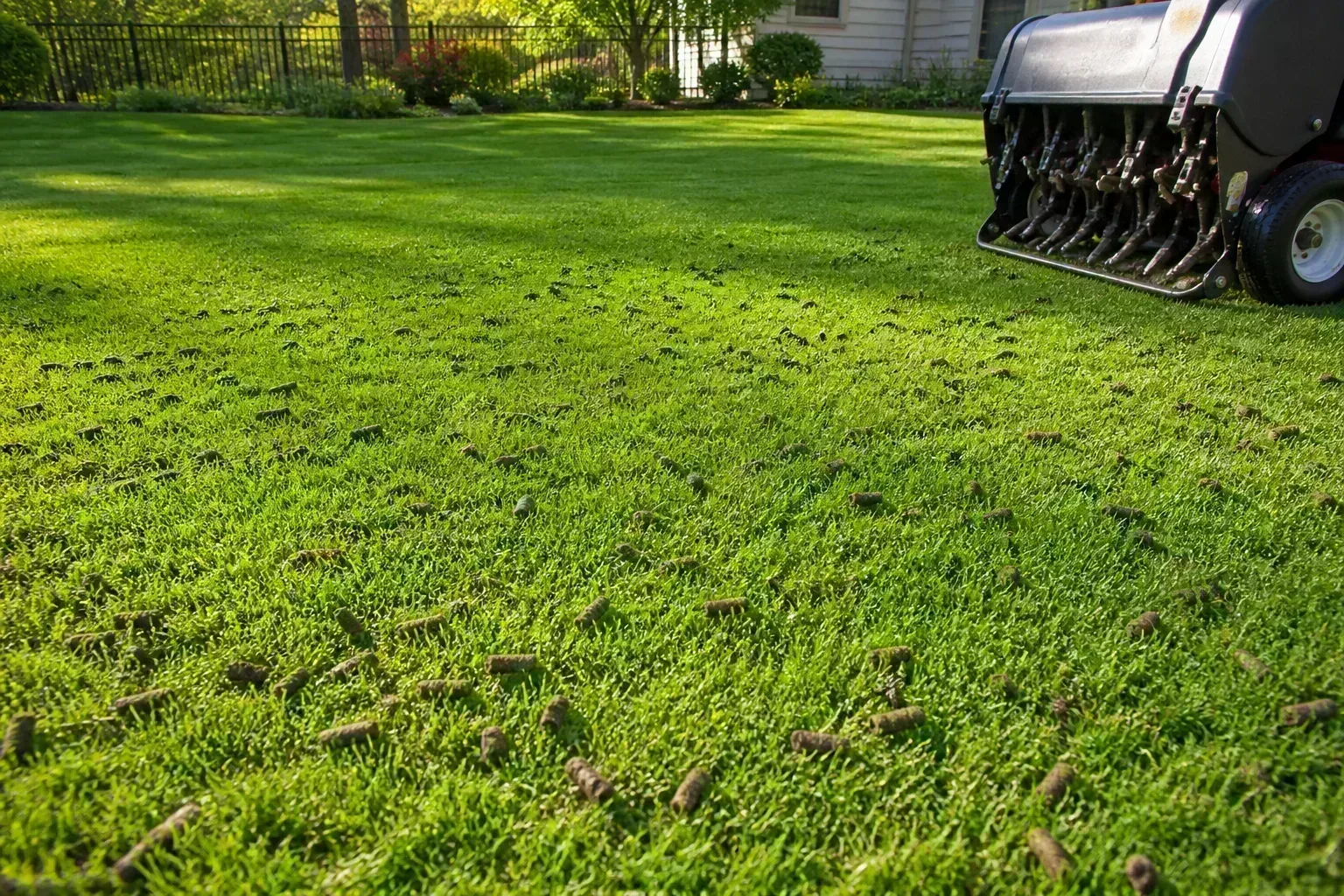
Spring yard lists fill up fast, and lawn aeration lands near the top every year. The pitch sounds simple: poke holes, let air and water in, and watch the turf thicken. Reality is more conditional. Aeration can absolutely help you build a denser lawn—but only when compaction or poor root-zone access is holding growth back, and only when you follow it with the steps that actually add new grass plants. Aeration opens the door. Overseeding, watering, and sensible mowing walk through it.
If your lawn is thin because of shade, chronic disease, wrong grass species, or bare soil from dog traffic, aeration alone will not manufacture thickness. If footprints linger, water pools after rain, and fertilizer seems to sit on the surface, aeration plus overseeding may be the highest-return spring job on your calendar.
The Short Answer
Yes, aeration can help create a thicker lawn—when compaction or a dense thatch layer is limiting root growth and you overseed immediately afterward. Core aeration pulls soil plugs and opens channels so air, water, and nutrients reach roots more effectively. That healthier root system supports denser top growth, but it does not sprout new tillers by itself. The thickness jump most homeowners want comes from overseeding into those open holes while the lawn is actively growing.
Spring aeration works well for cool-season grasses that are waking up and hitting a growth spurt. For many warm-season lawns, late spring through early summer is the better aeration window—not March on dormant turf. If you applied a standard pre-emergent crabgrass preventer and still want to overseed, you have a timing conflict to resolve before you rent equipment.
What Lawn Aeration Actually Does Underground
Aeration—properly done with a core or plug aerator—means pulling small cylinders of soil from the lawn and leaving holes behind. Colorado State University Extension’s PlantTalk guidance describes aeration as supplying the soil with air by removing plugs, reducing compaction, helping control thatch, and moving water and fertilizer into the root zone. Penn State Extension defines aeration as removing soil plugs to create large pores that carry moisture, lime, and nutrients while alleviating compaction and reducing thatch.
Healthy turf thickness is a root story. Grass spreads by tillers and, for some species, rhizomes or stolons. Those structures need oxygen, moisture, and nutrients in the top few inches of soil. When that zone is tight and airless, roots stay shallow, crowns weaken, and the stand opens up—especially after winter traffic, snow mold recovery, or a season of backyard use.
How Compaction Limits Root Growth and Density
Compaction happens slowly and invisibly. Kids cut across the same path. The mower follows one track. Spring cleanup equipment rolls over soggy soil. Clay-heavy yards are especially prone. WVU Extension notes that compacted soils from heavy foot traffic, pet routes, or construction equipment make it difficult for water, air, and nutrients to penetrate, with pooled water after rain as a common symptom.
Compacted ground produces thin, stressed turf that browns quickly in heat and recovers slowly after damage. You can fertilize and water faithfully and still see a patchy lawn because the inputs never reach functioning roots. Aeration targets that bottleneck directly by fracturing the hard layer and giving roots room to deepen.
What Aeration Does Not Fix on Its Own
Aeration is not a universal thickness cure. It will not:
- Fill bare soil where grass crowns are already dead. You still need seed or sod.
- Replace shade-tolerant turf under trees that never had enough light to stay dense.
- Kill weeds already occupying open space. Weeds may actually germinate better in disturbed soil if you do not overseed and water correctly.
- Correct chronic overwatering, scalping, or disease that keeps killing plants every season.
If the same brown circles return every summer, read our guides on brown patch disease and brown patches after watering before you treat aeration as the fix. Aeration helps healthy grass grow better. It does not resurrect a lawn that is failing for unrelated reasons.
Core Aeration vs Spike Aeration: Choose the Right Tool
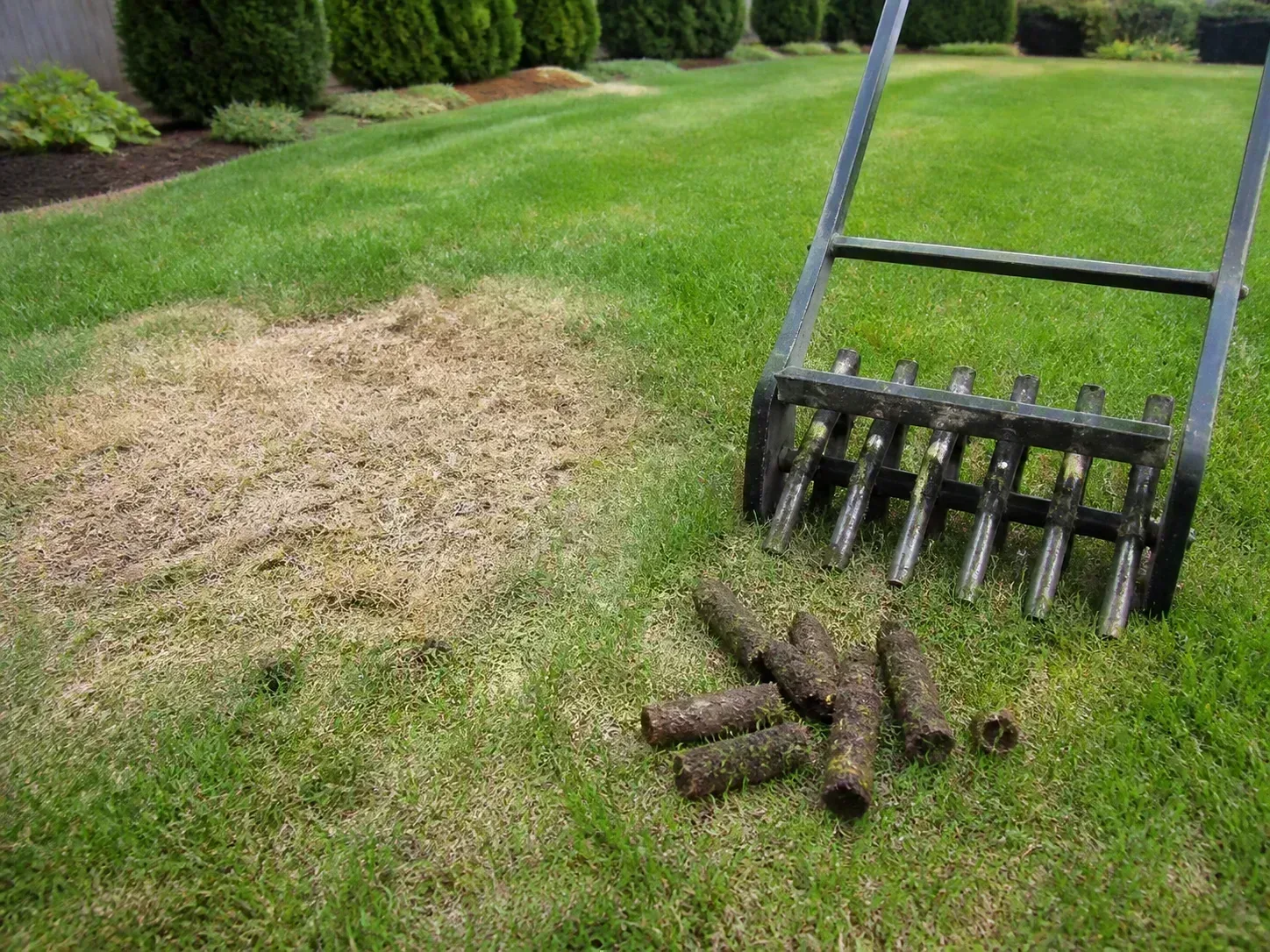
Not every machine labeled “aerator” does the same job. The distinction matters because the wrong tool can waste a rental fee—or make compaction worse.
Core (plug) aerators use hollow tines to remove soil cylinders and deposit them on the surface. Penn State Extension is explicit: equipment with solid tines or spikes should not be mistaken for core aerating equipment. WVU Extension recommends plug aerators because they remove a core of grass and soil rather than just poking holes that can compress soil around the opening.
Spike aerators and spiked sandals push holes into the ground without removing soil. They can help slightly on a small, lightly compacted area, but on heavy clay or high-traffic lawns they often squeeze soil sideways and add pressure around each hole. For the thickness goal described in this article, rent or hire a hollow-tine core machine.
If you are unsure which problem you have—thatch vs compaction—our dethatcher vs aerator guide walks through a simple plug test before you choose equipment.
Signs Your Lawn Needs Aeration Before You Rent Equipment
Do not aerate on calendar autopilot. Run through these checks first:
- Footprints or tire tracks stay visible long after you walk across the lawn.
- Water pools on the surface after normal rain instead of soaking in within a few hours.
- A screwdriver or soil probe resists pushing into the top 3 to 4 inches even when soil is moist.
- Fertilizer granules sit on the blades days after application instead of washing into soil.
- The lawn feels spongy but still thin, suggesting a thatch layer may also be blocking roots (aeration helps, but thick thatch may need dethatching too).
- High-traffic zones along gates, play equipment, or the route to the shed look thinner than the rest of the yard every year.
If grass lifts like carpet or you see grubs under the surface, pause and address those problems first. Our signs of an unhealthy lawn checklist helps separate compaction from pests, irrigation errors, and disease.
Spring Aeration Timing for Cool-Season and Warm-Season Grass
Timing is where spring aeration advice usually goes vague. Grass type and local weather matter more than the date on a calendar.
PlantTalk Colorado recommends aerating when the ground is not frozen and avoiding extremely hot, dry periods, with spring and fall considered the best windows. Penn State Extension advises aeration during cool weather in early to mid-spring or late summer to early fall for rapid grass recovery. Active growth is the non-negotiable part: you want holes to heal quickly while roots are expanding.
Cool-Season Lawns: Kentucky Bluegrass, Tall Fescue, and Ryegrass
For Kentucky bluegrass, tall fescue, fine fescue, and perennial ryegrass, spring aeration fits once the lawn is green and growing—not when it is still mostly dormant brown. A practical sequence: mow two or three times as growth picks up, confirm the grass is sending up new leaf tissue, then aerate on a day when soil is moist but not muddy.
Early to mid-spring works when you missed fall aeration or winter traffic compacted paths. Soil is warming, rain is usually more reliable than midsummer, and roots are rebuilding before summer stress. The trade-off is weed competition: Penn State warns that spring aeration can bring weed seeds to the surface and create voids where weeds germinate. That is another reason overseeding and proper watering matter—you want desirable grass filling holes, not crabgrass.
For many northern lawns, late summer to early fall remains the premium aeration plus overseeding window because soil is warm, air is cooler, and weeds are less aggressive. Spring is the strong second choice, not a weak afterthought.
Warm-Season Lawns: Bermuda, Zoysia, and St. Augustine
Bermudagrass, zoysiagrass, centipedegrass, and St. Augustinegrass should be aerated when they are actively growing—typically late spring through early summer once frost risk is gone and the lawn has fully greened up. Aerating dormant warm-season turf in early spring does little for thickness because the plant is not repairing holes or supporting new seedlings yet.
WVU Extension recommends aerating warm-season grasses in fall for some climates, while cool-season types do best in early spring or fall. Your local extension office can narrow the month, but the principle holds: match aeration to the grass’s growth curve, not to when big-box stores put rental machines on display.
Fall vs Spring Aeration Trade-Offs
| Factor | Fall aeration + overseed | Spring aeration + overseed |
|---|---|---|
| Weed pressure | Usually lower for cool-season turf | Higher; crabgrass and broadleaf competition |
| Soil temperature | Warm soil, cool air—ideal for seed | Warming soil; workable but watch summer heat on young plants |
| Recovery time before stress | Two cool seasons before peak summer | One season; seedlings must survive summer |
| Best for | Full-yard density rebuild on cool-season lawns | Touch-up after winter damage or missed fall window |
If your goal is maximum thickness on a cool-season lawn and you can choose only one season, fall usually wins. If you are reading this in spring with thin turf and compaction symptoms, a spring pass still beats waiting another year—just plan on overseeding immediately and keeping soil moist through establishment.
How to Aerate Your Lawn the Right Way
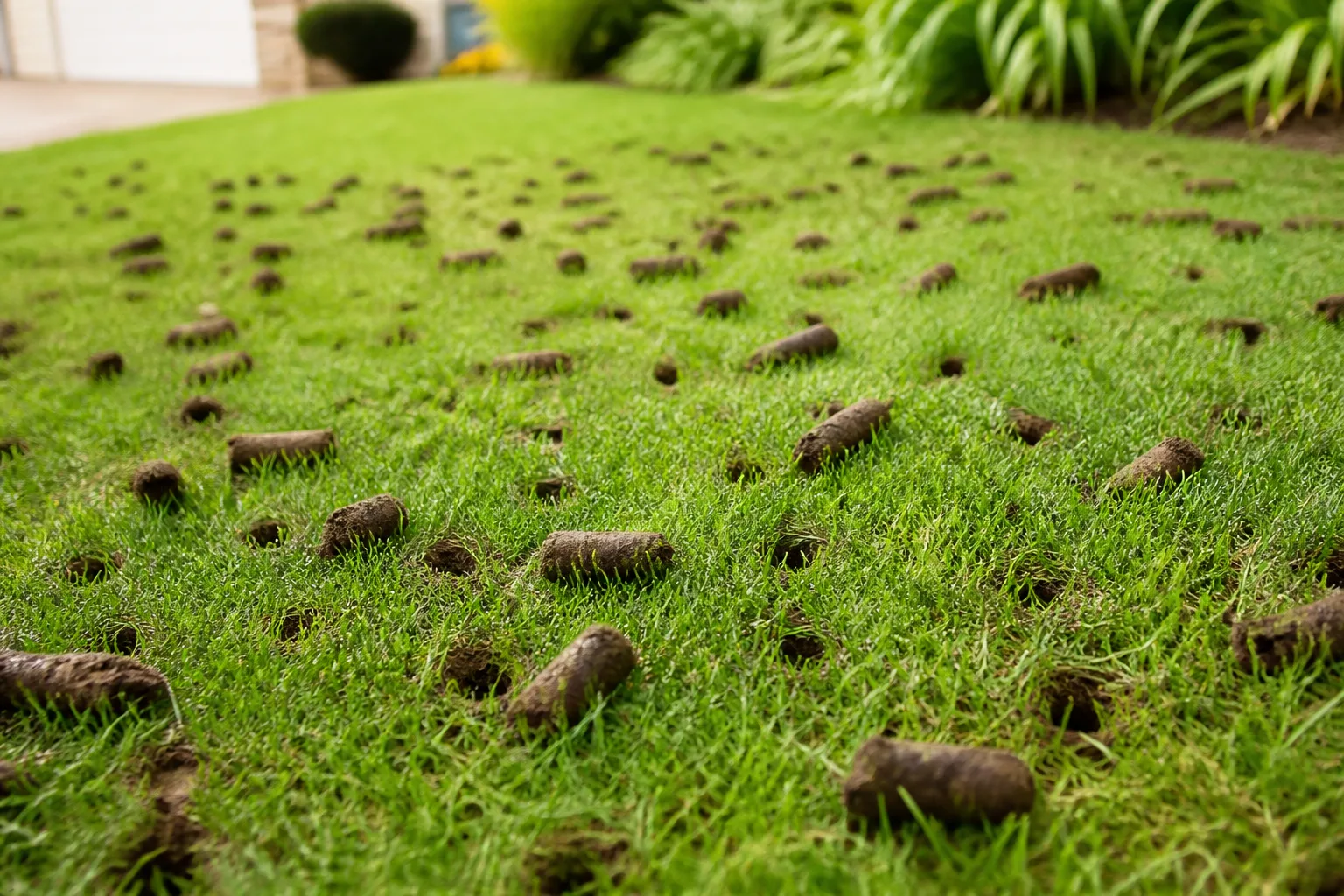
Good technique separates a lawn that thickens from one that looks molested for a month.
Before aerating:
- Water thoroughly the day before if rain has not done it for you. CSU Extension notes that moist soil lets tines pull deeper, more complete plugs.
- Mark irrigation heads, shallow lines, and buried dog fences so hollow tines do not shred them.
- Mow slightly shorter than usual—not scalped—so the machine reaches soil easily.
- Skip aeration when soil is bone dry, saturated mud, or during extreme heat drought stress.
During aeration:
- Use a core aerator with tines roughly 3 to 4 inches long on residential lawns. CSU recommends holes 2 to 3 inches deep and spaced no more than 2 to 4 inches apart.
- Make multiple passes at different angles on thin or heavily compacted areas. Penn State suggests six to eight passes over the lawn when preparing for overseeding on large thin areas.
- Leave soil plugs on the surface. Once they dry, break them up with a rake or mower so organic matter filters back into holes.
After aeration:
- Overseed the same day if thickness is the goal (details in the next section).
- Water lightly to settle seed and start plug breakdown.
- Stay off the lawn while seedlings establish—foot traffic closes holes and tears new plants.
How often? Most home lawns benefit from core aeration once per year on high-traffic or clay soil, or every two to three years on lighter soil with little compaction. Double annual aeration is occasionally justified on athletic-level use yards, not on typical front lawns that only need maintenance.
Why Overseeding After Aeration Is the Real Thickness Multiplier
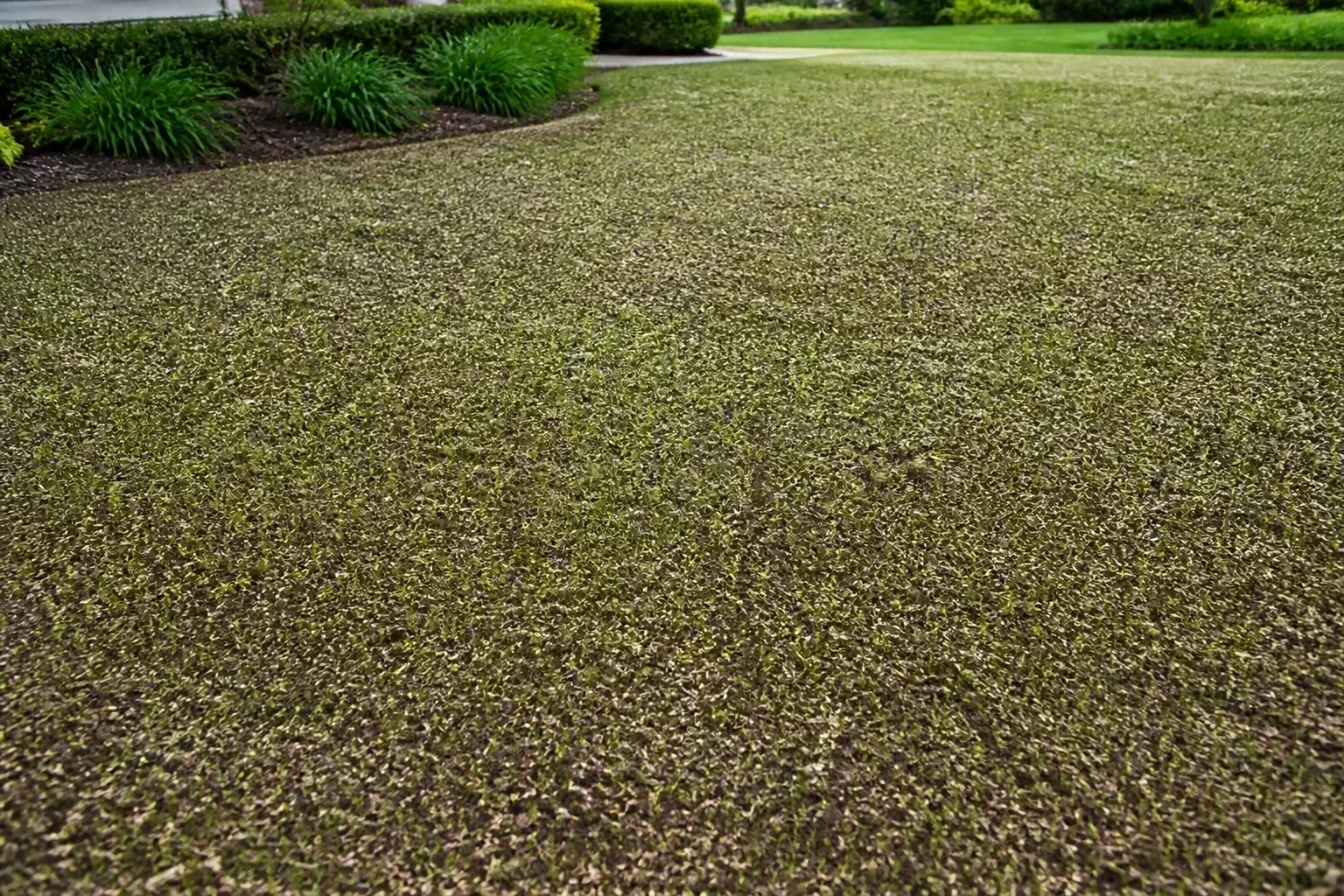
Here is the part many quick articles skip: aeration improves the environment for grass that is already there; overseeding adds new plants. Thickness is plant count plus health. If your lawn is thin because crowns died out, you need seed.
PlantTalk Colorado states that lawns may be fertilized and seeded immediately after aeration. Penn State emphasizes that when overseeding, seed must contact soil and have space to germinate—exactly what open aeration holes provide.
Practical overseeding steps after aeration:
- Choose seed that matches your existing grass or a compatible blend for your sun and traffic level. Wrong species is a common reason reseeding fails.
- Spread seed at label rates for overseeding—often roughly 2 to 4 pounds per 1,000 square feet for tall fescue blends, less for fine fescue-heavy mixes. Heavier rates do not always mean faster thickness; they can cause disease in crowded seedlings.
- Work seed into holes with a light rake, roller, or slice seeder if you are doing a large renovation.
- Apply a starter fertilizer if your soil test supports phosphorus for new seed—follow label rates and local regulations.
- Keep the top 1/4 inch of soil consistently moist until seedlings establish, then transition to deeper, less frequent watering. Our guide to watering new grass seed covers the daily rhythm better than a generic “1 inch per week” line.
For timing windows on bare patches vs full-yard overseeding, see when to overseed bare patches and how to help your lawn grow faster.
Dethatching vs Aeration: Which Job Comes First
Aeration and dethatching overlap in conversation but solve different problems. Thatch is a layer of dead stems and roots between green grass and soil. A little thatch is normal. Too much acts like a sponge that repels water and blocks roots.
Penn State Extension recommends dethatching when thatch is one inch or deeper, using vertical blades during cool, moist weather—not during heat, drought, or late fall. Aeration can reduce moderate thatch by introducing soil microbes on plug surfaces, but it is not a substitute for a thick mat.
Decision shortcut:
- Compaction symptoms with moderate thatch (under ~1 inch): core aerate first, then overseed.
- Spongy lawn with thick thatch and poor water penetration: dethatch (or power rake) during a safe growth window, remove debris, then core aerate if soil is still hard, then overseed.
- Unsure: read dethatcher vs aerator and cut a small plug to measure the thatch layer before renting two machines.
Do not dethatch every year out of habit. Penn State is clear that dethatching is needed only when buildup becomes excessive. Over-aggressive dethatching on healthy turf sets the lawn back without improving density.
Fertilizer, Water, and Pre-Emergent Timing Around Aeration
Aeration fits into a larger spring program. Order matters.
Fertilizer: CSU notes lawns may be fertilized immediately after aeration. A light starter fertilizer supports new seed; an established lawn may get a modest spring feeding if soil tests and grass type warrant it. Avoid dumping high nitrogen on heat-stressed or disease-active turf. If you are unsure whether spring feeding is even appropriate this year, see is it a bad idea not to fertilize grass in spring.
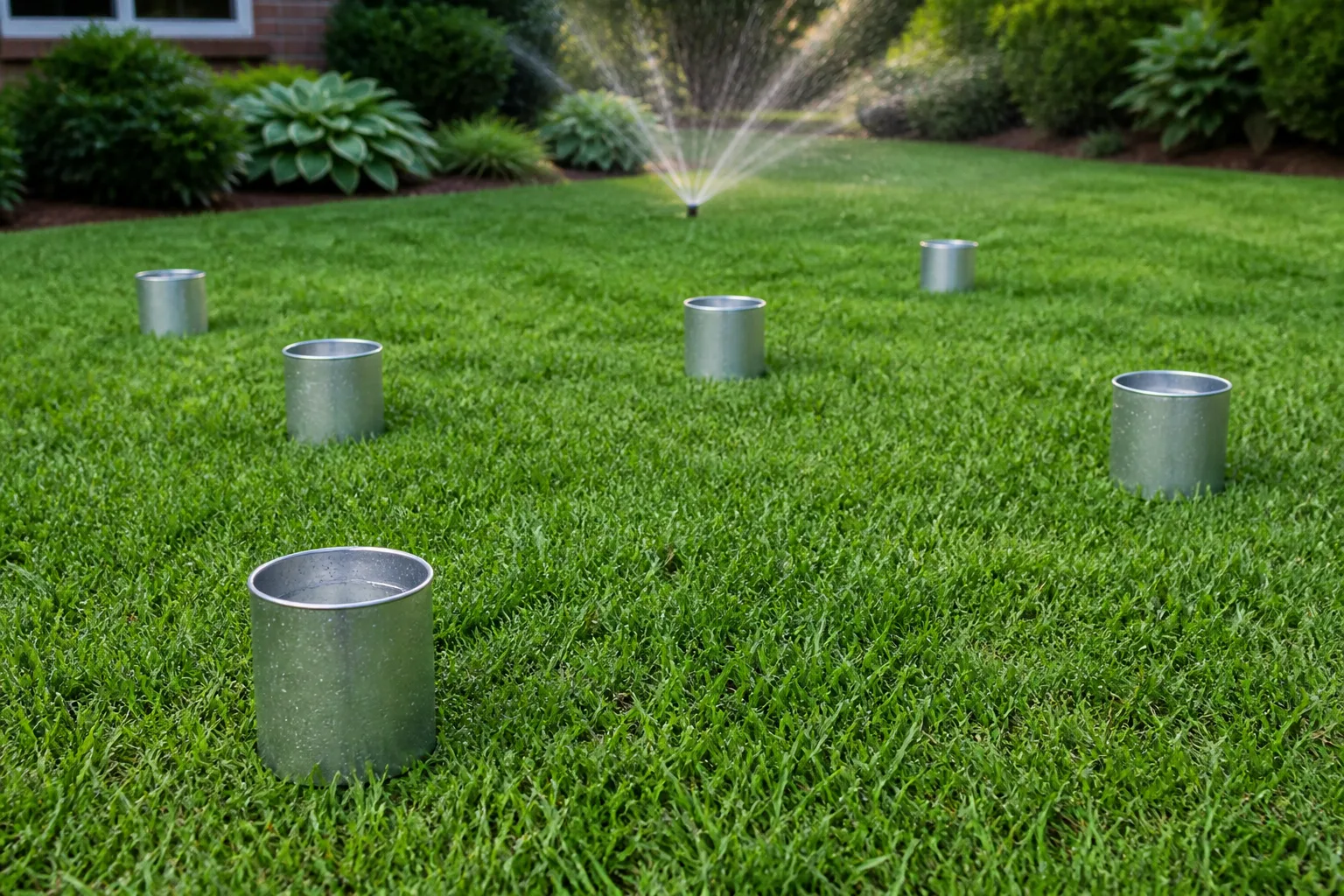
Watering: After aeration and overseeding, prioritize even moisture in the seed zone for two to four weeks. Once new grass is up, shift toward deeper watering that wets several inches of soil and lets the surface dry between cycles—about 1 inch total per week from rain plus irrigation during active growth, measured with catch cans rather than guesswork. Common mistakes are covered in our lawn watering mistakes guide.
The Pre-Emergent vs Overseeding Conflict
This is the spring landmine. Standard pre-emergent herbicides stop crabgrass by creating a soil barrier that also blocks turfgrass seed from germinating. You cannot apply typical pre-emergent and overseed thick areas in the same season and expect both to work.
Your options:
- Overseed this spring, skip pre-emergent, and accept some crabgrass pressure while new grass establishes—then use targeted post-emergent or next year’s pre-emergent timing.
- Apply pre-emergent for crabgrass control and postpone overseeding until fall on cool-season lawns.
- Use products labeled for simultaneous seeding only if you read the label carefully and follow timing restrictions—many standard preventers do not qualify.
If crabgrass took over last July, skipping pre-emergent without a overseeding plan may trade one problem for another. Plan the whole season, not just the aeration weekend.
Five Lawn Habits That Undo Aeration Results
You can aerate and overseed perfectly and still end up with a thin lawn by midsummer if daily habits work against you.
- Mowing too short. Removing more than one-third of the blade at once or running the mower at its lowest setting shocks grass and exposes soil to weeds. Mow high enough to keep crowns shaded.
- Watering every evening. Frequent shallow irrigation and overnight wet foliage encourage fungal issues. Water deeply enough to wet roots, early enough that grass dries before night.
- Ignoring traffic while seed establishes. A freshly aerated and overseeded lawn is not a shortcut path for two to three weeks. Rope off high-use zones if needed.
- Fertilizing by guesswork. Excess nitrogen on young seedlings or during heat waves burns grass and fuels disease. Test soil and follow rates.
- Treating symptoms without fixing the cause. Re-aerating the same dog trail every spring without changing traffic patterns or adding stepping stones is maintenance, not a cure. For recurring bare strips, see repair bare patch on lawn.
Conclusion
Aeration can help you achieve a thicker, healthier lawn this spring when compaction or poor root-zone access is the limiting factor and you treat it as the first step—not the whole project. Rent a core aerator, not spikes. Aerate while grass is actively growing for your species. Overseed immediately, keep seed moist, and resolve the pre-emergent conflict before you start. Pair the job with sensible mowing and measured watering, and you give new and existing grass a real shot at density.
If plugs pull easily, seed contacts soil, and you protect young turf through establishment, aeration plus overseeding is one of the most reliable thickness upgrades a homeowner can make. If the lawn is failing from shade, disease, or dead crowns everywhere, fix those drivers first—then aerate into soil that can actually support the lush lawn you want.



