When to Overseed Bare Patches in Your Lawn
Learn when to overseed bare lawn patches by grass type—fall vs spring windows, soil temps, prep steps, and when it is too late to seed.
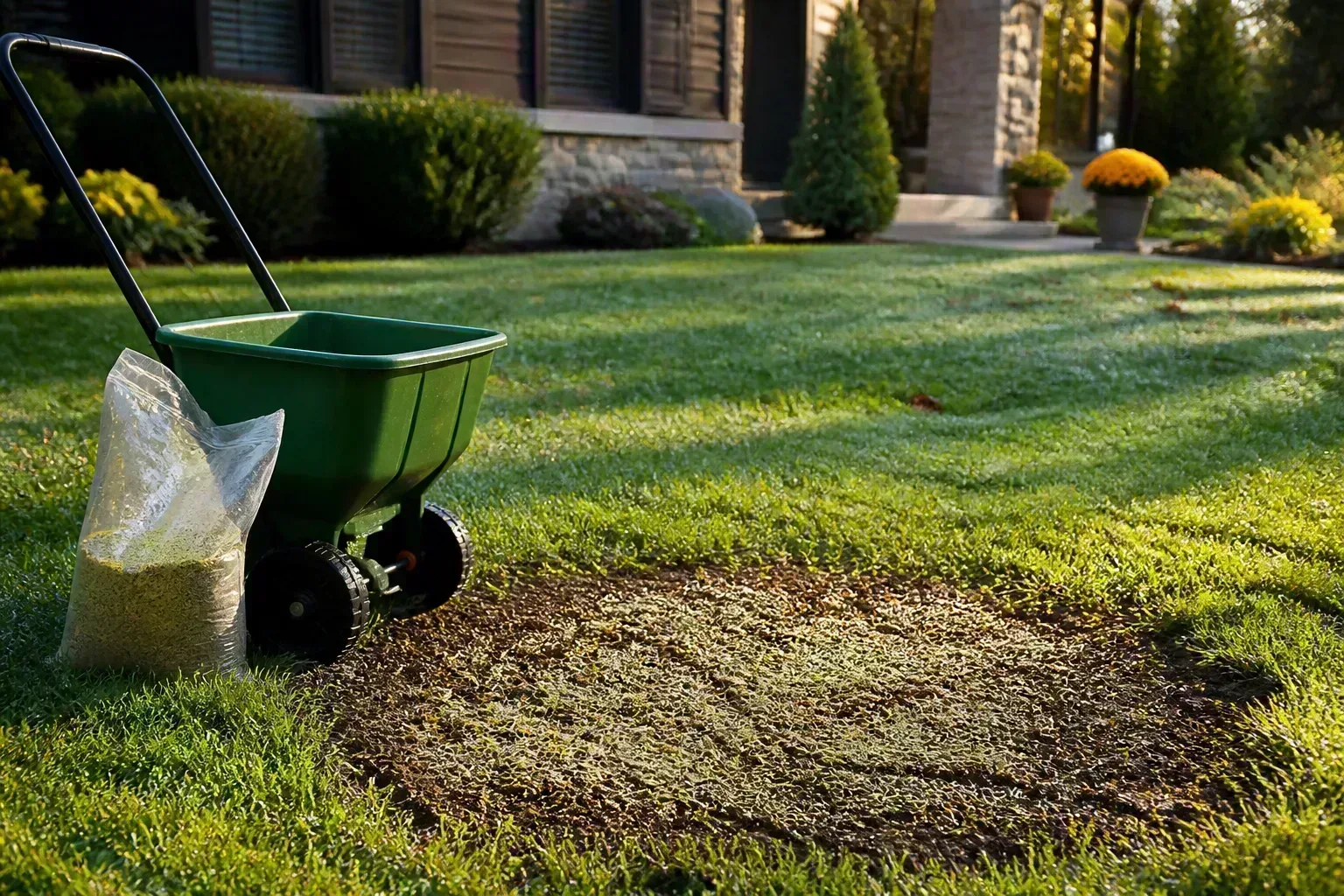
Bare patches are frustrating because the fix looks simple—throw seed on the brown spot and wait—but timing and prep matter more than the bag label suggests. Overseeding means sowing grass seed into an existing lawn to thicken thin turf or fill small bare areas without tearing out the whole yard. Done in the right season with real seed-to-soil contact, it can turn a patchy lawn into a dense stand. Done at the wrong time, on compacted thatch, or on top of an unresolved disease or dog-urine problem, it becomes an expensive way to feed birds.
The decision that saves the most seed is not “which brand to buy.” It is which grass type you already grow, whether the crowns in the bare spot are dead or just stressed, and whether your calendar still gives seedlings enough growing days before frost or summer heat.
What overseeding does—and when it is the right fix
Overseeding spreads new seed over established turf so emerging plants fill gaps between older grass. It is a repair and density tool, not a full lawn rebuild. If more than about a third of the yard is dead soil, weeds, or bare ground, you are usually past overseeding and into renovation or sodding territory.
For scattered bare patches, thin traffic lanes, or post-disease thinning where the underlying problem is already controlled, overseeding is often the most practical choice. Penn State Extension notes that overseeding into thin turf or small patches of bare soil can be done in late winter, spring, or early fall, especially when seed is worked into the soil through aeration, dethatching, or slit seeding.
The trade-off is time. Sod gives instant cover; seed gives stronger long-term rooting when establishment goes well. If you need a photo-ready patch this weekend, sod wins. If you can keep soil moist for two to four weeks and protect the area from traffic, overseeding costs less and blends more naturally with the surrounding lawn.
Match your timing to grass type before you pick a date
Calendar memes fail here because cool-season and warm-season grasses run on opposite clocks. Cool-season turf—Kentucky bluegrass, tall fescue, perennial ryegrass, and fine fescue—grows most actively in spring and fall. Warm-season turf—bermuda, zoysia, centipede, bahia, and St. Augustine—hits its stride in late spring and summer.
NC State Extension’s lawn establishment guide lists fall as the preferred planting season for cool-season grasses across North Carolina’s mountain and piedmont regions, while warm-season types are planted in spring and summer. Your local extension office can narrow that further, but the grass-type split is non-negotiable: seed when that species wants to grow, not when your calendar feels convenient.
Cool-season lawns: Kentucky bluegrass, tall fescue, and ryegrass
For cool-season lawns, early fall is the sweet spot for filling bare patches. Soil is still warm from summer, which speeds germination, while air temperatures cool and reduce heat stress on young seedlings. Weed pressure is usually lower than in spring, and new plants get a fall establishment period plus another cool spring before their first brutal summer.
A practical target for much of the northern and transition-zone U.S. is late August through mid-October, adjusted for your first frost date. Montgomery County, Maryland’s organic lawn program recommends fall overseeding ideally about 45 days before the first frost, which gives seedlings time to root before winter while avoiding the hottest weeks.
Spring overseeding is possible for cool-season grass—especially for small bare spots—but it competes with aggressive spring weeds and can struggle if an early heat wave arrives before roots deepen. Use spring when fall was missed, not when fall is still available.
Warm-season lawns: bermuda, zoysia, and St. Augustine
Warm-season bare patches should be seeded or plugged during active growth, typically late spring through early summer once soil temperatures stay consistently warm and frost risk is gone. For common bermuda and similar fast establishers, think May through June in many southern lawns; zoysia is often slower and may need an earlier start to gain size before fall slowdown.
Do not overseed warm-season bare patches in late fall expecting spring miracles unless you are using a controlled dormant-seeding strategy and understand your species. A zoysia or centipede patch seeded too late may germinate and then stall when temperatures drop, leaving weak plants that winter poorly.
Fall overseeding windows for cool-season turf
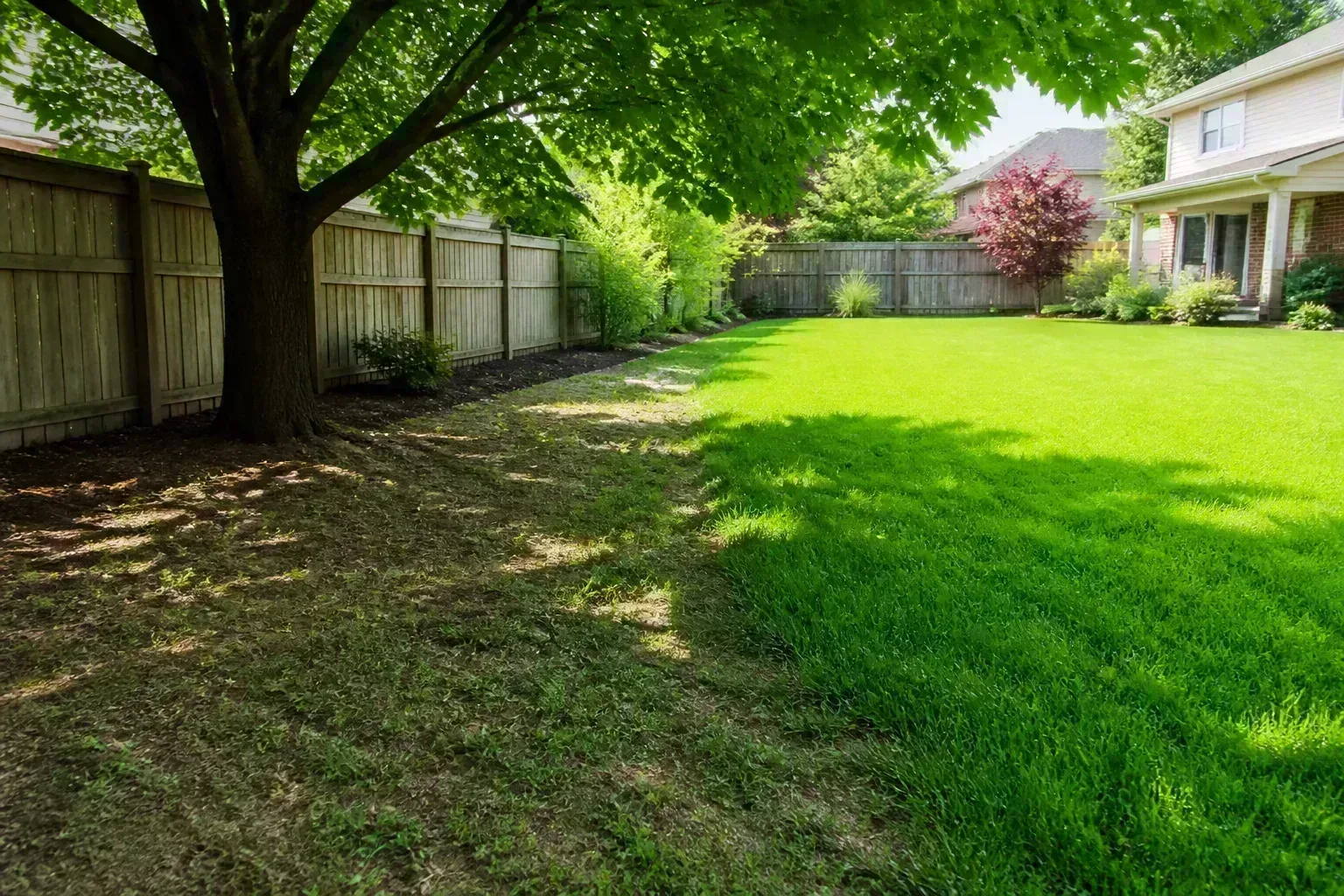
If you grow cool-season grass and still have bare patches, prioritize fall. Penn State Extension states that late summer to early fall is usually the best time to establish turf from seed because new seedlings face less weed competition and get two cool growing seasons before summer stress. Overseeding piggybacks on that same logic even when most of the lawn stays in place.
Aim for soil temperatures roughly between 50°F and 65°F at seeding depth for cool-season blends. A simple soil thermometer pushed an inch or two into the patch zone beats guessing from air temperature alone. Morning sun on a bare soil patch can read very differently from a shaded corner of the same yard.
Fall also aligns with aeration season. Penn State recommends aeration during cool weather in early to mid-spring or late summer to early fall, and overseeding immediately after coring puts seed directly into holes where soil contact is excellent. Six to eight passes with a core aerator on a thin lawn is a common professional target for large areas; for a single bare patch, hand prep may be enough.
If your bare spots trace back to fungal patch diseases such as brown patch, finish active disease control and avoid heavy nitrogen during heat before you seed. Our guides on brown patch treatment and brown patch diagnosis cover how to tell fungus from irrigation problems so you are not seeding into a repeating disease cycle.
Spring and dormant seeding for bare patches
Spring overseeding fills the gap when fall passed you by or when winter damage appears in March. Start when soil reaches favorable germination temperatures—often around 55°F for many cool-season grasses—and when you can commit to daily moisture checks through establishment.
Dormant seeding is a specialized spring alternative: sowing in late winter while soil is still cold so seed sits until temperatures rise. It can work for bare patches in regions with freeze-thaw cycles that naturally work seed into soil, but it demands realistic expectations. Seed may wash on slopes, birds may feed, and germination will be uneven if a warm spell is followed by another hard freeze. If you try dormant seeding, keep rates moderate and plan a light touch-up seeding in early spring wherever cover is thin.
For warm-season lawns, spring into early summer remains the main window. Seed when nights are consistently mild and the existing turf has greened and begun pushing growth—not when the first warm afternoon tricks you in April.
When it is too late to overseed
“Too late” is a function of remaining growing days, not a single calendar date on a meme.
Frost dates, day length, and summer heat cutoffs
For cool-season fall seeding, stop when seedlings will not have enough time to develop roots before ground freeze and when mowed height is unrealistic before winter. In Pennsylvania, Penn State cautions that seeding later than mid-October is not suggested for most areas. Farther south you gain weeks; farther north you lose them.
Day length matters as much as temperature. Once daylight drops below about 10 hours, top growth on cool-season turf slows sharply. Late-fall seedlings that emerge but do not tiller may winter-kill or stall until spring, looking like a failed seeding when the real problem was timing.
Summer is too late for cool-season overseeding in most climates. Soil and air heat push germination toward fungal collapse, and keeping bare soil moist without cooking seed is a losing battle. If July leaves bare spots after disease or drought, mark the areas, control weeds, and plan fall repair.
For warm-season grass, late fall seeding is usually too late unless you are far south and frost is weeks away. Winter dormancy with unestablished seedlings is a common way to waste a bag of seed.
Fix the cause before you spread seed
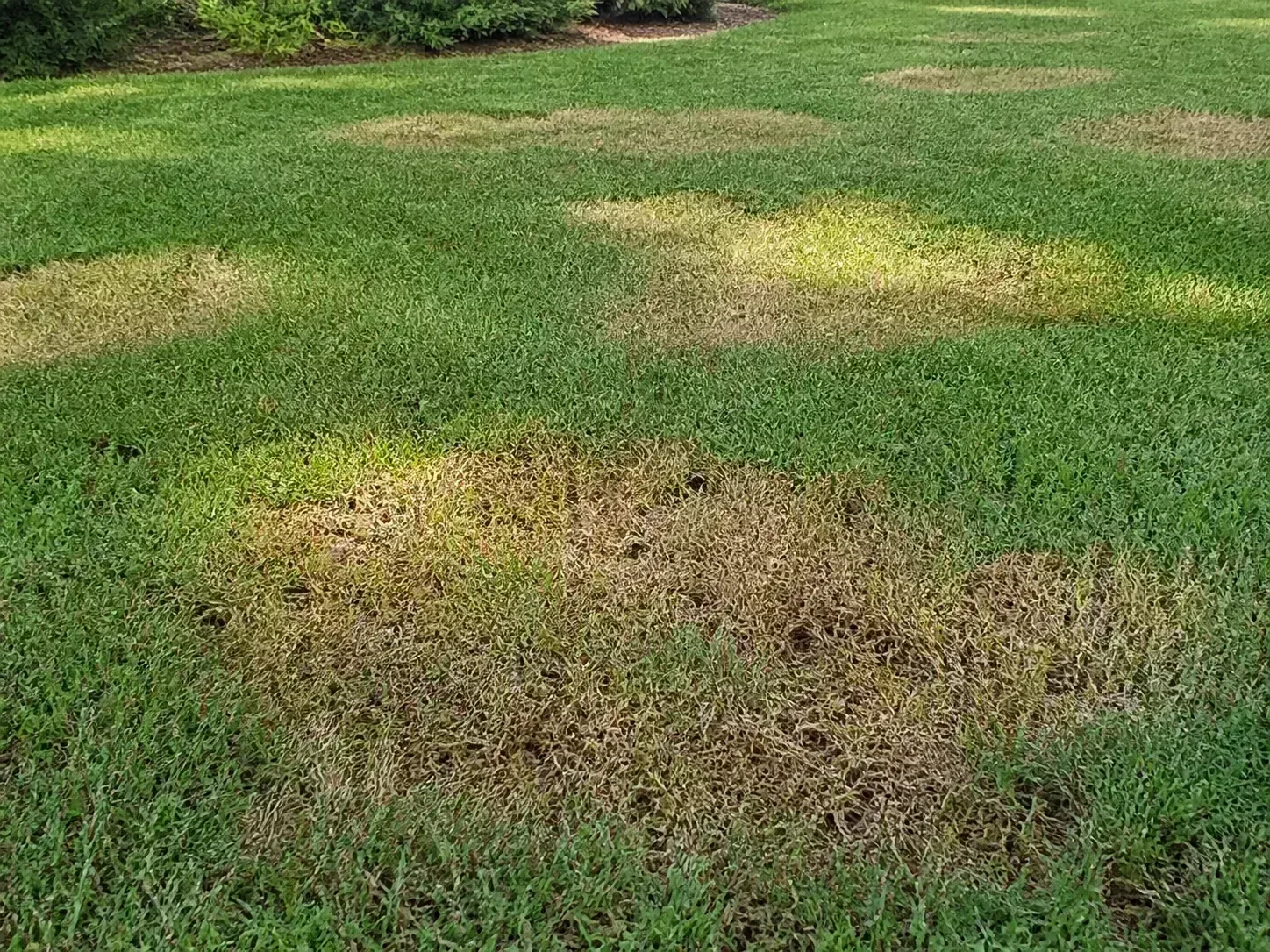
Overseeding without diagnosis is how homeowners enter the annual reseed cycle—fresh green fuzz in spring, same bare patch by August. Walk the lawn once with a notebook before you open seed.
Common reasons bare patches keep returning
Match the pattern to the problem:
- Circular tan patches after humid heat may be brown patch or large patch fungus, not “bad seed.”
- Dry arcs and stripes usually mean irrigation coverage or compaction, not seed failure.
- Small repeated spots along a dog path point to urine injury and traffic.
- Patches that lift like carpet suggest grub or root damage.
- Shade thinning will defeat sun-loving grass no matter how perfectly you time fall seed.
Our signs of an unhealthy lawn guide helps separate cultural stress from pests and disease. If crowns are black, mushy, or absent, scrape out dead mat before seeding. Living crowns at the patch edge can recover with overseeding; dead tissue needs removal or sod.
Also check thatch. A thin layer is normal. Thick thatch blocks seed from reaching soil and holds moisture in ways that favor disease. Dethatch or aerate when thatch is an inch or deeper before expecting seed to germinate.
Prepare soil so seed actually touches earth
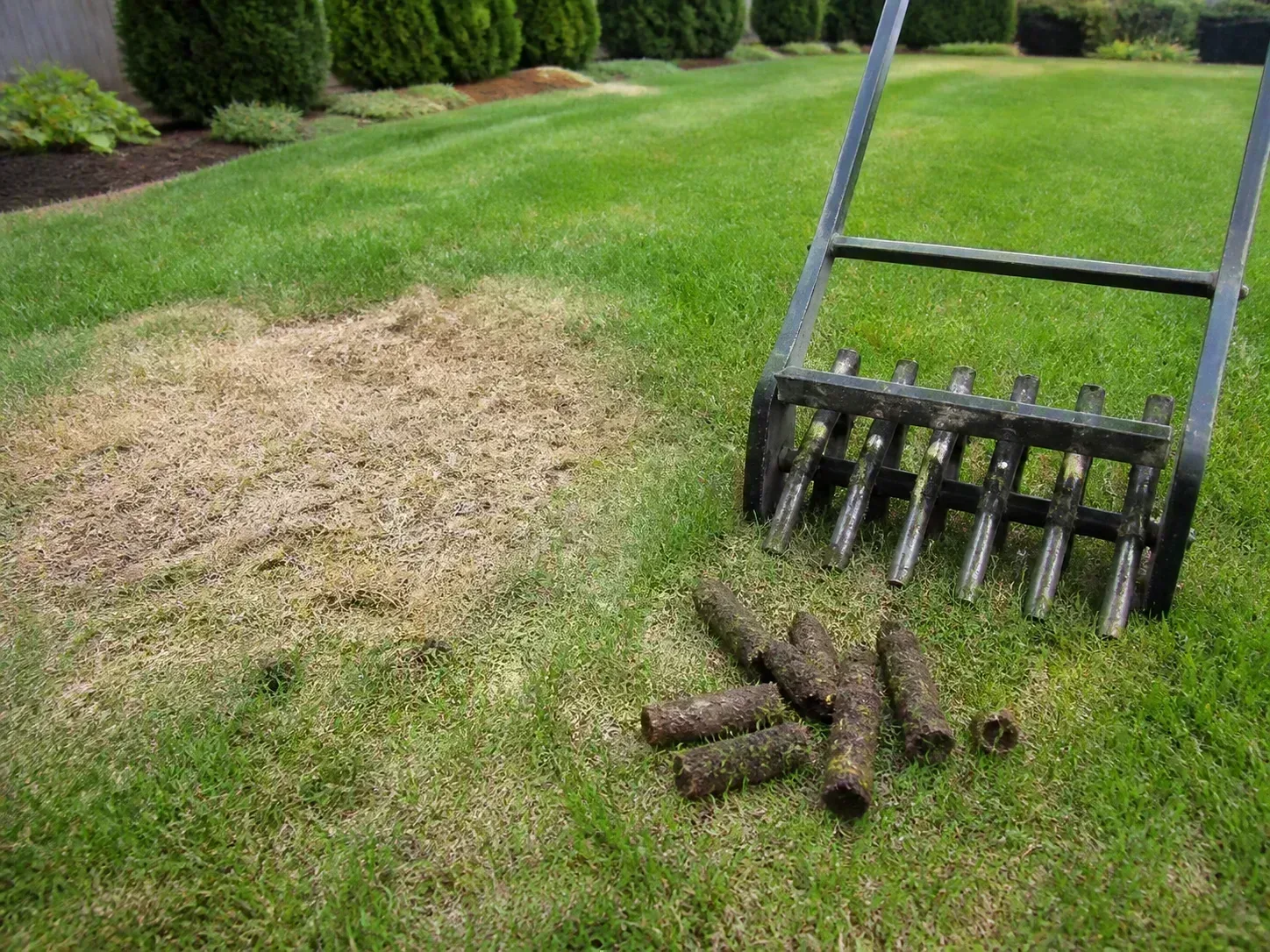
Seed on top of thatch behaves like seed on a shag rug: it may sprout, then die when roots find no soil. Preparation scale depends on patch size.
Small bare patches vs large thin areas
Coin- to dinner-plate patches: Mow slightly shorter over the area without scalping living turf. Rake aggressively to remove dead grass and scratch the soil surface. You want visible soil in the bare zone. Spread seed by hand or with a small shaker, then rake lightly again to nestle seed against soil. A thin dusting of compost or screened topsoil can help on clay, but do not bury seed deeper than about a quarter inch.
Large thin areas or multiple patches: Rent a core aerator and make several passes, or use a slit seeder that drops seed into shallow grooves. Penn State Extension recommends overseeding following aeration with six to eight passes on thin lawns. Drag a mat or piece of chain-link fencing afterward to settle seed into holes on bigger jobs.
Match seed to what is already there. Tall fescue over a Kentucky bluegrass lawn can look like a patchwork quilt. Read the label for cultivar mix and avoid cheap filler-heavy bags when you are patching a visible front yard.
Step-by-step overseeding for bare spots
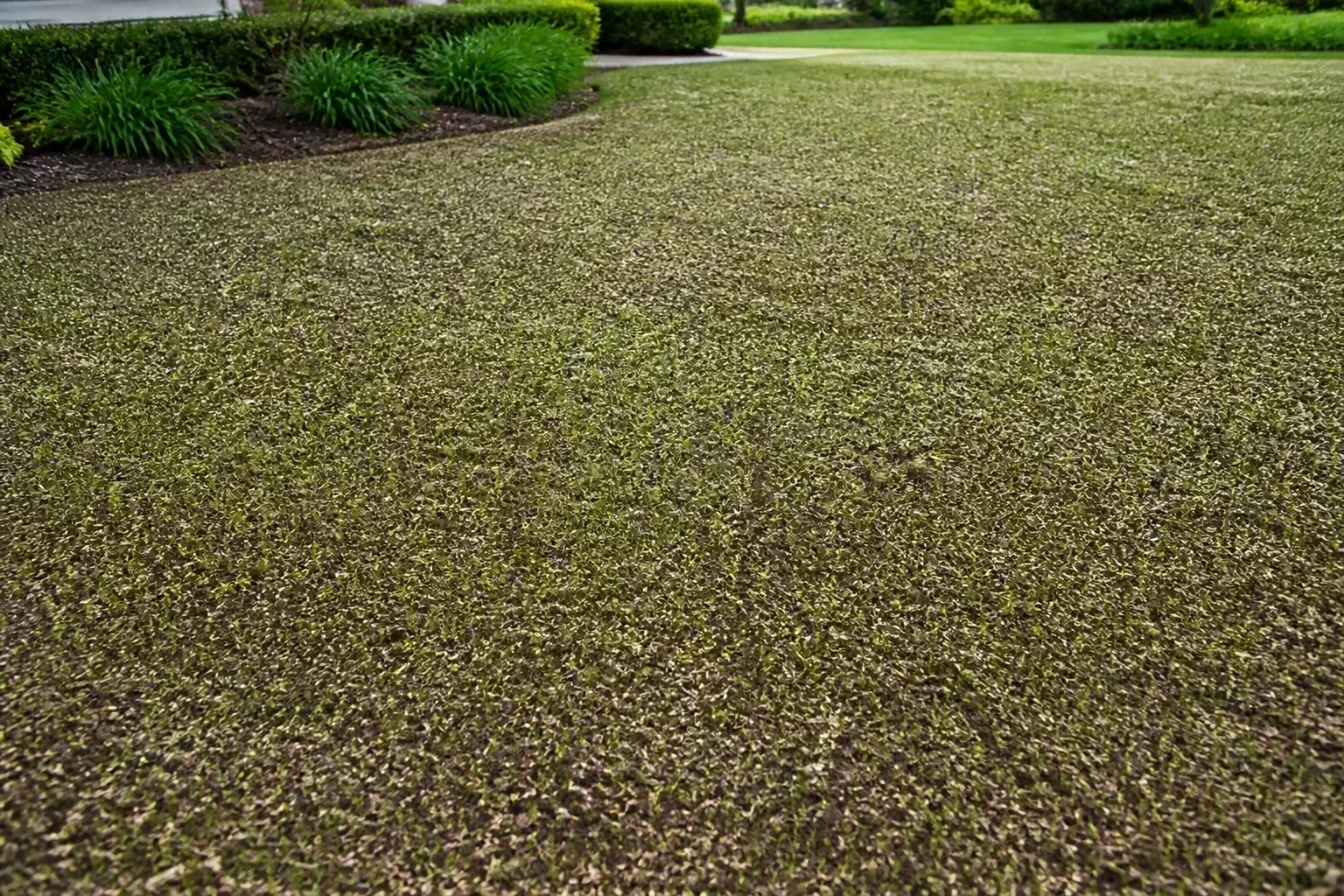
Once timing and diagnosis are settled, the sequence is straightforward:
- Mow the lawn slightly shorter than usual and bag or rake clippings off bare zones so seed is not sitting on fresh mulch.
- Prep soil with raking for small patches or aeration/slit seeding for larger thin areas.
- Spread seed at the label’s overseeding rate—not the new-lawn rate unless the patch is mostly bare soil. Split passes in two directions for even coverage.
- Work seed in with a light rake or roller so it contacts soil; on slopes, a thin erosion blanket can hold seed in place.
- Apply starter fertilizer if soil tests or history suggest phosphorus is adequate; high-phosphorus starter products support early rooting when used per label rates.
- Water immediately with a gentle soak that moistens the top half inch without puddling or washing seed downhill.
- Fence or flag the patch to keep foot traffic, pets, and wheels off until the first several mowings.
If you are patching only a few spots, overseed the thin margins around each bare area too. Grass creeps slowly; a halo of new seedlings prevents a “green island in a desert” look.
Watering and mowing through establishment
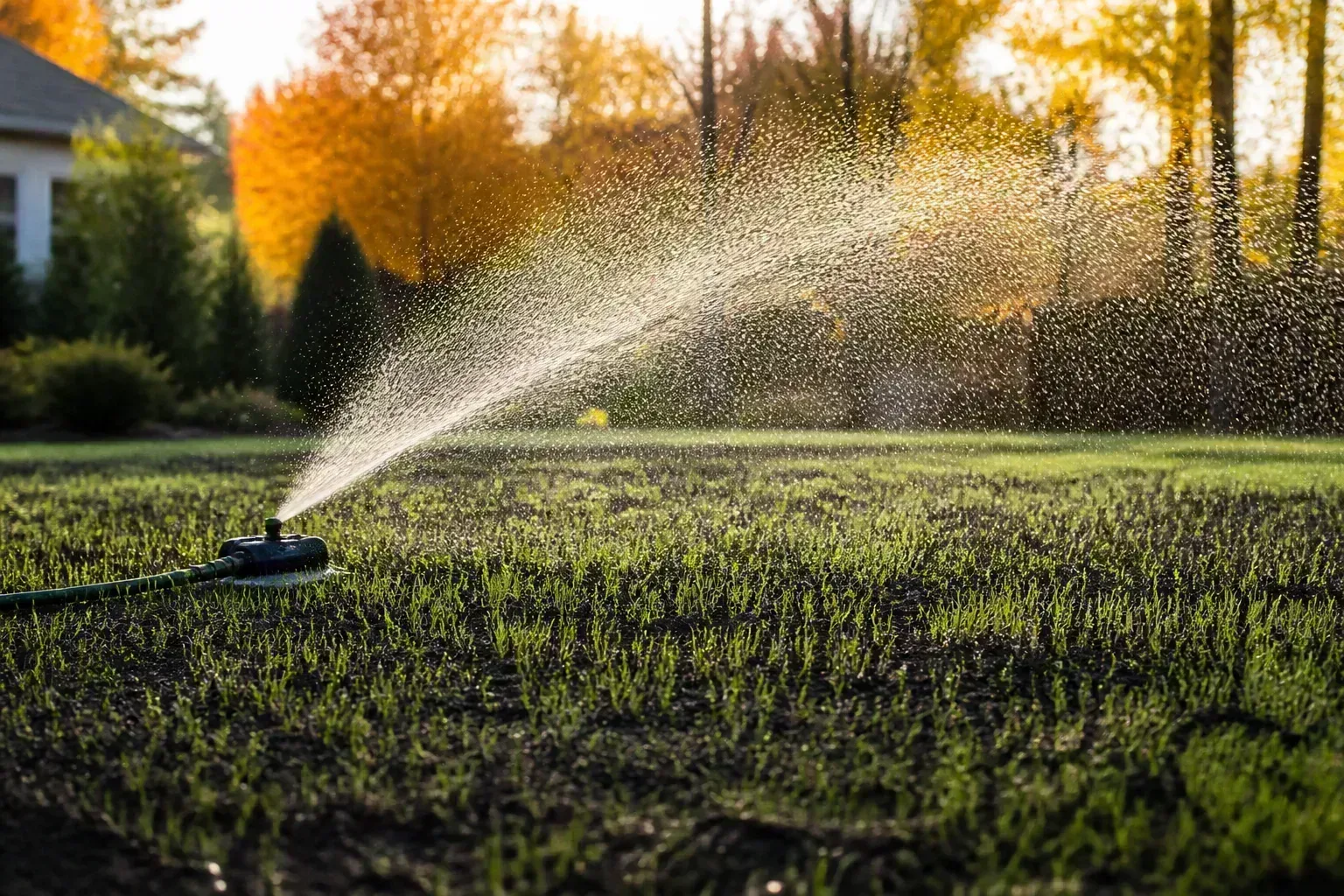
Under-watering kills more overseeding jobs than wrong seed brand. The top half inch of soil should stay evenly moist from planting until seedlings are several inches tall—not flooded, not bone dry between noon and dusk.
In dry fall weather, that often means light watering two or three times per day for the first one to two weeks, then tapering as roots deepen. On cool, cloudy weeks, touch the soil before adding water. Our how often to water new grass seed guide walks through overseeding vs bare-soil schedules in more detail, including how to back off after the first mow.
Mow when new grass reaches about three to four inches and the patch has enough height to cut without ripping seedlings—often three to four weeks after germination for fast species, longer for slow ones like Kentucky bluegrass. Keep blades sharp and set high enough to avoid scalping; Penn State recommends mowing most home lawns at 2 inches or above on a regular basis.
If germination is patchy after three weeks, see our grass seed taking too long and why grass seed is not germinating guides before you reseed on top of the first attempt.
Fertilizer, pre-emergent, and weed conflicts
About six weeks after green shoots appear, a balanced lawn fertilizer at label rates can support tillering—unless local fall fertilizer restrictions apply. Some states and municipalities limit nitrogen on lawns after certain dates to protect water quality; check local rules before a late-fall feeding.
The conflict that catches people every year is pre-emergent herbicide. Pre-emergents stop crabgrass and other weeds by preventing seed germination—including your grass seed. You cannot overseed bare patches in the same season you apply a standard pre-emergent without expecting failure. Plan overseeding for early fall windows when pre-emergent is not active, or skip pre-emergent the year you renovate thin areas.
Broadleaf weed sprays on young seedlings are another trap. Read labels for “new seeding” intervals. Hand-pulling broadleaf weeds in patched areas is tedious but safer than spraying too early.
Sod vs overseeding for bare patches
Sod wins when you need instant cover for a high-visibility spot, erosion control on a slope, or a patch larger than you can keep moist for weeks. Cut sod to fit, stagger seams, and press firmly for soil contact. Keep it watered daily at first, same as seed.
Overseeding wins when patches are scattered, budgets are tight, or you want the repair to blend gradually with existing turf. It also makes sense when the lawn is mostly healthy and only thin.
A hybrid approach works well: sod for a few deep bare spots near the driveway, overseeding for general thinning elsewhere—after you fix whatever caused the damage.
Conclusion
The best time to overseed bare patches is when your grass type is actively growing, soil temperatures support germination, and you still have enough season left for roots to establish before frost or summer stress. For most cool-season lawns, that means early fall first, spring second. For warm-season lawns, target late spring into early summer.
Before you seed, diagnose why the patch went bare, prep soil so seed touches earth, and protect the area while it establishes. Match watering to weather, not a rigid clock, and keep pre-emergent herbicides off the calendar unless you are willing to wait on seeding. Get those pieces right and overseeding stops being a yearly chore—it becomes a targeted repair that actually sticks.