4 Things Slowing Down Grass Growth in Your Yard
Slow grass growth usually traces to soil nutrients, sun/shade mismatch, watering mistakes, or slope runoff—not bad luck. Diagnose and fix all four here.
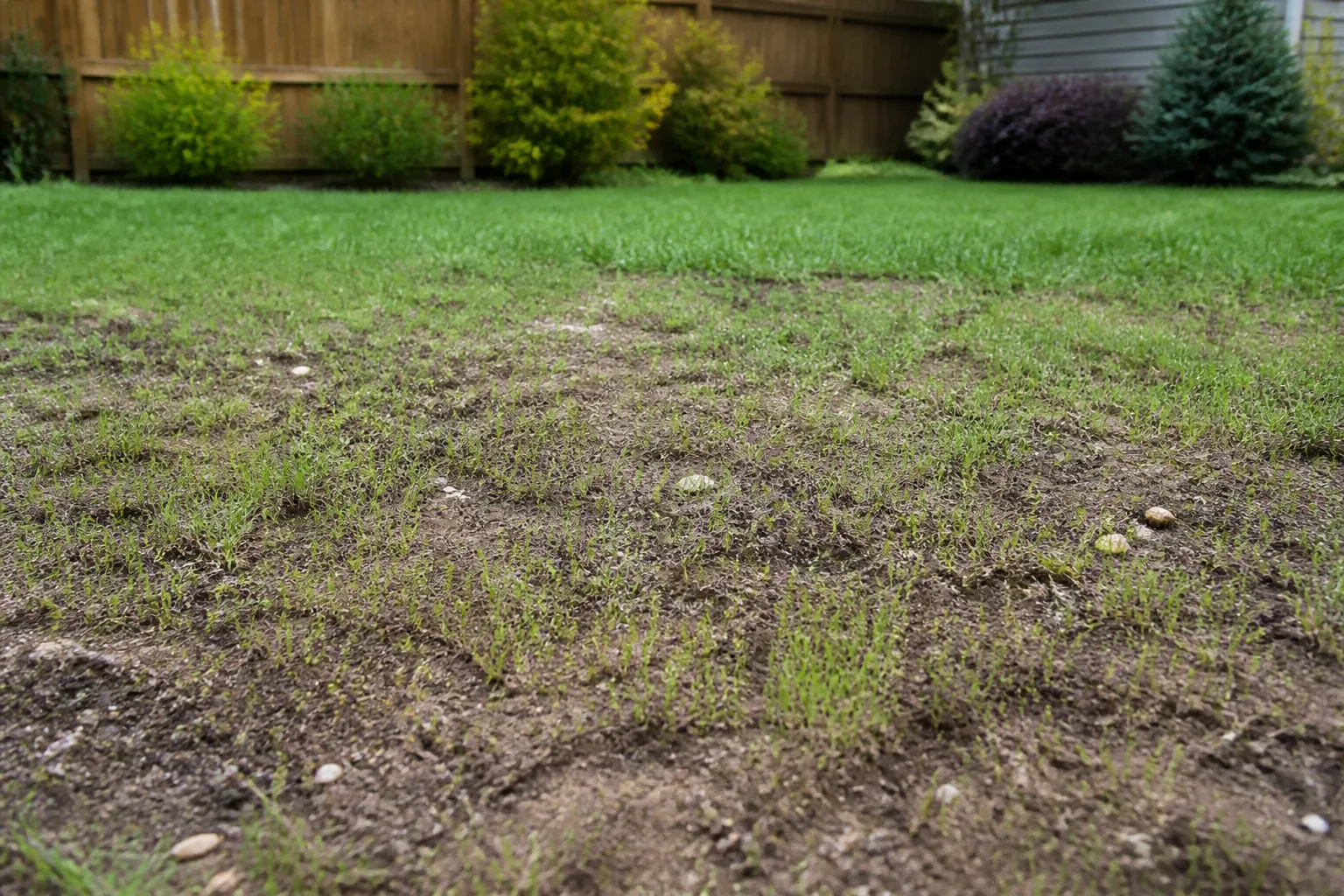
You seeded, watered, and waited—and the lawn still looks thin, patchy, or bare. That is frustrating, but it is usually explainable. Slow grass growth almost always traces to something in the seedbed environment: soil fertility, light, water, or terrain. Seed quality and timing matter too, but those four factors control whether roots can access nutrients, whether shoots get enough sun, whether moisture stays in the right zone, and whether water pools or runs away.
Before you buy another bag of seed, walk the lawn with a simple question: which condition is wrong right now? Press your finger into the top half-inch of soil. Note whether the area is sunny, shaded, or mixed. Look for puddles, crusted dry patches, or seed collected at the bottom of a slope. That two-minute survey usually points you to the fix faster than guessing.
If you need baseline timing expectations, see our guide on how long grass seed takes to grow. If nothing has sprouted at all, start with why grass seed isn’t germinating before assuming the seed is merely slow.
Why grass looks stuck—even when you water every day
Grass can fail in two different ways that homeowners often mix up. Germination is internal: the seed absorbs water and begins growth underground. Emergence is when you first see green above the soil. Establishment is the longer phase where roots deepen, leaves multiply, and the turf can handle mowing and foot traffic.
A lawn that “took too long to come in” might have germinated on time but emerged slowly because the surface dried out. Or it might have sprouted quickly in ryegrass form while slower Kentucky bluegrass in the same blend is still developing below. Judging the whole project by the fastest species—or by a calendar alone—creates unnecessary panic and bad fixes like overwatering already-wet soil.
The NC State Extension guide to establishing a new lawn stresses that seeds need moisture to emerge, and seedlings still need correctly timed watering, fertilizing, and mowing to build early growth. Slow visible progress is often an establishment problem, not a dead-seed problem.
Germination, emergence, and establishment are different clocks
Use species-based ranges as checkpoints, not deadlines:
| Grass type | Typical first sprouts | Notes |
|---|---|---|
| Perennial ryegrass | 5–10 days | Fast cover grass in many blends |
| Tall fescue | 7–14 days | Common cool-season choice |
| Kentucky bluegrass | 14–30 days | Slow starter; keep moisture through its window |
| Bermudagrass | 10–30 days | Needs warm soil |
| Zoysia | 14–30+ days | Slow; warm soil essential |
If you are inside the expected window for your grass type and the seedbed is moist and firm—not muddy—the first move is usually to keep conditions steady, not to scatter more seed on top.
A 60-second lawn check before you change anything
Check three spots: a bare patch, a partially green area, and a low spot where water collects. At each spot, note:
- Moisture: dry dust, damp sponge, or standing water?
- Light: full sun, dappled shade, or deep shade under trees?
- Surface: soft and spongy, hard and crusted, or eroded downhill?
- Seed visibility: still on the surface, buried in thatch, or washed into a gutter?
Write down what you see. The pattern across those spots tells you whether soil chemistry, light mismatch, irrigation, or slope is the primary bottleneck.
The four factors that stall grass growth
Lawn professionals often summarize slow turf under four headings: treat the soil, match grass to sun, water for roots—not just green blades—and fix grade so water behaves. Each one has distinct symptoms and fixes.
1. Soil nutrients and pH lock out growth
Lawn care is mostly soil care. Grass pulls nutrients through roots, and roots depend on soil chemistry. Poor nutrient availability or extreme pH can leave seed viable and watering consistent while growth still crawls.
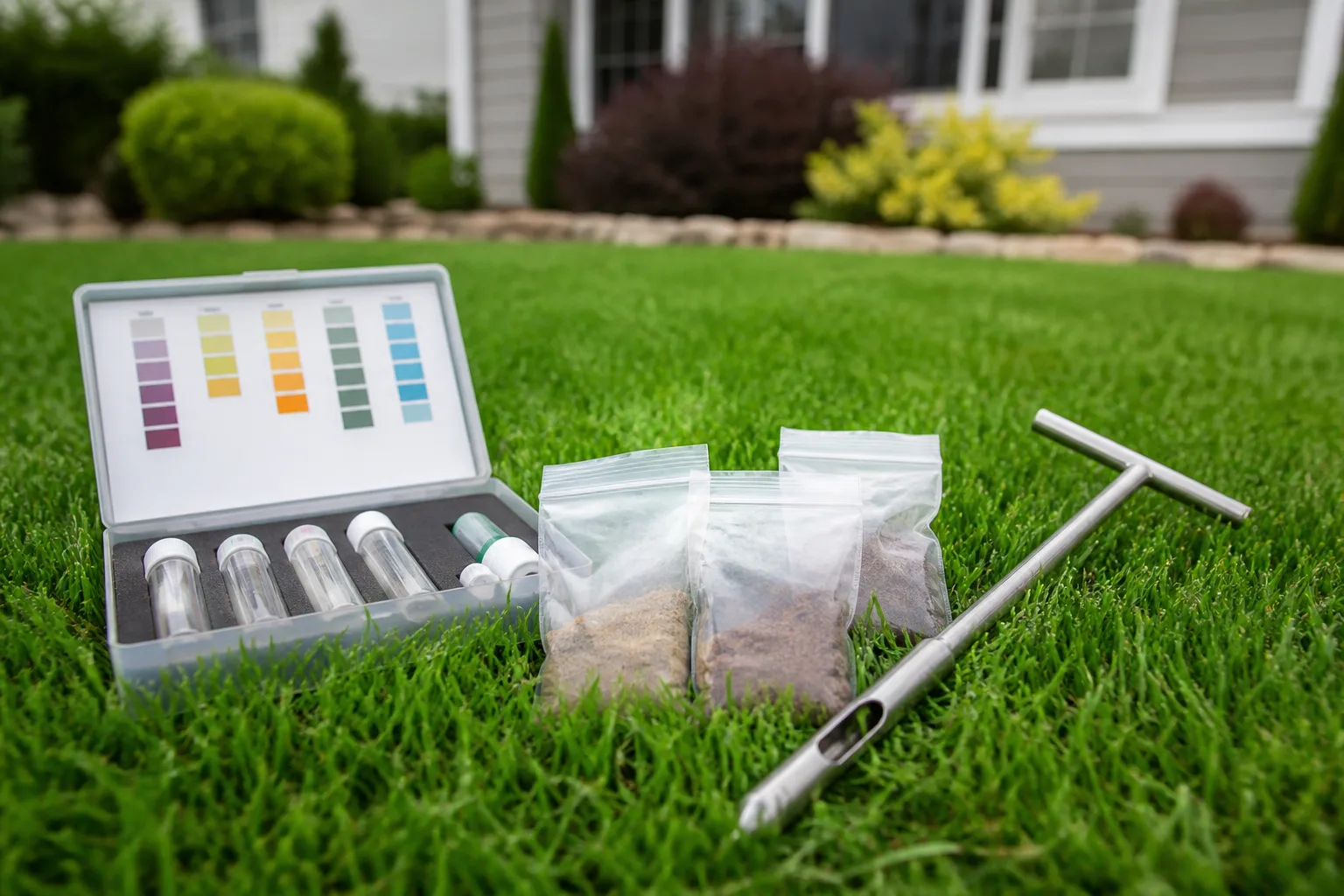
Most common lawn grasses perform best in slightly acidic to neutral soil—often roughly 6.0 to 7.0 pH, though some species tolerate more acid or alkaline conditions. When pH is too low (acidic) or too high (alkaline), nutrients may be present but chemically unavailable. Iron, phosphorus, and other essentials can be effectively locked out even when a bag fertilizer sits on the shelf.
Purdue Turfgrass Science’s soil testing guidance for lawns recommends laboratory soil testing rather than guessing from symptoms. A lab report shows available nutrients and pH, then suggests lime or sulfur rates if needed. That single test often explains why a neighbor’s lawn responds to fertilizer while yours barely changes.
Potassium deserves special mention for slow lawns. Potassium strengthens cell walls and supports root development, drought tolerance, and disease resistance. Products containing soluble potash can help when a soil test shows deficiency—but only when the test confirms need. Random high-potassium applications on already-balanced soil do not speed up a stalled seedbed.
Compaction also masquerades as nutrient deficiency. On hard ground, roots cannot explore, water runs off, and fertilizer never reaches the seed zone. If a screwdriver won’t penetrate several inches, aeration or loosening the seedbed may matter more than another fertilizer round.
How to test soil and read the report
Collect samples from several areas of the lawn, not one corner. Mix sub-samples for a representative bag, label the intended use as turf/lawn, and send to your state extension lab or a reputable agricultural lab. Results typically include pH, phosphorus, potassium, and sometimes organic matter.
Read the report for two things: pH adjustment recommendations and nutrient levels relative to turf needs. Follow the lab’s lime or sulfur rates rather than eyeballing. Retest after major amendments—pH change is slow.
If you are seeding soon, test before planting when possible. Correcting pH and major deficiencies ahead of sowing gives seedlings a fair start. Post-seeding corrections are still possible but slower and harder to judge.
Lime, sulfur, and potassium: what each fixes
- Lime raises pH in acidic soil. Use when the lab recommends it for turf; do not apply blindly on alkaline soil.
- Sulfur lowers pH in alkaline soil when the test supports it.
- Potassium addresses deficiency shown on the test; it supports root strength and stress tolerance.
- Starter fertilizer with phosphorus can help new seed when soil phosphorus is low—but excess phosphorus where it is not needed helps runoff, not your lawn.
The Colorado State University Extension lawn-care guidance reminds growers that soil type, species, weather, and shade all change water and fertility needs. Soil chemistry is the foundation; it does not replace correct watering or species choice.
2. The wrong sun/shade balance for your grass type
Grass is not one plant. Bermudagrass wants open sun and weakens in heavy shade. Tall fescue tolerates more shade than Bermuda but still needs meaningful daylight. Fine fescues handle shade better than most turf types but will not thrive in deep darkness under low evergreens.
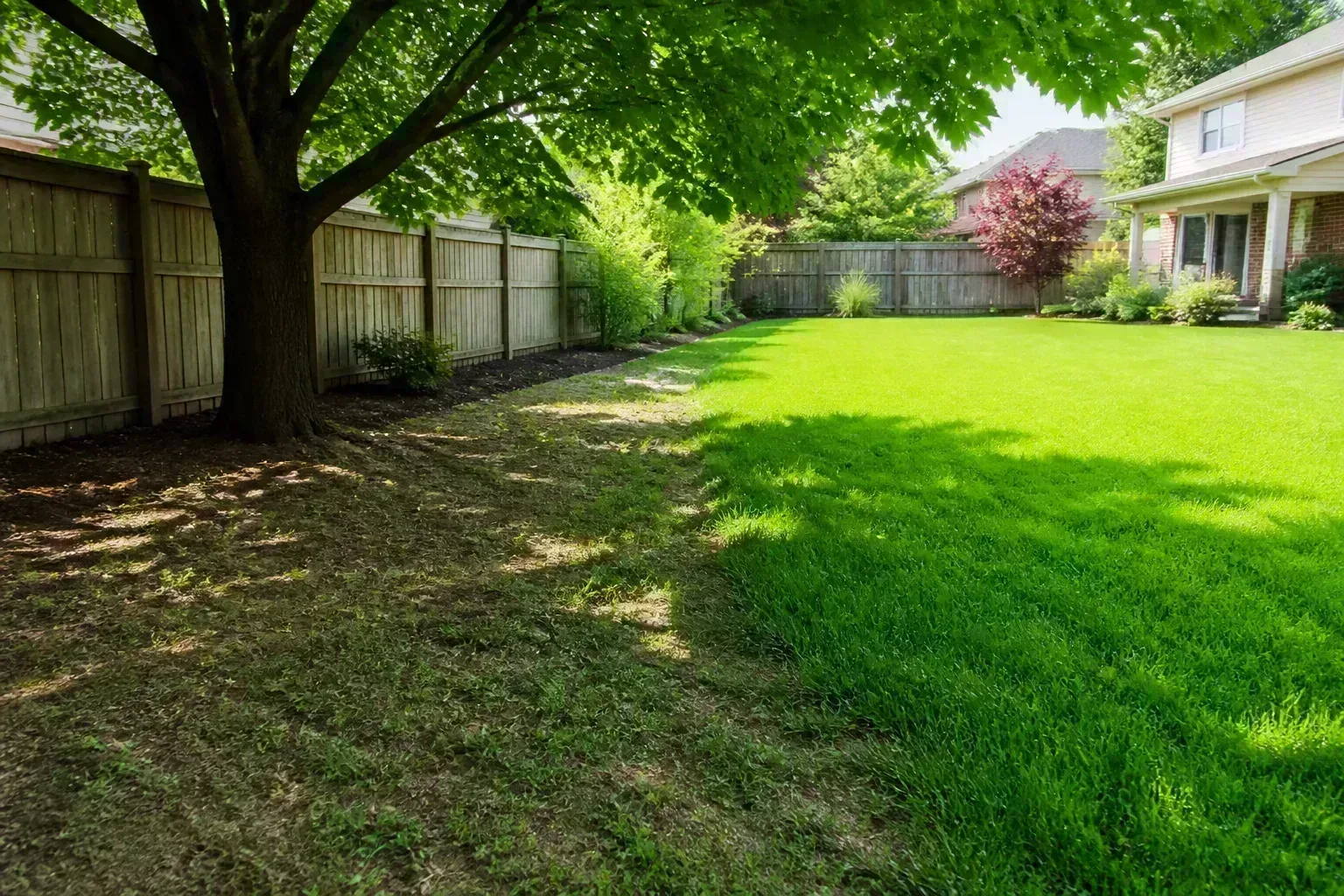
Slow growth in shade is often a species mismatch, not a watering failure. Homeowners water shaded bare patches as if dryness is the problem while the grass type simply cannot photosynthesize enough in that light.
Cool-season vs warm-season light needs
Cool-season grasses (perennial ryegrass, tall fescue, Kentucky bluegrass) grow actively in cool weather and often establish best in late summer or early fall when soil is warm enough but air is not punishing. They can work in partial shade if the species matches—fine fescue for shade, tall fescue for moderate shade, ryegrass for quick sun cover.
Warm-season grasses (Bermuda, zoysia, centipede) need warm soil and strong sun. Planting them into a shaded yard or too early in spring produces weeks of apparent “nothing happening” while seed sits in cold or dim conditions.
Match the bag label to the actual microclimate of each zone. A full-sun mix under trees will always look slow compared to the sunny border.
When to prune trees—and when to stop fighting shade
Selective limb thinning can raise light levels without removing the tree. Raise canopy gradually over seasons rather than stripping one side in a single aggressive cut. More light to the turf often beats more seed.
When shade is permanent and deep—north side of a wall, under dense maples, in a narrow courtyard—stop forcing turf. Convert to shade-tolerant groundcover, mulch beds, or hardscape borders. That is not defeat; it is matching plants to light. Continuing to reseed the same dark pocket wastes water and seed every year.
3. Watering mistakes that slow or stop growth
Water keeps seed alive, but how you water determines whether roots stay shallow, whether disease appears, and whether the seedbed crusts or floats away. The biggest mistakes are daily light sprinkles that never wet the root zone, midday irrigation that mostly evaporates, and fear-driven overwatering that suffocates roots.
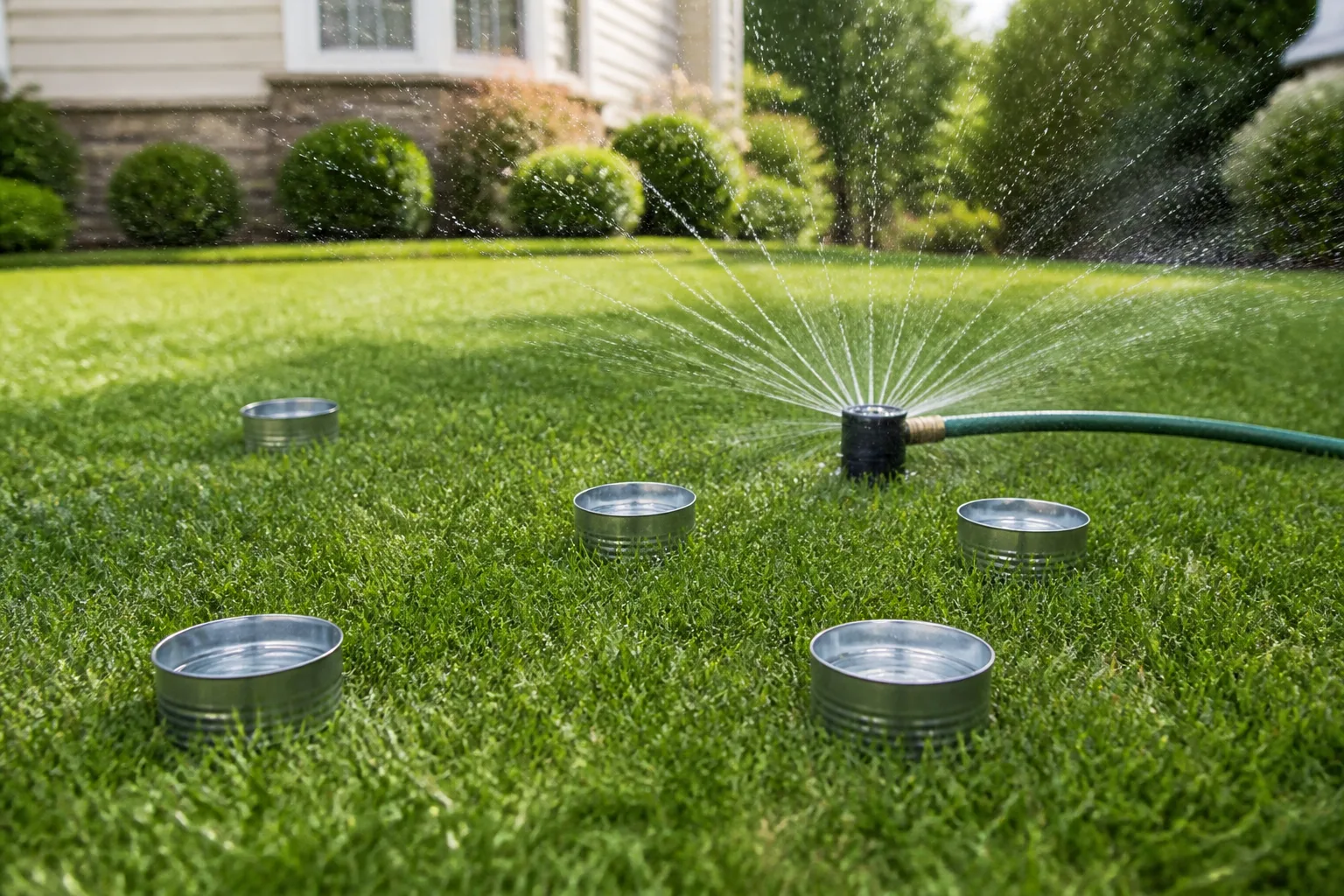
Lawn pros often say: water deeply and infrequently to encourage deep roots. That principle applies after emergence. During germination, the top layer must stay moist—but moist means damp sponge, not swamp.
LawnStarter’s guide on watering grass seed recommends light, frequent irrigation during early germination—often several short cycles per day—to keep the top 1–2 inches consistently moist, then gradually longer, less frequent sessions as roots develop. Timing and soil type adjust those numbers; sandy sunny slopes need more cycles than clay shade.
Best time to water an established lawn is early morning—roughly 6 a.m. to 10 a.m.—when wind is lower and leaves dry before evening. For new seed, you may need additional short cycles between morning and late afternoon to prevent surface drying, but avoid peak midday heat when much of the water evaporates before reaching soil.
Do not shut off irrigation the day fall arrives. Continue until the grass stops growing and enters dormancy for your climate. Cutting water too early stresses roots that still need moisture to store energy for spring.
Deep and infrequent vs shallow and constant
During germination: frequent light watering keeps the seed zone moist without flooding. After seedlings are up and rooted: shift toward deeper, less frequent irrigation so roots chase water downward. Shallow daily sprinkles on mature turf produce weak grass that browns fast in heat—the classic “slow growth then sudden decline” pattern.
Use a gentle spray. High-pressure impact sprinklers or harsh hose streams can wash ungerminated seed downhill. Oscillating or mist-style application spreads water evenly. Built-in systems may need temporary heads or hose sprinklers on new seed until the stand is established.
Overwatering and underwatering warning signs
Overwatering slows growth by reducing oxygen in the root zone and inviting fungus. Watch for:
- Mushrooms or slimy patches in the lawn
- Brown patches in otherwise wet soil
- Footprints that stay sunken in soft turf
- Puddles that linger hours after irrigation
- Seed floating into low spots
The West Harris County Regional Water Authority’s guidance on overwatering lawns notes that excess irrigation wastes water and can damage turf health—roots drown, disease spreads, and weeds exploit weak grass.
Underwatering is easier to spot: dry crust, seed still visible on top, seedlings that shrivel by afternoon, and footprints that stay crisp instead of bouncing back. In heat above about 85°F, cool-season seed may need extra short cycles because surface soil dries in hours.
Nature’s Seed’s practical watering notes emphasize keeping the top inch moist without waterlogging—typically several short sessions early on, then tapering frequency while increasing duration as roots deepen. Adjust for rain, wind, and shade rather than following a rigid clock.
4. Slope, runoff, and low spots
Terrain controls where water goes. On a slope, uphill areas dry out while downhill areas collect seed, mulch, and excess water. Both extremes slow growth: drought uphill, drowning and erosion downhill.
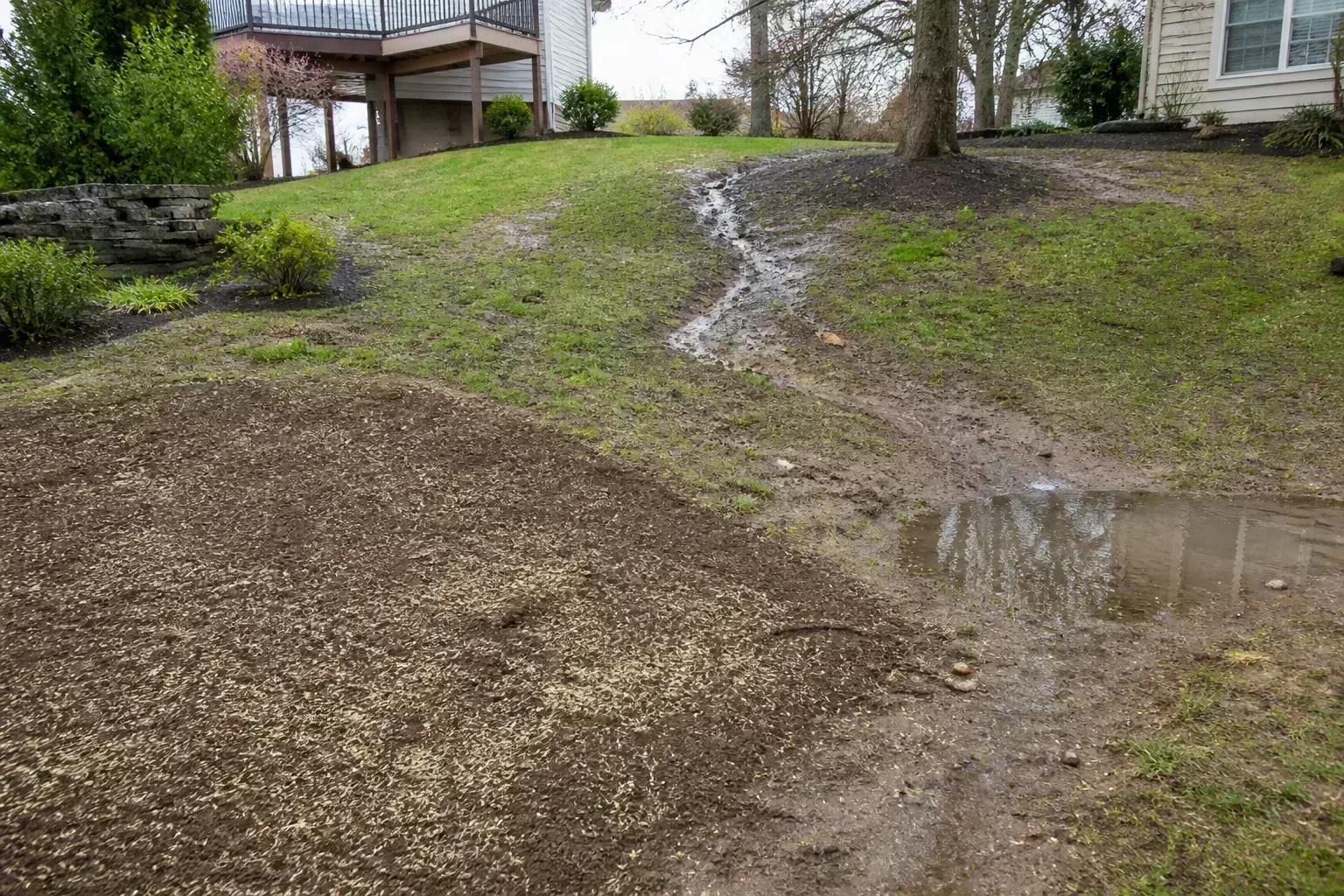
Uneven grade also creates cosmetic and safety issues—lumpy mowing, trip hazards, and puddles that bake into hard crust when they finally dry. Level seedbeds produce more uniform emergence because water and seed stay where you placed them.
Why uphill dries and downhill drowns
On even a modest grade, the first irrigation cycle may run off before the upper third absorbs moisture. Meanwhile, seed washes to the toe of the slope or against a sidewalk lip. The upper lawn looks “slow” because it is dry; the lower lawn looks “slow” because roots rot in saturated soil.
Walk the slope after watering. If water races downhill in sheets, break the cycle into shorter pulses (cycle-soak) or use erosion-control mulch on bare seed until roots hold soil.
Level before seeding vs fixing an existing lawn
Before seeding is the easiest time to fix grade. Rake, fill low spots with matching topsoil, and roll or firm lightly so the surface is smooth. Seed and mulch on that prepared plane so new grass copies a level pattern.
On an existing thin lawn, topdress small low areas with thin lifts of soil (no more than about half an inch at a time), let grass grow through, and repeat. Large corrections may need stripping sod, regrading, and reseeding. Core aeration combined with topdressing can smooth minor bumps without full renovation.
For significant slope issues, consider swales, French drains, or regrading so water moves through the yard without scouring seedbeds. Grass on properly drained, level ground establishes faster because roots get stable moisture—not alternating flood and drought.
Hidden slowdowns short troubleshooting lists often skip
Four environmental factors cover most cases, but these common issues also throttle growth:
- Wrong season or soil temperature: Cool-season seed in summer heat or warm-season seed in cold spring soil sits dormant despite watering.
- Old or mislabeled seed: Check germination date and run a small jar test before committing a whole lawn.
- Pre-emergent herbicide residue: Many products block germination; label reseeding intervals matter.
- Thick thatch or live weed mat: Seed on top of thatch never contacts soil; scrape or slit-seed into the seedbed.
- Salt or pet urine hotspots: Chemistry and compaction in small zones can stall growth while the rest of the lawn looks fine.
Address these if your four-factor checklist looks correct but growth is still abnormally slow in isolated patches.
Step-by-step recovery plan
Work in order so each step builds on the last:
- Identify grass type and expected timeline from the seed label. Compare to our grass seed timing guide.
- Run the 60-second moisture/light/grade check on bare, partial, and low spots.
- Order a soil test if fertility or pH has never been measured, or if fertilizer has not helped.
- Fix grade and drainage before the next seeding if runoff or pooling is obvious.
- Match species to sun—swap seed or stop seeding hopeless shade pockets.
- Set a germination irrigation plan—short cycles to keep the top moist, gentle spray, morning-biased timing, cycle-soak on slopes.
- After emergence, shift to deeper, less frequent watering and delay mowing until grass is about 1.5 times your target mowing height with a sharp blade.
- Retest soil or topdress only after the stand is established if growth remains pale or thin.
Skipping straight to “more seed” without fixing soil, light, water, or slope usually reproduces the same slow result.
When to wait longer vs when to reseed
Wait when you are still inside the species germination window, the seedbed stays evenly moist without puddling, soil temperature matches the grass type, and you see occasional tiny shoots or root hairs in a scratch test. Kentucky bluegrass and zoysia routinely test patience.
Reseed when:
- The expected window passed with consistent moisture and still no emergence
- Seed washed away or sits exposed on crusted dry soil
- Water pools and smells sour; roots never developed
- You confirmed wrong species for shade or season
- A test patch with corrected conditions germinates while the main area fails—pointing to local grade or chemistry problems
When reseeding, fix the underlying factor first, then seed into loosened soil with fresh labeled seed. Cover bare slopes lightly with clean straw or erosion mat until roots anchor.
Conclusion
Grass that takes too long to come in is rarely mysterious. Soil chemistry, light match, water depth and timing, and terrain decide whether seed becomes a lawn or stays a waiting game. Test soil instead of guessing, put the right grass in the right sun, water to keep the seed zone moist without drowning it, and level or drain slopes so water and seed stay put.
Use species-based timelines to judge patience versus failure. Fix the environment, then give the stand a fair window. If you need germination troubleshooting or day-by-day timing, our guides on why grass seed isn’t germinating and how long grass seed takes to grow complete the picture. A slow lawn usually tells you what it needs—if you know which of the four factors to read first.



