10 Common Ant Types and How to Get Rid of Them
Black ants on the counter? Identify pavement, odorous, carpenter, fire, and pharaoh ants—then use the bait, spray, or exclusion fix that actually reaches the nest.
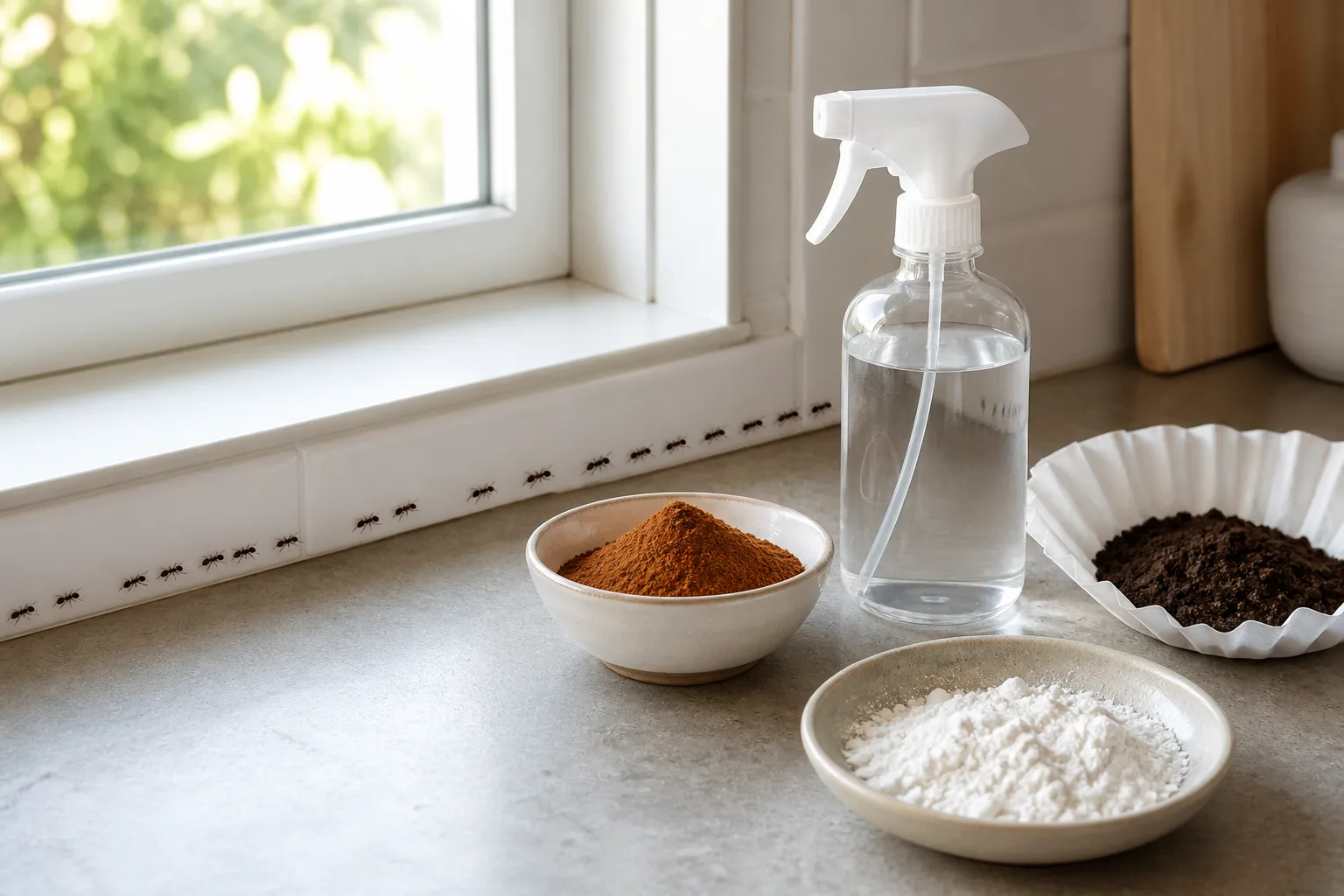
A line of ants across your kitchen counter is not a species diagnosis—it is a foraging trail between food inside and a nest you may never see. Wiping the counter kills today’s workers; the colony replaces them tomorrow. Fast control starts with identifying which ant you have, because sweet-feeding trail ants, grease-loving thief ants, moisture-linked carpenter ants, and stinging fire ants need different tools. Extension IPM programs agree: slow bait near trails plus exclusion beats perimeter spraying for most household invasions (UC IPM).
This guide covers ten ants commonly found near homes in North America, how to recognize each one in under a minute, and the control sequence that actually reaches queens—not just the ants you see.
Identify the Ant Before You Grab the Spray
Most failed ant projects share one mistake: treating every black speck the same way. Cinnamon on a carpenter ant forager does not fix wet framing. Boiling water on a pharaoh ant trail can bud one problem into three nests. Sweet borax bait on grease-loving thief ants sits untouched while the colony grows.
Why killing the trail fails
Ant colonies send out expendable foragers. UC IPM notes that spraying foragers indoors provides temporary control and does not stop new ants from entering, because the nest outdoors—or in a wall void—keeps producing workers (UC IPM). Slow-acting baits work because workers carry toxicant back to the nest, where it spreads mouth-to-mouth to larvae, other workers, and queens over five to ten days before traffic drops.
Contact sprays and heavy repellents (vinegar lines, essential oil barriers, pyrethrin foggers) can block bait acceptance if they contaminate feeding sites. Use soapy water to wipe an emergency trail, then switch to bait—not a long-term spray campaign.
Nuisance trail ants vs structural pests
Trail ants (Argentine, odorous house, pavement, pharaoh, ghost, thief) usually nest outside or in voids and march indoors for food and water. Your job is sanitation, caulking entry points, and species-matched bait. Carpenter ants and severe fire ant infestations add different stakes: moisture-damaged wood, structural galleries, or painful stings on lawns and occasionally indoors.
Take a photo, note size with a ruler, crush one ant on paper (smell test), and check UC IPM’s ant identification key if baits fail after two weeks. Our 20 natural ways to get rid of ants guide sorts repellents, killers, and baits when you need pantry options beyond this species list.
Quick ID: Size, Color, Nodes, and Smell
Use this table as a field guide. Nodes are the small lumps between thorax and abdomen—one node vs two nodes separates many common species (UC IPM).
| Ant | Size | Nodes | Key ID clue | Primary food | Typical nest |
|---|---|---|---|---|---|
| Argentine | ~1/8 in., dull brown | One | Massive trails, supercolony behavior | Sweets, sometimes protein | Shallow outdoor soil |
| Carpenter | 1/4–1/2 in., black or bicolored | One | Large workers, smooth wood galleries, frass | Sweets | Stumps, wet wood, wall voids |
| Odorous house | ~1/8 in., dark brown–black | One | Coconut smell when crushed | Sweets, sometimes protein | Soil, mulch, wall voids |
| Pavement | ~3/16 in., dark brown–black | Two | Parallel thorax spines, sidewalk mounds | Sweets, grease, protein | Under pavement, foundations |
| Pharaoh | ~1/16 in., yellow–orange | Two | Tiny, uneven thorax, indoor warmth nests | Grease, protein, sweets | Wall voids, cabinets |
| Ghost | ~1/16 in., dark head, pale legs/abdomen | One | Almost invisible on counters | Sweets | Moist indoor sites, multiple nests |
| Fire (imported/southern) | 1/16–1/5 in., reddish | Two | Aggressive, painful sting, mound nests | Sweets, protein | Soil mounds, sometimes voids |
| Thief/grease | ~1/32 in., yellow–brown | Two | Near other ant nests, loves grease | Grease, fatty foods | Soil, wall voids |
| Field | Variable, often larger | One | Big lawn mounds, not always indoors | Sweets, insects | Open lawns, firewood piles |
| Black garden | Small, black | One | Classic “picnic ant,” outdoor soil nests | Sweets | Gardens, under paving |
If two species match, run a ** bait preference test**: set a dab of honey and a dab of peanut butter on wax paper near the trail. Whichever attracts more foragers tells you sweet vs protein/grease bait selection for the next two weeks.
Control Principles That Work for Almost Every Species
Species sections below add nuance, but these rules apply across most kitchen invasions.
Bait beats spray for colony kill
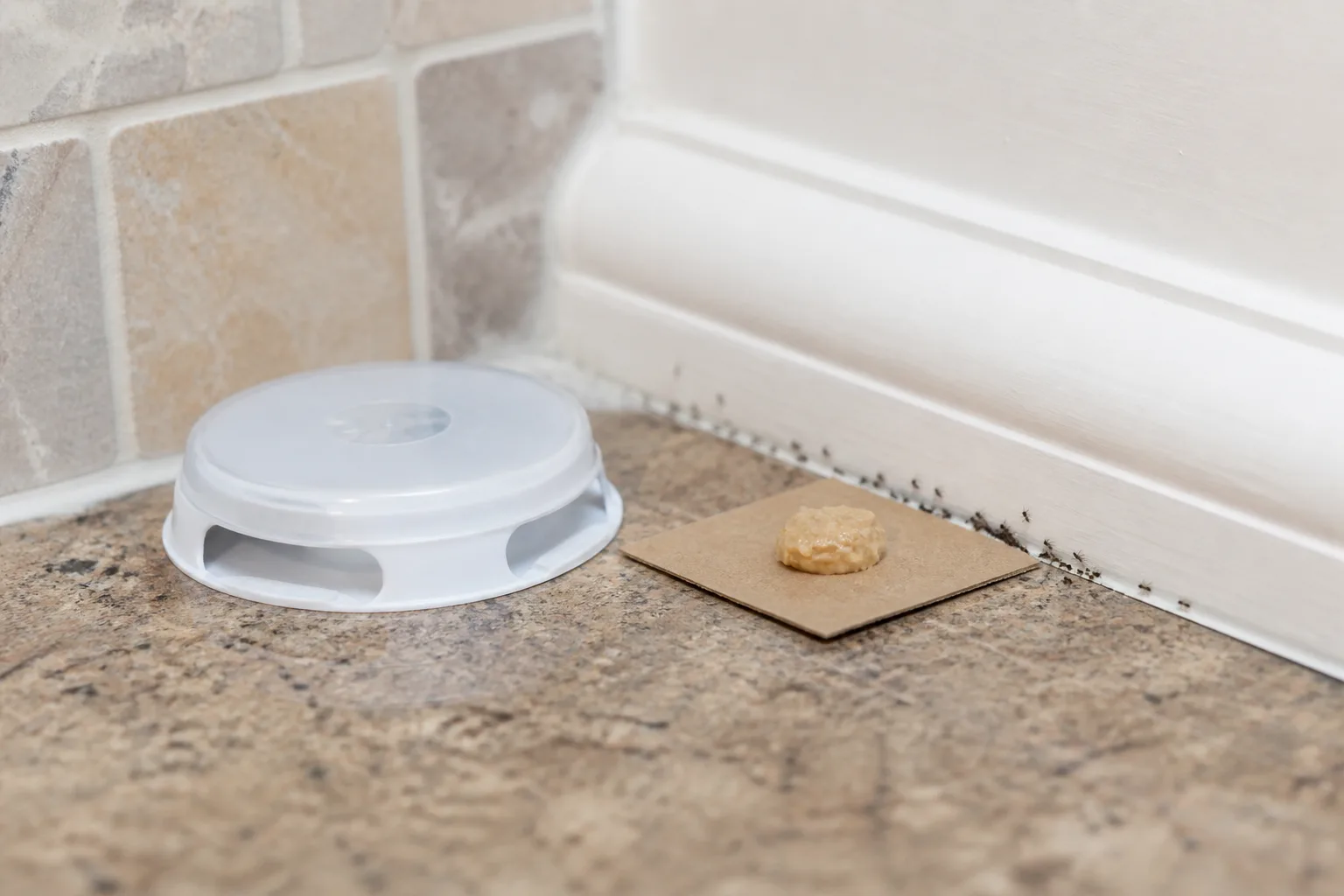
Place prepackaged bait stations or gel baits near trails—not on top of the marching line—and let workers carry slow toxicant home. Active ingredients in consumer baits often include boric acid/borate, abamectin, fipronil, or hydramethylnon (UC IPM). Replace emptied stations and try a different bait formulation if ants ignore the first product for several days.
Do not spray the same area while baiting. If you need contact kill for a sudden swarm, wipe with soapy water, wait 24 hours, then deploy bait on a clean surface.
Sanitation, exclusion, and trail cleanup
Caulk cracks around windows, pipes, and foundation gaps. Store sugar, pet food, and syrup in sealed containers. Fix leaky faucets—ants recruit to moisture as reliably as to crumbs (NPIC). Wipe trails with soapy water to remove pheromone highways scouts follow. Pull mulch and plants back at least 12 inches from the foundation so ants lose covered routes to siding.
Budding species: never drench the nest
Pharaoh, ghost, and Argentine ants expand through budding: queens and workers walk to a new site and found satellite colonies when disturbed. Pouring insecticide into a wall void or drenching an indoor nest can split one colony into several (UC IPM). For these species, use slow bait only, keep competing food away, and seal entry points after traffic slows—not blast repellents indoors.
Black Garden Ants (Lasius species)
When people picture a generic small black ant outdoors, they often mean black garden ants (Lasius species). Workers are tiny, dark, and abundant in soil, under paving stones, and in garden beds. They enter homes when sugar sources pile up—jam jars, hummingbird drips, or sticky recycling.
Control: Wipe indoor trails, seal the entry crack you traced, and place sweet borax bait stations along exterior foundation lines where ants travel. Flying ants on summer evenings are reproductive forms mating outdoors; swarms indoors may mean a nest in a wall void. Trim vegetation touching the house and see our hummingbird feeder ant moat guide if sugar water is the magnet.
Pavement Ants
Pavement ants (Tetramorium caespitum) are among the most widespread ants in the U.S.—brownish-black workers about 3/16 inch with two petiole nodes and two small spines on the thorax. They nest under sidewalks, driveways, and foundation edges, pushing small mounds through cracks.
Control: Follow the trail backward to the outdoor nest opening when possible. Place bait stations along the trail outdoors; workers carry bait to the queen underground (UC IPM). Do not spray indoor foragers—that triggers more replacements. If the trail leads to a visible pavement crack mound, a labeled mound drench can supplement bait on dry days. Seal interior gaps along baseboards and plumbing penetrations.
Fire Ants (Southern and Red Imported)
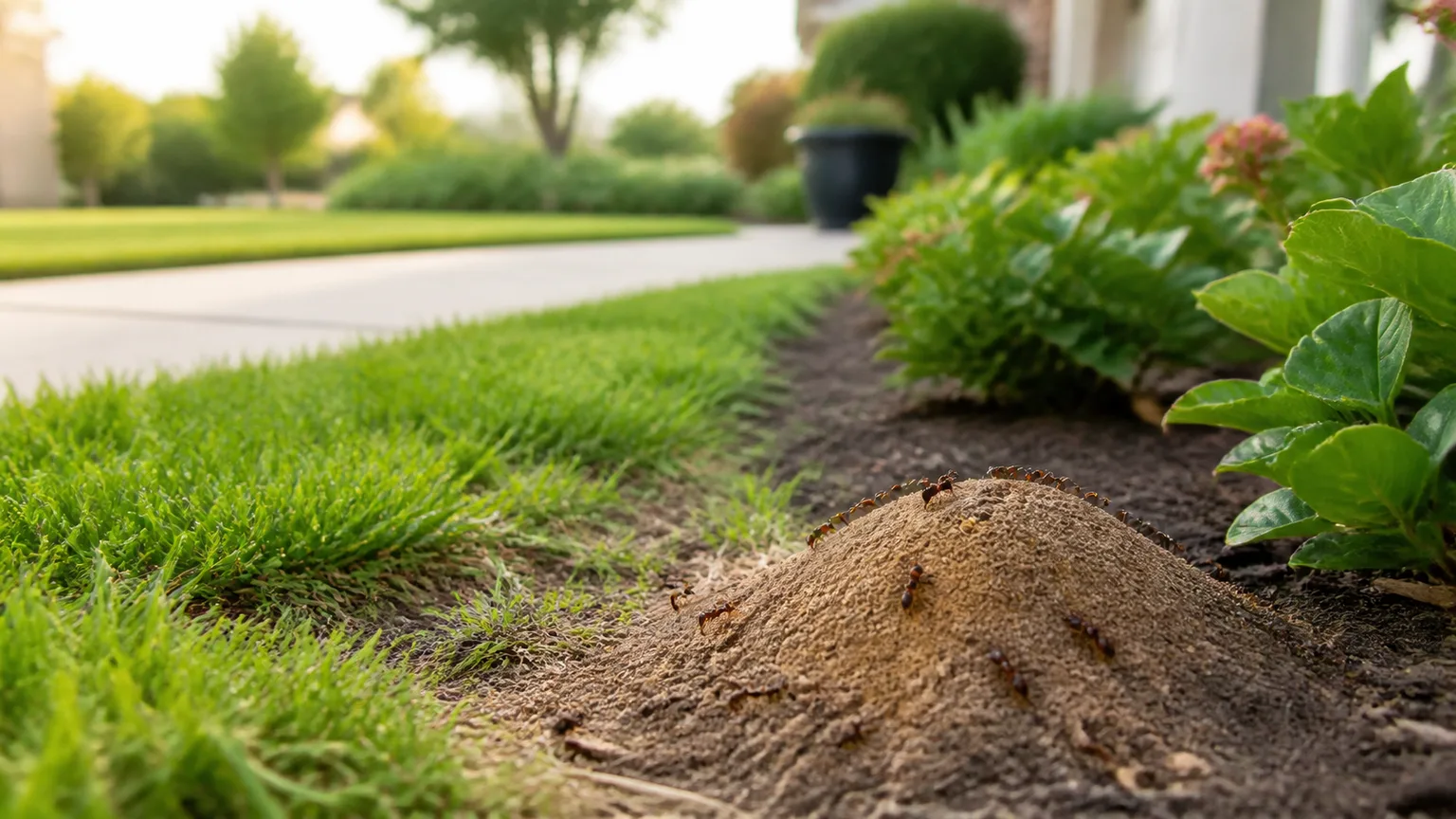
Fire ants include the southern fire ant (Solenopsis xyloni) and the red imported fire ant (S. invicta), established in parts of the southern U.S. Workers are reddish with a darker abdomen; imported fire ants deliver a memorable sting. Outdoors they build soil mounds with multiple openings; occasionally they nest in wall voids.
Control: Treat mounds directly with labeled fire-ant bait granules or mound products—never guess concentrations (EPA DIY ant control). Boiling water can collapse a small single-queen mound but risks scalding and misses deep tunnels; repeat applications may be needed. Food-grade diatomaceous earth along edges kills foragers crossing dry cracks but does not eliminate the colony alone. Wear closed shoes when inspecting mounds and report suspected imported fire ant spread to your county agricultural office per local guidance.
Indoor fire-ant traffic usually means an outdoor mound within foraging range—prioritize outdoor bait and seal entry points rather than fogging the kitchen.
Carpenter Ants
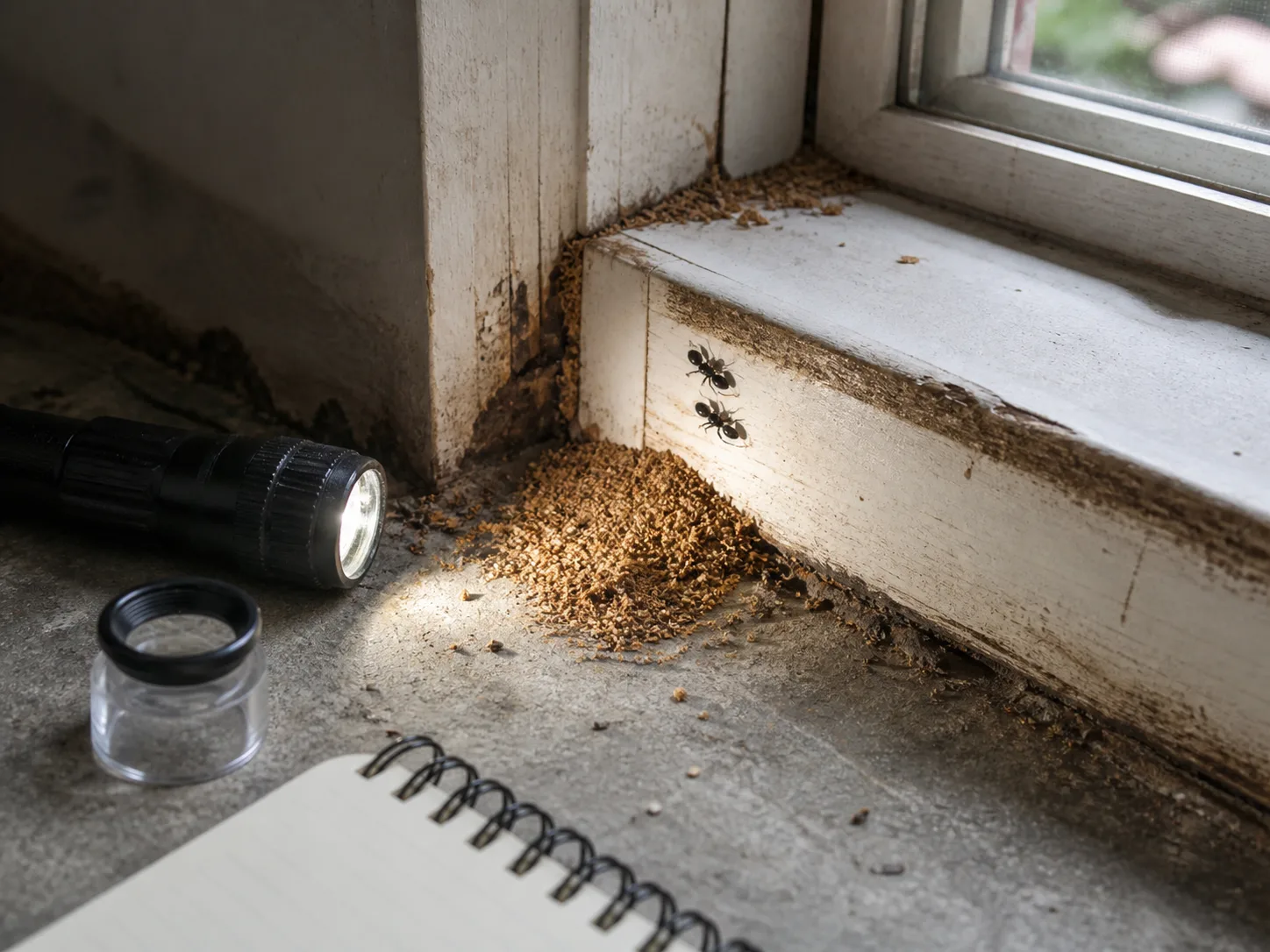
Carpenter ants (Camponotus species) are the largest common household ants—workers 1/4 to 1/2 inch, usually black or black-and-red. They do not eat wood; they excavate smooth galleries in moist, decaying timber and hollow voids. Indoor signs include large wingless workers at night, piles of sawdust-like frass (no soil mixed in), and rustling in walls.
Penn State Extension emphasizes that foragers may come from an outdoor parent nest within 100 yards, with satellite colonies indoors in damp sill plates, porch pillars, or foam insulation (Penn State Extension).
Carpenter ants vs termites
Winged carpenter ants swarm in spring; homeowners often confuse them with termites. Ants have a pinched waist, elbowed antennae, and front wings longer than hind wings. Termites have a broad waist, straight bead-like antennae, and equal-length wings. Termite galleries contain soil and fecal pellets; carpenter galleries are smooth and dump frass outside nest openings.
Control: Fix moisture sources (leaks, clogged gutters, poor ventilation) before bait alone will hold. Trim branches touching the house and move firewood off the ground. Apply carpenter-ant-specific bait along trails where workers travel; dusts of diatomaceous earth or silica in voids may supplement professional treatment. Do not ignore recurring frass—see our signs of carpenter ants in the house guide and arrange inspection if structural wood sounds hollow or soft.
Odorous House Ants
Odorous house ants (Tapinoma sessile) are small dark ants whose crushed bodies smell distinctly like rotten coconut. They nest almost anywhere—under mulch, in wall voids, near hot pipes—and form large trailing columns to sweets indoors.
Control: These ants respond well to sweet borax or borate liquid baits in refillable stations outdoors (UC IPM). Trim shrubs away from siding and caulk entry points. Avoid repellent sprays during baiting—they scatter trails into new rooms. Multiple outdoor nests are common; perimeter bait stations every 10–20 feet during peak season outperform a single kitchen station.
Thief and Grease Ants
Thief ants (Solenopsis molesta)—often called grease ants—are among the smallest household ants, pale yellow to light brown with two nodes. They nest near other ant colonies (sometimes stealing brood) and love greasy, fatty foods: bacon drips, pet food oil, butter smears.
Control: Grease or protein baits outperform sweet gels. Place bait in shallow lids near activity—not loose on floors if children or pets are present. Outdoor nests under rocks or decaying wood need direct outdoor baiting; indoor bait alone fails when the nest is outside. If sweet baits sit untouched, switch formulations before escalating to sprays.
Pharaoh Ants
Pharaoh ants (Monomorium pharaonis) are tiny yellow to honey-colored ants with two nodes and a slightly uneven thorax. Colonies harbor multiple queens and thousands of workers, nesting in warm, humid voids: wall cavities, under insulation, behind baseboards, and inside heated cabinets.
Control: Bait exclusively—slow toxicant gels or stations with protein or grease attractants. Never drench suspected nests indoors; budding spreads colonies (UC IPM). Hospitals and apartments struggle with pharaoh ants because repellents scatter them. Keep bait stations refreshed for weeks, eliminate competing food, and seal cracks after activity declines. Professional help is reasonable when void nests cannot be located.
Ghost Ants
Ghost ants (Tapinoma melanocephalum) have a dark head and thorax with a pale, nearly translucent abdomen and legs, making them hard to spot on white counters. Like pharaoh ants, they maintain multiple queens, mobile colonies, and expand by budding.
Control: Use the same slow bait strategy as pharaoh ants—no nest flooding, no broad indoor repellent campaigns. Ghost ants love sweets and moisture; fix leaks and wipe counters nightly while bait works. Baits placed at both indoor trail points and outdoor foundation lines improve odds when satellite nests hide in wall voids.
Argentine Ants
Argentine ants (Linepithema humile) are dull 1/8-inch brown ants with one node, famous for supercolonies linked across yards—multiple queens, shallow nests, and relentless sweet feeding. They often tend aphids on shrubs, protecting sap-sucking pests that damage plants.
Control: UC IPM recommends low-concentration liquid borate baits (0.5–1%) in refillable outdoor stations for severe Argentine infestations—higher-percentage prepackaged stations sometimes kill foragers before they return to the nest (UC IPM). Space stations every 10–20 feet on shady foundation routes and refresh for weeks. Manage aphids on foundation plants so honeydew does not compete with bait. Argentine pressure has slowed red imported fire ant spread in some regions, but Argentine trails indoors still demand bait-first IPM, not monthly perimeter sprays.
Field Ants
Field ants (genus Formica) build large lawn mounds—sometimes two feet wide—that can be mistaken for fire ant hills. They are more often a yard nuisance than a kitchen pest, though workers forage indoors when mounds sit near foundations.
Control: Saturate outdoor mounds with a product labeled for field ants, using enough water to penetrate the soil profile (UC IPM). Seal foundation cracks and apply non-repellent perimeter treatment only per label if foragers keep entering—prefer bait outdoors first. Do not disturb mounds with shovels before treatment; collapsing tunnels without insecticide scatters colonies.
When Natural and DIY Fixes Fit—and When They Fail
Pantry remedies have roles—but species ID determines which one.
Diatomaceous earth kills foragers crossing a dry dust film but washes away when wet and does not reach queens (NPIC DE fact sheet). Baking soda mixes underperform borax baits for colony kill—see our does baking soda kill ants breakdown. Essential oil barriers repel trails temporarily; pair with bait, not replace it (essential oils for ants).
Boiling water fits small single-opening mounds on dry days—not pharaoh or ghost voids. Soapy water is the best emergency wipe: it kills on contact and scrubs pheromone trails. For a full pantry-to-bait roadmap, our natural ant remedies guide ranks twenty options by repellent vs killer vs bait job.
Call a professional when: carpenter frass keeps appearing after moisture repair, stinging fire ant mounds cover large lawn sections, pharaoh or ghost ants persist after six weeks of disciplined baiting, or you cannot locate entry points in multifamily buildings.
Prevention: Keep the Next Colony Out
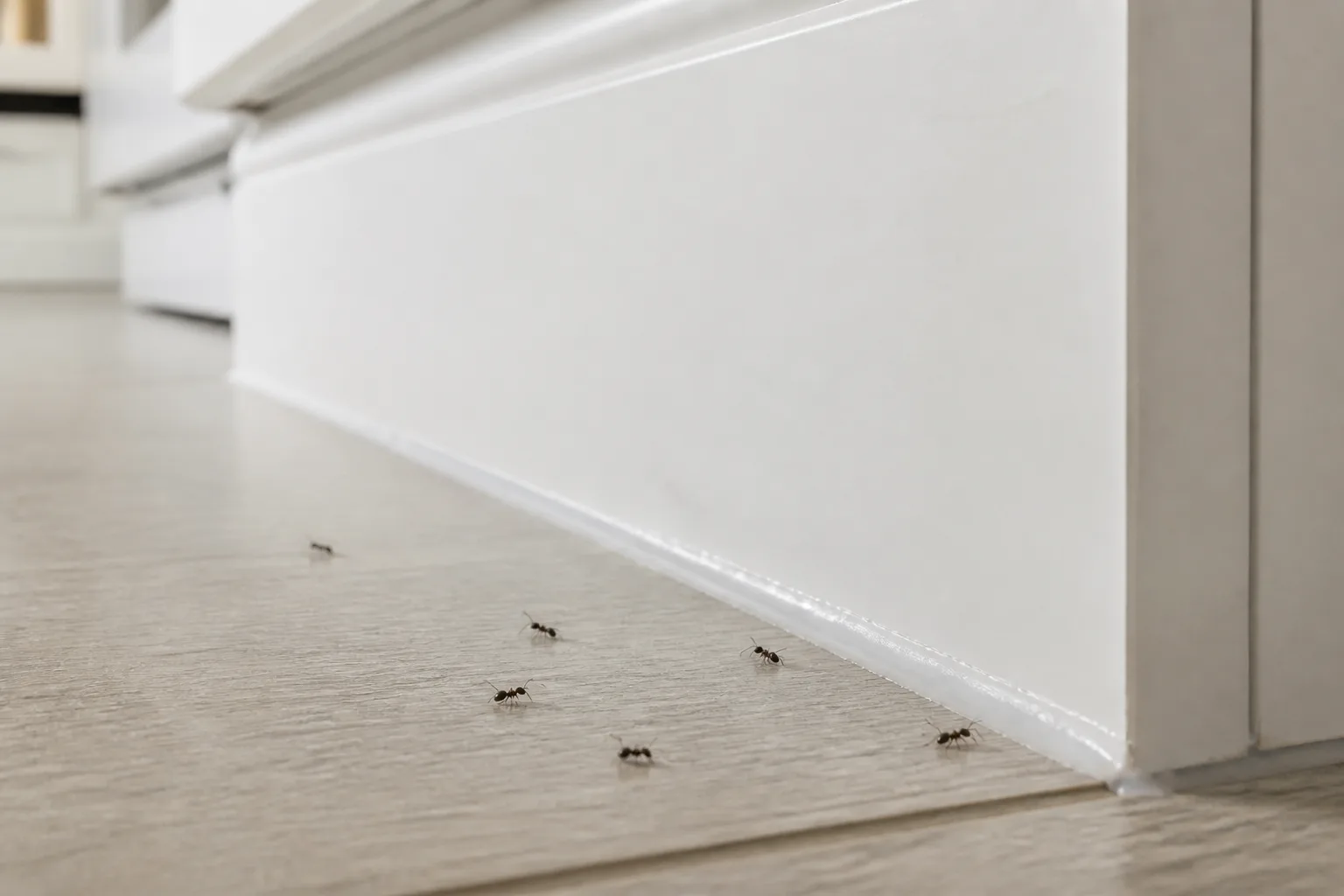
Annual ant invasions are predictable—caulk and bait before trails peak in spring.
Store food in sealed glass or rigid containers, not clip bags. Rinse recycling and take kitchen trash out daily. Fix dripping faucets and downspouts. Keep firewood off the ground and away from the house. Maintain a 12-inch bare or gravel strip along foundations where practical. Inspect door sweeps and window screens each spring.
Outdoor bait stations along foundation edges in late winter or early spring catch colonies while populations are small (UC IPM). Indoors, reserve sprays for labeled spot use only; default to bait and exclusion so you are not retraining foragers every week.
Conclusion
Fast ant control is not about the strongest spray—it is about matching the species to the right bait diet, sealing the highway indoors, and respecting budding behavior on pharaoh, ghost, and Argentine colonies. Identify using size, nodes, color, and smell; treat carpenter and fire ants as structural or sting risks, not counter-wipe problems; and let slow bait work for five to ten days before you declare failure.
When one remedy fails, switch bait type—not to a fogger. The colony you cannot see is always larger than the trail on your tile.