20 Natural Ways to Get Rid of Ants at Home
Ant trail in the kitchen? Compare 20 natural repellents, baits, and killers—plus when each works, safety tips for kids and pets, and prevention steps that stop repeat invasions.
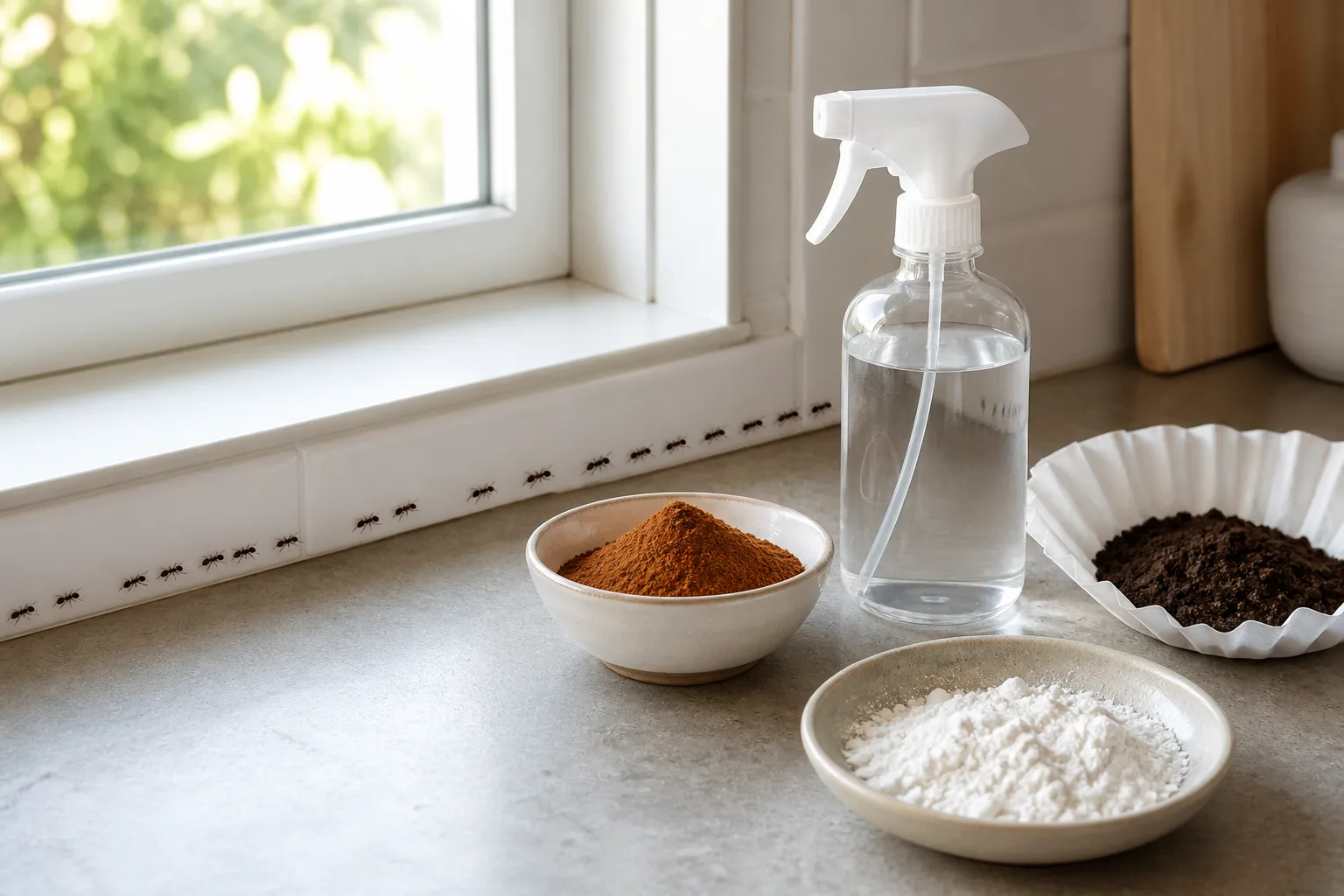
A line of ants across your counter is rarely a mystery—it is a foraging trail between a nest (usually outdoors) and a food or moisture source inside.
The twenty pantry and garden remedies below can work, but only when you match the tool to the job. Repellents scramble scent trails and push ants elsewhere. Contact killers knock down the workers you see. Slow baits aim at the queen and brood the trail never reveals. Most failed DIY attempts come from using a repellent when the colony needed bait, or baiting while the kitchen still leaks syrup under the toaster.
The Quick Answer: Repel, Kill, or Bait—Pick One Job First
For a few scout ants: wipe the trail with soapy water or diluted vinegar, remove the food source, and seal the entry crack you traced. For steady indoor traffic: set a borax- or boric-acid-based bait near the trail (not on it) and keep the area free of competing food for one to two weeks. For ants crawling baseboards at night: dust a thin line of food-grade diatomaceous earth in dry cracks they must cross—not a visible pile on the floor. For an outdoor mound in pavement or lawn: boiling water can collapse a small nest if you pour directly into the opening on a dry day; repeat if needed.
Nothing here guarantees overnight elimination. UC IPM notes baits typically need five to ten days before you see fewer ants, because workers must share slow-acting poison back at the nest (UC IPM). Repellents like cinnamon or essential oils may work in hours—but only by rerouting ants, not erasing the colony.
Identify the Ant Problem Before You Treat
Size, color, and where you see ants matter more than most listicles admit. Small brown ants on a sugar jar are often odorous house ants or Argentine ants—species that respond well to sweet borax baits plus sanitation. Larger black ants in spring may be carpenter ants nesting in moisture-damaged wood; sprinkling cayenne on the counter does not fix wet framing. Pavement ants near pet bowls want protein or grease baits. Misidentification wastes time and can spread the problem.
Nuisance trail ants vs structural pests
Trail ants (Argentine, odorous house, pavement, pharaoh) usually nest outside or in wall voids and send workers indoors for food. Your goal is exclusion, sanitation, and bait—not soaking the house in repellent oils. Carpenter ants and moisture ants signal water damage; find the wet wood, fix the leak, and consider professional inspection if galleries appear in structural timbers (NPIC). Fire ants outdoors need mound-specific treatment, not kitchen cinnamon.
Take a photo, note size (under or over ¼ inch), and check whether ants smell coconut-like when crushed (odorous house ant) or leave piles of fine sawdust (carpenter ant). UC IPM’s ant key helps narrow species when baits fail (UC IPM ant key).
When natural repellents make things worse
Repellents—vinegar perimeter sprays, heavy essential oils, cinnamon lines—block trails and force ants to find new routes. That sounds fine until they split into multiple kitchen paths or bud off a new nest indoors. UC IPM warns that spraying foragers indoors does not stop new ants from entering and can interfere with bait acceptance if oils or pyrethrin sprays contaminate feeding sites (UC IPM).
Use repellents for temporary barriers at a single entry while you caulk and bait—not as your only tactic during a heavy infestation.
Repellents, Killers, and Baits—How the 20 Methods Sort Out
| Method | Category | Best for | Limitation |
|---|---|---|---|
| Coffee grounds | Repellent | Outdoor pots, short-term barrier | Dries out; loses smell |
| Vinegar / lemon spray | Repellent + contact | Wiping trails, spot kill | Acid etches natural stone |
| Peppermint, tea tree, cedar oils | Repellent | Entry-point distraction | Overpowering indoors; repels baits |
| Cinnamon, cayenne, cloves, salt | Repellent barrier | Door thresholds, dry lines | Does not kill colony |
| Chalk / baby powder lines | Repellent barrier | Temporary entry block | Washes away; talc concerns |
| Orange / citrus peels | Repellent | Compost-adjacent zones | D-limonene contact kill only on direct touch |
| Diatomaceous earth | Desiccant killer | Dry cracks, void edges | Useless when wet |
| Soap / glass cleaner spray | Contact killer | Visible foragers | No residual; no queen kill |
| Boiling water | Contact killer | Outdoor mound opening | Burns turf; misses deep nests |
| Borax / boric acid baits | Colony bait | Persistent indoor trails | Toxic if eaten; slow |
| Baking soda + sugar | Bait (weak evidence) | Last-resort experiment | Mixed research; slow |
| Sanitation + caulk | Prevention | Every infestation | Not a “remedy” but required |
Treat this table as your decision shortcut before you open the spice cabinet.
Vinegar, Citrus, and Essential Oil Sprays
These are trail disruptors, not colony eliminators. Used correctly, they erase the chemical highway ants follow—and kill the individuals you spray directly.
Vinegar and lemon juice for trails
Mix equal parts white vinegar and water in a spray bottle, or one part lemon juice to three parts water. Spray foragers, then wipe the surface dry. Vinegar’s acetic acid breaks down pheromone trails so recruits stop following the same path (NPIC). It also kills ants on contact through dehydration and drowning in the film.
Do not mist vinegar across granite, marble, or unsealed natural stone—it etches the finish. On stone counters, use your usual pH-neutral cleaner with the same wipe-and-dry technique. Vinegar is a cleanup and spot-kill step, not a perimeter program. Pair it with bait outside the wiped zone.
Peppermint, tea tree, and cedar oils
Ants navigate by smell; strong plant oils mask food cues. A practical spray: 8 ounces water, 30–40 drops peppermint, tea tree, or cedar oil, plus 30 drops rubbing alcohol to help dispersion. Mist entry points, window sills, and trash-cabinet hinges—not open food prep areas or bait stations.
UC IPM lists peppermint, clove, rosemary, thyme, and citrus oils among plant-based repellents that can kill on contact at sufficient concentration (UC IPM). Cedar oil adds contact toxicity beyond mere confusion. Reapply every few days; oils volatilize. Keep pets away until dry—concentrated tea tree can irritate cats.
Pantry Spice and Powder Barriers
Ground cinnamon, cayenne pepper, black pepper, whole cloves, and used coffee grounds all exploit the same weakness: ants rely on precise scent trails. A dry line at a threshold forces detours. Cloves steeped in warm water make a spray with similar effect.
These fixes are cheap, fast, and safe for homes with curious toddlers—unlike borax baits left on the floor. They are also temporary. Rain, vacuuming, or drying coffee grounds ends the effect. Use spices to hold the line while you locate the entry and deploy bait outdoors.
Cayenne and cinnamon irritate mucous membranes—avoid blowing powder where pets breathe. Coffee grounds work best outdoors around pots and patio edges; indoors they mold and attract other pests if left wet.
Contact Killers and Desiccants
When you need dead ants—not redirected ants—these tools kill individuals that touch them. None reaches the queen unless paired with bait.
Diatomaceous earth
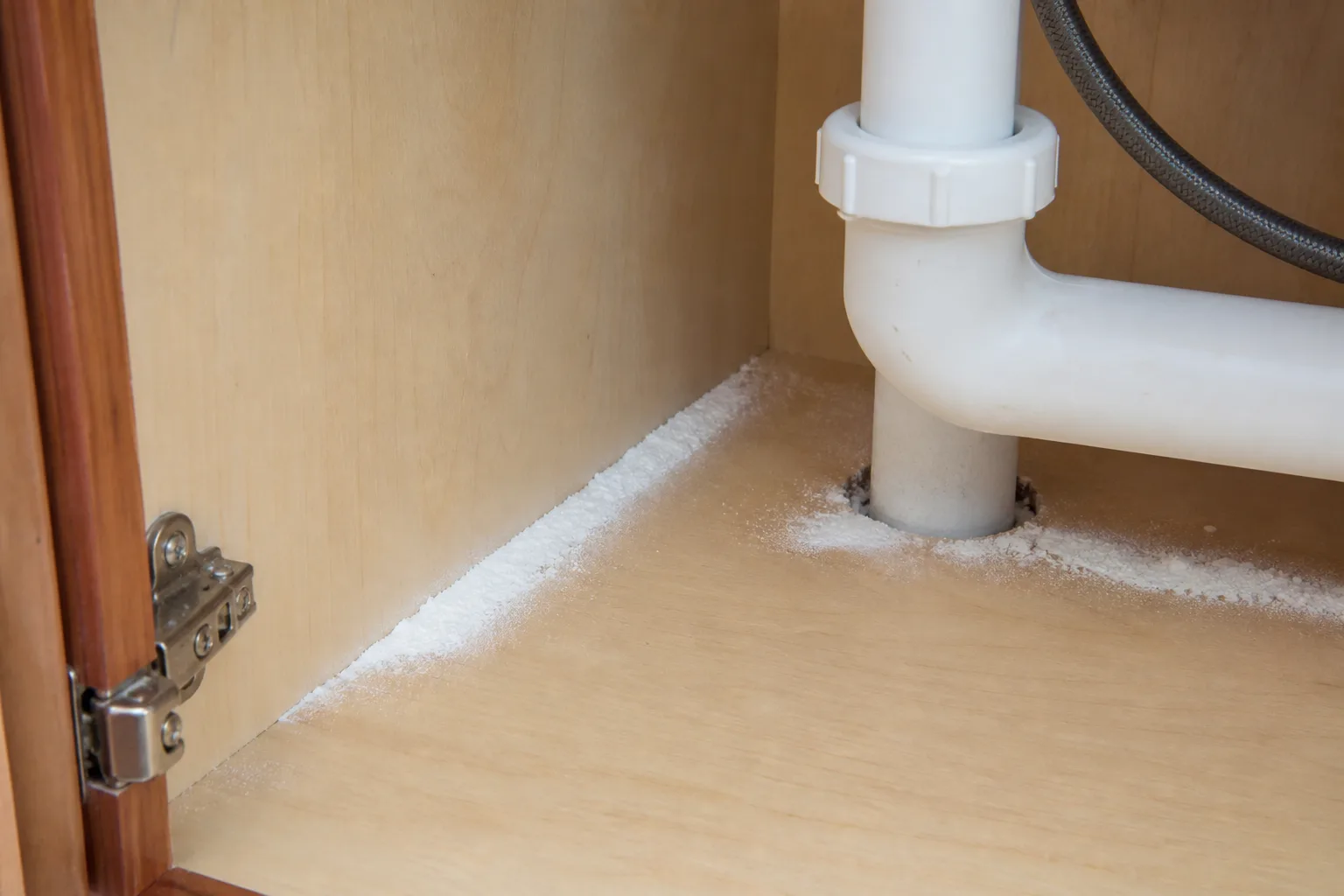
Food-grade diatomaceous earth (DE) is a desiccant dust: microscopic silica shards abrade the waxy cuticle, and the ant loses water until it dies—usually over 24–72 hours per insect (NPIC DE fact sheet). Apply a barely visible film along baseboards, pipe chases, and cabinet voids ants must crawl through. DE stops working when wet, so skip steamy bathrooms until they dry.
DE is low toxicity for mammals but irritating to lungs when airborne—use a squeeze duster, not a handful tossed in the air. For a deeper dive on placement technique, see our guide on diatomaceous earth for household pests.
Soap sprays and boiling water
Dish soap and water (a few drops per cup) or glass cleaner breaks surface tension and suffocates ants on contact while removing grease trails. It is the fastest way to clear a visible column on the sink—but expect replacements tomorrow if the nest still feeds indoors.
Boiling water poured into an outdoor mound entrance kills ants it reaches and collapses shallow tunnels. It will scald lawn and roots, misses deep queens in large colonies, and is unsafe to carry upstairs—reserve it for driveway cracks and patio nests, not kitchen cabinets.
Borax and Boric Acid Baits for Colony Control
If you remember one section, remember this: baits beat barriers for recurring indoor ants. Worker ants feed, return to the nest, and share slow poison with the queen and larvae through trophallaxis (Poison Control).
Sugar vs protein bait recipes
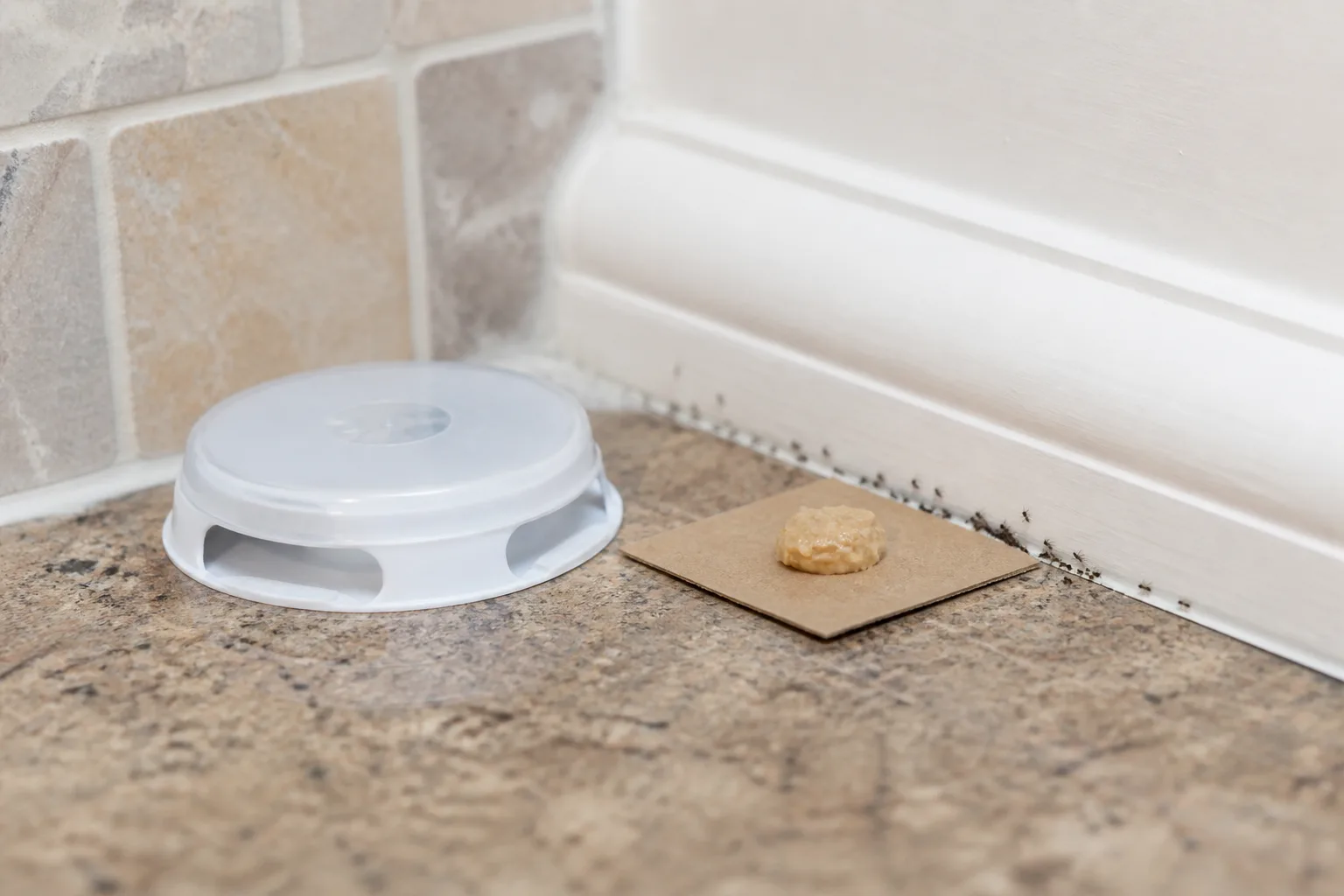
Sweet-seeking species (Argentine, odorous house): mix ¼ teaspoon borax (or boric acid) into ¼ cup honey, jelly, or sugar syrup. Or use the 0.5–1% borate in sugar water concentration UC IPM recommends for heavy Argentine infestations—far lower than the 5.4% in many retail stations, but more likely to reach the queen because foragers survive long enough to share (UC IPM).
Protein/grease seekers (pavement, some carpenter foragers): blend ¾ teaspoon borax with ¼ cup peanut butter or equal parts boric acid powder and powdered sugar moistened to a paste. Place pea-sized dabs on cardboard strips along walls where trails run—not in the middle of the trail—so ants discover it without repellent oils nearby.
Prepackaged Terro-style liquid stations work when you want sealed containers; refillable outdoor stations scale better for large yard colonies. If ants ignore one bait, switch sweet ↔ protein before assuming baits “do not work.”
Safety around children and pets
Borax is not harmless. Poison Control notes unintentional toddler tastes usually cause nausea or vomiting, and concentrated ingestion can be serious—but typical bait concentrations (~5%) rarely cause severe toxicity in small tastes (Poison Control). Still:
- Place baits inside locked cabinets, under appliances, or in commercial bait stations pets cannot chew.
- Never scatter loose peanut-butter borax on floors where toddlers crawl.
- Label homemade baits and store borax with cleaners, not food.
- If a child eats bait, rinse the mouth and call Poison Control at 1-800-222-1222.
DE dust and essential oils carry separate inhalation and pet risks—match the hazard to the method.
Scraps, Mixtures, and Line Drawings (Orange Peel, Baking Soda, Chalk, Salt)
Orange, lemon, and grapefruit peels release D-limonene, which kills ants on direct contact and masks trails when fresh. Replace peels as they dry; compost them before mold sets in.
Baking soda mixed with powdered sugar is a popular internet bait; the idea is acid–base reaction inside the ant. Pest researchers are skeptical of fast kill claims—it may work slowly or primarily as a distraction bait compared with borax. If you try it, use it only where borax baits are already ruled out for safety, and judge success over two weeks, not one afternoon.
Chalk lines and salt barriers interrupt trails by desiccating feet (salt) or presenting an unfamiliar powder (chalk). They are entry stalling tactics—fine while you caulk the actual gap behind the baseboard.
Baby powder (talc) can clog spiracles when piled directly on ants, but inhaled talc raises health concerns; prefer food-grade diatomaceous earth in cracks instead of talcum lines across living spaces.
Stop Ants Before They Cross the Threshold
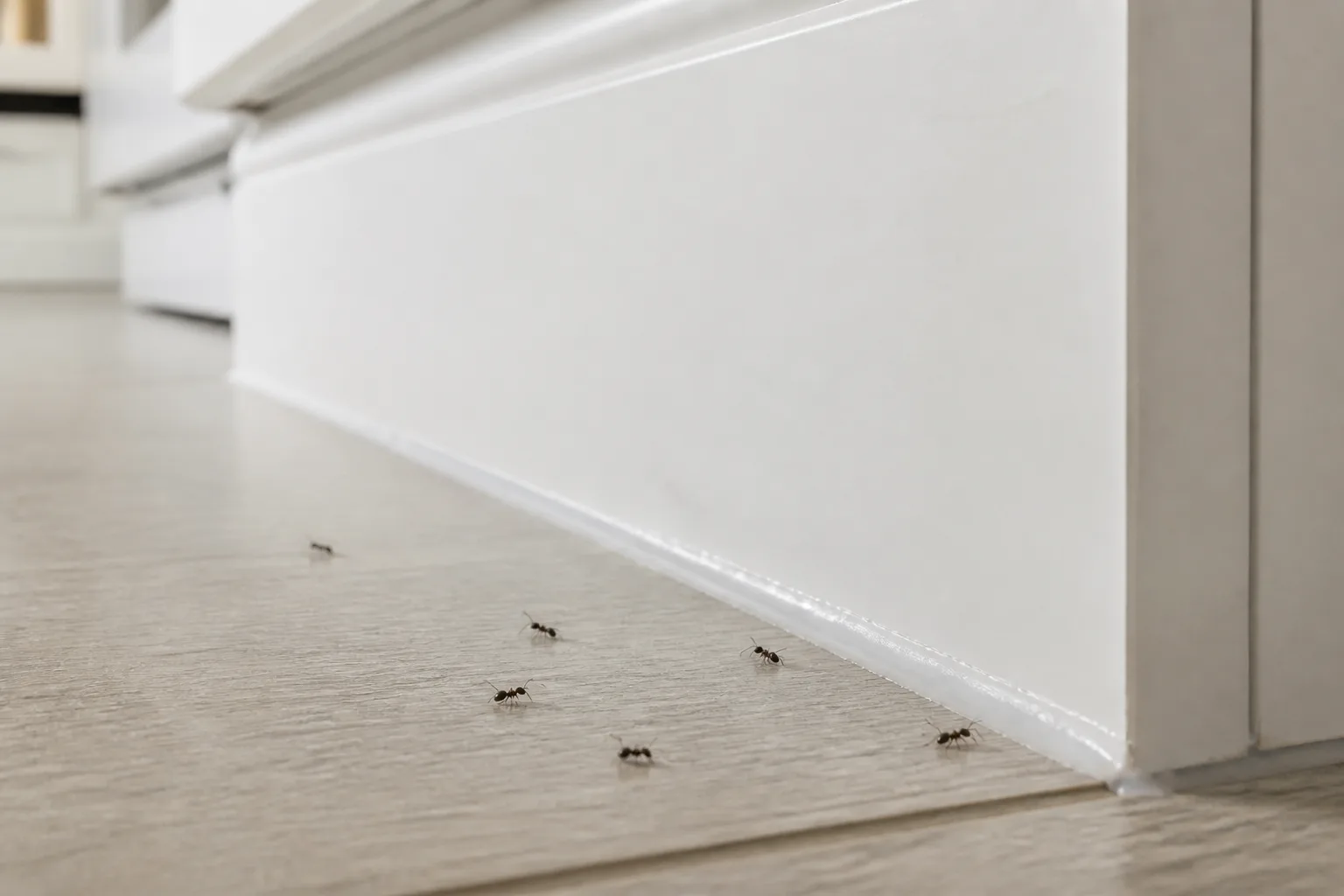
Natural remedies fail when the house still advertises open buffets. NPIC and UC IPM align on a prevention core (NPIC):
- Wipe trails with soapy water whenever you see a line; do not just squash foragers.
- Store sugar, honey, and pet food in sealed glass or hard plastic—not clip bags.
- Empty trash and recycling frequently; rinse sticky bottles before they sit in the bin.
- Caulk cracks around windows, pipes, and foundation penetrations; ants follow wires and plumbing like highways (UC IPM).
- Trim vegetation 18 inches from the foundation; remove limbs touching the roof.
- Fix leaks and replace moisture-softened wood before carpenter ants move in.
- Elevate potted plants on saucers or moats if ants farm aphids on your houseplants—the sticky honeydew keeps them coming back.
Set outdoor bait stations along foundation edges before annual spring invasions in ant-heavy regions. Prevention is the only “natural” fix that stays working when the spices wash away.
When Natural Methods Are Not Enough
Call a pest management professional trained in IPM when:
- Carpenter ant sawdust appears near structural wood or you hear rustling in walls.
- Bait + sanitation for three weeks fails and multiple indoor trails persist.
- Stinging fire ants colonize play areas or patios.
- You rent and landlord-owned moisture damage fuels the nest.
Pros can deploy gel baits, void dusts, and species-specific treatments without the perimeter pyrethroid sprays UC IPM discourages near waterways (UC IPM). That is not defeat—it is matching scale to risk.
Conclusion
The twenty natural ant remedies in your pantry and garden do work—on the right ant, with the right expectation. Spices, oils, and vinegar scramble trails and buy time. Diatomaceous earth and soap kill the ants you see in dry, targeted spots. Borax and boric acid baits are the closest DIY equivalent to professional colony control, provided you remove competing food and keep pets and kids safe. Start by identifying whether you have trail ants or structural pests, then pick repel, kill, or bait—not all three at once. Seal entries, clean sticky surfaces, and judge success over days and weeks, not a single evening. When sawdust, stings, or repeated bait failure show up, escalate before the colony escalates for you.