Coconut Tree Care: Growing Cocos nucifera
Cocos nucifera
Grow Cocos nucifera in full sun, warm frost-free conditions, and moist well-drained soil. Learn coconut palm watering, potting, feeding, and indoor limits.
Coconut Tree Care: Growing Cocos nucifera
Start with wateringThe most common care mistake for Coconut TreeWatering guide →Coconut Tree care essentials
Light
Water
Keep the root zone evenly moist while Cocos nucifera is establishing or growing in a pot, but never leave the crown sitting in stagnant water. Water deeply when the top 2–5 cm of mix feels dry, then let excess drain. Outdoor transplants often need about 2.5 cm (1 inch) of water weekly from rain or irrigation in the first year.
Soil
Moderately fertile, humusy, moist but well-drained sandy loam or a soil-based potting mix with grit or sand. A practical container blend is 50% quality potting mix, 25% coarse sand or grit, and 25% fine bark or coir.
Humidity
Temperature
Fertilizer
About Coconut Tree
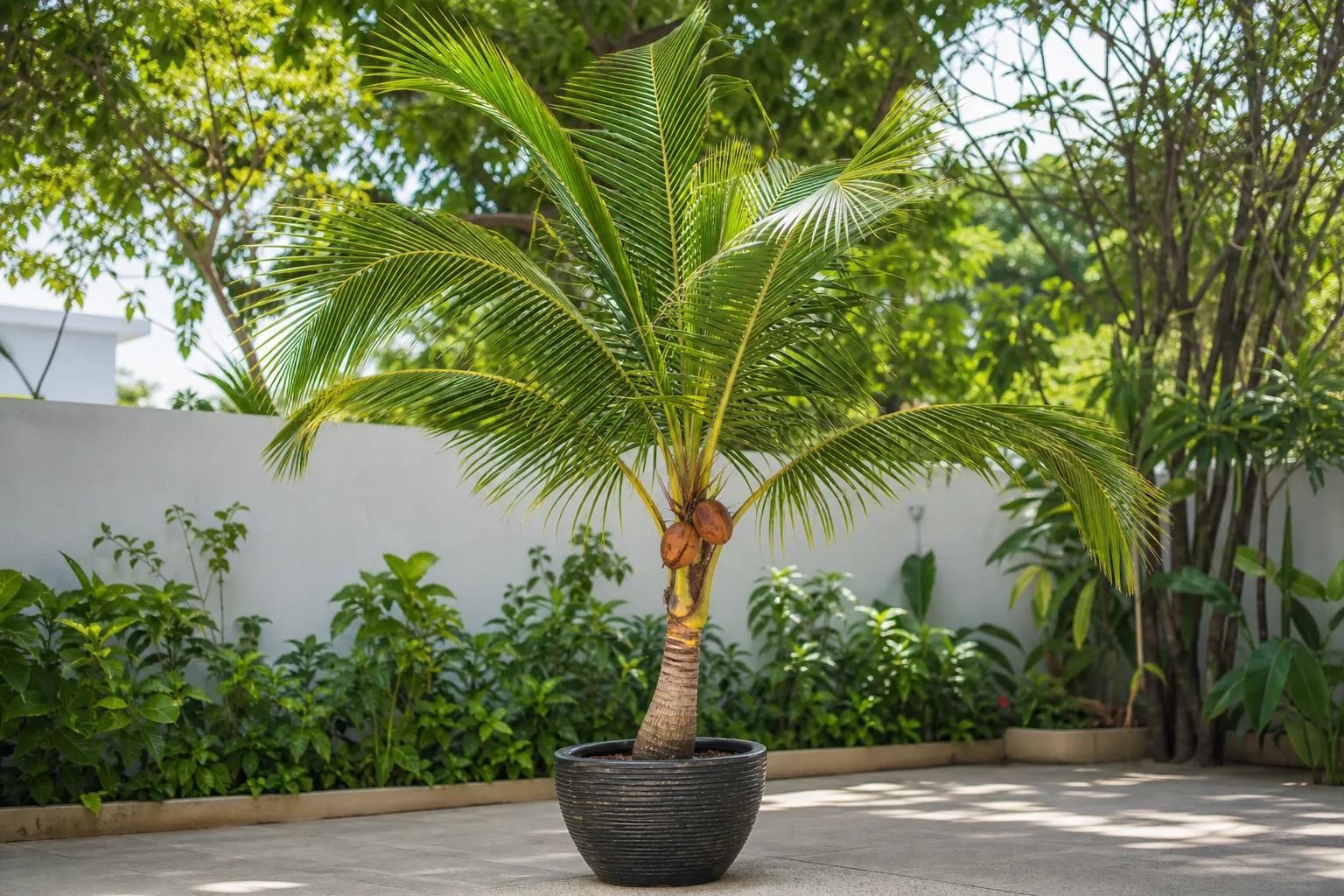
Coconut Tree is native to Tropical islands of the western Pacific; now pantropical on frost-free coastal lowlands and seashores, typically reaches 15–30 m (50–100 ft) tall with a crown spread of about 6–12 m (20–40 ft) in the ground; young container plants usually stay under 1.5–2 m indoors before outgrowing typical rooms indoors, with moderate in sustained tropical heat and full sun; slower in containers and cool conservatory conditions growth. Coconut Tree has a palm like growth habit and part of the Arecaceae family. It is also known as Coconut Palm, Coconut, Nariyal, and Cocoanut.
| Detail | Information |
|---|---|
| Also known as | Coconut Palm, Coconut, Nariyal, Cocoanut |
| Native region | Tropical islands of the western Pacific; now pantropical on frost-free coastal lowlands and seashores |
| Mature size | 15–30 m (50–100 ft) tall with a crown spread of about 6–12 m (20–40 ft) in the ground; young container plants usually stay under 1.5–2 m indoors before outgrowing typical rooms |
| Growth rate | Moderate in sustained tropical heat and full sun; slower in containers and cool conservatory conditions |
| Growth habit | Palm Like |
| Scientific name | Cocos nucifera |
| Family | Arecaceae |
Coconut Tree Care: Growing Cocos nucifera
Coconut Tree care starts with climate honesty. Cocos nucifera is a single-trunk coastal palm that wants full sun, frost-free warmth, and moist but aerated roots. Treat it as a landscape palm for tropical lowlands—or as a temporary conservatory specimen—not as a permanent apartment tree that will fruit in a living room.
This overview helps you decide whether your site can support Coconut Tree, what “good care” looks like in practice, and which sibling guides to open when light, water, soil, or feeding become the main problem.
Coconut Tree care at a glance
For reliable Coconut Tree care, provide full sun, frost-free tropical or near-tropical heat, and moderately fertile soil that stays moist yet drains freely. Outdoors, plant only where winters stay in warm hardiness bands. Indoors or under glass, expect a short-lived foliage plant that eventually outgrows typical rooms.
Keep establishing plants evenly moist: water deeply when the top few centimetres of mix dry, then drain thoroughly. Feed with a palm-special fertiliser during active warm-season growth. Do not bury the stem deeper than the nursery line, and do not strip yellow older fronds just because they look imperfect while you correct nutrition. Use the Coconut Tree light guide and Coconut Tree watering guide when placement or moisture is the bottleneck.
Know what you are growing
Cocos nucifera belongs to the palm family Arecaceae. Missouri Botanical Garden describes it as a tall single-trunk palm native to tropical islands of the western Pacific and now widely planted on frost-free coasts, with a branchless trunk topped by long pinnate fronds. It is solitary: it does not clump like Areca palm, and you cannot multiply it by dividing offsets.
The edible coconut is a large single-seeded fruit with a fibrous husk around a woody shell. Coconut water is the liquid inside immature green nuts; coconut milk is made from grated mature meat. Those food uses do not mean every plant part is a safe pet snack, and harvesting the growing tip for “heart of palm” kills the tree.
Tall vs dwarf types and realistic size
In the ground, this palm commonly matures to about 50–100 ft (15–30 m) with a crown spread of roughly 20–40 ft (6–12 m) (Missouri Botanical Garden). UF/IFAS notes coastal landscape palms can exceed 80–100 ft, with growth habit varying by cultivar: some trunks lean or curve, others stay relatively straight (UF/IFAS Gardening Solutions).
Cultivar names matter. ‘Malayan Dwarf’ is often chosen when a narrower, straighter trunk is preferred; ‘Jamaican Tall’ (Atlantic Tall) and hybrids such as ‘Maypan’ are common landscape options where they are adapted. “Dwarf” still means a substantial palm outdoors. Young nursery plants kept in pots usually stay under about 1.5–2 m indoors before outgrowing the space—not because they stay miniature forever.
Climate honesty: frost-free tropics first
Missouri Botanical Garden places Cocos nucifera in USDA zones 10–12, thriving in humid, frost-free coastal lowlands (Missouri Botanical Garden). UF/IFAS focuses planting advice on roughly zones 10B–11 in Florida because the palm is not suitable for freezing temperatures (UF/IFAS Gardening Solutions).
In frost-prone climates, the Royal Horticultural Society treats young specimens as short-lived foliage plants for a warm conservatory or houseplant culture, not as permanent outdoor trees (Royal Horticultural Society). If your winters drop below freezing, plan for protection under glass or choose a different palm. Fruiting needs sustained tropical heat; Missouri Botanical Garden cites a minimum around 64°F (18°C) for nuts to develop.
Growing coconut outdoors in warm climates
Choose an open, sunny site with room for a tall trunk and falling fronds or nuts. UF/IFAS notes coconut tolerates wind and brief flooding once sited correctly, but still needs a well-draining location for long-term health (UF/IFAS Gardening Solutions). Plant during warm, rainy months when possible so roots establish while soil stays moist.
Set the transplant so the stem sits at about the same depth it grew in the nursery—about one inch below the soil surface for many transplants—then water in and mulch a few inches over the root zone without burying the trunk. Deep planting is a classic palm failure mode: crowns that stay wet and stems that sit too low invite decline. For mix and drainage detail, use the Coconut Tree soil guide.
India and monsoon considerations
In India’s coconut belts, the biology is the same: full sun, warmth, and free drainage with reliable moisture. Tamil Nadu Agricultural University describes suitable soils from light sandy to heavy textures at roughly pH 5.2–8.0, with proper drainage, good water-holding capacity, and no rock or hardpan within about 2 m of the surface (TNAU Agritech). Common planting windows include June–July and December–January, with other seasons workable when irrigation and drainage are available.
Monsoon seasons punish low spots. Before heavy rain, clear drains so water does not bank against the stem. In dry heat, irrigate on a schedule suited to your region and palm age; TNAU publishes basin and drip schedules that scale water by month and scarcity level for Western and Eastern Tamil Nadu (TNAU water management). Treat those figures as regional crop guidance for landscape palms, not as a calendar for a small indoor pot.
Container and indoor coconut limits
You can grow a young Coconut Tree in a large draining tub in a bright conservatory, greenhouse, or frost-free courtyard. The RHS recommends a loam-based, peat-free mix with sharp sand and fibrous organic matter, bright light, moderate humidity, moderate watering in the growing season, and much less water in winter (Royal Horticultural Society).
Do not expect a living-room plant to become a fruiting orchard tree. Indoor light and heat rarely match coastal tropics, pots restrict roots, and the palm will eventually demand outdoor-scale space. Use containers as a temporary or decorative stage: check moisture often in hot weather, empty saucers after watering, and move up pot size only when roots fill the current container. The Coconut Tree repotting guide covers timing and aftercare.
Light and warmth requirements
Outdoors, give full sun. Nursery plants raised under shade cloth can scorch if moved into harsh afternoon sun in one step, so acclimatise them over one to two weeks. Indoors, place the palm at the brightest south- or west-facing glass you have; filtered bright light under glass is a compromise, not a substitute for open sky.
Warmth drives whether this palm looks tropical or merely surviving. Protect from frost and cold drafts. Humidity helps fronds look softer, but stagnant wet crowns invite bud rot. If new spears stall while the plant sits in a cool, dim corner, fix light and temperature before adding fertiliser. Details and warning signs live in the Coconut Tree light guide.
Watering for establishment and mature palms
Keep establishing landscape palms and container plants evenly moist, not cycling between bone-dry and swampy. UF/IFAS recommends about one inch (2.5 cm) of water weekly from rain or irrigation during the first year after transplanting, with surface mulch to steady moisture (UF/IFAS Gardening Solutions). In a pot, finger-test the top 2–5 cm and water when the surface is dry and the container feels lighter, then drain fully.
Yellowing lower fronds in wet soil, a sour smell, soft roots, or a soft crown point toward overwatering or poor aeration. Brown crispy tips, folded leaflets, and a mix that sheds water point the other way. Indoors, cut watering hard when cool, low-light months slow growth. Seasonal checks and recovery steps are covered in the Coconut Tree watering guide.
Soil, drainage, and planting depth
The useful target is moist, well-drained, moderately fertile sandy loam or a soil-based potting mix amended with grit or sand. Missouri Botanical Garden recommends humusy, moist, well-drained soil in full sun outdoors and a soil-based container mix with grit or sand (Missouri Botanical Garden). The RHS lists loam or sand that stays moist but well drained across a wide pH range (Royal Horticultural Society).
A practical container blend is about half quality potting mix, one-quarter coarse sand or grit, and one-quarter fine bark or coir. Avoid dense clay in pots and any mix that stays cold and slick for days. Never plant the stem deeper than it grew in the nursery. If water sits in the crown or the pot stays heavy for days, improve drainage, light, and warmth before the next soak.
Feeding and nutrient deficiency signs
Coconut is prone to nutrient deficiencies, especially potassium issues that show first on older fronds. UF/IFAS recommends a palm-special fertiliser several times from spring through fall—commonly three to four applications a year for landscape palms (UF/IFAS Gardening Solutions). Palm nutrition guidance highlights potassium deficiency as the most common nutritional disorder of palms and advises against stripping yellowed fronds that still feed the plant while you correct nutrition (UF/IFAS palm nutrition).
Feed only while the palm is actively growing in warmth and strong light. Fertiliser cannot replace missing sun, cold-damaged tissue, or waterlogged roots. For product timing, dilution, and deficiency clues, use the Coconut Tree fertilizer guide.
Flowering, fruiting, and seed propagation
Flowering commonly begins after four to six years in the tropics, and full production can take around two decades; mature palms may then hold fruit year-round, with each nut taking about a year to develop (UF/IFAS Gardening Solutions). Indoor specimens almost never fruit.
Propagation is by seed only. A viable nut often sloshes when shaken. Plant it on its side with roughly one-third of the nut above a warm, moist, well-drained medium; germination can take months. The RHS describes soaking a fresh husked coconut, half-burying it pointed end down, and keeping it warm in a sealed bag until sprouts appear (Royal Horticultural Society). Step-by-step aftercare belongs in the Coconut Tree propagation guide.
Common problems and what to watch for
Most home-grower failures are environmental: cold drafts, dim rooms, chronic wet mix, deep planting, or harsh sun on an unacclimatised nursery plant. Correct the limiting condition first instead of changing water, fertiliser, and pot on the same day.
Where phytoplasma diseases occur, lethal yellowing is a serious landscape threat. Warning signs include premature nut drop, blackened flower stalks, and progressive yellowing; once leaves yellow heavily, palms often decline quickly (UF/IFAS Gardening Solutions). Lethal bronzing and bud rot are related concerns in some regions. Spider mites, scale, and aphids can bother container palms under glass but are usually less lethal than crown or root rot from poor drainage.
Pet safety and falling-nut hazards
Cocos nucifera does not have a species-specific ASPCA toxic/non-toxic listing cited for this guide. Edible coconut water and meat do not prove that fronds, husk, or fertiliser-treated mix are safe pet snacks. Keep pets from chewing foliage and digging in fertilised soil, and seek veterinary advice after significant ingestion.
Outdoors, treat falling nuts as a real impact hazard under fruiting palms. Site pathways and seating away from the drop zone, and remove loose nuts promptly after storms.
When to use this page vs other Coconut Tree guides
Use this overview to decide whether your climate and space can support Cocos nucifera and to connect the care tasks. Open Coconut Tree watering when moisture timing or yellow fronds are the main issue, Coconut Tree soil when drainage or mix quality is wrong, and Coconut Tree propagation when starting from a nut.
For narrower decisions, go to Coconut Tree light, Coconut Tree fertilizer, or Coconut Tree repotting. Those pages add the detailed checks that would overwhelm a whole-plant overview.
Related Coconut Tree guides
- Coconut Tree hub — identity, profile data, and the complete care cluster.
- Coconut Tree light guide — full sun outdoors, indoor placement, and weak-light signs.
- Coconut Tree watering guide — establishment irrigation, pot checks, and wet-root warnings.
- Coconut Tree soil guide — mixes, drainage, pH range, and planting depth.
- Coconut Tree fertilizer guide — palm-special feeding and deficiency clues.
- Coconut Tree repotting guide — pot sizing, soil refresh, and aftercare.
- Coconut Tree propagation guide — germinating a viable coconut.
Conclusion
Successful Coconut Tree care means matching Cocos nucifera to real tropical sun and frost-free space. Give it full light, sustained warmth, moist but aerated roots, and palm-appropriate feeding while it is actively growing. Expect landscape size outdoors, temporary foliage culture indoors, and fruit only where heat and time allow.
If the palm stalls, start with climate, light, planting depth, and root-zone drainage before reaching for fertiliser. Keep the crown firm, let excess water leave after every soak, and use the sibling guides when one care factor becomes the clear limiting constraint.
How to care for Coconut Tree?
When should you water Coconut Tree?
Keep the root zone evenly moist while Cocos nucifera is establishing or growing in a pot, but never leave the crown sitting in stagnant water. Water deeply when the top 2–5 cm of mix feels dry, then let excess drain. Outdoor transplants often need about 2.5 cm (1 inch) of water weekly from rain or irrigation in the first year.
- Finger-test the top 2–5 cm and lift the pot - Water deeply when the top 2–5 cm of mix feels dry, then let excess drain.
- water when the surface is dry and the container feels lighter - Water deeply when the top 2–5 cm of mix feels dry, then let excess drain.
- before fronds wilt or tip-burn - Keep the root zone evenly moist while Cocos nucifera is establishing or growing in a pot, but never leave the crown sitting in stagnant water.
- Drain excess water - Water deeply when the top 2–5 cm of mix feels dry, then let excess drain.
What soil works best for Coconut Tree?
Moderately fertile, humusy, moist but well-drained sandy loam or a soil-based potting mix with grit or sand. A practical container blend is 50% quality potting mix, 25% coarse sand or grit, and 25% fine bark or coir.
- 50% quality potting mix or loam-based compost - A practical container blend is 50% quality potting mix, 25% coarse sand or grit, and 25% fine bark or coir.
- 25% coarse sand, grit, or perlite - A practical container blend is 50% quality potting mix, 25% coarse sand or grit, and 25% fine bark or coir.
- 25% fine bark, coir, or finished compost - A practical container blend is 50% quality potting mix, 25% coarse sand or grit, and 25% fine bark or coir.
Grower notes for Coconut Tree
What matters most with Coconut Tree
Cocos nucifera is a single-trunk coastal palm that wants full sun, frost-free warmth, and moist but aerated roots. Missouri Botanical Garden notes best growth in moderately fertile, humusy, moist, well-drained soil in full sun, with fruiting needing nighttime temperatures above about 18°C (64°F). Indoors it is usually a short-lived foliage specimen, not a permanent houseplant that will fruit in a living room.
Best placement in a real home
Plant outdoors only where winters stay in USDA zones roughly 10–12 (UF/IFAS focuses on 10B–11 in Florida). Give an open, sunny terrace, courtyard, coastal garden, or warm conservatory with strong light. Protect from frost and cold drafts. Young nursery plants need gradual introduction to harsh afternoon sun. Humidity helps fronds look better, but stagnant wet crowns invite rot.
Before you buy this plant
Decide whether you want a landscape palm or a temporary indoor specimen. Choose firm new spears, clean frond undersides, and mix that does not smell sour. Reject soft crowns, collapsed spears, heavy mite webbing, or a tall trunk jammed into a tiny nursery pot. Dwarf or compact-marketed seedlings still become large palms outdoors.
First month after bringing it home
Quarantine and learn how fast the pot dries before repotting. Keep moisture steady rather than cycling drought and flood. UF/IFAS recommends about 2.5 cm of water weekly for first-year transplants and a few inches of surface mulch outdoors. Do not plant the stem deeper than it grew in the nursery; palms resent deep planting.
Pet-aware and household-safety note
Cocos nucifera does not have a species-specific ASPCA toxic/non-toxic listing cited for this hub. Edible coconut water and meat do not prove that fronds, husk, or treated mix are safe pet snacks. Keep pets from chewing foliage and digging in fertilised soil. Outdoors, falling nuts are a real impact hazard under fruiting palms.
How Coconut Tree grows and multiplies
This is a solitary palm: it does not clump like Areca. Propagation is by seed (the coconut). UF/IFAS notes viable nuts often slosh when shaken; plant on the side with about one-third of the nut above the medium in warmth. Flowering commonly begins after four to six years in the tropics; full production can take around two decades. Indoor plants rarely fruit.
Is Coconut Tree safe for pets?
Cocos nucifera has no species-specific ASPCA toxic/non-toxic listing cited here. Do not treat the whole palm as pet-safe just because coconut meat and water are human foods; prevent chewing of foliage and keep pets clear of falling nuts outdoors.
Cocos nucifera was not verified against a species-specific ASPCA toxic/non-toxic plant page in this review. Edibility of coconut flesh and water does not establish fronds, husk, potting mix, or fertiliser residues as safe to ingest. Seek veterinary advice after significant plant-part ingestion or any distress.
Watering Coconut Tree
For Coconut Tree, finger-test the top 2–5 cm and lift the pot; water when the surface is dry and the container feels lighter, before fronds wilt or tip-burn and water check containers every 2–4 days in hot weather and weekly or less in cool indoor conditions; newly planted landscape palms weekly until established. Water most during warm rainy-season growth; reduce sharply in cool, low-light months when indoor or conservatory plants are barely growing.
| Detail | Information |
|---|---|
| How often | Check containers every 2–4 days in hot weather and weekly or less in cool indoor conditions; newly planted landscape palms weekly until established |
| How to check | Finger-test the top 2–5 cm and lift the pot; water when the surface is dry and the container feels lighter, before fronds wilt or tip-burn |
| Seasonal changes | Water most during warm rainy-season growth; reduce sharply in cool, low-light months when indoor or conservatory plants are barely growing |
Signs of overwatering
- yellowing lower fronds while the mix stays wet
- sour-smelling soil and soft roots
- crown or root rot
- stalled spear growth in a heavy, soggy pot
Signs of underwatering
- brown crispy frond tips and margins
- drooping or folded leaflets
- dry compacted mix that sheds water
- premature older-leaf death
Soil & potting for Coconut Tree
Use a mix of 50% quality potting mix or loam-based compost, 25% coarse sand, grit, or perlite, 25% fine bark, coir, or finished compost for Coconut Tree. Free drainage with steady moisture; coconut tolerates brief flooding outdoors but declines in chronically saturated, poorly aerated pots. Target soil pH around 5.5–8.0. Repot every 1–2 years while young; move to the final large tub once roots fill the pot, then refresh the top mix rather than perpetual upsizing, ideally in warm season or spring under glass, when root growth is active.
| Detail | Information |
|---|---|
| Recommended mix | 50% quality potting mix or loam-based compost, 25% coarse sand, grit, or perlite, 25% fine bark, coir, or finished compost |
| Drainage | Free drainage with steady moisture; coconut tolerates brief flooding outdoors but declines in chronically saturated, poorly aerated pots |
| Soil pH | 5.5–8.0 |
| Repotting frequency | Every 1–2 years while young; move to the final large tub once roots fill the pot, then refresh the top mix rather than perpetual upsizing |
| Best season to repot | Warm season or spring under glass, when root growth is active |
Signs it needs repotting
- roots circling densely or escaping drainage holes
- pot drying within a day in warm weather
- plant becoming unstable or top-heavy
- growth stalling despite full sun, warmth, and feeding
Humidity & temperature for Coconut Tree
Fertilizer & pruning for Coconut Tree
Common problems on Coconut Tree
Yellow Leaves
MediumLikely cause: Common on this plant type; confirm with recent watering, light, and root checks.
Quick fix: Inspect the plant and correct the most likely care stressor before stacking treatments.
Full fix guide →Brown Tips
MediumLikely cause: Common on this plant type; confirm with recent watering, light, and root checks.
Quick fix: Inspect the plant and correct the most likely care stressor before stacking treatments.
Full fix guide →Root Rot
MediumLikely cause: Common on this plant type; confirm with recent watering, light, and root checks.
Quick fix: Inspect the plant and correct the most likely care stressor before stacking treatments.
Full fix guide →Overwatering
MediumLikely cause: Common on this plant type; confirm with recent watering, light, and root checks.
Quick fix: Inspect the plant and correct the most likely care stressor before stacking treatments.
Full fix guide →Underwatering
MediumLikely cause: Common on this plant type; confirm with recent watering, light, and root checks.
Quick fix: Inspect the plant and correct the most likely care stressor before stacking treatments.
Full fix guide →Spider Mites
MediumLikely cause: Common on this plant type; confirm with recent watering, light, and root checks.
Quick fix: Inspect the plant and correct the most likely care stressor before stacking treatments.
Full fix guide →Mealybugs
MediumLikely cause: Common on this plant type; confirm with recent watering, light, and root checks.
Quick fix: Inspect the plant and correct the most likely care stressor before stacking treatments.
Full fix guide →Aphids
MediumLikely cause: Common on this plant type; confirm with recent watering, light, and root checks.
Quick fix: Inspect the plant and correct the most likely care stressor before stacking treatments.
Full fix guide →Leggy Growth
MediumLikely cause: Common on this plant type; confirm with recent watering, light, and root checks.
Quick fix: Inspect the plant and correct the most likely care stressor before stacking treatments.
Full fix guide →Slow Growth
MediumLikely cause: Common on this plant type; confirm with recent watering, light, and root checks.
Quick fix: Inspect the plant and correct the most likely care stressor before stacking treatments.
Full fix guide →Wilting
MediumLikely cause: Common on this plant type; confirm with recent watering, light, and root checks.
Quick fix: Inspect the plant and correct the most likely care stressor before stacking treatments.
Full fix guide →Drooping Leaves
MediumLikely cause: Common on this plant type; confirm with recent watering, light, and root checks.
Quick fix: Inspect the plant and correct the most likely care stressor before stacking treatments.
Full fix guide →Low Humidity
MediumLikely cause: Common on this plant type; confirm with recent watering, light, and root checks.
Quick fix: Inspect the plant and correct the most likely care stressor before stacking treatments.
Full fix guide →Not Enough Light
MediumLikely cause: Common on this plant type; confirm with recent watering, light, and root checks.
Quick fix: Inspect the plant and correct the most likely care stressor before stacking treatments.
Full fix guide →Fungus Gnats
MediumLikely cause: Common on this plant type; confirm with recent watering, light, and root checks.
Quick fix: Inspect the plant and correct the most likely care stressor before stacking treatments.
Full fix guide →Mold on Soil
MediumLikely cause: Common on this plant type; confirm with recent watering, light, and root checks.
Quick fix: Inspect the plant and correct the most likely care stressor before stacking treatments.
Full fix guide →