17 Small Palm Trees for Your Yard: Size & Zone Guide
Compare 17 small palm trees by mature size, hardiness, light, water, and pet-safety considerations before planting one in your yard.
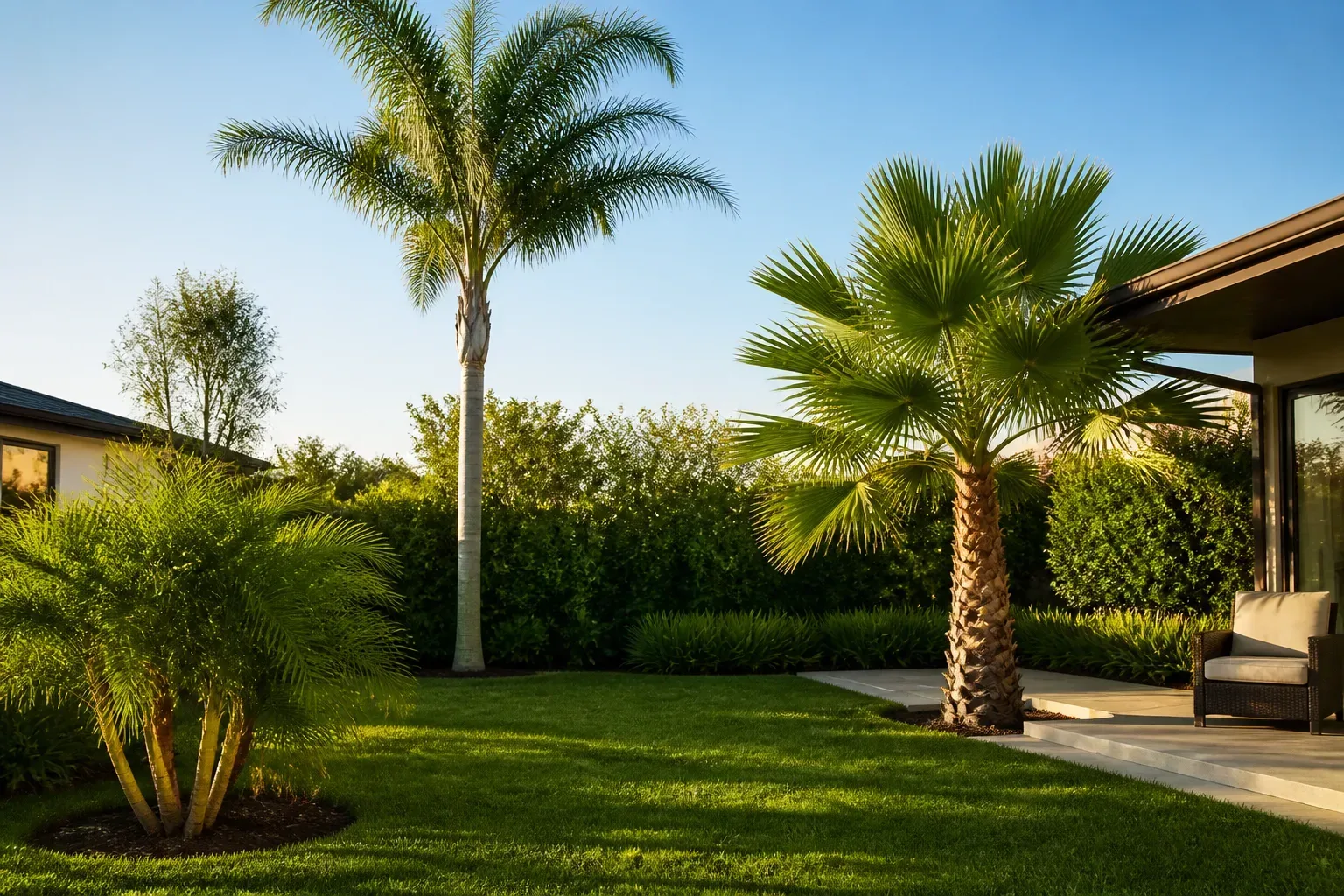
The phrase small palm tree hides an important distinction: some palms stay under 10 feet for decades, while others reach 20 to 30 feet and are called small only because a queen palm or coconut palm is much larger. The best choice depends on the mature spread, not the size of the container you see at the nursery.
Start with the space you have, then filter by cold tolerance, light, drainage, salt, pets, and how much pruning you are willing to do. The North Carolina State Extension Plant Toolbox is a useful reminder that even a relatively compact windmill palm can have a 4- to 6-foot spread, while the Epic Gardening comparison of small palms treats “small” as a practical landscape label rather than a fixed botanical category.
What “small” means before you buy a palm
Judge mature spread before mature height
Height gets the attention, but width usually creates the first landscape problem. A palm can fit beneath a window and still push fronds across a walkway, crowd a neighboring plant, or shade a bed far beyond the trunk. A clumping palm also expands sideways as new stems appear, while a solitary palm may keep a narrower footprint but grow taller.
Use the mature width on the nursery label as the minimum planning space, then add clearance for fronds, access, and storm movement. If the only available bed is a narrow strip between a foundation and a sidewalk, a palm that eventually spreads 8 feet is not a small-space plant just because it grows slowly.
Treat hardiness zones as a starting point
USDA hardiness zones describe average winter lows, not every cold event a palm will experience. A palm planted against a sunny wall may survive a brief freeze that kills the same species in an exposed yard, while winter wind, wet soil, a late frost, or a young root system can create damage even inside the published zone range.
For a borderline climate, choose a palm with a margin of cold tolerance, plant it in a protected site, and ask a local extension office or reputable nursery about proven forms. The Gardening Know How guide to cold-hardy tropicals is useful for identifying candidates, but the North Carolina State profile for needle palm gives the more important detail: the plant is hardy into zone 6b yet still benefits from shelter and root mulch.
Check roots, wind, fruit, spines, and pets
Before planting, look up five less-obvious traits:
- Root-zone fit: Leave a large palm away from foundations, septic fields, utility lines, paving, and retaining walls. No single setback number works for every species; mature width, soil moisture, and wind exposure matter.
- Wind behavior: Feather fronds can shred, and a top-heavy palm can become a poor choice beside a roof, play area, or narrow path.
- Fruit and flowers: Pindo fruits can be attractive and edible, but fallen fruit can stain paving and attract wildlife.
- Spines: Needle palm, saw palmetto, and some sago fronds can be hazardous beside a path or where children and pets play.
- Toxicity: “Palm” in the common name does not mean pet-safe. Sago palm is the important exception in this list.
17 small palm trees compared by fit
The table is a quick filter, not a promise of final size. Climate, soil, irrigation, cultivar, and whether the plant is grown in a container can all change the result. A range that reaches 20 feet deserves tree-scale planning even if the plant is sold as a small palm.
| Palm | Approximate mature size | Best fit | Common starting zone range |
|---|---|---|---|
| Bottle palm | 8–10 ft tall | Warm coastal accent | 10–11 |
| Pygmy date palm | 6–12 ft tall | Warm patio or specimen | 9–11 |
| Sago palm* | 3–10 ft tall and wide | Slow, palm-like accent | 9–11 |
| Parlor palm | 6–16 ft outdoors | Shade or container in warm climates | 10–12 |
| Spindle palm | 20–25 ft tall | Warm, open focal point | 10–11 |
| Windmill palm | About 8–10 ft in cultivation; taller in the wild | Protected temperate garden | 7–11 |
| Cat palm | 6–8 ft tall | Moist shade or warm patio | 9–11 |
| Pindo palm | 15–20 ft tall | Sunny, well-drained coastal or inland site | 8–11 |
| Saw palmetto | Usually 4–8 ft, wider with age | Dry, sunny, naturalistic planting | 8–11 |
| Foxtail palm | 10–30 ft tall | Warm yard with canopy room | 10–11 |
| Lady palm | 4–12 ft tall, 6–15 ft wide | Shade and protected patio | 9–11 |
| Blue latan palm | 20–25 ft tall | Warm, dry, high-visibility site | 10–11 |
| Areca palm | 15–30 ft outdoors | Tropical screen or clustered planting | 10–11 |
| Needle palm | 3–6 ft tall, 4–8 ft wide | Cold-hardy clump or understory | 6b–10 |
| Dwarf palmetto | 2–10 ft tall, 4–6 ft wide | Wet or dry native-style planting | 7–10 |
| European fan palm | 6–15 ft tall | Sunny, dry, Mediterranean-style bed | 8–11 |
| Puerto Rican thatch palm | 20–25 ft tall | Warm, salty, spacious site | 10–11 |
*Sago palm is a cycad, not a true palm, and all parts are toxic if eaten.
True dwarfs and low-growing palms
These are the safest starting points when the goal is a palm that looks intentional in a small bed rather than a tree that will eventually dominate it.
1. Needle palm (Rhapidophyllum hystrix) is the standout cold-hardy choice. It forms a dense, nearly trunkless clump about 3 to 6 feet tall and 4 to 8 feet wide, tolerates partial shade and wet soil, and becomes drought tolerant after establishment. Its black spines are real and sharp, so place it where people will not brush against the leaf bases. It is also a valuable native southeastern palm for wildlife cover, but local plant guidance matters because wild populations have conservation concerns.
2. Dwarf palmetto (Sabal minor) has fan-shaped leaves emerging from a short or underground trunk. It grows slowly, accepts moist to wet soil, handles occasional poor drainage better than many palms, and is hardy with protection into zone 7. Choose it for a rain garden edge, pond margin, understory, or naturalistic foundation bed; choose something else if you need fast height or a narrow, formal silhouette. The NC State profile for dwarf palmetto also notes flowers for pollinators and dark fruit for birds.
3. Saw palmetto (Serenoa repens) is a creeping, clumping fan palm that usually stays around 4 to 8 feet tall but can spread into a broad thicket. It tolerates sandy soil, drought after establishment, flooding, salt, and intense sun, making it useful for a coastal or xeric southern garden. The saw-edged petioles are a poor match for a tight walkway, but the plant is excellent in a naturalistic mass, pollinator garden, or wildlife planting. Its NC State profile is a better guide to its creeping habit than a simple height number.
4. Cat palm (Chamaedorea cataractarum) is a low, clumping palm with arching fronds that stays around 6 to 8 feet outdoors in a suitable warm climate. Give it bright filtered light or gentle morning sun, evenly moist but well-drained soil, and protection from cold. It is a good choice for a shaded patio or humid courtyard, but it is not a cold-climate landscape palm that can be planted and forgotten.
5. Sago palm (Cycas revoluta) earns a place on a small-palm list because its stiff rosette and short trunk look convincingly palm-like. It grows extremely slowly, may take decades to approach 10 feet, and suits a well-drained container, rock garden, or warm foundation planting. The NC State plant profile identifies it as a cycad with high-severity poison characteristics, while the ASPCA Sago Palm listing lists toxicity to dogs, cats, and horses. Do not use it where pets or children can chew the fronds, seeds, or other plant parts.
Clumping and feather palms for warm sites
These palms give a soft, tropical look, but most need a frost-free or nearly frost-free climate. They are often better in a container or protected courtyard than in an exposed yard outside their comfort zone.
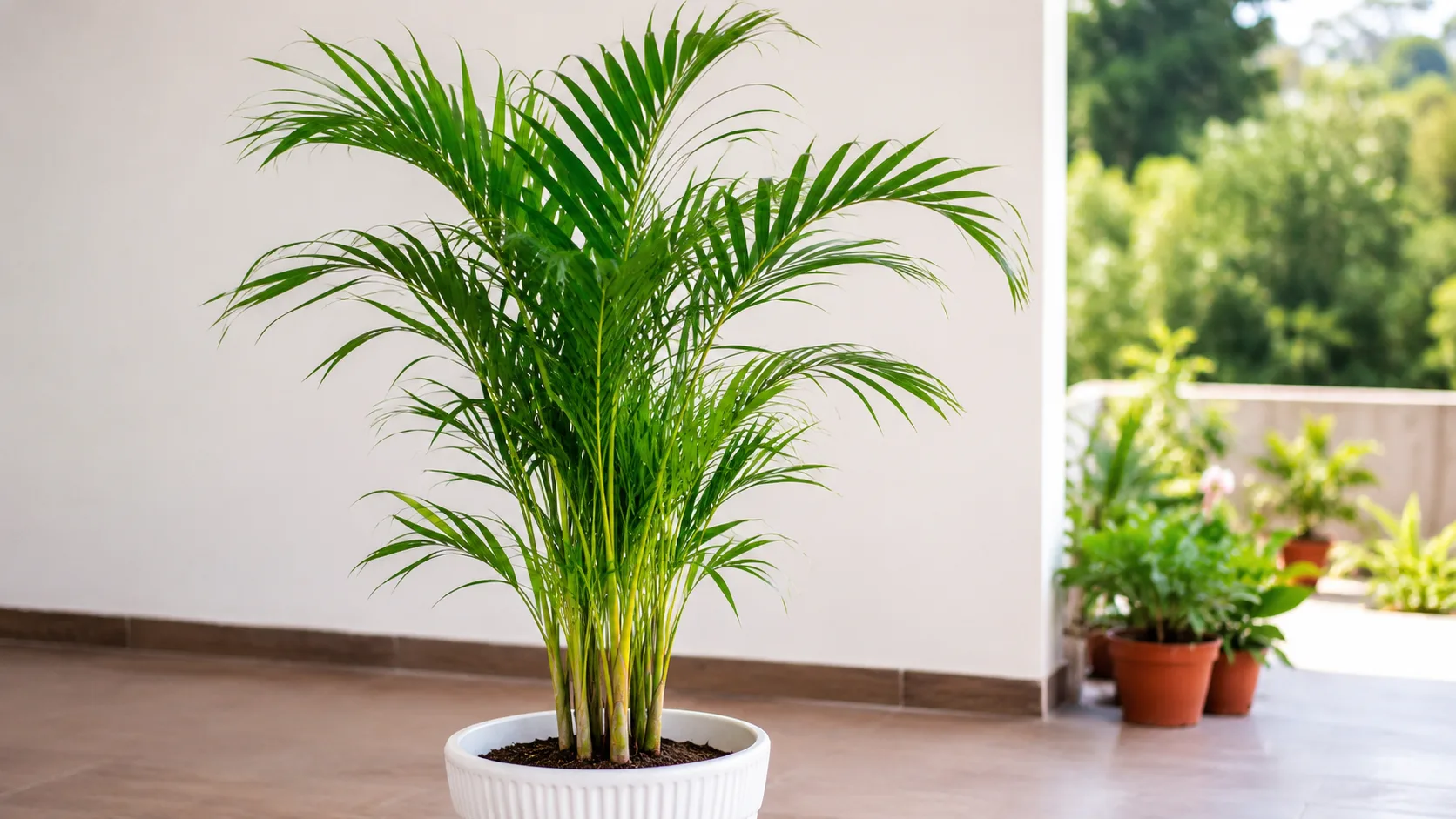
6. Pygmy date palm (Phoenix roebelenii) has a slender trunk and a graceful crown of fine, arching fronds. It typically reaches 6 to 12 feet outdoors, grows slowly, and works as a specimen in a warm entry bed or large patio container. Give it good drainage, regular water while it establishes, and protection from hard freezes; dry indoor air can brown the leaf tips when it is overwintered inside.
7. Parlor palm (Chamaedorea elegans) is one of the most forgiving palms for bright shade and containers. Outdoors in a tropical climate it can become a 6- to 16-foot clump, but its indoor growth is much more restrained. Keep the mix lightly and evenly moist, never stagnant, and move it outside gradually rather than placing an indoor plant into full sun all at once.
8. Lady palm (Rhapis excelsa) forms a slow-growing cluster of slender, fiber-covered stems and fan leaves. It tolerates lower light better than many palms and can make a handsome shade-courtyard specimen, but it can spread 6 to 15 feet in the ground. NC State describes it as a wet-forest understory plant that prefers well-drained, moist soil and is tender below about 50°F, so container culture is often the practical choice outside zones 9–11.
9. Areca palm (Dypsis lutescens) creates a dense, bamboo-like screen from many yellow-green stems. It is often sold small, yet outdoor specimens can reach 15 to 30 feet and spread widely in warm climates. Use it only where the eventual clump has room, or keep it in a large container as a movable screen. The University of Florida IFAS guide to palm seed includes areca among palms whose seeds can retain viability for extended storage, but growing from seed is slow and variable; buying a correctly labeled nursery plant is easier for most homeowners.
10. Bottle palm (Hyophorbe lagenicaulis) is a slow-growing, warm-climate accent named for its swollen trunk. It usually stays near 8 to 10 feet, tolerates salt, and looks best as a single specimen where the sculptural trunk can be seen. It is a specialist for frost-free coastal or subtropical gardens, not a reliable choice for a yard that gets regular freezes.
11. Spindle palm (Hyophorbe verschaffeltii) has a bottle-like trunk when young and a more pronounced spindle shape as it matures, topped by a fountain of feather fronds. At about 20 to 25 feet, it is a small palm only in comparison with larger landscape palms. Give it full sun, excellent drainage, and enough open space that its crown does not crowd a roof or path.
12. Foxtail palm (Wodyetia bifurcata) is recognizable by its full, plume-like fronds. Although it is often included in compact-palm lists, a mature tree can reach 10 to 30 feet with a broad crown, so call it a warm-climate small tree rather than a dwarf. It needs sun, drainage, and a frost-free site; remove fallen seed clusters promptly if children or pets might eat them, and confirm the local guidance for this species before planting.
Fan palms and palms that are small only by comparison
Fan palms often bring better cold tolerance or drought performance, but some still need tree-scale spacing. Their fronds can be stiff, heavy, or thorny, and their final width is easy to underestimate from a young plant.
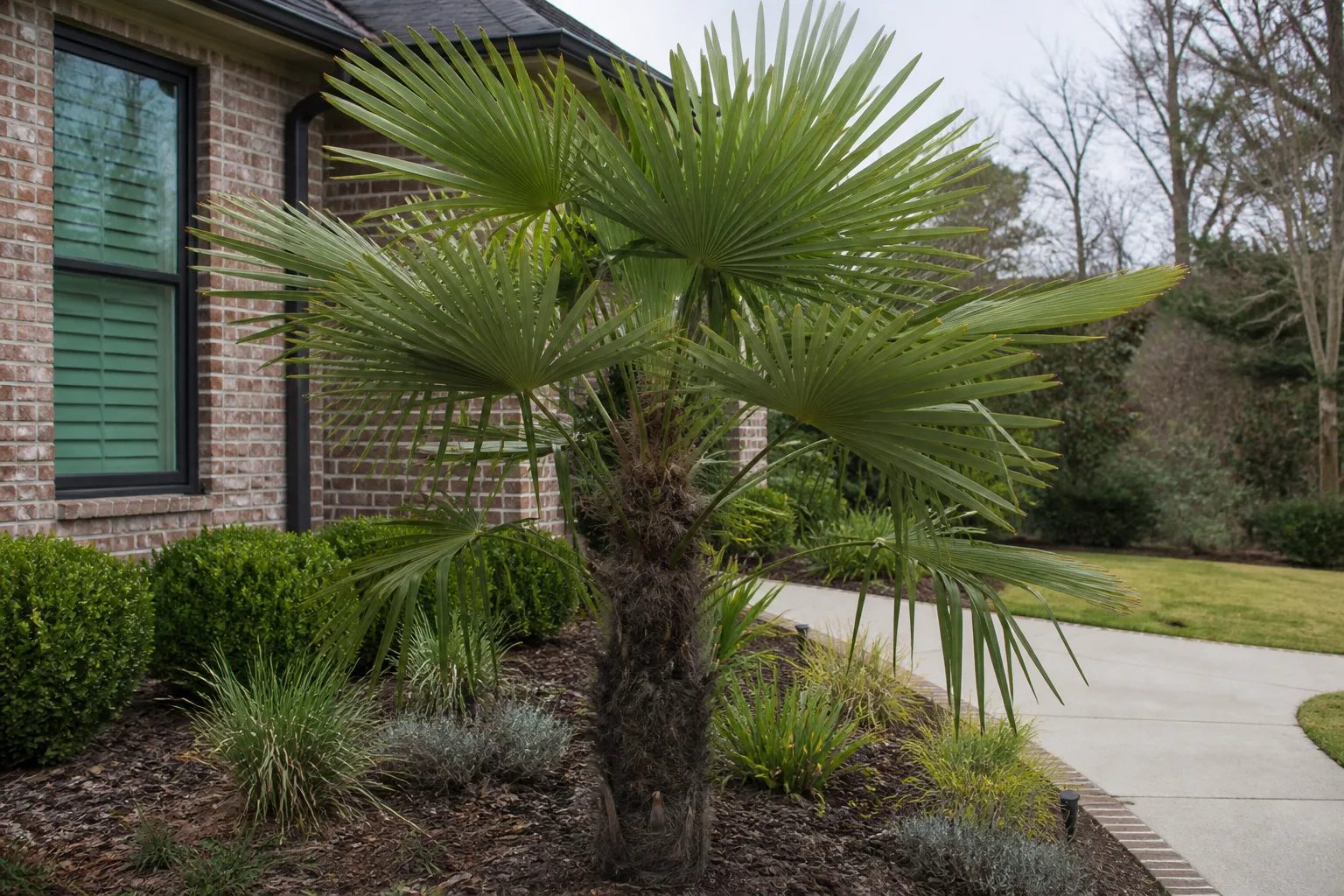
13. Windmill palm (Trachycarpus fortunei) is the best all-around candidate for a temperate gardener who wants a palm silhouette. It has a shaggy, fiber-covered trunk, fan leaves, and an in-ground cultivated height commonly near 8 to 10 feet in the NC State profile, though wild plants can reach 20 to 40 feet. It can grow in sun or partial shade, appreciates shelter from strong winds, and can be grown in a large container that is moved or protected in winter. Do not assume its cold hardiness makes it indestructible: torn fronds, root rot, and cold injury are still possible.
14. European fan palm (Chamaerops humilis) may grow as a single-trunked plant or a multi-stemmed clump, with blue-green fan leaves and a dry-garden look. It reaches roughly 6 to 15 feet, prefers full sun and sharp drainage, and is more drought tolerant once established than tropical feather palms. Spiny leaf stalks and a spreading clump make it a poor choice beside a narrow walkway, but it is a strong match for a sunny Mediterranean-style or coastal bed.
15. Pindo or jelly palm (Butia odorata, often labeled B. capitata) has blue-gray, arching feather fronds and yellow-orange fruit. At about 15 to 20 feet, it needs more room than the word “jelly” or “small” suggests, but it is a useful choice for a sunny, well-drained yard in a mild climate. Plant it away from paving if you do not want fruit underfoot, and expect the long fronds to create a wide visual spread.
16. Blue latan palm (Latania loddigesii) is valued for silvery-blue fan leaves and a pale trunk. It tolerates sun, salt, and dry conditions after establishment, but at roughly 20 to 25 feet it belongs in an open, warm, high-visibility site rather than a small foundation pocket. Its color is strongest when the plant receives enough direct light.
17. Puerto Rican thatch palm (Coccothrinax barbadensis) has silver-green fronds, a textured trunk, and a warm-climate coastal character. It usually reaches around 20 to 25 feet in cultivation and should be treated as a small tree, not a shrub. Give it full sun, fast drainage, and room for the crown; its salt and poor-soil tolerance are useful only if the climate is warm enough.
Match a palm to your yard’s job
Best choices for cold or part shade
For the coldest site on this list, start with needle palm, then consider dwarf palmetto or windmill palm according to the look and spread you want. Needle palm is a dense shrub with spines, dwarf palmetto is a low fan palm with wet-soil tolerance, and windmill palm is the most tree-like of the three. A sheltered wall, mulch over the root zone, and protection from drying winter wind can matter as much as the printed zone.
For shade, look first at lady palm, parlor palm, cat palm, and sago palm. “Shade tolerant” still means bright filtered light for good growth; deep, dark shade can produce weak, sparse fronds. If the site is cold as well as shady, choose the hardy palm first and accept that the shape will be different from a tropical indoor palm.
Best choices for containers and protected patios
Containers are most useful when they solve a climate problem, not when they are used to pretend a large palm will remain tiny. Parlor, lady, pygmy date, cat, sago, and windmill palms can work in large containers when their light, drainage, and winter needs are met. A container limits the root run, but it does not prevent a plant from becoming top-heavy, root-bound, or difficult to move.
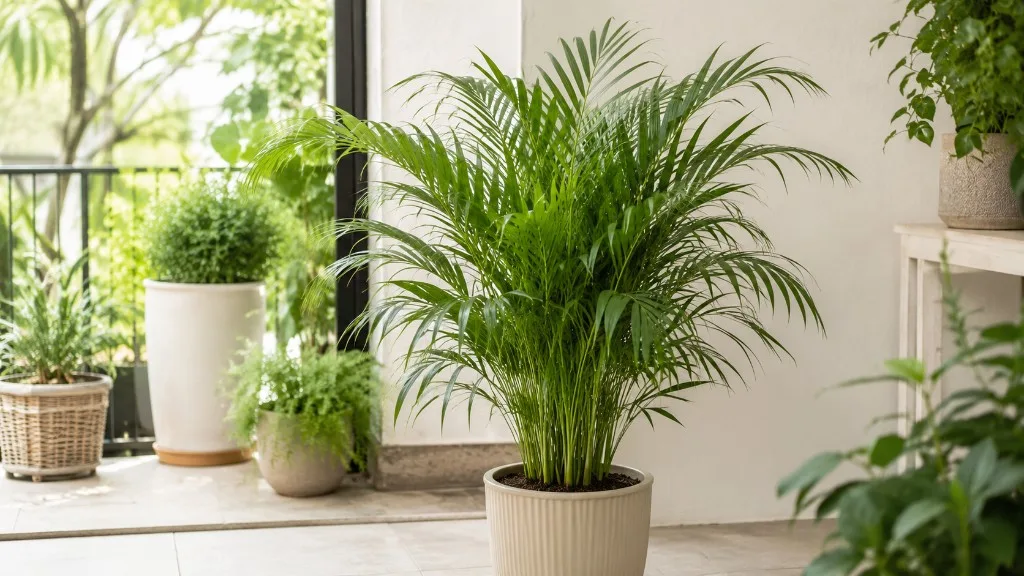
Choose a pot with drainage holes, use a fast-draining mix, and make sure the container is heavy enough for the crown. Do not move a plant from a dim interior straight into afternoon sun. Acclimate it over one to two weeks, and bring tender palms inside before cold weather rather than after frost has already burned the foliage.
Best choices for sun, salt, and drought
For a hot, sunny, well-drained site, shortlist saw palmetto, European fan, pindo, blue latan, bottle, or spindle palm according to climate and final size. Saw palmetto is the strongest small, spreading choice for a dry or coastal southern garden; European fan palm suits a drier ornamental bed; pindo gives blue-gray texture but needs more room. Salt tolerance does not cancel the need for drainage, and drought tolerance usually applies after establishment, not during the first summer.
Avoid planting a moisture-loving palm in compacted soil and then compensating with frequent shallow irrigation. If water sits around the root ball for days, the plant may decline even when the fronds look thirsty. Improve drainage before planting or choose a species that naturally tolerates wet conditions, such as dwarf palmetto or needle palm.
The palm to avoid around pets
The sago palm is the clear safety outlier. It is not a true palm, and the ASPCA lists it as toxic to dogs, cats, and horses, with cycasin poisoning capable of causing severe illness and liver damage. If a pet can reach the plant, its offsets, fallen leaves, or seeds, choose a different palm-like accent and ask a veterinarian what to do if ingestion may have occurred.
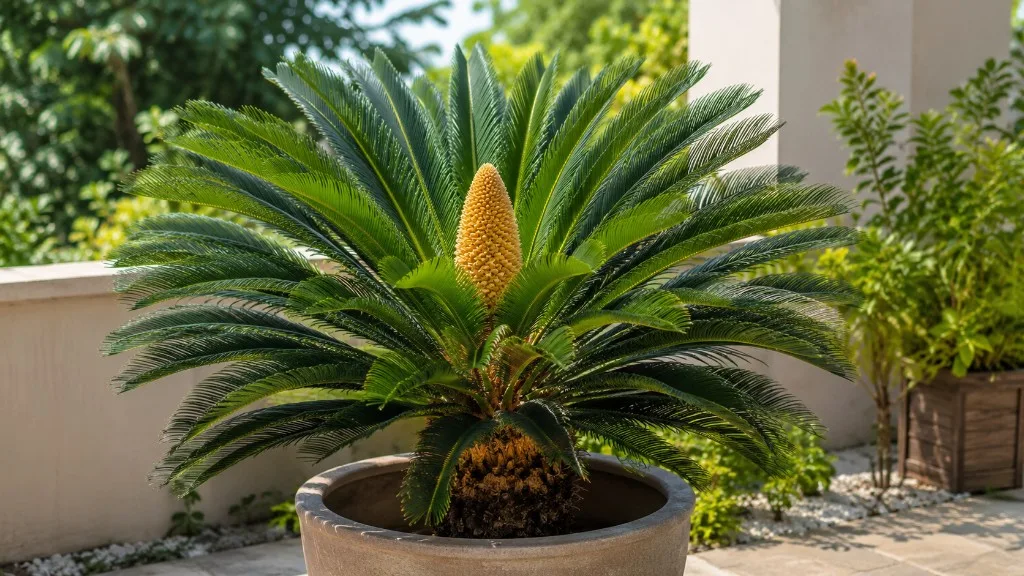
Do not assume that a nursery tag saying “palm” settles the safety question. Common names can cover unrelated plants, and a pet-safe decision should be made from the botanical name and a current veterinary or poison-control source.
Planting and first-year care that prevent failure
Site, spacing, and planting depth
Mark the palm’s mature width on the ground before you dig. Keep a generous buffer from foundations, paving, septic systems, utility lines, roof edges, and play areas, and use the local utility-locating service before any excavation. For a palm that can reach 20 feet or more, an open lawn or broad border is a more honest site than a narrow foundation bed.
Plant after the worst freeze risk has passed, or in early fall where the root system has time to establish before winter. Dig a hole wider than the root ball but no deeper. Set the top of the root ball level with the surrounding soil, or slightly high in heavy soil, and never bury the trunk or crown to make the plant look shorter.
This matters because palms are unusually intolerant of planting too deeply. The University of Florida IFAS seed and seedling guidance warns that even young palms can suffer severe setbacks when planted too deep; the same principle is useful when setting a nursery-grown palm. Backfill with the native soil, water slowly, and add a thin mulch ring without piling mulch against the trunk.
Water, drainage, feeding, and winter care
Water a new palm deeply enough to wet the root ball and surrounding soil, then check the soil before watering again. The goal is consistent moisture while roots establish, not a permanently saturated hole. After the first season, reduce irrigation for drought-tolerant palms but continue watering during prolonged heat, especially when the plant is in a container.
Fertilize only when growth, a soil test, or local extension guidance indicates a need. A palm-specific slow-release fertilizer can be useful in nutrient-poor soil, but excess nitrogen creates soft growth and does not fix poor light, root damage, or bad drainage. Remove only dead or completely brown fronds; cutting green fronds too early removes the plant’s working leaf area.
Protect borderline palms from cold wind and sudden freezes with the method appropriate to the species, but do not wrap wet foliage for long periods or place heat sources against the trunk. Mulch the root zone, keep containers off cold concrete when possible, and move tender palms before a forecast freeze. A damaged frond can be ugly without being fatal, so wait until the danger has passed before pruning frost-burned growth.
Common small-palm mistakes to avoid
The most expensive mistake is buying by current pot size. A 3-gallon areca or foxtail palm can look perfect in a small bed and then become a large, difficult-to-remove plant. Read the botanical name, search the mature height and width, and decide whether the future crown still fits the site.
Another common mistake is treating every palm as a desert plant. Tropical palms need regular moisture and humidity, while palms such as saw palmetto and European fan palm resent constantly wet soil. Match the watering plan to the species, not to the fact that the plant has thick, leathery fronds.
Finally, do not use hardiness as the only filter. Wind exposure, cold wet soil, salt spray, sharp spines, fallen fruit, pet access, and the ability to move a container all change whether a palm is genuinely suitable. If the only palm that fits the site is toxic, too spiny, or too large, a non-palm evergreen shrub may be the better design decision.
Conclusion
The best small palm tree is the one that stays compatible with the yard after it stops looking small in its nursery pot. Choose needle palm or dwarf palmetto for a compact, hardy landscape role; windmill palm for a protected temperate accent; saw palmetto or European fan palm for sunny, drier sites; and parlor, lady, cat, pygmy date, or sago for warm containers or protected courtyards—with sago excluded anywhere pets can reach it.
Before buying, measure the mature spread, confirm the botanical name, check the zone and microclimate, and locate utilities. Plant at the correct depth, keep drainage appropriate to the species, and give the crown room to move in wind. Those decisions matter far more than whether the label calls the palm dwarf, miniature, or small.



