Fan Palm Care: Washingtonia Light, Water, Size and Cold
Washingtonia spp. (W. filifera and W. robusta)
Grow Washingtonia fan palms in full sun and freely draining soil. Water newly planted trees deeply; once established, irrigate during prolonged dry spells. Confirm whether you have W. filifera or W. robusta before judging cold limits or mature size.
Fan Palm Care Guide: Growing Washingtonia Palms
Start with wateringThe most common care mistake for Fan PalmWatering guide →Fan Palm care essentials
Light
Full sun outdoors; give a container plant the brightest natural light available.
Water
Water newly planted palms deeply while they establish. Established Washingtonia palms tolerate dry spells, but occasional deep irrigation during prolonged drought supports growth. For a container plant, water thoroughly when the top inch (2–3 cm) of mix has dried, then let the pot drain fully. Never keep the roots in standing water.
Soil
Use a freely draining sandy or loamy soil outdoors; a container needs a coarse, well-drained palm mix and unobstructed drainage holes.
Humidity
Temperature
Fertilizer
About Fan Palm
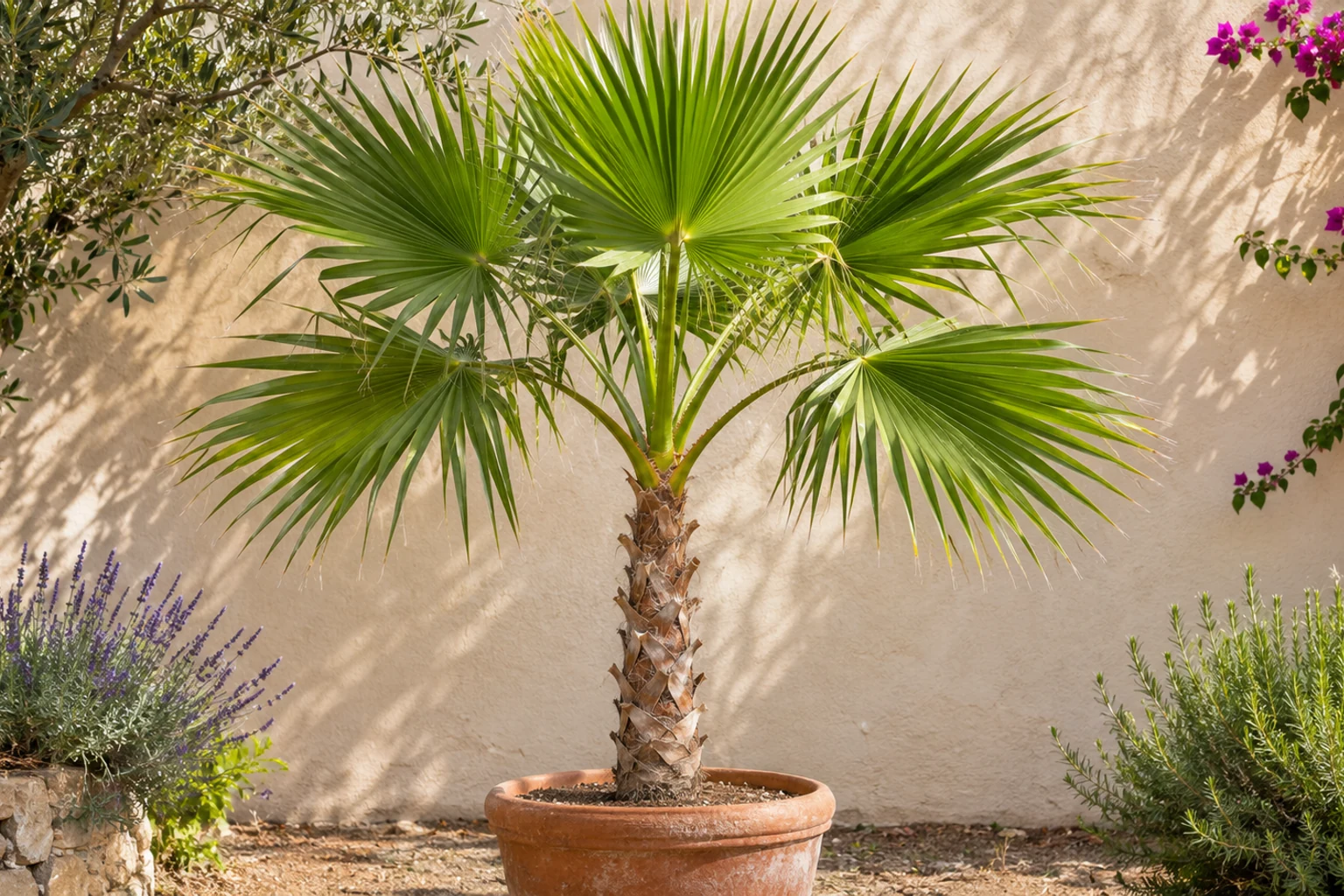
Fan Palm is native to Southwestern United States and northwestern Mexico; the native range differs between the two Washingtonia species covered here., typically reaches A tall, solitary palm, generally about 50–100 ft (15–30 m) at maturity, with large fan-shaped fronds. Washingtonia filifera usually has a thicker trunk; W. robusta is slimmer and often grows faster. indoors, with moderate to fast, depending on species and conditions growth. Fan Palm has a solitary evergreen palm with one upright trunk and a rounded crown of palmate fronds growth habit and part of the Arecaceae family.
| Detail | Information |
|---|---|
| Native region | Southwestern United States and northwestern Mexico; the native range differs between the two Washingtonia species covered here. |
| Mature size | A tall, solitary palm, generally about 50–100 ft (15–30 m) at maturity, with large fan-shaped fronds. Washingtonia filifera usually has a thicker trunk; W. robusta is slimmer and often grows faster. |
| Growth rate | Moderate to fast, depending on species and conditions |
| Growth habit | Solitary Evergreen Palm With One Upright Trunk And A Rounded Crown Of Palmate Fronds |
| Scientific name | Washingtonia spp. (W. filifera and W. robusta) |
| Family | Arecaceae |
How to care for Fan Palm?
How much light does Fan Palm need?
Full sun outdoors; give a container plant the brightest natural light available.. Partial sun, with slower or less vigorous growth than in full sun. direct sun
- Full sun outdoors - Full sun outdoors; give a container plant the brightest natural light available..
- give a container plant the brightest natural light available - Full sun outdoors; give a container plant the brightest natural light available..
- Partial sun, with slower or less vigorous growth than in full sun - Partial sun, with slower or less vigorous growth than in full sun.
- direct sun - direct sun.
When should you water Fan Palm?
Water newly planted palms deeply while they establish. Established Washingtonia palms tolerate dry spells, but occasional deep irrigation during prolonged drought supports growth. For a container plant, water thoroughly when the top inch (2–3 cm) of mix has dried, then let the pot drain fully. Never keep the roots in standing water.
- Feel the top inch (2–3 cm) of container mix - For a container plant, water thoroughly when the top inch (2–3 cm) of mix has dried, then let the pot drain fully.
- outdoors
- check moisture around the root ball as well as the surrounding soil - Never keep the roots in standing water.
- Drain excess water - For a container plant, water thoroughly when the top inch (2–3 cm) of mix has dried, then let the pot drain fully.
What soil works best for Fan Palm?
Use a freely draining sandy or loamy soil outdoors; a container needs a coarse, well-drained palm mix and unobstructed drainage holes.
- Use a palm or general container mix that drains freely - Use a freely draining sandy or loamy soil outdoors; a container needs a coarse, well-drained palm mix and unobstructed drainage holes.
- Add coarse perlite or bark if the mix remains wet too long - Use a freely draining sandy or loamy soil outdoors; a container needs a coarse, well-drained palm mix and unobstructed drainage holes.
- Choose a stable pot with open drainage holes for young container specimens - Use a freely draining sandy or loamy soil outdoors; a container needs a coarse, well-drained palm mix and unobstructed drainage holes.
Grower notes for Fan Palm
Confirm which fan palm you have
This hub uses “Fan Palm” for Washingtonia, a genus with two commonly grown species: California fan palm (W. filifera) and Mexican fan palm (W. robusta). Other palms also have fan-shaped leaves and need different care. Check the botanical label before relying on a hardiness or size estimate.
Plan for a landscape tree, not a compact houseplant
Washingtonia develops a tall trunk and a broad crown. A young palm can be kept in a sturdy, well-drained container for a time, but it will outgrow most rooms and ordinary patios. Choose an outdoor site with open sky, generous clearance, and access for safe maintenance.
Full sun and drainage set the pace
Give the palm full sun where possible and soil that sheds excess water. Established plants tolerate dry periods, while steady moisture can speed growth if the ground still drains freely. Waterlogged soil can cause a serious decline, so do not treat drought tolerance as permission to ignore the root zone or drainage.
Cold tolerance differs by species
Do not use one cold threshold for every fan palm. NC State Extension notes that leaf damage to W. robusta can occur around 20°F (-6.7°C); exposure duration, wind, moisture, age, and the exact species affect the result. W. filifera is generally the more cold-tolerant of the two, but local winter conditions still matter.
Treat old fronds and sharp leaf stalks as maintenance issues
Dead fronds may remain as a skirt below the crown, and leaf stalks can carry sharp teeth. In dry regions the skirt can increase fire risk; it also provides roosting habitat for wildlife. Keep green fronds, and use a qualified palm arborist for elevated pruning rather than climbing or cutting near the crown yourself.
Keep pets from chewing or brushing against it
The sources reviewed did not establish a species-specific toxicity classification for Washingtonia. Its sharp leaf stalks and falling plant debris are physical hazards around paths and play areas. Keep pets from chewing the plant and contact a veterinarian if a pet eats any part of it.
Fan Palm and pets
A species-specific veterinary toxicity classification for Washingtonia was not found in the sources reviewed, so do not assume it is non-toxic. Keep pets from chewing the fronds, watch for sharp leaf stalks and falling debris, and contact a veterinarian if any part is eaten.
No species-specific cat, dog, or other-pet toxicity determination for Washingtonia was verified in the sources reviewed. ASPCA's plant database is a useful reference, but the general listing does not establish this genus as safe. Keep animals from chewing it and ask a veterinarian about an ingestion.
Watering Fan Palm
For Fan Palm, feel the top inch (2–3 cm) of container mix; outdoors, check moisture around the root ball as well as the surrounding soil. and water check container mix about weekly during warm active growth and water when its surface layer is dry. In the landscape, adjust irrigation to rainfall and establishment; mature trees need supplemental water mainly during extended dry periods. Reduce container watering in cool weather as growth and evaporation slow. Newly planted outdoor palms still need monitoring through their first warm growing season, especially in dry weather.
| Detail | Information |
|---|---|
| How often | Check container mix about weekly during warm active growth and water when its surface layer is dry. In the landscape, adjust irrigation to rainfall and establishment; mature trees need supplemental water mainly during extended dry periods. |
| How to check | Feel the top inch (2–3 cm) of container mix; outdoors, check moisture around the root ball as well as the surrounding soil. |
| Seasonal changes | Reduce container watering in cool weather as growth and evaporation slow. Newly planted outdoor palms still need monitoring through their first warm growing season, especially in dry weather. |
Signs of overwatering
- Potting mix stays saturated or drains poorly
- Water stands around the root zone after rain or irrigation
- Decline in a persistently wet planting site
Signs of underwatering
- Potting mix dries deeply between waterings
- A newly planted root ball dries during hot, rain-free weather
Soil & potting for Fan Palm
Use a mix of Use a palm or general container mix that drains freely, Add coarse perlite or bark if the mix remains wet too long, Choose a stable pot with open drainage holes for young container specimens for Fan Palm. Excellent drainage is essential; Washingtonia tolerates drought better than persistently saturated, oxygen-poor soil. Target soil pH around Adaptable; no narrow pH target is established by the sources reviewed. Repot repot a young container plant only when roots crowd the pot or the mix has broken down; do not use pot restriction as a long-term way to contain a tree., ideally in spring or early warm-season growth.
| Detail | Information |
|---|---|
| Recommended mix | Use a palm or general container mix that drains freely, Add coarse perlite or bark if the mix remains wet too long, Choose a stable pot with open drainage holes for young container specimens |
| Drainage | Excellent drainage is essential; Washingtonia tolerates drought better than persistently saturated, oxygen-poor soil. |
| Soil pH | Adaptable; no narrow pH target is established by the sources reviewed. |
| Repotting frequency | Repot a young container plant only when roots crowd the pot or the mix has broken down; do not use pot restriction as a long-term way to contain a tree. |
| Best season to repot | Spring or early warm-season growth |
Signs it needs repotting
- Roots crowd the pot or emerge from drainage holes
- The mix has compacted or no longer drains freely