20 Cold Hardy Palm Trees by Zone and Temperature
Compare 20 cold hardy palm trees by approximate freeze tolerance, mature size, leaf shape, and the winter protection each needs.
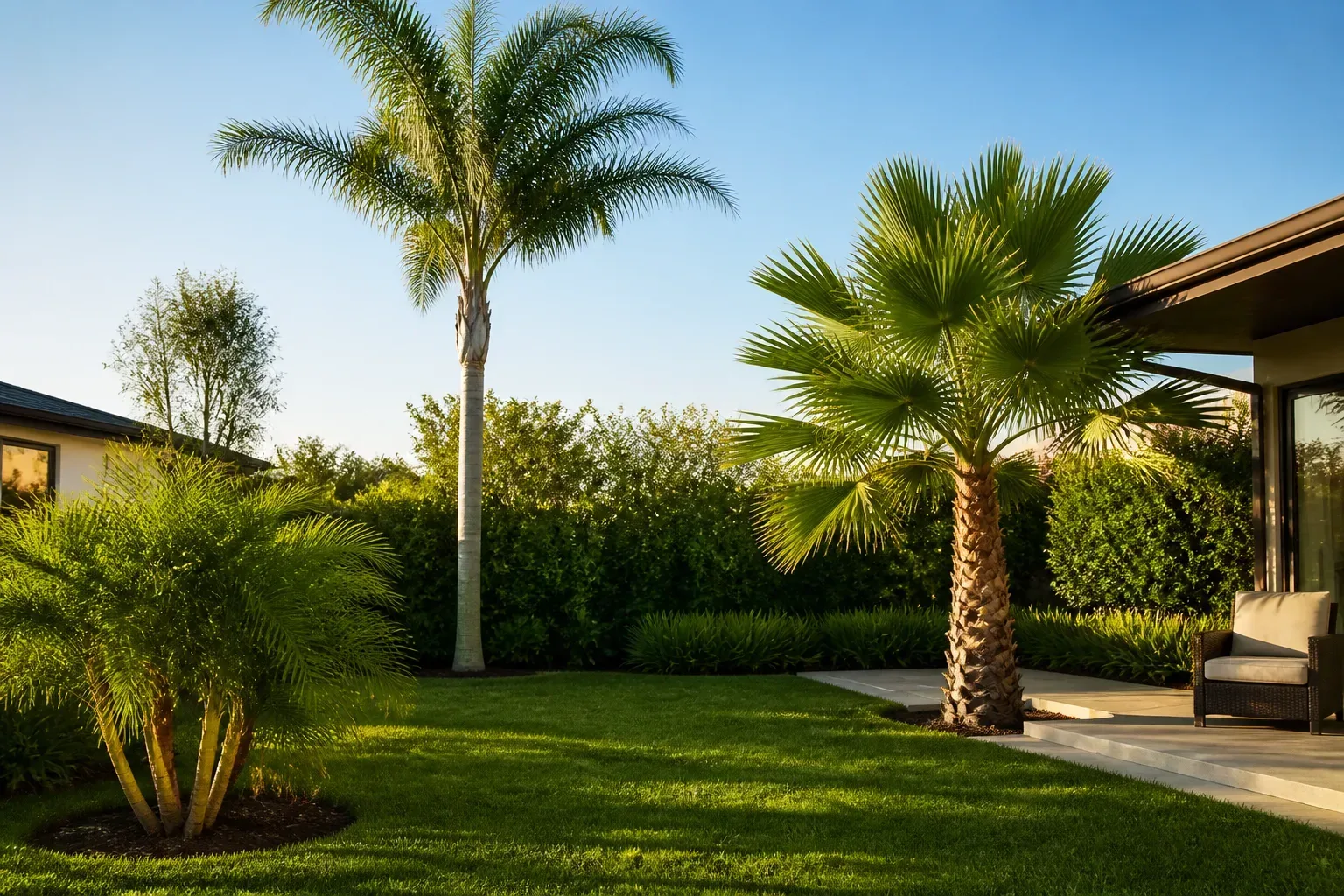
Palm trees can survive more cold than their tropical image suggests, but “cold hardy” needs a careful definition. A palm that survives a short frost in a sheltered courtyard is not automatically a palm for repeated freezes, frozen soil, or a windy zone 7 garden.
Your best choice depends on the lowest temperature, how long the cold lasts, winter moisture, plant age, and whether the crown is protected. Use the list below as a shortlist, then confirm the mature size and local performance with a nearby nursery or extension office.
What cold hardy really means for a palm
Cold tolerance is usually described as an approximate minimum temperature for an established plant under favorable conditions. It is not a promise that every leaf will remain green. A palm may survive with burned fronds, or its trunk may live while the growing point dies.
The USDA hardiness zone describes average annual extreme minimum temperatures, not every freeze. A zone 8 garden can still experience an unusually severe event, and a warm urban courtyard can be several degrees safer than an exposed rural site. Treat hardiness as a starting filter, not an insurance policy.
Temperature is only one part of winter survival
Wet roots and cold wind make damage worse. A palm planted in heavy, waterlogged soil may fail at a temperature it could tolerate in sharply drained soil. Young palms are also more vulnerable because they have less trunk mass and a smaller root system. Protection is most valuable during the first few winters.
Quick picks by climate and growing method
For the best odds in a cold-prone landscape, start with needle palm, dwarf palmetto, windmill palm, Mediterranean fan palm, and saw palmetto. Needle palm and dwarf palmetto are the conservative choices for short hard freezes. Windmill palm is often the most useful trunk-forming palm for a cool garden with good drainage.
For a mild-winter coastal or southern site, cabbage palm, California fan palm, date palm, jelly palm, and Mexican fan palm may work, but their performance depends heavily on heat, drainage, and freeze duration. For a colder area, grow a smaller lady palm or Chinese fan palm in a container and bring it under cover before temperatures fall.
Cold-hardy palms at a glance
| Palm | Approximate cold position | Habit | Best use |
|---|---|---|---|
| Needle palm | Very hardy once established | Clumping fan | Cold-prone beds |
| Dwarf palmetto | Very hardy | Low fan | Native-style planting |
| Windmill palm | Hardy to moderate freezes | Trunk-forming fan | Courtyards and lawns |
| Mediterranean fan palm | Hardy to moderate freezes | Clumping fan | Dry, sunny sites |
| Saw palmetto | Hardy in warm regions | Spreading fan | Sandy, coastal sites |
| Cabbage palm | Mild to moderate freezes | Tall fan | Warm landscapes |
| Date palm | Mild freezes when established | Feather palm | Dry, hot sites |
| Jelly palm | Short mild freezes | Feather palm | Warm lawns or pots |
The bands above are deliberately broad. A palm’s cultivar, size, acclimation, soil, and exposure can shift the result. Do not choose by the lowest number on a plant tag alone.
20 palms for frost-prone gardens
The strongest candidates for severe cold
-
Needle palm (Rhapidophyllum hystrix) is a clumping, fan-leaved palm with stiff needles at the bases of its leaves. It is one of the first palms to investigate for a garden that experiences serious winter cold, especially in a protected, well-drained site. It stays shorter than a street tree and can look shrubby rather than tropical.
-
Dwarf palmetto (Sabal minor) forms a low, tough fan crown. It may remain trunkless for years, which is useful where wind and ice would punish a tall palm. Give it full sun to light shade and avoid planting it where winter water collects.
-
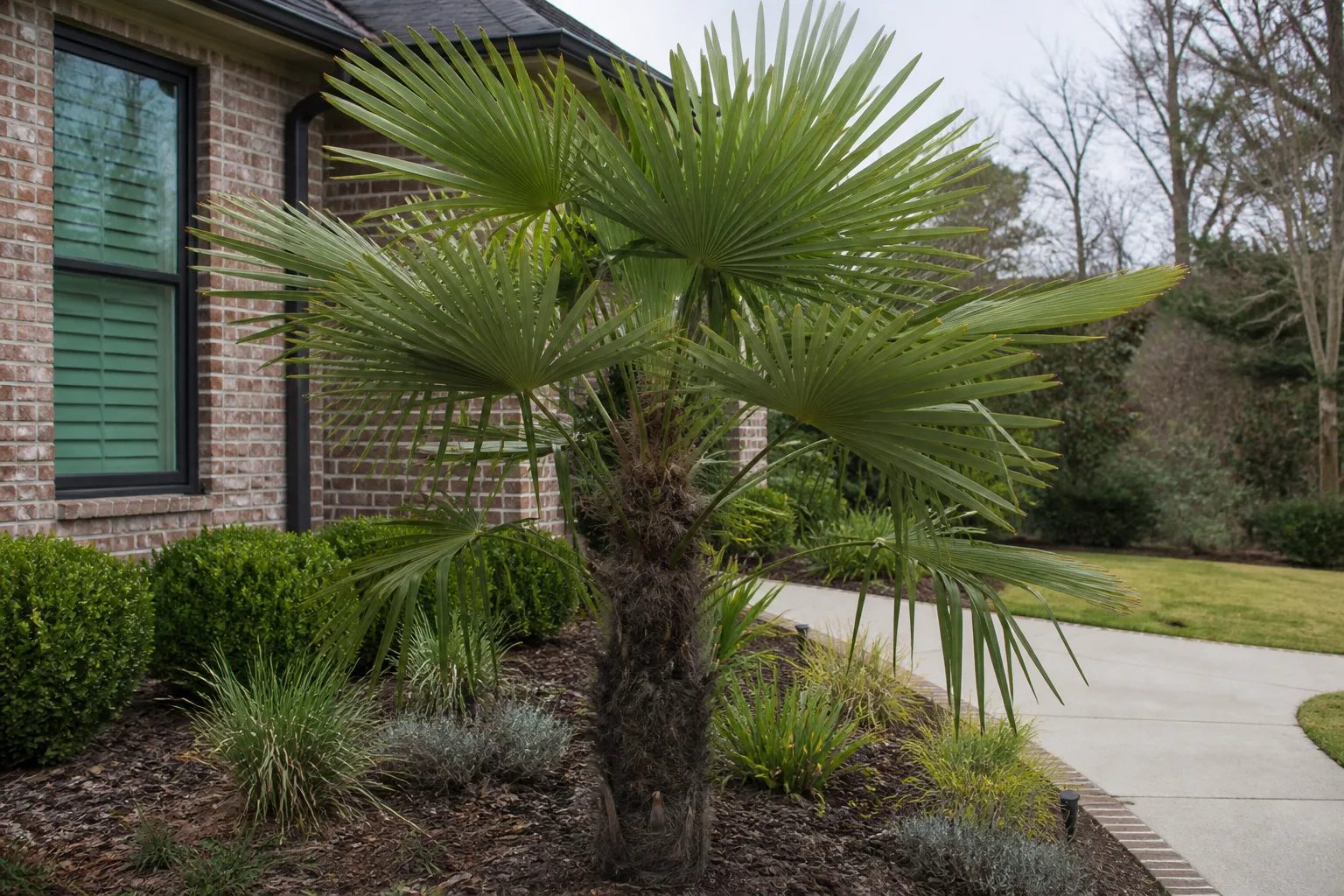
Windmill palm (Trachycarpus fortunei) is the classic trunk-forming choice for cool climates. Its fibrous trunk and fan leaves create the strongest palm silhouette in many temperate gardens, but young specimens still need protection during severe weather.
-
Sabal etonia, or scrub palmetto, is a smaller southeastern species suited to sandy, well-drained ground. It is not the palm for a wet clay lawn; improve the site before planting.
-
Needle palm hybrids and selected Sabal forms may perform differently from the species described on a generic label. Buy from a grower who can identify the cultivar and has local winter experience rather than assuming every “hardy palm” seedling is equivalent.
Palms for mild freezes and warm zones
-
Mediterranean fan palm (Chamaerops humilis) makes several stems and tolerates dry conditions once established. It is a good match for sun, lean soil, and a site where a clump is preferable to one tall trunk. Wet winter soil is its enemy.
-
Saw palmetto (Serenoa repens) is a slow, spreading fan palm with strong regional value in the southeastern United States. It tolerates drought and sandy soils, but it is not a fast privacy screen.
-
Cabbage palm (Sabal palmetto) is a large fan palm for warm landscapes. It can take occasional cold better than many tropical palms, yet an exposed young tree can still suffer crown damage.
-
Mexican blue palm (Brahea armata) has powder-blue fan leaves and prefers hot, dry conditions. Its cold performance is better when roots are dry and the crown is not exposed to prolonged freezing rain.
-
Bismarck palm (Bismarckia nobilis) is valued for silver foliage but belongs in a warm climate. It may handle a brief chill after establishment; it is not a sensible choice for a garden with regular hard freezes.
-
Guadalupe palm (Brahea edulis) is a slow, drought-tolerant palm for mild coastal and desert conditions. Its edible fruit and compact crown can be attractive, but it needs excellent drainage and a long warm season.
-
California fan palm (Washingtonia filifera) tolerates heat and drought and can handle brief cold events once large. It becomes a very tall tree and is a poor choice under utility lines or beside a small house.
-
Mexican fan palm (Washingtonia robusta) is even more strongly associated with hot climates. Use it where winter is mild and there is room for a tall trunk; do not buy it for a cold-zone experiment because it is inexpensive.
Large, ornamental, and container-grown options
-
Date palm (Phoenix dactylifera) suits dry heat and can survive light freezes when established. It needs space, sharp drainage, and a realistic plan for fruit or old fronds. Female trees may produce dates only in the right climate and with pollination.
-
Canary Island date palm (Phoenix canariensis) is a massive statement tree for warm regions. Its bulky trunk and heavy crown need room, and cold or wet conditions can cause serious damage before the tree reaches maturity.
-
Jelly palm (Butia odorata) has arching, blue-green feather leaves and a more compact outline than a date palm. It is suited to warm temperate gardens with occasional light freezes, not prolonged winter cold.
-
Chilean wine palm (Jubaea chilensis) is slow-growing and eventually enormous. It tolerates some cold once established, but its size and cost make site selection more important than experimentation.
-
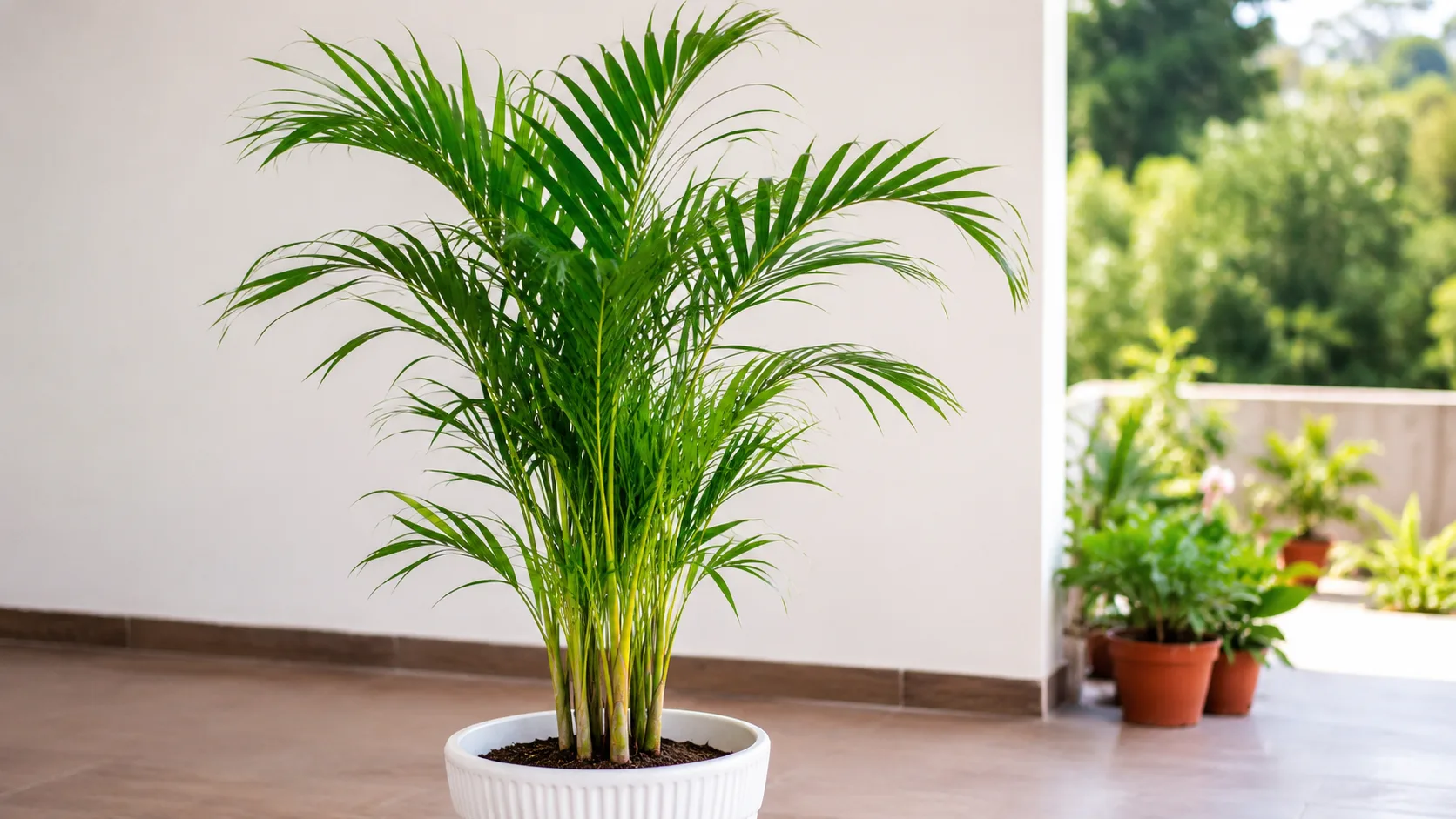
Lady palm (Rhapis excelsa) is a clumping, shade-tolerant palm that works especially well as a container plant. In a cold region, move it into a bright, cool room or protected porch before frost rather than testing its outdoor limit.
-
Chinese fan palm (Livistona chinensis) offers broad fan leaves and a manageable juvenile form. It is better treated as a patio container palm in cold climates; bring it inside before the root ball freezes.
-
Queen palm (Syagrus romanzoffiana) is fast and graceful in warm landscapes but is among the riskier choices on a cold-hardy list. Use it only where winter is mild, and expect frond damage after a hard freeze even if the trunk survives.
How to choose a palm by site
Soil, wind, sun, and drainage
Choose the warmest part of the property: a south-facing wall, courtyard, or area protected from prevailing winter wind. Full sun helps most palms build useful energy, but the root zone still must drain. If water stands after rain, mound the planting area or choose a different species.
Allow for mature height, crown spread, falling fronds, and trunk diameter. A palm that fits a one-gallon pot may eventually block a window or interfere with wires. Keep spiny species away from narrow paths and play areas.
In-ground versus container growing
An in-ground palm has the advantage of an insulated root zone, while a container can be moved before a freeze. Container roots are less protected because the entire root ball is exposed to air. A palm that survives outside in the ground may need winter shelter when grown in a pot.
Use a pot with drainage holes and a coarse, stable mix. Move the container into bright shelter before a hard freeze, not after leaves have collapsed. Do not place a dormant palm in a dark, overheated room and expect it to remain healthy for months.
Protect palms before a freeze
Water a dry palm a day or two before a predicted freeze if the soil drains well; do not saturate a wet site. Tie fronds loosely upward only when necessary, cover the crown with breathable frost fabric, and remove the cover when temperatures rise. Never wrap a palm in plastic that traps condensation against the growing point.
Mulch the root zone several inches deep, keeping it away from the trunk. For a small palm, a temporary cage filled with dry leaves can reduce wind exposure. Heat cables and lights require outdoor-rated equipment and safe installation; a smoldering bulb or overloaded cord is a greater hazard than cold damage.
What to do after cold damage
Do not cut every brown frond immediately. Damaged leaves still protect the crown, and green tissue can continue photosynthesis. Wait until the threat of another freeze has passed, then remove only fully dead or collapsed material with clean tools.
The central spear is the key diagnostic point. If it pulls out easily or smells rotten, the growing point may be damaged; keep the crown dry and ask a local extension office or palm specialist about recovery. If the spear remains firm, patience is often the best treatment. New growth can take weeks or months after a severe event.
Conclusion: start with the microclimate
Needle palm, dwarf palmetto, and windmill palm are the most useful starting points for a genuinely frost-prone garden. Mediterranean fan palm and saw palmetto suit warmer, drier sites. Date, jelly, queen, and fan palms belong in mild-winter landscapes unless you are prepared to grow them as movable specimens.
Select for the site’s coldest combination—temperature, wind, wet soil, and duration—not the palm’s marketing label. A modest palm in a protected, well-drained location will usually outperform a “hardier” palm planted where winter water and wind attack it from every direction.