How to Winterize Potted Plants for Winter
Learn how to winterize potted plants by matching the method to hardiness, dormancy, pot size, and local weather—from burying hardy perennials to storing tender plants.
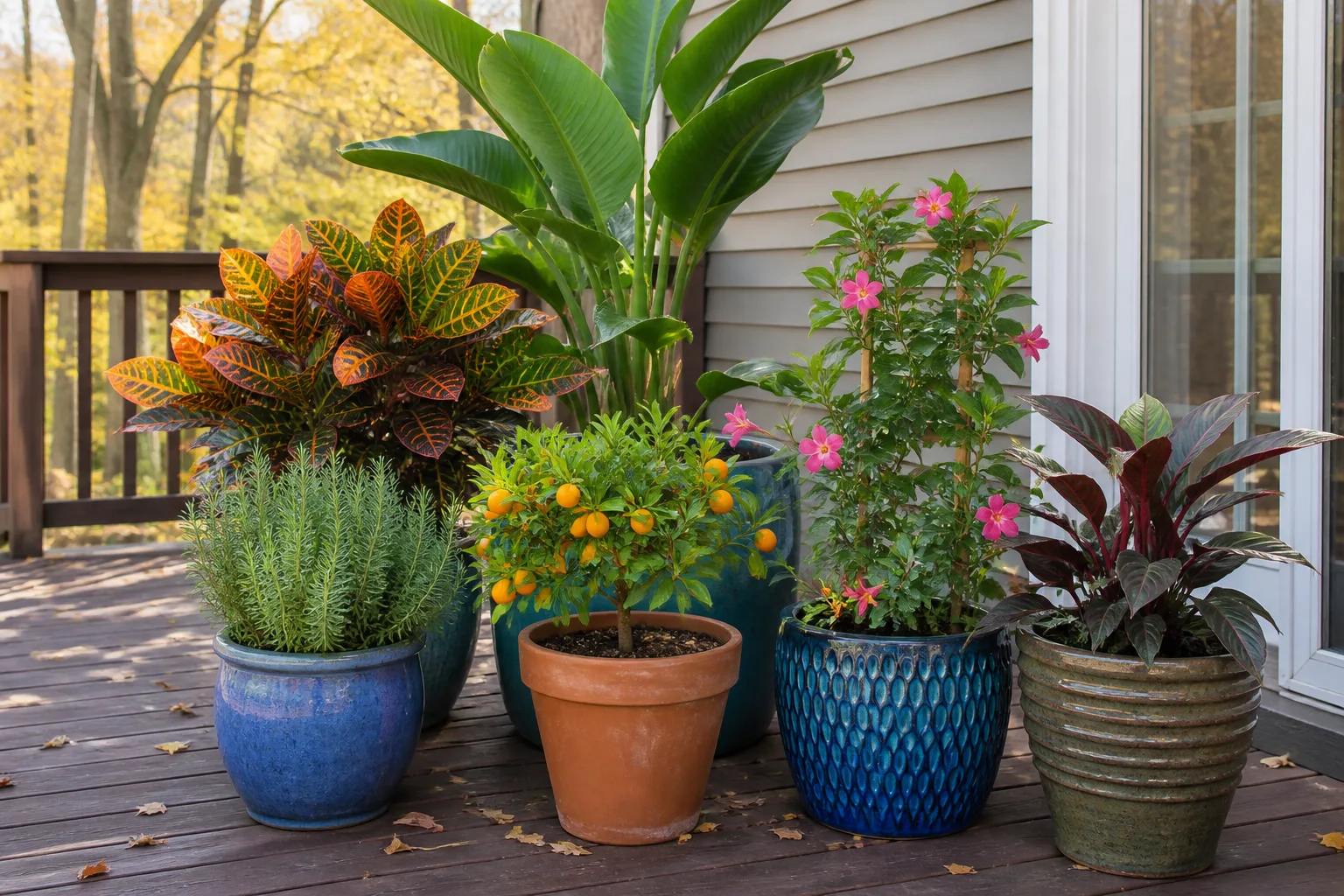
A perennial can be hardy in your garden and still lose its roots in a pot. In a bed, surrounding soil buffers cold; in a container, the root ball is exposed to air on every side and can swing from thawed to frozen faster. The right winter plan depends on the plant’s hardiness and dormancy, the container, and the winter your site actually gets.
Start by deciding where each plant belongs. Hardy, dormant perennials can often overwinter outdoors if their roots are insulated; borderline-hardy dormant plants usually need a cold, protected place; tender evergreens and tropicals need a frost-free space with the light and warmth their species requires. A heated living room is not automatically safer than a garage, and wrapping a pot cannot make a tropical plant cold-hardy.
| Plant and situation | Best starting point | Main reason |
|---|---|---|
| Hardy perennial that dies back naturally | Bury the container or protect it outdoors | It needs dormancy, but the root ball needs insulation |
| Borderline-hardy dormant shrub or perennial | Unheated garage, shed, or sheltered cold frame | Cold keeps it dormant while shelter reduces root exposure |
| Tender evergreen, citrus, or tropical foliage plant | Bright, frost-free indoor or greenhouse space | It may keep leaves and cannot tolerate a freezing root ball |
| True annual or spent summer bedding plant | Compost it unless it is a species worth propagating | Many annuals finish their life cycle rather than needing winter storage |
First choose where the plant should spend winter
Before moving or wrapping anything, identify the plant by its botanical name or a reliable nursery label. “Perennial” only means it can live for more than two years under suitable conditions; it does not mean it can survive your local winter in an exposed pot. Check the plant’s minimum temperature, whether it needs a cold rest, whether it keeps leaves, and whether the cultivar is rated for your region.
Then assess the location and container together. A large pot against a sheltered wall in a mild coastal climate is a different problem from a small terracotta pot on a windy, elevated balcony in a zone with repeated subzero nights. Note your coldest typical temperatures, wind exposure, snow cover, winter rain, and whether a garage stays above freezing or becomes colder than outdoors.
A useful quick rule is: choose a method that protects the plant’s most vulnerable part without interrupting its seasonal cycle. For a dormant hosta, protect the roots and let the top die back. For a potted citrus that must remain leafy, provide frost-free light. Do not move every pot into the warmest room simply because a freeze is forecast.
Why roots in pots face more cold
The plant’s top and its roots do not always share the same cold tolerance. Many perennials can lose leaves or stems and regrow from a protected crown, while their fine roots may be injured at higher temperatures. In the ground, roots are surrounded by a broad mass of soil; a pot has much less soil and exposes its sides as well as its surface to cold air.
Iowa State University Extension notes that container mix left above ground can fall into the single digits, cold enough to damage or destroy some root systems. The exact temperature at which a plant is injured varies by species, root condition, moisture, pot size, and how long the cold lasts, so a single forecast low cannot predict survival. The practical lesson is to protect the root ball before severe cold, rather than judging risk only by whether the stems look hardy.
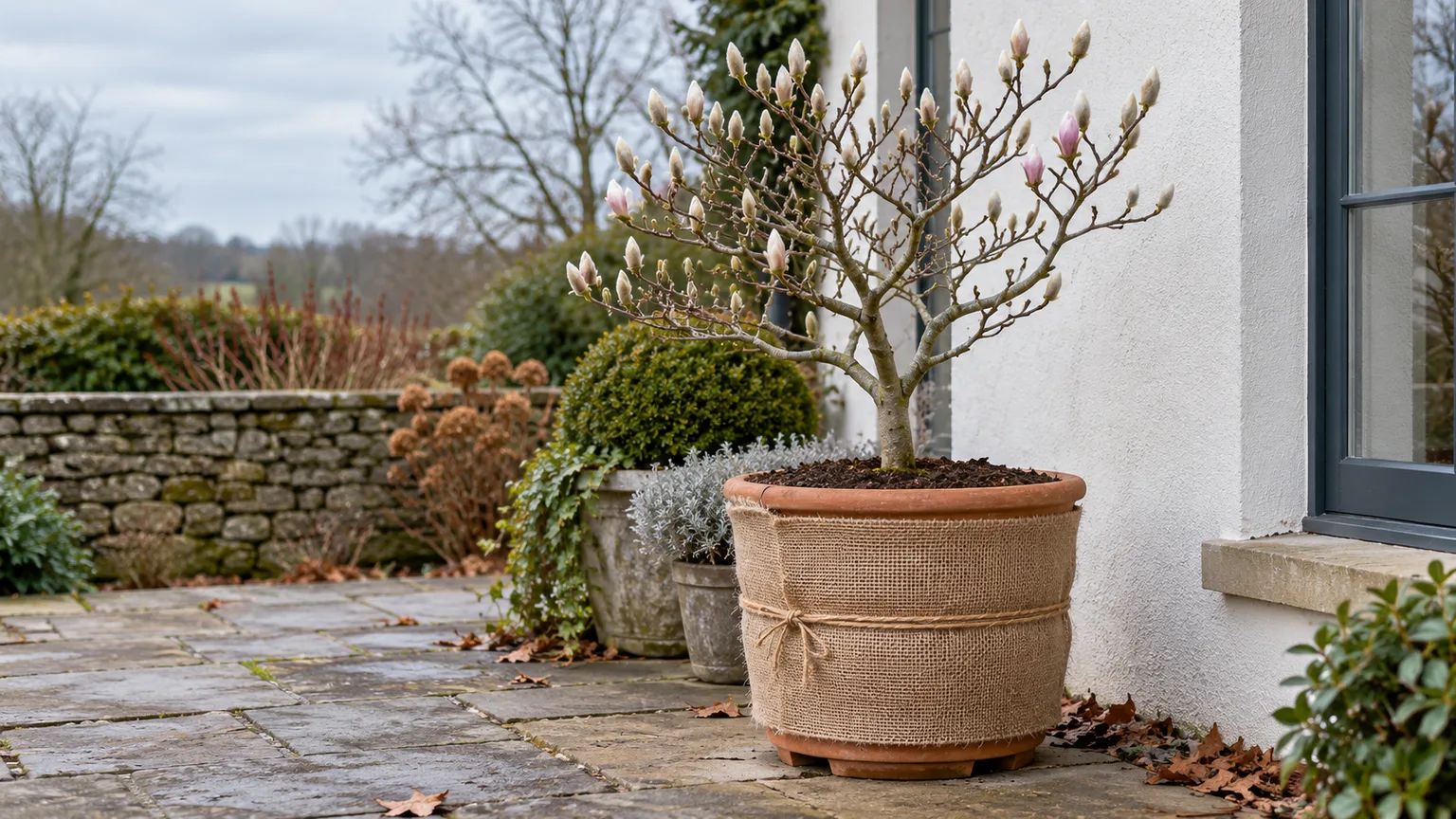
Container size and material affect the speed and severity of temperature changes. A larger volume of mix generally changes temperature more slowly than a small pot, but extra soil is not a substitute for a wintering plan. Unglazed terracotta and some ceramics absorb moisture and can crack when wet mix freezes and expands; thin plastic can also split or become brittle. If the plant is valuable and the decorative pot is not designed for freezing, set the plant in a sturdy nursery pot and move the display container to a dry sheltered place.
Freeze-thaw swings can be harder on roots than a steady cold period. A dark container in winter sun may warm during the day and cool sharply overnight; wind also strips heat and dries exposed foliage. Sheltering a pot from wind and extreme sun can reduce those swings, but do not seal the plant in airtight plastic or leave the container standing in water.
Check the plant’s winter habit
A label’s zone rating is a starting point, not the whole answer. You need to know whether the plant should rest cold, remain actively growing, or enter a dry storage state. If the plant’s winter behavior is uncertain, search the exact species or cultivar through a university Extension service, botanic garden, or specialist nursery before choosing a storage room.
Hardy plants that need dormancy
Many herbaceous perennials, including hostas and peonies, naturally lose their top growth after cold weather and wait until spring to emerge again. Their stems do not need to stay green, and a dark garage can be appropriate only if the plant is truly dormant and the storage temperature suits it. Keep the root ball slightly moist when conditions permit, but do not keep it saturated.
Some hardy woody plants and evergreens retain leaves in winter. They still need protection from root freezing, and their foliage can lose water when wind and sun continue to pull moisture from leaves while frozen mix prevents uptake. These plants may need a brighter, more sheltered location and occasional watering during a thaw. Do not assume that every plant with a dormant-looking top can be stored dry and dark.
Tender evergreens and tropicals
Citrus, tropical hibiscus, mandevilla, and many plants sold as summer patio foliage are not made hardy by being in containers. Move them before the temperature reaches the species’ injury threshold. Minnesota Extension advises bringing most houseplants inside before temperatures fall below about 50°F; sensitive species may need protection earlier, and some succulents tolerate cooler conditions. Use the plant’s actual requirements and your forecast rather than treating 50°F as a universal cutoff.
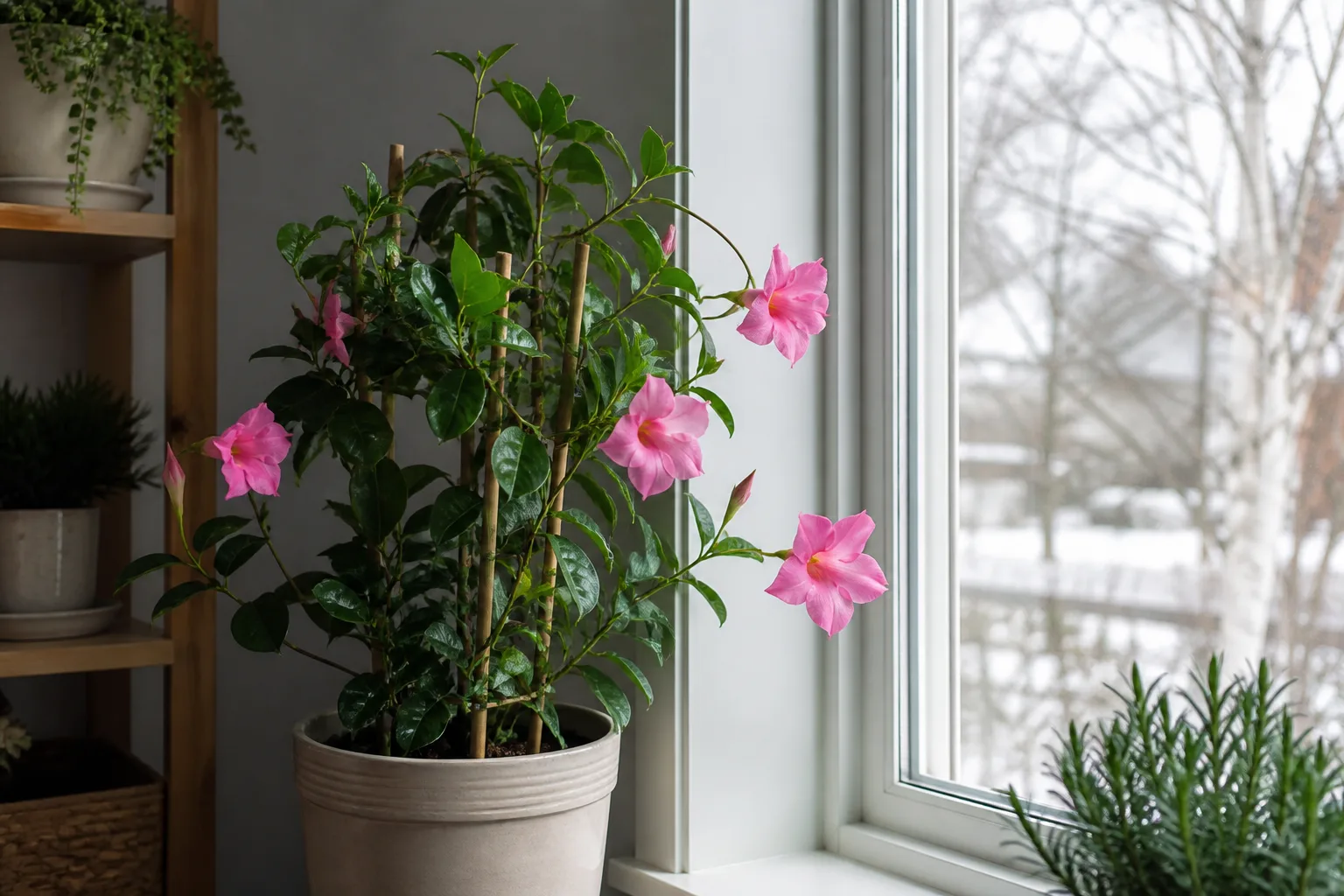
A warm, bright room is suitable for tropicals that continue growing, but low winter light may still lead to leaf drop or weak growth. A cool, frost-free greenhouse or sunroom can fit plants that prefer a rest without a hard freeze; the Royal Horticultural Society describes 41–45°F (5–7°C) as a suitable minimum for some tender plants in an unheated conservatory, while other species need warmer conditions. A dark garage is not the right place for an evergreen that needs light.
Bulbous or tuberous plants require their own storage instructions. Some can remain dormant in their pots in a cool, dark place, while others need their rhizomes or tubers lifted, dried, or stored differently. For example, a dormant canna and a leafy citrus should not share a generic “water once a month in the garage” schedule. Look up the species before deciding whether to keep the potting mix moist, nearly dry, or to store the plant without its pot.
Use hardiness zones as a screening tool
The USDA Plant Hardiness Zone Map describes average annual extreme minimum temperatures for locations; it does not promise that every plant rated for a zone will survive every winter there. A container changes the root environment, and a balcony, windy corner, or exposed rooftop can be colder than the garden bed nearby.
For outdoor container growing, Extension and horticulture references commonly recommend choosing a plant rated about one or two zones colder than your own. Illinois Extension uses two zones as a rule of thumb for potted perennials, and Fine Gardening similarly advises selecting plants one to two zones hardier than the garden zone. Treat that as a conservative screen rather than a precise conversion: large pots, reliable snow cover, and shelter may reduce exposure, while a small pot, a dry winter, or repeated freeze-thaw weather raises it.
For example, if you garden in Zone 6, a perennial rated to Zone 4 has a better starting margin for an outdoor pot than one rated only to Zone 6. It still may need to be plunged into soil or moved into shelter if your site is unusually exposed. When the only rating you can find is for the plant’s aboveground survival, ask a local Extension office or the nursery whether the roots and crown are likely to overwinter in a container.
Choose a wintering method
Choose the least complicated method that meets the plant’s needs. If you can bury pots in a garden bed, that often provides steadier insulation than leaving them exposed. If digging is impossible, a protected unheated structure or a carefully insulated outdoor cluster may work for a dormant hardy plant. Use heated indoor storage for plants that cannot tolerate the cold or need to keep growing.
Bury the pot for the steadiest root temperatures
For hardy dormant plants, burying the container in the ground is often the most reliable home-garden option. Dig a hole in a well-drained spot before the ground freezes, set the pot into it after the plant has gone dormant, and backfill around the sides with garden soil. The surrounding earth buffers the root ball more effectively than a thin wrap alone.
Do not bury a pot in a low spot where winter rain or snowmelt pools. A buried container drains more slowly than one standing above ground, so saturated mix can cause root and crown problems; make sure water has somewhere to move away. Iowa State Extension recommends watering when needed before the soil freezes and after it thaws, but not irrigating frozen soil. If the plant benefits from extra mulch, wait until dormancy and the onset of freezing weather, then use loose material without packing it tightly against evergreen foliage.
Mark the location before snow covers it. In spring, lift or uncover the pot after the soil thaws and severe cold is past, but before new roots or shoots become entangled with the surrounding ground. Ease the plant back into its usual exposure instead of immediately placing tender new growth in full sun and wind.
Group and insulate pots outdoors
When you cannot dig, cluster compatible pots in the most sheltered part of the yard or patio. A wall can block wind and moderate temperature swings; an east- or north-facing position often receives less intense winter sun than a south-facing wall. Keep the cluster away from roof runoff, icy walkways, and locations where snow removal will damage stems.
Set pots close together and insulate the sides with straw, bark, or another loose material that stays airy. A wire cage filled with straw can protect several containers; burlap can hold the insulation in place. Wrapping the pot is aimed at the root ball, while a breathable frost cloth over the plant protects foliage during a brief cold snap. These are different jobs. Avoid tight plastic around evergreen leaves, and remove temporary covers during mild extended weather so heat and moisture do not build up.
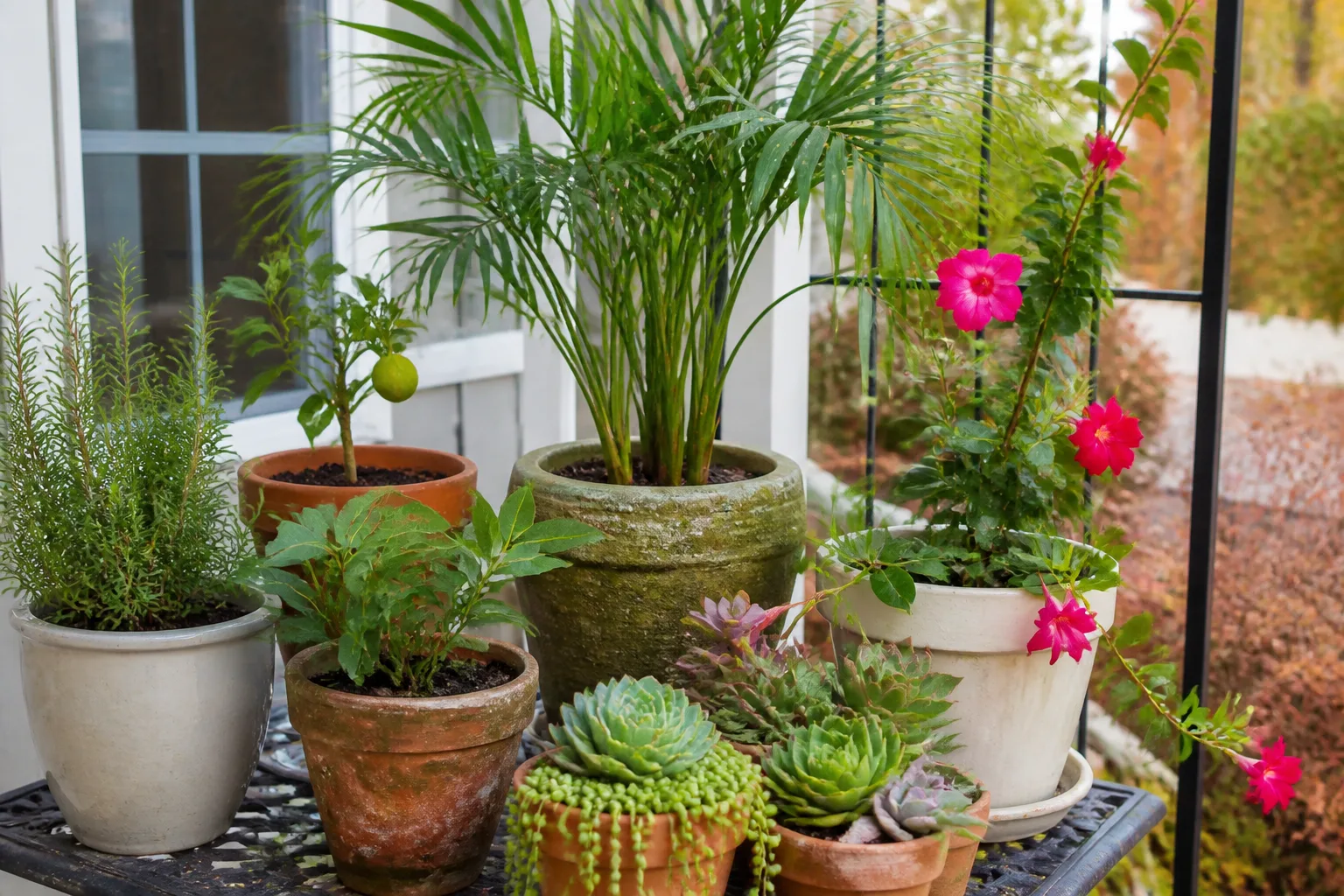
This method works best for hardy dormant plants in substantial containers and climates without prolonged, extreme freezes. It is not a guarantee for a marginally hardy shrub in a small pot. If a plant would be marginal in the ground, outdoor grouping and pot wrapping may only reduce risk; moving it to cold storage is usually more dependable.
Use an unheated structure for dormant plants
A garage, shed, cold frame, or three-season porch can protect a dormant plant from wind and rapid temperature changes while still supplying the cold period it needs. Iowa State Extension gives 20–45°F (-7 to 7°C) as a moderate-cold range for container-grown trees, shrubs, and perennials kept dormant. That range is useful guidance, not a universal target for every species; check the plant’s requirements and measure the actual space, because garages can swing above 45°F on sunny days and below 20°F overnight.
A dark space is suitable only for plants that have naturally entered dormancy or are being stored in a dormant state. Keep the pot away from a furnace, hot-water heater, or sunny window that wakes the plant prematurely. Leave room for air circulation, remove dead or diseased material, and place pots where they cannot freeze against an exterior garage door.
Check the mix every couple of weeks during a mild spell, then adjust the interval to the plant, temperature, and pot size. The goal is to prevent the root ball from becoming bone dry without leaving it wet. If the room is consistently below freezing, it is not frost-free storage; if it stays warm, the plant may break dormancy too early and produce weak growth.
Bring tender plants into a suitable indoor space
Before moving a tender container indoors, inspect leaves, stems, soil surface, and drainage holes for pests. Remove fallen leaves and weeds, wipe the outside of the pot, and rinse foliage if appropriate for the species. Keep returning plants apart from established houseplants while you watch for hitchhiking insects; Minnesota Extension recommends checking plants before they come inside because pests such as aphids, spider mites, and scale can spread indoors.
Place actively growing tropical plants in the brightest suitable window or under a grow light. Keep them away from cold glass, heating vents, and drafts. Reduce watering as growth slows, but use the plant’s moisture needs rather than a shared calendar. A dormant geranium may be stored with little light and water; a leafy citrus tree cannot use that same routine.
If you need more detail on deciding which outdoor containers should move indoors, use this guide to bringing potted plants inside for winter. The key distinction is whether the plant needs a cold dormant rest or warmth and light to remain alive. Do not keep a cold-hardy perennial in a heated room for months unless its species-specific instructions call for that.
Prepare containers before the ground freezes
Winterizing is easier when you prepare in stages instead of reacting to the first hard freeze. Group plants by destination, label pots with the species and intended storage method, and move the most tender plants first. A forecast is more useful than a fixed calendar date because frost timing and severity vary by year and by yard.
Fix drainage and protect the pot itself
Clear blocked drainage holes and remove saucers that could hold water under outdoor pots. Raise containers slightly on pot feet or bricks where appropriate so excess water can escape. Do not add a layer of gravel inside a pot as a substitute for drainage; the water still needs an open route out of the container.
For frost-prone ceramic or terracotta, either store the empty decorative pot in a dry place or protect it from repeated wet-freeze cycles. Plastic and fiberglass are generally easier to leave outdoors, but no material can compensate for waterlogged mix or inadequate plant hardiness. If you wrap a pot, insulate its sides without sealing the soil surface or blocking the drain holes.
Clean and inspect plants before moving them
Remove dead annuals and diseased foliage, but do not cut every perennial down simply because it is fall. Some plants are best left intact until their foliage dies naturally or until spring; others benefit from removing diseased material. Follow plant-specific pruning guidance so you do not remove next year’s buds or the plant’s natural winter protection.
For plants going indoors, check the undersides of leaves, stem joints, and the soil surface. Trim only dead, damaged, or diseased growth unless the species needs a more substantial cutback for storage. Avoid fertilizing dormant plants; feeding will not make them more cold-hardy and can encourage growth at the wrong time. A plant with active new growth is often more vulnerable to a sudden cold move than one allowed to follow its normal seasonal cycle.
Water by checking the root ball
A potted plant can dry out in winter, especially under an eave, inside a windy shelter, or during a long stretch without snow or rain. Evergreen leaves may continue losing moisture even when growth has slowed. At the same time, cool roots use water slowly, and persistently soggy potting mix deprives them of oxygen and encourages rot.
Check the mix with a finger or wooden skewer below the surface; a dry top crust does not always mean the whole root ball is dry. If the root zone is dry and the container is above freezing, water thoroughly enough to moisten the mix, then let excess drain. If the mix is frozen, do not pour water onto it expecting it to reach the roots. For a pot buried in soil, remember that it may drain more slowly and need less water than an exposed pot.
There is no safe universal “water every two weeks” rule. An unheated garage may need occasional water when temperatures stay above freezing, while a dormant succulent, a wet winter, or a small pot in a cold shed calls for a different approach. Check more often during mild spells, after wind, or when evergreen foliage looks dry; water less when the mix is cold and wet. RHS container-watering guidance likewise notes that evergreens may need water during dry winter spells, a reminder that “dormant” does not always mean “dry.”
Avoid common winterizing mistakes
- Using the zone label as a guarantee. It rates general plant hardiness, not the protection offered by a specific pot, balcony, wind exposure, or freeze-thaw pattern.
- Putting every plant in a heated room. Dormant perennials often need cold rest; warm storage can trigger pale, weak growth.
- Putting every plant in a dark garage. Evergreen tropicals and plants that continue growing need light and frost-free temperatures.
- Watering on the summer schedule—or never checking. Both saturation and a completely dry root ball can cause losses.
- Wrapping the entire plant in airtight plastic. That can trap moisture and heat; use breathable fabric for foliage and insulation around the container for roots.
- Mulching too early or packing wet leaves tightly. A premature, dense cover can hold excess moisture and interfere with dormancy; use loose material at the timing recommended for the plant and climate.
- Ignoring the pot. Frozen wet ceramic can crack even when the plant survives. Keep valuable frost-sensitive containers empty and dry through the coldest weather.
- Moving pests indoors with the plant. Inspect and isolate returning plants before placing them beside a houseplant collection.
Reintroduce stored plants in spring
Do not treat a warm afternoon as proof that winter is over. Keep dormant plants protected while hard freezes remain likely, then uncover them gradually as temperatures moderate. Remove mulch in stages so sunlight and air reach the crown, and return buried pots to the surface after the soil thaws and drainage is reliable.
Plants coming from a garage or greenhouse may have tender growth that formed in low light. Move them to a bright sheltered outdoor location for short periods, then increase exposure over several days to a week, adjusting for the forecast and the species. If the plant has been actively growing indoors, harden it off before leaving it outside overnight. Sudden sun, wind, or cold can scorch leaves even after the root ball is safe.
Resume watering as new growth appears, but do not fertilize until the plant is actively growing and the species’ spring care schedule begins. Prune only tissue that is clearly dead after buds swell; brown-looking dormant stems may still be alive. If a plant has not emerged when expected, scratch a small area of stem or crown to check for green tissue before discarding it, and give slow-growing perennials time to wake.
Conclusion
To winterize potted plants successfully, match the winter destination to the plant’s habit: insulate dormant hardy plants, store borderline-hardy dormant plants somewhere cold and protected, and give tender evergreens the frost-free light or warmth they need. The pot matters too. Large volume, intact drainage, sheltered placement, and breathable insulation improve the odds, but none can turn a tropical into a hardy perennial.
Before the first damaging freeze, identify each plant, choose its storage route, and check that the pot drains. Through winter, monitor moisture when the mix is thawed instead of following a rigid watering calendar. That short routine gives roots protection without sacrificing dormancy—and makes spring recovery far more predictable.



