How to Grow and Care for Chinese Fan Palm (Fountain Palm)
Chinese fan palm care: balance light, watering, drainage, feeding, and pruning; decide if your climate suits indoor or outdoor growing before planting.
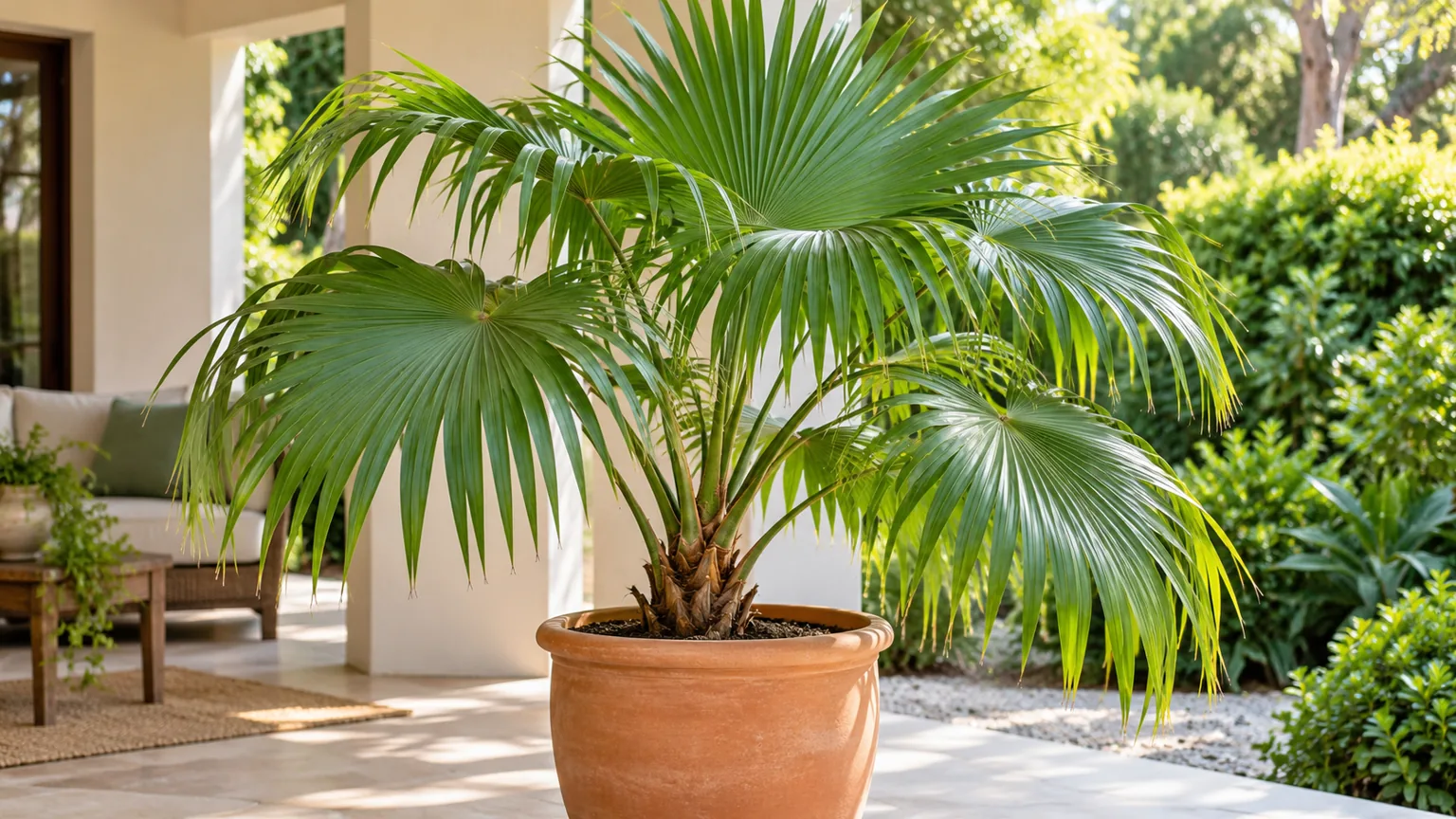
Chinese fan palm is a slow-growing palm with wide, folded leaves that form a fountain-like crown. It can live in a bright home for years or become a substantial landscape tree in a suitable warm climate, but those are different growing plans: indoors, light and root-zone moisture are the main constraints; outdoors, winter cold, eventual size, drainage, and the chance of escape matter just as much as routine care.
The accepted botanical name is Livistona chinensis. ITIS lists both “Chinese fan palm” and “fountain palm” as common names, while UF/IFAS classifies it as a tree and warns Florida growers to manage it to prevent escape. That combination makes this a plant worth understanding before planting: its graceful foliage is not a promise that it will remain small or stay confined to its original bed. ITIS taxonomic record UF/IFAS Assessment of Non-Native Plants in Florida
Meet the Chinese fan palm before choosing a spot
The fountain effect comes from the leaf shape. The large, pleated blades are fan-shaped, and their outer segments arch down at the tips. A young plant usually looks like a dense cluster of long petioles and leaves close to the soil; with age, it develops a single trunk and a higher crown. This is a solitary palm, not a clump-former that can be separated into several independent plants.
That growth habit changes how you prune, repot, and propagate it. New leaves emerge from one central growing point at the crown. If that point is cut or badly damaged, the trunk cannot produce another crown, so do not top the plant or remove a spear leaf just because it is slow to open. The species’ accepted name, family, and common names are recorded by ITIS; a practical indoor profile from Guide to Houseplants also emphasizes the palm’s size and fragile roots when moving it between pots. ITIS taxonomic record Guide to Houseplants: Chinese fan palm
Plan around the plant you have, not the small nursery pot it came in. Indoor specimens remain much smaller than landscape trees because their roots and light are restricted, but the leaves still spread widely and can crowd a narrow walkway or block a window. Outdoors, allow for a mature trunk and broad canopy rather than treating the palm as a compact accent shrub.
Decide whether it belongs indoors or in the landscape
Choose indoor container culture if you can provide a very bright position and have room for broad leaves, a stable pot, and a slow-growing but eventually sizeable plant. A young palm can spend a long time in a container, but it is not a miniature species; the crown can make the plant awkward before the trunk becomes tall. If your room only has dim corners or the palm must fit beside a frequently opened door, choose a smaller, more shade-tolerant houseplant instead.
Choose landscape culture only where winter conditions are appropriate for this subtropical palm and local planting guidance supports it. The commonly repeated “zones 9–11” shorthand is not a frost guarantee: cold duration, wind exposure, moisture, plant age, and whether the crown is sheltered all affect damage. If your garden freezes regularly, container culture lets you move a young palm to protection; if it is already a large specimen, do not assume a brief cold-tolerance claim makes it safe from a long or severe freeze.
There is also a local ecology decision. UF/IFAS currently labels L. chinensis “Caution—manage to prevent escape” in Florida and lists records from several counties. That does not mean the plant is prohibited everywhere or behaves the same in every climate, but it does mean Florida gardeners should prevent fruiting seedlings from spreading and check current local recommendations before installing it. In other warm, wet regions, consult local invasive-species lists before planting. UF/IFAS Assessment
Give indoor palms bright, filtered light
Set an indoor Chinese fan palm where it receives bright, indirect light for much of the day. A position near an east-facing window is a useful starting point; a bright south or west window can also work if a sheer curtain or some distance from the glass limits the harshest midday sun. Rotate the container a little every week or two if the crown leans toward the window, but avoid repeatedly shifting it between very different light levels.
More light is not always better on day one. A palm raised under shade can develop bleached or crispy patches if it is moved straight into hours of direct sun, especially through hot glass or outdoors during midsummer. Acclimate it gradually over two to three weeks: begin with morning sun or bright shade, then lengthen exposure while watching the newest fronds. If new growth stays compact and green, keep that position; if it scorches, return to filtered light and let the damage stop spreading.
Low light creates a different problem. Growth slows, existing leaves may lean toward the source, and the potting mix stays wet longer because the plant uses less water. Before increasing watering when a palm looks dull or droopy, check whether the room is simply too dim. Guide to Houseplants recommends a bright position for indoor Chinese fan palms and notes that they grow slowly, which is why a bright window and patient observation usually work better than trying to speed growth with extra fertilizer. Guide to Houseplants
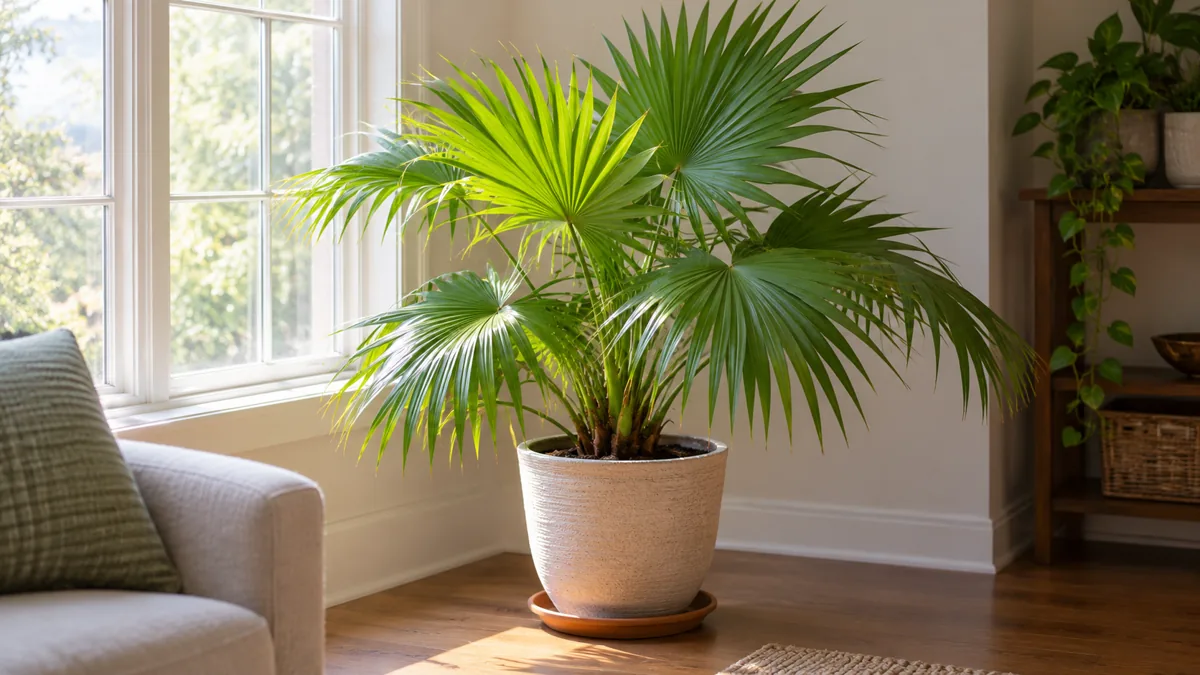
Match temperature and humidity to the season
Indoors, ordinary warm room temperatures are usually easier to manage than cold snaps or hot, drying drafts. Keep the crown away from exterior doors that open in winter, air-conditioning outlets, radiators, and forced-air heat. A sudden chill can damage foliage even when the room’s average temperature seems comfortable, while hot vent air can dry the frond tips and speed moisture loss from the pot.
Outside, use your local winter record rather than a single minimum-temperature number. A brief dip and a week of freezing nights are different exposures, and a young palm is less established than a mature tree. Where cold is marginal, plant in a sheltered microclimate with good drainage and a windbreak; keep a frost cloth available for an unexpected cold event, but do not wrap the crown so tightly that it stays wet or overheats after the freeze passes.
Moderate household humidity is often workable. If edges crisp while the soil moisture, roots, and light all look appropriate, move the palm away from dry airflow and consider a room humidifier. Misting gives only a short-lived rise in humidity and does not replace steady room conditions; avoid keeping the crown wet for long periods in a poorly ventilated corner.
Use a fast-draining soil mix
Roots need both moisture and air. Choose a loose, well-drained potting medium made for palms or combine a quality indoor potting mix with a coarse, aerating ingredient such as perlite or fine orchid bark. Avoid heavy garden soil in a pot: it compacts, drains slowly, and can remain saturated around roots long after the surface looks dry.
The container must have open drainage holes. A decorative cachepot can hide the nursery pot, but pour out water that collects in its bottom after irrigation. Do not add a gravel layer as a substitute for drainage holes; it does not fix a dense mix and can leave the root zone wet at the wrong level. If your palm has stayed wet for many days after watering, first check light, pot size, mix texture, and blocked holes before changing the watering schedule.
For a landscape planting, check how the site drains after a substantial rain. If a hole remains full of water or the soil is sticky and airless, choose a raised or better-drained location rather than digging a deep pocket and filling it with a small amount of amended mix. A narrow amended pocket can behave like a basin in surrounding clay, trapping water around the root ball. Keep the palm’s crown and trunk base at grade; burying the trunk does not stabilize the plant and increases rot risk.
Water by soil condition, not calendar
Water thoroughly when the upper inch or two of mix has dried, then allow excess water to drain away. The exact interval changes with pot size, light, room temperature, season, and whether the container is terracotta or plastic, so “every Sunday” is not a reliable care rule. Push a finger into the mix near the root zone or use a moisture meter as a second check; if it is still damp below the surface, wait and inspect again in a few days.
When it is time to water, wet the full root ball rather than giving it frequent sips. Pour slowly until water exits the drainage holes, let the pot drain, and empty the saucer. A small amount of water that only wets the top can leave roots dry lower down, while a pot sitting in runoff can deprive roots of oxygen. In winter, growth and evaporation often slow indoors, so the palm may need water less often; let the plant and mix, not the calendar, decide.
Outdoor palms need a different adjustment period. Water a newly planted specimen deeply enough to moisten the root ball and the surrounding soil, then check the moisture in both places during the first growing season. A root ball can dry even when nearby native soil is damp, and persistent rainfall can make irrigation unnecessary. Once established, the palm may tolerate short dry spells better than a new transplant, but prolonged drought can still cause stress, especially in hot, exposed sites.
If browning continues despite sensible watering, consider mineral salts or fluoride in tap water, fertilizer buildup, dry air, or old fronds before switching to expensive bottled water. Flush a container occasionally by watering thoroughly and allowing it to drain, and use rainwater or filtered water if your supply leaves visible crusts or the palm repeatedly develops tip burn after other causes are ruled out. Guide to Houseplants recommends letting the mix dry slightly between thorough waterings and reducing watering when indoor growth slows. Guide to Houseplants
Feed lightly and choose a palm-formulated fertilizer
Use a slow-release palm fertilizer during active growth, following the product label and the rate for container plants. Palms have particular potassium and magnesium needs, but a yellow or brown leaf is not proof that the plant needs a stronger feed. Overfeeding can injure roots or add salts to a pot that is already draining poorly, while a light indoor palm growing slowly in dim conditions will not benefit from being pushed with extra fertilizer.
For outdoor palms, UF/IFAS Extension’s Florida landscape guidance describes a controlled-release formulation with a relatively high potassium-to-nitrogen ratio and magnesium plus micronutrients; its rates are written for Florida landscapes and soils. Do not copy those broadcast rates into a small indoor pot or assume the Florida program applies in another region. Use a container label for potted plants, and check local extension recommendations before treating a suspected nutrient deficiency in a landscape specimen. UF/IFAS Extension: Fertilization of Field-Grown and Landscape Palms in Florida
Feed only when the palm can use the nutrients. Spring and summer are generally the active period in a warm, bright setting; pause or reduce feeding when growth is very slow, light is low, or the plant is recovering from root problems. If the older leaves show a recurring pattern of yellowing or spotting, take a clear photo and note which fronds are affected before buying a corrective supplement. Nutrient deficiencies may take months or longer to correct, and the old damaged tissue will not necessarily turn green again even after the cause is fixed.
Repot only when roots need room
Chinese fan palm’s slow growth is an advantage: it does not need routine annual repotting. Look for roots circling the inside of the pot, emerging through drainage holes, or pushing the root ball upward, and compare those signs with how quickly the mix dries. If the plant dries out unusually fast or has stopped growing despite adequate light and sound roots, it may be root-bound; if the soil stays wet for ages, a larger pot will usually make the problem worse.
When repotting is justified, choose a container only one size larger and with drainage holes. Slide the root ball out gently, loosen only the outside roots that release easily, and avoid tearing through the fibrous root mass in an effort to make it fit. Set the palm at the same depth it was growing before, fill around it with fresh mix, water once to settle the medium, and let it recover in bright filtered light rather than moving it into direct sun or fertilizing immediately.
A heavy pot can help stabilize a tall, top-heavy specimen, but it should not be dramatically oversized. Excess mix around a small root system dries slowly, which increases the chance of waterlogging. If the palm has reached the maximum size you can manage indoors, top-dress the surface with fresh mix when needed instead of disturbing an otherwise healthy root ball; Guide to Houseplants similarly advises waiting until the palm is genuinely root-bound and handling its roots carefully. Guide to Houseplants
Plant outdoors with long-term size in mind
Choose a spot with enough open sky for the crown and enough clearance from paths, walls, rooflines, and overhead wires. The young plant’s footprint can be misleading: the leaves spread wider than the pot or nursery root ball, and the trunk rises over time. Avoid putting it where sharp petiole margins brush a walkway or where a maintenance crew will need to cut green leaves to keep the passage open.
Plant during a mild part of the growing season when roots can establish before the harshest heat or cold. Dig a hole no deeper than the root ball and several times wider, roughen glazed sides in compacted soil, and set the palm so the top of the root ball is level with surrounding grade. Backfill with the site soil, water to settle it, and apply a modest organic mulch ring while keeping mulch away from the trunk. Do not bury the trunk or create a bowl that keeps water against the crown.
Start young plants in partial shade if they were grown under cover, then acclimate them to more sun as they establish. A site with morning sun and light afternoon shade is a sensible compromise in hot climates, while cooler coastal gardens may support more sun. If your soil is poorly drained, move the planting location or improve the broad bed rather than adding a small pocket of potting soil around the roots.
Before planting, check local status. UF/IFAS lists Chinese fan palm as “Caution—manage to prevent escape” in Florida, so fruiting plants should not be allowed to seed into natural areas, and local managers’ current guidance should take priority over general nursery descriptions. Elsewhere, check local extension or invasive-plant resources; a landscape palm can be attractive and still be a poor ecological choice in a region where it naturalizes. UF/IFAS Assessment
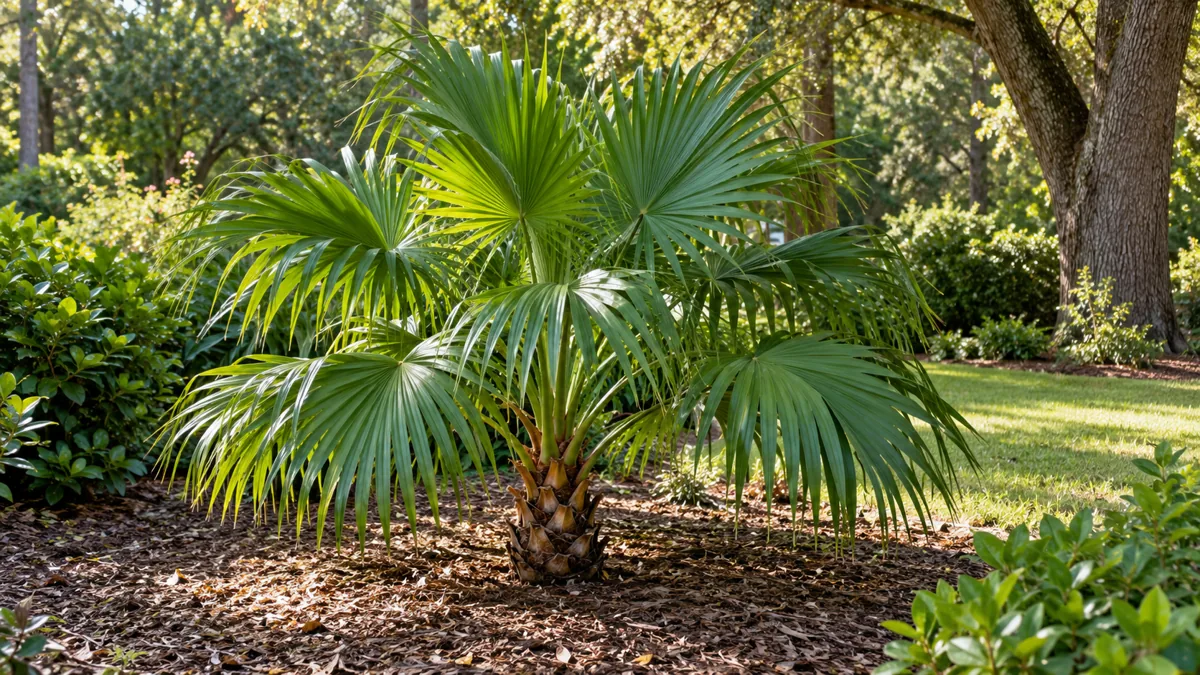
Prune dead fronds without topping the crown
Prune only fully brown, dry fronds and flower or fruit stalks you do not want, using clean, sharp tools. A frond that is partly green is still contributing energy and nutrients, even if it looks uneven, so removing it early can weaken the palm over time. Cut close to the base of the leaf stalk without cutting into the trunk or injuring the growing point; do not pull fronds off by hand.
Never “hurricane cut” the crown into a tight ball or remove every drooping leaf to make the palm look tidy. That practice strips the plant’s working foliage and leaves a less natural crown. Some petiole margins can be sharp or toothed, so wear eye protection and sturdy gloves, keep your face away from the leaves, and use a stable ladder only if you are trained to work at that height. For a tall landscape palm, hire a qualified tree-care professional rather than climbing or cutting near power lines.
Do not cut the top of the trunk to limit height. Palms do not branch from the trunk like many broadleaf trees, and the crown’s single growing point produces the new leaves. If that point is destroyed, the trunk cannot be shortened and then regrown as a healthy multi-branched tree.
Propagate from ripe seed
For a typical Chinese fan palm, seed is the dependable propagation route. The solitary trunk does not normally offer removable basal offsets, so dividing the plant as if it were a clumping palm is likely to damage it and leave a nonviable section. Outdoor mature specimens may flower and produce fruit; indoor plants rarely do, so most home growers buy fresh seed or start with a nursery-grown plant.
When you have ripe fruit, remove the fleshy outer material and rinse the seed clean. Sow fresh seed shallowly in a sterile, free-draining propagation mix, keep it evenly moist but never waterlogged, and place it somewhere warm with bright indirect light. A covered tray can retain moisture, but open it periodically for air exchange and remove the cover once seedlings emerge. Germination is irregular and can take weeks or longer, so use fresh seed and avoid repeatedly digging it up to check progress.
Move seedlings into individual pots only after they have established roots and produced enough growth to handle. Keep young palms warm, bright, and protected from strong direct sun while their leaves are small. If a plant suddenly has several apparent trunks at its base, inspect closely before separating anything: they may be multiple seedlings sharing a pot, or another palm species may have been mislabeled. Do not assume every extra shoot is a sucker. Guide to Houseplants also recommends spring sowing and cautions that germination can take about two months. Guide to Houseplants
Diagnose yellowing or brown fronds by age and pattern
A palm naturally replaces its oldest leaves, so one lower frond turning yellow and then brown while the center remains firm and new leaves emerge is not automatically a disease. Look at the pattern across the whole crown and combine it with soil moisture, recent temperature changes, pot drainage, and pests. Treating the color alone—especially with fertilizer—can make the original problem harder to identify.
Yellow lower fronds
If one or two of the oldest leaves yellow gradually while the newer central growth stays green, normal aging may be the explanation. If many leaves yellow at once, check whether the root ball is continuously wet, whether the container has open drainage holes, and whether the plant recently endured cold or a major move. Persistent wet soil, a sour smell, or a soft base points toward root stress and calls for better drainage and less frequent watering, not another feed.
If older fronds show yellowing or spotting over several months despite healthy roots and adequate light, consider nutrient balance, especially in a landscape palm growing next to a heavily fertilized lawn. UF/IFAS cautions that palm nutrient problems can take a long time to correct and that excess nitrogen can aggravate potassium or magnesium issues in some settings. Identify the affected leaf age and consult a local extension service before applying a concentrated supplement; removing symptomatic older leaves too early can hide the pattern and further reduce the palm’s reserves. UF/IFAS Extension palm fertilization guidance
Brown tips and dry edges
Brown tips can follow inconsistent watering, dry airflow, salt accumulation, or natural aging, so start with the simplest checks. Feel the mix below the surface, inspect the saucer and drainage holes, and look for a white mineral crust on the soil or pot rim. If the root zone is dry, water deeply; if it is wet, improve drainage and wait for partial drying; if water and drainage are sound, move the palm away from vents and consider flushing accumulated salts.
Trim only the dead brown portion if it bothers you, leaving a narrow brown edge rather than cutting into green tissue. Repeatedly trimming tips into a sharp contour creates more wounded tissue and does not fix the cause. If new leaves emerge smaller, pale, distorted, or stuck, inspect for pests and root damage; if only a few old tips are brown, changing the whole care routine is usually unnecessary.
Prevent and manage common pests
Scale insects and spider mites are the pests most worth checking for on a stressed indoor palm. Inspect both leaf surfaces, the petiole bases, and the center where new leaves emerge; mites can be hard to see, but fine webbing and stippled foliage are clues, while scale often looks like small fixed bumps. A magnifying glass and a repeat inspection a week later can reveal an early infestation before it spreads to nearby plants.
Isolate the palm if you find pests, then wipe or rinse accessible foliage and remove heavily infested dead material. Confirm the pest before using a product, and follow the label exactly; a product labeled for houseplants may not be labeled for every pest, location, or palm. Test any spray on a small area first and keep treated foliage away from children and pets until the label allows contact. Avoid spraying a sunlit plant or applying oil or soap to drought-stressed foliage, which can cause additional injury.
Prevention is mostly routine observation and plant health. Quarantine new plants, wipe dust from leaves, avoid letting the root ball swing between bone dry and saturated, and maintain enough light for steady growth. A healthy palm is not immune to pests, but early detection keeps a small treatment more manageable than trying to solve mites across an entire indoor collection.
Avoid five mistakes that set palms back
First, do not water on a fixed weekly schedule. Check the mix because light, season, and pot size change how quickly it dries. Second, do not keep the palm in a pot without drainage or leave standing water in a cachepot; a consistently airless root zone is harder to correct than a brief dry spell.
Third, do not move a shade-grown plant into full outdoor sun overnight. Strong light is useful only after acclimation, and scorched fronds will not recover. Fourth, do not cut green fronds or the top of the palm to force a smaller shape; that removes working leaves or the only growing point instead of solving a placement problem.
Fifth, do not copy care advice from a different palm just because both plants have “palm” in their names. BBC Gardeners’ World describes the ponytail palm as a drought-tolerant plant with very different watering needs; it is not even a true palm. That contrast is a useful reminder to identify the species before borrowing a watering schedule or soil recipe. BBC Gardeners’ World: ponytail palm care
Conclusion
Chinese fan palm care is straightforward when you match the setting to the plant’s long-term needs. Give an indoor specimen bright filtered light, a draining pot, and a thorough watering only after the upper mix has begun to dry; feed lightly and repot only when the roots need space. For a landscape palm, plan for mature size, protect it from unsuitable cold, and check local invasive-plant guidance before planting.
The most important maintenance rule is to protect the crown. Let healthy fronds remain, avoid topping the trunk, and diagnose yellowing or browning from the pattern plus the root-zone conditions rather than guessing from color alone. If you provide enough light, drainage, warmth, and room, this slow-growing palm can keep its fountain-shaped foliage for many years.



