Sago Palm Care: Light, Water, Soil, and Propagation
Learn sago palm care for indoor pots and warm-climate gardens, including light, drainage, watering, pruning, pups, cold protection, pests, and toxicity.
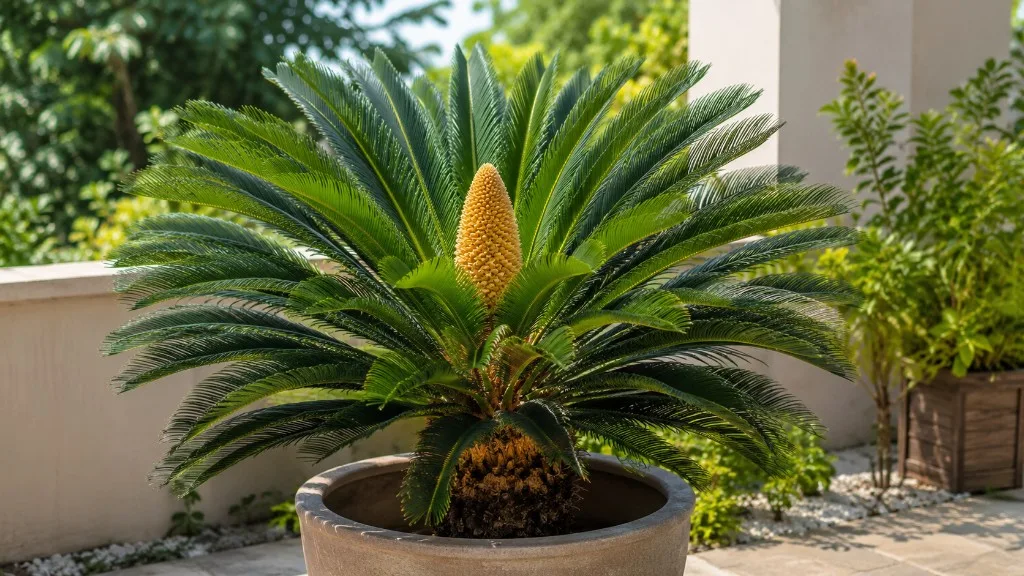
Sago palm (Cycas revoluta) is a slow, architectural plant that can live for decades when its roots stay airy and its crown gets enough light. It is also a plant that punishes casual habits: a weekly drink in a dim room, a pot with no drainage, or a sudden move from indoors to hot sun can leave the fronds yellow and the trunk soft.
The first useful correction is botanical. Sago palm is a cycad, not a true palm. It produces cones rather than flowers, stores reserves in a thick trunk, grows in flushes instead of continuously, and is toxic if eaten. Once you plan around those traits, care becomes much more predictable.
Start with the plant’s real identity
The standard king or Japanese sago palm is Cycas revoluta, a member of the cycad family Cycadaceae. It is a gymnosperm, meaning its reproductive structures are cone-like rather than true flowers. The name “palm” describes its silhouette, not its family relationship; UF/IFAS explains the difference between cycads and true palms and describes the species’ native range in southern Japan.
This distinction changes your care decisions. Sago palm is not a fast tropical foliage plant that needs constantly wet compost. Its thick trunk and roots tolerate periods of dryness, while oxygen-starved, waterlogged soil can lead to root or trunk rot. NC State Extension’s plant profile describes it as very slow-growing, drought tolerant once established, and intolerant of overwatering or poor drainage.
Expect patience rather than weekly visual change. A young plant may produce a flush of new fronds and then appear motionless for months. Mature specimens may make only one flush in a year, and the trunk can take many years to gain noticeable diameter. That is normal biology, not proof that the plant needs more fertilizer.
Decide whether a sago palm fits your home or yard
Sago palm works well as a specimen in a bright room, a patio container, a rock garden, or a warm-climate landscape. It is a poor choice for a low-light corner, a wet bed, a narrow walkway where people brush against sharp leaflets, or any home where a dog, cat, child, or horse can chew fallen plant material.
The safety issue deserves more than a small warning label. The ASPCA lists sago palm as toxic to dogs, cats, and horses; its toxic principle is cycasin, and the clinical signs include vomiting, gastrointestinal bleeding, jaundice, liver damage, liver failure, and death. All plant parts are a concern, with seeds especially dangerous. If ingestion is possible, keep the plant sample or a photograph, prevent further access, and contact a veterinarian or animal poison service immediately rather than waiting for symptoms.
Outdoor plants also need room. The Missouri Botanical Garden’s entry for Cycas revoluta lists a mature range of about 3–10 feet tall and wide, although indoor plants stay smaller for much longer. Check the botanical name on the tag before planting: several unrelated cycads share “sago” or “palm” in their common names, and common-name confusion matters when toxicity and eventual size are involved.
Give it bright, filtered light before changing anything else
Aim for four to six hours of bright filtered light indoors, such as through a lightly sheer curtain near an east, west, or bright south-facing window. Outdoors, morning sun and partial shade during the hottest afternoon hours are a dependable starting point. Mature plants can take stronger light, but a plant raised in a dim store or room needs a gradual transition.
Light controls more than leaf color. In a dim room, the plant uses water slowly, so the soil stays wet and root problems become more likely. New fronds may emerge thin, stretched, or unusually long as they reach for light. Moving the pot closer to a window or adding a grow light is a better first response than watering or feeding more.
On the other hand, bleached patches or crisp brown areas on the window-facing side can signal sunscorch, particularly after a sudden move outdoors. Filter hot midday light with a curtain, shift the pot slightly back from the glass, or acclimate it over a week. Rotate the container occasionally for even exposure, but do not keep relocating it every few days; sago palm prefers a stable rhythm.
Use gritty soil and a pot that can drain completely
Choose a porous, fast-draining potting mix made for cacti, succulents, or palms. A regular mix can work if it is opened up with coarse mineral material such as perlite, pumice, or coarse horticultural grit. The goal is not to create bone-dry soil; it is to let excess water leave quickly while a small amount of moisture remains around the roots.
Use a container with a real drainage hole. Terracotta can make dry-down easier, but plastic is acceptable when the mix and watering are adjusted to suit it. Never plant directly into a decorative cachepot with no exit hole, and do not put a layer of gravel in the bottom as a substitute for drainage. That reduces the root zone available to the plant without fixing a perched water layer.
For outdoor beds, avoid a low pocket where rain collects. Sandy or loamy soil is easier to manage than compacted clay. Epic Gardening’s sago palm guidance recommends sandy, humusy, well-draining soil and notes that compost can improve a poor bed, but compost should not turn a heavy site into a permanently wet basin.
Keep the caudex—the thick trunk-like base—at the same level it occupied in its nursery pot. Burying more of it “for stability” traps moisture against tissue that should stay exposed and can start decay. Firm the mix around the root ball without packing it hard.
Water by soil depth, not by the calendar
Water when the upper root zone has dried and the pot feels lighter, then soak thoroughly until water runs from the drainage hole. Empty the saucer or cachepot after the pot has finished draining. During active growth in a warm, bright setting, that may be every couple of weeks; in a cool, dim winter room, it may take several weeks or longer.
The exact interval depends on pot size, mix, light, humidity, and airflow. Check the soil three or four inches down with a finger, wooden skewer, or moisture meter. A dry surface alone is not enough evidence, and a fixed weekly schedule is especially risky for a slow plant in heavy soil. Get Busy Gardening’s practical care guide similarly recommends deep watering after the soil dries a few inches and emphasizes good drainage.
Use the plant’s condition to interpret the test. Dry soil with a firm caudex usually means wait a little longer. Dry soil with a slight, healthy loss of firmness means it is time for a deep soak. Wet soil with a soft, spongy, or darkening base means stop watering and inspect for rot; adding water to a stressed plant is not a rescue.
Reduce watering in fall and winter as growth slows. A heated room may feel dry to you while the pot remains wet because shorter days reduce the plant’s water use. Misting does not replace root watering and can leave water around the crown without solving a dry root zone. Water the soil surface evenly, not directly into the central growing point.
Keep temperature, humidity, and airflow steady
Sago palm prefers warm conditions and tolerates average household humidity. A stable room around 65–80°F suits active growth, while sudden cold drafts, hot furnace air, and air-conditioning vents can damage or dehydrate the fronds. Humidity in the broad range common to homes is usually adequate if light and watering are correct.
A pebble tray is optional, not a cure for poor care. If you use one, keep the pot above the waterline on the stones so the drainage hole and caudex never sit in standing water. Good airflow around the crown matters more than chasing a number on a hygrometer; stagnant dampness encourages spotting, while very dry conditions can favor spider mites.
Outdoors, protect the plant from frost even if an established specimen can survive a brief cold snap. Missouri Botanical Garden notes that plants tolerate brief dips into the high teens with foliage damage, but may not survive below about 15°F. That is a survival limit, not a target. A frost-free porch or movable container is safer than gambling with a prized landscape plant.
Feed lightly during active growth
Sago palm is a light feeder. Feed only when the plant is actively growing, the roots are healthy, and the pot is receiving enough light to use the nutrients. A balanced or palm-formulated fertilizer at reduced strength once or twice during spring and summer is usually more sensible than repeated full-strength feeding.
Follow the product label rather than copying a fertilizer volume from another pot or climate. Stop feeding in winter and after a stressful repot. Excess fertilizer can build salts in a container, brown leaflet tips, and push weak growth that is more attractive to pests. If tips are browning, check water quality, soil salt buildup, light, cold, and pests before assuming the plant is hungry.
Yellow or distorted new growth can sometimes involve manganese deficiency, especially in alkaline soils, but nutrient disorders resemble damage from wet roots, scale, cold, or sun. Correct the drainage and watering pattern first. Use a soil test or local extension advice before adding manganese; manganese and magnesium are different nutrients, and adding the wrong one will not solve the problem.
Plant a sago palm outdoors without burying the crown
In a warm, frost-limited climate, plant in spring or early fall when soil is workable and the plant has time to establish. Choose a site with bright light, some afternoon protection, good drainage, and enough space for the eventual crown. Dig a hole no deeper than the root ball and several times wider, loosen the surrounding soil, and amend only as needed for structure.
Slide the plant out without tearing the roots, set the top of the root ball level with the surrounding soil, and backfill firmly enough to remove air pockets. Water deeply once to settle the soil, then allow the surface and upper root zone to dry before watering again. Keep mulch several inches away from the caudex so the trunk base does not stay damp.
Acclimate a container plant before stronger sun
A sago palm that spent winter behind glass has not developed outdoor sun protection. Start it in bright shade or gentle morning sun for a few days, then increase exposure over roughly one to two weeks. Avoid the hottest afternoon sun, wind, and a heatwave during the transition. If old fronds scorch, do not strip them immediately; leave any green tissue in place while the plant produces or hardens its next flush.
Repot slowly and preserve the caudex
Repot in spring only when the plant is truly constrained, the mix has collapsed, roots are circling densely, water runs straight through without wetting the root ball, or the container has become unstable. Slow growth means a sago palm can remain in the same pot for several years. A large decorative pot is not automatically an upgrade; extra wet soil increases the risk of rot.
Choose a container only a little wider than the existing root ball, refresh the mix, and keep the caudex at its previous depth. Handle the trunk carefully and avoid chopping healthy roots just to fit a new pot. After repotting, water enough to settle the mix but do not keep it saturated while disturbed roots recover. Do not fertilize immediately.
The most important repotting decision is often not to do it. If a plant is green, stable, draining normally, and not root-bound, leave it alone and top-dress lightly with fresh mix when the surface has settled. Unnecessary root disturbance can cost a plant an entire growth flush.
Prune finished fronds and protect yourself
Remove fronds only when they are fully brown, dry, or clearly dead. Yellowing lower fronds may be aging naturally, but they are still transferring nutrients while any green tissue remains. Cutting them early does not make new leaves appear and can leave the plant with fewer reserves.
Wear gloves and long sleeves when pruning. The leaflet tips can be sharp, and every part of the plant is toxic if swallowed. Use clean, sharp pruners and cut an old frond close to the trunk without gouging the caudex. Bag fallen fronds, seeds, and trimmings rather than leaving them where pets or children can investigate.
Never cut off the central growing point to make a sago palm shorter. The crown is where the next flush emerges; damaging it can permanently disfigure or kill the plant. If the plant is too large for the room, relocate it or choose a smaller specimen rather than trying to top it like a woody shrub.
Read cones, new flushes, and slow growth correctly
Sago palms are dioecious: individual plants are male or female. A male produces a tall, cone-shaped pollen structure, while a female can form a rounded, fuzzy seed structure that develops orange or red seeds after pollination. A lone indoor plant rarely produces viable seed, and cone production is uncommon in typical houseplant conditions. UF/IFAS documents the separate male and female structures.
When a new flush appears, it may look soft, pale, or loosely arranged before the leaflets harden. Do not prune or force it open. Keep the plant in steady light, avoid moving it, and water only when the root zone calls for it. Cones and new fronds can temporarily change the plant’s appearance without signaling a deficiency.
The same patience applies after a setback. A plant may keep a bare crown for a long time after cold or root damage and still recover if the caudex remains firm and the growing point is alive. Remove dead tissue only after it is clearly finished, and judge recovery by the next healthy flush rather than by day-to-day size.
Propagate from basal pups
The practical home method is division of a basal pup, also called an offset or sucker. Pups form around the parent’s base and may be loosely attached or joined by firm tissue. Spring or early fall is a good time because warm conditions support rooting without the extreme heat or winter slowdown that increases stress.
Choose an offset with a firm base and some roots of its own. Tiny, rootless bumps are more likely to rot or stall than a pup that has begun to resemble a small plant. Prepare a clean knife or narrow saw, a small pot with drainage, and a gritty mix before you start. Because the plant is toxic and sharp, work where pets and children cannot reach the tools or debris.
Root an offset with the least possible rot risk
Unpot the parent if necessary and expose the attachment point gently. Cut the pup away while preserving as much of its own root tissue as possible; do not tear it until the base is ragged. Let the cut surface dry in bright shade for several days so it can seal. This callus is not a guarantee, but it reduces the chance that a fresh wound stays wet in the pot.
Set the pup shallowly in barely moist or dry fast-draining mix, with its base supported but not buried deeply. Put it in warm bright shade, then water sparingly as roots develop over weeks or months. A loose pup may need a stake for stability, but do not compress the mix around it. New growth is the proof of establishment; tugging on the plant to check for roots only breaks them.
Grow from seed only when the project makes sense
Seed propagation is possible but slow and less predictable. You need properly pollinated seed, usually from a male and female plant, and a willingness to wait months for germination and years for a substantial specimen. The seeds are also among the most hazardous plant parts if swallowed, so seed handling needs the same strict access control as pruning.
Remove the outer coating while wearing gloves, soak seed briefly in room-temperature water, and sow it shallowly in a clean, fast-draining seed mix. Keep the medium lightly moist—not waterlogged—and the container warm, roughly 70°F or above. Ventilation matters because warm, wet, stagnant seed mix rots quickly. Pot up only after the seedling has a usable root system and several leaves.
For most home growers, a healthy rooted pup is the better choice. Seed is worthwhile when you want to observe the plant’s life cycle, have verified viable seed, or are working with a conservation or collection project. It is not a shortcut to a mature sago palm.
Diagnose yellow leaves, brown tips, and wilt
Start with the pattern, not the color. One or two old lower fronds turning yellow can be normal aging. Widespread yellowing in a wet pot suggests a root-zone problem; yellow stippling with fine webbing suggests mites; white or brown crusts under leaflets suggest scale; new growth that is distorted or streaked can point to cold, nutrition, or pest damage.
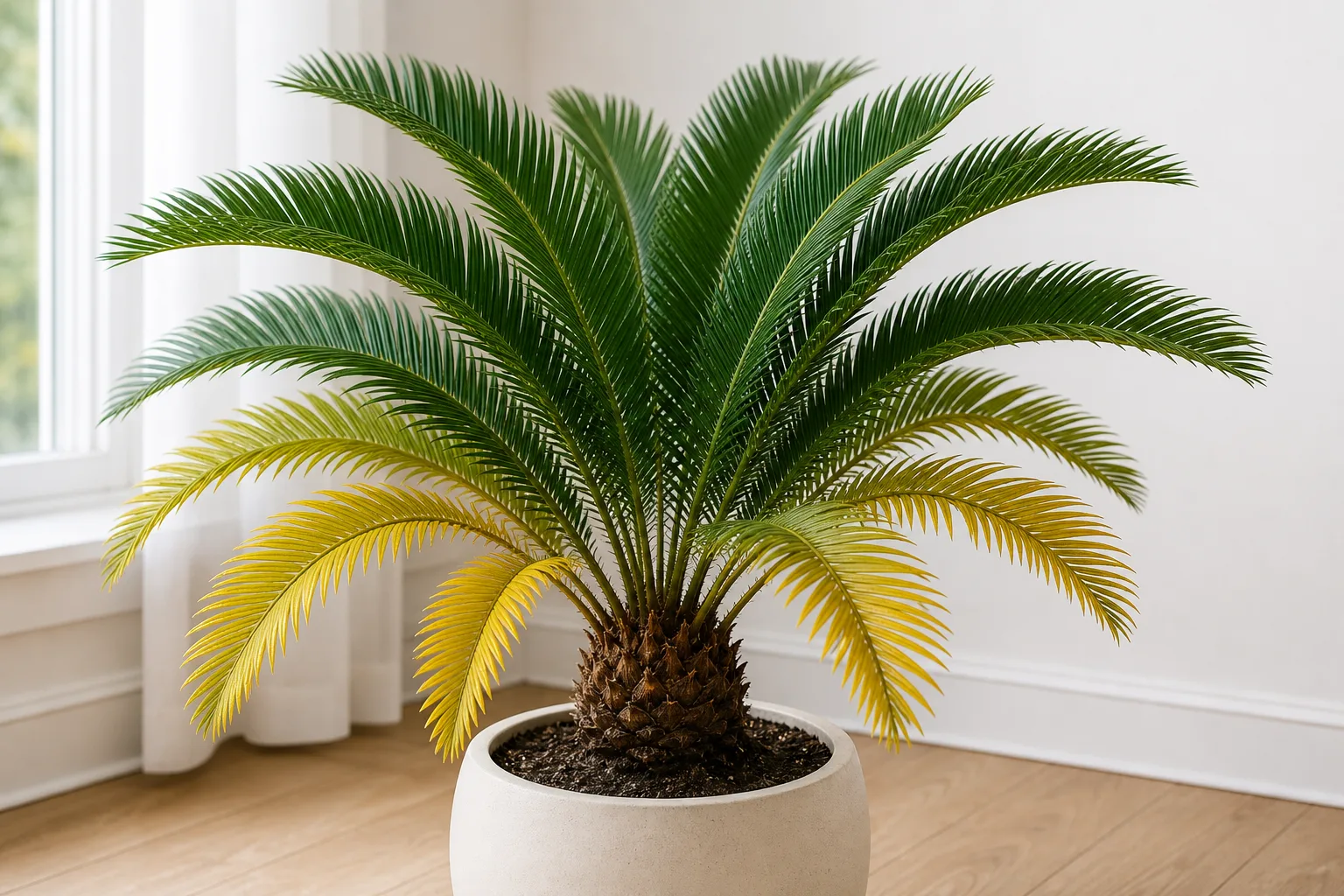
Use this first-action guide:
| What you see | More likely pattern | First action |
|---|---|---|
| Older outer fronds yellow, base firm, soil drying normally | Natural aging or mild stress | Wait; remove only when fully brown |
| Many fronds yellow with wet mix or soft base | Overwatering or rot | Stop watering, inspect drainage and roots |
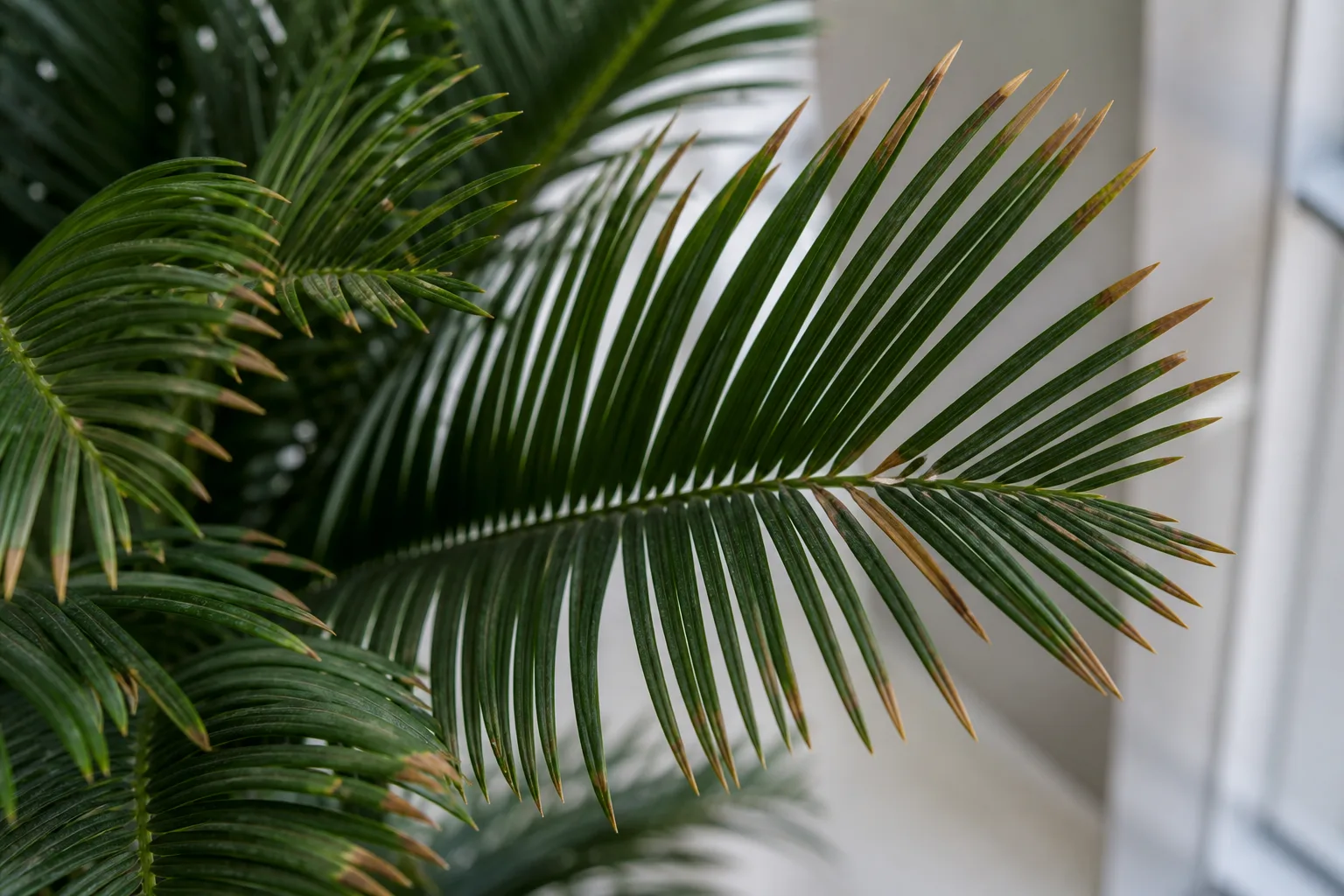
| Dry brown tips on otherwise green fronds | Dry-down stress, salts, sun, or cold | Check soil depth, light, water quality, and drafts |
| Pale stretched new fronds | Insufficient light | Move closer to bright filtered light or supplement |
| Brown sun-facing patches after a move | Sunscorch | Return to filtered light and acclimate gradually |
| Wilting with wet soil | Root damage, not thirst | Check roots and caudex before watering again |
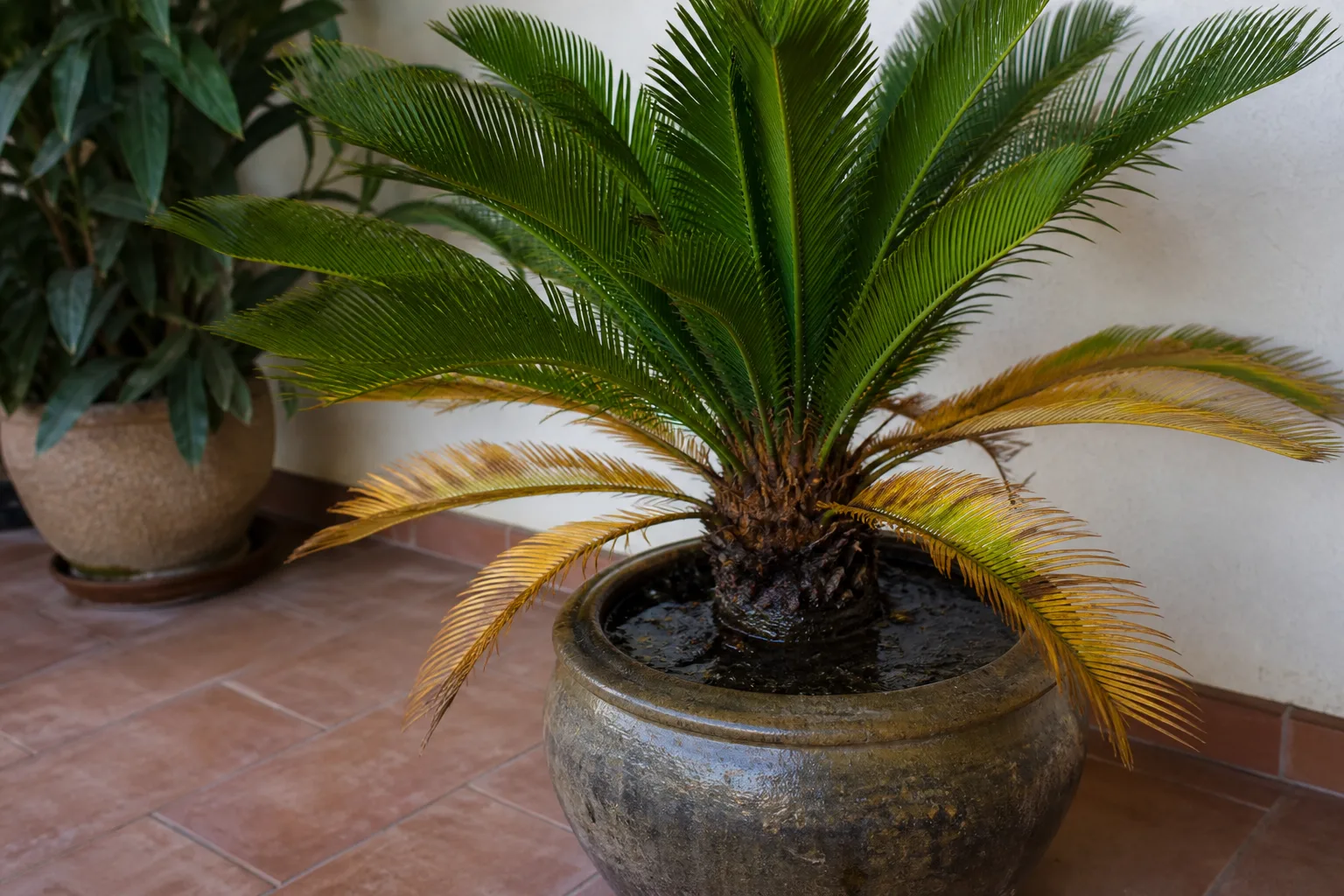
If the base is firm and the soil is dry, a deep soak may be appropriate. If the base is soft, the pot smells sour, or roots are brown and mushy, isolate the plant, remove it from the wet mix, trim only dead roots with sterile tools, and repot into fresh dry-draining medium. Severe trunk rot may not be reversible. Do not use a fungicide as a substitute for fixing the water and drainage conditions that caused the problem.
Manage scale, mites, and sooty residue
Inspect the undersides of leaflets, central stalks, and the fibrous trunk when bringing a plant home or moving it indoors. Scale can look like fixed white, tan, gray, or brown bumps; spider mites cause fine stippling and webbing, especially in hot dry air; mealybugs look cottony. Sticky residue can support black sooty mold, which is a clue that sap-feeding insects are present.
Start with isolation and a gentle rinse if the plant and potting setup allow it. Remove a small number of visible insects with a cotton swab, then use insecticidal soap or horticultural oil only according to the product label and only after checking that the product is suitable for cycads. Test a small area first, avoid hot sun during treatment, and repeat at the label interval because one spray rarely reaches every life stage.
The cycad aulacaspis scale deserves special attention in warm-climate landscapes. UF/IFAS identifies this armored scale as a serious pest of cycads and notes that it concentrates on lower frond surfaces and can also infest roots. Heavy white crusting, progressive browning, and decline call for local extension or certified arborist help; persistent infestations can spread on plant material. Do not move an infested plant to a patio or garden, and do not improvise pesticide rates.
Protect outdoor and patio plants from cold
If you grow sago palm in a pot outside a warm hardiness range, treat it as a seasonal patio plant. Bring it indoors before frost or before a forecast of prolonged nights near 50°F, and check the plant for pests before placing it near other houseplants. A move indoors also means lower light and slower water use, so reduce watering rather than carrying the outdoor schedule inside.
In a warm landscape, mulch can buffer the root zone, but mulch should not touch the caudex. A brief cold event may burn the fronds while leaving the growing point alive. Wait until the damage is clearly dry before pruning, then protect the plant from a second stress while it rebuilds.
Plan the move before the plant is too large to lift safely. Mature sago palms are heavy, spiny, and awkward, and a damaged back or dropped pot is a preventable problem. If a landscape specimen is too established to cover or move, use local extension guidance for your exact climate rather than relying on a generic temperature number.
Conclusion
Successful sago palm care is mostly a sequence of good decisions: give Cycas revoluta bright filtered light, use a fast-draining mix, water deeply only after the root zone dries, and keep the caudex at the correct depth. Feed sparingly, repot only when evidence says the plant needs it, and leave yellowing fronds alone until they are fully brown.
Treat toxicity as part of placement, not an afterthought. Keep every part away from pets and children, wear gloves around the sharp foliage, and propagate from a firm rooted pup when you want a second plant. With drainage, stable light, and realistic expectations about its slow growth, a sago palm can be a remarkably long-lived container or landscape specimen.



