How to Grow Bleeding Hearts: Planting and Care
Learn how to grow bleeding hearts with the right shade, soil, water, planting depth, pruning, propagation, winter care, and troubleshooting.
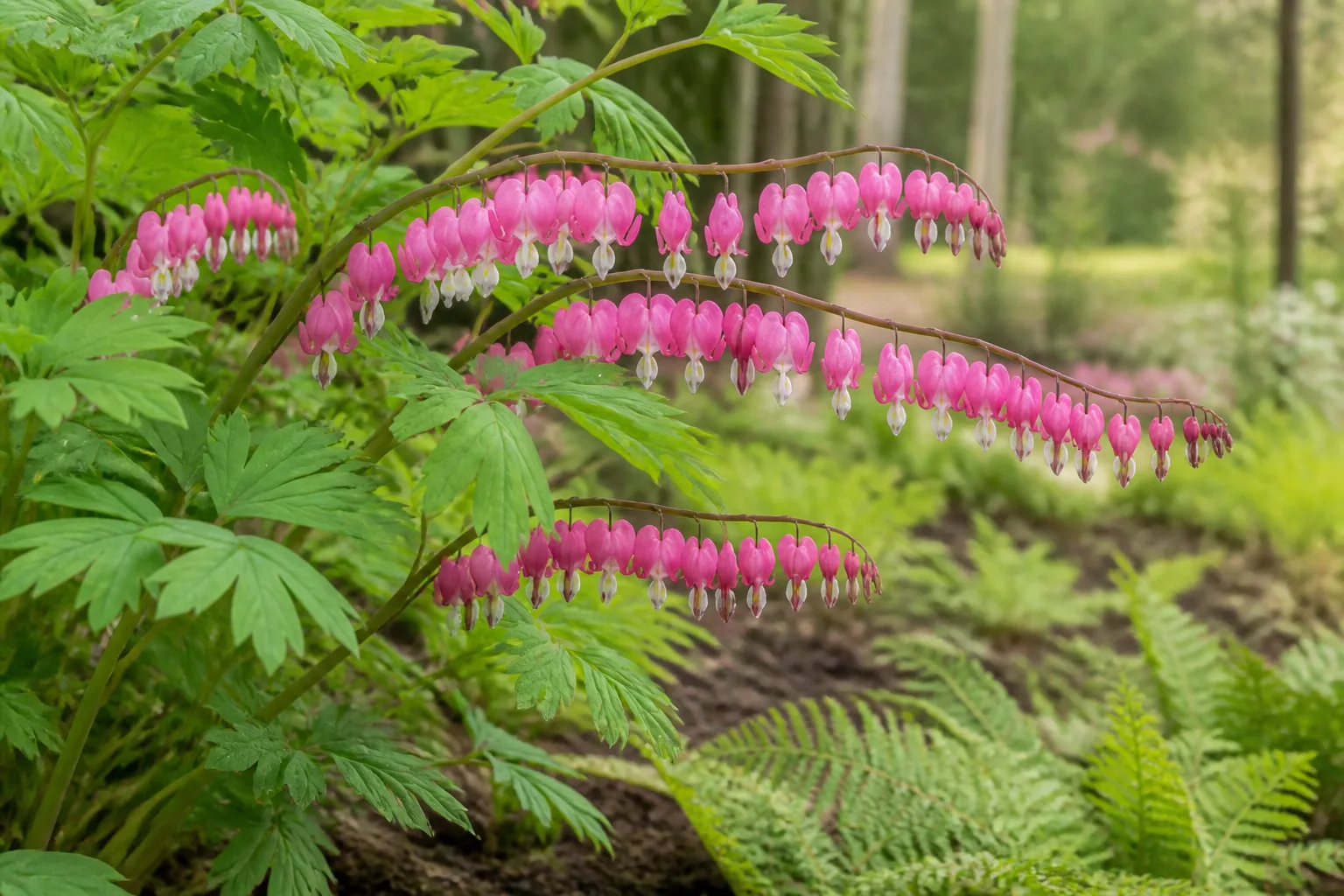
Bleeding heart (Lamprocapnos spectabilis, formerly Dicentra spectabilis) is a spring perennial with an unusually clear personality: it wants the cool, evenly moist conditions of a woodland edge, gives you a dramatic flush of pendant pink-and-white flowers, and then retreats as summer heat builds. That retreat is not a care failure. It is part of the plant’s calendar.
The reliable formula is simple but not careless: bright shade or morning sun, afternoon protection, humus-rich soil that drains freely, and consistent moisture while the foliage is active. Get those conditions right and the plant is a low-maintenance perennial in USDA Zones 3 through 9, depending on the cultivar and local climate. The Missouri Botanical Garden describes the classic form as a 2- to 3-foot plant for part shade to full shade, while Wisconsin Horticulture notes that cool, moist climates can support more sun than hot or dry ones.
Understand the bleeding heart’s seasonal cycle
The old-fashioned bleeding heart emerges early, often before the rest of a shade border has filled in. Reddish new shoots unfurl into divided, fernlike leaves, followed by arching stems lined with heart-shaped flowers. Bloom timing varies by climate, but spring through early summer is the normal window; the Wisconsin Extension profile records racemes with several dangling flowers and notes that the plant commonly begins to senesce by August.
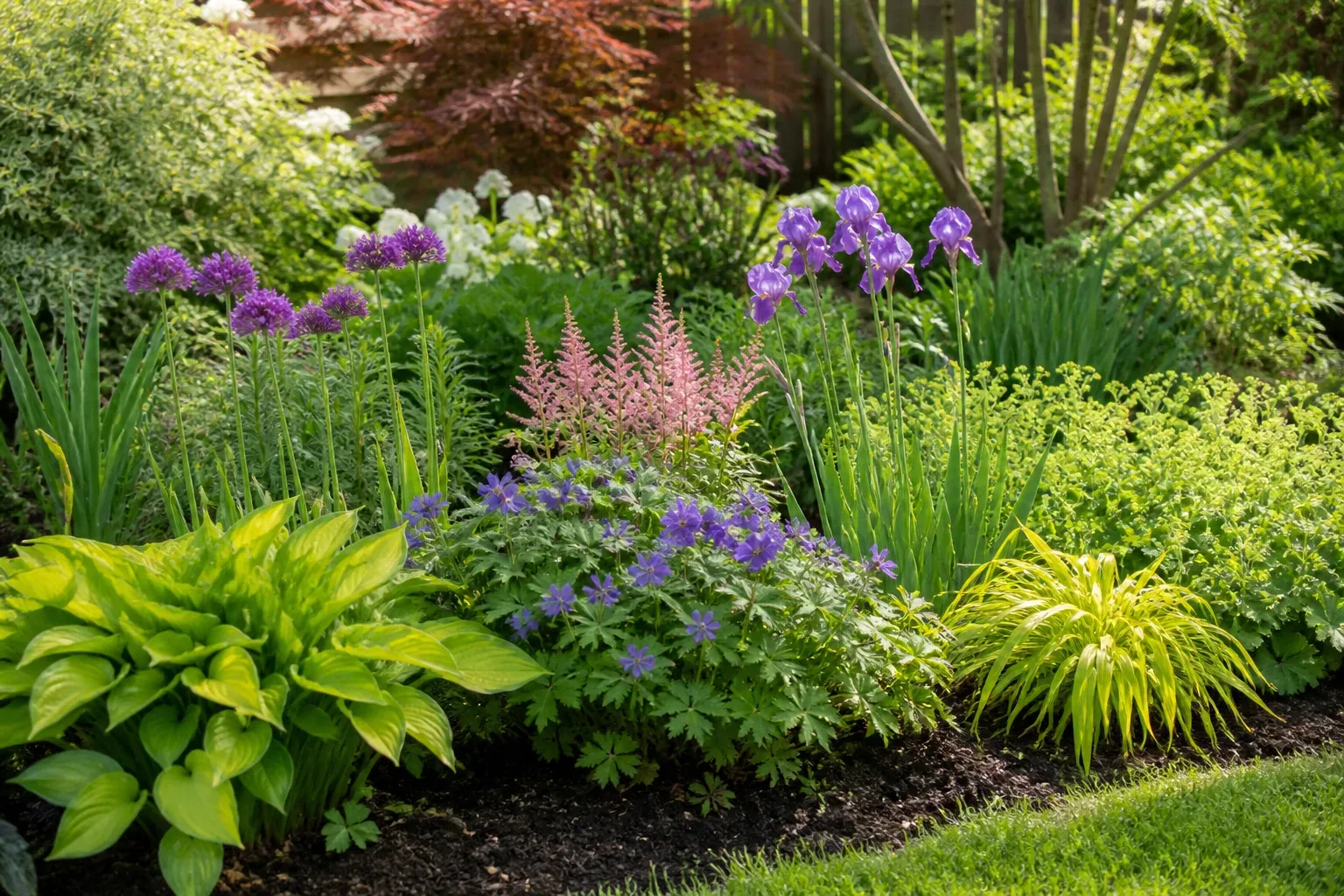
After flowering, the foliage may fade quickly when the weather turns hot or the soil dries. In a cool, moist garden it can remain attractive longer, but no watering trick will make a classic bleeding heart behave like a summer-long bedding plant. Plan for the gap. Later-emerging hostas, ferns, astilbe, and ground covers can hide the yellowing foliage and take over the space while the bleeding heart stores energy below ground.
That cycle also explains why a plant that looks “dead” in July can be perfectly healthy. Check the crown and soil rather than judging the leaves alone. If the foliage declined gradually after bloom and the crown is firm, let the plant rest; if it collapses suddenly while the soil is wet, investigate the roots and crown for rot.
Choose a site with the right shade and shelter
The best location receives morning sun and afternoon shade, or bright filtered light beneath deciduous trees. Full shade is tolerated, but dense darkness can produce a looser plant and fewer flowers. Full sun is an exception for cool climates with dependable moisture, not a safe default for a hot, exposed border. NC State Extension’s plant profile specifically describes morning sun with afternoon shade as the preferred exposure and says full sun is most workable in a cool, moist climate.
Use the plant’s foliage as a site test. If leaves bleach, scorch, or disappear unusually early while the soil is not dry, the spot may be too bright or hot. If stems stretch toward a narrow beam of light and flowering is weak, the site may be too dark. A north- or east-facing bed, the sheltered side of a shrub border, or the bright edge of a woodland garden is usually easier to manage than an open west-facing bed.
Shelter matters because the stems and roots are fleshy and easily disturbed. Avoid a wind tunnel, a location where roof runoff floods the crown, and a bed that bakes against paving. Leave enough room for a mature clump—roughly 2 to 3 feet tall and 1.5 to 2.5 feet wide for the classic form—without wedging it between aggressive ground covers.
Build soil that stays moist but drains
Bleeding hearts need a soil paradox: water must remain available around the roots, but excess water must move away before the crown sits in a cold, airless pocket. Aim for soil that is rich in organic matter, moisture-retentive, and well drained, with a neutral to slightly acidic reaction in many gardens. NC State notes that the plant can tolerate clay and sand when moisture is managed; the structure and watering pattern matter more than chasing a perfect number.
Before planting, loosen a broad area rather than creating a small pocket of amended soil in a hard bed. Mix finished compost or leaf mold into the top layer if the soil is thin or compacted. Do not fill a planting hole with pure compost: the sharp boundary between loose amendment and surrounding soil can hold water around the root ball and encourage poor rooting.
Test drainage by filling the empty hole with water and watching how quickly it disappears. If water remains for hours, improve the bed’s structure or choose a different location; piling a small mound over a persistently wet site can help, but it is not a substitute for a drainage plan. The Missouri Botanical Garden’s species profile warns that the plant dislikes wet winter soils and dry summer soils, which is the central soil-management rule to remember.
Plant bleeding hearts without burying the crown
Plant nursery-grown bleeding hearts in spring or early fall, choosing a cool, calm day when the ground is workable. Dormant bare roots and divisions can go in very early spring or late fall. Gardening Know How’s planting guidance also emphasizes matching the planting method to whether you have a bare root, tuber, or container plant. Dig a hole wide enough for the roots to spread naturally, then water the plant once after backfilling to settle the soil. After that first deep watering, return to a moisture check rather than automatically watering every day.
Handle bare roots, tubers, and container plants differently
With a bare-root plant, identify the short, thicker crown and any visible buds before it goes into the ground. Set the roots downward and outward, with the crown shallow—generally around 1 inch below the soil surface, following the supplier’s directions if they specify a different form. Buds should point up. A crown planted too deeply stays wet and may rot before the shoots reach daylight.
If you receive a small tuber or rhizome-like piece, do not bury it as if it were a deep bulb. Look for the growing eye, orient it upward, and cover it lightly. The goal is stable contact with moist soil, not a thick blanket of soil over the top.
For a container-grown plant, match the existing soil line rather than automatically using the bare-root depth. Tease only circling roots that are truly constricted; the brittle, fleshy roots do not benefit from rough handling. Firm the surrounding soil gently, keep mulch a few inches away from the crown, and label the spot so you do not disturb it when the foliage disappears.
Water for steady growth, not soggy roots
During active growth, water when the upper layer of soil begins to dry rather than waiting for the whole root zone to become dusty. A new planting may need checking several times a week in warm, windy weather; an established plant in deep, moisture-holding soil may need much less. Water slowly at the soil line so the root zone is moistened without keeping the leaves wet overnight.
There is no universal “one inch per week” setting that overrides rain, soil, and temperature. Use a finger, a trowel, or a moisture meter to compare the surface with the soil a few inches down. If the surface is dry but the lower soil is cool and damp, wait. If both are dry and the plant is still leafy, water deeply. If the soil is wet and the plant wilts, do not add water; check drainage and the crown instead.
Once summer dormancy is obvious, reduce irrigation. The roots should not be abandoned in prolonged drought, especially in a container or under a roof overhang, but dormant soil should not be kept constantly saturated. This adjustment is one of the easiest ways to prevent the two opposite mistakes—drying the plant before it has stored enough energy, or rotting it while trying to keep it green.
Use mulch and fertilizer sparingly
A 1- to 2-inch layer of shredded bark or leaf mold helps mimic a woodland floor, moderate soil temperature, and slow evaporation. Keep a bare ring around the crown and stems so the mulch does not trap wetness against tender tissue. Refresh the layer when it thins, rather than piling new mulch over old layers every season.
Bleeding hearts are not heavy feeders when the soil is already rich. In early spring, top-dress with a thin layer of compost or leaf mold. Only use a balanced slow-release fertilizer if a soil test or weak growth suggests the bed is genuinely deficient. Extra nitrogen can produce soft foliage without fixing shade, moisture, drainage, or a plant that is naturally preparing for dormancy.
Prune after flowering and during summer dieback
Do not cut the foliage immediately after the flowers fade just because the plant looks untidy. Green leaves are still photosynthesizing and replenishing the crown for the next season. You can remove spent flower stems for appearance, but leave healthy leaves until they yellow and collapse naturally.
When the foliage is fully brown and brittle, cut stems close to the ground and remove the debris if the bed had leaf-spot or mildew. If you cut green foliage hard in spring, expect a weaker return next year. A late-season cutback may sometimes encourage a fresh flush of leaves or flowers, but it is not a guaranteed rebloom strategy and it costs the plant time to rebuild reserves.
Choose a cultivar for color, size, and climate
The classic pink form is the familiar choice, but cultivars can change the plant’s color, foliage, vigor, and footprint. ‘Alba’ has white flowers and can be a quieter choice for a moonlit shade garden. ‘Gold Heart’ combines pink flowers with yellow-gold foliage, which can brighten a dark border but may need protection from harsh light. ‘Valentine’ has deep red flowers and dark stems for stronger contrast.
Check the mature dimensions and local performance before buying, not just the flower photograph. The Royal Horticultural Society’s cultivar listings are useful for comparing named forms, while the Wisconsin Horticulture profile points out that fringed and western bleeding hearts are different species with different foliage persistence and bloom habits. Do not assume that every plant sold as a “bleeding heart” wants the same space or handles the same heat.
Propagate by division when the plant is dormant
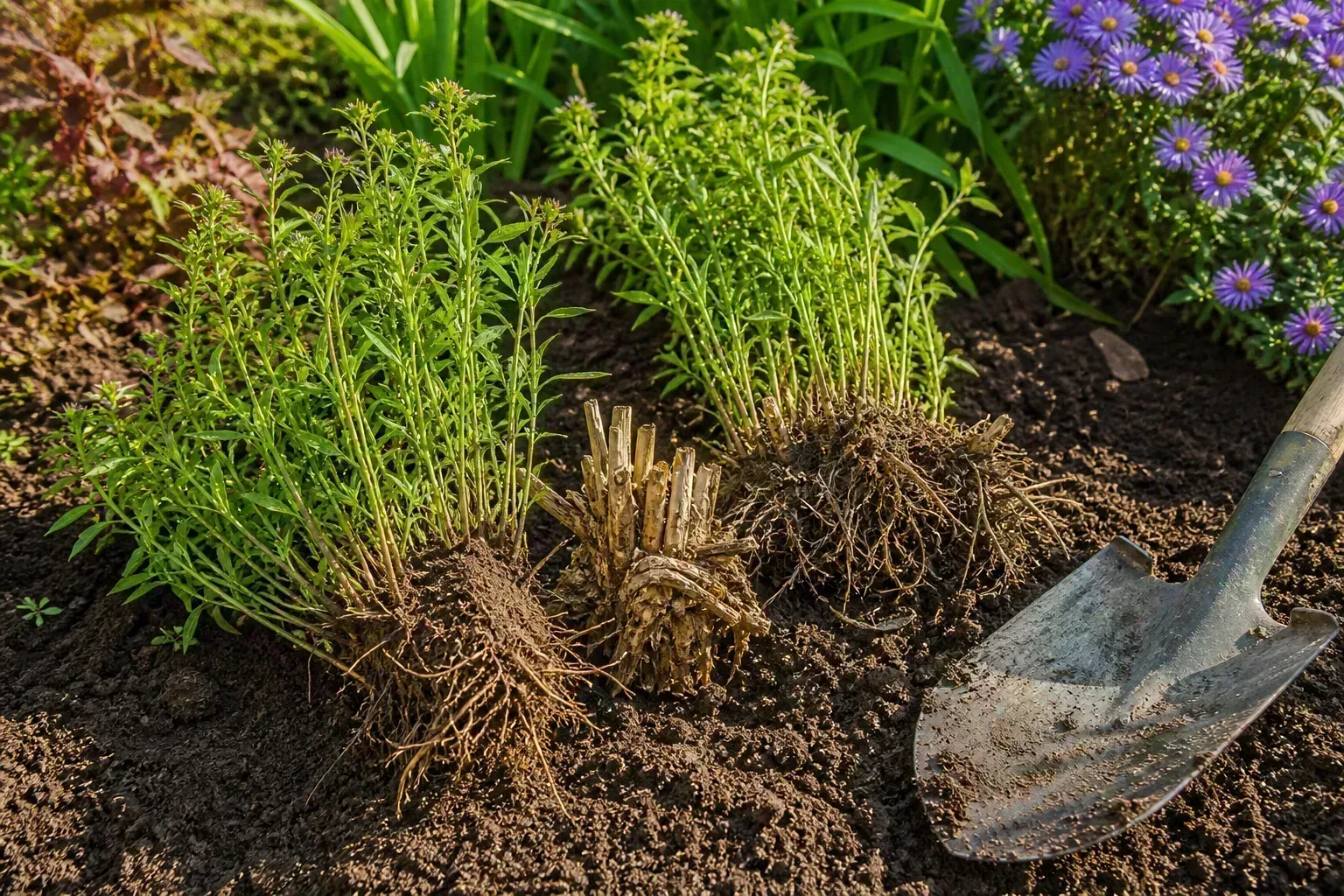
Division is the most predictable way to make more classic bleeding hearts because you begin with a piece that already has a crown and stored energy. Work in early spring as growth begins or in fall after the foliage has gone dormant. Water the plant the day before if the soil is dry, then lift a generous root ball with a sharp spade rather than tugging on the stems.
Find the buds or eyes on the crown and separate the clump with a clean, sharp knife. Each division needs at least one viable growing point and enough fleshy root to support it; two or three buds make a more forgiving division. Replant promptly at the original shallow depth, water thoroughly once, and keep the new divisions evenly moist while they re-establish.
Treat the roots as fragile. Do not divide a heat-stressed plant in midsummer, and do not divide simply because the foliage has disappeared—that is the normal summer habit. If the plant is thriving and has not outgrown its space, leaving it intact may produce a better display than making small divisions.
Use seed or cuttings when patience is part of the plan
Seed is rewarding but slow. Fresh seed benefits from a cold, moist period before it germinates, which is why autumn sowing outdoors often works better than treating it like a warm-season annual. Gardener’s Path’s propagation notes likewise describe seed as a patient route, with cold stratification and transplanting challenges. Indoor seed-starting requires patience and careful transplant timing; seedlings can take years to reach a substantial flowering size, and moving them after emergence may delay bloom.
Stem cuttings are possible in spring to early summer, but they are less straightforward than division and need consistently moist, airy media and indirect light. Use clean tools, take cuttings from healthy growth, and do not expect a new cutting to provide an instant flowering clump. For most gardeners, buy a plant for immediate impact and reserve propagation for a dormant division or a deliberate seed project.
Grow bleeding hearts in containers with realistic expectations
A bleeding heart can grow in a large container, but a pot is less forgiving than a woodland bed. Choose a wide container with drainage holes and enough room for the fleshy root system—about a 12-inch pot is a practical starting point for a young plant, but larger is better for a mature clump. Use a quality potting mix that holds some moisture while draining freely; garden soil can compact in a pot.
Place the container where it receives bright shade or gentle morning sun, and monitor it more often than an in-ground plant. Pots heat and dry from the sides, yet the drainage hole can still sit in a saucer of water after rain. Empty the saucer, protect the container from harsh afternoon heat, and move it only when the plant is dormant or when the current position is clearly unsuitable.
Expect summer dieback in a container too. Once the foliage has fully browned, the pot can be kept in a cool, protected place with minimal moisture, but do not store it in a warm indoor room and expect normal spring flowering. The plant needs seasonal cold; a sheltered outdoor position is usually more natural than trying to make it a permanent houseplant.
Prepare dormant plants for winter
In a garden bed, winter care is mostly about avoiding winter wet and preventing repeated freeze-thaw exposure from heaving a shallow crown. After the top growth is fully dormant, remove dead stems and apply a modest layer of organic mulch, especially in cold or exposed sites. Pull mulch back from the crown when spring growth begins so emerging shoots are not smothered.
Do not keep watering on a fixed summer schedule through cold, wet weather. A plant that is hardy in your climate can still fail in a poorly drained bed. Container plants need extra protection because roots above ground experience colder temperature swings; group pots in a sheltered location and ensure drainage remains open.
Prevent pests and respond to disease early
Bleeding hearts usually have few serious pest problems, but aphids may cluster on tender shoots or flower stems, and slugs can chew the foliage in cool, damp beds. Start with inspection: look beneath leaves, check for sticky residue or distorted growth, and examine the soil surface after dark for slug activity. Improve airflow and reduce hiding places before reaching for a spray.
Wet shade can also favor fungal leaf spots and powdery mildew. Water at the soil line, space plants so air can move, and remove badly spotted leaves rather than composting diseased material if your compost does not reliably heat. Use any pesticide or fungicide only according to its label and only after confirming the problem; a generic spray can injure beneficial insects and will not correct a wet planting site.
Separate normal yellowing from a real problem
Use this sequence when a bleeding heart turns yellow:
- Check timing. Yellowing after flowering as heat rises is often normal dormancy, especially if the change is gradual and widespread.
- Check moisture. Dry soil can force early dieback; constantly wet soil can damage roots. Correct the pattern, not just the leaf color.
- Check light. Hot afternoon sun can shorten the display and scorch foliage even when the plant is watered.
- Check the pattern. Discrete brown or black spots, halos, gray mold, sudden wilt, or a foul-smelling crown point toward disease or rot rather than ordinary dormancy.
If the crown is soft, blackening, or foul-smelling, isolate the problem by removing affected material and improving drainage. A plant that is simply yellowing in late summer should not be dug up or treated as diseased. The difference between gradual seasonal decline and sudden tissue collapse is more useful than the color alone.
All parts of Lamprocapnos spectabilis are poisonous if ingested, and NC State Extension also flags possible contact dermatitis. Wear gloves when handling the plant, wash up afterward, and keep prunings away from children and pets. Pet Poison Helpline reports alkaloid toxins that can cause neurological signs after ingestion; the risk and response depend on the animal, amount, and circumstances, so contact a veterinarian or poison service promptly if a pet eats it.
Help a bleeding heart bloom well
Start with the site rather than fertilizer. A plant in bright shade with cool, evenly moist soil usually has a better bloom window than one in direct afternoon sun, even if both receive the same amount of water. Next, consider age: a newly planted or recently divided bleeding heart may spend its first season establishing roots and produce few flowers.
Avoid cutting green foliage after bloom, moving the plant during active summer growth, or keeping the crown waterlogged. If an old clump is crowded, divide it while dormant. If it blooms well for a few weeks and then disappears, that is the expected behavior of the classic form—not evidence that it needs more feed.
For a longer season of interest, combine the plant with companions that take over as it fades. Ferns, hostas, astilbe, and later-emerging ground covers provide foliage rather than competing for the same early-spring spotlight. A thoughtful companion layer is often a more successful solution than trying to force a short-lived spring perennial to bloom all summer; see these astilbe companion planting ideas for a shade-border framework.
Conclusion
To grow bleeding hearts successfully, think like a woodland gardener: protect the plant from punishing afternoon heat, keep the root zone evenly moist but never stagnant, and give the crown shallow placement in soil rich with organic matter. Let the foliage finish its work after flowering, accept summer dormancy, and use later-season companions to make the retreat look intentional.
Plant divisions when the plant is dormant, start seed only if you can wait, and treat containers as a special case that needs more moisture and winter protection. With those decisions in place, Lamprocapnos spectabilis can return each spring with the same theatrical row of dangling hearts—and with far less guesswork from you.



