How to Grow and Care for Golden Alexander
Learn how to grow and care for Golden Alexander (Zizia aurea), including site selection, watering, seed stratification, pruning, and safe look-alike checks.
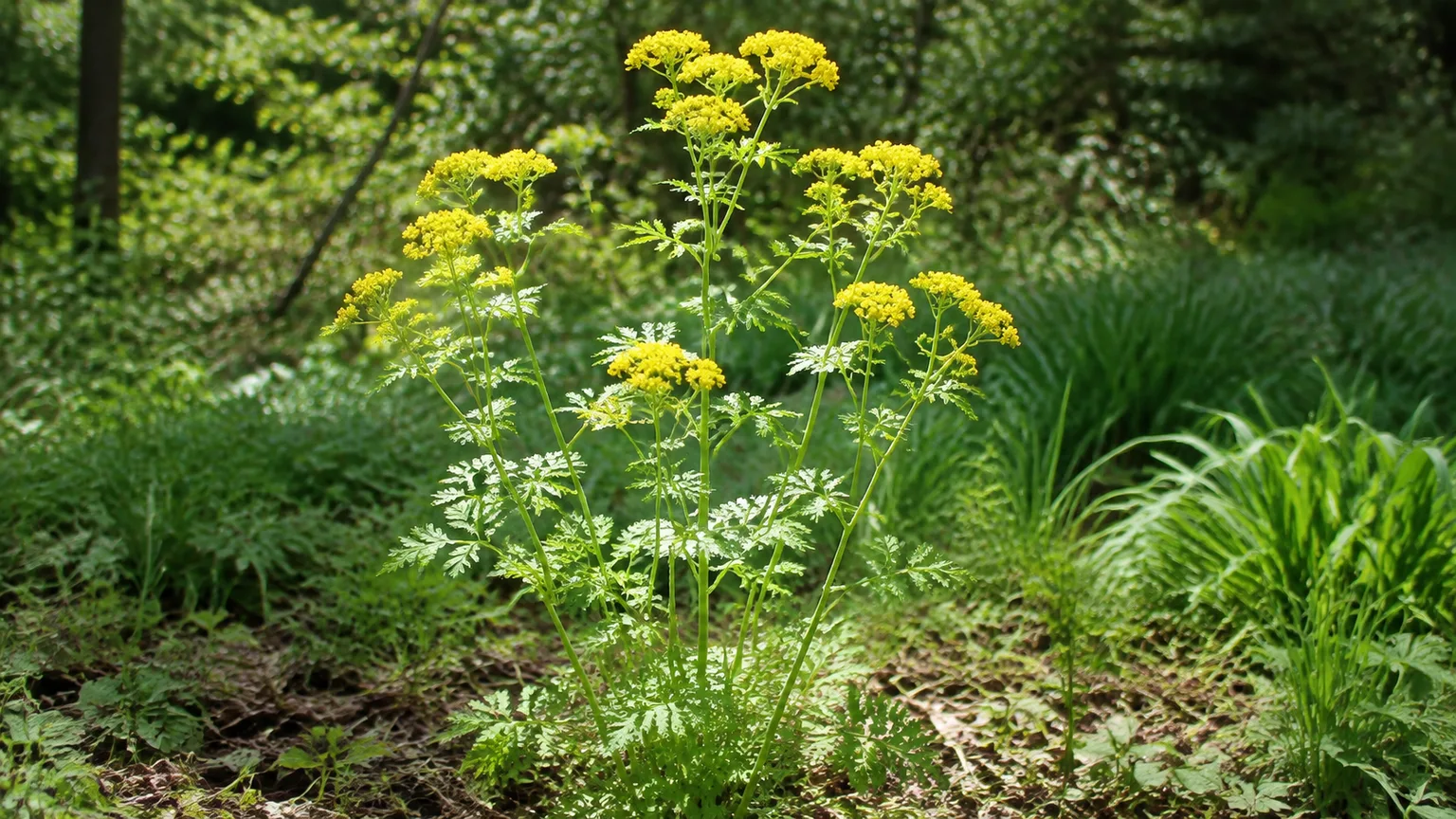
Golden Alexander (Zizia aurea) is a spring-blooming native perennial for gardeners who want early yellow flowers without building a high-maintenance display. Its flat-topped flower clusters open when many summer perennials are still just leaves, and its foliage supports the caterpillar stage of the Black Swallowtail butterfly.
The most important care decision is not fertilizer or pruning. It is putting the plant where spring soil stays reasonably moist, drainage is still good, and the plant can receive sun or light shade. Once established, Golden Alexander can tolerate a dry spell, but a newly planted division or seedling needs steady moisture while its roots settle.
What Golden Alexander Is and Where It Fits
Golden Alexander is the common name for Zizia aurea, an herbaceous perennial in the carrot family, Apiaceae. It is native across much of eastern Canada and the eastern United States, where it grows in moist prairies, savannas, woodland openings, thickets, limestone glades, and other places that are open enough for light but not permanently waterlogged. NC State Extension’s plant record lists it as a clumping, erect, deciduous perennial with low maintenance needs and a typical height and width of 1 to 2 feet. The U.S. Fish & Wildlife Service species profile uses the related common name Golden Zizia, which is helpful when searching native-plant inventories.
In a strong site, individual plants can appear taller, especially in full sun with steady moisture. That variation is useful when planning: treat 12 to 24 inches as the dependable garden scale, then leave enough room for a small colony to knit together rather than wedging one plant into a narrow formal pocket.
The plant is easy to recognize once you know its sequence. Smooth stems rise from compound green leaves, then branch into small yellow flowers held in flat or slightly domed umbels. After flowering, narrow green capsules develop and gradually turn purplish as they mature, giving the plant a second season of interest before the foliage fades.
Why Grow It in a Native or Pollinator Garden
Golden Alexander earns its space by filling a timing gap. Its flowers typically arrive in spring or late spring, earlier than many of the bold perennial border plants people associate with pollinator gardens. The individual flowers are small, but an established clump produces enough umbels to make a bright patch and a useful landing area for small bees, flies, beetles, wasps, and butterflies.
It is also a host plant, not merely a nectar plant. The leaves can be eaten by Black Swallowtail caterpillars, so a few ragged leaflets are not automatically a sign that the plant is failing. If supporting caterpillars is part of your goal, grow several plants together and accept that the best wildlife planting will not look untouched every week.
Penn State Extension describes Golden Alexander as a low-growing perennial with several weeks of late-spring bloom, dry purple seed heads, deer resistance, and a self-seeding habit suited to wet or moist rain-garden zones. Those traits make it especially useful at the edge of a rain garden, in a meadow transition, or beside taller plants that take over as Golden Alexander begins its summer decline.
Choose a Site That Matches Its Spring-to-Summer Rhythm
Think of the planting site as a seasonal contract. Golden Alexander wants enough water to build foliage and flowers in spring, but it does not promise to remain a lush, full-season specimen after seed set. Place it where early color and wildlife value matter more than uninterrupted summer foliage.
Light: Full Sun to Light Shade
Start with six or more hours of direct sun if you want the strongest flowering and the firmest stems. Golden Alexander also grows in partial shade and can handle light shade beneath open trees, but fewer hours of light usually mean a shorter plant with fewer flowers. Morning sun with some afternoon shade is a practical compromise in hot-summer climates.
Watch the shade pattern across the whole season. A bed that is sunny in April may be shaded by a tree canopy in June, which can be perfectly workable because the plant’s main display happens early. Conversely, a spot that looks bright in winter may become a hot, reflective strip beside concrete just as young plants are establishing. If that site dries within a day or two after rain, add mulch and plan supplemental water rather than assuming the plant’s drought tolerance applies immediately.
Soil and Moisture: Moist Is Best, Soggy Is Not
The target is moist, well-drained soil: soil that holds enough water for steady growth but allows oxygen back into the root zone after rain. Loam, sandy loam, and clay can all work when the site drains sensibly. Very fast-draining sand is harder because it can turn a spring planting dry before roots are established; heavy clay is workable if water does not stand around the crown.
Do not install Golden Alexander in the lowest point of a basin simply because it is called a rain-garden plant. A rain garden has zones, and the plant belongs in a moist or wet zone that drains between storms, not in a permanently submerged depression. If puddles remain for days, choose a plant adapted to standing water or move Golden Alexander to the shoulder of the basin.
Plant Nursery Plants Without Stalling Their Roots
A nursery plant is the fastest route to flowers, but availability can be seasonal because Golden Alexander is still less common than mainstream perennials. Plant a healthy specimen in spring or fall when temperatures are moderate and the soil can be kept evenly moist. Avoid buying a root-bound plant with a dense spiral of roots unless you are prepared to tease or correct that root system at planting.
Prepare the site before removing the plant from its container. Make the hole about twice the width of the root ball and no deeper than the root ball’s height, then set the crown at the same level it occupied in the pot. Backfill with the native soil you removed; a pocket of rich, loose amendment inside a heavier surrounding soil can hold water differently from the bed and slow root movement.
Water the hole thoroughly once, allow it to drain, and add a thin layer of mulch around—not over—the crown. For the first few weeks, check the soil at root-ball depth rather than watering by calendar. A small plant with fresh growth is using water, while a dormant or cool-weather transplant may remain wet longer than expected.
Watering After Planting and Through Dry Weather
For a new transplant or division, water deeply enough to moisten the root zone, then check again when the surface begins to dry. The goal is consistent moisture during establishment, not a permanently saturated hole. In warm weather, a small plant may need attention several times a week; in cool, rainy weather, watering again can do more harm than skipping a day.
Once new growth is clearly expanding, extend the interval between waterings and let the soil surface dry modestly between applications. An established plant can tolerate occasional dry conditions, particularly in partial shade, but drought tolerance is not the same as a requirement for dry soil. If leaves wilt before midday, flower stems collapse, or the soil is dry several inches down during a heat wave, water slowly at the base and recheck the following day.
Container plants dry faster than plants in the ground because the root volume is smaller and the pot is exposed on every side. Use a container with a drainage hole, water until some drains from the bottom, and empty any saucer rather than leaving the pot in standing water. A short-lived wilt during a hot afternoon can be a container signal even when an in-ground plant nearby looks fine.
Fertilizer is usually unnecessary. In fertile soil, extra nitrogen can produce soft, leafy growth at the expense of a compact, flower-ready habit and may encourage weeds around a naturalized planting. If the bed is genuinely poor, improve the soil with a modest amount of finished compost before planting instead of feeding repeatedly after the fact.
Follow Its Seasonal Growth Cycle
Golden Alexander looks different in April, at peak bloom, and after seed set. Learning that cycle prevents two common mistakes: pulling a healthy plant when its summer foliage thins, and cutting off seed heads before deciding whether you want volunteers or wildlife food.
Spring Emergence and Bloom
New growth rises from the crown as temperatures moderate. The first leaves may look small and delicate, then expand rapidly as the plant receives longer days and regular moisture. Keep the emerging patch visible by clearing only aggressive weeds; avoid deep cultivation around it because shallow disturbance can sever young roots and erase seedlings you intended to keep.
Flower stems follow the early foliage and branch near the top. The yellow umbels are usually at their best for several weeks, but exact timing varies with latitude, spring temperatures, and shade. Penn State Extension records an April-to-June bloom window, while NC State’s plant record gives a spring bloom period, so use the plant’s visible development rather than a rigid calendar date.
During bloom, do not spray insecticide simply because insects are visiting. The open umbels are part of the plant’s purpose in the garden. If a stem leans into a path, stake it gently or move the path edge next season; avoid cutting the entire clump while pollinators are actively using it.
Summer Seed Heads and Natural Decline
After flowering, the umbels become seed-bearing capsules and the plant may look less polished. The foliage can thin, turn yellow-green, or take on a purplish cast as the season advances. That is a normal shift for a spring ephemeral-like perennial, not proof that the roots have died.
Leave the seed heads if you want natural reseeding, winter texture, or food for small wildlife. Remove only the stems that flop across a walkway or drop seed into a place where volunteers would be difficult to remove. The most useful compromise is often to leave half the heads and deadhead half: you get control without giving up the next generation.
Grow Golden Alexander from Seed
Seed is often the most practical way to establish a colony, but it rewards patience. Golden Alexander seed needs a cold, moist period before it will germinate reliably, and seedlings are easy to lose when they are mixed into a weedy bed. Buy from a native-plant seed supplier when possible, or collect only from a plant you have positively identified and have permission to harvest.
Do not expect a dense flowering clump immediately. Some plants devote the first season to roots and leaves, while stronger flowering follows after establishment. Label the sowing area, photograph it, and mark the edges with a small stake so spring weeding does not remove the seedlings as “unknown weeds.”
Direct Sow or Winter Sow
Direct sowing outdoors in fall is the simplest method. Clear a small patch of soil, press the seed onto the surface or barely cover it, and keep the area free of competing weeds. Autumn and early winter provide the cold-moist exposure the seed needs naturally, then seedlings can emerge as the soil warms in spring.
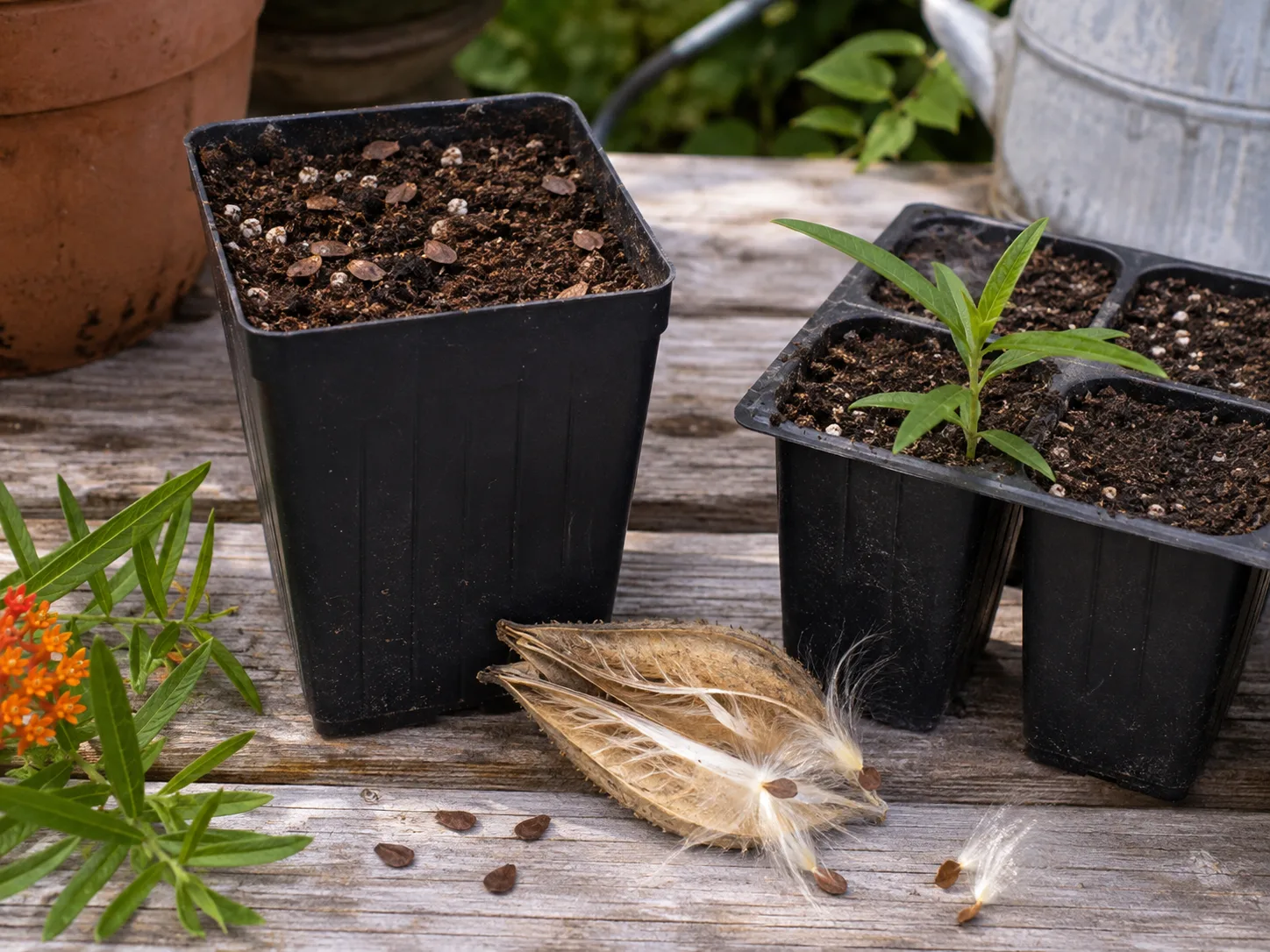
Winter sowing in a ventilated container gives you more control over where the seedlings emerge. Use a deep container with drainage, fill it with a moist seed-starting mix, press the seed into the surface, and place the container outdoors where it receives light but is not baked against a south-facing wall. Protect it from drying completely, but do not seal it into a waterlogged mini-greenhouse.
When seedlings have several true leaves, thin them rather than allowing a crowded tray to compete for light and water. If you must separate them, disturb the roots as little as possible and plant them while the weather is cool. Deep cells or paper pots are useful because the young plant can make a strong root system before transplanting.
Refrigerated Cold Stratification
Refrigeration is an alternative when you cannot sow outdoors. Mix the seed with a small amount of barely moist, sterile seed-starting medium in a labeled bag or container and keep it cold for roughly two to three months, depending on the seed supplier’s instructions. The medium should be damp enough to stay in contact with the seed, not wet enough to drip when squeezed.
The freezer routine sometimes repeated online is not a reliable substitute for a controlled cold-moist period. Repeated freezing and thawing can damage seed, and a household refrigerator has more predictable conditions. After stratification, sow the seed shallowly, keep the mix evenly moist, and provide bright light; do not bury the seed deeply just because the top has dried once.
Epic Gardening’s Golden Alexander guide emphasizes cold exposure and cautions that young plants are sensitive to root disturbance, which is why deep or biodegradable starting containers are a practical choice. Germination can be uneven. Give the tray time, verify that the medium has not dried, and resist discarding a container after only a few days.
Divide Established Plants and Manage Self-Sowing
Division is best for moving a plant or making a small patch quickly. Divide in early spring as new basal growth appears, when you can see where separate crowns are forming and the plant has the entire growing season ahead to reestablish. Dig around the clump, lift as much of the root mass as possible, and separate sections that each have roots and emerging stems.
Replant divisions at the original depth and water them in. Keep them evenly moist until they resume growth, especially if the weather turns warm immediately after division. Avoid dividing during peak bloom or during a summer drought; the plant is spending energy above ground then, and a torn root system has less time and moisture to recover.
Golden Alexander can self-sow where seed lands on open soil. That is a benefit in a meadow or rain-garden edge and a nuisance in a tightly designed border. Thin volunteer seedlings in spring while their roots are small, or mulch bare soil lightly after desired seedlings are established. Pulling a plant late in summer is harder because the root system is larger and the soil is often drier.
Pruning, Cleanup, and Overwintering
Pruning is optional, not a yearly requirement. Deadhead when you need to prevent seed from reaching a path or a neighboring bed; leave some heads when you want a self-renewing patch. Cutting every flower immediately removes the seed stage and reduces the food and shelter value that makes the plant useful beyond its bloom.
For a tidy garden, wait until the foliage has clearly declined and the plant is entering dormancy, then cut old stems close to the crown with clean pruners. In a wildlife-focused garden, leave stems and seed heads through winter and do the main cleanup in late winter or early spring, after the worst weather has passed. Cut material can be removed gradually rather than stripped from the entire bed in one operation.
The crown is winter hardy across USDA Zones 3 through 8 according to the NC State plant record. In the ground, it generally needs no winter blanket. A thin mulch layer can protect soil from temperature swings, but piling wet mulch over the crown encourages rot. Container-grown plants have more exposed roots, so move a pot to a sheltered location or sink it into the ground before hard freezes if the container is small and exposed.
Pests, Diseases, and Look-Alikes
Golden Alexander is usually a low-problem plant when it receives the right moisture and light. Aphids may cluster on tender growth, and caterpillars may chew leaves, but a little feeding is compatible with the plant’s wildlife role. Start with a strong water spray for aphids and remove only heavily damaged stems; reserve any pesticide decision for a confirmed, consequential problem and follow the product label.
The more likely “problem” is a site mismatch. Yellowing with persistently wet soil suggests poor drainage, while crisp foliage and a shrinking plant in a hot sandy bed suggest drought stress. A plant that flowers, forms seed, and thins in summer may simply be following its normal rhythm. Before treating, check the crown for firmness, the soil for moisture, and the calendar for the plant’s stage.
Golden Alexander vs. Wild Parsnip
Golden Alexander is in the carrot family, so its compound leaves and yellow umbels can resemble other Apiaceae. Do not identify a volunteer from flower color alone. Golden Alexander is commonly described as a shorter plant with three to five main leaflets, finely serrated foliage, and a spring bloom; wild parsnip is generally taller and flowers later in summer, but field conditions can blur simple rules.
NC State Extension specifically lists Sanicula canadensis among plants that may be confused with Zizia aurea, which is a useful reminder that a plant’s identity should come from several traits, not one photograph. If a plant was not intentionally purchased, compare it with a regional extension plant record or ask a local native-plant group before handling it closely. Do not eat, brew, or use an uncertain Apiaceae plant medicinally, and do not harvest from public land or a wild population without permission.
Container Growing: Possible, but Not the Easiest Home
Golden Alexander can grow in a container, especially as a seasonal accent or a way to observe a small seedling before planting it in the ground. Choose a deep pot with drainage and a quality potting mix that holds moisture without remaining saturated. A shallow bowl is a poor choice because the root zone heats and dries quickly.
Place the container in full sun or bright partial shade, then check moisture more often than you would in a bed. A large pot is easier to manage than a tiny one because it buffers temperature and watering swings. Do not keep the pot sitting in a saucer of water, and do not fertilize on a routine schedule just to push foliage.
The limitation is seasonal and spatial. One potted plant gives you the flowers, but an in-ground group supports more caterpillars and looks more natural as the foliage thins after bloom. If the plant outgrows its container, move it in early spring or fall, or divide it while the crown is visible; avoid repeated repotting during hot weather. For a grower’s field-tested perspective on how a clump matures and how early spring bloom bridges a garden’s flowering gap, see GrowIt BuildIt’s Golden Alexander guide; its timing observations are practical experience rather than a universal calendar.
Conclusion
Grow Golden Alexander in a sunny or lightly shaded place with moist, well-drained soil, then let its season guide your care. Water new plants consistently, keep fertilizer modest, give seed the cold-moist period it needs, and transplant young seedlings with their roots intact.
The plant’s best use is usually a group at the edge of a native border, meadow, woodland opening, or rain garden—not a perfectly manicured specimen expected to look the same from April through October. Leave some seed heads for wildlife and renewal, remove volunteers while they are small, and confirm any look-alike before handling an unknown carrot-family plant. With that small amount of planning, Zizia aurea supplies early gold, a Black Swallowtail host, and a graceful transition into the rest of the summer garden.