12 Astilbe Companion Plants for Shade Borders
Twelve astilbe companion plants matched by moisture, shade, and bloom timing—plus a layered border plan, spacing numbers, and four pairings to skip.
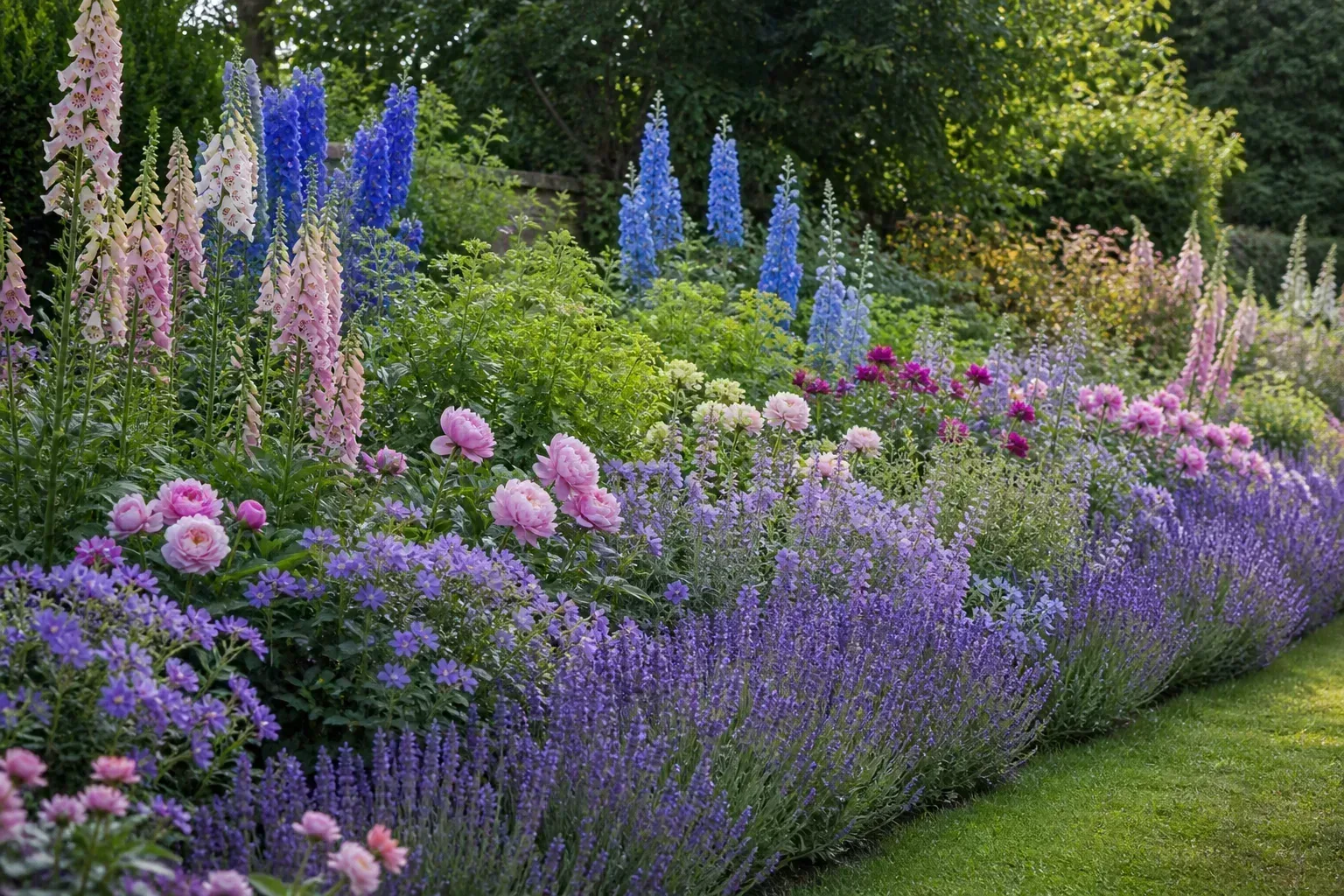
Astilbe (Astilbe spp.) solves a problem many shade gardeners know too well: a north-facing bed that stays dark all summer yet still dries out between rains. Its fern-like leaves and fluffy plumes bring soft color from late spring through summer, and the faded seed heads can look handsome into winter if you leave them standing. The catch is that astilbe is not a solo act. It needs neighbors that share its love of moist, rich soil and dappled shade, bloom in a sequence that covers the calendar, and occupy different height layers so the bed never looks empty after the plumes brown.
This guide lists 12 companions worth planting, explains how to layer them front to back, and names four pairings to skip. You will also get spacing numbers, a bloom calendar, and a sample layout for a 4×10-foot shady border.
What Makes a Good Astilbe Companion
Companion planting beside astilbe is less about secret root chemistry and more about shared site conditions plus visual and seasonal complement. The RHS astilbe growing guide describes astilbes as moisture-loving perennials from damp woods and stream margins. They want rich soil, steady moisture through summer, and protection from hot afternoon sun. A neighbor that thrives in dry shade or blazing sun will struggle—or pull water away from astilbe roots.
Good companions also solve astilbe’s post-bloom gap. Once flowering finishes, astilbe foliage often bronzes and dries on the stem. Gardening Know How notes that astilbe will not rebloom after deadheading the way some perennials do, so partners that peak later—or offer evergreen foliage—keep the bed from looking tired from July onward.
Shared Moisture, Shade, and Soil Needs
Before you buy anything, run a ten-minute site check:
Light: Dappled shade under deciduous trees is ideal. Astilbe tolerates morning sun in cool climates but scorches when hot afternoon sun hits dry soil. NC State’s profile for Astilbe × arendsii lists partial shade to full shade and warns that leaf margins burn in too much sun.
Soil: Loamy, humus-rich, and consistently moist—not soggy. Astilbe dislikes waterlogged clay and droughty sand equally. Work 2–3 inches of compost into the top 8 inches before planting, and mulch after installation.
pH: Slightly acidic to neutral (roughly 6.0–7.0) suits most astilbes and their woodland neighbors. If rhododendrons and azaleas already thrive in your bed, astilbe usually will too.
Hardiness: Most garden astilbes are hardy in USDA zones 4–8; a few chinensis hybrids stretch to zone 3 or 9 with extra water. Match companion zones to your winter lows, not just the astilbe tag.
Bloom Timing and Height Layering
Astilbe bloom time depends on the group you plant. A. japonica hybrids flower in early summer; A. × arendsii crosses peak in midsummer; A. chinensis types often wait until late summer. Plan companions so something is in flower—or showing strong foliage—from March through September:
| Season | Companion role | Examples from this list |
|---|---|---|
| Late winter–spring | Low blooms before astilbe leafs out | Hellebores, lungwort, crested iris |
| Early spring | Vertical color as astilbe emerges | Bleeding hearts, columbines |
| Early–midsummer | Astilbe peak; foliage contrast | Hostas, painted fern, azaleas |
| Mid–late summer | Cover astilbe fade | Daylilies, coneflowers (sunny edge), begonias |
| Fall–winter | Structure and seed heads | Astilbe plumes left standing; evergreen azalea foliage |
Height layering matters as much as bloom time. Astilbe ranges from 12-inch dwarfs to 4-foot giants. Put low ground covers and iris in front, astilbe and coral bells in the middle, and hostas, azaleas, or tall daylilies toward the back unless you are designing a viewed-from-all-sides island bed.
How to Plant a Layered Shade Border With Astilbe
Think of a shade border as three bands when viewed from the path: front (under 12 inches), middle (12–30 inches), and back (30+ inches). Astilbe usually sits in the middle band unless you grow dwarf A. simplicifolia hybrids at the front edge.
Front, Middle, and Back Placement Rules
Spacing within bands: Plant astilbe crowns 18–24 inches apart so mature clumps touch without competing for root space. NC State recommends dividing established astilbes every three to four years in spring to keep flowering vigorous—tight spacing makes that job harder.
Spacing between species: Leave 24–36 inches between an astilbe clump and a spreading shrub like azalea, and 12–18 inches between astilbe and low companions like lungwort or crested iris. Coral bells spread wider than they are tall; give them 18–24 inches from astilbe stems so heuchera foliage does not bury emerging astilbe shoots in spring.
Water once, water all: Group plants with similar thirst. A drip line or soaker hose along the middle band keeps astilbe, hostas, and ferns evenly moist without sprinkling tree trunks nightly.
Sample 4×10-foot border (morning sun, afternoon shade):
- Back row: One compact evergreen azalea centered, flanked by two hosta clumps (Hosta ‘Halcyon’ or similar blue type).
- Middle row: Three astilbe (A. × arendsii ‘Bridal Veil’ or ‘Fanal’ for height contrast), two coral bells for leaf color between them.
- Front row: Japanese painted fern on one end, crested iris and lungwort across the front, bleeding heart tucked where the tree canopy is thinnest.
Adjust counts to your mature widths, but keep the taller plants north or rear of lower ones if the bed faces south.
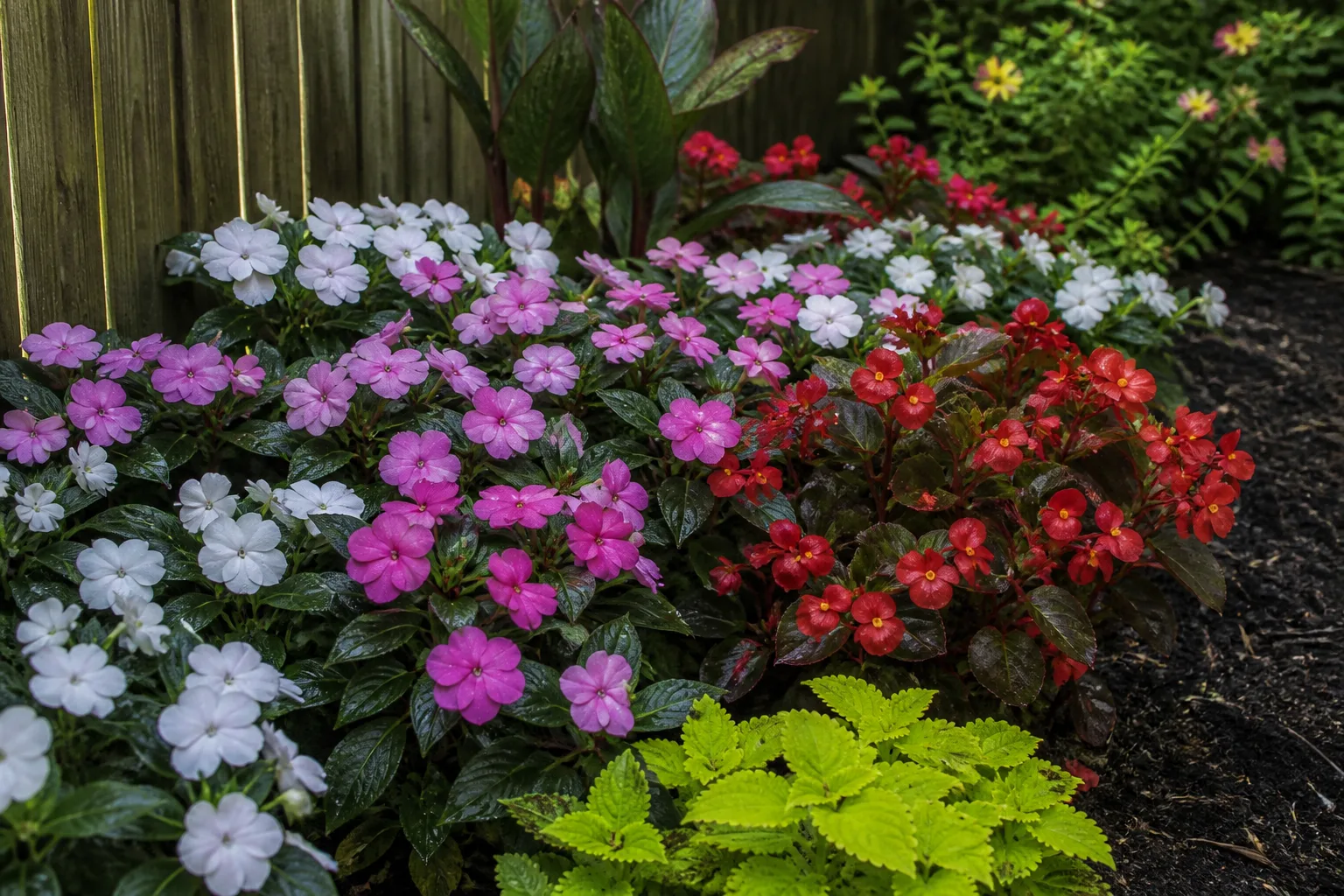
Hostas — Bold Foliage Anchors
Hostas (Hosta spp.) are the classic astilbe neighbor for a reason: they share shade, tolerate the same moisture regime, and offer bold leaves that make astilbe’s fine texture read sharper. Where astilbe sends up airy plumes, hostas provide mounding structure from spring until frost.
Choose hostas by mature size and slug pressure in your yard. Blue-leaved types like ‘Halcyon’ stay medium and pair well with pink astilbes. Giant ‘Sum and Substance’ belongs at the back of the border where it will not swallow mid-height astilbe. In slug-heavy gardens, thick-leaved ‘Halcyon’ or ‘Elegans’ outlast thin gold cultivars.
Plant hosta eyes so the crown sits at soil level, then mulch. Keep hosta leaves dry when possible—overhead irrigation on dense hosta can encourage foliar disease, while astilbe handles more splash. Both want the same deep soak when the top inch of soil dries.
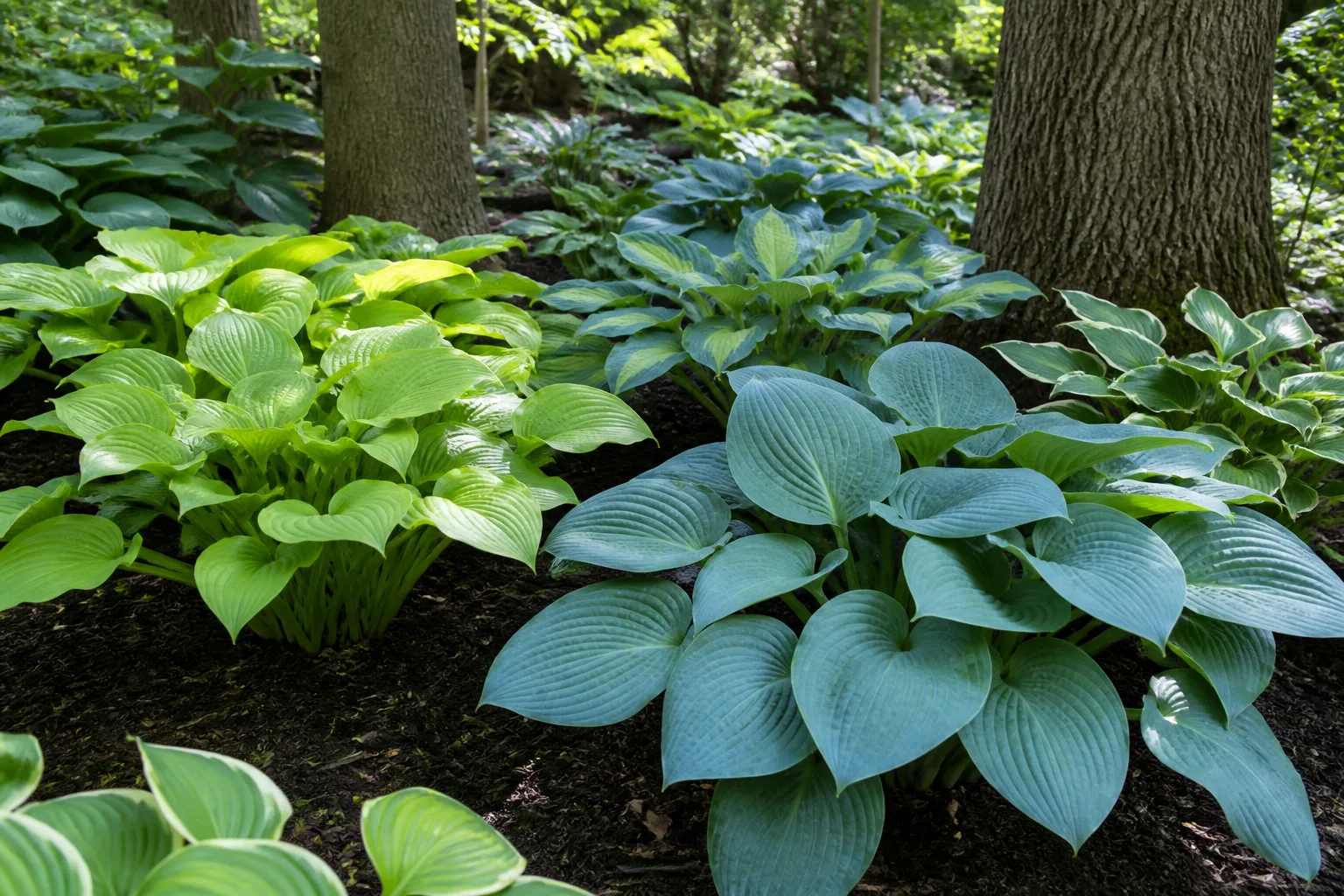
Japanese Painted Fern — Texture Without Competing Flowers
Japanese painted fern (Athyrium niponicum var. pictum) is the fern most gardeners reach for beside astilbe because its silver-green fronds echo astilbe’s cool palette without competing for flower attention. Ferns and astilbes both evolved in moist woodland edges, so they thrive on the same watering schedule.
Site painted fern where it gets two to four hours of gentle morning light; too much sun bleaches the silver. Plant 12–15 inches in front of mid-height astilbe so fronds arch over bare soil early in the season. Other outdoor ferns—lady fern, ostrich fern, or native maidenhair—work in the same role if painted fern is sold out; match moisture, not just aesthetics.
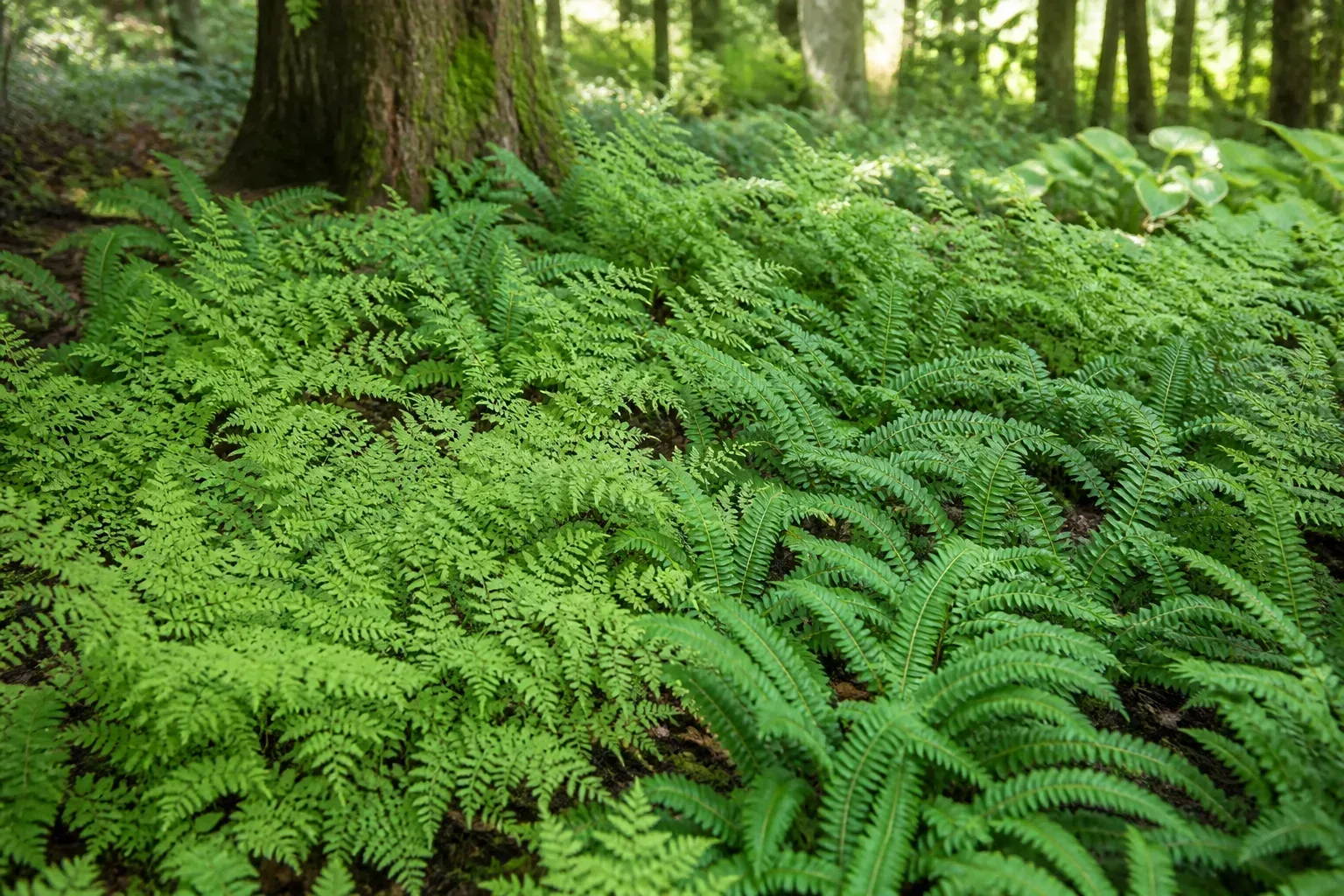
Hellebores — Winter-to-Spring Color Before the Plumes
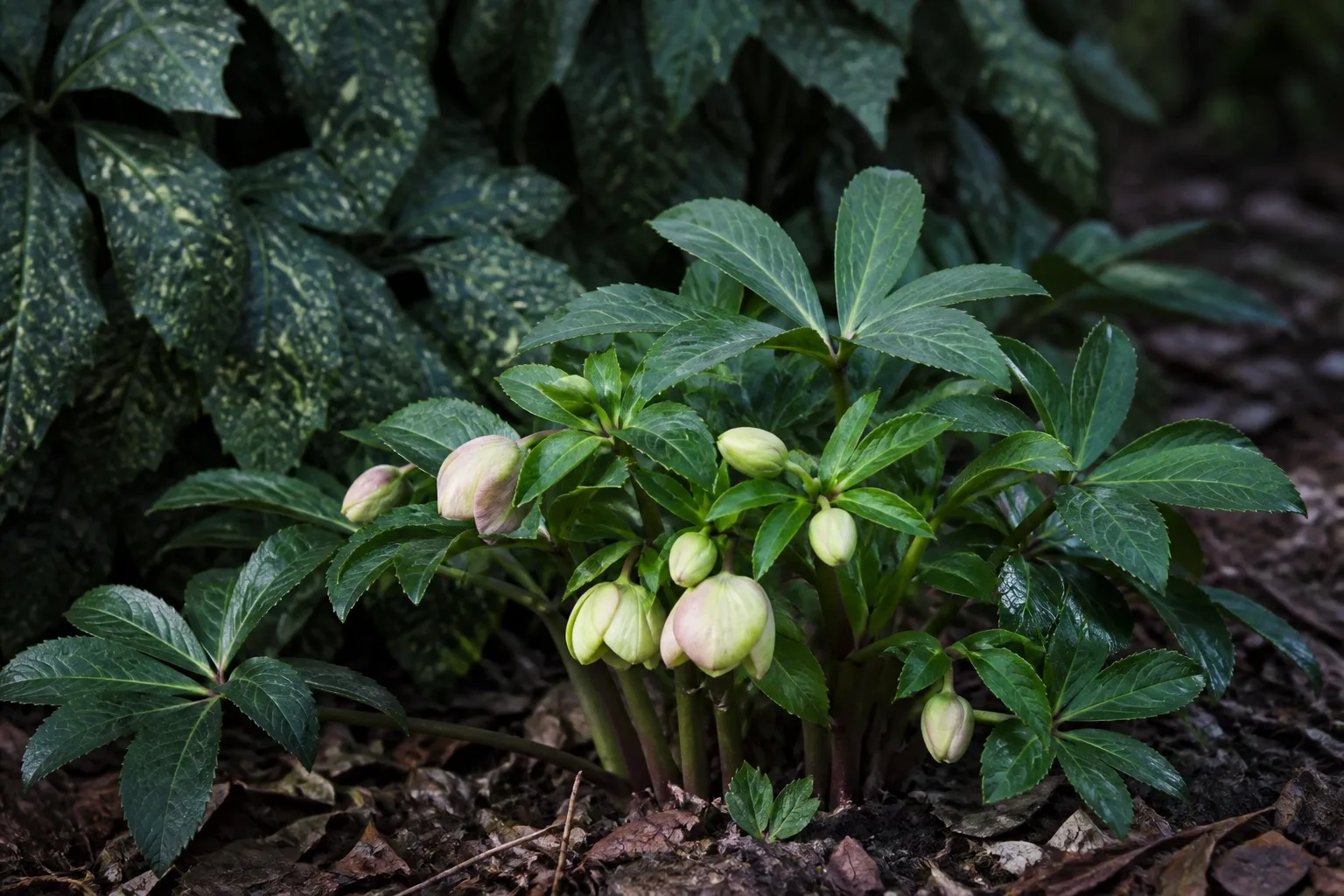
Hellebores (Helleborus spp.) push cup-shaped blooms from late winter through spring, long before astilbe shoots appear. That timing makes them invaluable in beds that look empty in March. Once hellebore flowers fade, the leathery, palm-like foliage stays low and dense—a perfect skirt around astilbe stems rising behind.
Plant hellebores slightly downslope or forward of astilbe so their nodding flowers stay visible. They tolerate drier conditions than astilbe once established, but young hellebores still need irrigation the first summer. Remove old leaves in late winter before new blooms emerge so you do not cut emerging astilbe tips by mistake.
Bleeding Hearts — Early Vertical Accents
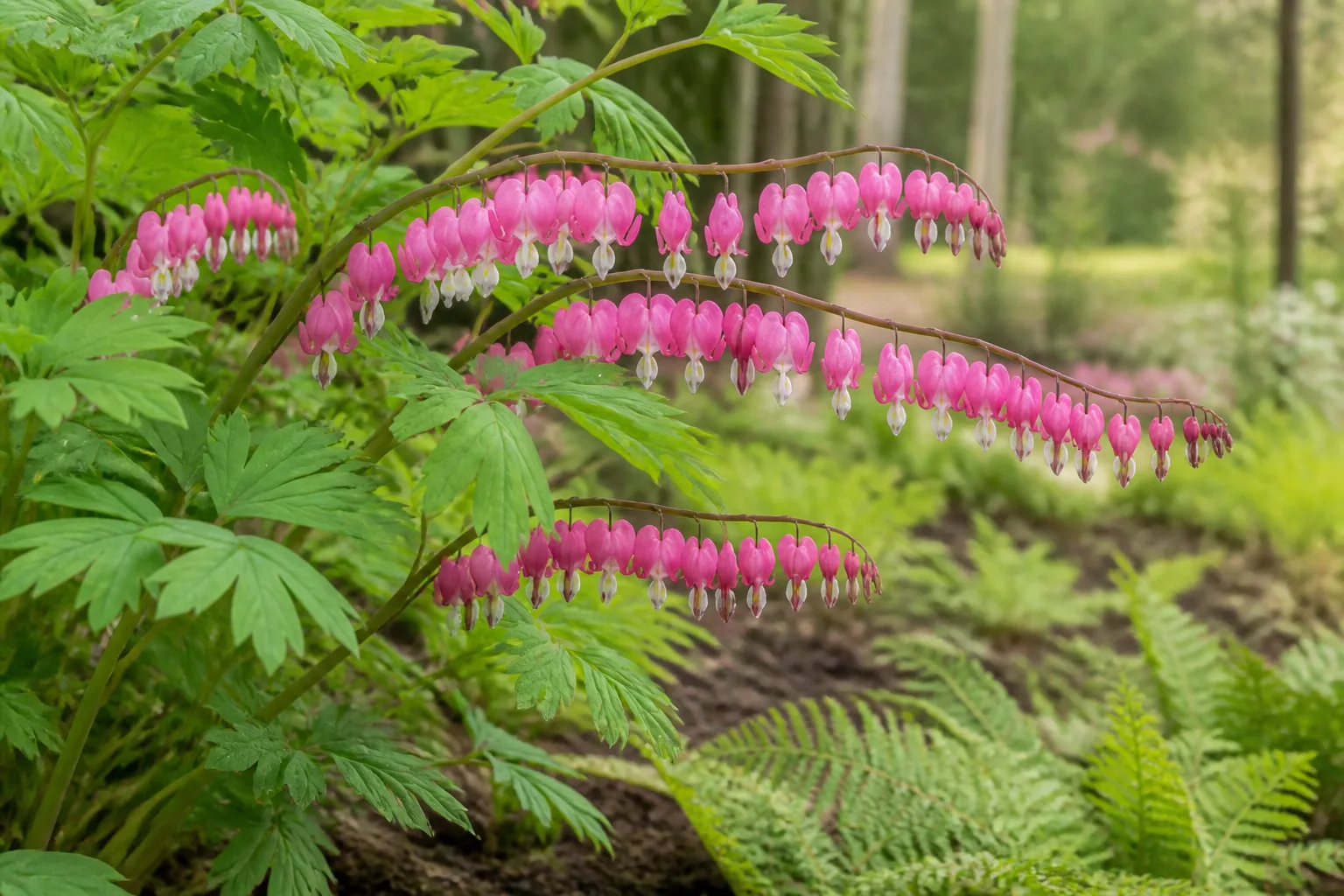
Bleeding hearts (Lamprocapnos spectabilis, formerly Dicentra spectabilis) send arching stems of heart-shaped flowers in mid-spring, then go dormant by midsummer—exactly when early astilbe hybrids begin to shine. That succession prevents color gaps if you accept that bleeding heart foliage will yellow and disappear.
Because bleeding hearts retreat, surround them with ferns or hostas that expand as the bleeding heart fades. Do not plant bleeding hearts where you need continuous summer foliage unless you plan to fill the hole with annuals. Space crowns 24 inches from astilbe; both spread slowly but resent root disturbance during summer heat.
Lungwort — Ground-Hugging Spring Bridges
Lungwort (Pulmonaria spp.) covers bare soil in early spring with spotted leaves and pink-to-blue flowers that shift color as they age. Low and fuzzy, lungwort sits comfortably in front of astilbe without blocking plumes. Both are often listed among deer-resistant shade perennials, though hungry deer may still sample new growth in desperate springs.
Lungwort spreads by stolons. Divide crowded clumps after flowering every three to four years to keep airflow at astilbe crowns. Morning sun improves bloom; afternoon shade keeps leaves from crisping—matching astilbe’s preferred exposure on east-facing beds.
Coral Bells — Foliage Color Through the Season
Coral bells (Heuchera spp.) are close saxifrage relatives of astilbe and share its preference for rich, moist soil in partial shade. Where astilbe delivers vertical plumes for six weeks, heuchera delivers leaf color from April through November—burgundy, lime, silver, or caramel depending on cultivar.
The design mistake is planting heuchera too close to tall astilbe stems. Pull coral bells forward so foliage mounds stay visible. Heuchera crowns heave in freeze-thaw cycles; mulch lightly and replant sunken crowns in spring. In humid Southeast summers, choose rust-resistant cultivars and avoid overhead watering late in the day.
Azaleas — Evergreen Structure Behind Feathery Plumes
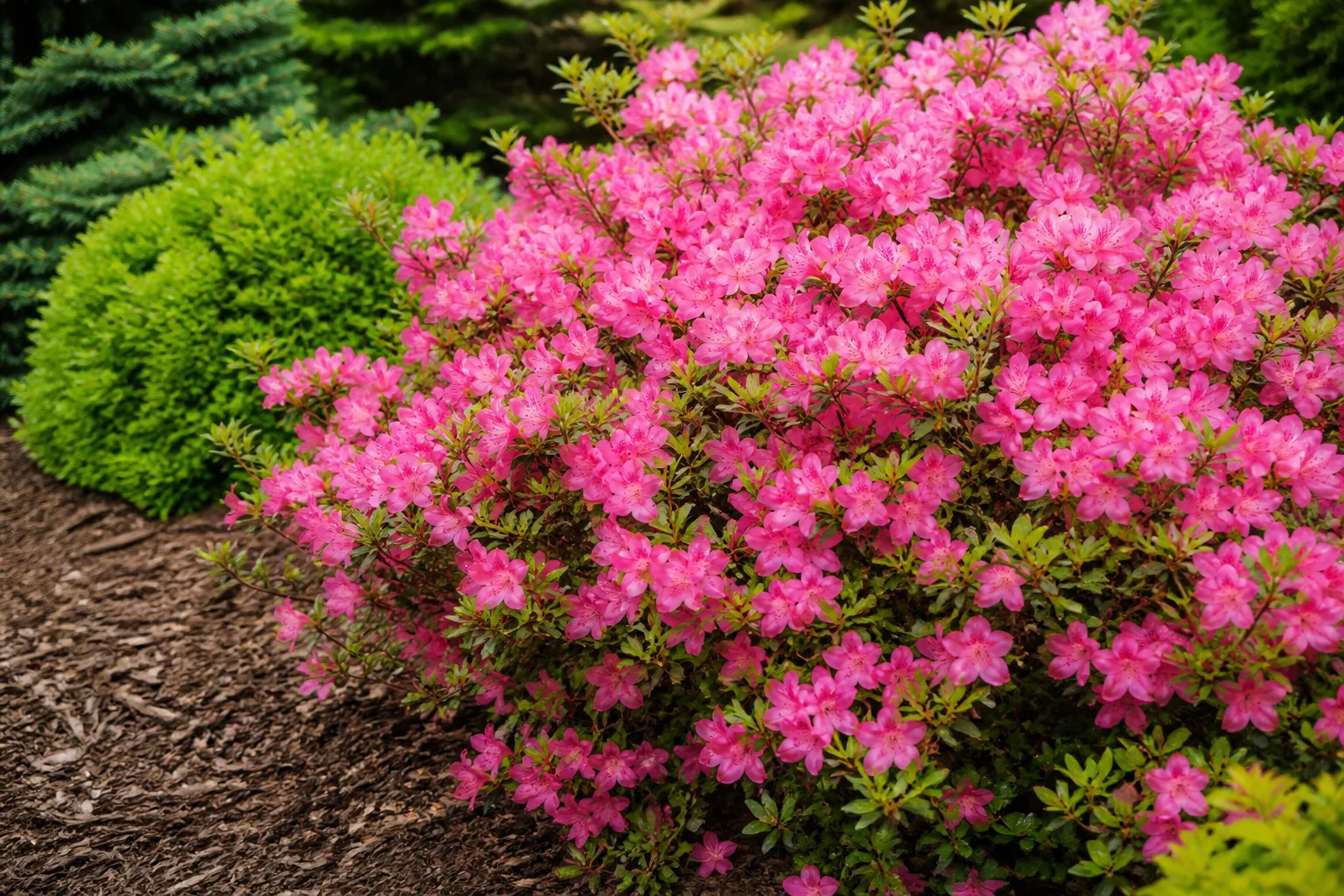
Azaleas (Rhododendron spp.) bring evergreen structure and spring flower mass behind astilbe plumes. The contrast between coarse, rounded shrub foliage and fine astilbe leaves creates depth in small shade gardens where everything otherwise reads the same texture.
Choose compact, shade-tolerant cultivars—not sun-hungry Southern Indica types in a woodland bed. Evergreen azaleas keep the rear wall green after astilbe browns; deciduous azaleas add summer fragrance but leave a gap once leaves drop. Plant shrubs at least 30–36 inches behind astilbe so shrub roots do not outcompete perennial crowns for moisture. Rhododendrons and azaleas want acidic soil; if they thrive in your yard already, astilbe is a natural mid-layer in front of them.
Columbines — Early Pollinator Magnets
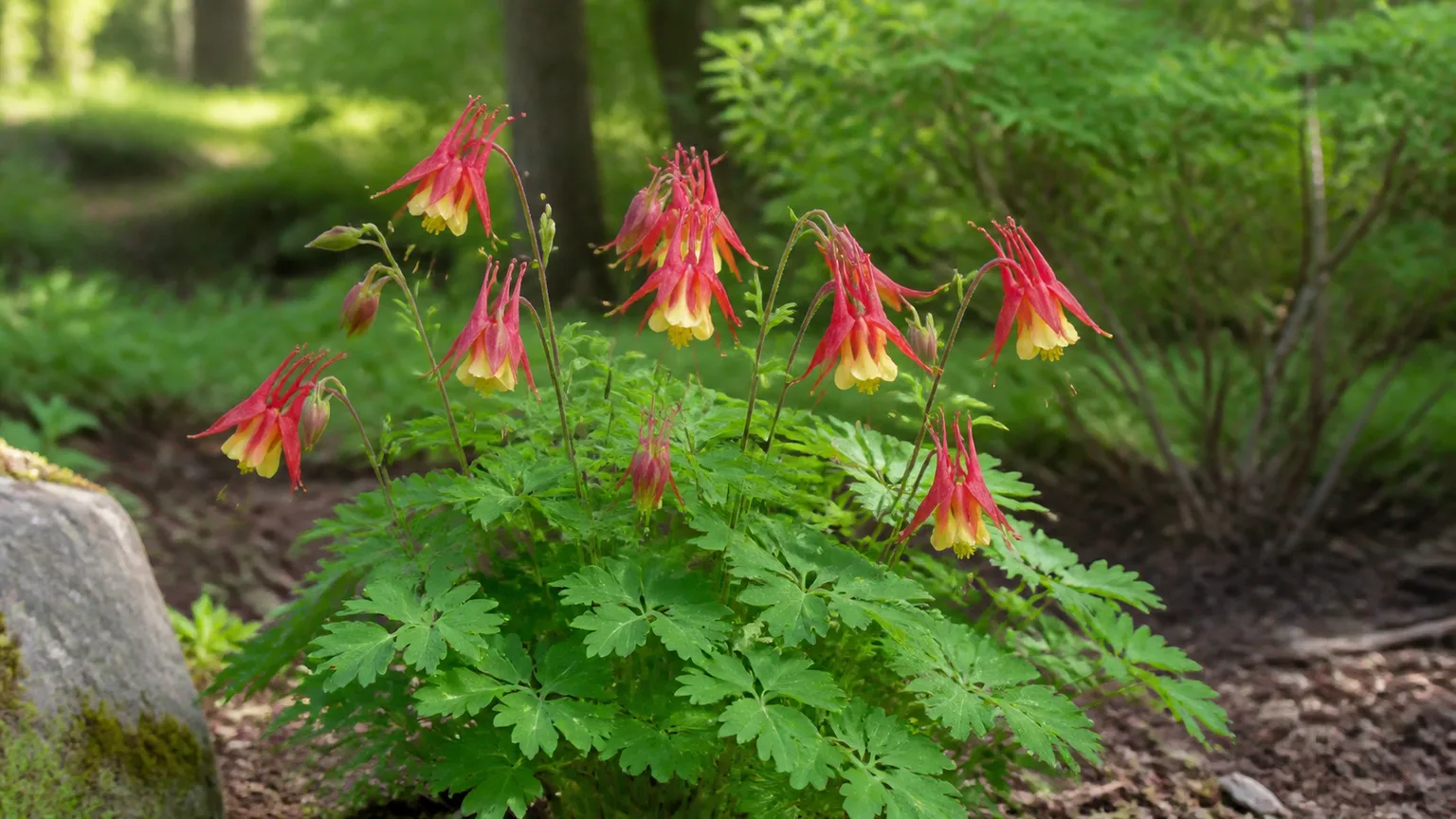
Columbines (Aquilegia spp.) bloom in late spring with spurred flowers that hummingbirds and bees visit heavily. They peak as astilbe foliage fills in and before tall hybrids open, extending nectar availability in pollinator-focused shade beds.
Columbines are short-lived perennials that self-seed politely in mulched beds. Allow seedlings if you like the surprise color mixes; pull extras that land on top of astilbe crowns. Leaf miner damage on columbine foliage is common and cosmetic—cut affected leaves back rather than spraying beside astilbe flowers where pollinators forage.
Crested Iris — Low Edging in Partial Shade
Crested iris (Iris cristata) is the iris to pair with astilbe—not tall bearded iris, which wants full sun and sharp drainage. This native ground-cover iris tops out near six inches, spreads by rhizomes in moist humus, and blooms in mid-spring with blue, purple, or white flowers marked with orange crests.
Plant rhizomes shallowly with the top exposed, 8–12 inches in front of astilbe. Crested iris goes summer-dormant in hot climates; astilbe and fern foliage cover the gap. In dry summers, do not let iris rhizomes bake—match astilbe’s watering depth.
Daylilies — Strappy Contrast on Brighter Edges
Daylilies (Hemerocallis spp.) add strappy leaves and trumpet flowers on the brighter edge of an astilbe bed—where eastern sun or reflected light lasts four to six hours. They tolerate more dryness than astilbe once established, so place them toward the transition zone between shade and sun rather than the deepest shade.
Each daylily flower lasts one day, but reblooming cultivars extend color into the period when early astilbe finishes. Foliage contrast is the real win: bold daylily leaves against feathery astilbe. Avoid planting aggressive daylily cultivars that swallow neighbors; compact rebloomers like ‘Happy Returns’ stay civil.
Coneflowers — Sunnier Companions at the Border Fringe
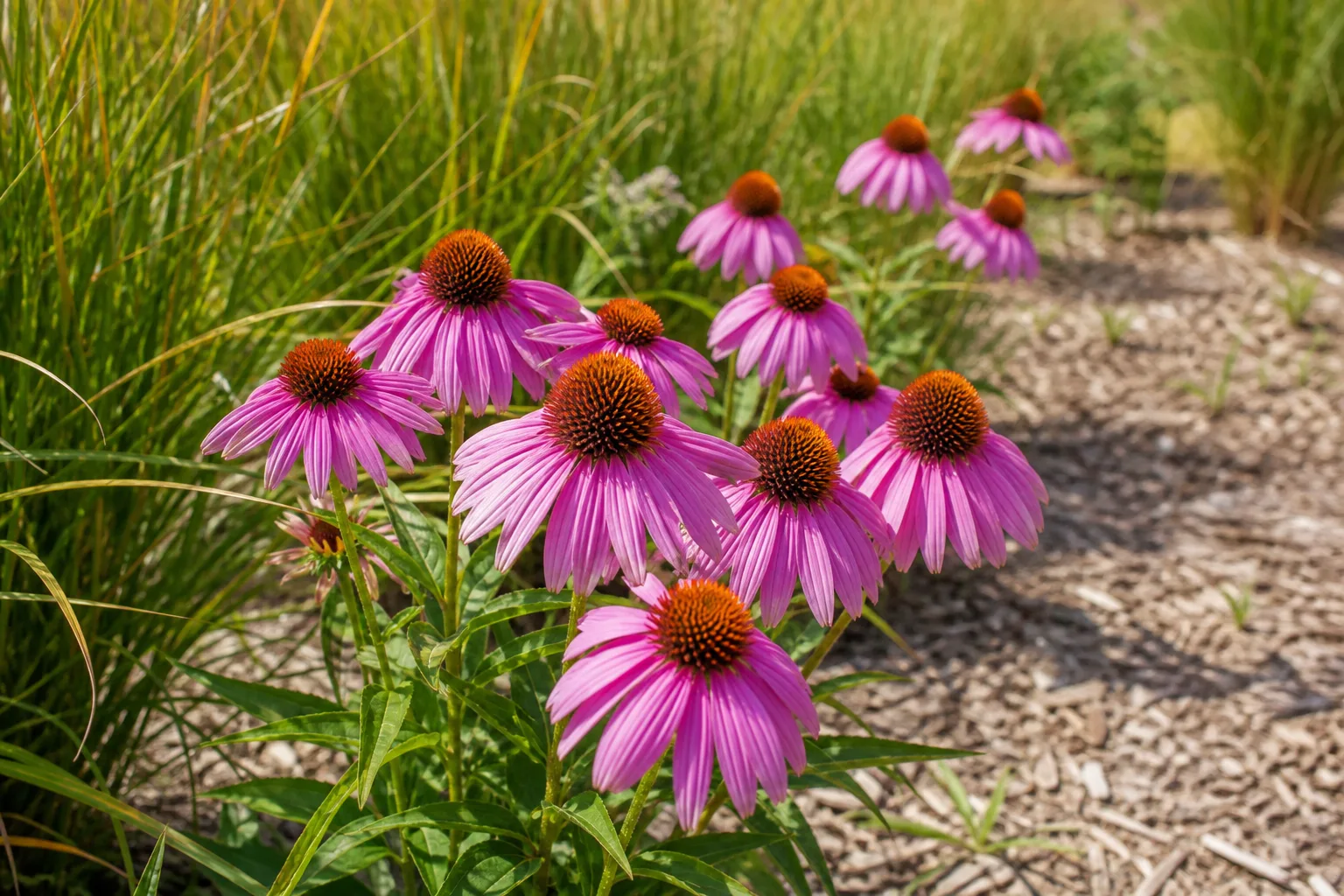
Coneflowers (Echinacea spp.) belong on the sunny fringe of an astilbe planting, not in the deepest shade. They bring native pollinator value and daisy faces that peak in midsummer when pink astilbe plumes overlap. Too little light makes coneflowers flop and astilbe scorch—so use them only where the bed opens to afternoon sun or along a south-facing edge under high tree canopy.
Improve drainage slightly at the coneflower end if your bed is boggy; astilbe tolerates more moisture than echinacea roots. A 3-foot transition with daylilies between zones helps both plants stay upright.
Begonias — Late-Season Annuals in Pots or Pockets
Begonias—especially wax and dragon-wing types—fill color after astilbe plumes brown without demanding the same permanent root space. Tuck shade-tolerant begonias in pots along the path edge or in pockets where bleeding hearts went dormant. Their rounded leaves and steady bloom contrast astilbe’s vertical fade through late summer and fall.
Begonias are tender; treat them as annuals below zone 10. In humid shade, improve airflow around pots to limit powdery mildew. Fertilize lightly—begonias in rich soil beside heavily mulched astilbe need less food than container plants on a patio.
Four Pairings to Skip Near Astilbe
Not every shade plant belongs beside moisture-loving astilbe:
- Dry-loving sedums and lavender — They need sharp drainage and lean soil; astilbe wants humus and steady water. One will drown, the other will crisp.
- Aggressive mint, goutweed, or creeping Jenny — Fast stolons overrun astilbe crowns and make division impossible. Keep spreaders in pots.
- Large taproot trees planted into the bed — Maples and beeches suck moisture from understory perennials. Plant astilbe outside the dripline or irrigate the bed separately.
- Full-sun prairie grasses — Switchgrass and little bluestem want sun and dry feet; they shade out astilbe poorly and compete for water. Use native sedges in moist shade instead.
Conclusion
A healthier astilbe border is built on matching moisture and light, then stacking bloom times and heights so the bed never stalls when plumes fade. Hostas, painted ferns, hellebores, bleeding hearts, lungwort, coral bells, azaleas, columbines, crested iris, daylilies, coneflowers, and begonias each solve a different layer of that puzzle—front to back, spring to fall. Run the site check, space crowns generously, irrigate the middle band deeply, and skip dry-loving spreaders that fight astilbe for root space. Get those basics right and astilbe stops being a one-week wonder and becomes the spine of a shade garden you actually want to walk through in August.