Container Gardening Ideas and Tips for Every Space
Find container gardening ideas for patios, balconies, and small yards. Choose suitable pots, combine compatible plants, and grow flowers, herbs, or vegetables.
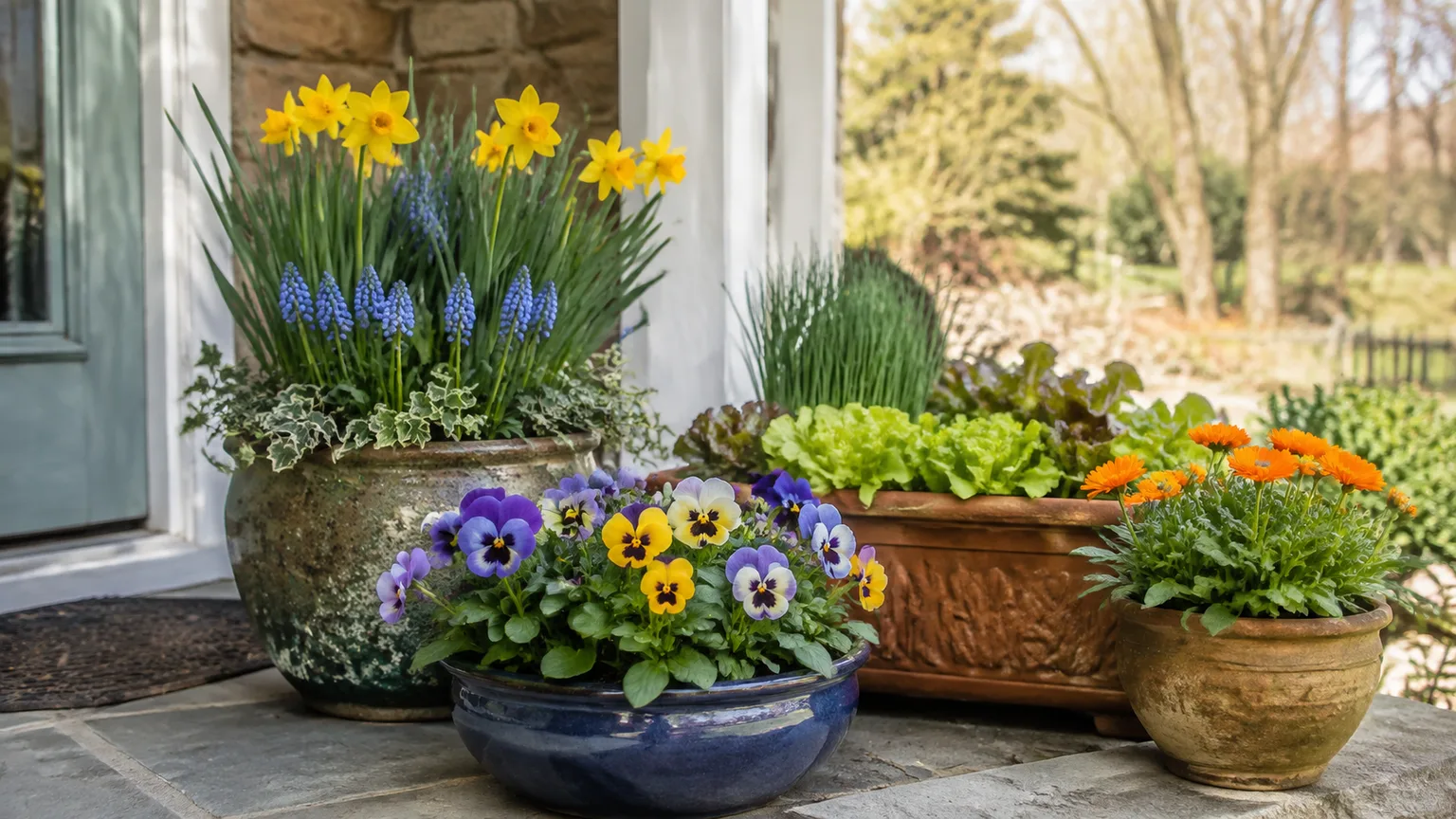
Container gardening lets you grow flowers, foliage, herbs, and vegetables where there is no usable garden bed. A pot can bring color to a porch, make a sunny balcony productive, or put fresh basil near the kitchen door. The best results come from matching the plant to the conditions you actually have, then choosing a container and care routine that fit that plant.
That order matters. A handsome planter cannot compensate for deep shade if you want tomatoes, and a small pot on a hot, windy deck may need water far more often than the same plant in a larger container. Start with the light and the way you use the space; then build a garden around those facts.
Start With the Space You Have
Watch the proposed planting area on a clear day before buying plants. Note which hours receive direct sun, when shade arrives, whether a wall reflects afternoon heat, and how much wind reaches the spot. Sun moves through the year, so a balcony that is bright in summer may be shaded by a neighboring building or tree at another season.
Count the hours of direct light at the height where the leaves will sit, not only at floor level. A railing planter can receive more sun and wind than the patio below it, while a container under a roof overhang may miss rain entirely. Use plant labels as a starting point, and favor plants listed for the light you measured rather than trying to train a shade plant to live in hot sun.
Also plan for maintenance. If you cannot reach behind a row of pots with a watering can, arrange them with space to turn or group them on a tray that catches runoff. A single larger container is often easier to keep evenly moist than many tiny pots, but one heavy planter may be difficult to move once wet; decide where it will live before filling it.
Choose a Container That Fits the Plant
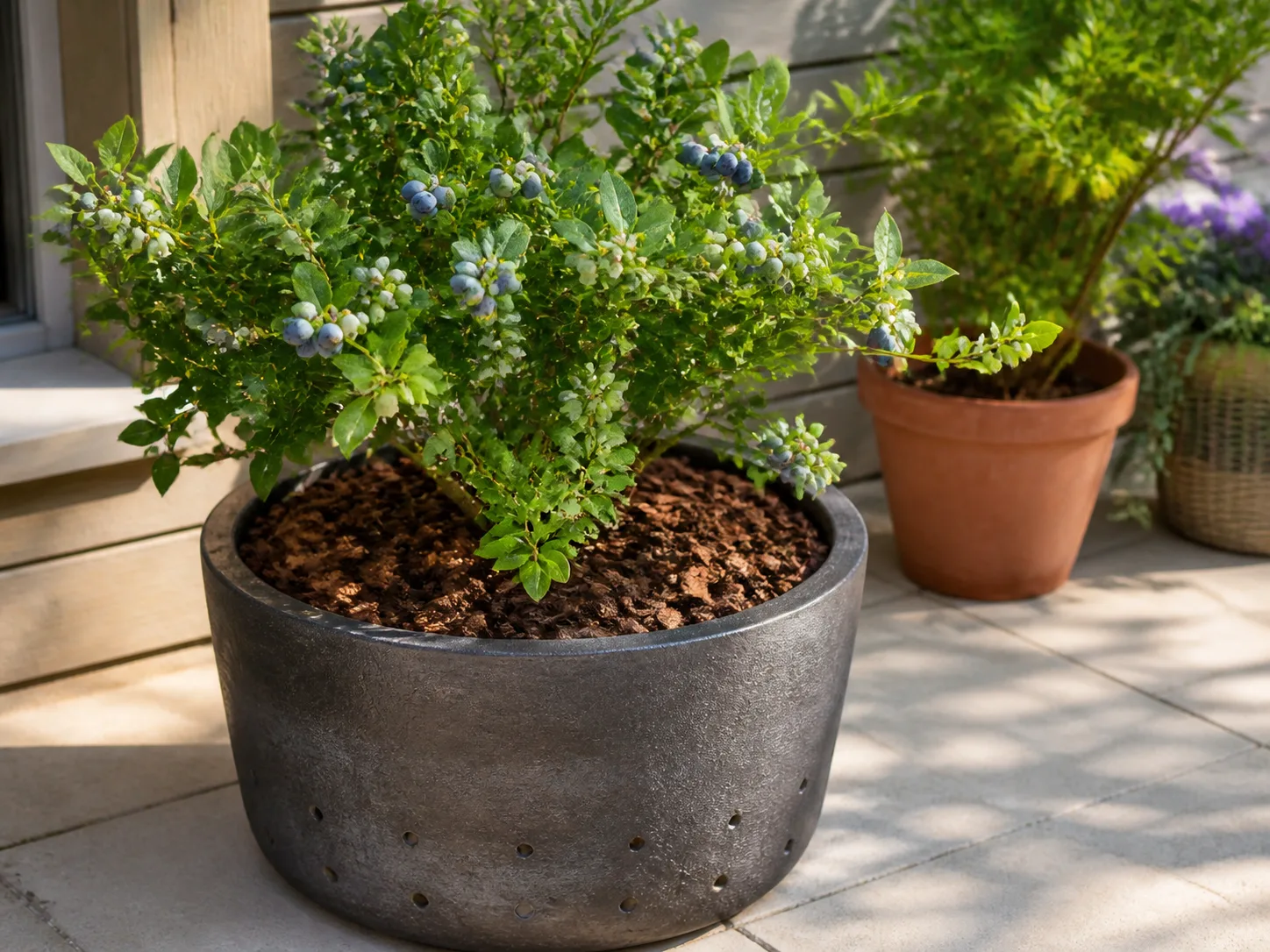
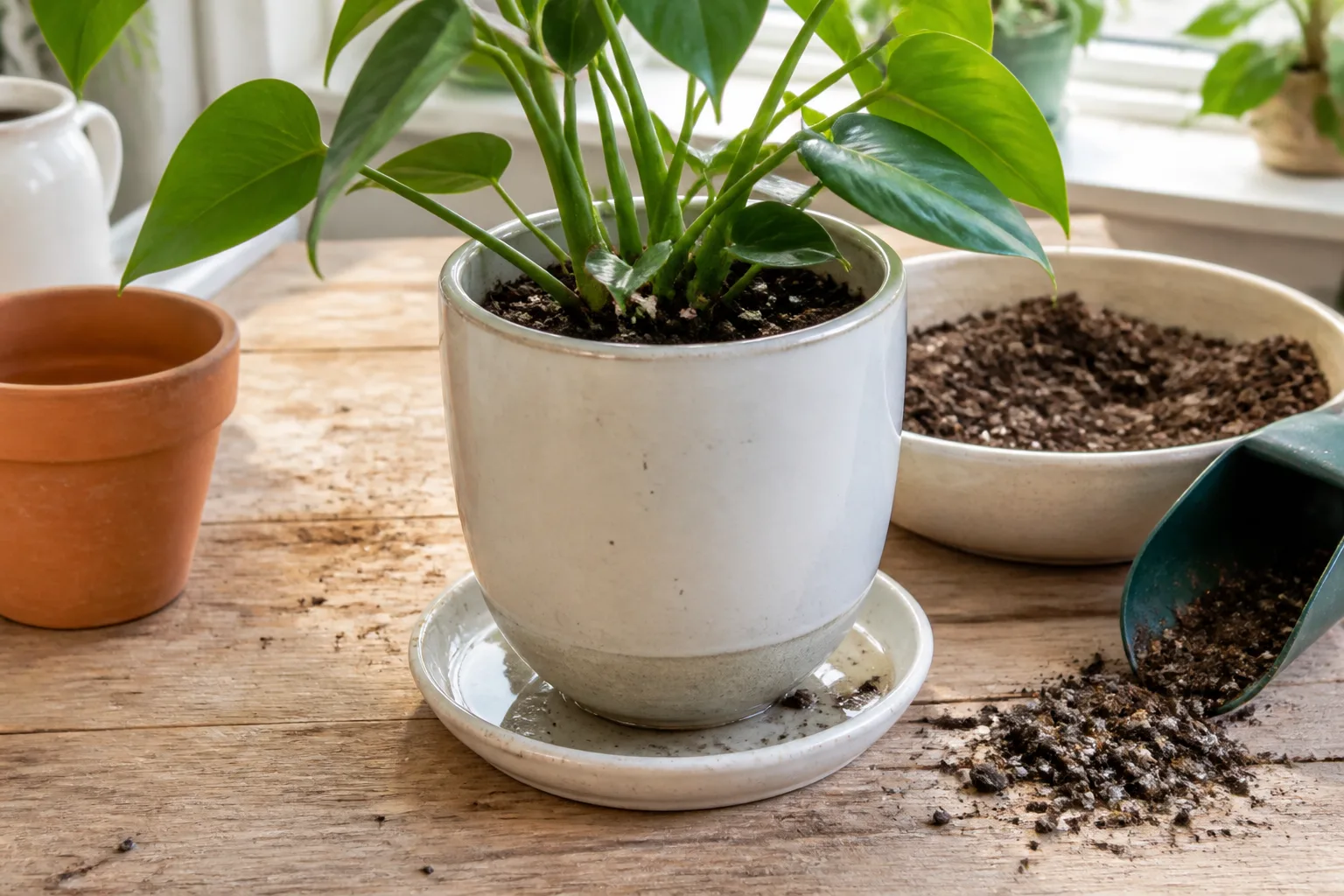
Most plants need a pot with at least one open drainage hole. Excess water must be able to leave; roots need both moisture and air around them. If you like a decorative cachepot without a hole, keep the plant in a removable nursery pot, water it elsewhere, and pour off the collected water before returning it.
Choose volume for the mature plant and the length of time it will grow there. A small annual or herb can begin in a modest pot, while a tomato, pepper, cucumber, or perennial needs enough root room to support a larger plant and a steadier supply of water. A wider, deeper container generally buffers moisture and temperature better than a tiny one. Check the cultivar label or a reliable growing guide for crop-specific minimums instead of planting by appearance alone.
Match material and weight to the location
Terracotta and other unglazed clay pots allow moisture to evaporate through their sides, which can be helpful for plants that dislike persistently wet roots but means more frequent watering in hot weather. Plastic and glazed pots lose moisture more slowly and weigh less than many heavy ceramic or stone planters. Fabric grow bags are easy to store and offer good aeration, but they can dry quickly and may stain the surface beneath them.
Durability and climate matter too. Thin plastic can become brittle in strong sun, porous clay can crack when wet soil freezes, and metal can heat up in direct sun. Pick food-safe containers for edible crops, avoid vessels that previously held chemicals, and use pot feet or risers if the base sits in a puddle after rain. The Royal Horticultural Society’s container guide compares common materials and notes that shallow pots dry faster than larger ones.
For balconies and decks, check the building’s rules and keep heavy planters on a stable surface rather than relying on an improvised railing hook. Saturated potting mix, a mature plant, and the container itself weigh more than an empty pot. Make sure irrigation water drains where it will not damage a neighbor’s property or create a slippery walkway.
Use a Light, Purpose-Made Growing Mix
Use potting mix made for containers, not soil dug from the yard. Garden soil can compact in a pot, leaving fewer air spaces for roots and making water movement unpredictable. A commercial mix is formulated to stay relatively light while holding enough moisture for roots; ingredients vary, so choose one suited to the crop and refresh it when it becomes dense or difficult to wet.
Before planting, moisten a very dry mix in a tub or bucket until it feels evenly damp but not sodden. Fill the pot while leaving an inch or two below the rim so water has somewhere to collect, set the root ball level with the surrounding mix, and firm gently to close large gaps. The Better Homes & Gardens planting guide also recommends leaving room at the top for watering and keeping drainage holes open.
Skip a deep layer of gravel or broken pottery as a supposed universal drainage fix. Keep the drainage opening from being blocked with a small piece of mesh if needed, but do not fill a large share of the root zone with coarse material just to lighten a pot. A 2025 PLOS ONE experiment on drainage layers found that effects varied with the container medium and the material and depth tested; the researchers measured water retention, not plant growth, so the results do not support one blanket rule for every pot. In practice, open holes, a suitable mix, and a pot that is not left standing in water are the reliable starting points.
Large planters do not have to be filled with a mountain of expensive mix. If the plant’s roots will occupy only the upper portion, a stable, clean, empty nursery pot can sometimes take up unused volume beneath the root zone. Keep the drainage path clear and do not use loose packing that can shift, hold water against the pot bottom, or contaminate soil used for food crops.
Pick Plants That Want the Same Conditions
The simplest plant combinations share four needs: similar light, water, temperature, and growth rate. Pairing a thirsty annual with a drought-tolerant succulent may look attractive at planting time, but the watering that keeps one happy can stress the other. Likewise, vigorous plants can crowd slower neighbors before the season ends.
Use the mature width and height on labels as a spacing guide. A mixed pot can look a little sparse on planting day and still fill out in a few weeks; that breathing room improves airflow and gives roots space. In long window boxes, repeat a few varieties rather than squeezing in one of everything. Repetition creates a cohesive look and makes watering and deadheading easier.
Think about what the container should do. If you want a continuous harvest, plant a short row of salad greens and sow another section a few weeks later. If you want a seasonal focal point, use one taller plant with a broad, lower planting around it. A small herb pot near the door should be easy to reach and harvest, even if that means choosing flavor over a complicated color scheme.
Design a Container That Looks Full Without Crowding
Start with one visual idea: a restrained color palette, a foliage texture, or a plant that anchors the display. Repeat one color or leaf shape in more than one place, then add contrast with a different height or form. A container looks intentional when its plants relate to one another and to the pot, not simply when it contains the largest number of blooms.
Use thriller, filler, and spiller as a flexible formula
The familiar “thriller, filler, spiller” formula is useful for a decorative pot: one upright focal plant, rounded plants that fill the middle, and trailing plants at the edge. It is a design shortcut, not a planting requirement. You can use one plant for each role, repeat one low-growing variety, or leave out a spiller when the container will be viewed from one side.
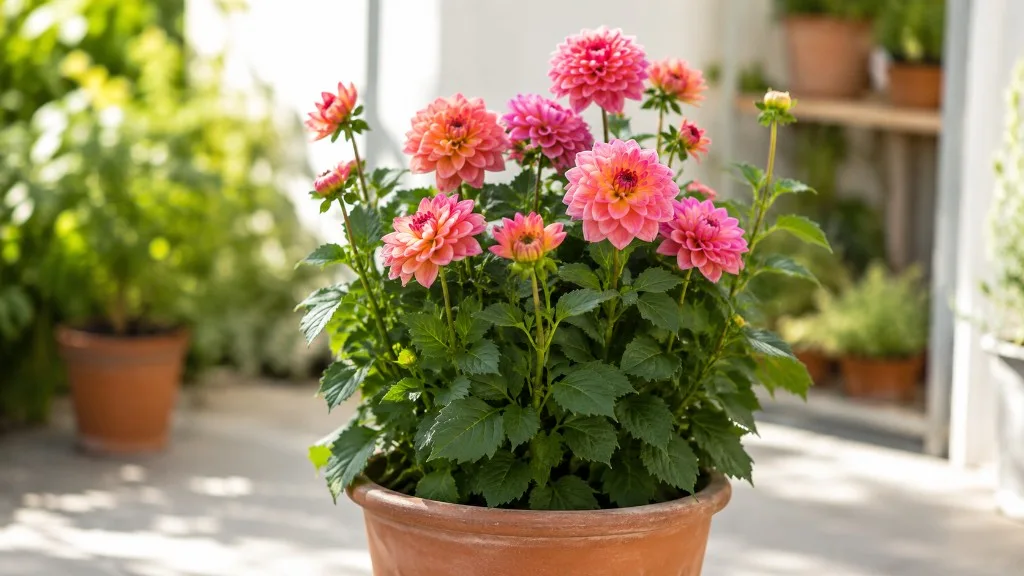
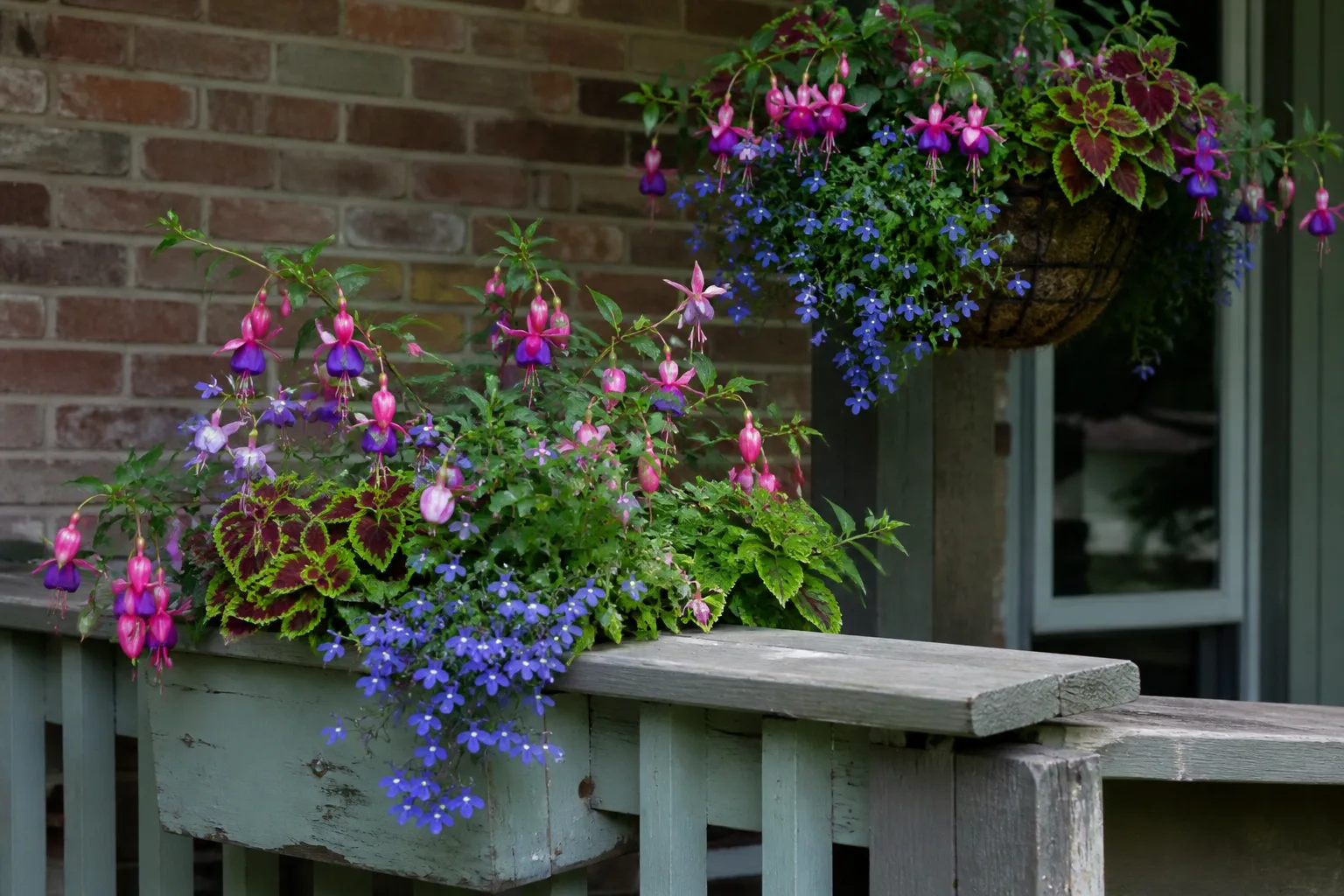
For a sunny container, an upright ornamental grass or compact salvia can serve as the focal point, with heat-tolerant flowers such as calibrachoa or lantana around it and a trailing plant at the edge. For a bright-shade pot, combine foliage plants such as coleus or begonia with fuchsia or lobelia if their moisture and light preferences match. These are starting points, not recipes: check each cultivar’s mature size and local growing conditions before combining them.
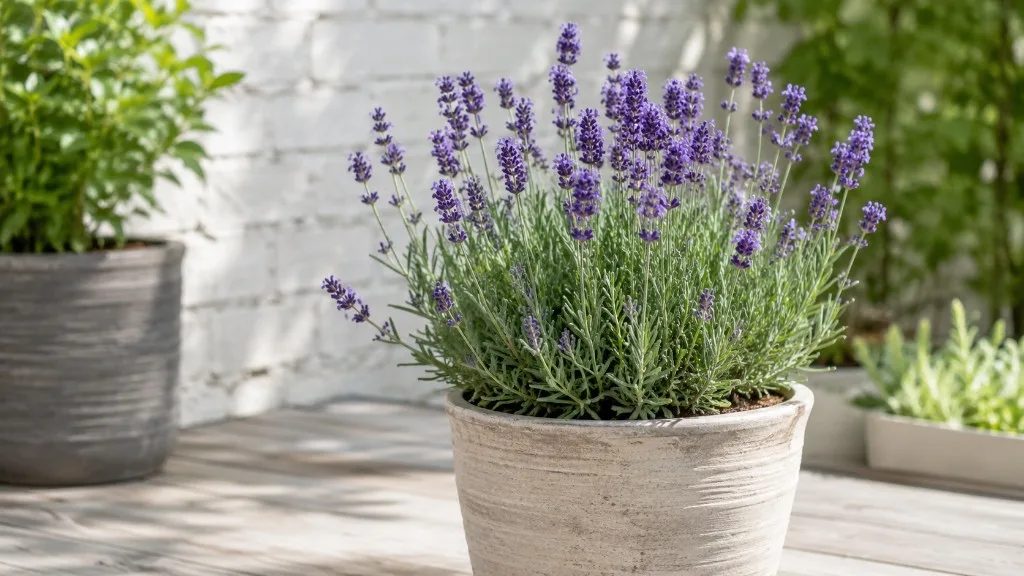
For a low-effort pollinator pot, use several nectar-rich plants that bloom at different times, then place the container where insects can find it. The editors at Gardening Know How recommend choosing varieties with overlapping but staggered bloom periods; in a mixed pot, also make sure they share similar sun and water needs. Avoid treating a single flower-filled pot as a substitute for broader habitat, but it can add a useful food stop to a patio or balcony.
Grow Vegetables and Herbs in Containers
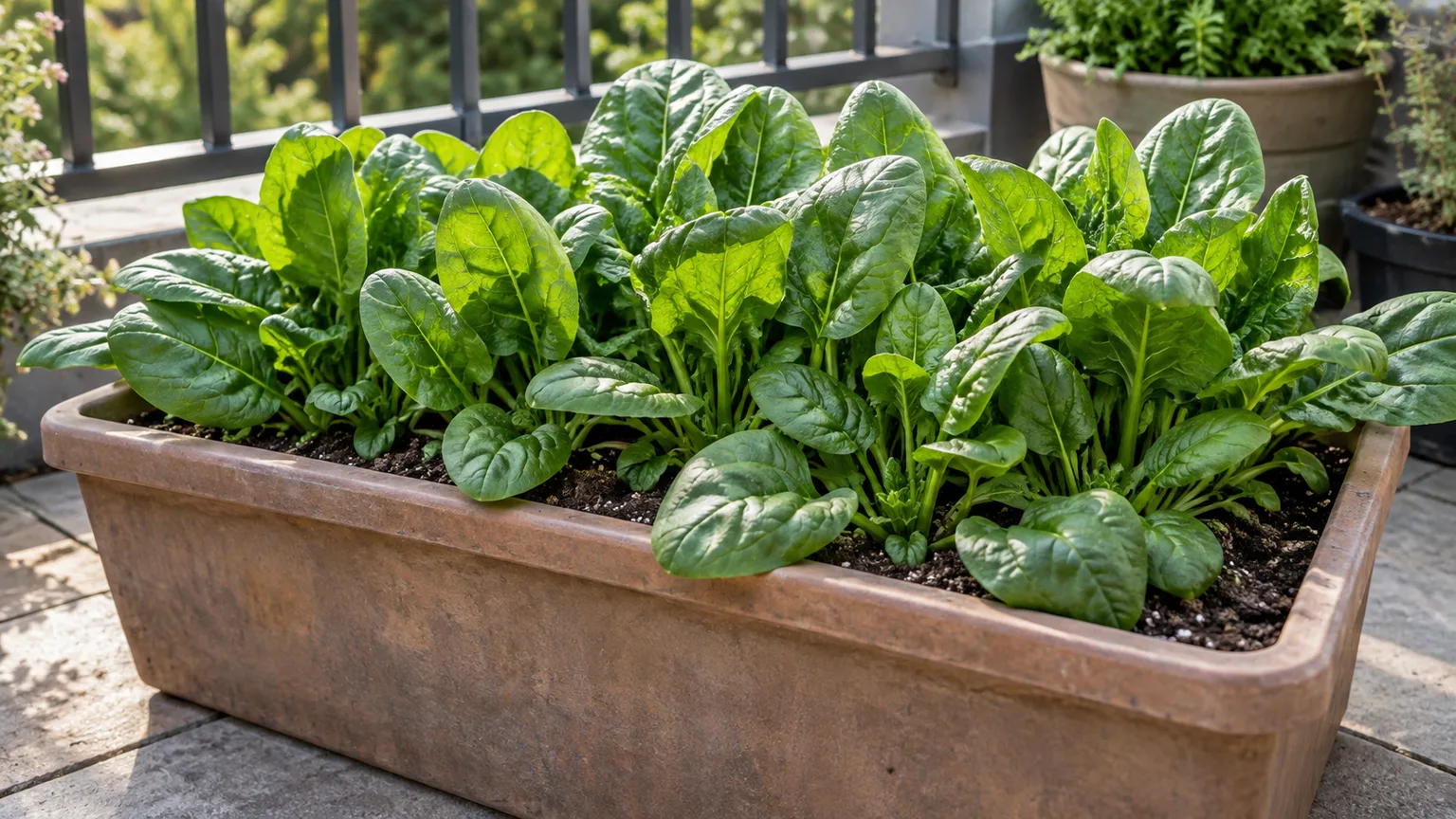
Many compact crops grow well in pots, especially when you choose varieties bred for containers. Leaf lettuce, spinach, arugula, chard, radishes, and many herbs are approachable first choices because you can harvest leaves or roots without needing a large trellis or a long season. They still need enough light and a pot deep enough for their roots, and they may need more frequent watering than plants in open ground.
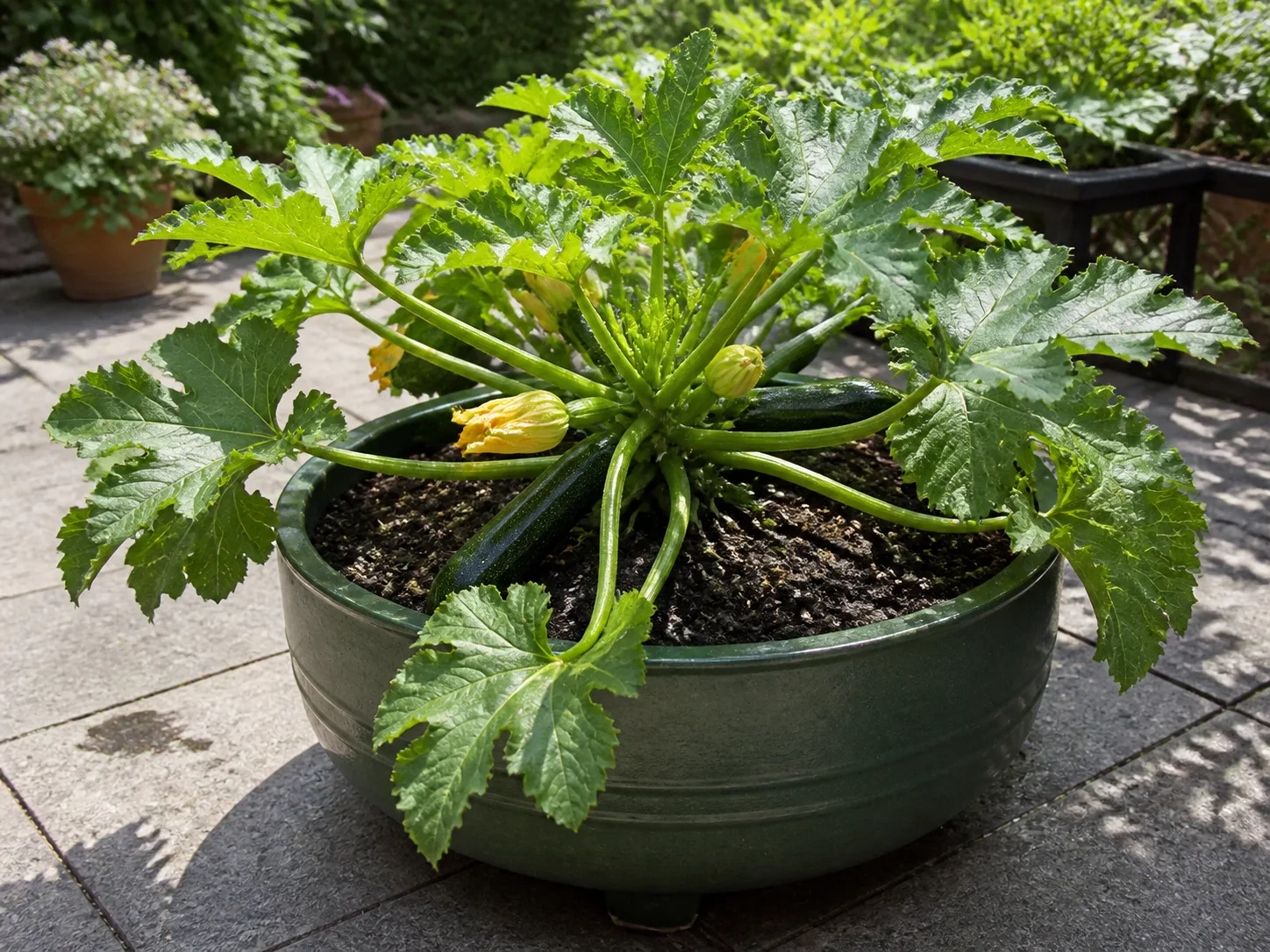
Fruiting crops ask more of a container. Tomatoes, peppers, and cucumbers need strong light, consistent moisture, room for roots, and often a stake or cage. Look for compact or patio varieties, and give each plant space according to its mature size; packing several full-sized plants into a decorative planter usually produces a tangle rather than more food. Dwarf bush beans and strawberries can be productive choices when their light and watering requirements fit your site.
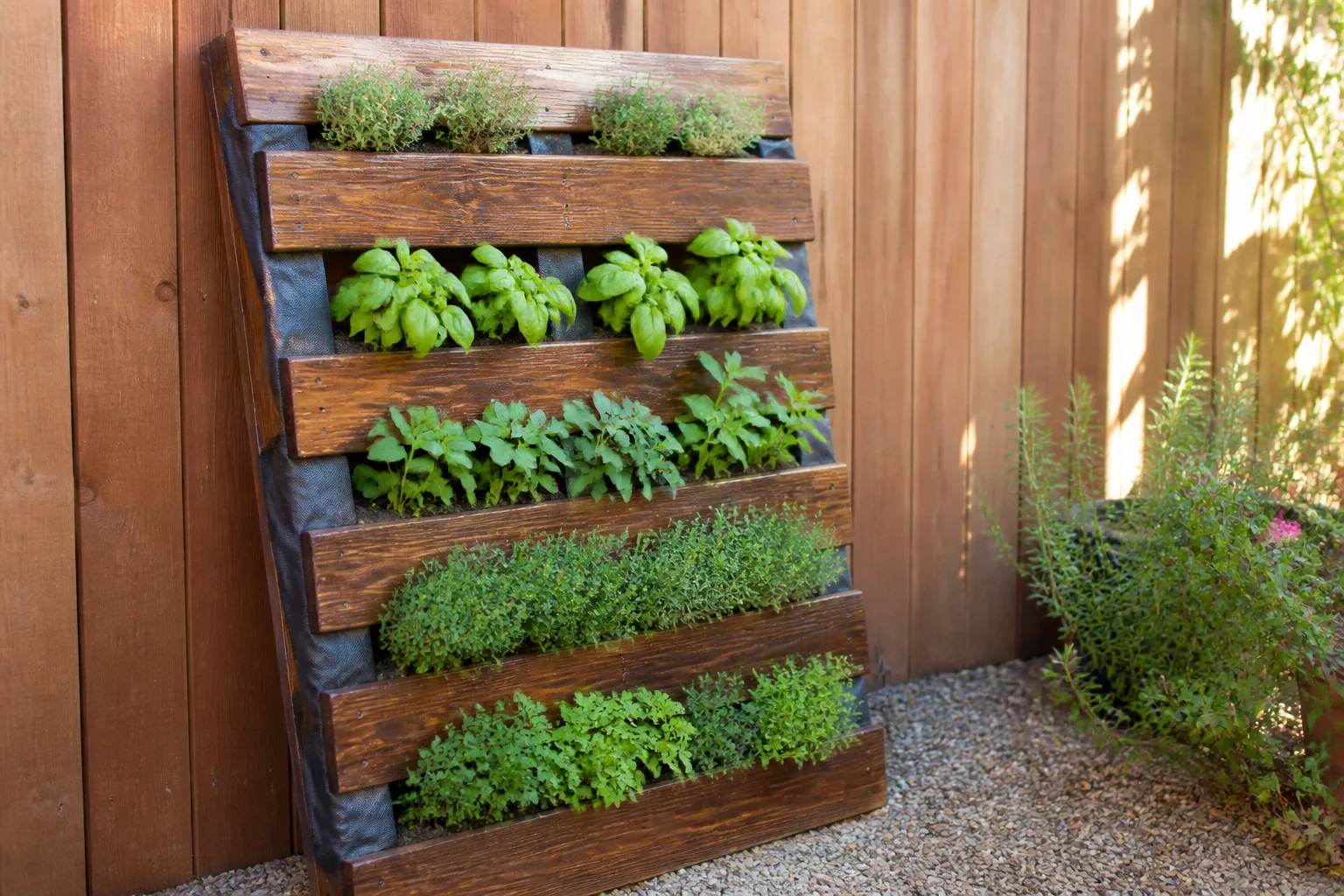
Herbs are convenient near the kitchen, but do not force every herb into the same pot. Basil and parsley appreciate more regular moisture than Mediterranean herbs such as thyme and rosemary, which prefer a mix that drains freely and a chance for the surface to dry between waterings. Separate them into neighboring pots if their care needs differ; the arrangement will still read as one herb garden.
For edible plantings, use clean containers and a fresh growing mix, then follow the seed packet or cultivar directions for spacing and harvest. A narrow container on a sunny ledge can hold cut-and-come-again greens, while a larger pot can support a compact tomato with a basil plant nearby if both receive enough light and root space. Plan for the plant you want to harvest, not a dense photo-ready arrangement that makes air circulation and picking difficult.
Build a Small-Space Garden That Is Easy to Reach
Use height in layers: put a stable, larger pot on the ground, place lighter containers on a sturdy bench, and hang a basket only where its support is designed to carry the wet weight. A vertical trellis or wall planter can use otherwise empty space, but it should not shade every pot behind it or make watering the upper tier difficult. A few well-placed containers often work better than covering every rail and walkway.
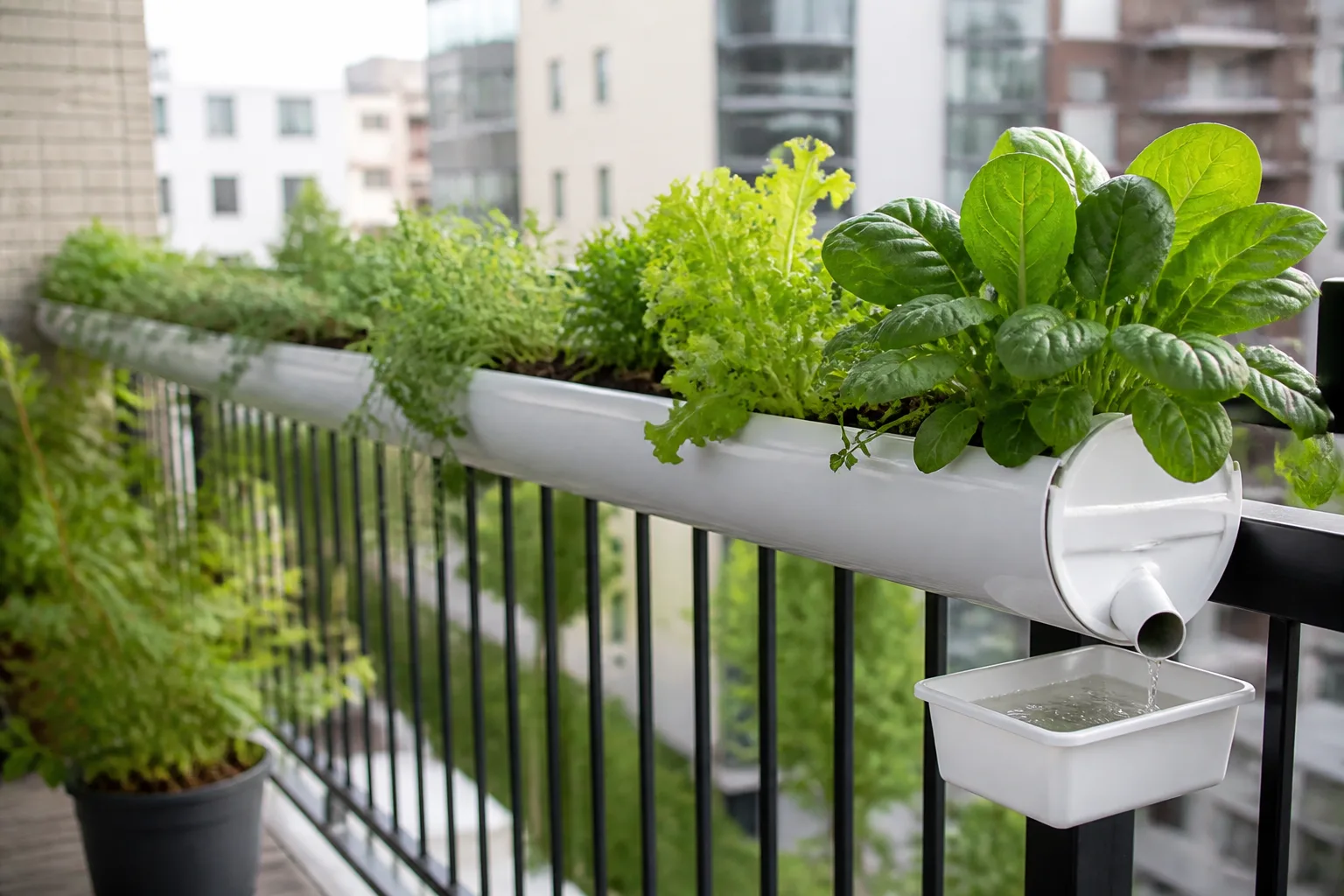
On a narrow balcony, reserve the sunniest reachable area for edible crops and use shadier corners for foliage or flowering plants that tolerate lower light. Keep a clear path to doors and drains, group pots with similar watering needs, and use saucers only when you can empty them. If runoff is prohibited or hard to control, use a waterproof tray or an indoor-safe reservoir system and check that the pot itself is not sitting in stagnant water.
Raised planters can make gardening more comfortable for people who find floor-level pots difficult to reach. Choose a height that allows watering and harvesting without leaning over the edge, and make sure the stand is stable before loading it. Lightweight containers may be moved to follow the sun; heavy planters should be placed once, in their permanent position, before you add mix and water.
Water by Checking the Root Zone
There is no universal watering schedule for container plants. The interval changes with pot size, material, plant growth, sun, wind, humidity, and rainfall. Check the mix instead: feel an inch or two below the surface or lift the pot to learn what it feels like when moist. A dry surface alone does not always mean the full root ball is dry, and a damp top does not guarantee that water reached the roots.
When the root zone needs water, pour slowly over the surface until water begins to drain from the bottom. If dry mix has pulled away from the sides and water runs straight down the gap, apply a small amount, pause, then water again so the center can absorb it. Empty standing water from a saucer after the pot has drained; roots need oxygen as well as moisture.
Small pots, hanging baskets, porous clay, and exposed containers often dry fastest. In hot or windy weather, check them each morning and again later if they feel light or the plants wilt. A larger pot, light mulch over the surface, grouping pots to reduce wind exposure, or a self-watering planter can stretch the interval, but none removes the need to inspect moisture.
Diagnose wilting before adding more water
Wilting can mean either too little or too much water. If the mix is dry and the pot is light, water thoroughly. If it is wet and heavy, pause; persistent saturation can deprive roots of air, and adding more water may deepen the problem.
Watch what happens after the container drains. A plant that perks up after thorough watering was likely thirsty; a plant that remains limp in wet mix may have damaged roots, heat stress, or another problem. Move a heat-stressed container to temporary afternoon shade if appropriate, confirm that holes are open, and avoid fertilizing a wilted plant until it is recovering.
Feed and Refresh Containers Through the Season
Potting mix contains a finite supply of nutrients, and regular watering can carry some nutrients out through the drainage holes. Start with the mix label: some products include fertilizer for an initial period, while others are lightly amended. Once that supply runs down, use a fertilizer labeled for the plants you are growing and follow its directions; more is not better, because excess salts can injure roots or burn leaf edges.
Flowering annuals and productive vegetables may use nutrients faster than slow-growing foliage plants. A steady, label-directed feeding routine is usually easier to manage than repeated heavy doses. If growth is weak, first check light, moisture, root space, and pests before assuming the plant needs fertilizer.
Remove spent flowers when the plant benefits from deadheading, harvest herbs and greens regularly, and trim damaged foliage with clean tools. At the end of a season, discard plants that are diseased, refresh or replace depleted mix as appropriate, and wash reusable containers. Perennials and woody plants may need repotting, root pruning, or replacement of some tired mix as their roots fill the container.
Adjust for Heat, Wind, Rain, and Winter
Container roots experience temperature swings more quickly than roots in the ground. Dark pots in direct sun can heat up, and wind can dry foliage and mix even when the air feels cool. During heat waves, check the moisture early, shade the pot from harsh late-afternoon sun when the plant allows it, and group containers where they shelter one another without blocking needed light.
Heavy rain can saturate a pot that usually dries quickly. Lift saucers, clear blocked holes, and raise containers slightly on pot feet so excess water can escape. If a plant repeatedly sits wet after storms, it may need a more open growing mix, a less exposed position, or a pot with better drainage.
Winter survival depends on the plant’s hardiness, the container material, and local conditions. Roots in pots are less insulated than roots in the ground, so a plant that survives outdoors in a garden bed may be more vulnerable in a container. Move tender plants under cover before frost, cluster hardy pots in a sheltered spot, protect the pot from cracking, and avoid leaving roots in a water-filled saucer during cold weather.
Solve Common Container-Garden Problems
The plant wilts every afternoon. Check the mix before you water. If it is dry, the pot may be too small for the plant or exposed to excess sun and wind; move it temporarily, water deeply, and consider repotting when conditions are milder. If the mix is wet, inspect drainage and roots rather than watering again.
Leaves yellow while the mix stays wet. Confirm that the pot has an open hole and is not sitting in water. Saturated mix can damage roots, but yellowing can also have other causes, including nutrient imbalance, pests, or normal aging; inspect new growth and the undersides of leaves before choosing a treatment.
A pot dries unevenly or water runs off the top. The mix may have become difficult to rewet, or roots may have crowded the container. Water in two or three slow passes, check whether the full root ball becomes moist, then plan to refresh the mix or move the plant to a slightly larger pot if roots have filled the space.
Plants look crowded soon after planting. Compare their current spacing with mature size. Remove or relocate a plant rather than compensating with more water or fertilizer. In the next planting, leave room for growth and choose fewer, compatible varieties.
Flowers stop blooming or vegetables produce little. Check sunlight first, then review watering consistency, pollination, plant maturity, and temperature. A container in deep shade will not become productive because it receives extra fertilizer. Move the pot only if the plant can tolerate the new exposure and the container is safe to move.
Conclusion
Successful container gardening is mostly good matching. Measure the light, choose a container large enough for the mature plant, use a suitable potting mix with working drainage, and group plants that share the same conditions. Then water when the root zone needs it instead of following a fixed calendar.
Start with one or two containers and a clear purpose: a pot of herbs by the door, leafy greens in a broad box, or flowers that brighten a shaded step. Keep notes on how quickly each pot dries and how the plants respond through the season. Those observations will tell you what to expand, what to move, and which container-garden ideas will work in your space.