Growing Lavender in Pots: Complete Care Guide
Learn how to grow lavender in pots with the right cultivar, pot size, gritty soil, watering rhythm, pruning routine, and winter protection.
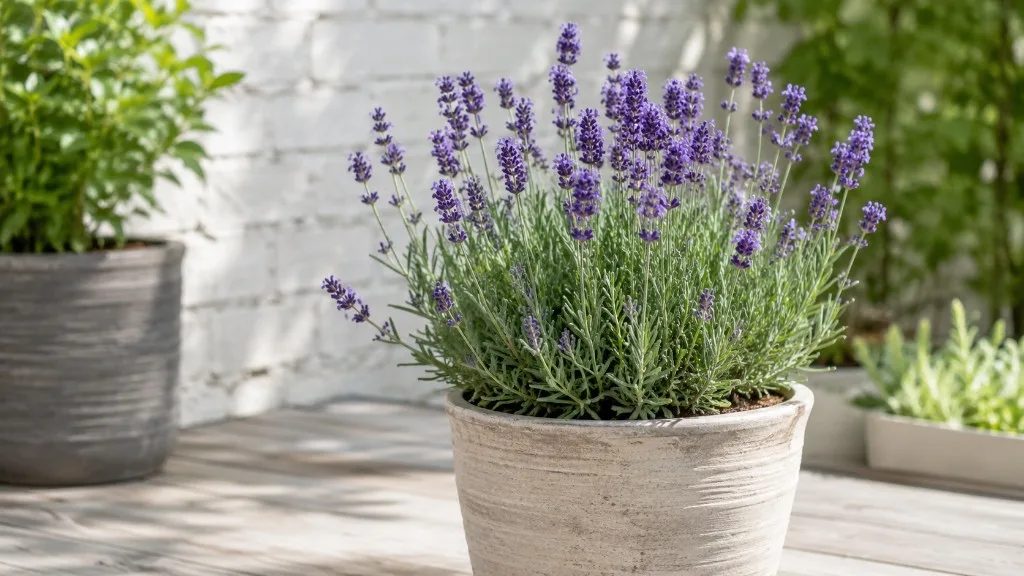
Lavender is a strong container plant when the pot recreates what its roots prefer: abundant sun, quick drainage, and a cycle of thorough watering followed by a real dry-down. That combination sounds simple, but a small pot can swing from soaked to parched quickly, and winter cold reaches roots more easily above ground than in a garden bed. Choose the plant and container as a pair, then adjust watering to the weather instead of following a rigid weekly schedule.
A pot is especially useful if your garden soil stays wet, your patio gets better sun than your yard, or you want to move a tender lavender into shelter. It is not a shortcut to growing lavender in a dim room; most plants bloom best outside. The guide below helps you decide which type to buy, how to set up the root zone, and what to change when the plant stops thriving.
Start With a Site Lavender Can Use
Give lavender the sunniest outdoor position you have, ideally a spot with at least six hours of direct light and good air movement. Eight hours is helpful where summers are mild, but the amount of midday heat a container receives matters too: a pot against a south- or west-facing wall can get much hotter and dry faster than one in an open, breezy position. Rotate the pot occasionally if light comes from one side so the plant does not lean toward the brightest edge.
Lavender tolerates dry air and lean soil; it does not tolerate being shaded, crowded, and kept damp. Leave room around the foliage so leaves dry after rain, and set the pot where water can drain freely rather than into a saucer that stays full. The Royal Horticultural Society (RHS) describes lavender as a sun-loving plant for free-draining soil or containers, and notes that damp, cold conditions increase failure risk. (RHS growing guide)
Choose a Lavender That Fits Your Climate and Container
Read the botanical name and mature dimensions on the plant label. Common names such as “French lavender” are not used consistently by every nursery, and “lavender” covers plants with different sizes, bloom habits, and cold tolerance. A compact cultivar can thrive for years in a patio pot, while a vigorous lavandin eventually needs a larger container or a place in the ground.
English lavender and lavandin suit different pot sizes
English lavender (Lavandula angustifolia) is the most reliable starting point when a pot will spend winter outdoors in a cold region. Many cultivars tolerate colder winters than Spanish or tender lavenders, but hardiness depends on the cultivar and the root zone: a plant that survives in the ground may still be damaged in a frozen container. Colorado State University Extension identifies English lavender as hardy in its Colorado conditions and lists Spanish and French types as too tender to rely on outdoors through that region’s winter. (Colorado State University Extension)
Compact English cultivars such as ‘Hidcote’ or ‘Munstead’ are easier to keep proportionate on a balcony or small patio. Lavandin (Lavandula × intermedia) varieties often grow larger and send up longer flower stems; they can look impressive in a generous pot, but they are less convenient if you need to move them into a garage each fall. Check the plant’s listed mature spread before you commit to a decorative container.
Tender lavender needs a winter plan
Spanish lavender (L. stoechas) adds distinctive bracts above its flowers and often blooms over a longer season, but it is generally more cold-sensitive than English lavender. Some plants sold as French lavender are also tender. If you want that look in a region with hard freezes, treat it as a movable container plant and plan on a bright, cool, frost-protected place for winter rather than assuming the pot makes it hardy.
For a comparison of lavender types and container selection, Garden Design also emphasizes matching variety to climate and mature size. Its general advice is useful, but the plant label and local winter conditions should decide whether a specific cultivar can stay outside. (Garden Design)
Select the Right Pot and Drainage Setup
For one compact to medium lavender, a pot about 12 to 16 inches wide is a practical long-term starting point; the RHS gives 30 to 40 centimeters as a useful container diameter. The container should be wider and deeper than the root ball, with enough room for several seasons of growth, but a dramatically oversized pot is not automatically better. A large mass of unused mix can remain damp after watering while a young plant has few roots to draw from it.
Drainage holes are essential, and more than one large opening is easier to keep clear than a tiny central hole. Unglazed terracotta loses moisture through its sides, which can help in rainy or humid climates but means more frequent watering in hot, dry weather. Plastic and glazed ceramic hold moisture longer and are lighter or more decorative, but require careful moisture checks; whatever you choose, use pot feet or a stand if the container otherwise sits flush on a wet patio.
A pot with no drainage hole is a cachepot, not a safe planting container for lavender. You can place a nursery pot inside a decorative cover, but lift the inner pot out to drain it completely after watering. Do not leave the root ball standing in a full saucer, and do not assume a layer of stones at the bottom can compensate for blocked holes.
Use an Airy Mix, Not a Rock Layer
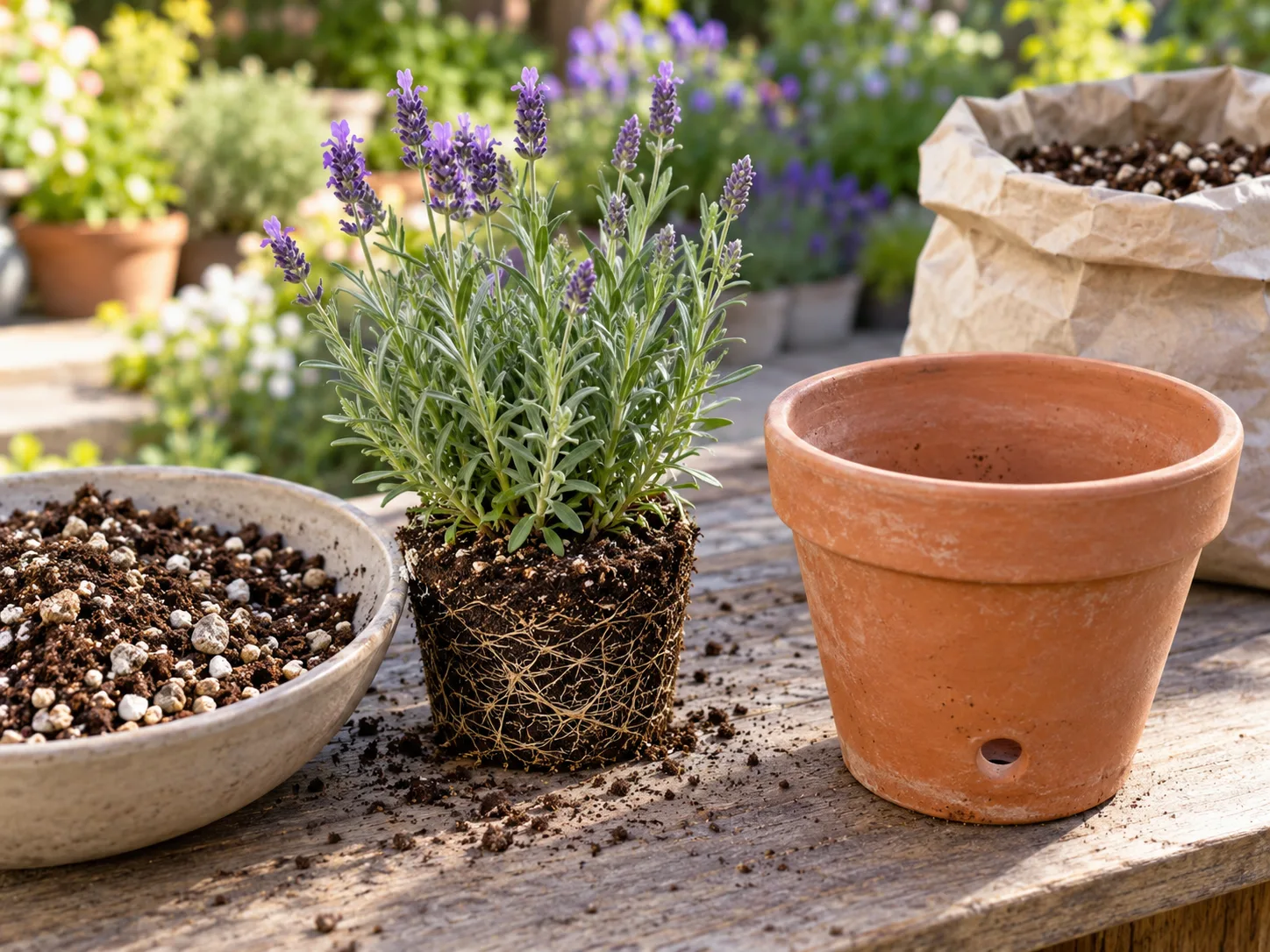
Start with a fresh, peat-free multipurpose or loam-based potting mix, then blend in coarse horticultural grit so water moves through the root zone instead of lingering around it. The RHS suggests adding up to about one-quarter coarse grit by volume to container compost for lavender. For a simple home mix, use roughly three parts potting mix to one part grit; perlite or pumice can also open a dense mix, while fine sand and garden soil can compact a container.
The goal is not to make the pot dry instantly. Lavender still needs a coherent root ball that can absorb water, especially while establishing; a blend of mostly mineral material can shed water before the roots have time to take it up. Water the finished mix once before planting to see whether it wets evenly and drains through the holes, then adjust if it stays heavy or channels straight down the sides.
Avoid adding lime by guesswork. Lavender tolerates neutral to alkaline conditions, but a random amendment can shift the mix unnecessarily and will not fix poor structure or standing water. If pH is a concern, use a soil test or the potting mix label as a guide; drainage and sunlight are usually the first variables to correct.
Plant or Repot Without Burying the Crown
Spring is a dependable time to plant or repot because the plant can establish before either summer heat or winter cold. Choose a container only a few inches wider than the current root ball, cover the drainage holes with a piece of mesh if the mix falls out, and add enough mix that the plant’s crown—the point where stems meet roots—will sit at the same height it did in its nursery pot. Burying the crown keeps the base damp and can encourage decline.
Ease the lavender out of its nursery pot and inspect the roots. Firm, pale roots are healthy; gently loosen circling roots around the outside of a root-bound ball, but do not tear the root system apart. Set the plant in the center, fill around it without packing the mix hard, and leave a small gap below the rim so water does not wash soil over the edge.
Water slowly until the whole root ball is wet and water runs from the drainage holes. Let the pot finish draining before returning it to a saucer or decorative cover. During the first few weeks, protect a newly repotted lavender from abrupt transitions into intense heat or cold, but move it into full sun as it settles; shade is not a long-term solution for transplant stress.
Give Lavender Six to Eight Hours of Direct Sun
Set the pot outdoors where it receives at least six hours of direct sunlight each day. Lavender often produces fewer flowers and looser growth in partial shade, even if the foliage stays green. A plant that grows long, weak stems toward a window or turns away from the rest of a patio is telling you that its light is coming from the wrong direction or is not strong enough.
Lavender can be grown indoors temporarily, but a bright room is not necessarily a bright growing site. A sunny south-facing window may work in a mild climate, though short winter days and glass that filters or blocks light can reduce flowering; a grow light on a consistent schedule may help, but it does not solve poor airflow or excess humidity. If indoor lavender becomes stretched or fails to bloom, moving it outside after frost risk has passed is usually more effective than adding fertilizer.
Water Deeply, Then Let the Root Zone Dry
Water when the mix has dried down several inches below the surface, not because a calendar says it is time. Push a finger into the soil near the edge of the root ball; if it still feels cool and damp, wait, and if it is dry at that depth, water thoroughly. A small terracotta pot in full sun may need attention every few days in a heat wave, while a larger glazed pot in cool weather may stay moist much longer.
When you do water, pour slowly over the whole soil surface until excess leaves the drainage holes. This wets the complete root ball and flushes some accumulated salts from the mix. Empty the saucer, and check that the pot’s holes are not sealed against the ground or blocked by compacted mix; lavender roots need both moisture and air.
Newly planted lavender needs more consistent checks while its roots settle in, and container plants can dry faster than lavender in the ground. Once established, allow the mix to dry between waterings, but do not force repeated wilting as a routine. The RHS notes that containers need regular summer water because their limited soil volume dries faster than beds, while dry winter conditions are important for cold tolerance. Those points are compatible: water enough to prevent a new plant from desiccating, but never keep mature roots continuously wet.
If the leaves droop, check the mix before watering. A dry, shrunken root ball may need a slow soak; a wet pot with drooping leaves needs drainage and root inspection, not another drink. This single check prevents the common mistake of treating every wilted plant as thirsty.
Feed Sparingly and Keep the Crown Open
Lavender does not need rich soil or frequent feeding. High nitrogen can push soft leafy growth at the expense of flowers and create a larger plant that is harder to keep compact in a pot. The RHS says lavender generally does not need feeding; Garden Design recommends only a light, slow-release spring feed as an option for container plants. (RHS on feeding and container care) (Garden Design on potted lavender)
If growth is weak and the plant has been in the same container for several years, first rule out low light, stale or compacted mix, a pot-bound root system, and poor drainage. Refreshing the mix at repotting is often more useful than regularly adding liquid fertilizer. If you choose to feed, use a modest amount of a balanced product according to its label during active growth, and stop feeding by late summer so tender growth is not encouraged just before cold weather.
Keep gravel mulch thin and pulled away from the stems if you use it. A dark, wet layer over the crown can trap moisture precisely where lavender is most vulnerable; leaving the crown and stem bases open also makes it easier to spot rot or pests early.
Prune for Compact Growth Without Cutting Old Wood
Lavender blooms from new growth, but it does not reliably push new shoots from bare, old wood. That makes the pruning boundary more important than the exact shape: keep cuts in leafy, flexible growth and leave a visible green cushion on every stem. Never shear a plant down to the woody framework just because it has grown wide or uneven.
Pruning timing varies by climate and cultivar. The RHS recommends a light trim just after flowering, while Colorado State University Extension describes pruning when new green growth appears in spring and removing about one-third of the top. In a mild region, a post-bloom trim can keep the mound tidy; where fall pruning would leave vulnerable new growth before a hard winter, wait for spring growth to show and make conservative cuts. Colorado State University Extension and Gardener’s Path both favor spring pruning in cold-winter climates, while the RHS recommends a light trim after flowering; all three emphasize avoiding bare old wood. (Colorado State University Extension) (Gardener’s Path) (RHS growing guide)
For an overgrown plant, reduce it over more than one season rather than trying to rebuild its shape in one severe cut. Trim one side lightly, watch where healthy shoots appear, and replace the plant if most stems are brittle and bare from the base. Older lavenders are often easier to replace than to revive after years without pruning.
Harvest and Deadhead With a Purpose
Cut flower stems on a dry morning after dew has lifted. For dried lavender, wait until about half the florets on a spike have opened; at that stage you get useful color and fragrance without waiting until the flowers begin to shed. Colorado State University Extension and Gardener’s Path both recommend morning harvest around this point, and Gardener’s Path notes that the dry flowers can be bundled and hung in a dark, airy place. (Colorado State University Extension) (Gardener’s Path) Use clean, sharp snips and follow each stem down to a leafy section so harvesting also removes a little spent growth without leaving a bare woody stub.
Remove faded flower stalks if you want a tidier plant or encourage another flush where the cultivar is capable of reblooming. Leaving a few late-season heads is fine if you prefer seedheads and wildlife value; deadheading is optional, not a rescue treatment. Avoid fertilizing simply to force a second bloom, because light, cultivar, and season length are more decisive.
Protect Container Lavender Through Winter
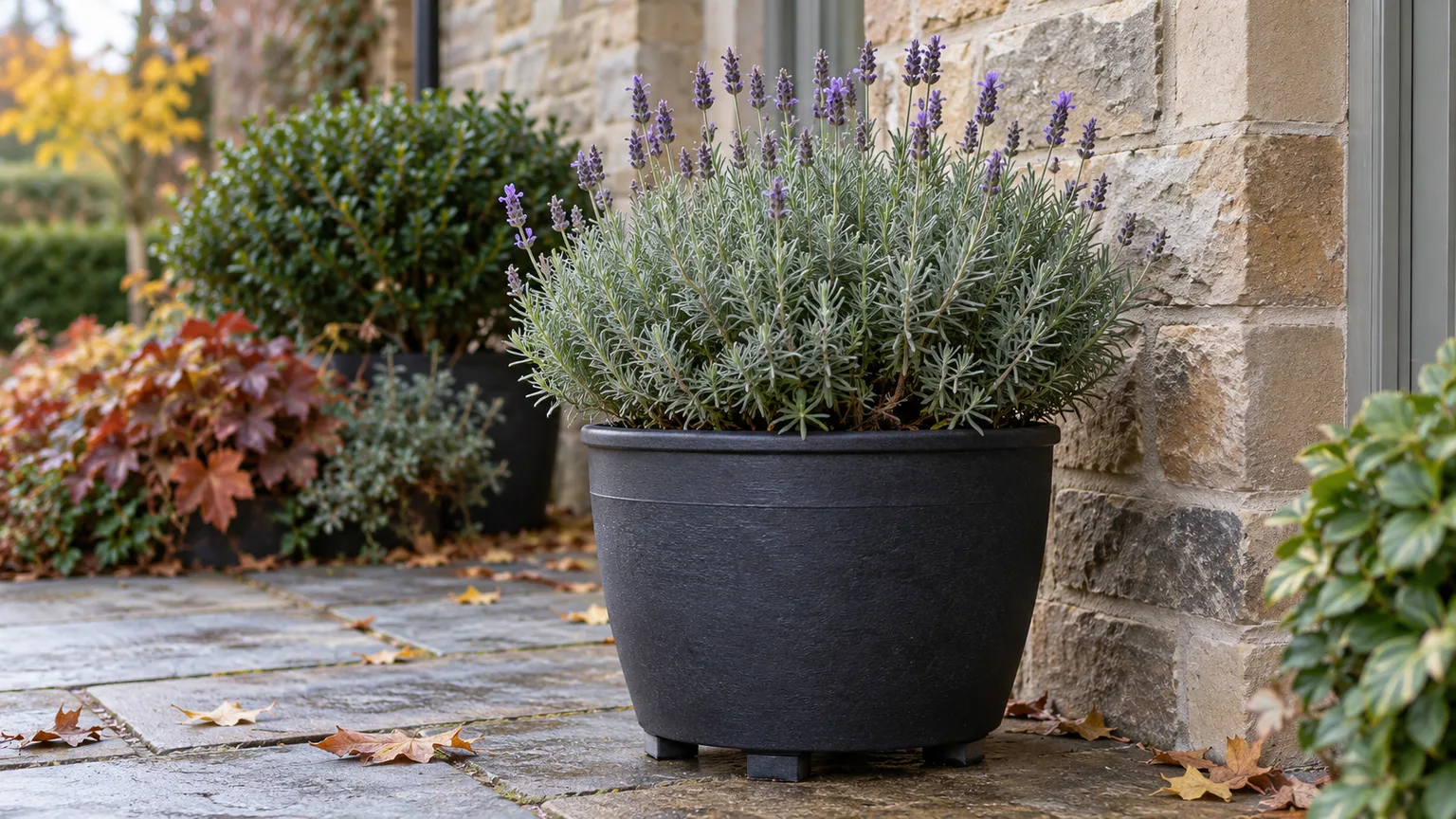
Potted lavender faces two separate winter risks: low temperatures around exposed roots and prolonged cold moisture around the crown. The pot’s root ball has less insulation than ground soil, so a cultivar that is hardy in a garden bed may need protection when grown above ground. Use the plant label as a starting point, then account for the pot material, wind, drainage, and local freeze-thaw pattern.
For a hardy English lavender in a region with occasional freezes, place the container in a sheltered spot beside a wall, keep it raised so holes stay open, and shield it from weeks of winter rain. A breathable windbreak can help, but do not wrap the foliage in plastic or move a dormant plant into a heated room. In climates with severe freezes, group pots against a protected wall or move the plant to an unheated garage or cold frame; keep the mix barely moist rather than bone dry or saturated.
Tender Spanish and French types need a frost-free winter position in cold climates, such as a cool greenhouse or bright unheated porch that does not freeze. Reduce watering while growth slows, but check the root ball occasionally; a sheltered pot still dries, especially in a dry garage. Bring the plant back outdoors gradually in spring once severe frost has passed, and reacclimate it to direct sun rather than placing it straight into a sudden heat wave.
Match protection to the plant and your winter
“Winterize lavender” is not one fixed instruction. In cold, wet regions, rain protection and fast drainage may matter as much as insulation; in dry, cold climates, a dormant plant can still need occasional water when the mix is fully dry and the soil is not frozen. Colorado State Extension’s growing guidance, for example, includes winter watering for its dry climate, while the RHS advises keeping container compost fairly dry and protecting it from excessive winter rain. Apply the principle to your weather instead of copying either schedule blindly.
Diagnose Stress by Checking the Mix First
Yellowing or wilting does not tell you by itself whether lavender needs water. Check the soil and root zone, then use the pattern of damage to narrow the cause. A wet mix with soft, dark roots points toward root decline from poor drainage; crispy tips in a very dry, light pot suggest the root ball may have dried too far. If only flower stalks fade after blooming while the silver-green leaves remain firm, normal seasonal turnover is more likely than a watering problem.
| What you see | First check | Useful next step |
|---|---|---|
| Whole plant wilts while mix is dry | Root ball moisture, especially at the center | Water slowly until the full ball is wet, then let it drain |
| Leaves yellow or darken while soil stays wet | Drainage holes, saucer, and root firmness | Empty standing water; repot if roots are soft or foul-smelling |
| Few flowers and stretched stems | Hours of direct sun and crowding | Move to a sunnier, airier position before feeding |
| Plant declines after a freeze | Cultivar hardiness and exposed pot | Wait for new growth before pruning; protect the roots next winter |
| Lower woody stems split open | Old growth, excess size, or missed pruning | Trim only leafy growth and plan gradual renewal or replacement |
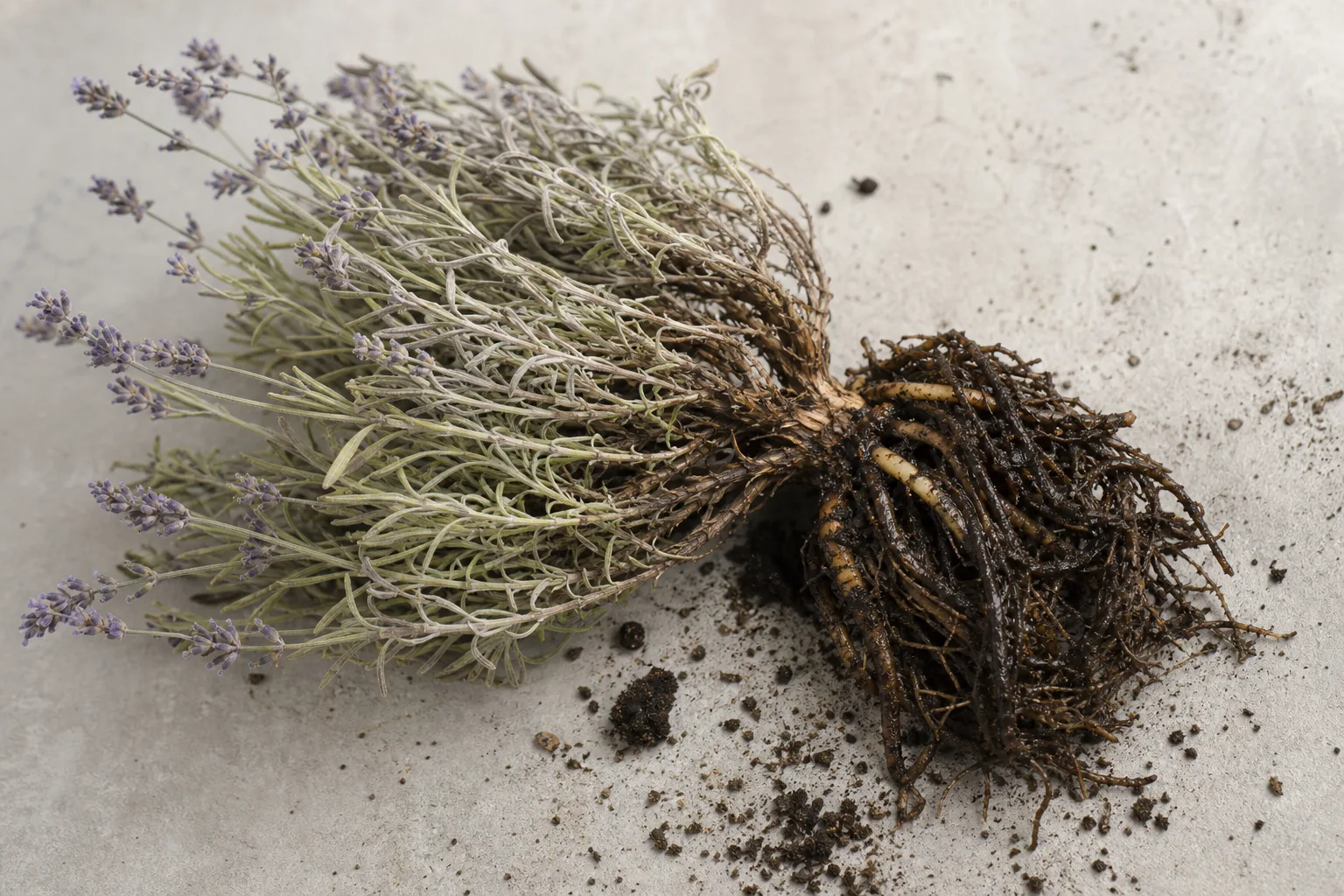
When root rot is suspected, slide the plant out carefully rather than adding fertilizer or repeatedly changing the watering schedule. Healthy roots should feel firm; mushy brown or black roots and a sour smell support a drainage problem. Remove only clearly dead roots with clean shears, replace compacted or waterlogged mix, and use a container with open holes; a severely rotted crown may not recover.
Propagate Lavender for a Second Pot
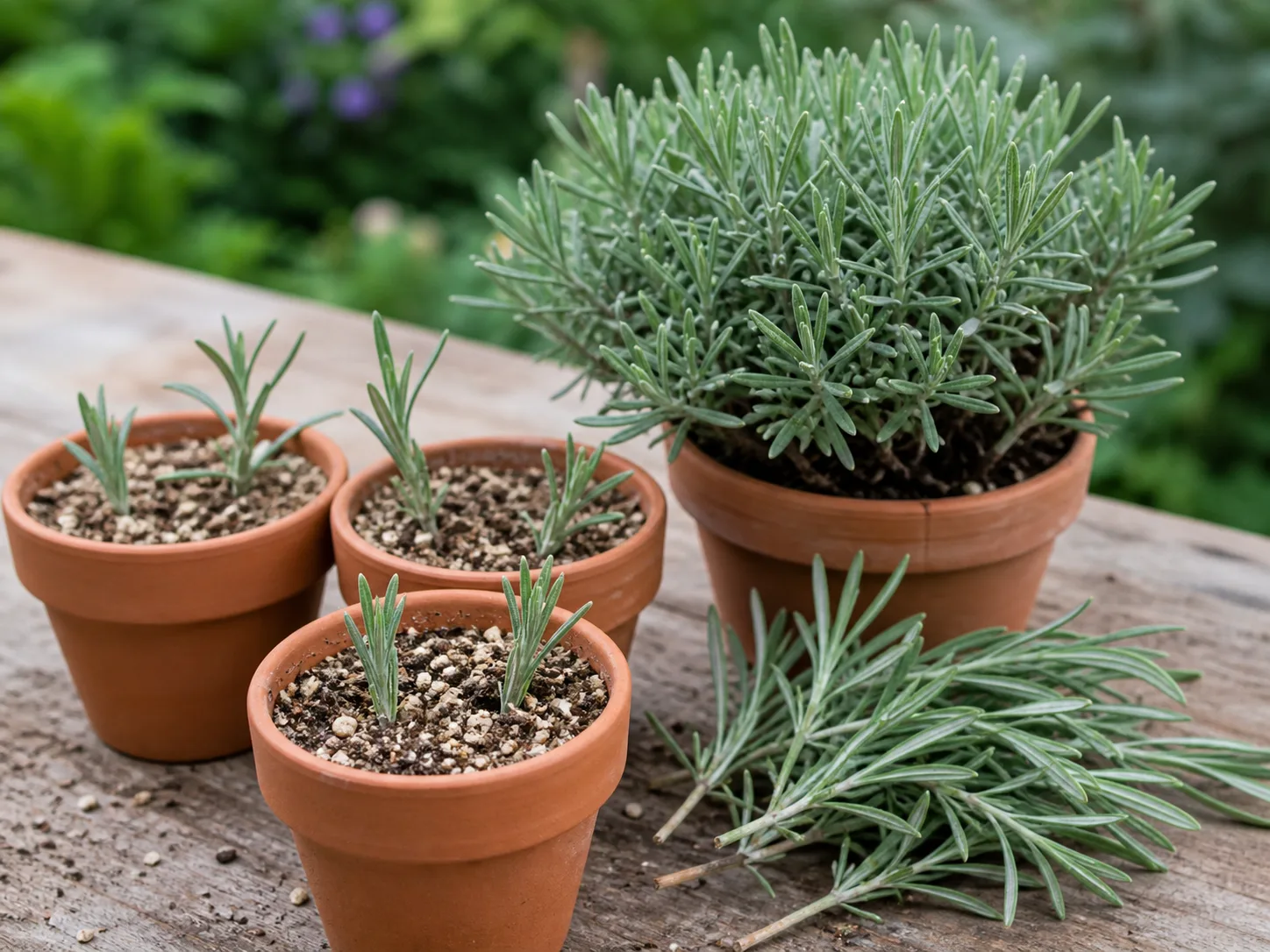
Softwood or semi-ripe cuttings let you reproduce a plant whose size, flower color, and hardiness you already know. Take a healthy non-flowering shoot in late spring or early summer, remove leaves from the lower portion, and insert the bare end into a small pot of moist, free-draining propagation mix. Keep the pot bright but out of harsh midday sun while roots form, and keep the medium lightly moist rather than waterlogged.
The RHS recommends taking softwood or semi-ripe cuttings from young plants in early to midsummer and notes that cuttings produce plants identical to the parent. Seed-grown lavender can vary in height, flower color, and timing, which matters if you bought a compact named cultivar for its container size. Once a cutting resists a gentle tug and begins new growth, pot it up gradually instead of placing an unrooted cutting directly into a large decorative planter. (RHS propagation guidance)
Conclusion
Growing lavender in pots comes down to choosing a cultivar that suits both the container and your winters, then giving it full sun and a root zone that drains quickly. Use a pot with open drainage holes, a gritty but water-holding-enough mix, and a moisture check that responds to weather instead of a fixed schedule. Prune only where stems still carry green growth, and protect the container from winter cold and prolonged rain according to your local conditions.
If your lavender struggles, check light, drainage, and root moisture before reaching for fertilizer or a drastic pruning cut. Those checks usually reveal whether the plant needs a sunnier position, a freer-draining pot, or a different winter plan—and they make the next growing season far more predictable.