How to Grow Spinach (Spinacia oleracea) — Complete Overview
Spinacia oleracea
Grow true spinach or palak in cool weather with steady moisture, fertile well-drained soil, seasonal shade, and repeat sowings for tender leaves.
How to Grow Spinach (Spinacia oleracea) — Complete Overview Guide
Start with wateringThe most common care mistake for SpinachWatering guide → →Spinach care essentials
Light
Water
Keep the root zone evenly moist but never saturated. Spinach has shallow roots, so check containers and young plants frequently and water before they wilt.
Soil
Fertile, organic-rich, moisture-retentive but well-drained soil. A slightly sandy or loamy texture helps prevent saturation around the shallow roots.
Humidity
Temperature
Fertilizer
About Spinach
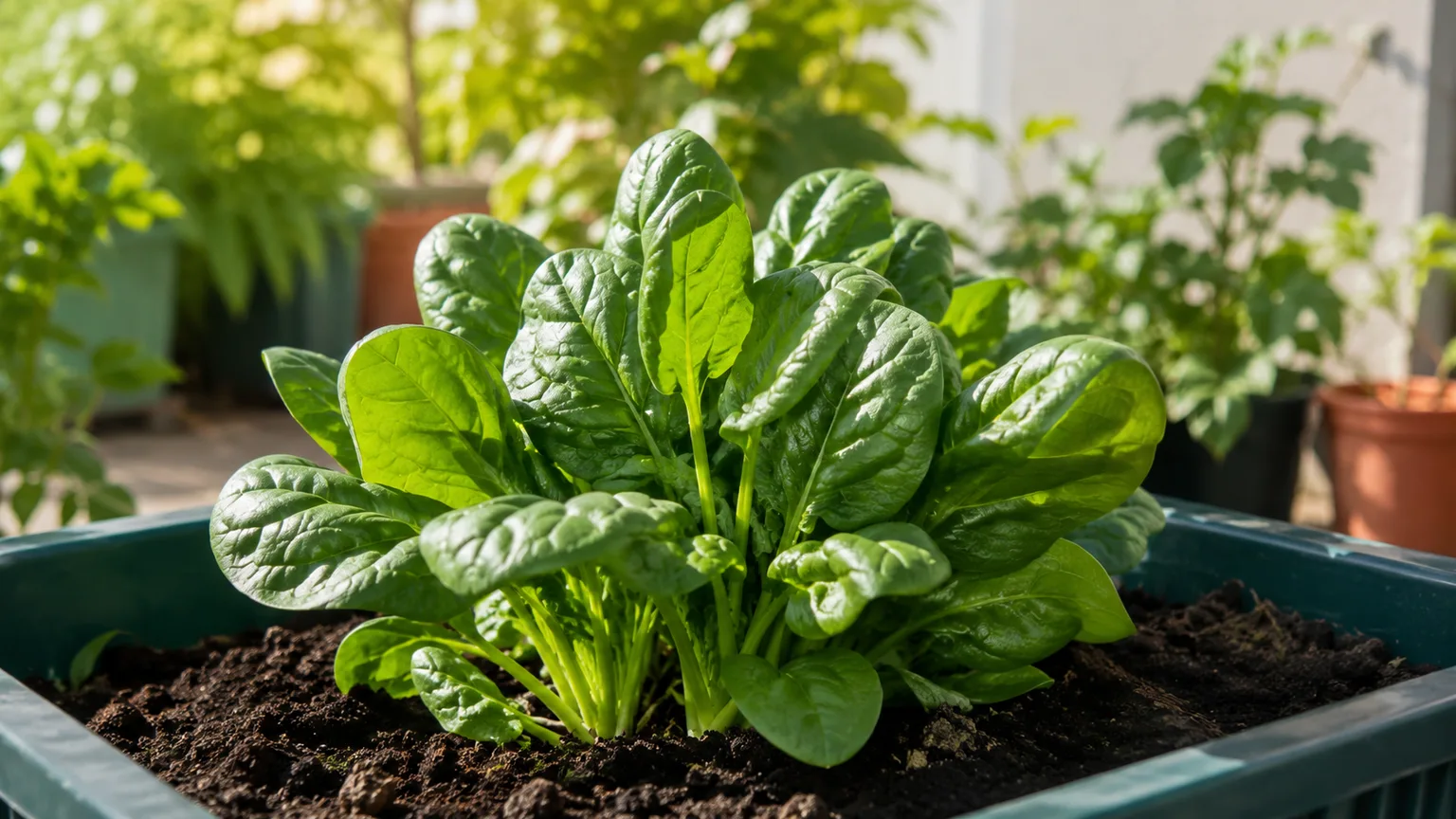
Spinach is native to Central and Western Asia, typically reaches 15–30 cm tall and 15–30 cm wide indoors, with rapid - baby leaves can be ready about one month after sowing growth. Spinach has a herbaceous annual growth habit and part of the Amaranthaceae family. It is also known as Palak, Common garden spinach, and Winter spinach.
| Detail | Information |
|---|---|
| Also known as | Palak, Common garden spinach, Winter spinach |
| Native region | Central and Western Asia |
| Mature size | 15–30 cm tall and 15–30 cm wide |
| Growth rate | Rapid - baby leaves can be ready about one month after sowing |
| Growth habit | Herbaceous Annual |
| Scientific name | Spinacia oleracea |
| Family | Amaranthaceae |
How to Grow Spinach (Spinacia oleracea) — Complete Overview Guide
Spinach (Spinacia oleracea) is a cool-season annual grown for its tender, nutrient-dense leaves. Known widely as palak across South Asia, it forms a compact basal rosette rather than a vine — a critical distinction from heat-loving substitutes like Malabar spinach (Basella alba) or New Zealand spinach (Tetragonia tetragonioides). True spinach thrives in mild conditions around 15–20 °C (59–68 °F), produces baby leaves in roughly 30 days, and reaches mature size of 15–30 cm tall and wide within 45–55 days University of Maryland Extension NC State Extension. Its shallow feeder roots and prominent taproot make consistent moisture and loose, deep soil non-negotiable for quality harvests University of Missouri IPM.
Identity, Names, and Classification
Spinacia oleracea belongs to the Amaranthaceae family (formerly Chenopodiaceae). Common synonyms include palak, common garden spinach, and winter spinach. Two leaf textures dominate the market: smooth-leaf types (easier to clean) and savoy or semi-savoy types (crinkled leaves that hold dressing better but trap soil). Both share the same temperature sensitivity and cultural needs University of Maryland Extension.
Growth Habit and Mature Size
Spinach grows as an erect, herbaceous annual forming a low rosette of fleshy, simple leaves. Leaves range from ovate to arrow-shaped with smooth or crinkled margins, typically 2.5–7.5 cm long at baby stage and up to 15–20 cm at full size. The plant develops a surprisingly deep taproot (30–45 cm in open ground) while maintaining a dense mat of shallow feeder roots in the top 5–10 cm University of Missouri IPM. This dual root architecture explains why spinach needs both deep soil preparation and frequent surface moisture checks.
Native Habitat and Climate Adaptation
Native to central and western Asia — from the Caucasus through Siberia — spinach evolved in continental climates with cold winters and mild springs. It is hardy to USDA zones 2–11 as an annual, tolerating frost to –6 °C (20 °F) once established NC State Extension Clemson HGIC. This cold tolerance makes it a reliable shoulder-season crop, but it also means the plant interprets lengthening days and rising temperatures as a signal to reproduce — the phenomenon gardeners call bolting.
Temperature & Seasonality: The Core Constraint
Ideal Temperature Windows
Spinach germinates best in soil temperatures of 7–20 °C (45–68 °F) Penn State Extension. Above 24 °C (75 °F) soil temperature, germination becomes erratic and slow; above 29 °C (85 °F) it is strongly inhibited Clemson HGIC. For active growth, air temperatures of 10–20 °C (50–68 °F) produce the sweetest, most tender leaves. Once sustained daytime temperatures exceed 24 °C (75 °F) combined with day lengths over 14 hours, the plant initiates flowering RHS University of Missouri IPM.
Spring vs. Fall vs. Winter Cropping
Spring: Direct-sow 4–6 weeks before the average last frost date, or as soon as soil is workable (minimum 4 °C / 40 °F). Make successive sowings every 7–14 days until 2–3 weeks before the last frost. Choose bolt-resistant cultivars for later spring plantings Cornell Extension Penn State Extension.
Fall: Sow 6–8 weeks before the average first frost. Fall crops often outperform spring because shortening days suppress bolting and cooling temperatures improve leaf quality. In mild climates (USDA 7+), fall-sown spinach can overwinter under row cover or cold frame for early spring harvest Utah State Extension RHS.
Winter: In zones 6 and warmer, cold-hardy cultivars (‘Giant Winter’, ‘Medania’, ‘Winter Bloomsdale’) sown in September–October produce through winter with minimal protection. Growth slows dramatically below 5 °C but resumes vigorously in late winter RHS Garden UK.
Why Summer Spinach Fails
True spinach is an obligate long-day plant: flowering is triggered when photoperiod exceeds ~14 hours, accelerated by warm soil and moisture stress RHS University of Missouri IPM. In most temperate regions, June–July day lengths and temperatures make bolting inevitable within 3–4 weeks of emergence. Summer “spinach” harvests require heat-tolerant substitutes — perpetual spinach (Beta vulgaris subsp. cicla), New Zealand spinach, or Malabar spinach — not true Spinacia oleracea Garden UK.
Light Requirements: Sun, Shade, and Seasonal Strategy
Full Sun in Cool Weather
Spring and fall crops perform best with 6+ hours of direct sun. High light drives rapid leaf expansion and sugar accumulation, yielding thicker, more flavorful leaves Missouri Botanical Garden.
Afternoon Shade as a Bolting Delay Tactic
As temperatures climb toward 21 °C (70 °F), providing light afternoon shade (30–50% shade cloth or strategic placement east of taller crops) can extend the harvest window by 1–2 weeks. NC State notes spinach tolerates as little as 3–4 hours of direct sun, making it one of the more shade-tolerant vegetables NC State Extension. However, deep shade produces leggy, thin leaves with reduced yield.
Container Placement Flexibility
Containers allow daily repositioning: full sun in cool mornings, dappled shade during peak heat. This mobility is a key advantage for urban growers. See /plants/spinach/light/ for detailed light measurements and grow-light guidance.
Soil Preparation: Fertility, Drainage, and pH
Target pH Range and Why It Matters
Spinach is unusually sensitive to soil acidity. All major extensions recommend pH 6.0–7.0, ideally 6.5–7.0 Clemson HGIC Cornell Extension Missouri Botanical Garden. Below 6.0, growth stunts, leaf margins yellow, and germination becomes unreliable. A soil test before planting avoids guesswork; incorporate lime 2–4 weeks ahead if needed.
Organic Matter and Taproot Accommodation
Because the taproot penetrates 30–45 cm, deep soil preparation pays dividends. Loosen soil to 20–30 cm depth and incorporate 5–10 cm of well-rotted compost or aged manure Penn State Extension University of Missouri IPM. This simultaneously improves drainage (preventing crown rot), water-holding capacity (buffering the shallow feeder roots), and nitrogen availability for rapid leaf growth.
Container Mix Specifications
For pots, use a mix of 50% quality potting soil or loam, 30% mature compost, and 20% coarse sand, perlite, or fine bark for aeration LeafyPixels spinach soil guide. Containers must be at least 30 cm wide and deep to prevent the mix from drying too quickly and to accommodate the taproot.
Water Management for Shallow Roots
Consistent Moisture Without Saturation
Spinach leaves are ~90% water RHS. The shallow feeder root mat dries rapidly, especially in containers and during wind. Check the top 1–2 cm daily; water when it feels just barely damp, not wet. The goal is even moisture — think of a wrung-out sponge — not a wet-dry cycle LeafyPixels spinach watering guide.
Morning Watering and Disease Prevention
Water early in the day so foliage dries before evening. Prolonged leaf wetness is the primary driver of downy mildew (Peronospora farinosa), the most destructive spinach disease RHS Clemson HGIC. Drip irrigation or a soaker hose directed at the soil surface is ideal; overhead sprinklers increase disease risk.
Container vs. In-Ground Frequency
In-ground beds with compost-amended soil may need watering every 2–3 days in cool weather, daily in heat. Containers often need daily checks and watering every 1–2 days. Mulch with straw or shredded leaves to reduce surface evaporation and keep soil cooler RHS.
Direct Seeding vs. Transplanting: Why Roots Matter
Taproot Sensitivity and Transplant Shock
Spinach’s prominent taproot resents disturbance. Direct seeding into the final position is strongly preferred by all extensions Penn State Extension Cornell Extension University of Missouri IPM. Transplanted seedlings often experience a growth check that hastens bolting, especially if root-bound in cells.
Module-Sown Seedlings as a Compromise
If indoor starts are necessary (e.g., for very early spring or to avoid flea beetles), use deep cells (5–7 cm) and transplant at the 2–3 true-leaf stage before the taproot hits the bottom. Handle by the leaves, never the stem, and keep the root ball intact Cornell Extension.
Spacing and Thinning for Airflow
Sow seeds 1 cm (½ in) deep, 2.5 cm (1 in) apart in rows 30 cm (12 in) apart, or broadcast in wide beds. Thin progressively: first to 5 cm (2 in) for baby leaf, then to 10–15 cm (4–6 in) for mature plants. Crowded plants compete for moisture, reduce airflow (inviting downy mildew), and bolt sooner Clemson HGIC University of Maryland Extension. Thinnings are edible — treat them as your first baby-leaf harvest.
Succession Sowing: The Key to Continuous Harvest
Two- to Three-Week Intervals
Because each spinach planting has a finite harvest window (3–5 weeks of quality leaves before bolting or decline), sow a short row or patch every 14–21 days during the suitable temperature window University of Maryland Extension Garden UK. This staggered approach yields a near-continuous supply rather than a single glut followed by a gap.
Spring, Fall, and Winter Sowing Windows
| Season | Sowing Window | Recommended Cultivars | Notes |
|---|---|---|---|
| Early Spring | 4–6 wks before last frost → 2 wks before last frost | ’Bloomsdale Long Standing’, ‘Space’, ‘Tyee’, ‘Melody’ | Use bolt-resistant types for later sowings |
| Late Spring | Only with bolt-resistant cultivars + shade | ’Palco’, ‘Apollo’, ‘Corvair’ | Expect shorter harvest; plan switch to substitutes by June |
| Fall | 6–8 wks before first frost | ’Melody’, ‘Tyee’, ‘Winter Bloomsdale’, ‘Giant Winter’ | Best quality; slowing days suppress bolting |
| Winter (zones 7+) | Sep–Oct for overwinter | ’Giant Winter’, ‘Medania’, ‘Winter Bloomsdale’ | Protect with row cover/cloche below –6 °C |
Sources: Cornell Extension RHS Garden UK Johnny’s Selected Seeds
Variety Selection by Season
Bolt resistance is not absolute — it merely extends the window by 1–2 weeks under stress. Match cultivar to slot: standard savoy types for earliest spring, semi-savoy bolt-resistant for late spring, winter-hardy types for fall/overwinter. See /plants/spinach/propagation/ for detailed variety profiles and seed-source links.
Bolting: Triggers, Warning Signs, and Mitigation
Day Length, Heat, and Drought as Triple Threat
Bolting is the plant’s reproductive switch. Three factors act synergistically: photoperiod >14 hours, soil temperature >24 °C, and moisture stress RHS University of Missouri IPM. Any one alone can trigger flowering; together they are nearly inevitable. The central growing point elongates into a tall, stiff flower stalk; leaves become smaller, arrow-shaped, and intensely bitter.
Bolt-Resistant Cultivars and Their Limits
‘Tyee’, ‘Space’, ‘Palco’, ‘Corvair’, and ‘Apollo’ are bred for slower bolting under long days. They buy time — typically 10–14 extra days before flowering — but cannot overcome midsummer conditions in most climates Johnny’s Selected Seeds RHS. Treat them as season extenders, not summer solutions.
What to Do When a Flower Stalk Appears
Once the central stalk is visible, leaf quality declines daily. Harvest the entire plant immediately (cut at soil level) and compost or cook the bolting leaves — they are edible but bitter. Do not attempt to pinch the flower stalk; the physiological switch is irreversible. Replace with a heat-tolerant substitute or wait for the fall window.
Harvest Methods: Cut-and-Come-Again vs. Whole Plant
Outer-Leaf Harvest for Extended Yield
Begin harvesting when leaves reach usable size (5–7 cm for baby, 10–15 cm for mature). Cut or pinch individual outer leaves 2–3 cm above the crown, leaving the central growing point intact. The plant will continue producing new leaves from the center for 3–5 weeks in cool weather NC State Extension University of Maryland Extension. This method maximizes total yield per plant.
Baby Leaf vs. Mature Leaf Timing
Baby leaf (28–35 days from sowing): tender, mild, ideal for salads. Cut at 5–7 cm; a second cut is possible with some cultivars. Mature leaf (45–55 days): thicker texture, stronger flavor, better for cooking. Harvest outer leaves weekly. See /plants/spinach/propagation/ for seed-to-harvest timelines by variety.
Post-Harvest Handling for Quality
Spinach loses nutrients rapidly after harvest — vitamin C drops ~50% within 24 hours at room temperature University of Missouri IPM. Rinse in cool water, spin or pat dry thoroughly (excess moisture promotes rot), and refrigerate in a perforated bag. Use within 3–5 days for best quality.
Common Problems Linked to Overview Care
Downy Mildew and Humidity Management
Downy mildew (Peronospora farinosa f. sp. spinaciae) appears as yellow patches on upper leaf surfaces with gray-purple fuzz underneath. It thrives in cool, humid conditions with wet foliage. Prevention: morning watering, wide spacing, resistant cultivars (‘Palco’, ‘Apollo’), and prompt removal of infected leaves RHS Clemson HGIC. See /plants/spinach/plant-problems/downy-mildew/ for detailed management.
Leaf Miners and Row Cover Use
Spinach leaf miners (Pegomya hyoscyami) tunnel between leaf layers, creating winding white trails. Damage is cosmetic but reduces marketable yield. Floating row covers applied at planting exclude the adult flies. Remove covers once temperatures exceed 21 °C to prevent overheating Cornell Extension University of Maryland Extension. See /plants/spinach/plant-problems/leaf-miners/.
Damping-Off in Cool, Wet Soil
Seedlings collapsing at the soil line indicate Pythium or Rhizoctonia damping-off. Risk factors: overwatering, poor drainage, cold soil, dense sowing. Use fresh seed, sterile mix for containers, and allow the surface to dry slightly between waterings Clemson HGIC.
Spinach vs. Lookalikes: Malabar, New Zealand, Perpetual
| Crop | Scientific Name | Heat Tolerance | Growth Habit | Best Use |
|---|---|---|---|---|
| True Spinach | Spinacia oleracea | Low (bolts >24 °C) | Low rosette, taproot | Cool-season leaf crop |
| Malabar Spinach | Basella alba | High (thrives >30 °C) | Vining, needs trellis | Summer substitute, mucilaginous texture |
| New Zealand Spinach | Tetragonia tetragonioides | High | Spreading, ground cover | Summer substitute, salty flavor |
| Perpetual Spinach | Beta vulgaris subsp. cicla | Moderate | Chard-like, biennial | Long-season, cut-and-come-again |
Key takeaway: True spinach is a cool-season specialist. In hot summers, switch to a substitute rather than fighting bolting. See /plants/spinach/overview/ (this page) for true spinach; substitute crops have their own hubs.
Pet Safety and Oxalate Considerations
Human Oxalate Context
Spinach contains oxalic acid (0.3–1.2% fresh weight), which binds calcium and iron, reducing absorption. For healthy adults eating varied diets, this is negligible. Cooking in water and discarding the liquid reduces oxalates by 30–50% NC State Extension. Those prone to calcium-oxalate kidney stones may wish to moderate intake.
Pet Toxicity Status
The ASPCA database does not return a species-specific listing for Spinacia oleracea. NC State classifies human poison severity as low (large quantities over time). Because oxalates are present, prevent unrestricted grazing by cats, dogs, rabbits, birds, horses, and tortoises. Consult a veterinarian before intentionally feeding spinach to pets ASPCA Animal Poison Control NC State Extension.
When to Use This Page vs. Other Spinach Guides
This overview page covers identity, seasonality, and the big-picture cultural framework. For topic-specific depth, use the sibling guides:
- Light: Window placement, shade-cloth specs, grow-light setups → /plants/spinach/light/
- Watering: Soil-check methods, container schedules, drought/overwater signs → /plants/spinach/watering/
- Soil: pH adjustment, DIY mixes, container recipes, fertility → /plants/spinach/soil/
- Fertilizer: NPK ratios, timing, side-dressing, organic vs. synthetic → /plants/spinach/fertilizer/
- Propagation: Seed-starting details, variety tables, transplant tips → /plants/spinach/propagation/
- Plant Problems: Downy mildew, leaf miners, damping-off, bolting rescue → /plants/spinach/plant-problems/
Related Spinach Guides
- Spinach Light Requirements — exact sun/shade specs, container positioning, grow lights
- Spinach Watering Guide — check methods, seasonal schedules, container vs. ground
- Spinach Soil & Fertilizer — pH, compost, container mixes, feeding calendar
- Spinach Propagation — seed starting, variety selection, succession calendar
- Spinach Plant Problems — downy mildew, leaf miners, bolting, damping-off
Conclusion
Growing spinach successfully comes down to respecting its biology: it is a cool-season rosette vegetable with a shallow feeder root mat and a deep taproot, genetically programmed to bolt when days lengthen and soils warm. The grower’s lever is timing — sow in the cool windows of spring and fall, use succession planting to bridge the gaps, and switch to heat-tolerant substitutes when true spinach’s season ends. Keep soil evenly moist, fertility high, and pH near neutral. Harvest outer leaves to extend each planting’s productive life. With these fundamentals in place, tender palak harvests are reliable and rewarding. For the next level of detail on any single topic, follow the sibling guides linked above.
How to care for Spinach?
When should you water Spinach?
Keep the root zone evenly moist but never saturated. Spinach has shallow roots, so check containers and young plants frequently and water before they wilt.
- Press a finger 1–2 cm into the mix - Keep the root zone evenly moist but never saturated.
- water when it feels only slightly damp rather than wet - Spinach has shallow roots, so check containers and young plants frequently and water before they wilt.
- Drain excess water - Spinach has shallow roots, so check containers and young plants frequently and water before they wilt.
What soil works best for Spinach?
Fertile, organic-rich, moisture-retentive but well-drained soil. A slightly sandy or loamy texture helps prevent saturation around the shallow roots.
- 50% quality potting mix or loam - A slightly sandy or loamy texture helps prevent saturation around the shallow roots.
- 30% mature compost
- 20% coarse sand, perlite, or fine bark for aeration - Fertile, organic-rich, moisture-retentive but well-drained soil.
Grower notes for Spinach
Grow true spinach in cool weather
Spinacia oleracea is a cool-season rosette vegetable, not heat-loving Malabar spinach (Basella alba) or an amaranth sold as spinach. Aim for mild conditions around 15–20°C when possible. Heat, drought, and increasing day length hasten bolting, after which leaves become bitter and harvests end.
Keep shallow roots evenly moist
Spinach grows quickly but has a fairly shallow root system. Check pots often, water before seedlings wilt, and keep moisture steady without leaving the crown in saturated soil. Morning watering and drip irrigation help keep foliage drier, reducing the damp overnight conditions that favor downy mildew and slugs.
Use sun according to the season
Give winter crops a sunny position. During warmer weather, light afternoon shade can keep leaves cooler and delay bolting. True spinach can still crop with roughly 3–4 hours of sun, making it more shade-tolerant than many vegetables, but dense shade reduces growth.
Sow where it will finish
Direct sowing is usually better than repeated transplanting because disturbed roots can check growth and encourage bolting. For containers, start seed in the final pot or move module-grown seedlings while young, keeping the root ball intact. Thin crowded plants so air can move between mature rosettes.
Harvest from the outside in
Begin taking individual outer leaves once plants are established, leaving the central growing point intact for repeat pickings. Baby leaves may be ready in about a month and mature leaves in about two months. Remove the whole plant when a central flower stalk starts to rise.
Plan short, repeated crops
Spinach is productive but short-lived. Sow small batches every two to three weeks during suitable cool weather instead of expecting one plant to last all season. In hot Indian regions, the most reliable window is the cooler part of the year; use shade and bolt-resistant cultivars as temperatures rise.
Edible crop, but limit pet access
Spinach is a human food crop, but that does not make unrestricted pet grazing appropriate. It contains oxalates, and the ASPCA database does not provide a species-specific spinach listing; ask a veterinarian before offering it.
Spinach contains oxalic acid. NC State classifies its human poison severity as low and notes risk mainly from large quantities over time; pet-specific safety is not established by the ASPCA plant database.
Watering Spinach
For Spinach, press a finger 1–2 cm into the mix; water when it feels only slightly damp rather than wet and water check every 1–2 days in containers or warm, dry weather; water when the surface is just beginning to dry. Water most often in warm or windy weather; cool-season crops in the ground usually need less supplemental water.
| Detail | Information |
|---|---|
| How often | Check every 1–2 days in containers or warm, dry weather; water when the surface is just beginning to dry |
| How to check | Press a finger 1–2 cm into the mix; water when it feels only slightly damp rather than wet |
| Seasonal changes | Water most often in warm or windy weather; cool-season crops in the ground usually need less supplemental water |
Signs of overwatering
- yellowing lower leaves
- soft or rotting crown
- wilting while the soil remains wet
Signs of underwatering
- limp young leaves
- dry soil pulling from the pot edge
- early flower-stalk formation
Soil & potting for Spinach
Use a mix of 50% quality potting mix or loam, 30% mature compost, 20% coarse sand, perlite, or fine bark for aeration for Spinach. Moist but well-drained; spinach is sensitive to saturated soil. Target soil pH around 6.0–6.5. Repot usually not repotted; direct-sow into the final bed or a container at least 30 cm wide and deep, ideally in cool season, after the hottest weather has passed.
| Detail | Information |
|---|---|
| Recommended mix | 50% quality potting mix or loam, 30% mature compost, 20% coarse sand, perlite, or fine bark for aeration |
| Drainage | Moist but well-drained; spinach is sensitive to saturated soil |
| Soil pH | 6.0–6.5 |
| Repotting frequency | Usually not repotted; direct-sow into the final bed or a container at least 30 cm wide and deep |
| Best season to repot | Cool season, after the hottest weather has passed |
Signs it needs repotting
- seedlings crowded closely enough that leaves overlap
- roots circling a nursery cell
- mix drying too rapidly for steady growth
Humidity & temperature for Spinach
Fertilizer & pruning for Spinach
Common problems on Spinach
Yellow Leaves
MediumLikely cause: Common on this plant type; confirm with recent watering, light, and root checks.
Quick fix: Inspect the plant and correct the most likely care stressor before stacking treatments.
Full fix guide →Brown Tips
MediumLikely cause: Common on this plant type; confirm with recent watering, light, and root checks.
Quick fix: Inspect the plant and correct the most likely care stressor before stacking treatments.
Full fix guide →Root Rot
MediumLikely cause: Common on this plant type; confirm with recent watering, light, and root checks.
Quick fix: Inspect the plant and correct the most likely care stressor before stacking treatments.
Full fix guide →Overwatering
MediumLikely cause: Common on this plant type; confirm with recent watering, light, and root checks.
Quick fix: Inspect the plant and correct the most likely care stressor before stacking treatments.
Full fix guide →Underwatering
MediumLikely cause: Common on this plant type; confirm with recent watering, light, and root checks.
Quick fix: Inspect the plant and correct the most likely care stressor before stacking treatments.
Full fix guide →Spider Mites
MediumLikely cause: Common on this plant type; confirm with recent watering, light, and root checks.
Quick fix: Inspect the plant and correct the most likely care stressor before stacking treatments.
Full fix guide →Mealybugs
MediumLikely cause: Common on this plant type; confirm with recent watering, light, and root checks.
Quick fix: Inspect the plant and correct the most likely care stressor before stacking treatments.
Full fix guide →Aphids
MediumLikely cause: Common on this plant type; confirm with recent watering, light, and root checks.
Quick fix: Inspect the plant and correct the most likely care stressor before stacking treatments.
Full fix guide →Leggy Growth
MediumLikely cause: Common on this plant type; confirm with recent watering, light, and root checks.
Quick fix: Inspect the plant and correct the most likely care stressor before stacking treatments.
Full fix guide →Slow Growth
MediumLikely cause: Common on this plant type; confirm with recent watering, light, and root checks.
Quick fix: Inspect the plant and correct the most likely care stressor before stacking treatments.
Full fix guide →Wilting
MediumLikely cause: Common on this plant type; confirm with recent watering, light, and root checks.
Quick fix: Inspect the plant and correct the most likely care stressor before stacking treatments.
Full fix guide →Drooping Leaves
MediumLikely cause: Common on this plant type; confirm with recent watering, light, and root checks.
Quick fix: Inspect the plant and correct the most likely care stressor before stacking treatments.
Full fix guide →Low Humidity
MediumLikely cause: Common on this plant type; confirm with recent watering, light, and root checks.
Quick fix: Inspect the plant and correct the most likely care stressor before stacking treatments.
Full fix guide →Not Enough Light
MediumLikely cause: Common on this plant type; confirm with recent watering, light, and root checks.
Quick fix: Inspect the plant and correct the most likely care stressor before stacking treatments.
Full fix guide →Fungus Gnats
MediumLikely cause: Common on this plant type; confirm with recent watering, light, and root checks.
Quick fix: Inspect the plant and correct the most likely care stressor before stacking treatments.
Full fix guide →Mold on Soil
MediumLikely cause: Common on this plant type; confirm with recent watering, light, and root checks.
Quick fix: Inspect the plant and correct the most likely care stressor before stacking treatments.
Full fix guide →