Leaf Miners on Plants: Identification and Control
'Houseplant pests are common indoors because conditions lack natural predators. Leaf Miners often arrives on new plants, open windows, or stressed specimens. When you notice Winding pale trails inside leaves, act quickly: confirm the pest, isolate the plant, and treat before the population explodes. Track weekly progress after you change care, and note watering, light, and repotting dates so you can tell whether the symptom is improving or returning.'. Compare upper versus lower leaves, new versus old growth, and soil moisture at root depth before you treat, because the same visible symptom can come from watering, light, pests, or normal aging on different plants.
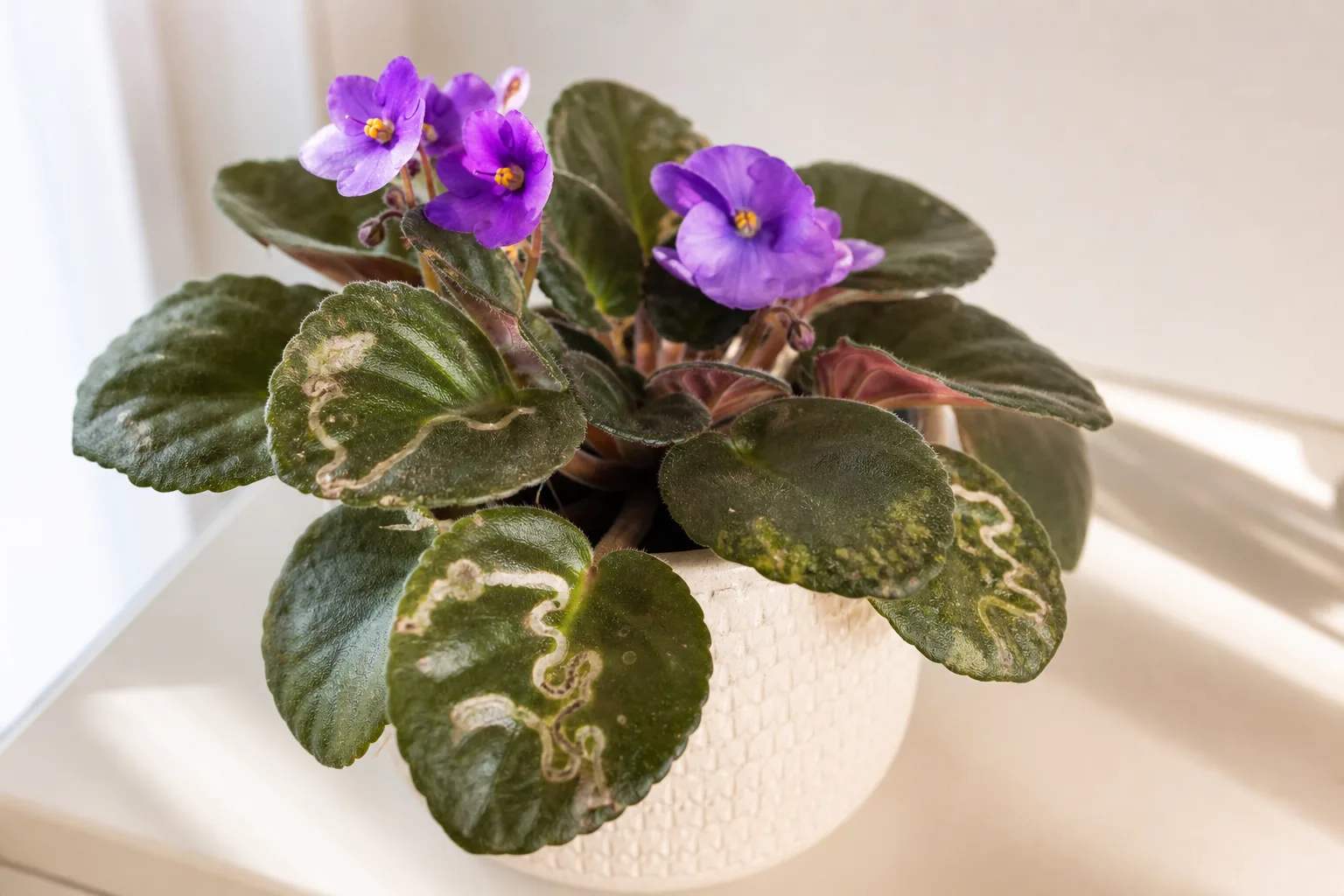
Leaf Miners on Houseplants
Still unsure?Match your symptoms to the most likely problems in under a minute.Run diagnosis →Understand and fix leaf miners
'Houseplant pests are common indoors because conditions lack natural predators. Leaf Miners often arrives on new plants, open windows, or stressed specimens. When you notice Winding pale trails inside leaves, act quickly: confirm the pest, isolate the plant, and treat before the population explodes. Track weekly progress after you change care, and note watering, light, and repotting dates so you can tell whether the symptom is improving or returning.'. Compare upper versus lower leaves, new versus old growth, and soil moisture at root depth before you treat, because the same visible symptom can come from watering, light, pests, or normal aging on different plants.
Overview
'Houseplant pests are common indoors because conditions lack natural predators. Leaf Miners often arrives on new plants, open windows, or stressed specimens. When you notice Winding pale trails inside leaves, act quickly: confirm the pest, isolate the plant, and treat before the population explodes. Track weekly progress after you change care, and note watering, light, and repotting dates so you can tell whether the symptom is improving or returning.'. Compare upper versus lower leaves, new versus old growth, and soil moisture at root depth before you treat, because the same visible symptom can come from watering, light, pests, or normal aging on different plants.
How to identify it
- Inspect leaf undersides, stem joints, and soil surface with a magnifying glass
- Look for movement, webbing, sticky honeydew, or cottony clusters
- Check nearby plants-even if only one looks bad initially
- Note whether symptoms match pest damage vs fungal or water issues
- Review recent plant purchases or outdoor time for introduction routes
When to worry
Heavy webbing, visible colonies on multiple plants, or larvae in soggy soil affecting seedlings need immediate treatment across your collection.
Common causes
New plant without quarantine
Pests hitchhike on nursery plants. Skipping a 2-week isolation period is the top way Leaf Miners enters a collection.
Dry air and heat stress
Spider mites thrive when humidity is low and plants are stressed. Heat vents and winter heating make infestations worse.
Overwatered soil
Consistently moist organic soil breeds fungus gnat larvae that feed on fine roots and spread annoyance indoors.
Dusty leaves and poor airflow
Dust blocks light and weakens plants, making them easier targets for scale, mealybugs, and aphids.
Step-by-step fix
Isolate the affected plant
Move it away from others until you see no new pest activity for at least two weeks after treatment.
Identify the pest correctly
Compare symptoms to photos or use a pest identifier tool. Treatment differs for mites, gnats, scale, and mealybugs.
Remove what you can manually
Wipe leaves, shower the plant, pick off visible bugs, and scrape scale with a cotton swab dipped in alcohol.
Apply appropriate treatment
Use insecticidal soap or horticultural oil for most soft-bodied pests. Repeat every 5–7 days for two to three cycles to catch hatchlings.
Fix conditions pests love
Let soil dry for fungus gnats, raise humidity for mite-prone plants, and dust leaves regularly.
Prevention tips
- Quarantine new plants for 2 weeks before placing near others
- Inspect leaf undersides during weekly care
- Avoid overwatering and improve airflow between plants
- Keep plants healthy-stressed plants attract pests faster
Common mistakes
- Treating once and assuming pests are gone
- Using the wrong product for the pest type
- Returning an isolated plant too soon
A pale winding trail inside a leaf is not dirt on the surface. It is usually a mine: a corridor eaten between the leaf’s outer layers by a hidden insect larva. The damage is distinctive, but “leaf miner” describes a feeding habit shared by larvae from several insect groups, not one universal pest.
That distinction shapes control. A spray that contacts the leaf surface may never reach a larva protected inside. Before treating, determine whether the mine is active, how many leaves are affected, and whether the plant is losing meaningful function or only appearance.
What Leaf Miners Are
Leaf-mining larvae feed within leaf tissue between the upper and lower epidermis. Many common vegetable and ornamental miners are fly larvae, but moths, beetles, and sawflies also include leaf-mining species. Adults differ, and so do host range, pupation site, and pesticide susceptibility.
University of Minnesota Extension explains that adults insert eggs into leaves and larvae then feed between the leaf surfaces. This protected position is why early detection and physical removal can be more reliable than indiscriminate contact spraying.
What Leaf Miner Damage Looks Like
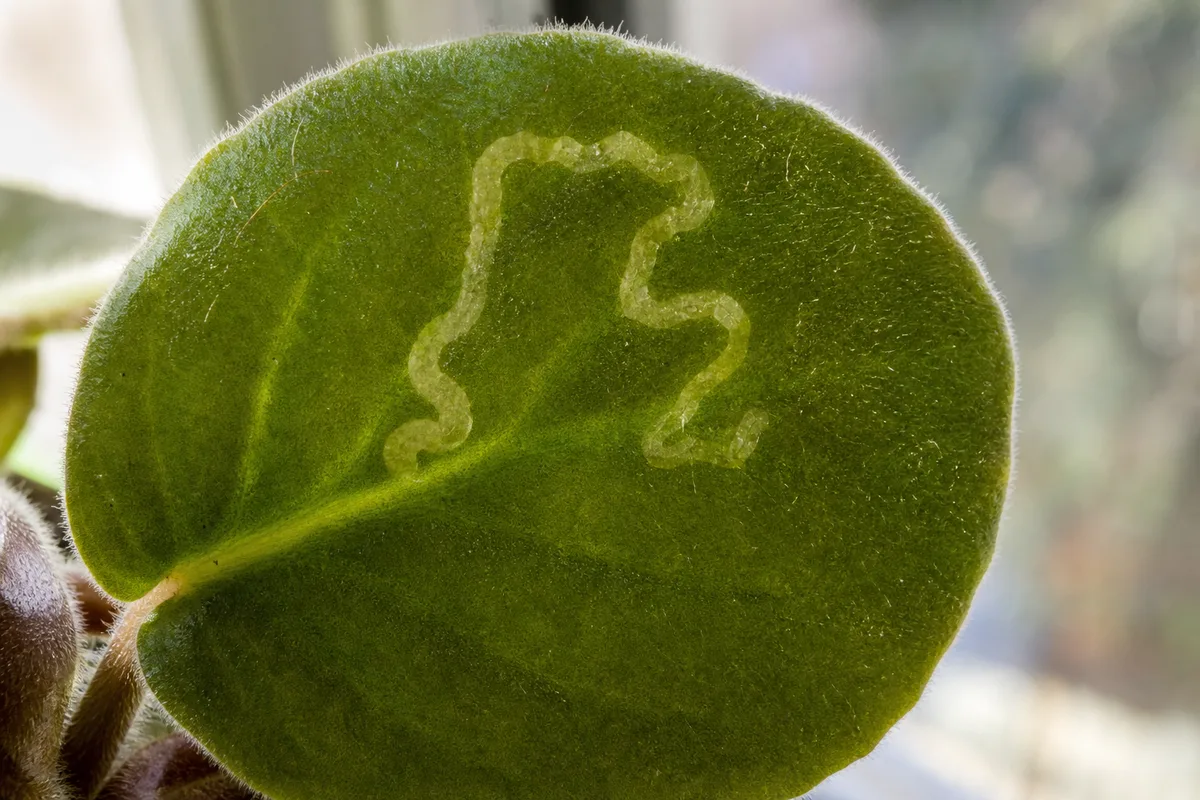
Mines begin pale, translucent, or opaque and may turn tan or brown as tissue dies. Hold a leaf toward a light. An intact upper and lower surface over a hollowed path supports the diagnosis. Dark grains or a thin dark line inside may be frass.
Serpentine Mines
Serpentine mines are narrow, winding trails that often widen as the larva grows. The path may curve across the blade without respecting veins. A larva or darker feeding front may be visible at the broad end.
Vegetable leaf miner larvae create winding, snake-like mines. Similar-looking trails can be produced by different species, so the pattern is diagnostic of feeding style more than exact identity.
Blotch Mines
Blotch miners create broad irregular patches. Some start as a short narrow line before expanding into a pale window. Multiple larvae in one leaf can produce merged blotches.
An old blotch may dry and tear, becoming an open hole. Inspect nearby earlier-stage mines to reconstruct what happened rather than mistaking the final hole for caterpillar feeding.
Confirm a Mine Is Active
Examine the newest and palest mine under bright backlighting. Look for a larva or a slightly swollen, darker end. Mark the boundary with a fine pen beside—not through—the mine and compare it after 24 to 48 hours. Expansion indicates feeding.
Gently pressing the active end between fingers can kill a larva in a sturdy, non-edible leaf without removing the whole leaf. This is inappropriate for fragile foliage and should not be used when the insect needs identification.
Use magnification before pressing anything that is unclear. A living larva may appear as a pale or dark speck at the widening end, while scattered dark granules behind it are frass. Photograph the mine against backlight and note the date. If the leading edge has not moved and no new mines appear, the larva may already have exited or died.
Do not open every mine with a blade. Cutting destroys diagnostic features, creates wounds, and can release a specimen too damaged to identify. For an unusual host, valuable collection, or suspected regulated pest, keep the leaf intact in a sealed container and follow the receiving laboratory’s sampling instructions.
Leaf Miners Versus Disease and Surface Damage
| Symptom | More consistent with | Confirmation |
|---|---|---|
| Winding translucent tunnel with frass | Leaf miner | Intact surfaces over a growing path |
| Angular brown spot bounded by veins | Leaf spot or abiotic injury | No hollow tunnel or larva |
| Silvery surface scarring with black specks | Thrips | Surface damage; insects move outside leaf |
| Open irregular holes | Chewing insect | Tissue is missing through both surfaces |
| Pale squiggle that wipes away | Surface residue | No damaged tissue below |
Fungal and bacterial leaf spots can expand, but they do not usually create a hollow serpentine gallery with an internal frass trail. Edema and sunscald can produce corky or bleached patches; environmental history and the absence of a larva matter.
Examine both leaf surfaces at an angle. Thrips scarring sits on or immediately beneath damaged epidermal tissue and is often paired with black fecal spots on the surface. A true mine has a roof and floor with consumed tissue between them. When necrosis has collapsed the mine, younger lesions on the same plant are usually more diagnostic than the oldest brown patch.
Record recent sprays, fertilizer splashes, cold exposure, and abrupt light changes. These events can produce patches that coincide with an insect sighting. More than one problem can occur at once, so finding an adult fly on a sticky card does not make every mark a leaf mine.
Understand the Life Cycle
An adult lays eggs on or in suitable foliage. The larva feeds inside, passes through several stages, and eventually pupates. Depending on species, pupation may occur in the leaf, on it, or after the larva drops into soil or debris. Adults then emerge and lay more eggs.
Minnesota Extension reports that common vegetable leaf miners can feed as larvae for roughly two to three weeks and produce several generations in a year. That outdoor example should not be turned into a universal calendar for every indoor species. Temperature and identity change timing.
Decide Whether Control Is Necessary
Count affected leaves and active mines, not every old scar. One inactive mine on an established ornamental is usually cosmetic. Young seedlings, leafy edible crops, propagation stock, and small plants with expanding mines deserve earlier action.
Leaf-miner feeding often has little effect on overall plant growth in robust garden crops, although it can ruin edible leaves or ornamental appearance. Minnesota Extension notes that management is frequently unnecessary because natural enemies keep vegetable leaf miners under control.
Intervene when new mines appear repeatedly, active larvae occupy multiple leaves, photosynthetic area is being lost quickly, or the plant is too small to tolerate removal.
Use a simple decision rule: monitor when mines are old and sparse; remove individual active mines when the plant has adequate foliage; seek identification when mines multiply on new growth; consider a labeled treatment only when physical control is insufficient and the pest stage is susceptible. This sequence keeps cosmetic injury from triggering collection-wide spraying.
For leafy vegetables, the tolerance threshold is lower because mined tissue is the harvested product. Follow local extension guidance for the crop and discard leaves according to food-safety and pesticide-label directions. Do not transfer an ornamental houseplant recommendation to an edible crop.
A Practical Control Plan
Isolate an indoor plant, inspect every leaf, remove active larvae where practical, and monitor new growth. Clean fallen leaves and keep the plant in appropriate care so it can replace damaged tissue.
Remove or Crush Larvae in Small Infestations
For a few mines, pinch the visible larva through the leaf or remove the affected leaf. Seal discarded material; do not leave it in the pot or open compost beside host plants. Minnesota Extension recommends removing and destroying leaves while damage is limited.
Balance sanitation with plant health. Removing half the foliage from a small plant may cause more stress than accepting old cosmetic mines. Prioritize active mines and retain unmined green tissue.
Monitor Adults Without Overreading Traps
Yellow sticky cards can catch small adult flies and help show whether flight activity continues. Position a card near, not against, foliage. Record captures by date.
A trapped small fly is not species confirmation, and traps do not remove larvae already inside leaves. Fungus gnats, whiteflies, and harmless flies may also be caught. Use cards as a trend tool alongside mine inspection.
Use Pesticides Only When They Fit the Life Stage
Surface contact products may kill adults but often do not reach protected larvae. Minnesota Extension cautions that pesticides aimed at egg-laying adults do not kill larvae already feeding inside leaves.
Spinosad can be effective for some leaf miners when the product is labeled for the plant, site, and target, but it is not risk-free. Follow the label’s rate, application interval, indoor-use status, harvest interval, and pollinator precautions. Apply only where allowed and avoid flowers.
Systemic insecticides have site, crop, pollinator, and resistance implications. Do not use one on an edible or flowering plant unless the exact label permits it. A product recommendation from an outdoor vegetable page does not automatically transfer to a houseplant.
Timing matters more than product strength. Once a larva has finished feeding and left the mine, an application cannot reverse the old trail. Adult-directed treatment must coincide with adult activity, while a translaminar or systemic product must be both labeled and capable of reaching the target stage. Local species and regulations determine whether either approach is appropriate.
Never combine products to “cover every stage” unless every label permits the mixture and the use site. Oils, soaps, and other materials can injure foliage when layered or applied under unsuitable temperature and moisture conditions. Test-sensitive ornamentals on a small area and wait the label-directed period before broader use.
Protect Natural Enemies
Tiny parasitoid wasps attack many leaf miners outdoors and in greenhouse biological-control systems. Broad-spectrum residual insecticides can kill these allies and sometimes produce a rebound. Choose removal and monitoring when damage is tolerable.
Evidence of parasitism can be subtle. A mine may stop expanding because a parasitoid developed inside the host, not because a spray worked. In managed greenhouses, identifying the miner and parasitoid matters before changing pesticides. Home growers do not need to identify every wasp, but they can preserve natural control by avoiding routine broad-spectrum applications.
Sticky-card counts can rise even while leaf damage falls because cards measure flying adults, not larvae inside leaves. Interpret both signals together: new active mines indicate plant injury, while adult captures indicate movement. A downward trend in new mines is the more direct recovery measure.
If an outdoor plant supports only a few mines, waiting may be the most effective integrated-pest-management choice. Avoid squeezing a mine that visibly contains a parasitoid pupa when you can identify it reliably.
Care for the Damaged Plant
Mined tissue will not turn green again. Recovery means mines stop expanding and clean new leaves develop. Give the plant its normal suitable light, temperature, and watering pattern. Do not compensate with extra fertilizer or constant moisture.
Remove a fully brown leaf when it separates easily or poses a sanitation problem. Retain partly green leaves if the plant needs them. A heavily defoliated plant may use water more slowly, so check the mix rather than watering on the old schedule.
Estimate healthy area before pruning. A leaf with one narrow mine may still contribute far more than it costs the plant. A leaf converted largely to a blotch contributes less and may contain an active larva. On small plants, pinch an individual larva rather than removing an entire leaf when the tissue tolerates it.
Keep water off leaves that are prone to spotting, but do not assume moisture created the insect. Adult leaf miners must reach a host and lay eggs. Care conditions influence plant tolerance; they do not spontaneously generate larvae.
New growth is the best report card. Mark the youngest unmined leaf and inspect it as it expands. If it remains clear while old mines stop growing, avoid additional treatment. If new mines appear, the cycle is continuing and adult monitoring or a label-appropriate intervention deserves reconsideration.
Track the numerator and denominator: record active mined leaves out of total usable leaves, not only the raw number of scars. Two mines on a six-leaf cutting represent a different loss from two mines on a dense mature plant. Photograph the same side weekly so leaf expansion does not make damage appear to spread when the mine itself is unchanged.
Do not apply fertilizer to “replace” tissue. Excess growth can change plant susceptibility, and fertilizer cannot rebuild mined cells. Resume normal feeding only when the plant is actively growing under suitable conditions.
Prevent Leaf Miners From Spreading
Inspect new plants, transplants, herbs, and cut flowers before placing them near a collection. Quarantine acquisitions and examine new leaves under backlight. Seal active mined leaves during removal.
Outdoors, remove relevant weedy hosts, rotate susceptible crops where appropriate, and use fine mesh row cover before adults lay eggs. Row cover applied over an already infested bed can trap emerging adults inside, and flowering crops may need pollinator access.
Keep records of host plant, date, mine pattern, and treatment. Recurring timing can guide earlier scouting next season.
Quarantine is more useful as repeated observation than as a calendar alone. Check the plant when it arrives, again after watering and leaf expansion, and before it joins the collection. A mine that was too small to notice can become obvious during that period.
Clean up fallen mined leaves promptly. If a species pupates after leaving the leaf, material left on potting mix or a greenhouse bench may support the next stage. Do not assume replacing all soil is necessary; first identify whether the relevant miner pupates there.
For outdoor crops, row cover works by exclusion. It must be placed before adult activity, sealed at the edges, and used only where pupae are not already enclosed. Minnesota Extension specifically warns that cover over a previously infested site may trap emerging flies with the crop.
Avoid broad-spectrum preventive spraying. It can remove parasitoid wasps while leaving protected larvae alive. Instead, scout susceptible hosts, remove early active mines, and preserve biological control.
When several hosts share a bench, inspect and handle the least affected plants first. Bag removed leaves immediately and clean tools before moving on. Do not shake mined foliage over neighboring pots because some mature larvae leave leaves to pupate. This workflow reduces spread without assuming every pot needs a soil treatment.
Keep the host name with each observation. Similar serpentine mines can come from different insects, and a correct host identification helps extension staff narrow the possibilities. If the plant label is uncertain, include clear photographs of flowers, stems, and the entire plant rather than guessing.
Sticky cards should be replaced when dusty or crowded, and counts should be recorded consistently. They provide a relative activity signal, not a treatment threshold by themselves. One small fly on a card is not evidence that every pale mark is a mine.
When to Seek Expert Identification
Contact an extension diagnostic laboratory when mines spread despite removal, a valuable crop is affected, the insect may be regulated, or pesticide choice depends on species. Submit the whole mined leaf in a sealed container if requested, along with photos of both surfaces and any adult caught nearby.
If brown patches lack a tunnel, larva, or frass, request diagnosis before continuing insecticide. Disease, nutrition, chemical injury, and environmental stress require different responses.
Include the plant name, where it has been kept, when mines first appeared, whether it recently came from outdoors, and every treatment applied. A lab may be able to rear an adult from an intact active mine, which can make identification easier than a damaged larva.
Commercial growers and valuable collections should seek help early because repeated pesticide exposure can select resistant populations and disrupt planned biological control. Home growers should also escalate when an edible crop is involved and no product label clearly covers the pest and site.
Stop and reassess if all mines remain unchanged yet leaves continue to brown. The active insect stage may be over, while water stress, disease, or treatment injury is now driving decline.
Bring a timeline, not just one damaged leaf. Note when the plant arrived, the first mine appeared, new mines stopped or continued, and any adult captures or treatments. Include an untouched active mine when possible. This lets a diagnostician distinguish current infestation from historical damage and prevents a recommendation based on a stage that has already passed.
Conclusion
Leaf miners are best managed by reading the mine. Confirm an intact tunnel or blotch, determine whether it is expanding, and assess how much functional leaf area is at risk. For a small infestation, removing or crushing active larvae and monitoring new growth may be enough. Pesticides must match the pest, life stage, plant, and site; surface spraying cannot erase a larva’s protected position—or old damage already written into the leaf.
Judge success by clean expanding leaves and inactive marked mines. That evidence-based threshold protects natural enemies, limits unnecessary treatments, and focuses attention on the hidden stage that is actually causing damage.
Retain dated photographs so later browning can be compared with the mine’s original boundary and activity status.
Plants commonly affected
These houseplants often struggle with leaf miners. Open a care guide or plant-specific troubleshooting page for tailored fixes.
 Medium
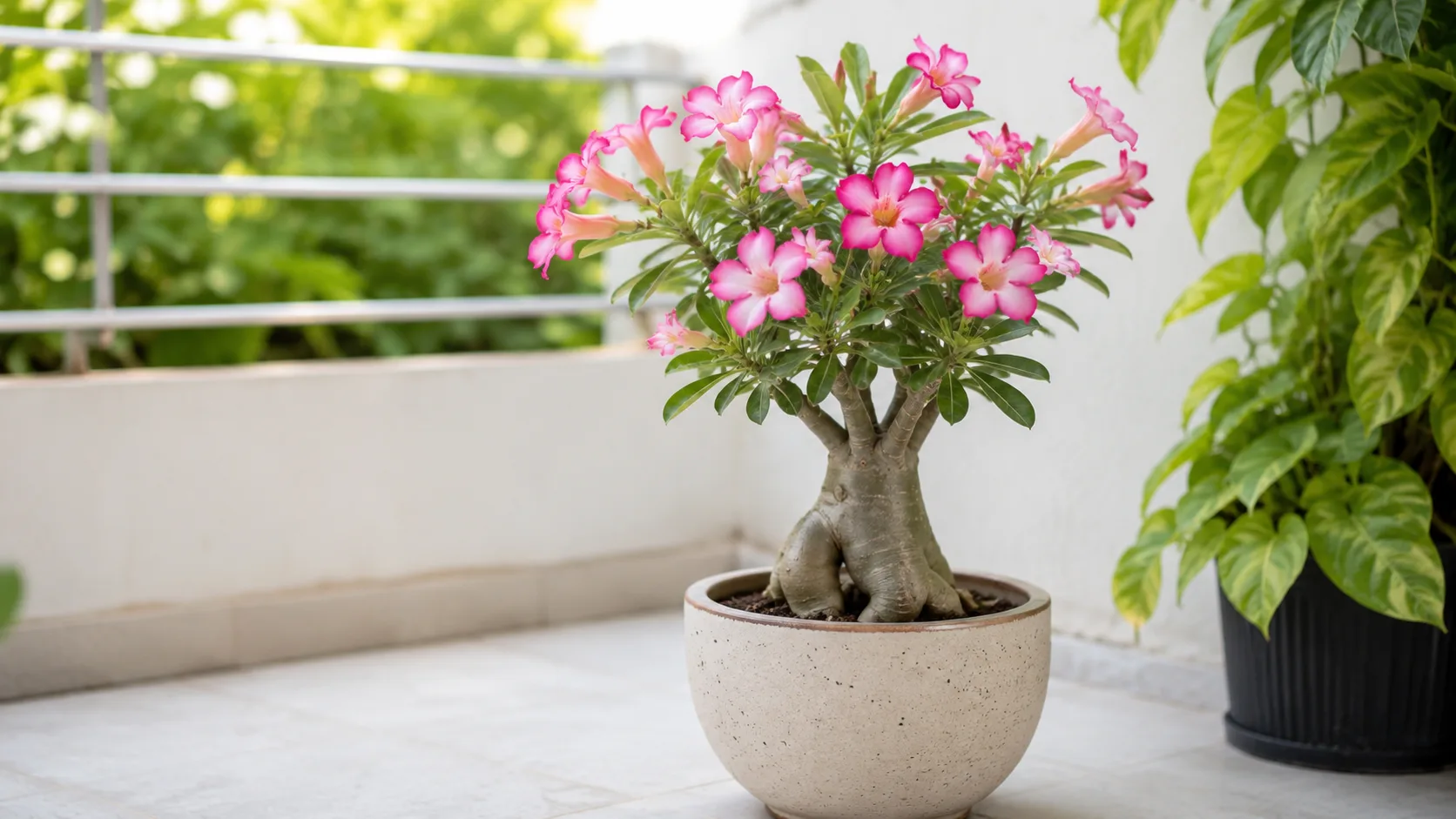
Adenium
Likely causeCommon leaf miners pattern on Adenium under indoor care stress.
Quick fixInspect roots, watering, light, and pests; adjust one variable and monitor new growth.
 Medium
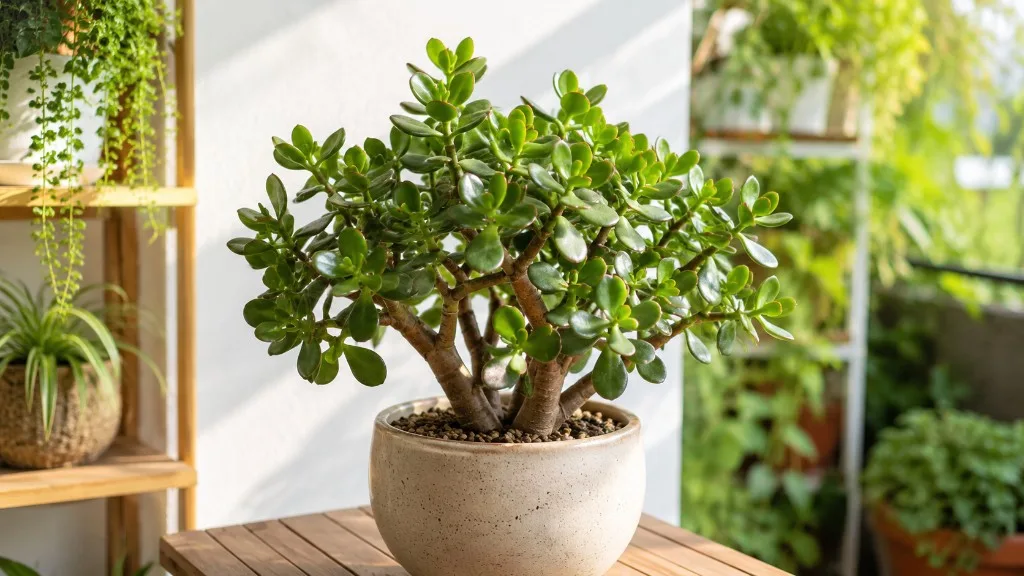
African Milk Tree
Likely causeCommon leaf miners pattern on African Milk Tree under indoor care stress.
Quick fixInspect roots, watering, light, and pests; adjust one variable and monitor new growth.
 Medium
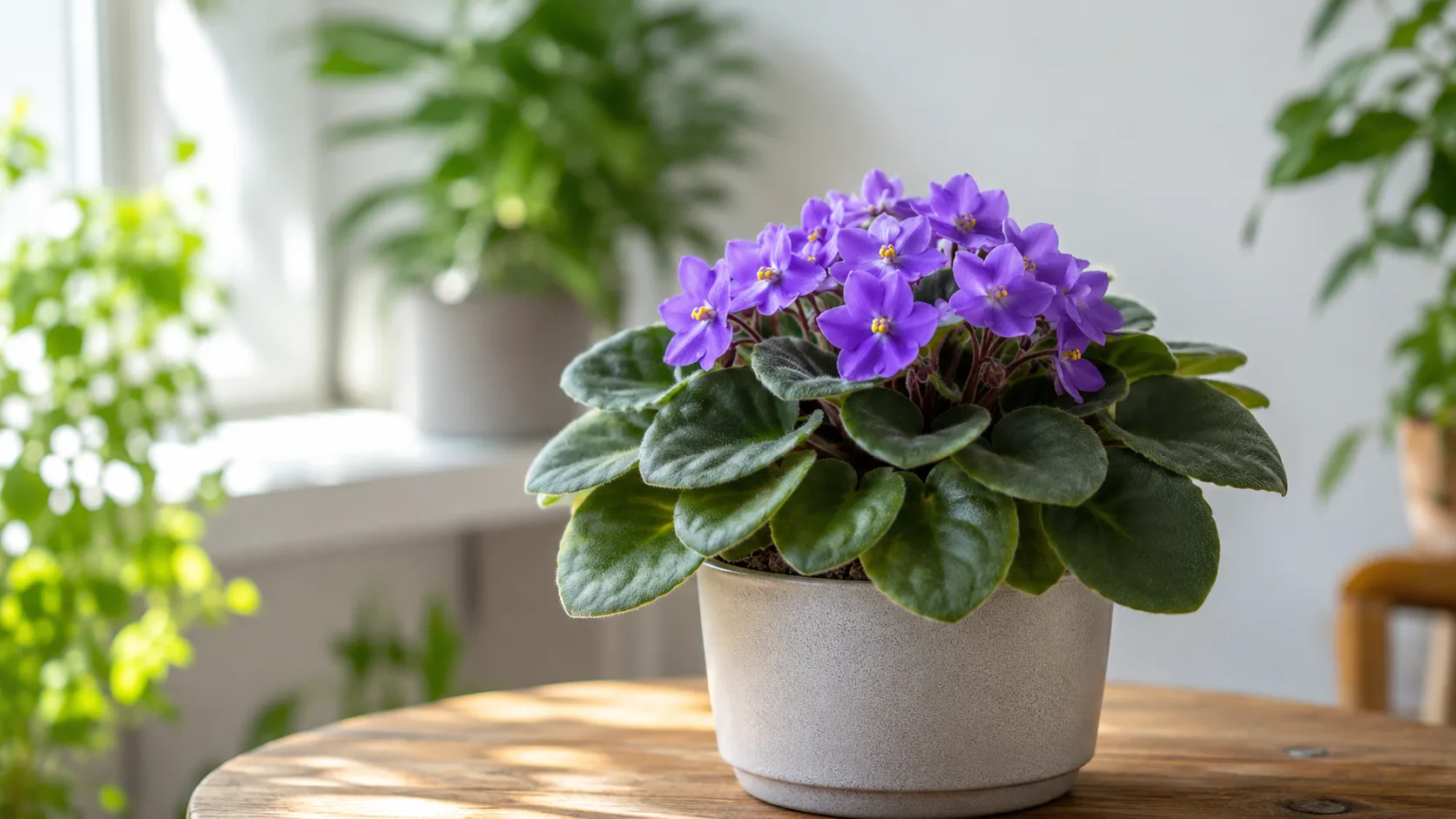
African Violet
Likely causeLeaf Miners on African Violet: If this is leaf miner how should I go about saving the plant from pest if I can't spray with neem or insecticidal soap since leaves cannot be wet?
Quick fixInspect African Violet, confirm leaf miners matches your symptoms, then adjust care or treat per authoritative guides.
 Medium
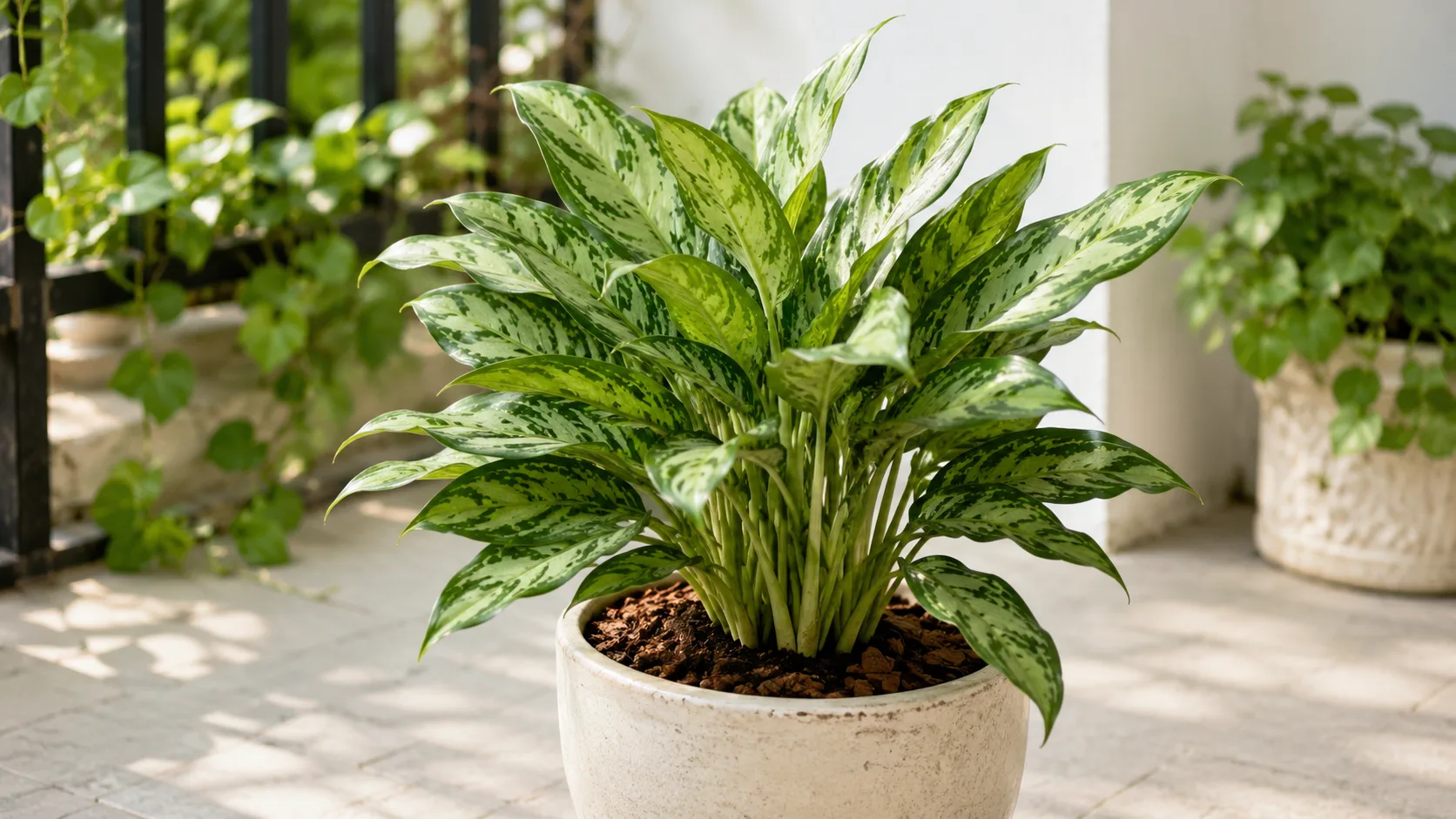
Aglaonema
Likely causeCommon leaf miners pattern on Aglaonema under indoor care stress.
Quick fixInspect roots, watering, light, and pests; adjust one variable and monitor new growth.
 Medium
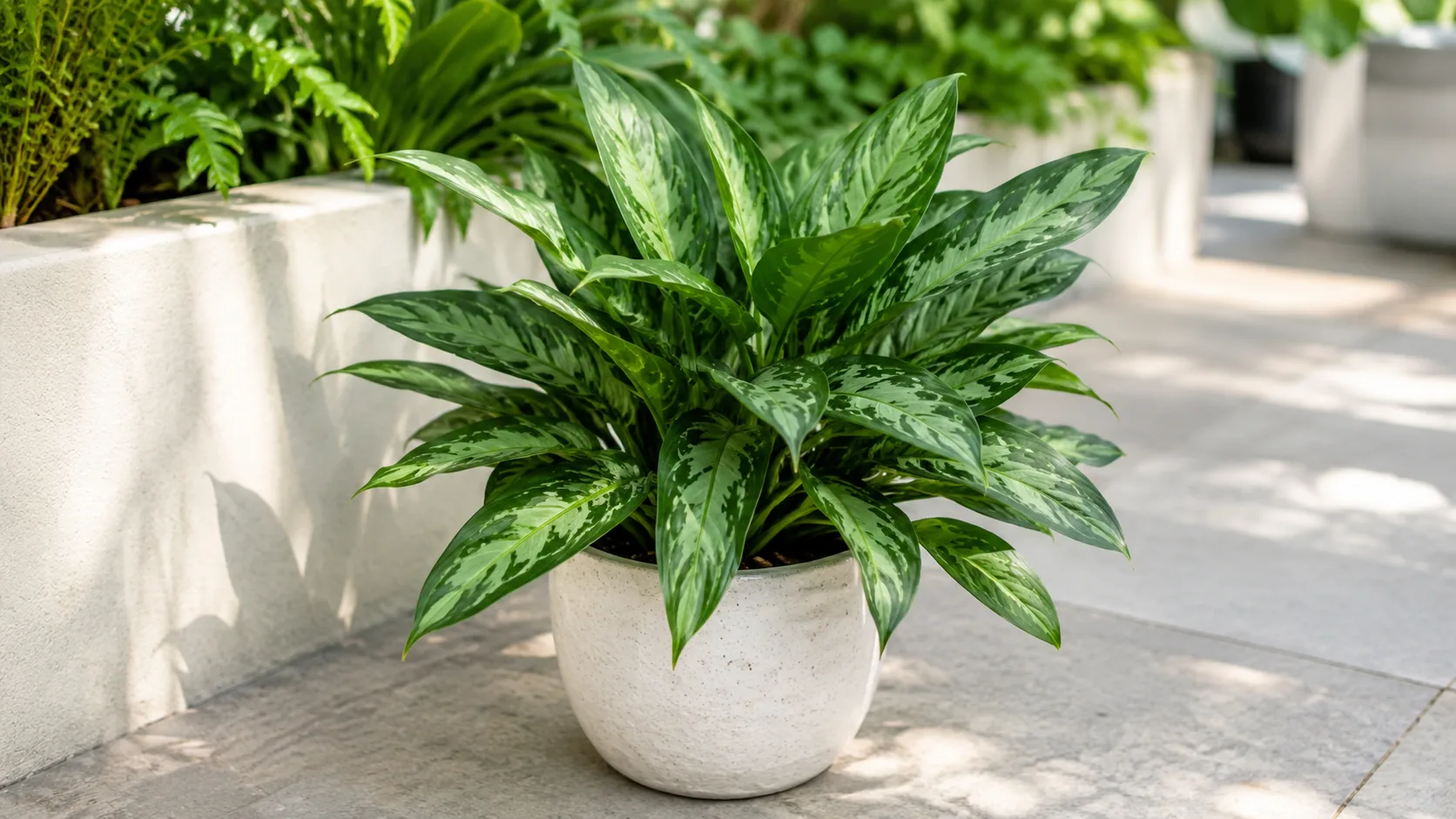
Aglaonema Cutlass
Likely causeCommon leaf miners pattern on Aglaonema Cutlass under indoor care stress.
Quick fixInspect roots, watering, light, and pests; adjust one variable and monitor new growth.
- Medium
Aglaonema Lady Valentine
Likely causeCommon leaf miners pattern on Aglaonema Lady Valentine under indoor care stress.
Quick fixInspect roots, watering, light, and pests; adjust one variable and monitor new growth.
- Medium
Aglaonema Maria
Likely causeCommon leaf miners pattern on Aglaonema Maria under indoor care stress.
Quick fixInspect roots, watering, light, and pests; adjust one variable and monitor new growth.
- Medium
Aglaonema Pictum Tricolor
Likely causeCommon leaf miners pattern on Aglaonema Pictum Tricolor under indoor care stress.
Quick fixInspect roots, watering, light, and pests; adjust one variable and monitor new growth.
 Medium
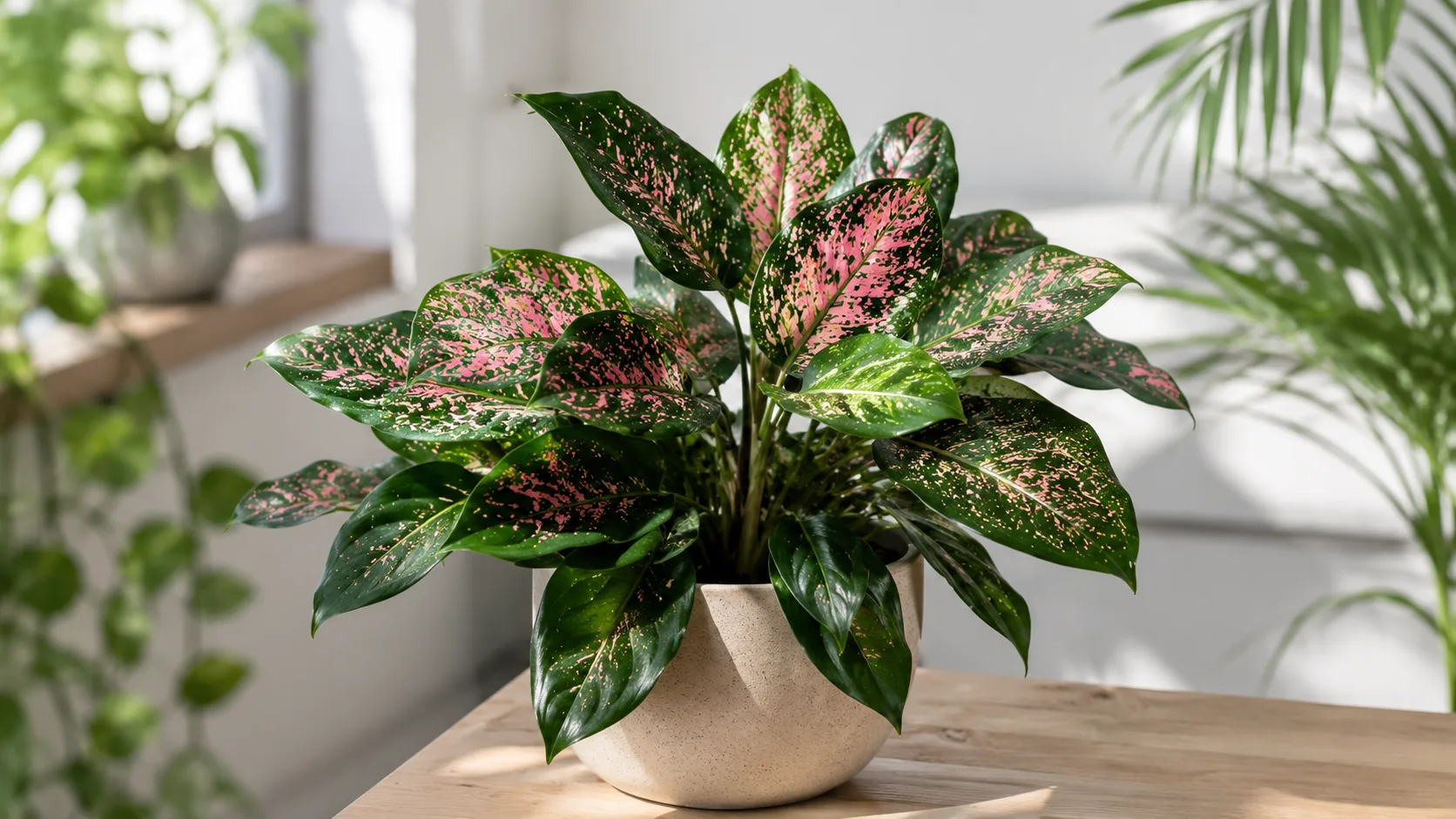
Aglaonema Pink Dalmatian
Likely causeCommon leaf miners pattern on Aglaonema Pink Dalmatian under indoor care stress.
Quick fixInspect roots, watering, light, and pests; adjust one variable and monitor new growth.
- Medium
Aglaonema Red Siam
Likely causeCommon leaf miners pattern on Aglaonema Red Siam under indoor care stress.
Quick fixInspect roots, watering, light, and pests; adjust one variable and monitor new growth.
 Medium
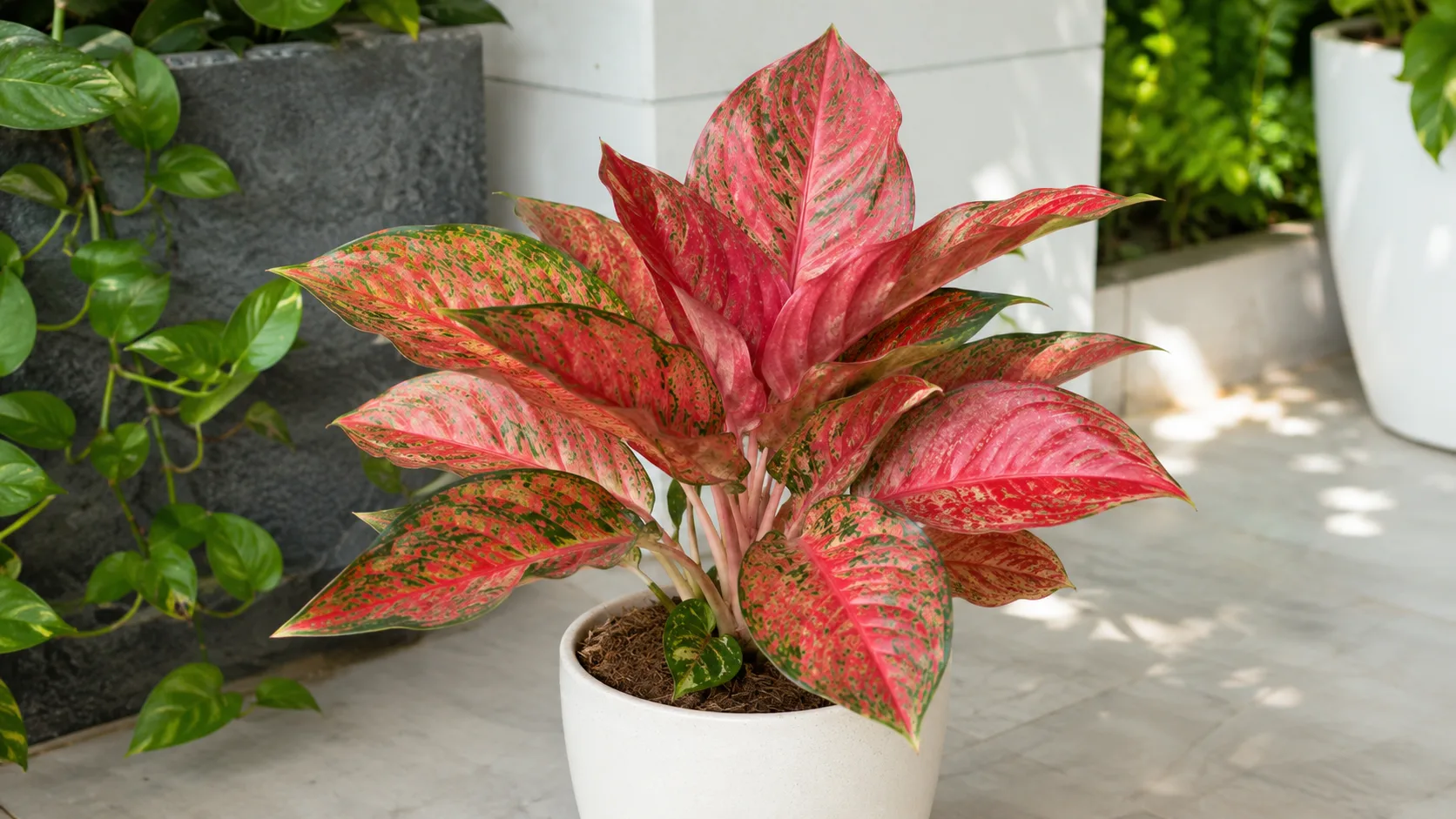
Aglaonema Red Valentine
Likely causeCommon leaf miners pattern on Aglaonema Red Valentine under indoor care stress.
Quick fixInspect roots, watering, light, and pests; adjust one variable and monitor new growth.
 Medium
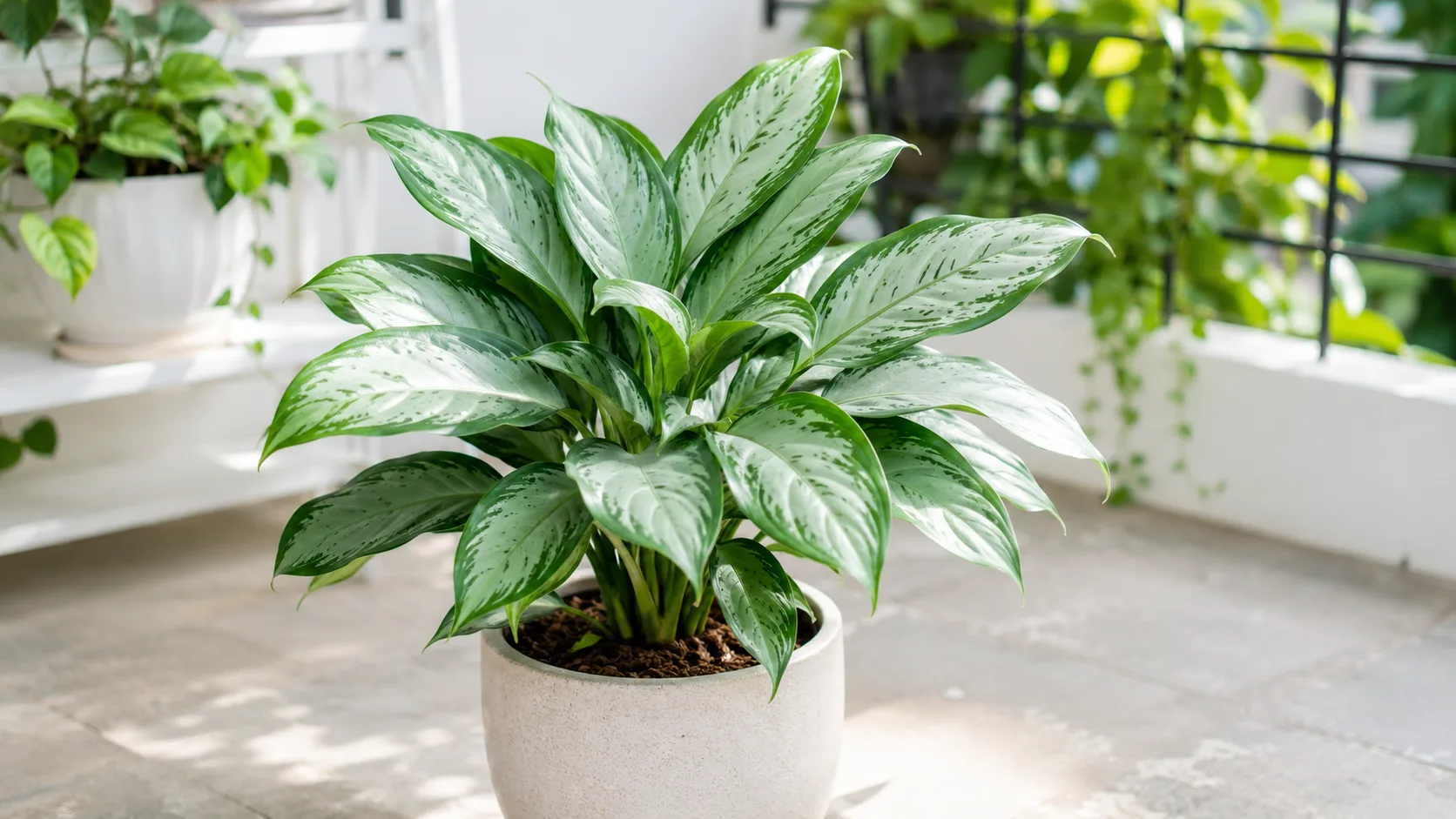
Aglaonema Silver Bay
Likely causeCommon leaf miners pattern on Aglaonema Silver Bay under indoor care stress.
Quick fixInspect roots, watering, light, and pests; adjust one variable and monitor new growth.